
Table of Contents
Some links on The Justifiable are affiliate links, meaning we may earn a small commission at no extra cost to you. Read full disclaimer.
If you’ve been wondering how to grow online retail business without spending a fortune on trial-and-error tactics, you’re in the right place.
Every ecommerce store faces the same challenge: getting seen by the right audience and converting that attention into steady sales.
The mix of SEO and smart ads can completely change how your business grows—but what’s the right way to combine them for lasting results?
This guide breaks down a proven, strategic approach that helps you attract high-intent shoppers, boost visibility, and maximize your return on ad spend.
Build a Strong SEO Foundation for Retail Growth
Growing an online retail business starts with visibility. SEO helps your store show up where shoppers are already searching—Google, Bing, or even image search.
Let’s break down how to make your SEO foundation solid enough to attract, engage, and convert buyers naturally.
Optimize Product Pages for Search Intent
Your product pages are often the first impression buyers get. Each one should answer a shopper’s search intent—the “why” behind their query.
For example, someone searching “women’s waterproof hiking boots” wants to compare features and price before buying.
Here’s how to align your product pages with intent:
- Use natural keyword placement: Add target keywords (like “waterproof hiking boots”) in the title tag, H1, meta description, and product description without forcing them.
- Add supporting details buyers care about: Include materials, dimensions, and lifestyle benefits.
- Use descriptive URLs: For instance, /womens-waterproof-hiking-boots performs better than /product123.
- Improve readability: Break descriptions into bullet points and add headers for quick scanning.
I often suggest studying Google’s “People also ask” section to see what real customers want to know. Then, bake those insights directly into your product copy.
Use Keyword Clusters to Capture Buyer Intent
Instead of targeting a single keyword per page, use keyword clusters—groups of related terms that represent different parts of the buyer journey.
For example, if your main keyword is “organic coffee beans,” your cluster might include:
- best organic coffee brands
- fair trade coffee beans
- buy organic coffee online
You can identify clusters using tools like Ahrefs Keywords Explorer or Semrush Keyword Magic Tool.
Create a content map connecting each keyword to a specific intent (informational, commercial, or transactional). This helps your pages rank for multiple terms while keeping content user-focused.
Improve Site Structure and Navigation for Better Indexing
If Google can’t find your pages easily, your customers won’t either. A clean, logical structure helps both search engines and users.
I recommend this structure for ecommerce sites:
- Home → Categories → Subcategories → Product Pages
- Include breadcrumb navigation (e.g., Home > Men’s Shoes > Running Shoes) for clarity.
- Keep URLs consistent and short.
- Use an XML sitemap and submit it via Google Search Console.
Good navigation not only helps indexing—it reduces bounce rates and increases time on site, which indirectly boosts SEO performance.
Create Unique Product Descriptions That Drive Conversions
Copy-pasted manufacturer descriptions are SEO poison. Search engines flag them as duplicate content, and shoppers find them uninspiring.
Write original descriptions that sell benefits, not just specs.
Here’s what I use when writing product copy:
- Lead with emotion: “Feel confident running in any weather.”
- Highlight key features: materials, warranty, sustainability.
- Use power words: “lightweight,” “durable,” “eco-friendly.”
- Include mini storytelling: “Built for hikers who don’t let rain stop them.”
If you have hundreds of products, prioritize writing for your top 20% performers first—these drive most revenue.
Implement Schema Markup for Product Visibility
Schema markup is structured data that helps search engines understand your pages. Adding Product, Review, and Offer schema can make your listings appear with rich results—like star ratings and price range—in Google search.
You can easily add it through plugins like Rank Math or directly in your site’s code using Google’s Structured Data Markup Helper. After implementation, test using Google’s Rich Results Test.
This not only increases click-through rates but also builds trust since users see real-time product info right in search results.
Drive Consistent Organic Traffic With Content Marketing
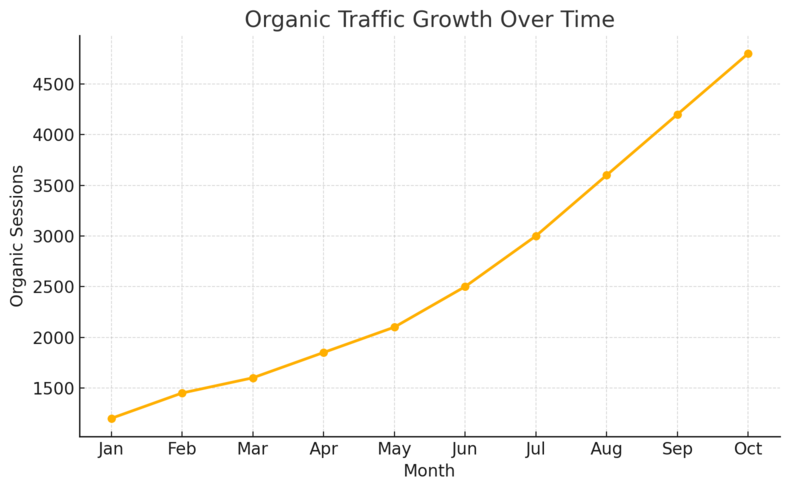
Once your SEO foundation is set, the next step is driving ongoing traffic through content.
This is where your brand starts building authority, answering buyer questions, and nurturing long-term trust.
Create Buyer-Focused Blog Content Around Product Needs
Content should help your buyers make confident decisions. Think beyond “what” your product is—focus on why and how it solves real problems.
For example, if you sell ergonomic chairs, write guides like “How to Fix Back Pain From Sitting Too Long” or “The Best Chair Height for Home Offices.” These attract users in the research phase, leading them naturally toward your products.
Include visuals like infographics, short videos, and internal links to your related product pages. Content that educates builds trust—and trust drives conversions.
Target Long-Tail Keywords With Commercial Intent
Long-tail keywords like “best hiking backpacks under $100” bring in highly qualified traffic. These searchers are usually closer to making a purchase.
You can uncover long-tail terms with tools such as AnswerThePublic or Google Keyword Planner. Then, create content that addresses these queries head-on.
Quick example:
- Keyword: “best trail running shoes for beginners”
- Content: “Top 5 Trail Running Shoes Perfect for Your First Run”
Include CTAs linking directly to your top-rated products. That’s how content turns browsers into buyers.
Use Internal Linking to Pass Authority to Product Pages
Internal linking helps Google understand your site’s hierarchy and passes link authority (SEO value) between pages.
I suggest linking from:
- Blog posts → product pages (“Shop the same model here”)
- Category pages → related blog posts (“Learn how to choose the right size”)
- High-traffic articles → underperforming product pages
This strategy improves visibility for key products while keeping visitors engaged across your site.
Build Topical Authority With Category-Based Content Hubs
A content hub is a collection of related articles organized around one theme. Think of it as a knowledge base for your niche.
For instance, if your store sells skincare products, you could create a “Skin Health Hub” with articles on routines, ingredient guides, and tutorials. Link each article to your main “Skincare” category page and relevant products.
Over time, this builds topical authority—Google sees your site as an expert source, which boosts rankings across the board.
Leverage Local SEO for Storefront and Hybrid Retailers
If your retail brand also has physical stores, local SEO helps nearby customers find you online and visit in person. It bridges the gap between your online and offline presence.
Optimize Google Business Profile for Local Visibility
Your Google Business Profile (GBP) is often the first touchpoint customers see. Fill out every field—business name, hours, address, and categories. Upload high-quality photos and regularly post updates or promotions.
Encourage customers to ask questions and respond promptly. Engagement signals show Google your business is active and trustworthy.
Pro tip: Add your top product keywords in the business description, but keep it natural.
Use Location Pages to Rank in Localized Searches
If you serve multiple cities or regions, create a dedicated location page for each one.
Each page should include:
- City-specific title and meta tags.
- Local testimonials or photos.
- Embedded Google Map with directions.
- Schema markup for local business details.
Example: “Men’s Sportswear in Austin, TX – [Brand Name]”
These pages help your store appear when people search things like “running shoes near me.”
Collect and Showcase Customer Reviews to Build Trust
Reviews are modern word-of-mouth. They influence buying decisions and boost rankings.
Encourage reviews through post-purchase emails or QR codes at checkout. Respond to all reviews—both good and bad—to show credibility.
You can integrate reviews directly on your product and location pages using platforms like Trustpilot, Yotpo, or Judge.me.
Search engines value these signals, and shoppers trust businesses with transparent feedback.
Use Local Citations to Strengthen Search Relevance
A local citation is any mention of your business name, address, and phone number (NAP) online—like directories, maps, or review sites.
Ensure your NAP is consistent across:
- Yelp
- Apple Maps
- Bing Places
- Industry-specific directories
Inconsistent information confuses both search engines and users. Tools like BrightLocal or Whitespark help manage citations efficiently.
Use Smart Ads to Accelerate Online Retail Growth
Once your SEO brings in steady traffic, the next step is scaling it fast—and that’s where smart ads come in.
Paid campaigns, when done right, can amplify your reach, retarget window shoppers, and drive conversions with data-backed precision.
Let’s go over how to combine automation and strategy to get the best return on every ad dollar.
Combine Google Shopping Ads With Dynamic Remarketing
Google Shopping Ads let you showcase products directly in search results with images, prices, and reviews—basically a digital storefront on Google.
To make them work harder, pair them with dynamic remarketing, which automatically shows ads for the exact products users viewed on your site.
Here’s how to set it up effectively:
- Sync your product feed with Google Merchant Center. This ensures your inventory, prices, and availability stay accurate.
- Use custom labels. These help segment your campaigns by profit margin, seasonality, or performance level.
- Enable dynamic remarketing through Google Ads Audience Manager. This retargets past visitors with product-specific ads as they browse other sites.
In my experience, stores that pair Shopping Ads with dynamic remarketing often see conversion rates double because they re-engage users who already showed intent to buy.
Set Up Performance Max Campaigns for Omnichannel Reach
Google’s Performance Max (PMax) campaigns are designed for full-funnel visibility. They run across Search, Display, YouTube, Discover, and even Gmail—using machine learning to deliver the right ad to the right person.
To get the best results:
- Start with high-quality creative assets. PMax automatically mixes and matches visuals, so strong product photos and short lifestyle videos make a huge difference.
- Use audience signals. Upload your existing customer lists or top-performing keyword sets to guide Google’s AI early on.
- Track performance in Google Ads → Campaigns → Insights. Look for asset performance ratings like “Best,” “Good,” or “Low,” and replace underperforming creatives every 2–4 weeks.
I suggest testing a dedicated PMax campaign for each major product line instead of lumping everything together. This way, you can control budget allocation based on ROI.
Use Facebook and Instagram Ads to Retarget Abandoned Shoppers
Social platforms like Facebook and Instagram are powerful for re-engaging people who’ve added products to their cart but never checked out.
You can set this up using Meta Pixel (in Meta Ads Manager → Events Manager → Connect Data Sources). Once installed on your site, it tracks user actions and triggers specific ads based on their behavior.
A few ad types that consistently perform well:
- Carousel ads: Show multiple related products or accessories.
- Collection ads: Blend product videos with catalog listings.
- Dynamic ads: Automatically display the exact product a shopper viewed.
From what I’ve seen, even a simple retargeting campaign with a small 10–20% discount offer can reduce cart abandonment rates by over 25%.
Test Smart Bidding Strategies for Higher ROAS (Return on Ad Spend)
Smart bidding automates your bids in real time based on user data—like device, time, and intent. Google offers several strategies, but Target ROAS (Return on Ad Spend) is my go-to for ecommerce.
Here’s how to approach it:
- Set up conversion tracking in Google Ads (Tools → Conversions → New Conversion Action).
- Choose a strategy based on goals:
- Maximize conversions for volume.
- Target ROAS for profitability.
- Allow 2–3 weeks of learning phase before making adjustments.
A common mistake I see is switching strategies too soon. Let the algorithm gather enough data (ideally 30+ conversions) before optimizing.
Integrate SEO and Paid Ads for Maximum Synergy
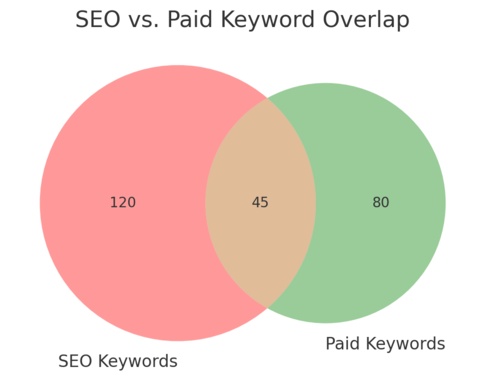
SEO and paid ads don’t compete—they complete each other. When combined strategically, they can boost visibility, conversions, and ROI more effectively than either could alone.
Use SEO Data to Identify High-Performing Ad Keywords
Your SEO data is a goldmine for PPC campaigns. Tools like Google Search Console show you which organic keywords already bring qualified traffic.
Steps to apply this:
- Go to Performance → Search Results in Search Console.
- Filter by queries with high click-through rates (CTR) but low positions.
- Plug these terms into Google Ads as paid keywords to capture missed clicks.
I’ve seen brands cut cost per acquisition (CPA) by up to 30% by prioritizing these data-backed terms instead of guessing.
Retarget Organic Visitors With Paid Ads for Faster Conversions
Not everyone who finds you through SEO will buy right away. Retargeting organic visitors with paid ads helps re-engage warm leads.
You can create remarketing audiences in Google Ads → Audience Manager → Segments → Website Visitors and filter by source = organic.
Example: If someone lands on your “Winter Jackets” blog post, you can retarget them with Shopping Ads featuring your best-selling coats. It’s subtle, relevant, and often converts far better than cold targeting.
Create Unified Messaging Across Organic and Paid Campaigns
Your audience shouldn’t feel like SEO and ads are speaking two different languages. Unified messaging builds familiarity and trust.
Here’s how to keep both aligned:
- Use similar tone and headlines across blog content, meta titles, and ad copy.
- Highlight the same value propositions (e.g., free shipping, sustainability).
- Ensure landing pages match ad promises—no bait-and-switch.
This consistency strengthens brand recognition and increases ad Quality Scores, which can lower CPC (cost per click).
Analyze Combined Metrics to Improve ROI
To truly understand performance, track SEO and ad metrics together. Use Google Analytics 4 (GA4) or Looker Studio dashboards to visualize blended data.
Key metrics to monitor:
- Assisted conversions: How SEO supports ad-driven sales.
- ROAS vs. organic conversion rate: To spot scaling opportunities.
- Attribution paths: How users interact with both channels before purchasing.
When you see organic visitors converting better after paid ad exposure, that’s proof your ecosystem is working in sync.
Optimize Landing Pages for Conversions
Your ads and SEO might drive traffic, but landing pages close the sale.
A well-optimized page turns casual browsers into loyal customers through design clarity, emotional triggers, and trust elements.
Align Landing Page Copy With Search and Ad Intent
If someone clicks on an ad for “affordable standing desks,” they expect to see standing desks—not a homepage or an unrelated offer.
To match intent:
- Keep headlines consistent with ad text and keywords.
- Use benefit-driven subheadings like “Boost Productivity Without Back Pain.”
- Include one clear call-to-action (CTA) such as “Shop Now” or “Get 20% Off Today.”
I often test different headline tones—emotional vs. functional—and track conversions in Google Optimize to see what resonates most.
Simplify Design for Faster Load Times and Higher Engagement
Speed and simplicity sell. According to Google, every extra second of load time can reduce conversions by 20%.
Checklist for a fast, frictionless experience:
- Compress images with tools like TinyPNG.
- Use lazy loading for below-the-fold content.
- Remove unnecessary pop-ups or scripts.
- Test mobile layouts in PageSpeed Insights.
I recommend aiming for a mobile load time under 2.5 seconds—anything slower risks losing impatient shoppers.
Use A/B Testing to Improve Call-to-Action (CTA) Performance
A/B testing lets you compare two page versions to see which performs better. Tools like Optimizely make it simple.
Examples of what to test:
- CTA button text (e.g., “Buy Now” vs. “Get Yours Today”).
- Hero image styles (product-only vs. lifestyle shot).
- Page layouts (single-column vs. two-column).
Run each test for at least two weeks to gather statistically significant data. Small tweaks—like a contrasting button color or shorter form—can lift conversions by 10–20%.
Add Social Proof and Urgency Triggers Strategically
Trust and urgency are powerful motivators. People are more likely to buy when they see others doing it—or when they think an opportunity might slip away.
To apply this ethically:
- Add real customer reviews or star ratings near CTAs.
- Show stock counters or “only 3 left” notifications (if genuine).
- Include trust badges like “SSL Secure” or “Free Returns.”
- Highlight user-generated content, such as Instagram photos.
I believe authentic social proof is one of the most underrated conversion tools. It doesn’t just sell—it reassures.
Track, Measure, and Refine Your Growth Strategy
If you want to grow your online retail business sustainably, you can’t just “set and forget.” You need to track performance, understand what’s working, and make ongoing improvements.
Measurement is your compass—it keeps every marketing effort pointed toward profit, not vanity metrics.
Use Google Analytics 4 (GA4) to Track Ecommerce Metrics
GA4 is more than an analytics tool—it’s your digital command center. It helps you understand how visitors interact with your store and which campaigns actually drive sales.
Here’s how to set it up effectively:
- Enable Enhanced Ecommerce: In GA4, go to Admin → Data Streams → Web → Enhanced Measurement. This automatically tracks product views, cart additions, and purchases.
- Connect Google Ads: Link GA4 and Google Ads to track paid campaign performance end-to-end.
- Set up conversion events: Identify key actions (like checkout or sign-up) and label them as conversions.
I suggest checking metrics like Average Order Value (AOV), Customer Lifetime Value (CLV), and Engagement Rate weekly. These numbers reveal whether your traffic is converting profitably or just visiting out of curiosity.
Monitor Keyword Rankings and Conversion Paths
Keyword rankings show visibility; conversion paths show impact. Monitoring both ensures your SEO and ad efforts are moving in sync.
You can use Semrush for rank tracking and Google Analytics 4 → Advertising → Conversion Paths to see the customer journey.
Focus on:
- Keywords bringing in high-converting traffic.
- Search terms where you rank between positions 5–15 (these are ripe for optimization).
- Multi-touch conversion paths (like “organic search → paid ad → purchase”).
When I review reports, I like to tag keywords with “lead,” “assist,” or “final” roles in the conversion funnel—it’s a simple but powerful way to identify which ones drive real business value.
Evaluate ROI of Organic vs Paid Channels
To make smart budget decisions, you need to compare what each channel contributes. The goal isn’t to prove which is “better”—it’s to find balance.
In GA4 → Advertising → Model Comparison, you can view ROI using different attribution models (like last-click vs data-driven).
Here’s what to watch:
- Organic ROI: Lower cost, slower growth, stronger long-term returns.
- Paid ROI: Faster sales, but requires ongoing spend and testing.
- Assisted conversions: Cases where SEO supports paid campaigns (or vice versa).
If paid ROI starts dropping, look at SEO performance before cutting spend—organic visibility often boosts ad efficiency.
Continuously Refine Based on Data-Driven Insights
Data without action is just noise. The key is to turn analytics into better decisions.
I recommend setting a monthly optimization cycle:
- Review top and bottom performers.
- Adjust ad bids, keywords, or content topics based on what’s driving revenue.
- Run A/B tests on landing pages or product titles.
Even small insights—like realizing mobile users prefer shorter copy—can produce major gains. The best growth strategies evolve through iteration, not guesswork.
Scale With Automation and AI Tools
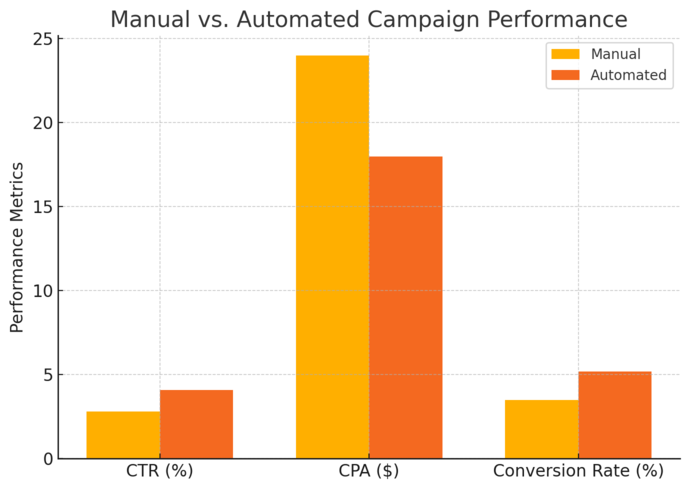
Manual work limits how fast you can grow. Automation and AI free you from repetitive tasks and give you real-time insights so you can focus on strategy instead of spreadsheets.
Automate Campaign Management With Smart Bidding and Rules
Platforms like Google Ads and Meta Ads Manager let you automate campaign adjustments through smart bidding and rules.
How to use it effectively:
- Smart Bidding: Use “Target ROAS” for profit-based bidding and “Maximize Conversions” for lead growth.
- Automated Rules: Set conditions like “Pause ads if CPA > $25” or “Increase budget by 10% if ROAS > 500%.”
This hands-off system optimizes performance while keeping you in control. I’ve seen businesses cut wasted ad spend by 20% simply by setting these rules early.
Use AI for Predictive Product Recommendations
AI can analyze customer behavior to predict what they’re likely to buy next.
You can integrate tools like Dynamic Yield or Nosto—they plug into Shopify, WooCommerce, or BigCommerce and personalize product suggestions in real time.
Example: A shopper browsing “running shoes” might see recommended socks or water bottles. These small nudges increase average order value without extra ads.
AI personalization feels seamless to customers and deeply data-driven to you.
Streamline SEO Tasks With Automation Platforms
SEO can be time-consuming, especially with large product catalogs. Automation platforms like Surfer SEO or Sitebulb can save hours each week.
You can automate:
- Broken link and redirect checks.
- Keyword clustering and topic mapping.
- On-page optimization audits.
For example, I often use Surfer SEO’s Audit Tool to automatically scan pages against top-ranking competitors—it highlights missing keywords, internal links, and readability gaps in seconds.
Build Personalized Ad Experiences With AI Audience Targeting
AI-powered targeting uses real-time user data—like browsing behavior, location, or purchase history—to create hyper-personalized ads.
Tools such as Meta Advantage+ or Google Ads Audience Signals handle this beautifully.
You could, for example:
- Serve new customers ads with “Shop the Latest.”
- Retarget loyal buyers with “Back in Stock” or “Members-Only” offers.
Personalization doesn’t just improve click-throughs—it boosts relevance, which lowers your cost per acquisition over time.
Build Long-Term Brand Authority Through SEO and Ads
Authority isn’t built overnight—it’s earned through consistent messaging, trust, and visibility.
When SEO and ads reinforce each other, your brand moves from “option” to “default choice” in a buyer’s mind.
Create Consistent Brand Messaging Across All Channels
Your audience should instantly recognize your brand voice, whether they’re on your website, social media, or reading your emails.
Keep your tone, visuals, and core promises unified. For example, if your SEO-optimized product pages highlight “eco-friendly materials,” your ads should echo that same value.
Consistency boosts recognition and credibility—two of the most powerful forces in marketing psychology.
Invest in PR and Link-Building to Strengthen Domain Authority
High-quality backlinks act like endorsements in Google’s eyes. Combine digital PR with targeted link-building to build authority fast.
Approaches that work:
- Pitch to niche bloggers or journalists through HARO or Qwoted.
- Sponsor local or industry events for relevant backlinks.
- Collaborate with complementary brands for content swaps.
I believe link-building should always align with brand storytelling, not just SEO goals. Each earned mention should tell part of your company’s bigger narrative.
Use Ads to Amplify High-Performing Organic Content
When a blog post or guide performs well organically, don’t stop there—put ad spend behind it.
For example, promote an article ranking for “best skin care products” with Facebook ads targeting beauty enthusiasts. This multiplies your reach while reinforcing SEO authority signals.
Think of ads as an amplifier, not a replacement, for good organic content.
Focus on Retention and Loyalty Programs for Sustainable Growth
Acquiring customers is expensive; keeping them is where profit lives. Loyalty programs help turn one-time buyers into repeat shoppers.
You can use platforms like Smile.io or LoyaltyLion to reward points for purchases, reviews, and referrals.
Adding retargeting ads reminding loyal members of unused rewards is another simple but effective retention tactic. I’ve seen these campaigns lift repeat purchase rates by up to 35%.
Future-Proof Your Online Retail Strategy
The digital retail landscape never sits still. New technologies, privacy laws, and shopping behaviors change how people find and buy products.
Staying ahead means embracing innovation early—without losing focus on fundamentals.
Adapt SEO for Voice Search and Visual Shopping Trends
Voice and image-based search are growing fast. Optimize your SEO for how people speak, not just how they type.
Use conversational keywords like “where can I buy” or “best deals on.” For visuals, add alt text that describes images naturally—like “black leather tote bag with gold buckle.”
Platforms like Pinterest Lens and Google Lens are making visual discovery mainstream, so strong image SEO is now non-negotiable.
Use Data Insights to Anticipate Consumer Behavior Shifts
Data from Google Trends, Shopify Analytics, or GA4 can help predict shifts in demand.
Example: A spike in searches for “eco-friendly packaging” might signal an opportunity to feature sustainability more prominently in your ads and product pages.
I advise setting aside time each quarter to review trend reports. The earlier you pivot, the easier it is to stay ahead of competitors.
Invest in Privacy-Compliant Tracking and Attribution Tools
As cookies phase out, first-party data becomes your strongest asset. Use tools like GA4, Triple Whale, or Wicked Reports to track customer journeys while respecting privacy regulations (GDPR, CCPA).
Always be transparent with data collection and offer clear opt-in options. This builds trust while keeping your analytics accurate.
Continue Experimenting With New Ad Formats and Search Trends
Digital marketing rewards curiosity. Don’t be afraid to test new formats—like shoppable videos on YouTube, live shopping on TikTok, or short-form reels that highlight top products.
Set aside a small “test budget” (5–10% of total ad spend) each quarter. Measure results, double down on what works, and drop what doesn’t.
Staying adaptable ensures your online retail business grows even as platforms, algorithms, and customer expectations evolve.

I’m Juxhin, the voice behind The Justifiable.
I’ve spent 6+ years building blogs, managing affiliate campaigns, and testing the messy world of online business. Here, I cut the fluff and share the strategies that actually move the needle — so you can build income that’s sustainable, not speculative.
Related posts:
 How to Make My Online Business Grow Using SEO and Smart Marketing
 Social Media Marketing for Small Business – Best Tips
 How to Increase Social Media Followers
 Online Business Courses: Start Your Entrepreneurial Journey Today
 Top Marketing for Business Tactics Every Entrepreneur Must Know
 Sprout Social Listening: How It Works for Brands