
Table of Contents
Some links on The Justifiable are affiliate links, meaning we may earn a small commission at no extra cost to you. Read full disclaimer.
If you’re wondering whether inmotion hosting worth it for small business websites is a real yes-or-no question or just another hosting sales pitch, I get it. Most small business owners do not need “the best host on earth.”
You need a host that keeps your site fast enough, stable enough, and simple enough to manage without turning every small change into a technical headache.
InMotion Hosting can absolutely fit that role for some businesses, but it is not the right pick for everyone.
Let me break it down in a practical way so you can decide with confidence.
What InMotion Hosting Actually Is
Before you compare features, it helps to understand what kind of company and buyer InMotion is really built for.
What The Brand Is Trying To Offer
InMotion Hosting has been around since 2001 and positions itself as a business-focused host rather than a pure bargain host. On its official site, it emphasizes shared hosting, WordPress hosting, VPS, dedicated servers, free SSL, cPanel access, and 24/7 human support.
That matters because it tells you the company is not just selling raw server space. It is selling a “managed enough” environment for businesses that want support, control, and room to grow.
For many small businesses, that positioning makes sense. A local service company, consultant, law office, agency, or online shop usually wants three things more than anything else: reliability, email tied to the domain, and support that can help when something breaks. InMotion leans heavily into those needs.
What I like here is that the offer is pretty clear. This is not one of those hosts that tries to act like it is only for developers while quietly selling to beginners. InMotion seems to sit in the middle. It wants beginners who are serious, and it wants growing businesses that may later need more power.
That middle ground is valuable. A lot of small businesses outgrow “cheap and easy” hosting faster than they expect. When that happens, they either migrate under pressure or live with a slow site for too long. InMotion is trying to reduce that problem by offering entry plans and more advanced tiers in the same ecosystem.
Who It Usually Fits Best
I believe InMotion makes the most sense for small businesses that see their website as an active business asset, not just a digital brochure. That includes businesses that need contact forms, booking flows, landing pages, email accounts, multiple team logins, or more than one website under a single account.
For example, imagine you run a home services company with a main website, a few city landing pages, and a second microsite for a seasonal campaign. A host that gives you some breathing room, migration help, SSL, cPanel, and a clean path to upgrade is usually more valuable than the absolute lowest monthly price.
It can also be a good fit if you want a traditional hosting setup. Some people genuinely prefer cPanel, email hosting, file access, and a familiar dashboard over a stripped-down “just install WordPress” experience. InMotion still serves that buyer well.
Where it fits less well is with businesses that only care about the cheapest entry price, or businesses that want the most simplified, hand-holding website experience possible. In those cases, the value equation changes fast.
So at a high level, InMotion is not really trying to win the race to the bottom. It is trying to be a practical hosting choice for businesses that want useful infrastructure without jumping straight to expensive managed hosting.
How InMotion Hosting Works For Small Business Sites
This is where the question becomes more practical. You are not buying “hosting” in the abstract.
You are buying storage, performance, support, security, and limits.
What You Get On Entry-Level Shared Plans
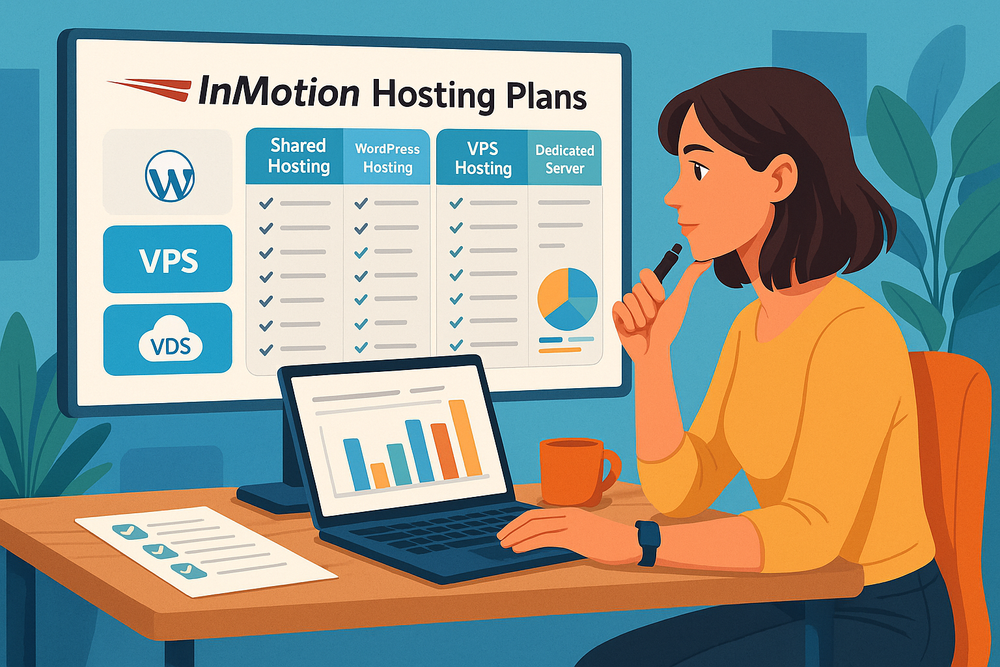
InMotion’s shared hosting page currently shows four main shared tiers: Core, Launch, Power, and Pro. The entry plan starts around $3.19 per month on promo pricing, while Launch is around $4.99, Power is around $4.99, and Pro is around $10.99 depending on term length and promotion.
The plans also advertise free SSL, malware and DDoS protection, a free domain on select terms, free migration, cPanel email, and a 90-day money-back guarantee.
That sounds generous, and in fairness, some of it is genuinely helpful for a small business. The free SSL is table stakes now, but still essential. The migration help matters if you are moving from another host.
The free domain credit can cut first-year setup cost, though it only applies on certain billing terms and only for the first year.
The more important detail is how the tiers are segmented. Core is built for one website and roughly 20,000 monthly visitors. Launch moves to two websites and around 50,000 monthly visitors. Power jumps to 10 websites and 200GB NVMe storage.
Pro goes further with 40 websites, 300GB NVMe storage, 2 vCPU, 4GB RAM, included dedicated IP, advanced caching, and stronger support options.
That means InMotion is not just selling one vague “unlimited” plan with hidden compromises. It is telling you, more directly than many hosts do, which plan is intended for which growth stage.
Why Those Features Matter In Real Life
A small business owner usually does not care whether a hosting plan says “NVMe” unless someone explains why it matters. NVMe is a faster type of storage than traditional SSD in many hosting setups, which can help pages, database calls, and backend tasks feel snappier.
InMotion promotes NVMe storage across its hosting offers and pairs it with its UltraStack performance branding. On higher shared plans, it also adds advanced caching and stronger performance tiers.
Now, I would not take any “up to 20x faster” style marketing claim as a promise for your exact website. Those numbers depend on the plan, the stack, your plugins, your theme, your images, and your traffic patterns.
But the bigger point is still valid: better storage, caching, and a more optimized stack can make a noticeable difference for a real business site.
If you run WordPress, that difference can show up in the places you actually feel every day:
- A faster dashboard
- Quicker page edits
- Better response during traffic spikes
- Less strain when you add forms, booking tools, or heavier plugins
In my experience, small businesses often underestimate how much hosting quality affects the admin side of the site, not just the front-end speed. When the backend is sluggish, publishing content, updating plugins, or processing orders starts to feel annoying. That is when “cheap hosting” becomes expensive in time.
The Biggest Reasons Small Businesses Choose InMotion
This is the part where InMotion starts to make a stronger case. It has a few advantages that can be genuinely useful if your site supports real business activity.
Support And Business-Friendly Tools
One of InMotion’s strongest selling points is support. The company prominently markets 24/7 human support across its hosting products, and its shared plan specs show that support levels improve as you move up tiers. Lower plans emphasize chat and tickets, while higher tiers include phone, chat, and ticket support.
That support structure matters more than most review roundups admit. A bakery owner, consultant, realtor, or local clinic usually does not want to troubleshoot DNS, email routing, or broken SSL configurations at midnight. They want somebody to help.
There are also outside signals that support is one of the better parts of the InMotion experience. Its Trustpilot page includes many positive recent customer comments around responsive help and migration support, and BBB shows the company as accredited with an A+ rating, though the BBB profile also lists complaints, which is normal context worth considering.
I would describe this as a practical advantage, not a flashy one. Fast support will not impress you during checkout, but it can save real money when your contact form stops working on a weekend or your store throws a plugin conflict after an update.
For a small business without in-house tech help, that is a legitimate reason to pay a little more.
Good Room To Grow Without Immediate Migration Pressure
Another real strength is growth flexibility. InMotion’s WordPress hosting page explicitly highlights scaling from entry-level to enterprise without forced migrations, while the shared plans themselves move from single-site starter tiers to plans that support multiple websites, advanced caching, and more server resources.
That matters because many small businesses do not stay “small website only” for long. A simple brochure site can turn into:
- A lead-generation machine with local SEO pages
- A WooCommerce store
- A booking site
- A multi-site setup for different brands
- A blog with growing organic traffic
Imagine you own a landscaping company. In year one, you only need a homepage, service pages, and a contact form. In year two, you add quote funnels, city pages, before-and-after galleries, and a knowledge base to attract search traffic. In year three, maybe you add a second brand for commercial services.
A host is worth more when it gives you a runway. InMotion’s plan ladder is one of the reasons I would call it a reasonable long-term option for businesses that expect steady growth.
Traditional Hosting Control Still Has Value
I know “traditional hosting control” does not sound exciting, but it is one of the biggest reasons some businesses stay with providers like InMotion. Shared plans include cPanel, domain-based email, migration support, one-click app installs, and common developer-friendly options like Git, SSH, and support for modern frameworks on relevant plans.
That means you are not stuck inside a super-limited proprietary dashboard. You have flexibility.
For a freelancer or agency helping a small business, that flexibility is often a huge plus. You can create staging habits, manage files directly, configure email, point domains, set redirects, and access the practical tools you actually need.
The business owner gets enough control to feel ownership, while the technical person still has room to work efficiently.
I suggest paying attention to this if you already know you want branded email, multiple mailboxes, and easier handoff between a business owner and a web designer. A more locked-down host can feel easier on day one but more limiting on day one hundred.
Where InMotion Hosting Can Disappoint You
This is the part many review articles rush past. InMotion is not automatically “worth it” just because it has a long feature list.
Intro Pricing Versus Renewal Pricing
The biggest practical issue for many small businesses is not capability. It is billing expectations.
InMotion’s shared plans are promoted at low introductory prices, but renewal rates are higher. For example, the Core plan is listed around $3.19 per month on promo pricing and renews at $10.99 per month.
Launch is around $4.99 and renews at $13.99. Power sits in a similar promo range and Pro renews higher still. The free domain also comes with terms, and the first-year free domain is not the same thing as “free forever.”
This is not unusual in hosting. It is almost industry standard. But it still catches small businesses off guard.
I believe this is one of the main reasons people later say a host was “not worth it.” The host may be fine. The mismatch was financial expectation. If you buy based only on the promo price, you are not evaluating the real cost of ownership.
Here is a simple way to think about it: if paying the renewal rate would make you resent the purchase, then the host is probably not your best fit from the beginning.
Lower Tiers Are Useful, But Not Magical
The next drawback is that lower shared plans are still lower shared plans. They are good for many small business websites, but they are not a substitute for stronger infrastructure if your site becomes resource-heavy.
For example, on the shared plan specs, advanced caching and stronger support appear on higher tiers, while some lower plans are more basic and use chat/ticket support rather than full support channels.
The Core and Launch plans may be fine for brochure sites, but they are not where I would want to stay forever if I were running a busy WooCommerce store or a content-heavy site with lots of plugins.
This is where expectations matter again.
A lot of businesses want enterprise stability on starter pricing. That usually does not exist. If your site becomes central to revenue, your hosting should reflect that.
So yes, InMotion can be worth it, but only if you choose the right tier for your actual workload. Picking too small a plan and then blaming the host is a common mistake.
Reviews Are Positive Overall, But Not Perfect
The external reputation picture is mostly solid, but not spotless. Trustpilot shows many recent positive experiences tied to support, migrations, and responsiveness. At the same time, BBB’s complaint profile shows 18 complaints in the last three years and six closed in the last 12 months.
That does not automatically make InMotion bad. Any large host will have complaints. But I think it is fair to read this as evidence that your experience can depend on issue type, plan level, and expectations.
In plain language: support may be a strength, but that does not mean every billing, uptime, or account issue will feel smooth.
For a small business owner, the right takeaway is balance. Do not let a few bad reviews scare you away from a suitable platform. But also do not assume every “award-winning support” claim guarantees perfection. Hosting is one of those categories where the average experience can be good while edge-case frustration still exists.
How To Decide If InMotion Is Worth It For Your Business
This is the section I wish more hosting articles included, because the right answer depends on the kind of website you actually run.
Start With Your Business Website Type
Ask yourself which of these sounds closest to your situation:
| Website Type | What You Usually Need | Is InMotion A Good Fit? |
|---|---|---|
| Local service site | Fast pages, contact forms, email, reliability | Yes, often a strong fit |
| Consultant or freelancer site | Low maintenance, branded email, simple growth path | Yes |
| Small content site or blog | Speed, WordPress support, low entry cost | Usually yes |
| WooCommerce starter store | Better performance, room to grow, support | Yes, but choose plan carefully |
| High-traffic store | More resources, caching, better server headroom | Maybe, but likely move above basic shared |
| One-page brochure site with tiny budget | Lowest possible cost | Only if renewal pricing still feels okay |
The key point is this: the more your site affects revenue, the less you should optimize only for intro price.
I recommend thinking in terms of cost of downtime, not just monthly hosting fee. If one missed lead is worth $200, then paying a few extra dollars per month for a host that feels more stable and supported can be completely rational.
That is especially true for local businesses where the website’s real job is generating calls and quote requests.
Look At The Full Cost, Not Just The Sticker Price
Here is how I would personally evaluate the purchase.
Step 1: Add up the first-year cost with domain, renewals, add-ons you actually need, and any migration-related effort.
Step 2: Estimate the cost of one serious issue. That could be one day of broken forms, one lost order batch, or one botched email setup.
Step 3: Compare the host based on operational stress, not just monthly price.
A cheap host can still be expensive if:
- Your site goes down during a promotion
- Email setup becomes a mess
- Support cannot solve an urgent issue
- You need to migrate six months later
This is why InMotion can be worth it even when it is not the absolute cheapest option. For many small businesses, the value is not just “server space.” It is reduced friction.
That said, if your website is basically a digital business card and you rarely update it, then the extra business-oriented features may not deliver much real-world return.
When InMotion Hosting Is Usually Worth It
There are clear situations where I would say yes without much hesitation.
Best-Fit Small Business Scenarios
I would seriously consider InMotion if you fall into one of these buckets:
- You need a business website that feels more serious than a hobby project.
- You want domain-based email and standard hosting control tools.
- You expect your site to grow over the next 12 to 24 months.
- You may need help from support instead of solving everything yourself.
- You want one provider that can support a move from shared hosting to stronger plans later.
A great example is a small agency or consultant. Let’s say you run a marketing consultancy and need your main site, a few landing pages, one branded email account, and enough flexibility to add a second site later. InMotion fits nicely because it gives you room to grow without forcing you into enterprise pricing too early.
Another example is a local business investing in SEO. If you are building location pages, blog content, lead magnets, and form funnels, your website is becoming more than a brochure. At that point, stable hosting and clean upgrade paths matter a lot more.
For those businesses, InMotion often feels like a “safe middle” choice. Not ultra-budget. Not ultra-premium. Just practical.
Why The Middle-Market Position Can Be A Strength
I actually think InMotion’s middle-market identity is one of its biggest advantages.
Some hosts over-optimize for beginners and make it hard to do normal technical tasks later. Others are too developer-heavy and overwhelm business owners. InMotion sits in the middle with traditional hosting controls, modern storage, support, and multiple upgrade paths.
That balance matters.
When I look at small business hosting decisions, I see one pattern over and over: the best choice is rarely the most extreme one. The cheapest option creates headaches. The most premium option is overkill. The sweet spot is the one that handles today’s needs and tomorrow’s likely growth with minimal drama.
That is where InMotion makes the strongest case.
When InMotion Hosting Is Probably Not Worth It
Now let’s be honest about the no side.
Cases Where You Should Probably Skip It
I would lean away from InMotion if any of these sound like you:
- You only want the cheapest possible hosting and do not care about support depth.
- You hate renewal-price jumps and want ultra-simple billing expectations.
- You want an all-in-one site builder experience more than traditional hosting control.
- Your site is extremely lightweight and will probably never grow.
- You are comparing it against a host that better matches your exact workflow.
For example, if you are building a very simple site for a side project and you do not care about email hosting, support responsiveness, or future scalability, InMotion may be more host than you need.
The same is true if you strongly prefer an ultra-managed ecosystem where almost everything is simplified and hidden from you. Some people love cPanel. Others never want to see it.
Worth it is always contextual. If the product gives you features you will not use, the value drops quickly.
Red Flags That Mean Another Host May Fit Better
Here are the practical warning signs:
- You are shopping based only on promo price.
- You do not know whether you need shared, WordPress, or VPS hosting.
- You are running a store but trying to stay on the lowest tier forever.
- You want zero technical involvement from day one.
- You expect premium performance without upgrading as traffic grows.
If that sounds harsh, I do not mean it that way. I just think hosting decisions go wrong when expectations are unrealistic.
A small business owner who wants “cheap, blazing fast, fully managed, unlimited everything, and instant expert support” is chasing a bundle that usually does not exist in one low-cost plan. InMotion offers a lot, but it is still subject to the normal tradeoffs of hosting.
How To Get The Most Value From InMotion If You Choose It
A host is only “worth it” if you use it well. This section is where you turn a decent purchase into a smart one.
Pick The Right Plan From The Start
This is my biggest recommendation.
Do not choose based on fear of spending an extra few dollars. Choose based on the next year of business activity.
Here is a simple rule:
- Core: Best for a very small, single-site business presence.
- Launch: Better if you need a little more headroom or a second website.
- Power: Better for growing businesses, multiple sites, or heavier WordPress usage.
- Pro: Better if the website is becoming a more central revenue asset.
I suggest most serious small businesses skip the absolute smallest tier unless the site is truly basic. The reason is not just traffic. It is flexibility.
When you install plugins, add forms, publish more pages, and start getting real traffic, your needs grow faster than you expect. Starting on a more comfortable plan can save you a rushed upgrade later.
Think of hosting like office space. Getting the absolute smallest room is only smart if you are sure you will stay small.
Set Up The Site Like A Business Asset
Once your hosting is active, focus on basics that protect performance and lead quality.
- Use SSL immediately: InMotion includes free SSL on hosting plans, and that should be active from the start.
- Configure domain email carefully: If your customers email you, test deliverability early so leads do not disappear into spam folders.
- Keep your WordPress stack lean: A fast server cannot save a bloated theme and 27 unnecessary plugins.
- Compress images before upload: This is still one of the easiest speed wins for any small business site.
- Use caching where your plan supports it: Higher InMotion plans include advanced caching, which helps you get more out of the platform.
- Track forms and conversions: Hosting quality matters most when your site is tied to results. Make sure you can see those results.
In my experience, businesses often judge hosting before they have fixed obvious site inefficiencies. If the site is slow because of oversized images, broken plugins, and bad page builders, no host will feel amazing.
Common Mistakes Small Businesses Make With InMotion
This is where a lot of “hosting regret” starts.
Mistake 1: Buying On Promo Price Alone
The first mistake is simple: focusing on the intro price and ignoring the renewal cost.
That creates frustration later, especially if the business owner mentally locked in the lower number as the permanent price. Hosting companies are partly responsible for that confusion, but buyers still need to evaluate the real long-term cost.
InMotion’s renewal rates are visible on plan pages, and they should absolutely be part of the decision.
I recommend making a quick 24-month cost estimate before buying. It takes five minutes and immediately makes your decision smarter.
Mistake 2: Expecting Hosting To Fix A Poor Website
A better host can improve baseline performance, but it cannot rescue a badly built site by itself.
If your business website has:
- Heavy page-builder bloat
- Massive uncompressed images
- Weak plugin hygiene
- Bad code snippets
- No caching strategy
- Too many third-party scripts
then the host only solves part of the problem.
I have seen people move to a stronger host and feel underwhelmed because the real issue was site architecture, not infrastructure. Hosting matters. It just is not magic.
Mistake 3: Staying Too Small For Too Long
Another classic mistake is refusing to upgrade when the website’s role has clearly changed.
A site that used to get a handful of monthly inquiries may now be running paid traffic, SEO landing pages, appointment booking, and content marketing. If that happens, your hosting should evolve too.
The nice part about InMotion is that it gives you multiple growth tiers and stronger product categories beyond entry-level hosting. The wrong move is not using that path when your business is ready.
Final Verdict: Is InMotion Hosting Worth It For Small Business Websites?
Yes, InMotion Hosting is worth it for many small business websites, but mainly for businesses that care about reliability, support, traditional hosting control, and room to grow more than they care about getting the absolute cheapest plan.
I would call it a good fit for local businesses, consultants, agencies, service providers, and growing WordPress sites that need a practical middle-ground host.
Its strongest advantages are business-friendly features, cPanel-based control, NVMe-backed performance positioning, migration help, free SSL, and a support-forward brand identity.
Current shared hosting plans also give a reasonable growth ladder from basic single-site use to much more capable multi-site setups.
Where it becomes less compelling is when you are extremely price-sensitive, only care about the lowest first-year cost, or want a completely simplified all-in-one builder experience instead of more traditional hosting.
My honest take is this: InMotion is usually worth it when your website has a real job to do.
If your website helps generate leads, sales, bookings, or client trust, then paying for a host that gives you support, solid core features, and a clean path to scale can be a smart business decision. If your site is tiny, static, and unlikely to grow, then you may not need what InMotion is best at.
So the most accurate answer is not just yes or no.
It is this: InMotion Hosting is worth it for small business websites when you value stability, support, and growth more than bargain-basement pricing.
FAQ
What is InMotion Hosting and is it good for small businesses?
InMotion Hosting is a web hosting provider focused on performance, support, and scalability. It is a good choice for small businesses that need reliable uptime, domain email, and room to grow without switching providers as their website traffic and complexity increase over time.
Is InMotion Hosting worth it for small business websites?
InMotion Hosting is worth it for small business websites if you value strong support, stable performance, and flexible upgrade options. It may not be ideal if you only want the cheapest hosting, but it offers better long-term value for growing business sites.
Does InMotion Hosting offer good performance for WordPress sites?
InMotion Hosting provides solid performance for WordPress sites through NVMe storage and optimized server configurations. This helps improve loading speed and backend responsiveness, which is especially important for small businesses using plugins, forms, or content-heavy pages.
What are the main drawbacks of InMotion Hosting?
The main drawbacks include higher renewal pricing after the initial discount and limited performance on lower-tier plans. Some users may also find it less beginner-friendly compared to simplified website builders, especially if they are unfamiliar with traditional hosting tools like cPanel.
Who should not use InMotion Hosting?
InMotion Hosting may not be the best option for users who want the lowest possible price or a fully simplified, all-in-one website builder experience. It is better suited for small businesses that need flexibility, support, and the ability to scale over time.

I’m Juxhin, the voice behind The Justifiable.
I’ve spent 6+ years building blogs, managing affiliate campaigns, and testing the messy world of online business. Here, I cut the fluff and share the strategies that actually move the needle — so you can build income that’s sustainable, not speculative.
Related posts:
 HostGator Reviews: Why Some Users Are Disappointed
 Comparing All InMotion Hosting Plans (With Features)
 HostGator Hosting Review: Speed, Support, And Real Costs
 WPEngine Cost: Why It’s More Expensive Than Other Hosts
 WP Engine Growth Plan Review for Business Scaling
 WPengine Plan Comparison: Which Option Fits Your Site Best?