
Table of Contents
Some links on The Justifiable are affiliate links, meaning we may earn a small commission at no extra cost to you. Read full disclaimer.
Innovative marketing solutions are redefining how brands stand out in a crowded market. With consumer behavior shifting faster than ever, traditional strategies simply don’t cut it anymore.
The real question is—what cutting-edge approaches are actually disrupting the market and driving measurable results?
In this guide, we’ll explore ten proven marketing innovations that are changing the game for modern businesses and reshaping how audiences connect with brands.
1. Hyper-Personalized AI Marketing Campaigns
Hyper-personalization is where marketing meets machine learning. It’s all about using real-time data and AI to tailor messages, products, and experiences for every individual—without guesswork.
Let’s break down how this works in practice and what tools make it seamless.
How Predictive AI Enhances Customer Targeting
Predictive AI doesn’t just tell you what happened—it forecasts what’s likely to happen next.
Using algorithms that analyze past behavior, AI can predict when a customer might churn, what products they’ll want, or which message will make them click.
Imagine an ecommerce brand like ASOS: its AI recommends products based on browsing habits, purchase history, and even current weather patterns. This isn’t guesswork; it’s statistical modeling powered by predictive analytics.
Here’s how it helps marketers:
- Segmentation on autopilot: AI tools like Segment or Optimove automatically create micro-segments of audiences based on intent and likelihood to convert.
- Smarter campaign triggers: Predictive engines analyze behavioral data and trigger personalized emails or ads at just the right time.
- Higher ROI: By targeting only those most likely to engage, ad spend becomes more efficient, and conversions climb.
I suggest starting small: train your AI model on email open rates or past purchases, then scale toward predicting lifetime value or churn probability.
Leveraging Dynamic Content for Real-Time Engagement
Dynamic content changes based on who’s viewing it. Instead of showing every visitor the same message, you adapt content in real time—whether it’s a homepage banner, an ad, or an email.
For instance, a SaaS company might personalize its homepage with different CTAs depending on whether the visitor is a first-time reader or a returning trial user.
Key ways dynamic content drives engagement:
- Email personalization: Platforms like ActiveCampaign let you display product recommendations that update based on recent behavior.
- Website customization: Using tools like Dynamic Yield or Adobe Target, you can adjust page elements, offers, and testimonials instantly.
- Ad retargeting: Platforms like Google Ads Smart Bidding refine creative dynamically based on user behavior across the web.
I believe dynamic content transforms “one-size-fits-all” marketing into “just-for-you” moments—and those are the ones customers remember.
Tools That Automate Hyper-Personalization at Scale
Scaling hyper-personalization is all about automation. You can’t manually personalize for thousands of customers—but AI tools can.
Top-performing tools include:
- HubSpot Smart Content: Automatically changes email and site content based on customer lifecycle stage.
- Persado: Uses natural language generation (NLG) to test and deploy emotional language proven to resonate with your audience.
- Blueshift: Combines behavioral data and AI predictions to automate multi-channel personalization at scale.
Quick workflow example:
- Connect customer data from your CRM.
- Use AI to predict what each segment needs next.
- Automate delivery of personalized emails, ads, or messages.
When done right, this feels less like marketing—and more like a one-on-one conversation with your customer.
2. Voice Search Optimization for Brand Visibility
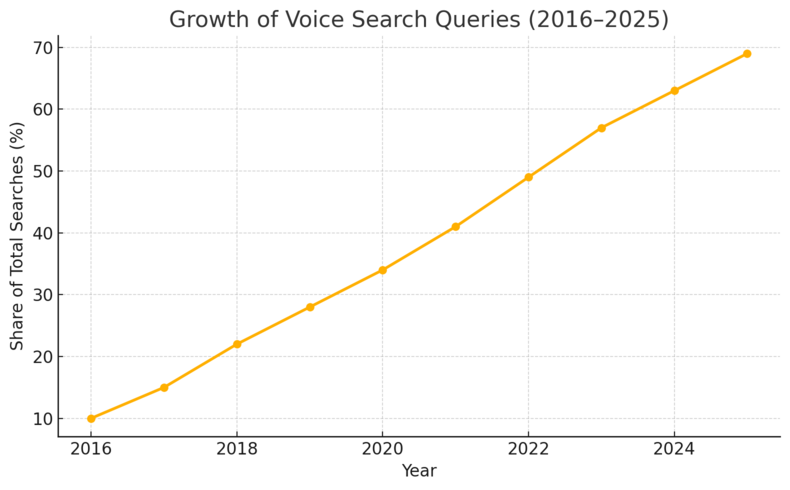
Voice search isn’t the future—it’s already here.
People now speak to devices instead of typing, meaning your content must adapt to natural, conversational queries.
Adapting SEO Strategies for Voice-Driven Queries
Traditional SEO focuses on short keywords like “best running shoes.” Voice search users, however, ask full questions like, “What are the best running shoes for flat feet?”
To optimize:
- Target long-tail keywords: Focus on how people speak, not just how they type.
- Use FAQ schema markup: Google reads structured Q&A data directly from your site for voice answers.
- Write conversational headlines: Phrases like “How can I…” or “What’s the best way to…” mirror spoken language.
In my experience, reviewing Google Search Console’s “Queries” tab helps reveal how users naturally phrase their questions—your roadmap for voice SEO.
Creating Conversational Content That Converts
Voice-friendly content must sound natural when read aloud. That means shorter sentences, simple vocabulary, and direct answers.
Here’s what I recommend:
- Lead with clarity: Answer questions in the first 30 words of a paragraph.
- Use structured answers: Create short, direct snippets for devices like Alexa or Siri.
- Keep tone human: Write as if you’re explaining something over coffee, not lecturing.
Example: Instead of “Our product facilitates remote communication solutions,” say “We help teams stay connected wherever they work.”
This small tonal shift increases your chances of being featured in voice search results and boosts user engagement across all formats.
Platforms and Tools to Optimize for Voice Search
Several tools make it easier to audit and optimize your site for voice search:
- AnswerThePublic: Shows question-based keywords that people ask out loud.
- Semrush Voice Search Report: Analyzes your site’s readiness for conversational SEO.
- Google’s Natural Language API: Evaluates how easily AI can interpret your content.
You can also use Google Assistant Emulator to test how your content performs when queried vocally. It’s a small step that gives big insights into voice readiness.
3. Interactive Content That Boosts Engagement
Interactive content breaks the “scroll and forget” cycle. It invites people to participate—and that participation builds stronger brand recall and loyalty.
Gamification Techniques That Capture Attention
Gamification turns routine interactions into playful experiences. It works because people love feedback and progress.
You can use:
- Spin-to-win popups for discounts (tools like OptinMonster make this simple).
- Progress bars in forms to increase completion rates.
- Points or badges for engagement—like Starbucks Rewards, which gamifies purchases brilliantly.
I’ve found that gamification drives emotional connection. When users “win,” they feel good—and associate that positive emotion with your brand.
Building Quizzes, Polls, and Interactive Videos That Convert
Quizzes and polls do more than entertain—they collect valuable data about preferences and intent.
Tools like Typeform, Outgrow, or Interact make it easy to design branded quizzes. You can ask questions like, “Which content strategy suits your business?” and recommend personalized solutions at the end.
Interactive videos are another goldmine. Using Rapt Media, you can embed clickable choices inside videos, turning passive viewers into active participants.
The key is to provide immediate value—show results instantly or reward users with relevant offers. That’s what turns curiosity into conversion.
Measuring Engagement Through Interactive Analytics
You can’t improve what you don’t measure. Interactive analytics help you see which parts of your content get clicks, how long people engage, and where they drop off.
Metrics that matter:
- Engagement rate: Percentage of users who interact vs. those who just view.
- Completion rate: How many people finish a quiz or interactive video.
- Conversion rate: Actions taken after interaction (e.g., signups, purchases).
Platforms like Google Analytics 4 and Hotjar visualize these behaviors beautifully. I suggest pairing insights with A/B testing—adjust one element at a time and see what really drives engagement.
Pro Tip: Combine AI-driven personalization with interactive content. For example, use AI to suggest quiz outcomes or tailor follow-up emails based on user responses. That synergy multiplies both engagement and conversion rates—no gimmicks, just smart strategy.
4. Augmented Reality (AR) Marketing Experiences
Augmented Reality (AR) marketing is turning ordinary campaigns into immersive, hands-on experiences that pull customers into a brand’s world.
Instead of telling people why a product is great, AR lets them see and try it—right through their phones.
Using AR to Create Immersive Product Demonstrations
AR bridges the gap between imagination and experience. It allows people to interact with digital overlays of products in real environments—whether that’s testing how a sofa looks in their living room or trying on sunglasses virtually.
Here’s how brands are doing it:
- Virtual try-ons: Sephora’s Virtual Artist app lets users “try on” makeup using their phone camera. It boosts confidence before buying—cutting return rates significantly.
- Product visualization: IKEA’s Place app uses ARKit (Apple’s AR framework) to let shoppers see how furniture fits their space before purchasing.
- In-store immersion: Nike uses AR in stores to help customers scan shoes and unlock detailed product stories or limited-edition experiences.
I suggest starting with smaller AR experiments first—maybe a single product demo or Instagram filter—and then scaling based on engagement metrics. You’ll learn what feels natural for your audience.
Real-World Examples of AR Campaigns That Went Viral
AR marketing thrives when it’s interactive and shareable. A few campaigns prove how viral it can get when executed creatively.
- Pepsi’s Bus Shelter Campaign: Pepsi turned a London bus stop into an AR experience showing UFOs and tigers walking down the street. It created over 8 million YouTube views and massive organic reach.
- Burger King’s “Burn That Ad”: Users could virtually burn competitor ads via AR and instantly receive a free Whopper coupon—blending humor and technology brilliantly.
- Gucci’s Virtual Sneakers: Gucci launched digital-only sneakers viewable in AR. It wasn’t about physical sales—it was about digital prestige and novelty.
These examples work because they fuse entertainment, innovation, and brand storytelling. I believe the key isn’t just tech—it’s emotional connection. AR should make people feel something while they interact.
Tools for Building Branded AR Experiences
You don’t need a full development team to create AR campaigns anymore. Plenty of platforms make it accessible even for small marketing teams.
- Meta Spark Studio (formerly Spark AR): Great for building interactive Instagram and Facebook filters. Its UI is visual—no heavy coding required.
- 8th Wall: Lets brands create browser-based AR experiences that users can access through a simple link, no app download needed.
- ZapWorks: An easy-to-use drag-and-drop AR tool ideal for small to medium-sized brands. You can integrate animations, 3D models, and tracking features.
- Adobe Aero: Integrates with Adobe’s ecosystem for creating high-quality, visually consistent AR assets.
A smart workflow: Design your AR concept, prototype it with a lightweight tool like Spark Studio, test user engagement, then scale to a more advanced platform such as 8th Wall. This iterative approach keeps development lean but impactful.
5. Influencer Co-Creation Campaigns
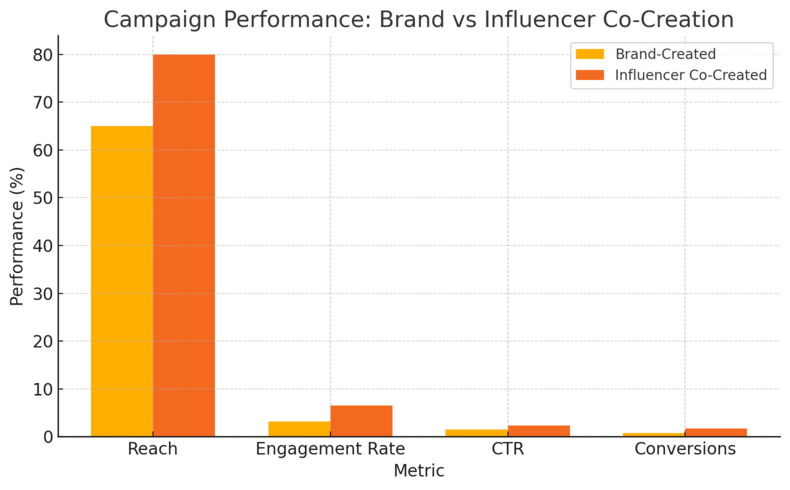
Influencer marketing has evolved from sponsored posts to full creative partnerships.
Co-creation means influencers aren’t just promoting your product—they’re shaping how it’s presented, giving campaigns authenticity that can’t be faked.
How to Partner with Influencers Beyond Sponsored Posts
Instead of paying influencers for one-off shoutouts, brands are now collaborating with them to co-design products, launch collections, or produce creative content together.
For example, Gymshark invites influencers to help design apparel lines, making each drop feel personal and community-driven. This gives influencers ownership—and audiences, trust.
To find the right partners:
- Look for influencers who use your product naturally.
- Focus on alignment over follower count—micro-influencers often convert better.
- Use influencer platforms like Grin or AspireIQ to manage outreach and collaboration.
I suggest running a co-brainstorm session early. Ask influencers what kind of campaign they’d create if given full creative control—you’ll be surprised how strong their ideas are when they feel valued.
Turning Influencers into Brand Storytellers
The magic happens when influencers stop promoting and start storytelling. You want them to bring your product into their world naturally, not stage it.
Think of GoPro’s Creator Program: instead of polished ads, it highlights real user footage from athletes and adventurers. Every piece of content doubles as an authentic brand story.
Tips for success:
- Encourage personal storytelling—why the product matters to them.
- Support creative freedom—avoid rigid brand scripts.
- Co-produce behind-the-scenes or “day in the life” style content to humanize your brand.
When audiences see genuine enthusiasm instead of scripted endorsement, engagement rates soar—and your brand credibility with it.
Measuring the ROI of Co-Created Campaigns
The tricky part of influencer co-creation is measurement. ROI isn’t just about likes—it’s about conversions, reach quality, and long-term brand lift.
Track metrics like:
- Engagement rate: Likes, comments, and shares on co-created content.
- Affiliate conversions: Use trackable links or codes via platforms like Shopify Collabs.
- Sentiment analysis: Tools like Brandwatch can gauge tone and emotion around your campaign.
I recommend running A/B tests comparing influencer-led creative versus brand-created content. In most cases, influencer-created content outperforms because it resonates more authentically.
6. Community-Driven Marketing Strategies
Community-driven marketing shifts focus from one-way messaging to two-way relationships.
Instead of talking to your audience, you build a space where they talk with you—and with each other.
Creating Micro-Communities That Build Brand Loyalty
Micro-communities are small, passionate groups formed around a shared interest or identity tied to your brand. They drive loyalty far better than large, generic audiences.
Brands like Notion excel here. Notion’s ambassadors run local meetups to exchange productivity tips.
Practical ways to start:
- Launch a private Discord or Slack channel for your most engaged customers.
- Host virtual events or challenges tied to your brand mission.
- Offer early access or beta features as community rewards.
The goal is simple: make your customers feel seen, heard, and valued. When they feel part of something bigger, loyalty happens naturally.
Leveraging UGC (User-Generated Content) for Authenticity
User-generated content builds trust faster than any ad. People trust real experiences from peers over brand promises.
Encourage UGC by:
- Running hashtag challenges (like GoPro’s #GoProAwards).
- Reposting customer photos on your feed and tagging them.
- Using review-based features like Yotpo for ecommerce credibility.
UGC also reduces content production costs—you’re letting your audience do part of the storytelling for you. I’ve seen brands double engagement simply by resharing authentic user photos rather than polished campaigns.
Tools to Manage and Grow Online Brand Communities
Managing an online community takes structure and consistent engagement. The right tools make that scalable.
- Circle: A clean, branded community platform perfect for creators and coaches.
- Discord: Ideal for interest-based communities that thrive on chat and quick updates.
- Tribe (now Bettermode): A community platform that integrates directly with your website, blending discussion threads with gamification.
- Facebook Groups: Still powerful for B2C brands looking for organic reach and discussion.
To grow your community, I suggest assigning a community manager (even part-time) to foster discussions and highlight member contributions. Communities thrive on human energy—and when nurtured well, they become your most powerful organic marketing engine.
Pro Tip: Combine all three—AR marketing, influencer co-creation, and community strategy—for exponential impact. Imagine launching an AR-powered product demo co-designed with influencers and shared in your brand’s private community. That’s not just marketing—it’s an ecosystem of connection, creativity, and loyalty.
7. Data-Driven Storytelling in Marketing
Data-driven storytelling is where creativity meets clarity.
Instead of letting numbers sit in a spreadsheet, it turns them into emotionally engaging stories that persuade and inspire action.
This approach helps audiences feel the truth behind the data—not just read it.
Turning Analytics into Emotional Narratives
Data by itself doesn’t move people; stories do. When marketers weave insights into narratives, they make statistics relatable.
For example, saying “70% of customers prefer sustainable packaging” is informative, but showing Maria, a conscious shopper who switched brands because of waste-free packaging, makes that number human.
Here’s how to craft emotional data stories:
- Start with a question: Identify what your data answers (e.g., “Why are users abandoning the checkout page?”).
- Find the human angle: Turn behavior into relatable motivations.
- Visualize change: Compare before-and-after metrics to show transformation.
I believe the key is empathy—data should highlight real people’s needs, frustrations, and triumphs. That’s what connects numbers to meaning.
Using Visualization Tools to Present Data Creatively
Visualization turns data into something people can see and feel instantly. The goal is clarity, not complexity.
Tools I recommend:
- Google Looker Studio: Ideal for interactive dashboards that update in real time.
- Tableau: Great for storytelling visuals with dynamic filters and animations.
- Infogram: Perfect for marketers who want quick, shareable infographics.
Imagine a campaign dashboard showing user engagement climbing as each ad variation runs—seeing that line rise gives instant insight, far stronger than reading “+23% CTR.”
I suggest using color thoughtfully: blue tones for calm or trust, red for urgency, green for growth. Good visuals make numbers not just readable but memorable.
Balancing Emotion and Logic in Data-Based Campaigns
Great marketing blends analytical insight with emotional resonance. Too much logic feels cold; too much emotion lacks credibility.
A simple framework I often use:
- Lead with data (logic): Present the fact or insight clearly.
- Follow with emotion: Connect that fact to a human outcome.
- End with action: Show how the insight drives change.
Example: “Our customer churn dropped 30% after personalizing onboarding emails.” The logic is the percentage drop; the emotion is retaining more loyal customers who feel understood. That balance builds both trust and relatability.
8. Sustainability-Focused Marketing Approaches
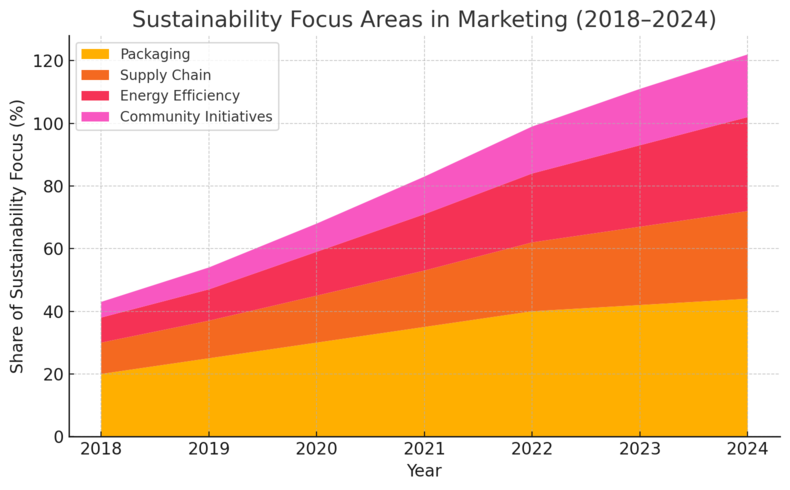
Sustainability marketing isn’t just a trend—it’s a long-term shift.
Consumers increasingly buy from brands that align with their values, making authenticity and transparency essential.
How Ethical Branding Attracts Conscious Consumers
Ethical branding builds emotional loyalty. People want to know their purchase supports something meaningful.
According to Nielsen, 73% of global consumers say they’d change habits to reduce environmental impact.
Examples of ethical branding done right:
- Patagonia: Their “Don’t Buy This Jacket” campaign encouraged thoughtful consumption and built massive trust.
- TOMS: Their one-for-one model showed purpose and product could coexist.
I suggest being specific about what you stand for—vague claims like “eco-friendly” no longer convince. Back every promise with visible proof (certifications, traceability reports, or verified materials).
Communicating Transparency Without Greenwashing
Greenwashing—making false sustainability claims—is a brand killer. Transparency, on the other hand, earns long-term credibility.
How to stay authentic:
- Show data: Publish sustainability reports, even if progress is ongoing.
- Use certifications: Labels like B Corp or Fair Trade add external validation.
- Admit imperfection: Consumers respect brands that say, “We’re improving.”
I believe honesty outperforms perfection. When brands own their journey instead of overpromising, customers feel part of the mission.
Brands Successfully Using Sustainability as a Differentiator
Many modern companies are proving that sustainability and profitability go hand in hand.
- Allbirds: Uses natural materials like merino wool and lists carbon footprints on every product.
- Tesla: Positioned sustainability as innovation, not sacrifice.
- Beyond Meat: Made plant-based eating aspirational by focusing on taste and experience, not just ethics.
Each brand redefined its market category through sustainability—not as a side note, but as its core identity.
9. Short-Form Video Dominance in Digital Campaigns
Short-form videos dominate digital storytelling today. They’re fast, emotional, and addictive—perfect for capturing attention in seconds.
Crafting Compelling Stories in 15 Seconds or Less
Fifteen seconds might not sound like much, but with the right framing, you can tell a complete story.
Here’s my favorite 3-step structure:
- Hook fast: The first 2 seconds matter most—use surprise, humor, or curiosity.
- Deliver value: Show a quick transformation, reveal, or insight.
- End with emotion or CTA: Leave a feeling, not just information.
Example: A skincare brand could show “morning skin glow” transformations using jump cuts, quick stats, and a short voiceover.
I suggest scripting for visuals, not narration. Most users watch without sound, so rely on captions, motion, and expression.
Platform-Specific Strategies for TikTok, Reels, and Shorts
Each platform has its rhythm and culture. You can’t post the same clip everywhere.
- TikTok: Prioritize trends, soundtracks, and authenticity. Raw beats polished here.
- Instagram Reels: Works best for aesthetic, story-driven content that fits your brand vibe.
- YouTube Shorts: Ideal for tutorials, snippets, or educational micro-content.
For example, if you’re teaching marketing tips: make an in-depth YouTube video, clip key points for Shorts, and remix them with trending audio for TikTok. That multiplies reach without doubling work.
Tools for Editing and Analyzing Short-Form Content Performance
Good editing tools streamline production, while analytics reveal what resonates.
Top tools I use:
- CapCut: Free, easy editing with templates for trends.
- InShot: Great for quick resizing and layering text overlays.
- Later Analytics: Tracks engagement across platforms with clear visual reports.
I suggest tracking watch time, not just views—it’s a better indicator of true engagement. If people watch till the end, your story worked.
10. AI-Powered Customer Experience (CX) Automation
AI-powered CX automation transforms customer journeys from reactive to proactive. Instead of waiting for users to act, brands anticipate their needs in real time.
Using Chatbots and AI to Personalize Customer Journeys
Modern chatbots are far beyond simple Q&A bots. They analyze intent, context, and purchase history to personalize every interaction.
Examples include:
- Drift: Automates B2B sales conversations by routing leads to the right reps.
- Intercom: Offers personalized responses using behavior-based triggers.
- Zendesk AI: Analyzes tone and urgency to prioritize customer tickets.
I suggest using AI for the first 70% of support and keeping humans for complex cases. This hybrid model keeps efficiency without losing empathy.
Integrating Predictive Analytics into CX Strategy
Predictive analytics help brands see around corners. By analyzing patterns, you can anticipate customer actions before they happen.
For instance, Netflix uses predictive modeling to recommend shows based on user behavior. Similarly, ecommerce brands use tools like Emarsys or Salesforce Einstein to predict churn or identify upsell opportunities.
Here’s a simple CX workflow:
- Collect data from CRM, email, and support channels.
- Train AI models to detect churn risks or intent patterns.
- Trigger automated messages that re-engage users before they drop off.
Predictive CX isn’t about replacing intuition—it’s about amplifying it with data precision.
How CX Automation Increases Retention and Reduces Costs
Automation saves both time and money while improving user satisfaction. According to IBM, AI chatbots can reduce customer service costs by up to 30%.
Here’s why:
- Faster response times: Bots handle repetitive queries instantly.
- 24/7 availability: No waiting for business hours.
- Data consistency: Every customer gets accurate, up-to-date information.
I’ve seen businesses boost retention simply by using automated “We miss you” messages triggered after inactivity. It’s small touches like these—powered by data—that make customers feel remembered.
Pro Tip: Blend automation with human warmth. Use AI to handle speed and scale, but keep real people in key touchpoints. When customers feel both seen and understood, technology becomes invisible—and loyalty becomes effortless.

I’m Juxhin, the voice behind The Justifiable.
I’ve spent 6+ years building blogs, managing affiliate campaigns, and testing the messy world of online business. Here, I cut the fluff and share the strategies that actually move the needle — so you can build income that’s sustainable, not speculative.
Related posts:
 Advanced Marketing Solutions That Give You a Competitive Edge
 How to Promote a Business
 10 AI Marketing Solutions Every Marketer Should Try Now
 How To Choose SEO Marketing Solutions That Fit Your Business
 How Local Marketing Solutions Group Helps Businesses Grow
 7 Integrated Marketing Solutions That Unify Your Strategy