
Table of Contents
Some links on The Justifiable are affiliate links, meaning we may earn a small commission at no extra cost to you. Read full disclaimer.
I get asked is SaleHoo legit more often than you’d expect, especially by people who are just starting out with dropshipping or wholesale sourcing and don’t want to waste money on the wrong platform.
This article is for aspiring ecommerce sellers, dropshippers, and small business owners who are considering SaleHoo but want to know what actually happens after you sign up.
The real question I’m answering here is simple: what do real sellers discover once they start using SaleHoo, beyond the marketing claims and homepage promises?
What SaleHoo Is And How The Platform Actually Works
SaleHoo is often marketed as an all-in-one supplier solution, but in practice it’s closer to a curated directory plus a few supporting research tools.
Before deciding if SaleHoo is worth paying for, it helps to understand what the platform actually does day to day, not just what the homepage promises.
SaleHoo’s Supplier Directory Explained Step By Step
At its core, SaleHoo is a searchable database of suppliers, not a marketplace where you place orders directly. You’re paying for access to contact details and background information.
Here’s how most sellers actually use it in practice:
- You search by product keyword, category, or supplier location
- SaleHoo returns a list of suppliers that claim to carry those products
- You click into each listing to see company details, minimum order quantities, and contact info
- You reach out manually via email or phone to request pricing and terms
In my experience, this feels closer to old-school wholesale sourcing than modern dropshipping apps.
There’s no automation, no product import button, and no built-in checkout. That’s not inherently bad, but it’s very different from what beginners often expect.
If you’re comfortable negotiating with suppliers and tracking conversations yourself, the directory can save time. If you expect instant product listings or one-click imports, SaleHoo can feel underwhelming fast.
How SaleHoo Vetting Claims Compare To Reality
SaleHoo frequently emphasizes that suppliers are “verified,” which sounds reassuring. What that usually means is basic legitimacy checks, not deep operational audits.
From what I’ve seen and tested, vetting typically includes:
- Confirming the business is legally registered
- Checking for a functioning website and contact details
- Reviewing basic reputation signals, like complaints or scams
What it does not guarantee is product quality, fast shipping, or good communication. Several sellers assume “verified” equals “safe and profitable,” and that’s where disappointment creeps in.
Think of SaleHoo’s vetting as a filter against outright scams, not a quality seal. You still need to request samples, test fulfillment speed, and negotiate terms like you would with any independent supplier.
Differences Between Dropshipping And Wholesale Inside SaleHoo
SaleHoo supports both dropshipping and wholesale sourcing, but the experience isn’t equal for both.
For dropshippers:
- Many suppliers require approval before working with you
- Some still have minimum monthly volume expectations
- Shipping times vary widely and aren’t always disclosed upfront
For wholesale buyers:
- You’ll find more traditional distributors
- Bulk pricing is often available, but MOQs can be high
- Storage and fulfillment are entirely your responsibility
I’ve noticed SaleHoo tends to work better for sellers who want to build long-term supplier relationships, not quick product tests. If your strategy is rapid testing with low upfront risk, the platform can feel slow and manual.
SaleHoo’s Core Tools And Member-Only Features
Beyond the directory, SaleHoo includes a few extra tools that sound powerful but have limits.
Key member features include:
- Market research tool with estimated demand data
- Community forum with seller discussions
- Educational guides for sourcing and ecommerce basics
The research tool is helpful for spotting broad trends, but it’s not a replacement for dedicated product research software. Data is directional, not precise.
The forum can be surprisingly useful, especially for supplier warnings, but it requires time to dig through threads. Overall, these tools support the directory rather than transform it.
Is SaleHoo Legit For Finding Real Wholesale Suppliers
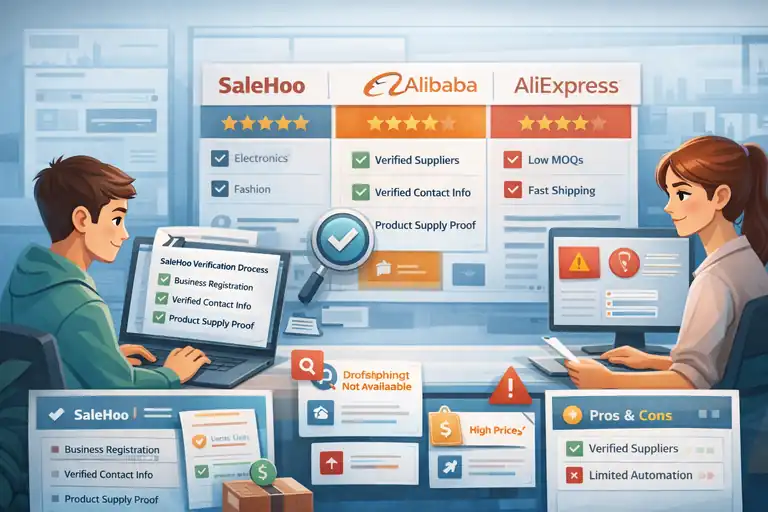
This is the big question people actually care about. Is SaleHoo legit when it comes to connecting you with real, usable wholesale suppliers, or does it just look good on paper?
How Verified Suppliers Are Approved On SaleHoo
SaleHoo does work with real businesses, not fake storefronts. Supplier approval generally follows a documentation-based process.
Suppliers usually must provide:
- Business registration or licensing
- Contact information that can be verified
- Proof they supply the listed products
That said, approval doesn’t measure how supplier-friendly they are. A supplier can be legitimate but still slow, expensive, or difficult to work with.
In practice, legitimacy means the supplier exists, not that they’re ideal for your business model. I suggest treating every new contact as unproven until you’ve tested them yourself.
Common Supplier Quality Issues Reported By Sellers
Across seller discussions and direct feedback, the same issues come up repeatedly.
Common complaints include:
- Slow response times or no reply at all
- Higher pricing than expected, even with “wholesale” labels
- Suppliers no longer offering dropshipping despite being listed
This doesn’t mean SaleHoo is a scam. It means the directory isn’t always perfectly up to date, and supplier priorities change over time.
If you go in expecting instant wins, frustration builds quickly. If you expect outreach, follow-ups, and rejection, the experience feels more realistic.
Comparing SaleHoo Suppliers To Alibaba And AliExpress
This comparison comes up constantly, and the difference is more about approach than quality.
SaleHoo suppliers are often:
- More focused on domestic or regional distribution
- Less flexible on tiny order volumes
- More traditional in communication style
Alibaba and AliExpress, by contrast, prioritize scale and speed. You can launch faster there, but you assume more risk.
I see SaleHoo as a middle ground. Less chaotic than Alibaba, but slower and more hands-on. Whether that’s good or bad depends entirely on how you want to run your business.
Red Flags Sellers Notice When Contacting Suppliers
Even with a vetted directory, red flags still appear. Paying attention early can save you weeks of wasted effort.
Watch out for:
- Suppliers refusing to provide samples
- Vague answers about shipping times or inventory
- Requests for payment methods that feel unusual or rushed
When this happens, it’s not a SaleHoo failure, it’s part of supplier sourcing. The platform reduces risk, but it doesn’t eliminate due diligence.
Expert tip: Treat SaleHoo like a starting point, not a shortcut. The sellers who get value are the ones who test, negotiate, and walk away quickly when something feels off.
Real Pricing, Membership Costs, And Hidden Limitations
Before deciding is SaleHoo legit for your business, pricing matters more than most people admit.
The cost isn’t outrageous, but what you’re really paying for — and what you’re not — deserves a clear, honest breakdown.
SaleHoo Membership Plans And What You Actually Get
SaleHoo runs on a paid membership model. You’re not paying per supplier or per lead. You’re paying for access.
Here’s what that access realistically includes:
- Entry to the supplier directory
- Use of the market research tool
- Community forum and educational content
- Email-based customer support
In simple terms, your money unlocks information, not execution. You still handle outreach, negotiations, product testing, and order management yourself.
From my experience, sellers who already understand supplier outreach tend to extract value faster. Beginners often assume the fee covers more automation than it does, which leads to early frustration.
A quick reality check: If you don’t plan to contact multiple suppliers consistently, the membership cost won’t justify itself.
What SaleHoo Does Not Include That Sellers Expect
This is where expectations quietly break.
SaleHoo does not include:
- Automated product imports into Shopify or WooCommerce
- Built-in order fulfillment or tracking
- Guaranteed pricing or profit margins
- Exclusive supplier access
I’ve seen sellers assume SaleHoo works like modern dropshipping apps. It doesn’t. There’s no “connect store and start selling” moment.
Think of SaleHoo as a research and sourcing assistant, not a fulfillment engine. If you expect it to run your store operations, you’ll feel stuck almost immediately.
Refund Policy And Cancellation Experience
SaleHoo offers a limited refund window, but it’s not open-ended. You typically need to request it early and meet specific conditions.
Based on seller feedback, here’s what matters most:
- Refunds are easier if you haven’t heavily used the platform
- Support responses are polite but procedural
- Cancellation stops renewal but doesn’t extend access
My honest take: Don’t treat the refund as a safety net. Treat the first few days as a trial where you aggressively test supplier relevance for your niche.
Cost Versus Value For New And Experienced Sellers
Value depends entirely on where you are in your ecommerce journey.
New sellers often struggle because they’re paying before they know how to evaluate suppliers. Experienced sellers usually benefit more because they already have systems in place. Here’s a simplified comparison:
New sellers:
- Higher learning curve
- Slower perceived ROI
- Risk of overestimating platform capabilities
Experienced sellers:
- Faster supplier filtering
- Better negotiation outcomes
- Clearer cost justification
If you already know what you’re looking for, SaleHoo can save time. If not, it can feel like paying for a map before learning how to drive.
SaleHoo For Dropshipping Versus Private Label Sellers
SaleHoo markets itself as flexible, but not all business models benefit equally. The gap between dropshipping and private label use cases is larger than most people expect.
How Dropshippers Typically Use SaleHoo In Practice
Dropshippers usually turn to SaleHoo hoping for reliable suppliers with fewer headaches than overseas platforms.
In real-world use, the process looks like this:
- Identify product categories, not individual viral products
- Contact multiple suppliers for dropshipping approval
- Manually upload products to your store
- Test suppliers one by one
This works best for niche stores, not trend chasing. If you’re running ads and testing dozens of products weekly, the manual nature becomes a bottleneck.
I’ve seen dropshippers succeed when they focus on fewer products and prioritize supplier relationships over speed.
Why Private Label Sellers Struggle With SaleHoo
Private label sellers often expect manufacturer-level support. That’s where SaleHoo falls short.
Most suppliers inside SaleHoo:
- Do not offer custom branding
- Do not support packaging design
- Require higher MOQs for customization
Private label requires tight control over manufacturing, branding, and logistics. SaleHoo suppliers are typically distributors, not factories.
If your goal is to build a branded product, you’ll likely outgrow SaleHoo quickly.
Product Research Limitations Inside The Platform
SaleHoo’s research tool offers demand estimates, not predictive insights.
What it does well:
- Spot broad product categories
- Avoid obviously saturated niches
What it struggles with:
- Identifying emerging trends
- Competitive pricing analysis
- Real-time demand shifts
I recommend using it as a validation layer, not a discovery engine. Pairing it with external research tools gives a clearer picture.
Profit Margin Expectations Based On Seller Feedback
This is the uncomfortable truth. Profit margins from SaleHoo suppliers are often thinner than beginners expect.
Why?
- Distributors already mark up products
- Shipping is rarely subsidized
- Volume discounts require scale
That doesn’t make it unusable. It just means profitability comes from efficiency, not hype.
Sellers who report consistent profits usually focus on repeat customers, bundles, or upsells rather than single-product wins.
Best practice: Use SaleHoo to reduce supplier risk, not to chase maximum margins. Stability often beats speed when you’re building something long-term.
Common Complaints And Frustrations Shared By Users
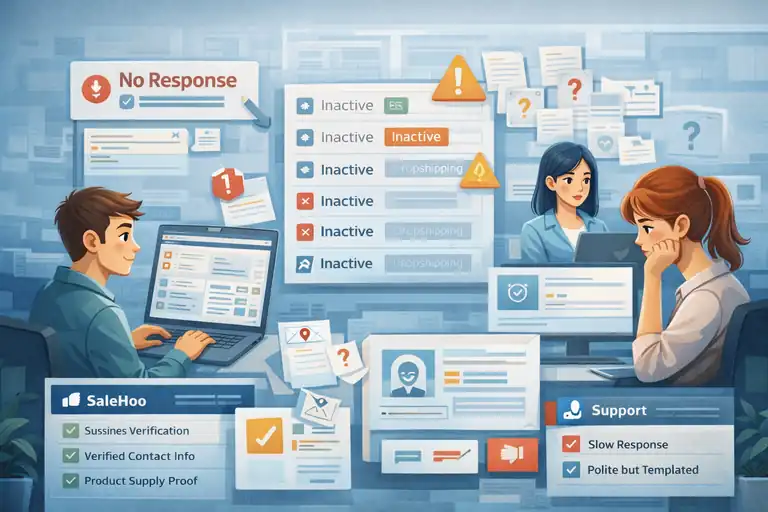
No platform is perfect, and SaleHoo is no exception. If you’re asking is SaleHoo legit, you also need to understand where real users feel friction after the honeymoon phase ends.
Most complaints aren’t about scams — they’re about expectations versus reality.
Supplier Response Rates And Communication Issues
One of the most common frustrations sellers mention is simply not hearing back.
Here’s what usually happens:
- You email multiple suppliers listed in SaleHoo
- A few respond within days
- Others never reply at all
This isn’t unique to SaleHoo, but it’s more noticeable because you’re paying for access. Many suppliers are traditional wholesalers who prioritize large, established buyers. If you’re a new seller with low volume, you may not be their priority.
A practical workaround I’ve seen work is personalization. Sellers who mention specific products, estimated order volume, and a clear business model tend to get more replies than those sending generic copy-paste emails.
Outdated Listings And Inactive Suppliers
Another recurring complaint is outdated supplier information.
This usually shows up as:
- Suppliers no longer offering dropshipping
- Businesses that have shifted product categories
- Contact details that lead nowhere
SaleHoo does update its directory, but supplier churn is constant in wholesale. That gap can make the platform feel less polished than expected.
My honest advice is to treat the directory like a lead list, not a guarantee. Expect some dead ends, and budget time accordingly.
Learning Curve For Beginners Using SaleHoo
Beginners often struggle, not because SaleHoo is complex, but because it assumes prior knowledge.
New users often ask:
- How do I evaluate a supplier quote?
- What’s a reasonable minimum order quantity?
- How do I negotiate terms without sounding unprofessional?
SaleHoo doesn’t hold your hand through these decisions. If this is your first exposure to wholesale sourcing, the learning curve can feel steep and lonely.
That doesn’t make it bad. It just means it rewards self-starters more than total beginners.
Support Quality And Response Time Concerns
Support quality is generally described as polite and helpful, but not fast.
Based on user feedback:
- Responses usually come via email
- Answers are clear but templated
- Complex issues take multiple back-and-forths
If you expect live chat or instant fixes, you’ll be disappointed. If you’re okay with slower, structured support, it’s acceptable.
Who SaleHoo Is Legit For And Who Should Avoid It
This is where everything comes together. SaleHoo isn’t good or bad in isolation. It’s useful for very specific types of sellers and frustrating for others.
Best Fit Seller Profiles Based On Real Use Cases
SaleHoo tends to work best for sellers who already think long-term.
Strong fits include:
- Niche store owners sourcing consistent inventory
- Sellers comfortable emailing and negotiating
- Entrepreneurs prioritizing supplier legitimacy over speed
If you like structure, documentation, and building relationships, SaleHoo can feel reassuring rather than limiting.
Situations Where SaleHoo Causes More Confusion
SaleHoo struggles when speed and automation matter most.
It’s a poor fit if you:
- Want one-click product imports
- Test dozens of products weekly
- Expect instant dropshipping approvals
In these cases, the platform can feel slow, manual, and restrictive.
Alternatives Sellers Switch To After SaleHoo
Some sellers outgrow SaleHoo rather than abandon it completely.
Common next steps include:
- Direct manufacturer sourcing once volume increases
- Marketplace-based platforms for faster testing
- Specialized product research tools for trend discovery
SaleHoo often becomes a stepping stone rather than a permanent home.
Final Verdict Based On Real Seller Discoveries
So, is SaleHoo legit? Yes. It connects you to real suppliers and reduces the risk of outright scams. But legitimacy doesn’t equal ease or profitability.
SaleHoo rewards patience, follow-up, and realistic expectations. If you’re willing to do the work, it can be a solid foundation. If you’re chasing shortcuts, it will feel like friction.
My final take: SaleHoo isn’t magic. It’s a tool. And like any tool, it only works well in the right hands, for the right job.
Frequently Asked Questions
Is SaleHoo legit for dropshipping beginners?
Yes, SaleHoo is legit for beginners who understand it’s a supplier directory, not an automated dropshipping tool. It works best if you’re willing to contact suppliers manually, compare quotes, and learn basic sourcing skills instead of expecting one-click store integration.
Is SaleHoo worth paying for in 2026?
SaleHoo can be worth paying for if your goal is finding verified suppliers and reducing scam risk. It’s less valuable if you want fast product testing, automation, or trend-based selling, since it lacks built-in fulfillment and product import features.
Does SaleHoo guarantee profitable suppliers?
No, SaleHoo does not guarantee profitability. It verifies that suppliers are legitimate businesses, but pricing, margins, and responsiveness vary. You still need to test suppliers, request samples, and negotiate terms to build a profitable setup.

I’m Juxhin, the voice behind The Justifiable.
I’ve spent 6+ years building blogs, managing affiliate campaigns, and testing the messy world of online business. Here, I cut the fluff and share the strategies that actually move the needle — so you can build income that’s sustainable, not speculative.
Related posts:
 How the Salehoo App Works and Why It Speeds Up Product Research
 How the Salehoo Catalog Helps You Spot Winning Items Quickly
 Salehoo Pricing Explained: What You Actually Get for Your Money
 Salehoo Stores Review: Are These Stores Worth It?
 Is SaleHoo Worth It? Honest Breakdown for New Sellers
 Top Ecommerce Platforms That Make Selling Simple