
Table of Contents
Some links on The Justifiable are affiliate links, meaning we may earn a small commission at no extra cost to you. Read full disclaimer.
If you’ve ever spent hours scrolling through supplier lists, trying to find products that actually sell, you’re not alone. That’s where the Salehoo Catalog becomes a real game-changer.
Instead of chasing trends blindly, it helps you identify profitable, in-demand items in minutes—without the guesswork or frustration.
In this guide, I’ll break down exactly how the Salehoo Catalog helps you spot winning items quickly and make smarter sourcing decisions.
Understanding How the Salehoo Catalog Works
The Salehoo Catalog is more than just a directory—it’s a live, data-powered research engine that helps you find products that sell before you invest time or money.
Let’s break down how it actually works behind the scenes.
How Salehoo Collects and Analyzes Product Data
Salehoo constantly gathers data from top global suppliers, eCommerce marketplaces, and pricing trends to provide real-time product insights.
It doesn’t just list items—it evaluates them using demand metrics, profit potential, and competition levels.
Here’s how it works in practice:
- Data Aggregation: Salehoo pulls product data from wholesale suppliers, dropship directories, and eCommerce sales history.
- Performance Metrics: Each item is scored based on how often it sells and at what price point.
- Market Validation: Salehoo compares supplier prices with average retail values from platforms like eBay or Amazon to flag profitable opportunities.
In my experience, this process saves hours of manual research. Instead of juggling spreadsheets, you get immediate clarity on whether a product is worth testing or not.
The Role of Verified Suppliers in the Catalog
Every supplier in the Salehoo Catalog goes through a strict verification process. Salehoo’s team checks for business legitimacy, customer reviews, order fulfillment reliability, and return policy transparency.
That verification matters because sourcing from random online suppliers can lead to scams or poor product quality. With Salehoo, you only deal with pre-vetted suppliers who meet consistent standards.
A big advantage here is trust. You don’t waste time second-guessing whether your supplier will ship on time or if the items meet customer expectations. You can focus purely on selecting the right product instead of worrying about backend logistics.
Why Real-Time Data Matters for Finding Winning Products
Product trends shift fast—sometimes within days. The Salehoo Catalog uses real-time updates to show which products are gaining traction and which are losing momentum.
For example:
- You might see a phone case model spiking in search volume this week but dropping next.
- Salehoo’s data refresh helps you stay ahead of those shifts before competition catches up.
That live data feature is what turns research from guesswork into strategy. You’re making decisions based on current buyer behavior, not outdated reports.
How the Catalog Simplifies Product Research for Beginners
If you’re new to product sourcing, the Salehoo Catalog removes the overwhelm. Instead of browsing thousands of random items, you can filter by profit margin, category, supplier type, or sales performance.
A few beginner-friendly features include:
- Visual product scores that instantly show whether an item has high, medium, or low potential.
- Supplier ratings that simplify trust decisions.
- Profit calculators that estimate your potential return on investment (ROI).
From what I’ve seen, this makes Salehoo ideal for first-time sellers who need quick wins without getting buried in analytics.
Identifying Hot-Selling Products Through Salehoo’s Filters
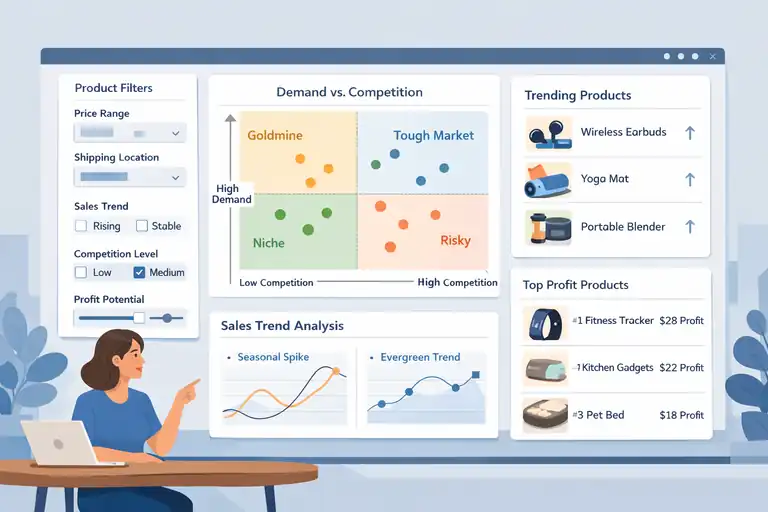
One of the most powerful features of the Salehoo Catalog is its filtering system—it’s where you separate potential best-sellers from products that might just look good on paper.
How to Use Product Filters to Narrow Down High-Profit Niches
Salehoo’s filters let you customize your search using criteria like price range, shipping location, sales trends, and competition level.
Here’s how to use them effectively:
- Start with demand filters: Focus on products showing consistent month-over-month growth.
- Layer in competition filters: Choose “low” or “medium” competition items for better profit margins.
- Sort by profit potential: Use Salehoo’s estimated profit data to prioritize high-margin products.
By filtering this way, you instantly narrow a list of 10,000 items to 10–20 strong contenders.
Analyzing Product Demand vs. Competition in the Catalog
Finding a winning product isn’t just about high demand—it’s about balance. Salehoo helps you visualize this by showing a simple graph comparing demand vs. competition.
- High demand + low competition = goldmine.
- High demand + high competition = tougher but doable with branding.
- Low demand + low competition = risky or niche-only.
This chart-style insight saves you from choosing oversaturated markets. It’s a small feature, but in eCommerce, it’s one of the smartest shortcuts to profitable decision-making.
Spotting Seasonal Trends and Evergreen Items Easily
Salehoo also helps you identify when to sell a product. Its sales data shows seasonal spikes—for example, weighted blankets peak during winter, while outdoor gear rises in summer.
At the same time, you can identify evergreen products—those that stay in demand all year, such as pet accessories or kitchen tools.
Using these insights, you can plan your inventory and marketing campaigns proactively, avoiding dead stock or seasonal drops.
Using the “Top Products” Section to Predict Market Winners
The “Top Products” section inside the Salehoo Catalog showcases trending items based on live marketplace data. It’s like a leaderboard of what’s selling now.
From what I’ve seen, this feature is perfect for spotting early momentum. A product ranked in the top 10 this week could become next month’s best-seller.
You can even filter by niche or country to align with your store’s audience. It’s a great way to test what’s working before competitors jump on the trend.
Leveraging Salehoo’s Market Research Lab for Deeper Insights
Once you’ve found promising items, the Market Research Lab inside Salehoo helps you validate those choices with deeper data analysis.
How the Market Research Lab Enhances Product Validation
This tool is like having a built-in research assistant. It compares your chosen products against millions of listings from platforms like eBay and Amazon to confirm demand and pricing strength.
You’ll see metrics like:
- Average sale price (what people are paying right now).
- Sell rate percentage (how often the product sells).
- Competition rating (how crowded the niche is).
From what I’ve noticed, this feature eliminates guesswork and gives beginners the confidence to commit to products backed by real data, not just hunches.
Comparing Profit Margins and Supplier Prices Seamlessly
Profit margins are often where beginners slip up—they focus on product cost but forget to account for fees and shipping.
Salehoo simplifies that by automatically comparing supplier prices with average retail prices in the Market Research Lab.
You’ll instantly see whether there’s a real profit margin or if it’s too thin to bother. That’s the kind of clarity that saves you from wasted effort and costly product launches.
Identifying High-Demand, Low-Competition Opportunities
Salehoo’s demand-competition matrix is particularly useful for spotting hidden gems. It highlights products that sell steadily but aren’t yet saturated.
Think of it as a “green zone” of opportunity—items that have enough sales data to prove demand but still offer breathing room for newcomers.
I’ve found this especially helpful when exploring micro-niches like eco-friendly accessories or pet grooming tools—areas where small sellers can compete successfully.
How to Cross-Check Catalog Data With External Marketplaces
Even though Salehoo’s data is strong, I always suggest double-checking it with external platforms like Etsy, Amazon, or TikTok Shop.
Here’s a simple way to do that:
- Search the same product keyword on multiple platforms.
- Compare pricing, reviews, and listing frequency.
- Validate that Salehoo’s demand trends align with real-world visibility.
This small cross-check ensures you’re not just relying on internal data—it confirms your product choice with real market behavior.
Using Supplier Insights to Strengthen Your Product Strategy
The Salehoo Catalog isn’t just about finding products—it’s about connecting you with the right suppliers who make your product strategy more reliable and scalable.
Supplier data is one of the catalog’s hidden strengths that can make or break your sourcing success.
How Verified Supplier Data Helps You Avoid Scams
One of the biggest fears for new sellers is being scammed by fake suppliers. Salehoo eliminates most of that risk by verifying every supplier before they’re added to the catalog.
Here’s how this verification works:
- Business validation: Salehoo checks company registration, ownership, and years in operation.
- Reputation check: Reviews, ratings, and delivery performance are audited.
- Product sampling: In some cases, Salehoo directly tests supplier products for authenticity.
This is a game-changer because it filters out unreliable middlemen. You don’t have to cross your fingers every time you place an order.
Instead, you can focus on building your store with confidence that your products are coming from legitimate, experienced partners.
Evaluating Supplier Ratings and Response Times
Inside the Salehoo Catalog, each supplier profile includes ratings, communication response times, and average order handling speed.
These are more than vanity metrics—they directly impact your customer satisfaction.
A supplier who responds within hours rather than days can mean the difference between a happy repeat buyer and a refund request.
When reviewing suppliers, I always look at:
- Average response time: Anything under 24 hours is ideal.
- Order accuracy rate: Consistent fulfillment without mix-ups shows reliability.
- Customer feedback trends: Repeated mentions of poor packaging or delays are red flags.
If you treat supplier ratings as seriously as product ratings, you’ll avoid 90% of common sourcing problems right from the start.
Choosing Between Dropship and Wholesale Options in the Catalog
The Salehoo Catalog caters to both dropshippers and bulk buyers. The choice depends on your current stage and business goals.
- Dropshipping suppliers let you sell without holding inventory. This is great for testing products quickly and learning what sells.
- Wholesale suppliers offer bulk pricing, giving you higher profit margins once you’ve validated a product’s performance.
I usually suggest starting with dropshipping to collect data—then moving to wholesale for your top-selling items once sales are consistent.
Salehoo makes this easy since both supplier types are clearly labeled, saving you from confusion or mismatched expectations.
How Reliable Shipping and Return Policies Impact Sales
It’s easy to underestimate how much shipping speed and return policies affect conversions. Salehoo includes supplier shipping details right in the catalog—delivery zones, estimated times, and refund terms—so you can filter accordingly.
Reliable suppliers typically:
- Offer tracked shipping methods.
- Have clear, easy-to-understand return policies.
- Provide replacement guarantees for damaged items.
From what I’ve seen, shoppers are far more likely to buy (and rebuy) when they see transparent policies upfront. And if you ever plan to sell through marketplaces like Shopify or eBay, that transparency gives you a competitive edge.
Speeding Up Product Discovery With Salehoo’s Smart Tools
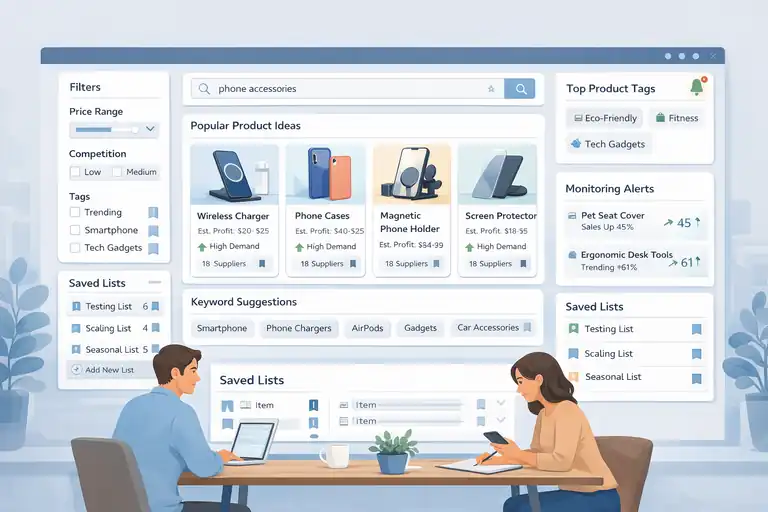
The Salehoo Catalog comes with built-in tools that help you move from “idea to product” in minutes.
These aren’t gimmicks—they’re designed to save time, reduce manual effort, and sharpen your product research process.
Using the Quick Search Feature for Instant Product Ideas
If you’ve ever struggled to come up with product ideas, the Quick Search feature feels like a shortcut to inspiration. You can enter a simple keyword—like “phone accessories” or “pet toys”—and instantly see products ranked by popularity, demand, and supplier availability.
What makes it useful is the data transparency. You don’t just see a product image—you see profit potential, trending direction, and supplier count.
Here’s how I use it personally:
- Start broad with a niche keyword.
- Narrow down by selecting “high-demand” or “low-competition” filters.
- Save the top results to my watchlist for deeper validation later.
This method often reveals unexpected hits—like pet seat covers or ergonomic desk tools—that wouldn’t have crossed my radar otherwise.
How Product Tags Reveal Hidden Market Opportunities
Salehoo uses a tagging system that groups products by niche, category, or market type. Tags like “eco-friendly,” “fitness,” or “tech gadgets” make it simple to explore entire segments fast.
What I love about tags is that they expose micro-niches. For instance, searching “eco-friendly” might lead you to reusable kitchen wraps or bamboo toothbrushes—small items that have loyal audiences.
Use tags as a discovery engine rather than just a filter. It’s often how you’ll find those untapped products that competitors overlook.
Leveraging Saved Lists to Track Potential Winning Products
When you start browsing, it’s easy to lose track of what caught your attention. Salehoo’s Saved Lists feature lets you bookmark and categorize potential winners by niche or test stage.
Here’s how I typically organize mine:
- Testing List: Products to trial-run with ads.
- Scaling List: Proven winners ready for bulk orders.
- Seasonal List: Items that perform during specific holidays or events.
This feature saves time and helps you stay focused. It also prevents you from constantly revisiting old searches or forgetting promising finds.
Automating Product Monitoring to Stay Ahead of Trends
Trends shift quickly, and Salehoo’s product monitoring tool tracks changes for you. You can set alerts for specific products or categories, and Salehoo will notify you when demand spikes or competition increases.
This automation means you don’t need to refresh charts daily—you get updates straight from the system.
I’ve found this particularly helpful for seasonal trend anticipation. For example, setting alerts for “summer apparel” in early spring gives you a head start before everyone else jumps in.
Comparing the Salehoo Catalog to Other Product Sourcing Platforms
Many sellers wonder if the Salehoo Catalog is better than big platforms like AliExpress or independent directories.
The answer depends on what you value most—data accuracy, supplier quality, or speed of research.
Key Differences Between Salehoo and AliExpress Product Search
AliExpress offers an enormous selection, but it lacks one thing: quality control. Anyone can list products, which means you spend hours sifting through unreliable sellers.
Salehoo, on the other hand, focuses on verified suppliers only. While the catalog is smaller, it’s curated for reliability. You trade quantity for quality—and that’s often a win for serious sellers.
If your goal is to build a sustainable store, not just chase trends, Salehoo’s structure will save you a lot of time and frustration.
Why Salehoo’s Data Accuracy Gives It a Competitive Edge
Unlike other directories that rely on static listings, Salehoo updates its catalog in real time. Each product’s metrics—like sales frequency, demand rating, and price range—are refreshed regularly.
This gives you an immediate view of what’s actually selling now. You don’t have to guess whether a product that was popular last year still performs today.
That accuracy helps you make fast, confident decisions without needing expensive market research tools.
How Salehoo Simplifies Research Compared to Manual Sourcing
Manual product sourcing usually means bouncing between multiple tabs—AliExpress, Google, Amazon, and supplier websites. Salehoo condenses all that into one unified dashboard.
You can view:
- Supplier data
- Profit margins
- Product performance trends
- Customer demand levels
This not only saves hours per week but also reduces the chance of error when comparing suppliers or calculating costs. It’s a smoother workflow that feels like having a personal assistant inside your research process.
When It Makes Sense to Use Salehoo Alongside Other Tools
Even though Salehoo is powerful, combining it with other tools can enhance your strategy. For instance:
- Use Google Trends to confirm long-term product growth.
- Pair TikTok Creative Center to gauge viral potential.
- Check Amazon Best Sellers to validate crossover demand.
I often use this hybrid approach—it’s how I double-check product momentum before committing to ad spend or bulk orders. Salehoo gives you a strong foundation, while external tools give context and confidence.
Avoiding Common Mistakes When Using the Salehoo Catalog
Even with a powerful tool like the Salehoo Catalog, I’ve seen many sellers slip up by treating it like a shortcut instead of a strategy.
The catalog gives you the data—but knowing how to interpret and act on that data is where the real wins happen.
Why Relying on Product Popularity Alone Can Backfire
One of the most common mistakes is chasing “popular” products. It’s tempting to sort by what’s trending and assume that’s the safest bet. But popularity doesn’t always mean profitability.
Here’s why:
- Popular products often attract heavy competition fast.
- Prices can drop quickly as sellers undercut each other.
- Trending items may have short lifespans, especially in fast-moving niches.
For example, fidget spinners looked unbeatable at one point—until the market flooded, and profits vanished overnight.
Instead of focusing only on popularity, I recommend filtering by profit margin and competition level to find products with staying power.
Ignoring Profit Margins: The Most Overlooked Error
Profit margin isn’t the most exciting metric—but it’s easily the most important. I’ve met many sellers who discovered too late that their “winning” product barely covered shipping costs.
In the Salehoo Catalog, always check:
- The supplier’s unit price versus the average retail selling price.
- Any hidden costs like transaction fees, ad spend, or packaging.
- Estimated ROI using Salehoo’s built-in profit calculator.
As a rule of thumb, I aim for at least a 40% margin before marketing costs. Anything lower becomes risky unless you’re selling high-volume items.
How to Avoid Over-Saturated Niches in the Catalog
It’s easy to fall in love with niches everyone else is chasing—fitness, phone accessories, or beauty gadgets. But oversaturation means fighting for attention and paying higher ad costs.
To sidestep this, use Salehoo’s competition filter and focus on medium or low competition segments. Then, dig deeper into micro-niches within that space.
For example:
- Instead of “yoga mats,” look for “eco-friendly cork yoga mats.”
- Instead of “dog collars,” explore “custom engraved pet collars.”
This approach lets you build a smaller, loyal audience without competing against massive brands.
Double-Checking Supplier Reliability Before Listing Products
Even though Salehoo verifies suppliers, it’s still wise to do your own double-check before committing.
Here’s my personal checklist:
- Send a short test message to see how fast they respond.
- Ask for sample photos or a small sample order.
- Confirm shipping times and refund policies directly.
Suppliers who are slow to reply or vague about delivery terms often signal trouble. In my experience, clear communication upfront prevents future headaches once orders start rolling in.
Turning Catalog Insights Into Actionable Product Decisions
Finding a promising product inside the Salehoo Catalog is exciting—but the real value comes from turning that data into an actionable plan.
Let’s talk about how to move from “research” to “results.”
Building a Winning Product List Step-by-Step
A strong product list isn’t random—it’s built strategically. Here’s how I recommend approaching it:
- Start broad: Identify 10–15 products that align with your niche or store theme.
- Filter by data: Narrow to 5–7 based on demand, profit margin, and supplier reliability.
- Refine by potential: Pick your top 3–5 “test” products based on audience fit or market trends.
By the end, you’ll have a short, data-driven list of items ready for validation instead of a cluttered catalog of guesses.
Testing Products Before Full Inventory Commitment
Never jump straight into bulk buying—no matter how promising an item looks. Start with test orders or small-scale dropshipping campaigns to see how customers respond.
A good testing phase includes:
- Running small ad campaigns to measure click-through and conversion rates.
- Tracking customer inquiries or complaints for early red flags.
- Adjusting product descriptions or pricing based on feedback.
This testing mindset prevents overstocking and keeps your cash flow healthy while you gather real-world data.
Using Customer Feedback to Refine Product Choices
Once your first test products are live, customer feedback becomes your best source of truth.
Look closely at:
- Common praise points (these highlight what to emphasize in marketing).
- Repeated complaints (potential product quality or description mismatches).
- Questions before purchase (signals of confusion you can clarify in listings).
For instance, if customers keep asking about material quality, adding a photo comparison or short product video can boost trust and conversions.
How to Transition From Product Research to Launch Confidently
The transition from research to launch can feel intimidating, but it’s smoother with structure.
Here’s a simple roadmap:
- Validate demand using Salehoo’s market data.
- Choose your supplier and confirm logistics.
- Create optimized product listings with accurate images and benefits.
- Launch ads or organic campaigns targeting your ideal audience.
When each of these boxes is checked, you can move forward confidently—knowing your launch is backed by research, not hope.
Expert Tips to Maximize Results With the Salehoo Catalog
Once you’re comfortable using the Salehoo Catalog, it’s time to level up. The goal now is to use its insights more strategically—like an experienced seller who sees patterns others miss.
Setting Up a Routine for Regular Catalog Checks
Trends shift faster than most people expect. I make it a habit to review the Salehoo Catalog weekly, especially the Top Products and Trending Niches sections.
Here’s why consistency matters:
- You spot trends before they peak.
- You can phase out slow movers quickly.
- You stay mentally tuned to shifts in your market.
Even just 15 minutes a week can help you stay agile and ready to pivot when demand changes.
Combining Catalog Insights With Competitor Tracking
I like to pair Salehoo data with competitor monitoring tools like Koala Inspector or manual checks on Shopify stores.
When you cross-reference what competitors are selling with what’s trending on Salehoo, you get a clear advantage.
It’s a bit like checking the weather forecast before going out—you’re not guessing; you’re preparing. The key is to act early, not react late.
How to Spot Undervalued Niches Before They Explode
This is one of my favorite parts of using Salehoo: finding products that are gaining momentum quietly before they go mainstream.
Here’s what to look for:
- Steady growth over 2–3 months, not sudden spikes.
- High demand, moderate competition metrics.
- Consistent supplier listings rather than temporary ones.
An example might be a home-office accessory that’s trending upward due to remote work but hasn’t hit mass popularity yet. Spotting those early lets you dominate before the floodgates open.
Using Data-Driven Insights to Scale Profitably
Once you’ve found your winning product, use Salehoo’s profit margin and demand data to decide how to scale.
You can:
- Increase ad spend gradually while tracking ROI.
- Test new suppliers for better pricing.
- Add complementary products to upsell or bundle.
Scaling smart means leaning on numbers—not emotions. Salehoo gives you that foundation, so you can grow without burning through your budget.
Final Thoughts: Why the Salehoo Catalog Saves You Time and Guesswork
At its core, the Salehoo Catalog isn’t just a product directory—it’s a decision-making engine for online sellers.
It saves you time, reduces uncertainty, and helps you focus on what really matters: selling the right products to the right audience.
How It Simplifies Research for Both Beginners and Pros
Beginners love Salehoo because it makes research visual and structured.
Pros love it because it cuts through noise and delivers insights fast. It’s designed to fit both levels—simple enough to start, detailed enough to scale.
Whether you’re validating your first product or refining your tenth, the process stays the same but becomes faster each time.
The Long-Term Advantage of Data-Backed Product Sourcing
Relying on gut instinct works once in a while—but consistent success comes from data. Salehoo’s real-time updates and supplier metrics give you a foundation to build a long-term, sustainable business.
It’s not about chasing every trend—it’s about making informed, profitable decisions again and again.
Why Fast Decision-Making Leads to Faster Sales
One underrated benefit of using Salehoo is speed. Because you get supplier info, pricing, and demand data all in one place, you can move from research to listing in hours instead of days.
In eCommerce, timing matters. The quicker you can identify and act on an opportunity, the better your odds of catching momentum early.
How the Catalog Turns Product Hunting Into a Predictable Process
What I like most about the Salehoo Catalog is how it removes the randomness from product discovery. It turns what used to be guesswork into a predictable, repeatable process: research, verify, test, and scale.
When you can rely on that system, you stop feeling like you’re gambling every time you choose a product. Instead, you’re building a business based on insight, timing, and data-backed confidence.
Pro Tip: The key to mastering Salehoo is consistency. Check it regularly, trust the data, and stay flexible enough to pivot when trends shift. That’s how you move from chasing products to creating predictable profits.
FAQ
What is the Salehoo Catalog used for?
The Salehoo Catalog helps online sellers find high-demand, profitable products by analyzing real-time sales data and verified supplier listings.
How does the Salehoo Catalog identify winning products?
It tracks product demand, competition, and profit margins, giving sellers clear insights into which items are trending and likely to perform well.
Is the Salehoo Catalog good for beginners?
Yes, the Salehoo Catalog is beginner-friendly, offering simple filters, supplier ratings, and profit calculators to help new sellers choose the best products confidently.

I’m Juxhin, the voice behind The Justifiable.
I’ve spent 6+ years building blogs, managing affiliate campaigns, and testing the messy world of online business. Here, I cut the fluff and share the strategies that actually move the needle — so you can build income that’s sustainable, not speculative.
Related posts:
 Salehoo Stores Review: Are These Stores Worth It?
 Salehoo Directory Free: What You Can Access Without Paying
 How the Salehoo App Works and Why It Speeds Up Product Research
 Salehoo Products List That Helps You Find Winning Items Fast
 How to Sell on SaleHoo: A Simple Guide for New Sellers
 Top Ecommerce Platforms That Make Selling Simple