
Table of Contents
Some links on The Justifiable are affiliate links, meaning we may earn a small commission at no extra cost to you. Read full disclaimer.
If you’re researching salehoo pros and cons for dropshipping, you’re probably trying to answer one practical question: will this directory actually help you make more money, or just add another monthly cost to your business?
I think that’s exactly the right lens to use. SaleHoo can absolutely improve supplier research and reduce some beginner mistakes, but it is not a magic profit button. Your margins, product choice, traffic strategy, and store positioning still do the heavy lifting.
Let me break down where SaleHoo helps, where it slows you down, and how it can affect real profit.
What SaleHoo Actually Does For A Dropshipping Business
Before you judge the pros and cons, it helps to get clear on what you’re actually buying. SaleHoo is best understood as a supplier directory and research platform, not a full business engine.
SaleHoo Is A Supplier Discovery Tool, Not A Complete Dropshipping System
A lot of new sellers expect SaleHoo to work like a one-click business builder. That expectation creates disappointment fast. In practice, SaleHoo is more useful for finding wholesalers, checking supplier legitimacy, and exploring products than for running your entire operation.
- Core role: It helps you find suppliers that claim to be vetted, which can save you from wasting time on random marketplaces or sketchy vendor sites.
- What it does well: It reduces supplier research friction. Instead of opening 30 browser tabs, you start from a centralized database.
- What it does not do by itself: It does not create demand, write ads, build a brand, or fix weak unit economics.
Imagine you launch a general store and add products with no real angle. Even if the supplier is solid, poor positioning will still kill your margins. I’ve seen many beginners blame the supplier platform when the actual problem was weak offer design.
That’s why I suggest viewing SaleHoo as part of your sourcing stack, not the business itself. It can help you make smarter sourcing decisions, but it cannot replace product validation, conversion optimization, or customer acquisition.
The Platform Solves Trust And Research Problems More Than Fulfillment Problems
The biggest value of SaleHoo is not speed. It is confidence. For many beginners, the hardest part of dropshipping is not building the store. It is trusting the supplier enough to put your reputation on the line.
- Trust benefit: SaleHoo gives you a more structured way to screen suppliers compared with blindly messaging unknown companies.
- Research benefit: You can compare categories, minimum order expectations, and supplier details in one place.
- Operational limit: It does not remove all fulfillment risk. Late shipping, weak packaging, and stock issues can still happen.
This is where the profit impact becomes interesting. A reliable supplier does not always increase gross margin, but it can increase retained profit. Refunds, disputes, poor reviews, and replacement orders quietly destroy profitability. Preventing those problems matters just as much as squeezing a few more dollars from product cost.
So when you evaluate SaleHoo, do not ask only, “Will this help me get cheaper products?” Also ask, “Will this reduce expensive mistakes?” In my experience, that second question is where SaleHoo often earns its keep.
The Biggest Pros Of SaleHoo For Dropshipping
SaleHoo has clear strengths, especially if you are still building confidence in supplier selection. The platform is not perfect, but some advantages are genuinely practical.
It Helps Beginners Avoid Risky Suppliers And Bad Early Decisions
This is the strongest argument in SaleHoo’s favor. Beginners often lose money before they ever make money because they rush supplier selection. They get excited by a product, ignore the backend, and end up with poor shipping, vague communication, or inconsistent fulfillment.
- Why this matters: One bad supplier can trigger refunds, chargebacks, ad waste, and damaged customer trust.
- Beginner shortcut: SaleHoo gives you a cleaner starting point than hunting suppliers manually across search engines and forums.
- Profit angle: Fewer supplier mistakes can protect margin even if the product cost is not the lowest in the market.
Let’s use a simple scenario. Say you sell a home organization product at $39.99. Your ad cost is $14, payment fees are about $1.50, and product plus shipping is $15. That leaves roughly $9.49 before returns and support. If a weak supplier causes a 10% refund rate, your real profit gets squeezed fast. If better supplier selection cuts those losses, your business becomes much healthier.
That’s why I believe SaleHoo is often more valuable as a risk-reduction tool than a margin-maximization tool. It helps you avoid the kind of messy operational problems that beginners underestimate.
The Directory Can Save Research Time When You Need A Structured Starting Point
Supplier research sounds simple until you actually do it. Then you realize you’re comparing shipping times, product ranges, contact responsiveness, country of origin, business type, and minimum order requirements across dozens of tabs.
- Time saver: SaleHoo organizes supplier discovery in one place, which can reduce early-stage research hours.
- Useful for validation: It helps you quickly see whether a niche has actual sourcing depth or just a few scattered options.
- Good for non-experts: You do not need advanced sourcing knowledge to start narrowing down suppliers.
Time has profit value. That matters more than many people admit. If you spend 15 to 20 hours chasing bad supplier leads, that is not just annoying. It delays store launch, product testing, and cash flow.
For a beginner, a structured directory can make the process feel manageable. Instead of asking, “Where do I even start?” you move to “Which of these five options best fits my product and shipping expectations?” That is a much more profitable question because it gets you closer to action.
I would not overstate this benefit for advanced sellers who already have sourcing workflows. But for someone in the setup phase, reduced research chaos is a real advantage.
The Market Research Element Can Help You Think Beyond Random Product Guessing
One underrated benefit of SaleHoo is that it nudges people toward more intentional product research. That matters because random product picking is one of the fastest ways to burn cash in dropshipping.
- Better filtering: You can explore product categories with sourcing context instead of chasing every social media trend.
- Practical insight: Supplier data can reveal whether a category looks stable or overcrowded.
- Strategic advantage: It encourages thinking about backend reliability alongside front-end demand.
This does not mean SaleHoo will hand you a winning product. That would be unrealistic. But it can help you avoid products that look exciting on the surface and collapse on the backend due to fragile supplier access or poor economics.
I recommend using SaleHoo to answer three questions before listing any product: Can I source it consistently? Can I get reasonable shipping for my target market? Can I still leave room for ad costs and refunds? If the answer is shaky on any of those, that product is riskier than it looks.
For many of us, profitability improves less from finding a “secret winner” and more from choosing products with fewer hidden operational problems. SaleHoo can support that mindset.
The Biggest Cons Of SaleHoo For Dropshipping
SaleHoo has real value, but the downside matters just as much. If you go in expecting too much, the platform can feel underwhelming and expensive relative to what it actually changes.
It Does Not Automatically Give You Better Margins
This is probably the most important con. Many people assume supplier directories lead directly to higher profit margins. Sometimes they do, but not reliably enough to make that the core promise.
- Margin reality: A vetted supplier is not always the cheapest supplier.
- Business reality: Your offer, conversion rate, average order value, and ad efficiency often matter more than small sourcing differences.
- Expectation gap: You can join SaleHoo and still struggle to find products with enough spread between cost and selling price.
Let’s say you find a product for $18 through a directory and sell it for $39.99. On paper, that sounds decent. But once you subtract payment fees, support time, creative testing, and traffic costs, the margin may look thin. If your clicks are expensive, you could still lose money.
That is why I caution against using SaleHoo as a “profit unlock” purchase. It is better seen as a due-diligence tool. It may help protect profit, but it does not manufacture margin where none exists.
In my experience, sellers who already understand pricing psychology, upsells, bundles, and offer angles will get more out of SaleHoo than sellers who are hoping the platform itself will solve weak economics.
Some Suppliers May Fit Wholesale Better Than Pure Dropshipping
Another common frustration is supplier fit. Not every supplier in a broad directory is perfectly aligned with the fast-moving expectations of modern dropshipping.
- Possible mismatch: Some suppliers lean more toward wholesale relationships than flexible low-volume dropshipping.
- Operational friction: You may run into minimum order expectations, slower onboarding, or less automation than you hoped for.
- Execution issue: That can create extra manual work, especially if you want fast testing.
This matters because dropshipping thrives on flexibility. If you need to test products quickly, change listings fast, and move with trends, supplier friction becomes expensive. Delays in communication or setup can cost you ad opportunities and momentum.
A beginner might assume every listed supplier is equally convenient for standard dropshipping workflows. That is rarely true. Some are better suited for established stores, niche retailers, or sellers willing to build longer-term sourcing relationships.
So yes, SaleHoo can help you find trustworthy suppliers. But it does not guarantee those suppliers match the speed, integration style, or order model you want. You still need to screen each one carefully.
It Is Less Attractive If You Want Fast Automation And Plug-And-Play Convenience
If your ideal setup is to import products fast, push them into a store, sync orders automatically, and move on, SaleHoo may feel less seamless than platforms built around automation-first workflows.
- User expectation issue: Many modern sellers want instant imports and streamlined syncing.
- Platform limitation: SaleHoo’s strongest value is supplier access and research, not being the most frictionless automation layer.
- Profit effect: Extra manual work increases labor cost, slows testing, and can reduce agility.
This is where alternatives like Spocket, Zendrop, DSers, Doba, or AutoDS often attract sellers who prioritize workflow speed. Those platforms tend to appeal to people who care deeply about import simplicity and order management convenience.
That does not automatically make them better. It just means the fit is different. If you’re optimizing for automation and rapid testing, SaleHoo can feel more like a research asset than an operational command center.
I think this is the biggest reason advanced marketers sometimes outgrow it. Once the sourcing learning curve is behind them, they often want tighter execution systems.
How SaleHoo Affects Profit In Real Terms
This is the part most people care about. Let’s move away from feature talk and focus on how SaleHoo can change your numbers in the real world.
SaleHoo Usually Protects Profit More Than It Expands It
The cleanest way to describe the profit impact is this: SaleHoo is usually better at protecting your downside than multiplying your upside.
- Upside limit: It might help you find slightly better sourcing, but not always enough to transform gross margin.
- Downside protection: It can reduce the risk of bad suppliers, product inconsistency, and wasted launch effort.
- Business outcome: That stability can improve net profit over time, especially for newer sellers.
I like to think of it this way. There are two ways to improve profit: increase revenue per order or reduce leakage. SaleHoo mainly helps with leakage. Leakage includes refunds, delays, poor supplier communication, weak product quality, and time lost chasing dead ends.
A store doing 100 monthly orders with a 12% issue rate is bleeding money in ways that are easy to ignore. If stronger sourcing drops that to 5%, the business looks much healthier even if the product cost only improved slightly.
So when you evaluate whether SaleHoo is “worth it,” compare it against the cost of poor supplier choices, not only against the dream of perfect margins.
The Value Changes Based On Your Experience Level And Business Model
The same platform can feel overpriced to one person and underpriced to another. It depends heavily on your stage, your workflow, and the type of store you run.
| Seller Type | Likely SaleHoo Value | Profit Impact |
|---|---|---|
| First-time beginner | High | Can prevent costly supplier mistakes |
| General store tester | Moderate | Useful for research, less useful for speed |
| Niche brand builder | High | Better long-term supplier vetting matters |
| Automation-focused seller | Lower | May feel slower than integration-first tools |
| Experienced sourcer | Lower to moderate | Less novel value if you already have a process |
For example, a niche store owner selling in one category for the long term may benefit more than a trend-chasing general store. Why? Because supplier stability matters more when you want consistent fulfillment, repeat orders, and brand reputation.
I suggest matching SaleHoo to your model instead of asking whether it is universally good. The answer changes a lot based on what kind of dropshipper you are.
Small Operational Improvements Can Create Bigger Profit Gains Than Fancy Tactics
One thing I’ve learned from ecommerce is that boring improvements often outperform flashy ones. Clean fulfillment, fewer customer complaints, and more reliable sourcing are not exciting, but they matter.
- Example improvement: Reducing support tickets frees up time and lowers refund pressure.
- Example improvement: Better supplier consistency can improve product reviews and retention.
- Example improvement: Fewer fulfillment mistakes can protect ad spend by keeping your store reputation stronger.
Let’s say you improve your average net profit from $6 to $8 per order. That does not sound dramatic. But across 300 monthly orders, that is an extra $600. Over a year, it becomes meaningful.
SaleHoo can contribute to that kind of improvement if it helps you choose suppliers with fewer hidden problems. It will not make the headline in a YouTube thumbnail, but it can quietly support a more profitable operation.
How To Decide If SaleHoo Is Right For Your Store
Not every good platform is right for every seller. The smarter move is to decide based on your current bottleneck, not general hype.
SaleHoo Makes Sense If Supplier Trust Is Your Biggest Problem
If your main pain point is not knowing who to trust, SaleHoo becomes easier to justify.
- Best-fit user: Beginners, cautious store owners, and niche sellers who care about reliable sourcing.
- Strong use case: You want a more structured way to find legitimate suppliers without researching from scratch.
- Profit logic: Less supplier uncertainty can mean fewer expensive errors.
This is especially relevant if you have already been burned. One bad supplier experience can make you realize how much damage poor backend operations can cause. Delayed shipments hurt more than customer patience. They hurt reviews, repeat purchase potential, and chargeback risk.
I would also put newer brand builders in this category. If you are trying to create a store that looks more premium, supplier quality matters even more. It is hard to position yourself as trustworthy when the backend is messy.
So if trust is the bottleneck, SaleHoo is a sensible tool to evaluate.
It May Be A Weak Fit If Speed And Automation Matter Most
On the other hand, some sellers are trying to move fast above all else. They want to test offers quickly, rotate products rapidly, and manage everything with as little friction as possible.
- Weak-fit user: Sellers who care most about rapid product import, automation, and speed of execution.
- Common complaint area: Too much manual evaluation compared with more automation-oriented tools.
- Profit logic: Slower execution can reduce testing volume and delay learning.
If your competitive edge comes from launching fast and iterating quickly, a research-heavy tool may not feel like the best use of time. You may prefer a workflow built around direct store integration and fast order handling.
That does not make SaleHoo bad. It just means the platform serves a different priority. In my opinion, that distinction matters more than broad “best platform” claims you see in roundups.
Ask These Five Questions Before Paying For Any Supplier Platform
This simple checklist will save you from buying tools based on hope.
- Question 1: Am I trying to solve a sourcing problem or a marketing problem?
- Question 2: Do I need supplier trust more than I need speed?
- Question 3: Will this platform reduce refund risk or just add software cost?
- Question 4: Does my business model benefit from deeper supplier vetting?
- Question 5: Do I already have a sourcing process that works well enough?
If most of your honest answers point toward trust, structure, and supplier vetting, SaleHoo is more likely to help. If your answers point toward automation and rapid experimentation, it may not be your best fit.
I recommend being brutally practical here. Software becomes expensive when it solves the wrong problem.
Common Mistakes People Make When Using SaleHoo
Even a useful platform can disappoint when used poorly. Most problems I see are not caused by the tool itself. They come from unrealistic expectations or lazy validation.
Treating The Directory As Proof That A Product Will Sell
This mistake is everywhere. People find a product through a supplier platform and assume that product is worth launching. Those are two different decisions.
- Sourcing validation: Confirms you can obtain the product.
- Market validation: Confirms customers actually want it enough to buy profitably.
- Key lesson: A sourceable product is not automatically a sellable product.
A product can have reliable suppliers and still fail because the angle is weak, the audience is saturated, or the offer lacks urgency. That is why I always separate “Can I source it?” from “Can I market it?”
Use SaleHoo to support backend confidence, then validate demand separately through search behavior, competitive analysis, organic content signals, or ad testing. Blending those stages together is how people waste money.
Ignoring Shipping Expectations And Customer Experience
Supplier directories can make the sourcing side feel organized, which sometimes tricks people into overlooking the customer side.
- Shipping reality: Customers do not care that you found a vetted supplier if delivery is too slow.
- Brand reality: Packaging, communication, and reliability shape store reputation.
- Profit reality: Bad post-purchase experiences create refunds and negative reviews.
I believe this is where many beginner stores quietly fail. They focus on product discovery and forget that the customer journey continues after checkout. Shipping expectations, tracking clarity, and issue resolution all affect profitability.
Always test the practical experience. Ask about shipping regions, processing time, stock consistency, and return handling. A supplier that looks acceptable on paper may still hurt your store if the end-customer experience feels rough.
Paying For Access Without Building A Real Selection Process
A directory only becomes useful if you have a method for filtering suppliers. Otherwise, you are just paying for access and still making random decisions.
- Good process: Compare product cost, shipping, response time, minimums, and consistency.
- Bad process: Choosing the first supplier that looks decent.
- Best practice: Score suppliers against the same criteria before committing.
A simple spreadsheet can do more for your profit than another tool subscription. Track each supplier on factors like shipping destination coverage, estimated delivery time, communication quality, return policy, and sample order experience.
That structure turns SaleHoo from a passive database into an active decision tool. Without that step, you are leaving too much to gut feeling.
Better Ways To Use SaleHoo If You Want Stronger Results
If you do decide to use SaleHoo, the smart play is to use it deliberately. The platform works better when paired with a clear sourcing strategy.
Use It To Narrow Options, Then Validate Manually
This is the workflow I recommend most often because it balances efficiency with common sense.
- Step 1: Use SaleHoo to create a shortlist of plausible suppliers.
- Step 2: Contact each one with the same practical questions.
- Step 3: Compare answers, responsiveness, shipping clarity, and flexibility.
- Step 4: Place a small test order before scaling.
That last step matters more than people think. Supplier pages and promises are one thing. Real-world order experience is another. A test order lets you check packaging, speed, product quality, and the overall impression your customer would get.
In my experience, this approach gives SaleHoo its best chance to pay off. You use the platform to reduce research chaos, then you do the real due diligence yourself.
Pair Supplier Research With Margin Planning Before You Launch
Do not wait until after launch to figure out if the numbers work. That is one of the easiest ways to lose money in ecommerce.
- Start with landed cost: Product cost plus shipping plus transaction fees.
- Add acquisition reality: Estimate ad or traffic cost conservatively.
- Leave room for issues: Refunds, support, and occasional defects are not optional line items.
A healthy product is not just “cheap enough.” It needs enough room to survive imperfect execution. For many stores, that means building in margin cushions rather than chasing the absolute lowest possible cost.
This is where SaleHoo can be useful. It gives you more sourcing options, and more options can help you compare cost structures more intelligently. But you still need to do the math.
I suggest writing your acceptable profit threshold before you choose a supplier. That keeps emotion out of the process.
Compare It Against Alternatives Based On Your Workflow, Not Hype
There is no universal winner in dropshipping software. Fit matters more than popularity. Here is a practical comparison lens:
| Platform | Best For | Main Strength | Main Weakness |
|---|---|---|---|
| SaleHoo | Supplier research and vetting | Trust and structured discovery | Less automation-focused |
| Spocket | Faster product sourcing workflows | Easy store-friendly setup | Product economics vary |
| Zendrop | Speed-oriented dropshippers | Simpler execution flow | Supplier depth differs by niche |
| DSers | Sellers using AliExpress-style workflows | Streamlined order handling | Depends on source quality |
| Worldwide Brands | Directory-focused research | Large supplier access | Can feel less modern operationally |
You’ll notice these tools do not solve the exact same problem. That is why direct comparisons often get sloppy. One is stronger at vetting, another at speed, another at workflow convenience.
Choose based on your current bottleneck. That one decision will probably affect profit more than the platform logo.
Final Verdict On SaleHoo Pros And Cons For Dropshipping
Salehoo pros and cons for dropshipping come down to one thing: what problem are you actually trying to solve? If you need trusted supplier discovery, more structure, and a lower chance of costly sourcing mistakes, SaleHoo can absolutely have a positive profit impact. It is especially useful for beginners, cautious store owners, and niche sellers who care more about reliability than raw speed.
But if you want instant automation, rapid product testing, and plug-and-play operational convenience, SaleHoo may feel slower and less exciting than other options. It protects profit better than it boosts it. That distinction matters.
My honest take is this: SaleHoo is worth considering when supplier quality and trust are your bottleneck. It is less compelling when your real issue is marketing, offer creation, or testing speed. Used the right way, it can save money by helping you avoid expensive supplier errors. Used the wrong way, it becomes just another subscription.

I’m Juxhin, the voice behind The Justifiable.
I’ve spent 6+ years building blogs, managing affiliate campaigns, and testing the messy world of online business. Here, I cut the fluff and share the strategies that actually move the needle — so you can build income that’s sustainable, not speculative.
Related posts:
 Spocket Vs Zendrop Which Is Better: Pros And Cons
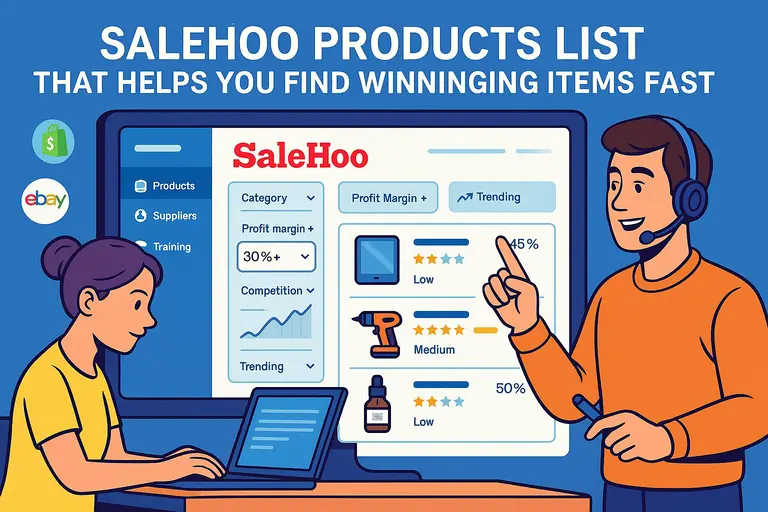
 SaleHoo Dropshipping Directory: How to Find Verified Suppliers
 The Best Way to Dropship Without Wasting Money
 Dropshipping How to Start: Your Complete Beginner’s Guide
 Salehoo Products List That Helps You Find Winning Items Fast
 How Much Can an Ecommerce Agency Make? Real Numbers and Revenue Examples