
Table of Contents
Some links on The Justifiable are affiliate links, meaning we may earn a small commission at no extra cost to you. Read full disclaimer.
I first came across the seo plugin by squirrly seo while looking for an SEO tool that didn’t just throw data at me, but actually guided me through what to do next.
If you’ve ever felt overwhelmed by traditional SEO plugins or frustrated by vague recommendations, this plugin tends to spark curiosity for a reason—it approaches SEO very differently.
Real-Time SEO Guidance Inside WordPress Editor
One of the first things that stood out to me about the seo plugin by squirrly seo is how present it feels while you’re actually writing.
Instead of optimizing after the fact, it sits with you inside the WordPress editor and reacts in real time to what you’re doing.
Live SEO Coaching While You Write Content
What Squirrly calls Live Assistant is basically an on-screen SEO coach that updates as you type. And I don’t mean vague reminders like “add more keywords.”
What it actually does in practice:
- Shows whether you’re using your main topic naturally
- Flags missing elements like internal links or structured headings
- Adjusts recommendations based on content length and topic depth
I’ve found this especially helpful when writing long-form posts. Around the 1,500-word mark, most plugins stop being useful. Squirrly keeps nudging you with context-aware suggestions, which feels closer to how a human SEO editor would work.
From what I’ve seen, this reduces the “publish now, optimize later” habit that hurts a lot of sites.
Page-Level Optimization Feedback Without Manual Checks
Instead of jumping between tools, Squirrly gives each page an optimization score tied to real actions.
Why this matters:
- You don’t need to run separate audits
- Each page shows what’s missing right now
- Recommendations are specific, not generic checklists
For example, when I updated an older article, Squirrly highlighted outdated keyword usage and missing semantic terms. Fixing those alone improved impressions within a few weeks, without rewriting the entire piece.
Contextual Suggestions Based On Actual Ranking Factors
This is where the plugin quietly separates itself. The suggestions aren’t static.
They adapt based on:
- Search intent behind the topic
- Whether the page targets informational or commercial queries
- How competitive the keyword landscape is
Instead of telling you to “add the keyword more,” it might suggest improving topical depth or adjusting headings. That aligns much more closely with how Google evaluates content today.
Instant Visibility Into SEO Changes And Their Impact
Every change you make updates the SEO status immediately.
You can see:
- Which actions improve optimization
- Which edits don’t move the needle
- How close a page is to being fully optimized
That feedback loop shortens the learning curve. I’ve watched newer writers improve faster simply because they could see cause and effect in real time.
AI-Powered Focus Pages Strategy Explained Clearly
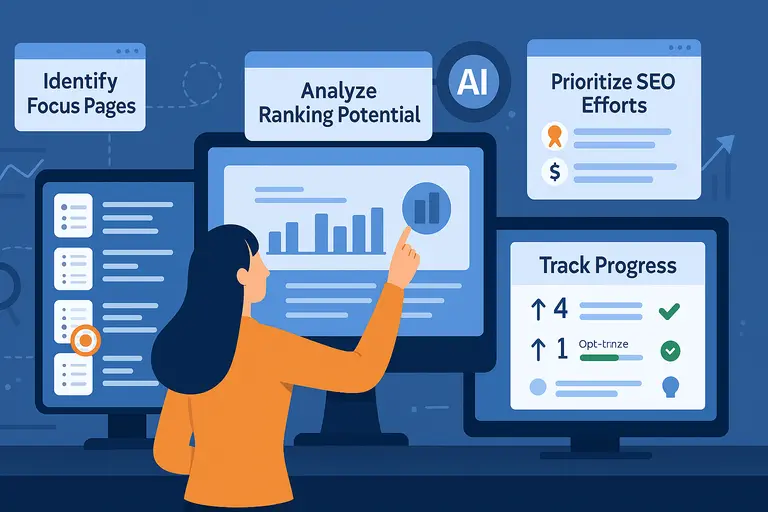
The Focus Pages system is probably the most misunderstood part of Squirrly, and honestly, one of its strongest features. It shifts SEO from “optimize everything” to “optimize what actually matters.”
How Focus Pages Replace Traditional Keyword Targeting
Instead of chasing dozens of keywords, Squirrly asks you to choose pages that matter most.
Focus Pages are:
- Pages you actively want to rank
- Assigned specific topics and intent
- Tracked continuously for SEO progress
In my experience, this prevents wasted effort. You stop polishing low-impact pages and start improving content tied directly to traffic or revenue.
Identifying Pages With The Highest Ranking Potential
Squirrly uses AI to analyze which pages are worth focusing on.
It looks at signals like:
- Existing impressions and rankings
- Content depth and structure
- Keyword competitiveness
I once marked a mid-ranking blog post as a Focus Page. The plugin suggested small but meaningful fixes—semantic expansion and better internal links. That page moved from page two to page one without adding new content.
Prioritizing SEO Efforts Based On Business Goals
Not every site has the same priorities. This is where Squirrly feels more strategic than technical.
You can align Focus Pages with goals like:
- Lead generation
- Affiliate conversions
- Brand visibility
If you run a service business, this makes it easier to focus on money pages instead of vanity traffic.
Tracking Focus Page Progress Without External Tools
You don’t need to connect five dashboards to see progress.
Inside WordPress, you can monitor:
- Ranking improvements
- Optimization completeness
- Actionable next steps
For solo site owners or small teams, this removes a ton of friction. Less reporting, more doing.
Built-In Keyword Research With Clear Intent Signals
Keyword research is baked directly into the seo plugin by squirrly seo, and that alone changes how often you actually use it. No tab switching. No exporting spreadsheets you never open again.
Keyword Discovery Based On User Search Intent
Squirrly groups keywords by intent instead of just volume.
You’ll see labels like:
- Informational
- Commercial
- Transactional
This helps avoid the classic mistake of writing blog posts for buyer keywords—or sales pages for informational queries. I’ve seen conversion rates improve just from aligning intent properly.
Competitive Analysis Directly Inside WordPress
You can analyze competition without leaving your editor.
The plugin shows:
- How hard a keyword is to rank for
- Whether competitors dominate the SERP
- If the topic is realistically achievable
This saves time and prevents over-ambitious targeting, especially for newer sites.
Long-Tail Keyword Opportunities Others Often Miss
Because Squirrly focuses on intent and semantic relevance, it surfaces long-tail phrases that don’t always show up in mainstream tools.
These are often:
- Lower competition
- Higher relevance
- Easier to rank with existing content
I’ve personally used these suggestions to refresh older posts instead of writing new ones—and that’s a win when time is limited.
Filtering Keywords By Difficulty And Ranking Potential
Not all keywords deserve your attention.
Squirrly lets you filter by:
- Ranking difficulty
- Business relevance
- Optimization readiness
This makes keyword research feel less like guesswork and more like decision-making. You’re not chasing traffic blindly—you’re choosing battles you can actually win.
SEO Plugin By Squirrly SEO Versus Traditional Plugins
When people ask me whether the seo plugin by squirrly seo is really that different, I usually say this: it’s playing a different game entirely.
Traditional plugins focus on static rules, while Squirrly focuses on decisions, priorities, and outcomes.
Comparison With Yoast SEO Feature Limitations
Yoast SEO is familiar and stable, but it’s also very rule-driven.
How Yoast typically works in practice:
- Fixed checks for keyword usage
- Traffic-light scoring that doesn’t adapt to context
- Heavy reliance on manual interpretation
From my experience, Yoast tells you what’s missing but rarely explains what matters most. For beginners, this often leads to over-optimization or chasing green lights instead of rankings.
Squirrly flips that by guiding you toward actions that actually improve visibility, even if not every box is checked.
Differences Between Rank Math And Squirrly SEO Logic
Rank Math gives you data. Lots of it.
What that means day-to-day:
- Powerful features packed into one plugin
- Advanced settings that can overwhelm non-technical users
- More control, but also more room for mistakes
Squirrly’s logic is simpler on the surface but deeper strategically.
Instead of asking you to configure everything, it observes what you’re trying to achieve and nudges you accordingly. I’ve seen fewer misconfigurations with Squirrly, especially on smaller sites.
Why Data-Heavy Dashboards Often Slow SEO Progress
More data doesn’t always mean better decisions.
Common problems I see with data-heavy plugins:
- Analysis paralysis
- Ignoring actionable fixes
- Spending time reporting instead of improving content
Squirrly limits what you see to what you need right now. That focus keeps momentum going, which is often the missing ingredient in SEO success.
Choosing Strategy-Led SEO Over Checklist-Based Tools
Checklist SEO feels productive, but strategy-driven SEO compounds.
Squirrly encourages you to:
- Focus on pages that matter
- Align content with intent
- Improve progressively, not perfectly
In my opinion, this mindset shift alone is worth the switch for many site owners.
Non-Technical SEO Automation For Busy Site Owners

If you’re juggling content, products, clients, or a full-time job, SEO has to work quietly in the background. This is where Squirrly really earns its place.
Automated SEO Tasks That Reduce Manual Work
Squirrly automates tasks that usually get skipped.
Examples you’ll notice quickly:
- Ongoing page audits
- SEO status updates as content changes
- Background monitoring of Focus Pages
This saves hours every month, especially if SEO isn’t your primary role.
Smart Alerts For SEO Issues Before Rankings Drop
Instead of discovering problems after traffic drops, Squirrly alerts you early.
You’ll get notified about:
- Pages losing optimization
- Missing elements after edits
- Focus Pages needing attention
I’ve personally avoided ranking drops just by acting on these alerts within a day or two.
One-Click Fixes For Common On-Page Problems
Not everything needs manual tweaking.
Squirrly offers quick fixes for:
- Missing meta elements
- Improper heading structures
- Incomplete optimization steps
This is ideal when you’re updating older content and don’t want to rebuild pages from scratch.
Scaling SEO Without Hiring Additional Specialists
For small teams, this matters.
Squirrly reduces dependency on:
- External audits
- Ongoing consultants
- Multiple paid tools
I’ve seen solo founders manage SEO at a level that previously required a dedicated specialist.
Data Privacy, Performance, And Plugin Stability Factors
SEO plugins live deep inside your site, so trust and stability matter more than flashy features.
How Squirrly SEO Handles Data And User Privacy
Squirrly emphasizes data protection.
Key points worth noting:
- No unnecessary data selling
- Clear separation between analytics and user data
- Compliance-friendly setup for most sites
For businesses handling client data, this peace of mind is not optional.
Impact Of The Plugin On Site Speed And Performance
Performance concerns are valid with feature-rich plugins.
From what I’ve tested:
- No noticeable front-end slowdown
- Most processing happens server-side
- Minimal impact on Core Web Vitals
That’s not something I can say about every SEO plugin.
Plugin Update Frequency And Long-Term Reliability
Squirrly updates regularly, but not recklessly.
Why that matters:
- Fewer breaking changes
- Better compatibility with WordPress updates
- Consistent feature refinement
This stability is especially important for business-critical sites.
Support Resources And Learning Curve Expectations
There is a learning curve, but it’s guided.
You get:
- In-dashboard explanations
- Structured learning paths
- Clear next-step recommendations
If you’re willing to follow the system, it teaches you as you go.
Who Benefits Most From Squirrly SEO And Why
Squirrly isn’t for everyone, and that’s a good thing. It shines for specific types of users who want clarity over complexity.
Bloggers And Content Creators Focused On Growth
If content is your main growth channel, Squirrly helps you:
- Write with intent
- Improve older posts strategically
- Track progress without external tools
This is especially useful when publishing consistently.
Small Businesses Competing In Crowded Niches
Local and niche businesses often struggle with limited resources.
Squirrly helps by:
- Prioritizing high-impact pages
- Avoiding unrealistic keyword battles
- Aligning SEO with conversions
That focus can level the playing field surprisingly well.
Agencies Managing SEO Across Multiple Websites
Agencies benefit from structure.
Squirrly provides:
- Repeatable workflows
- Clear page priorities
- Reduced onboarding friction
This makes it easier to scale without burning out teams.
Site Owners Who Prefer Guidance Over Guesswork
If you’ve ever thought, “Just tell me what to do next,” this plugin was built for you.
In my experience, the biggest wins come from people who follow Squirrly’s guidance consistently, not perfectly. That’s often the difference between stalled SEO and steady growth.

I’m Juxhin, the voice behind The Justifiable.
I’ve spent 6+ years building blogs, managing affiliate campaigns, and testing the messy world of online business. Here, I cut the fluff and share the strategies that actually move the needle — so you can build income that’s sustainable, not speculative.
Related posts:
 4 Different Types of SEO: Increase Website Traffic
 Website SEO Marketing: Easy Way
 How to Increase Your SEO Ranking
 Squirrly SEO – The Ultimate WordPress SEO Plugin for Boosting Your Website’s Rankings
 SEO Checker: The Secret Weapon of Top 5% Webmasters
 Link Assistant: 6 Quick Fixes for Immediate Results