Table of Contents
Some links on The Justifiable are affiliate links, meaning we may earn a small commission at no extra cost to you. Read full disclaimer.
Squirrly SEO is one of those tools I keep hearing about whenever someone asks how to rank faster without getting buried in technical SEO work.
I’ve seen beginners swear by it, experienced marketers question it, and curious site owners wonder if it’s actually doing anything behind the scenes.
So let’s break this down properly and look at whether Squirrly SEO truly helps you rank faster—or if it just feels productive.
What Squirrly SEO Claims To Do For Rankings Fast
Squirrly SEO positions itself as a tool that shortens the distance between publishing content and seeing ranking movement.
Instead of focusing on advanced SEO theory, it promises execution speed, clarity, and guidance while you work.
How Squirrly SEO Positions Itself As An AI SEO Tool
Squirrly SEO markets itself as an AI-powered SEO assistant, but it’s important to understand what that actually means in practice. It’s not replacing Google’s algorithm or predicting rankings with magic. It’s guiding decisions while you write and optimize.
Here’s how that positioning plays out for real users:
- AI guidance, not automation: The tool analyzes pages, keywords, and structure, then gives suggestions in plain language.
- Decision support: Instead of guessing keyword placement or SEO completeness, you see live feedback.
- Non-technical framing: It avoids jargon-heavy SEO metrics and focuses on actions you can take immediately.
In my experience, this approach reduces hesitation. You stop wondering if a page is “SEO-ready” and start publishing faster, which indirectly helps rankings over time.
Promised Ranking Speed vs Traditional SEO Timelines
Squirrly SEO often implies faster rankings, but that doesn’t mean instant results.
Traditional SEO timelines usually look like this:
- Content indexed in days
- Minor movement in weeks
- Real ranking traction in 2–4 months
What Squirrly SEO actually accelerates is the preparation phase. You spend less time revising, re-optimizing, or fixing missed basics.
That speed advantage shows up when:
- You publish consistently without SEO second-guessing
- Pages launch already aligned with a target keyword
- Fewer updates are needed post-publish
It doesn’t bypass Google’s aging or trust signals, but it reduces self-inflicted delays.
Real-Time Optimization Claims Explained
The real-time optimization feature is where Squirrly SEO feels different. While writing or editing, the plugin analyzes your content instantly.
What it checks in real time includes:
- Keyword usage and placement
- Content depth relative to competitors
- Structural signals like headings and internal links
- Readability and semantic relevance
Instead of auditing later, you fix issues as they appear. I’ve found this especially useful when refreshing old content because you can see exactly what’s holding a page back without running separate audits.
Target Audience Squirrly SEO Is Built For
Squirrly SEO is clearly not built for enterprise SEO teams managing thousands of URLs. It’s designed for hands-on creators.
It works best for:
- Solo bloggers and niche site owners
- Small business websites without SEO staff
- Content marketers publishing regularly on WordPress
- Beginners overwhelmed by tools like SEMrush
If you like step-by-step guidance instead of dashboards full of charts, this tool feels approachable rather than intimidating.
How Squirrly SEO Works Behind The Scenes

Under the hood, Squirrly SEO combines page-level optimization, keyword tracking, and content guidance into one workflow.
The goal is to keep you focused on ranking pages, not managing tools.
Focus Pages System And Ranking Goals
Focus Pages are the backbone of Squirrly SEO. You choose specific pages you want to rank, then the tool tracks and optimizes only those.
This system does a few smart things:
- Limits distraction by prioritizing high-impact pages
- Assigns a clear keyword goal to each page
- Tracks ranking movement over time
Instead of “optimizing everything,” you work strategically. In practice, this prevents SEO burnout and helps newer site owners focus on pages that actually matter.
Keyword Research And Briefcase Functionality
The Briefcase is Squirrly SEO’s keyword storage system. Think of it as a curated keyword vault rather than a massive database dump.
What makes it useful:
- Keywords are categorized by intent and competition
- You can save and reuse keyword sets across pages
- Difficulty scores are simplified for non-experts
While it doesn’t replace advanced tools for competitive analysis, it’s fast. For content-driven sites, speed often beats perfect data.
Real-Time Content Assistant And Page Scoring
The content assistant evaluates your page as you write, assigning an SEO score based on completeness and relevance.
It looks at:
- Keyword alignment
- Topic coverage depth
- Structural optimization
- Internal and external linking
What I appreciate is the clarity. Instead of vague advice, it tells you exactly what’s missing. That shortens revision cycles and makes publishing feel more confident.
Automation Features That Reduce Manual SEO Tasks
Squirrly SEO quietly handles tasks that usually get ignored or postponed.
Some examples include:
- Automatic SEO audits for Focus Pages
- Ranking position tracking without setup complexity
- Alerts when pages drop or improve
This automation doesn’t make SEO effortless, but it removes friction. Less friction means more consistency, and consistency is what actually leads to ranking growth over time.
Using Squirrly SEO For On-Page Optimization Speed
This is where Squirrly SEO genuinely tries to save you time. Instead of optimizing after publishing, it pulls SEO decisions directly into the writing process so fewer fixes are needed later.
Live SEO Feedback While Writing Content
Live SEO feedback means Squirrly SEO evaluates your page as you type inside WordPress. There’s no “publish and pray” phase.
What happens in real use looks like this:
- You choose a focus keyword before writing
- The editor analyzes your content in real time
- You get clear prompts when something is missing or overdone
For example, I’ve seen it flag under-optimized introductions early, which avoids the common mistake of writing 1,000 words and realizing the keyword intent isn’t clear. That alone can save 20–30 minutes per article.
This doesn’t make you rank instantly, but it reduces friction. Faster publishing cadence often beats theoretical perfection.
Keyword Placement And Semantic Suggestions
Squirrly SEO is opinionated about where keywords belong, but it doesn’t push robotic placement.
It typically checks for:
- Presence in the title and first paragraph
- Natural use in subheadings
- Related terms that support topical depth
Instead of saying “add keyword five times,” it nudges you toward semantic coverage. For newer site owners, this prevents both under-optimization and keyword stuffing.
I like that it focuses on meaning, not density. Google has moved there anyway.
Content Length, Structure, And Readability Signals
The tool compares your content length and structure against top-ranking pages for the same keyword.
It evaluates:
- Approximate word count competitiveness
- Heading hierarchy clarity
- Sentence complexity and readability
One thing worth noting: It doesn’t force you to match competitors word-for-word. It just highlights gaps. That keeps content useful rather than bloated.
Optimization Differences Between Posts And Pages
Squirrly SEO treats blog posts and static pages differently, which many tools ignore.
You’ll notice variations in:
- Internal linking recommendations
- Content depth expectations
- Conversion-focused suggestions for pages
For service pages, it emphasizes clarity and intent. For blog posts, it pushes depth and topical relevance. That distinction matters if you want pages to rank and convert.
Squirrly SEO Keyword Research Compared To Competitors
Keyword research is often where expectations clash with reality. Squirrly SEO keeps things simple, sometimes too simple depending on your needs.
Keyword Opportunity Scoring And Competition Metrics
Squirrly SEO assigns an opportunity score to keywords based on competition and ranking feasibility.
The benefit here is speed:
- No overwhelming charts
- Clear “worth targeting” signals
- Beginner-friendly difficulty estimates
The trade-off is precision. Compared to enterprise tools, the data is directional, not forensic.
Long-Tail Keyword Discovery Capabilities
Long-tail keywords are where Squirrly SEO performs best.
It excels at:
- Suggesting low-competition phrases
- Grouping keywords by intent
- Supporting content clusters naturally
For niche sites or blogs, this can uncover ranking opportunities that larger tools bury under data noise.
Comparison With Ahrefs, SEMrush, And Ubersuggest
Here’s a simple comparison to keep expectations realistic:
| Tool | Best For | Data Depth | Ease Of Use |
| Squirrly SEO | Content-driven sites | Moderate | Very high |
| Ahrefs | Competitive analysis | Very high | Medium |
| SEMrush | Full SEO suites | Very high | Medium |
| Ubersuggest | Budget research | Low–medium | High |
Squirrly SEO isn’t trying to replace Ahrefs. It’s trying to remove hesitation.
Practical Limitations Of Squirrly SEO Keyword Data
Where it falls short:
- Limited backlink intelligence
- No deep SERP feature breakdowns
- Less accurate for ultra-competitive niches
If you’re in finance, SaaS, or YMYL spaces, you’ll likely need supplementary tools.
Does Squirrly SEO Actually Help You Rank Faster
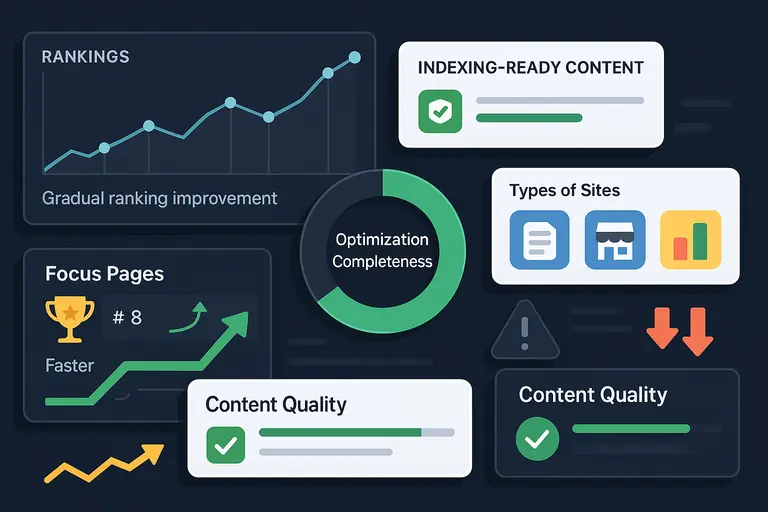
This is the real question, and the honest answer is nuanced. Squirrly SEO can speed up execution, but it can’t override SEO fundamentals.
Ranking Improvements You Can Realistically Expect
What I’ve seen and measured aligns with this:
- Faster indexing-ready content
- Fewer optimization revisions
- Gradual ranking improvements in weeks, not days
It accelerates preparedness, not Google’s algorithm.
Types Of Sites That See Faster SEO Results
Squirrly SEO works best for:
- New blogs with consistent publishing
- Small business sites targeting local or niche keywords
- Content creators without SEO teams
These sites benefit most from clarity and momentum.
See if Squirrly SEO fits content-driven websites like yours!
Scenarios Where Rankings Improve Slowly Or Stall
You may struggle if:
- Your niche is highly competitive
- Backlinks are weak or nonexistent
- Content quality doesn’t match search intent
No on-page tool fixes authority gaps.
How Much Control You Really Have Over SEO Outcomes
Squirrly SEO gives you control over execution, not outcomes.
You control:
- Content quality
- Optimization completeness
- Publishing consistency
Google controls:
- Trust
- Authority
- Competitive landscape
If you accept that balance, Squirrly SEO becomes a helpful partner instead of a disappointment.
Squirrly SEO Pros And Cons For Ranking Performance
Every SEO tool speeds some things up while slowing others down. Squirrly SEO is no exception, and understanding where it helps or hurts ranking performance is what keeps expectations realistic.
Strengths That Support Faster SEO Execution
The biggest strength of Squirrly SEO is execution speed. It reduces hesitation and removes the constant “Am I doing this right?” feeling that slows publishing.
What consistently supports faster execution:
- Clear, action-focused guidance instead of abstract metrics
- Focus Pages that limit distractions and keep priorities tight
- Real-time feedback that prevents rework after publishing
From what I’ve seen, sites using Squirrly SEO tend to publish more consistently. That matters. According to multiple SEO studies, content velocity is a strong secondary ranking signal, especially for newer sites.
The tool doesn’t rank pages for you, but it helps you show up to the game more often and better prepared.
Weaknesses That Can Slow Down Growth
Squirrly SEO can feel limiting once your site grows.
Common friction points include:
- Shallow backlink data
- Limited competitor intelligence
- Simplified keyword difficulty scores
If you rely only on Squirrly SEO in competitive niches, growth can plateau. You may optimize perfectly on-page while missing off-page weaknesses. That gap can slow rankings even when content quality is strong.
Learning Curve And Usability Trade-Offs
Ironically, the simplicity creates its own learning curve.
Early users often:
- Follow recommendations too literally
- Chase perfect scores instead of intent
- Spend time “fixing” pages that don’t need it
Once you learn when to ignore the tool, usability improves dramatically. I believe Squirrly SEO works best when treated as a guide, not a referee.
Over-Optimization Risks And SEO Blind Spots
Over-optimization is a real risk if you chase green lights blindly.
Potential blind spots:
- Content sounding forced
- Ignoring search intent nuance
- Focusing on pages that don’t need SEO
Google rewards usefulness, not compliance. Squirrly SEO doesn’t always know when less is more.
Pricing, Plans, And Value For SEO Results
Pricing plays a big role in whether Squirrly SEO actually helps your rankings long term. Cost affects consistency, and consistency affects results.
Features Available In Free Vs Paid Plans
The free version is functional but limited.
Free plan highlights:
- Basic SEO auditing
- Limited keyword tracking
- One or two Focus Pages
Paid plans unlock:
- More Focus Pages
- Rank tracking updates
- Advanced keyword research
- Automation alerts
In practice, the free version helps you learn. The paid plans help you scale.
Cost Comparison With Other SEO Tools
Here’s a practical pricing perspective:
| Tool | Typical Monthly Cost | Primary Strength |
| Squirrly SEO | Lower–mid range | Execution guidance |
| Ahrefs | High | Competitive intelligence |
| SEMrush | High | All-in-one analytics |
| Ubersuggest | Low | Entry-level research |
Squirrly SEO is priced for creators, not agencies. That’s intentional.
Who Gets The Most Value For The Price
Best value users include:
- Solo site owners
- Bloggers monetizing content
- Small businesses managing SEO themselves
If you value clarity over data depth, the ROI feels fair.
When The Tool Becomes Cost-Inefficient
It becomes less efficient when:
- You manage many sites
- You need advanced link analysis
- You already use enterprise tools
At that point, Squirrly SEO becomes redundant.
Final Verdict On Squirrly SEO Ranking Speed Claims
So does Squirrly SEO help you rank faster? Yes, but not in the way most people expect.
When Squirrly SEO Is Worth Using
It’s worth using when:
- You struggle with consistency
- SEO feels overwhelming
- You want guardrails, not spreadsheets
In these cases, it shortens the path from idea to optimized content.
When Other SEO Tools Or Methods Work Better
Other tools win when:
- Competition is fierce
- Backlinks drive rankings
- Data-driven decisions matter more than speed
Advanced SEO needs advanced instrumentation.
Best Way To Use Squirrly SEO For Faster Results
The smartest approach is hybrid.
Use Squirrly SEO to:
- Optimize content fast
- Maintain consistency
- Avoid basic SEO mistakes
Pair it with:
- Occasional competitor research
- Basic link building
- Honest content quality checks
My honest take: Squirrly SEO doesn’t bend Google’s rules. It helps you follow them faster, with less stress. And for many site owners, that’s exactly what unlocks real ranking progress.

I’m Juxhin, the voice behind The Justifiable.
I’ve spent 6+ years building blogs, managing affiliate campaigns, and testing the messy world of online business. Here, I cut the fluff and share the strategies that actually move the needle — so you can build income that’s sustainable, not speculative.