Table of Contents
Some links on The Justifiable are affiliate links, meaning we may earn a small commission at no extra cost to you. Read full disclaimer.
Writing blogs can be both exciting and intimidating—especially when you’re just starting out. You might be wondering: How do some creators turn simple posts into income while others struggle to gain traction?
The truth is, earning through blogging isn’t about luck; it’s about strategy, consistency, and understanding what truly connects with readers.
In this guide, I’ll walk you through simple, actionable steps to help you write blogs that don’t just attract readers—but actually earn.
Understanding What Makes a Blog Earn
Before your blog can make money, it needs to matter—to readers and to search engines.
Writing blogs that earn isn’t just about traffic; it’s about trust, clarity, and solving real problems for real people.
Identifying Your Blog’s Purpose and Audience
Every successful blog starts with a clear why. Ask yourself: Why am I writing this, and who am I writing it for?
If your audience feels that your blog understands their challenges, they’ll return—and that loyalty translates into revenue over time.
For example, if you write about sustainable living, you might focus on busy professionals who want to live greener without overhauling their lives.
Here’s a simple way to define your purpose and audience:
- Purpose: What do you want to achieve? (e.g., educate, inspire, sell, entertain)
- Audience: Who are they? What frustrates them? What motivates them?
- Promise: What will your blog consistently deliver that’s valuable or unique?
I often suggest creating a one-line mission statement like: “I help freelancers create systems that free up their time and income.” This helps guide every post you write.
Choosing a Profitable Blog Niche for Long-Term Growth
Picking a niche isn’t about chasing trends—it’s about alignment between what you love, what you know, and what people pay for.
A quick formula I use is:
- Passion + Skill + Market Demand = Profitable Niche.
For instance, “budget travel” is broad, but “budget travel for solo women in Asia” narrows your audience while opening opportunities for affiliate links, sponsored stays, or course sales.
Pro Tip: Use Google Trends or AnswerThePublic to validate interest in your niche. Look for steady (not spiking) interest—it signals long-term potential.
How Reader Intent Shapes the Success of Every Post
Reader intent is why someone searches for a topic. Are they looking to learn, compare, or buy? Understanding this changes how you write.
For example:
- Informational intent: “What is SEO?” → Write educational posts.
- Commercial intent: “Best SEO tools” → Write comparison posts.
- Transactional intent: “Buy keyword planner subscription” → Create review or guide content.
If you match intent perfectly, your post becomes exactly what the reader needed—making them more likely to trust your recommendations or products.
Finding the Balance Between Passion and Profitability
I’ve seen many new bloggers fall into two traps: writing only for passion (but ignoring income potential), or chasing profit without enjoying the topic. Both burn out fast.
The sweet spot is writing about something you care about that others are willing to invest in.
Try this:
- List your top five interests.
- Search each topic in Ahrefs or Google Keyword Planner.
- Look for keywords with decent traffic and clear monetization (affiliate products, services, or digital products).
If “vegan cooking” excites you but “vegan meal prep for beginners” has better earning potential—start there.
Crafting Compelling Blog Topics That Convert
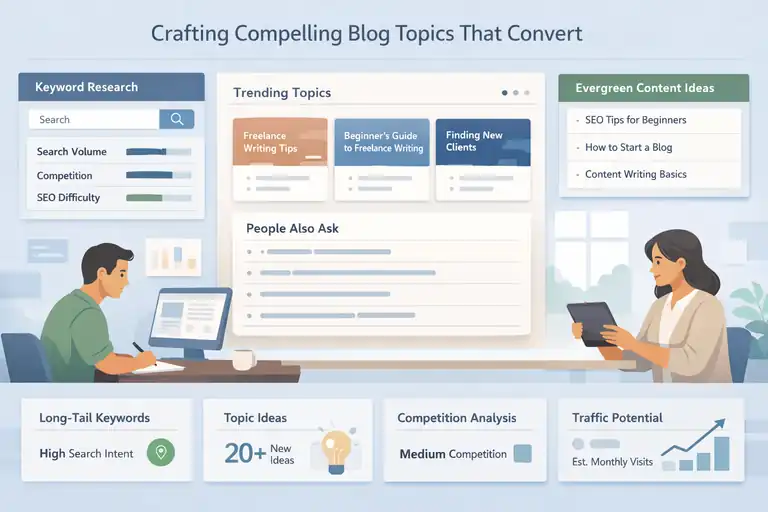
Once you know your niche, your next job is to write about things people actively search for.
Compelling topics grab attention, rank well, and keep readers clicking through.
Using Keyword Research Tools to Find High-Value Topics
I suggest starting with tools like Google Keyword Planner, Ubersuggest, or Ahrefs. Don’t worry if they look intimidating—here’s a simple process:
- Type in a broad term like “freelance writing.”
- Look for long-tail keywords such as “how to find freelance writing clients.”
- Choose topics with mid-level competition and strong search intent.
These keywords often convert better because they reflect real user needs.
Example: “Freelance writing tips” may get lots of traffic, but “freelance writing tips for beginners” will attract people ready to learn—your ideal reader.
How to Turn Everyday Questions Into Blog Ideas
Sometimes, your readers tell you exactly what to write—if you listen. Check the “People Also Ask” section on Google, or join niche Facebook groups and forums.
You’ll notice questions like:
- “How do I find clients with no experience?”
- “What should I charge for my first gig?”
Each question can become a detailed blog post. I personally keep a “Content Goldmine” document where I drop these questions whenever I see them online. Within weeks, you’ll have dozens of blog ideas that actually matter.
Creating Evergreen Content That Continues to Earn Over Time
Evergreen content is timeless—it keeps attracting traffic months or years after publishing.
Examples include:
- “How to Start a Blog in 2026”
- “10 Simple SEO Habits for Beginners”
Unlike trend-based posts, evergreen articles consistently bring new visitors through search engines.
My tip: Every few months, update stats, screenshots, and tools to keep the content fresh. This small effort helps your posts maintain rankings and income potential.
Avoiding Common Topic Traps That Don’t Drive Results
Many new bloggers fall into what I call the “topic trap”—writing about what they want instead of what readers need.
Here’s how to avoid it:
- Don’t copy viral content unless it fits your niche.
- Avoid overly broad topics like “How to Be Successful.”
- Focus on specific, actionable posts that solve one clear problem.
For instance, instead of “How to Save Money,” write “How to Save $500 a Month on Groceries Without Coupons.” Specificity equals value—and value earns trust and traffic.
Structuring a Blog Post That Keeps Readers Hooked
Good structure keeps people reading. Readers skim first—then decide whether to stay.
I always tell new bloggers: If your structure feels effortless, you’ve done your job right.
Crafting Attention-Grabbing Introductions
Your first few lines decide whether someone scrolls or leaves. Start with a relatable question, story, or fact.
Example: “Have you ever spent hours writing a blog post, only to hear crickets after publishing?”
Then quickly promise a solution. Make it clear what the reader will gain if they keep reading.
Tip: Keep introductions under 150 words—clear, warm, and curiosity-driven.
Writing Scannable Content with Engaging Subheadings
People read blogs like they scroll social media—fast. Break your post into small, clear sections using H3s that act like “mini promises.”
To make content scannable:
- Use short paragraphs (2–3 lines).
- Add bullet lists or numbered steps.
- Include italicized emphasis for key words, not bold text.
When you make your post easy to skim, readers stay longer, increasing ad revenue and conversions.
Using Storytelling to Strengthen Connection and Trust
I believe storytelling is your secret weapon. Even in educational blogs, stories humanize you.
Share a quick experience: “When I first started freelancing, I made $50 for a 2,000-word blog post. I thought that was amazing—until I learned how to negotiate rates.”
Stories like this make your readers nod and think, “That’s me.” That connection builds loyalty and credibility—two essentials for blogs that earn.
The Right Way to End a Blog Post with Clear Next Steps
Your ending should guide the reader, not just stop. Tell them exactly what to do next.
Strong endings include:
- A short summary of key takeaways.
- A call-to-action (subscribe, comment, share, or buy).
- A teaser for related content (“Next, read my post on…”)
Think of your ending as a gentle push that moves the reader from passive reader to active follower.
Optimizing Your Blog for SEO Without Losing Authenticity
Search engines bring readers to your blog, but authenticity keeps them there. I believe SEO should feel natural—like seasoning, not the main dish.
When you focus on writing blogs that sound human first, and optimize second, you’ll win both readers and rankings.
How to Use Focus Keywords Naturally Throughout Your Blog
Using your focus keyword correctly is about placement, not repetition. I always tell new creators: “If it reads smoothly out loud, your keyword use is probably fine.”
Here’s a simple keyword flow that works:
- Use your focus keyword once in your intro (preferably in the first 100 words).
- Add it naturally in one or two subheadings.
- Sprinkle variations (semantic keywords) in body paragraphs.
- Include it once in the conclusion or call-to-action.
For example, if your focus keyword is writing blogs, you could vary it with phrases like creating blog posts, blog writing tips, or how to write a blog that ranks.
Pro Tip: Use free tools like Surfer SEO or NeuronWriter to check keyword density, but always prioritize readability. Your readers—and Google—can spot keyword stuffing from miles away.
Writing Meta Descriptions That Improve Click-Through Rates
Your meta description is like a movie trailer—it convinces people to click. While it doesn’t directly affect rankings, it influences your click-through rate (CTR), which Google does notice.
A high-performing meta description should:
- Stay under 160 characters.
- Include your focus keyword once.
- Promise a clear benefit or solution.
Example: “Learn simple, proven steps for writing blogs that attract readers and earn income—even if you’re just starting out.”
I suggest previewing how your meta description looks using Rank Math in WordPress. Both show a live snippet so you can tweak the text until it feels irresistible.
Linking Strategies to Boost Authority and Retention
Smart linking makes your blog stronger—both for SEO and for user experience. Think of links as threads weaving your content together.
There are two types:
- Internal links: Point to other pages on your site (great for keeping readers around).
- External links: Lead to trusted sources (great for building credibility).
Here’s what I do:
- Add at least 2–3 internal links per post to relevant older content.
- Link out to 1–2 authoritative sites like HubSpot or Forbes.
- Always use natural anchor text (avoid generic “click here”).
Example: Instead of writing “click here to learn SEO,” write “check out my full SEO guide for beginners.”
These small tweaks increase page time, reduce bounce rates, and signal to Google that your content is connected and trustworthy.
Image Optimization and Alt Text Best Practices
Images can help your post rank in Google Images and improve accessibility for visually impaired readers. But large, unoptimized images slow your site down—a ranking killer.
Here’s a simple checklist I use:
- Compress images using TinyPNG or ShortPixel before uploading.
- Rename files descriptively (e.g., “blog-writing-tips-2025.jpg”).
- Add alt text describing the image in natural language, not keyword stuffing.
- Use consistent dimensions (like 1200×800 px) for cleaner formatting.
If you’re using WordPress, the Smush plugin automates most of this. I’ve seen load times drop by over 40% just from optimizing images.
Building Consistency Through a Blogging Workflow
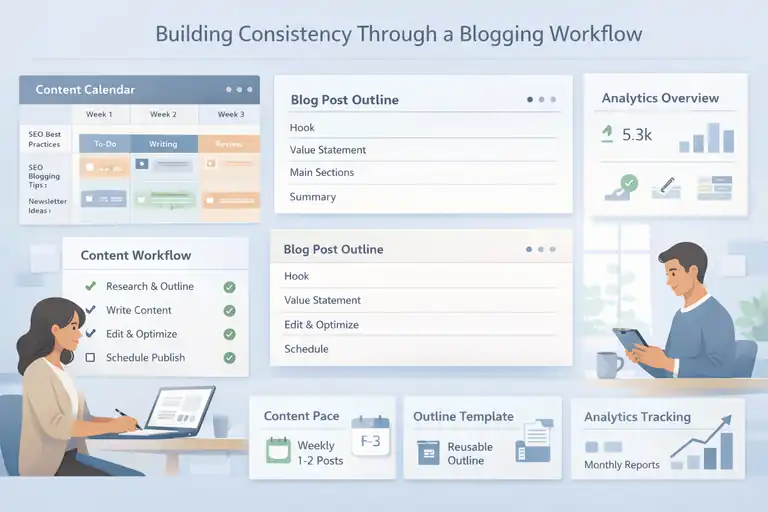
Consistency is what separates hobby bloggers from those who earn. The goal isn’t to post daily—it’s to post reliably.
Creating a workflow helps you stay organized, inspired, and confident that your blog is always moving forward.
Setting a Realistic Content Schedule for Beginners
When I started blogging, I made the mistake of overcommitting—three posts a week sounded doable until it wasn’t. I learned that sustainability beats speed.
If you’re new, I suggest:
- Start with one post every 10–14 days.
- Batch your content (research, write, edit, and publish in stages).
- Use tools like Notion or Trello to plan topics visually.
Here’s a simple workflow:
- Week 1: Research and outline.
- Week 2: Write, edit, and schedule.
It’s slow enough to build quality but steady enough to keep momentum.
How to Create a Repeatable Outline System for Each Post
Having a post outline system saves mental energy and keeps your writing consistent.
My go-to outline looks like this:
- Hook (question, story, or fact).
- Value statement (what the reader will learn).
- Main sections (each solving one part of the problem).
- Summary and call-to-action.
I usually store reusable templates inside Notion. You can also use Google Docs templates so every new blog starts with a clear roadmap.
When you follow a familiar structure, your writing gets faster—and your tone stays consistent across posts.
Tracking Blog Performance with Simple Analytics Tools
It’s easy to get lost in data, so start simple. The goal is to understand what works, not drown in numbers.
The three tools I recommend most:
- Google Analytics 4 (GA4): Tracks visits, engagement, and time on page.
- Google Search Console: Shows what keywords bring traffic.
- Microsoft Clarity: Offers free heatmaps to see where readers click or scroll.
I check analytics once a month, not daily. Look for patterns: Which posts perform best? Which keywords drive visitors? Adjust your content calendar accordingly.
Pro Tip: Always connect GA4 and Search Console early—it’ll save months of missing data later.
Managing Burnout and Staying Inspired as a Creator
Even the best workflows fail if you burn out. I’ve been there—staring at a blank screen, knowing what to write but not wanting to.
Here’s what helps me:
- Batch-create content when energy is high.
- Take one week off after every five published posts.
- Keep an “idea bank” so you never start from scratch.
- Read outside your niche for fresh inspiration.
Remember, your creativity is a renewable resource—but only if you rest it. It’s okay to pause; your readers will still be there when you return.
Monetization Strategies That Work for New Bloggers
Once your blog builds trust and traffic, it’s time to turn that attention into income.
I believe monetization isn’t about quick wins—it’s about building multiple, stable revenue streams that grow over time.
Understanding Different Income Streams for Bloggers
There are four main ways most bloggers earn:
- Ads: Earn money per impression or click (via Monetag or Adsterra).
- Affiliate marketing: Recommend products and earn commissions.
- Sponsored posts: Get paid by brands to feature their products.
- Products or services: Sell your own digital courses, eBooks, or consulting.
I suggest starting with one stream (usually affiliate links), then expanding once your traffic grows. Each income stream supports the others, creating long-term stability.
How to Use Affiliate Links the Right Way
Affiliate marketing is powerful, but only if it’s done with honesty. The key is recommending only what you’ve used or truly trust.
How to use affiliate links effectively:
- Add them naturally inside tutorials or tool roundups.
- Use tracking tools like Pretty Links (WordPress) to shorten and manage URLs.
- Always disclose affiliate relationships—transparency builds trust.
Example: “I use Aweber for my email list because it’s beginner-friendly and offers visual automation. (Affiliate link)”
When readers see you genuinely believe in what you promote, conversions rise naturally.
Monetizing with Ads Without Hurting User Experience
Ads can be tricky—too many, and you drive readers away; too few, and you miss revenue. I believe the sweet spot is about earning without annoying.
Here’s what I recommend:
- Start with Google AdSense until you reach ~50,000 monthly views.
- Then upgrade to Mediavine or Raptive for higher payouts.
- Avoid placing ads mid-sentence or within lists—breaks flow.
- Test mobile layouts carefully; 70% of readers browse on phones.
You can use tools like Ezoic to A/B test ad placements automatically.
Offering Services or Digital Products to Boost Earnings
If you want consistent income, your best product is often you. Offering a skill or knowledge-based product lets you monetize even with low traffic.
Examples:
- Services: Freelance writing, design, or consulting.
- Digital products: eBooks, templates, or mini-courses.
Start small—create a $15 resource that solves a clear problem for your readers. For instance, if you blog about productivity, offer a weekly goal planner PDF or time-blocking template.
Over time, those small digital products can grow into online courses or membership communities.
Expert Tip: Diversify early, but scale slowly. Build trust first, monetize second. Readers don’t buy from blogs—they buy from voices they trust.
Promoting Your Blog to Grow Traffic and Visibility
Once your blog is live, the real work begins—getting people to actually read it. Promotion is where strategy meets persistence.
I often say that great writing attracts readers, but smart promotion keeps them coming back.
The Power of Social Media in Driving Early Traffic
Social media can be your blog’s fastest growth tool—especially in the beginning when SEO hasn’t yet kicked in. But instead of spreading yourself thin across every platform, focus on one or two that align with your audience.
For instance:
- Pinterest: Great for evergreen topics like lifestyle, travel, or finance. Use keyword-rich pins and schedule posts through Tailwind.
- LinkedIn: Perfect if you write about business or personal growth. I suggest sharing short story-style posts that lead into your blog link.
- Twitter (X): Ideal for quick insights and connecting with other creators.
- Instagram: Works best when you blend personal stories with visuals—showing the person behind the blog.
Pro Tip: Repurpose snippets from your posts into bite-sized social content. A single blog post can turn into 5–10 social updates if you pull out tips, quotes, or takeaways.
Example: If your post is “10 Tips for Writing Blogs That Earn,” you could share one tip per day, each linking back to the full article.
Using Email Marketing to Build a Loyal Audience
Social media brings traffic, but email builds relationships. I believe your email list is your blog’s most valuable asset—because it’s yours. Algorithms can change overnight; email subscribers stick around.
To get started:
- Offer a small freebie (like a checklist or short guide) in exchange for sign-ups.
- Use tools like MailerLite—both beginner-friendly and affordable.
- Send one email per week with a personal touch.
Keep your tone conversational, like writing to a friend. Instead of “Read my new post,” try “I just published something I think you’ll love—it’s about turning blog ideas into income.”
The key is consistency. Even a list of 200 engaged readers can outperform 10,000 social media followers if you nurture them well.
Networking with Other Bloggers for Organic Reach
Networking isn’t just about link swaps—it’s about genuine connection. I suggest reaching out to creators whose content complements yours, not competes with it.
Here’s what works:
- Comment thoughtfully on their posts.
- Share their content and tag them (without asking for anything in return).
- Offer to collaborate on roundup posts or guest articles.
When I first started, I co-wrote an article with another blogger in my niche. We both promoted it, and our audiences doubled overnight. Collaboration builds visibility faster than solo promotion ever will.
How to Repurpose Blog Content Across Multiple Platforms
Repurposing saves time and multiplies reach. Every blog post can become videos, carousels, or even podcast episodes.
Here’s how I usually repurpose a single post:
- Turn the intro into a 60-second Instagram Reel.
- Convert main points into a LinkedIn carousel.
- Record a short YouTube video expanding one idea.
- Use quotes or stats for Twitter threads.
If you’re using Canva, you can create templates to speed this up. I keep one post checklist: “Written → Visual → Shared → Repurposed.” This system ensures every post keeps working long after it’s published.
Analyzing, Adapting, and Scaling Your Blog Earnings
The moment you treat your blog like a business, everything changes. To grow, you need to understand what’s working—and double down on it.
Using Data to Understand What’s Working and What’s Not
Data tells the story behind your growth. The goal isn’t to obsess over numbers but to spot patterns that guide your next move.
Focus on these key metrics:
- Traffic sources: Where your readers come from (SEO, social, or referrals).
- Top-performing posts: Which content gets the most engagement or conversions.
- Bounce rate & time on page: Signals how engaging your writing is.
Tools like Google Analytics 4 (GA4) or Plausible.io make tracking easy. In GA4, go to Reports → Engagement → Pages and screens to see which blogs perform best.
I suggest reviewing your analytics monthly, not daily. This keeps you focused on long-term trends instead of short-term noise.
Making Small Improvements That Lead to Big Growth
Growth often comes from small, consistent tweaks. I like to treat my blog like a living thing—something that evolves with every update.
Try these quick wins:
- Update older posts with new examples or stats.
- Add internal links between related articles.
- Improve intros or headlines using CoSchedule Headline Analyzer.
- Refresh visuals or screenshots to stay current.
Even simple updates can double your traffic over time. For example, one of my posts jumped 60% in views after I swapped out outdated tools for newer ones and improved the title clarity.
Tools for Tracking Earnings and Measuring ROI
Understanding where your income comes from helps you make smarter decisions.
I recommend using a simple tracking spreadsheet or a tool like Airtable to monitor affiliate earnings, ad revenue, and digital product sales.
If you want automation:
- ThriveCart and Gumroad both show sales insights for digital products.
- Impact and ShareASale provide affiliate dashboards with commission data.
- Google Data Studio (now Looker Studio) can visualize your income over time.
The idea is to see which posts or channels generate the highest return—and focus your time there.
When and How to Scale Your Blog Into a Brand
Scaling happens when your blog moves from a side project to a recognizable brand. This means building systems, not just content.
Steps to start scaling:
- Create a consistent brand identity—colors, tone, and messaging.
- Automate repetitive tasks (emails, social posts, analytics reports).
- Outsource small tasks like editing or design once you can afford it.
- Expand into products, memberships, or services.
When your blog starts earning predictably, reinvest 20–30% of profits into growth—whether that’s better hosting, paid ads, or hiring help. Scaling isn’t about doing more; it’s about doing less but smarter.
Pro Tips for Sustained Blogging Success
Longevity in blogging isn’t about algorithms—it’s about mindset, trust, and adaptability.
I believe the most successful bloggers aren’t just great writers; they’re great listeners who evolve with their readers.
Building Trust Through Authenticity and Transparency
Readers can sense when you’re being real. If you recommend a tool, be honest about its downsides. If you’re learning something, share the process. Transparency builds long-term credibility.
For example, I once wrote a post about a course that didn’t meet my expectations. Instead of hiding it, I explained why—and it became one of my most shared articles. People value honesty more than perfection.
Quick trust boosters:
- Disclose affiliate links clearly.
- Show behind-the-scenes moments.
- Share your personal wins and mistakes.
How to Evolve Your Voice Without Losing Your Readers
Your writing voice will change as you grow—and that’s okay. The key is to evolve naturally, not suddenly.
Here’s what I recommend:
- Revisit your old posts and see how your tone has matured.
- Keep your core message consistent even as style shifts.
- Test new content types (like audio or video) but stay true to your values.
Readers grow with you. As long as your content remains helpful and genuine, they’ll embrace your evolution.
Staying Updated on Trends Without Chasing Every One
Trends can boost visibility, but chasing all of them can scatter your focus. I suggest following a select few thought leaders or newsletters in your niche.
Use Google Alerts or Feedly to track relevant updates, and ask yourself before jumping on a trend: Does this align with my audience’s goals?
For example, AI writing tools are trending—but if your audience values human storytelling, use AI as a helper, not a replacement.
Balance curiosity with intention. Staying informed doesn’t mean losing direction.
Creating a Long-Term Vision That Keeps You Motivated
Blogging isn’t a sprint—it’s a slow build. Motivation fades when you only focus on short-term results. I’ve found that having a long-term vision changes everything.
Ask yourself:
- What do I want my blog to achieve in 3 years?
- How do I want readers to describe my work?
- What kind of lifestyle do I want blogging to support?
Write those answers somewhere visible. When traffic dips or burnout hits, that vision becomes your compass.
Final Tip: The blogs that earn for years are the ones rooted in purpose. Keep your heart in the work, adapt with intention, and success will follow naturally.
FAQ
How do I start writing blogs that actually earn money?
Start by choosing a profitable niche, understanding your audience’s needs, and creating valuable content. Then, monetize through affiliate links, ads, or digital products once traffic grows.
What are the best platforms for writing blogs as a beginner?
WordPress and Medium are popular choices. WordPress offers full control and monetization options, while Medium is easier for beginners but limits income potential.
How often should I post when writing blogs to build traffic?
Post consistently—aim for one high-quality post every 1–2 weeks. Quality and regularity matter more than frequency for growing sustainable traffic.

I’m Juxhin, the voice behind The Justifiable.
I’ve spent 6+ years building blogs, managing affiliate campaigns, and testing the messy world of online business. Here, I cut the fluff and share the strategies that actually move the needle — so you can build income that’s sustainable, not speculative.