
Table of Contents
Some links on The Justifiable are affiliate links, meaning we may earn a small commission at no extra cost to you. Read full disclaimer.
Social media marketing solutions can completely change how your audience interacts with your brand.
But with so many platforms, tools, and trends competing for attention, how do you actually boost engagement instead of getting lost in the noise?
The right mix of strategy, creativity, and data-backed tools can make your content not just seen—but remembered and shared.
In this guide, we’ll explore proven social media marketing solutions that increase engagement, spark conversations, and build loyal communities around your brand.
Optimize Content Strategy For Maximum Engagement
To make your social media marketing solutions actually drive engagement, you need to understand what your audience wants, where they spend time, and how they respond.
Every post should feel intentional, not random.
Align Content With Audience Interests
If your content doesn’t connect with your audience’s interests, it won’t matter how often you post. The key is to listen before you speak.
I always start with social listening tools like Brandwatch or Sprout Social, which show what topics your followers care about and what competitors are doing.
Practical tip: Create a “content resonance map.” List your audience’s top five pain points and link each one to a type of post that solves it—like how-tos, behind-the-scenes, or success stories.
You can also use data from Meta’s Audience Insights or TikTok’s Analytics dashboard to learn what your followers engage with most. Then, tailor your future posts around those interests.
Create Platform-Specific Strategies That Fit User Behavior
One of the biggest mistakes I see brands make is copy-pasting the same content across all platforms. Each network has its own rhythm and culture.
For instance:
- Instagram thrives on aesthetics and emotion.
- LinkedIn rewards thought leadership and professional storytelling.
- TikTok celebrates creativity and raw authenticity.
I suggest using tools like Hootsuite or Later to manage multiple accounts while adjusting tone and format per platform. For example, a polished Instagram carousel can become a concise LinkedIn post or a casual TikTok explainer.
The message stays consistent—but the presentation adapts to the audience.
Use Storytelling To Humanize Your Brand Presence
People engage with stories, not slogans. Storytelling transforms ordinary posts into relatable experiences. Share your brand’s “why,” or highlight customer journeys using a before-and-after format.
Try this approach:
- Start with a relatable problem – “Ever feel invisible online?”
- Show the struggle – “We did too when engagement dropped 40% last year.”
- End with transformation – “Now we use short-form Reels to connect more authentically.”
These narrative arcs tap into emotion and build trust faster than statistics alone.
Apply Data Insights To Refine What Works
Creativity matters, but data should guide it. Dive into platform analytics weekly to identify which formats, captions, and posting times deliver results.
Look at engagement rate per post (likes + comments + shares ÷ followers × 100). If carousel posts outperform videos on Instagram, double down on them.
For deeper analysis, I use Google Looker Studio (formerly Data Studio) to visualize performance trends across platforms. This helps spot long-term engagement patterns, not just viral one-offs.
The goal isn’t to chase algorithms—it’s to build consistent engagement grounded in insight.
Leverage Video And Visual Marketing For Higher Reach
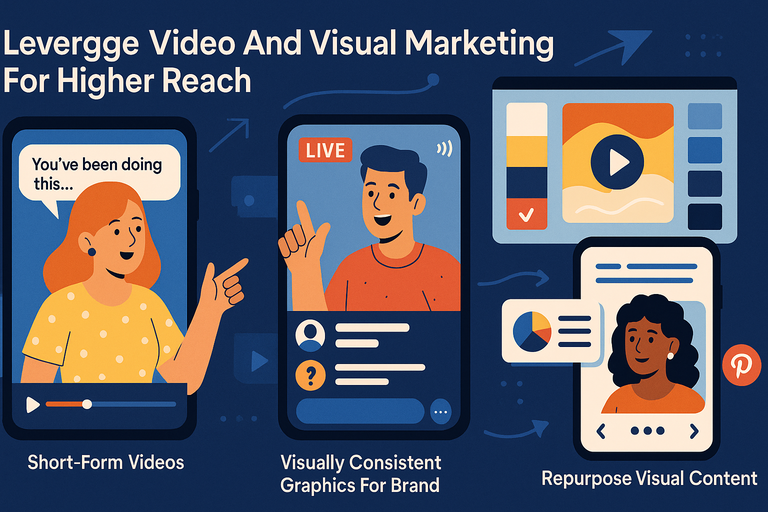
Videos dominate social media engagement—and that’s not changing anytime soon. But not all videos are created equal.
You need a visual strategy that matches both the platform and your audience’s attention span.
Craft Short-Form Videos That Capture Attention
Platforms like TikTok, Instagram Reels, and YouTube Shorts thrive on brevity. The first three seconds matter most.
Use curiosity hooks like:
- “You’ve been doing this wrong…”
- “Here’s what no one tells you about…”
Keep it conversational, and end with a simple call to action—such as “Try this today.” I recommend editing tools like CapCut to quickly trim, caption, and brand videos without heavy production.
Short-form content works best when it feels spontaneous, not overproduced. Authentic beats perfect every time.
Use Live Streaming To Build Real-Time Engagement
Live streaming is one of the fastest ways to deepen connection. Platforms like Instagram Live, TikTok Live, or YouTube Live allow two-way communication in real time.
If you’re promoting a product, give a live demo or do an “ask me anything.” The key is interaction—acknowledge comments, respond by name, and invite opinions.
For example, I once hosted a live Q&A for a brand launch and engagement rates were 3x higher than standard posts because people felt part of the process, not just an audience.
Design Visually Consistent Graphics For Brand Recognition
Visual consistency builds familiarity, which strengthens engagement over time. Use a unified color palette, font family, and tone across posts.
Design tools like Canva Pro and Figma let you create reusable templates.
I suggest setting up a “brand kit” with presets for every platform—Instagram stories, LinkedIn banners, Pinterest pins. This keeps your feed cohesive and professional without creative burnout.
Repurpose Visual Content To Extend Lifespan Across Platforms
Repurposing saves time and amplifies reach. Turn a YouTube video into:
- Instagram clips (15 seconds each)
- Pinterest infographics summarizing takeaways
- LinkedIn carousels breaking down the key points
You’re multiplying impact without reinventing the wheel. I use Descript for quick clip extraction and captioning—it’s perfect for turning one long video into multiple micro-assets that stay on brand.
Build Strong Community Connections Through Interaction
Engagement isn’t a metric—it’s a relationship. To grow loyal followers, you need to create two-way communication, not broadcast monologues.
Encourage Two-Way Conversations In Comments And DMs
When someone comments, reply. When they ask a question, respond like a human, not a bot. The more conversational your tone, the more approachable your brand feels.
I often recommend setting aside 15–20 minutes daily to respond to comments and DMs. You can use Meta Business Suite to manage multiple inboxes efficiently.
A simple “What’s your take on this?” at the end of a caption can double comment rates. Engagement grows when followers feel heard, not sold to.
Use Polls, Q&As, And Interactive Posts To Drive Participation
Interactive features like Instagram polls or LinkedIn reactions make engagement effortless. They invite micro-interactions that keep your content visible in algorithms.
Example: A skincare brand might post, “What’s your biggest skin challenge right now?” and use poll data to plan future content.
Interactive formats turn passive scrollers into active participants. They make people feel invested in your brand’s conversation.
Reward Loyal Followers With Exclusive Content Or Giveaways
Recognition drives loyalty. Reward your most active followers through shoutouts, early access, or small giveaways.
Tools like Gleam automate contests while collecting engagement data.
But even a simple gesture—such as featuring a customer photo in your story—builds emotional equity. People support brands that make them feel appreciated.
Develop A Brand Voice That Feels Personal And Authentic
Your voice is your digital personality. It should sound like a real person, not a press release. Whether your tone is witty, empathetic, or bold, stay consistent.
I advise creating a “voice guide” with examples of on-brand and off-brand language. For instance:
- On-brand: “We’ve all been there—posting for hours and seeing zero engagement.”
- Off-brand: “Our analytics indicate suboptimal audience interaction rates.”
Authenticity can’t be faked. Be relatable, be transparent, and you’ll build a community that engages willingly—not because they have to, but because they want to.
Utilize Influencer And Brand Partnerships Effectively
Collaborating with the right influencers can make your social media marketing solutions far more effective.
When done strategically, partnerships help your brand connect authentically with audiences who already trust the influencer’s voice.
Choose Influencers Who Truly Reflect Your Brand Values
I always say: don’t chase follower counts, chase alignment. An influencer with 20,000 loyal fans who share your values can outperform one with a million disengaged followers.
Start with a values check. Look at their tone, audience interaction, and past brand collaborations. Tools like Upfluence or Aspire let you filter influencers by engagement rate, niche, and demographics.
If your brand promotes sustainability, for instance, an influencer who often posts about conscious living will naturally resonate.
Check engagement metrics manually too—see if followers leave thoughtful comments instead of emojis. That’s a quick authenticity test.
Collaborate On Creative Campaigns That Feel Organic
Partnerships that feel like ads usually fail. The goal is to co-create content that fits naturally into the influencer’s storytelling style.
Here’s what I suggest:
- Give creative freedom: Let influencers interpret your product their way.
- Co-develop campaign themes: Align on a story rather than a script.
- Involve them early: Share your goals but invite their input—they know what their audience likes.
For example, a skincare brand might have an influencer show their nighttime routine rather than just “review a product.” That story-driven approach feels personal, not forced.
Track Engagement Metrics To Measure Partnership Success
Never measure success on impressions alone. Engagement is the real proof of influence.
I usually track:
- Engagement rate (likes + comments + shares ÷ total followers × 100)
- Click-through rate from tracked links
- Conversion rate from influencer-specific discount codes
Platforms like Traackr or CreatorIQ help centralize this data. If a post drives comments like “I need this!” or “Where can I buy it?”, you’ve hit genuine engagement—not passive exposure.
Diversify With Micro-Influencers For Niche Reach
Micro-influencers (typically 5k–50k followers) often deliver stronger engagement than big names because their audiences feel like friends, not fans.
For example, a local café partnering with several food bloggers in the same city can generate hyper-local buzz that no paid ad could replicate.
I recommend building long-term relationships with these creators rather than one-off campaigns. The consistency builds trust—and their community starts to associate your brand as part of their daily life.
Implement Social Media Automation And Management Tools

Automation doesn’t mean losing authenticity—it means gaining consistency.
The right tools streamline your workflow so you can focus more on creativity and engagement.
Schedule Consistent Posts Using Tools Like Buffer Or Later
Consistency is everything. I use Buffer and Later to schedule posts across platforms while maintaining quality.
In Buffer, for instance, you can drag and drop posts into a visual calendar and preview how they’ll look on your feed. In Later, you can also store media assets and write captions ahead of time.
This allows you to batch content creation weekly and free up time for real-time engagement. The trick is to schedule, not “set and forget.”
Monitor Engagement And Analytics With Platforms Like Sprout Social
Posting is only half the job. You need to track how your content performs. Sprout Social is my go-to for that—it combines scheduling, engagement tracking, and analytics.
You can view detailed metrics like audience growth rate, post reach, and average engagement per impression. A helpful feature: the Smart Inbox, which consolidates all DMs and mentions from different platforms in one dashboard.
That saves time and ensures no conversation goes unanswered.
Use AI-Powered Tools To Personalize Content Delivery
AI tools like Lately or Ocoya can help personalize your content for different audience segments.
For example, Lately uses natural language processing to analyze which phrases perform best in your previous posts, then generates optimized captions that align with your tone.
I suggest treating AI as a collaborator, not a replacement. It’s great for scaling and insights—but your human touch should guide the message.
Balance Automation With Genuine Human Interaction
Automation saves time, but followers can spot robotic replies a mile away. Make sure you still engage manually through comments, stories, and DMs.
I advise creating a daily “engagement block”—15 to 30 minutes for authentic interaction. Use automation for what it’s good at (posting, tracking, reminders) but keep conversations human.
This balance between efficiency and empathy builds trust—the ultimate engagement driver.
Optimize Posting Times And Frequency For Maximum Impact
Timing can make or break your engagement. Posting great content at the wrong time is like performing to an empty room.
Let data, not guesswork, guide your schedule.
Analyze Platform Data To Identify Peak Engagement Hours
Each platform has unique engagement patterns.
For example:
- Instagram: typically peaks around 11 AM–1 PM and 7–9 PM
- LinkedIn: best early on weekdays (7–9 AM)
- TikTok: varies, but often evenings see higher engagement
Use Meta Business Suite or Pinterest Analytics to find your personal audience’s peak times. Look for consistent engagement spikes over several weeks before finalizing your schedule.
I believe that long-term observation beats general “best times” lists—because your followers’ habits are unique.
Experiment With Frequency To Avoid Overposting Or Underposting
Posting too often can fatigue your audience, but posting too little breaks momentum. The balance depends on your brand size and content quality.
Try this formula to start:
- Instagram: 3–5 posts + daily stories
- LinkedIn: 2–3 posts per week
- TikTok: 4–6 short videos per week
Then test engagement changes over 30 days. Use tools like Iconosquare or SocialPilot to visualize frequency impact. I’ve found that sustainable posting wins over aggressive volume every time.
Tailor Content Timing To Different Time Zones And Audiences
If your audience spans multiple regions, post in waves. For example, a global e-commerce brand might schedule one post for 8 AM EST and another for 8 PM EST.
Both reach different segments of the same audience—without spamming. Tools like CoSchedule make it easy to duplicate and stagger posts by time zone.
This strategy helps you stay visible without overwhelming any single region’s feed.
Use A/B Testing To Find The Sweet Spot For Post Performance
Never assume what works—test it. A/B testing means publishing two versions of a post with small differences (caption tone, image type, or post time) and comparing engagement results.
Platforms like Agorapulse and Hootsuite Analytics simplify this. They show engagement differences side by side so you can refine your posting rhythm.
From what I’ve seen, continuous testing often reveals surprising truths—like how slightly shifting your post timing can double engagement without extra content.
Incorporate User-Generated Content (UGC) To Build Trust
User-generated content—photos, videos, or testimonials shared by your customers—has become one of the most powerful social media marketing solutions for building credibility.
When real people share their experiences, it adds authenticity that polished brand content simply can’t replicate.
Encourage Customers To Share Real Experiences
People love to be recognized. I always suggest encouraging customers to share how they use your products through hashtags, contests, or calls to action.
For example, a coffee brand could use a campaign like #MyMorningBrew and invite customers to share their morning rituals featuring the product. You can even prompt engagement in captions: “Show us your setup for a chance to be featured!”
Platforms like Bazaarvoice make it easy to collect and display user content across social channels. The key is to make participation simple—one hashtag, one upload, one tag.
Showcase UGC In Stories, Reels, And Campaigns
Once you have content from customers, show it off. UGC performs best when you repurpose it into stories, reels, or ad creatives because it feels real.
Instagram Stories, for example, have features like “Add Yours” stickers that invite users to join a trend. I recommend mixing these organic moments with branded templates to maintain consistency.
A fashion retailer I worked with saw a 40% increase in engagement when switching from studio-shot photos to customer-submitted outfits. It’s proof that audiences connect more with real people than perfect images.
Credit And Engage With Content Creators Publicly
Acknowledging contributors is just as important as featuring their content. Tagging creators publicly not only builds goodwill but also expands your reach to their followers.
A small example: when you repost a fan’s image, write a caption like, “We love how @username styled this look—absolute weekend inspiration!” This kind of appreciation sparks more people to share their own posts.
If you manage large volumes of UGC, use a tool like Later UGC to track permissions and automate tagging so you stay organized and compliant.
Use UGC To Strengthen Social Proof And Authenticity
UGC is modern-day word-of-mouth marketing. A study from Nielsen found that 92% of consumers trust recommendations from peers over traditional ads.
Showcasing customer content not only builds credibility but also turns buyers into advocates. I often advise placing UGC at critical points of your funnel—such as retargeting ads or product pages—to reinforce trust just before purchase decisions.
When followers see others genuinely loving your product, skepticism fades and conversions rise naturally.
Analyze And Adjust Using Social Media Analytics

Without data, you’re flying blind. Tracking and adjusting your performance is what turns random posting into a focused, effective social media strategy.
Track Engagement Metrics Like Shares, Comments, And Saves
Engagement metrics tell you whether people care about your content—not just if they saw it.
The key indicators I monitor are:
- Engagement rate: (Likes + Comments + Shares ÷ Followers) × 100
- Save rate: How often posts are saved for later
- Share rate: How frequently users pass along your content
Most platforms now offer this directly in analytics tabs—Instagram Insights, TikTok Analytics, or X (Twitter) Analytics. I recommend checking trends weekly to spot what consistently resonates.
Use Insights To Identify Content That Drives Emotional Response
Numbers only matter if you interpret them. Look beyond total engagement—analyze what triggers it.
For example, you may notice behind-the-scenes posts receive more comments, while tutorials get more saves. That means people value personal connection and practicality.
I often color-code posts by type (educational, emotional, promotional) to see which category drives engagement growth.
Adjust Strategy Based On Data Trends, Not Assumptions
Too many brands stick to what used to work. I believe in a “test, learn, and pivot” mindset.
If carousel posts outperform single images on Instagram, double down. If short-form videos perform better than long-form, adapt your production. Let data guide your direction, not your comfort zone.
I suggest revisiting your content calendar every 30 days and using metrics to adjust themes, frequency, and visuals. Social media moves fast—flexibility wins.
Set Clear KPIs To Measure Long-Term Engagement Growth
It’s easy to get lost in vanity metrics like follower counts. Instead, define KPIs that tie back to your goals.
Examples include:
- Engagement rate growth over time
- Click-through rates to landing pages
- Community growth (e.g., number of active commenters or UGC contributors)
- Platforms like Google Looker Studio can consolidate data from multiple sources into one dashboard. I use it to create monthly reports that show not just numbers but patterns—what’s improving, what’s stalling, and where we need to test next.
Data becomes valuable when it leads to action. That’s where real engagement growth begins.
Stay Ahead With Emerging Social Media Trends
Social media changes at lightning speed. Staying relevant means adapting before everyone else does.
Keeping an eye on emerging features and technologies gives your brand an early advantage.
Explore New Features Like Threads, Reels, Or TikTok Shop
New features often get algorithmic boosts because platforms want users to adopt them.
For instance, Instagram’s Reels quickly became one of the top engagement formats because early adopters leaned in.
If you’re a brand, I suggest setting aside time each month to test at least one new feature.
For example:
- Threads for conversational updates
- TikTok Shop for direct in-app shopping
- YouTube Shorts for educational micro-content
Experimenting helps you stay visible while others are still catching up.
Experiment With AI-Driven Personalization Tools
Artificial intelligence is reshaping how content reaches audiences. Tools like Predis.ai or Ocoya use AI to analyze audience behavior and suggest posting times, captions, or visuals optimized for engagement.
I find AI particularly useful for testing tone and format.
For example, I’ve used AI to identify when an audience responds better to humor versus information-heavy posts. Still, human oversight is key—AI helps you scale creativity, not replace it.
Follow Platform Algorithm Updates And Adapt Fast
Every platform tweaks its algorithm regularly, and those shifts affect visibility. Following update reports from reliable sources like Social Media Today helps you stay informed.
When engagement suddenly drops, check for recent updates—it’s often the reason. Adjust quickly by experimenting with new formats or engagement triggers like comments and saves.
Blend Innovation With Consistency To Sustain Growth
Trends attract attention, but consistency builds loyalty. I believe in balancing both: try new features, but keep your brand tone, visuals, and purpose stable.
For instance, if you experiment with new filters or formats, keep your color palette and messaging aligned. That way, followers recognize your brand even when the medium changes.
Innovation gets you discovered; consistency makes you remembered. Together, they’re the long game of social media success.
Create A Consistent Brand Experience Across All Channels
Consistency isn’t about sameness—it’s about familiarity. Your audience should recognize your brand instantly, whether they see a tweet, an Instagram story, or a YouTube ad.
Consistency builds trust, and trust drives engagement.
Maintain Cohesive Visual And Messaging Style
Your visual identity—colors, fonts, logo placement—should stay uniform across every platform. I recommend creating a brand style guide using tools like Canva Brand Kit or Figma Libraries, where your design team can store approved templates and assets.
For messaging, think tone and phrasing. If your brand voice is friendly and approachable, keep that warmth in all captions and replies. Even small details, like using emojis or phrasing CTAs in the same way, reinforce brand familiarity.
A good rule of thumb: if you covered your logo, would your followers still recognize your brand? If the answer is yes, your consistency is working.
Align Brand Personality With Target Audience Expectations
Your brand voice should reflect the people you’re trying to reach. A fintech startup targeting young entrepreneurs might sound bold and energetic, while a wellness brand might lean more calm and nurturing.
You can discover your audience’s communication style using Meta Audience Insights or SparkToro—both reveal how your followers interact and what tone they respond to.
I often advise running short polls or asking open-ended questions like, “What type of content would you love to see more from us?” It not only helps you refine tone but also shows your audience that you listen.
Integrate Cross-Platform Campaigns For Unified Reach
Cross-platform campaigns amplify engagement when all channels work together. Instead of isolated posts, create a connected story that flows across platforms.
For example:
- Launch a teaser video on TikTok
- Follow up with behind-the-scenes clips on Instagram Stories
- Share a longer explainer post on LinkedIn
Using a tool like Loomly, you can plan and preview how your campaign looks across platforms to ensure cohesion. I’ve seen this multi-layered storytelling boost click-through rates by over 25% compared to single-platform efforts.
Reinforce Brand Identity With Repetition And Familiarity
Repetition isn’t boring—it’s branding. Repeating visual elements and key messages helps audiences associate your brand with certain feelings and ideas.
Take Nike’s “Just Do It.” Every piece of content—ads, captions, visuals—echoes that mindset. You can apply this by consistently tying posts back to your brand mission or tagline.
I suggest reviewing your last ten posts per platform. Do they feel like chapters of the same story? If not, tighten your creative direction until they do.
Encourage Employee Advocacy And Internal Engagement
Your employees are your most authentic promoters. When team members share brand content or celebrate company wins, engagement feels genuine because it’s human.
Train Team Members To Represent The Brand Authentically
I recommend holding quarterly training sessions on social media guidelines—nothing too corporate, just clear direction. Show examples of on-brand and off-brand posts, and outline what tone fits best.
Platforms like EveryoneSocial or Sociabble help organize employee advocacy programs. They let you share pre-approved content employees can post while still personalizing it in their voice.
Encourage creativity. A designer’s “behind the scenes” post or a support agent’s “day in the life” story makes your brand relatable in ways polished marketing can’t.
Share Internal Wins And Culture Moments Online
Culture content humanizes your brand. Share team milestones, events, or community projects. If a new product launches, spotlight the people behind it.
One company I worked with started a “Friday Wins” series—employees shared small victories, from landing clients to solving tech glitches. It boosted both internal morale and external engagement.
This kind of content reminds followers there are real people behind the logo.
Empower Employees To Share Branded Content Organically
Make sharing easy. I like using Bambu by Sprout Social because it curates ready-to-share company content employees can personalize.
Provide caption suggestions or image libraries but avoid strict scripts. Let team members add their stories. When people can express genuine pride in where they work, engagement feels natural, not forced.
You can also track participation rates through the platform dashboard to identify your most active advocates—recognize and thank them publicly to encourage others.
Turn Your Workforce Into Passionate Brand Ambassadors
When employees believe in the mission, advocacy becomes instinctive. Recognize contributions, highlight them in company newsletters, and celebrate shared successes.
I suggest creating an internal hashtag, like #InsideYourBrandName, for employees to use across platforms. It unites content under one discoverable thread while reinforcing community spirit.
In time, these small efforts turn employees into storytellers—and audiences love brands that feel human and connected from within.
Use Paid Social Media Campaigns To Amplify Engagement

Organic reach is powerful but limited. Paid campaigns give your content the visibility it deserves—especially when targeting the right people with the right message.
Target Custom Audiences With Precise Ad Segmentation
Platforms like Meta Ads Manager and LinkedIn Campaign Manager allow you to build audience segments based on interests, demographics, and behaviors.
For example, you can retarget people who visited your website or engaged with a previous video. I usually create lookalike audiences—groups that mirror your best customers’ traits—to expand reach without losing precision.
When done right, segmentation ensures every dollar serves an audience already halfway interested in your message.
Use Retargeting Campaigns To Re-Engage Warm Leads
Retargeting is where engagement often turns into conversion. If someone visited your site but didn’t act, show them a reminder ad featuring what they viewed.
Platforms like AdRoll or Criteo automate this across social and web. A simple example: someone who watched your video about a product could later see a carousel ad highlighting its top benefits.
I’ve seen retargeting campaigns increase engagement rates by over 30% because the audience already knows you—they just need a nudge.
Test Ad Formats Like Carousel, Video, Or Story Ads
Different audiences respond to different formats. Carousel ads work great for storytelling or showcasing multiple products, while video ads build emotional connection faster.
A/B testing helps you see what format performs best. For instance:
- Test a 15-second video vs. an image ad.
- Compare carousel ads with single-product posts.
Use Meta’s Experiments tool to run these tests easily. Small adjustments often reveal big performance differences.
Optimize Budgets Based On Engagement ROI
Instead of setting fixed budgets, monitor your cost per engagement (CPE). If one ad drives more clicks or saves for the same spend, shift your budget accordingly.
Platforms like Sprinklr integrate campaign analytics across channels, letting you visualize ROI trends.
I suggest weekly reviews rather than monthly—it helps catch performance dips early. Paid engagement is an investment, and agile budget management keeps it profitable.
Enhance Engagement With Gamification And Challenges
Gamification turns ordinary scrolling into something interactive and memorable.
When you give people a reason to participate—through challenges, rewards, or fun competition—you invite emotional investment, not just attention.
Create Fun Social Challenges That Encourage Participation
Challenges can spread like wildfire when they strike the right emotional tone. The secret is to make participation simple, creative, and rewarding.
Think of campaigns like #IceBucketChallenge or #ShareACoke—both started small but grew because they tapped into human connection. I often advise starting with low-effort actions:
- Ask followers to post a photo or short video tied to your brand theme.
- Encourage creative twists that make people want to join in.
- Give it a catchy hashtag for easy discovery.
For example, a fitness brand could run a #7DayMoveChallenge using Instagram Reels, while a coffee shop might create a #MyMorningMug challenge inviting customers to share their favorite brew moments.
The key is inclusivity—design challenges everyone can join, not just your existing fans.
Offer Incentives Like Discounts Or Features For Winners
Rewards motivate participation. They don’t always have to be big—a small incentive with emotional or social value works wonders.
You could offer:
- Exclusive discounts or gift cards.
- Early access to a new product.
- A feature on your official page.
I’ve seen small eCommerce brands double engagement simply by offering to repost top entries. Public recognition can feel more valuable than any prize.
Platforms like Woobox can help you manage submissions, track participation, and randomly select winners to keep things fair and transparent.
Use Hashtags To Track Entries And Build Visibility
Hashtags act as the digital thread connecting every participant. Create one that’s unique, short, and memorable. Before launching, check it on Instagram, TikTok, and X (formerly Twitter) to ensure it’s not already in use.
You can use Keyhole or Brand24 to monitor hashtag performance and engagement. I recommend engaging directly with participants by liking or commenting on their entries—this reinforces your presence and keeps momentum alive.
A pro move: share weekly highlights or reaction reels from participants. It builds community energy and encourages late joiners.
Blend Entertainment With Brand Purpose To Deepen Impact
Fun is great, but lasting engagement happens when the challenge also reflects your mission. If your brand promotes sustainability, make it a #ReuseChallenge; if you’re about wellness, make it a #MindfulMinute.
People love feeling that their participation contributes to something meaningful.
In my experience, campaigns that blend entertainment with values generate deeper loyalty—and often attract earned media coverage because they stand for more than just clicks.
Gamification should entertain, yes, but it should also belong to your brand story.
Integrate Customer Feedback Into Your Content Strategy
Listening to your audience doesn’t just improve engagement—it builds respect.
When customers see their feedback shaping your content or products, they feel like collaborators, not just consumers.
Collect Feedback Through Polls And Surveys
Social platforms make feedback collection effortless. Tools like Instagram Polls, LinkedIn Surveys, or Typeform let you gather quick, actionable insights directly from followers.
You could ask:
- “What type of posts do you enjoy most?”
- “Which feature would you love to see next?”
- “What’s one challenge you face using our product?”
I usually embed feedback cycles into campaigns every quarter. It keeps strategy fresh and audience-focused. Plus, people love to share opinions—it gives them ownership of the brand experience.
Respond Publicly To Customer Suggestions And Concerns
Transparency is a powerful engagement tool. When a customer makes a great suggestion, thank them publicly. When a concern arises, address it honestly instead of hiding behind silence.
A simple acknowledgment like, “We heard your feedback on our new packaging—thank you! We’re working on adjustments,” can turn potential frustration into trust.
From my experience, these moments often outperform promotional posts in engagement because they show your brand’s human side.
Use Feedback To Guide Product Or Service Updates
Social feedback can often predict product success better than internal reports. Monitor comments, DMs, and review sections to spot patterns. If multiple people mention a similar issue, it’s a sign to act.
For example, a SaaS company I consulted for noticed users frequently asking about a “dark mode” in comments. They developed it, launched it with a “You asked, we delivered” campaign—and engagement doubled overnight.
The best part? That post became their most shared one of the year because it credited the community.
Turn Customer Stories Into Relatable Social Narratives
Customers often tell better stories than brands. Transform their experiences into relatable posts—short videos, quote graphics, or mini testimonials.
A good approach is the “Customer of the Month” format. Share their story, how they use your product, and the results they’ve seen.
These real-world narratives build emotional connection. I believe nothing strengthens brand trust more than your audience seeing themselves reflected in your content.
Pro Tip: Combine Data With Creativity To Sustain Engagement
The best social media marketing solutions thrive where data and creativity intersect. Numbers reveal what works; creativity gives it soul.
Balance Analytical Insights With Original Storytelling
Relying purely on data makes content robotic. Ignoring it makes strategy blind. The balance lies in using data to inform, not dictate, creativity.
I often start with metrics—like which post formats perform best or which topics get the longest watch times—and then use those insights to craft fresh stories around them.
For instance, if analytics show short-form tutorials perform well, you can creatively reimagine them as “behind-the-scenes” series or user challenges. The format stays data-driven; the story stays human.
Test, Learn, And Adapt As Audience Preferences Evolve
Audiences change fast. What worked last quarter might flop next month. That’s why I recommend running micro-experiments weekly—new captions, visual styles, or posting times—to keep learning.
Use Meta Experiments or Sprout Social Reports to track small changes in engagement. Document what works, and gradually evolve your approach.
I like to think of content strategy as gardening—you plant ideas, monitor growth, and adjust care based on how they respond.
Keep Engagement Organic—Never Forced Or Formulaic
Engagement isn’t something you can fake. When posts sound too scripted or self-promotional, audiences tune out instantly.
Instead, aim for authenticity. Share behind-the-scenes moments, team wins, or honest reflections about challenges. These “imperfect” posts often outperform polished ones because they feel real.
A quick rule I follow: if a post doesn’t sound natural when spoken aloud, it’s probably too forced.
Treat Every Post As A Conversation, Not Just A Promotion
Every social interaction is an opportunity to connect, not just sell. Instead of posting at people, post with them. Ask questions, reply thoughtfully, and make your audience part of the dialogue.
I always remind clients: conversations build communities; monologues build fatigue.
The most successful social media brands are those that use data to guide their storytelling—and heart to keep it human. That’s how engagement doesn’t just rise but endures.

I’m Juxhin, the voice behind The Justifiable.
I’ve spent 6+ years building blogs, managing affiliate campaigns, and testing the messy world of online business. Here, I cut the fluff and share the strategies that actually move the needle — so you can build income that’s sustainable, not speculative.
Related posts:
 Social Media Marketing for Small Business – Best Tips
 The Role of Social Media in Digital Marketing: How to Maximize Your Online Presence
 Paid Social Traffic: Strategies for Increasing Conversions
 How to Create a Digital Marketing Strategy
 How to Increase Social Media Followers
 Online Business Courses: Start Your Entrepreneurial Journey Today