
Table of Contents
Some links on The Justifiable are affiliate links, meaning we may earn a small commission at no extra cost to you. Read full disclaimer.
Shopify dropshipping has become one of the fastest and most flexible ways to start an online business without holding inventory or managing shipping.
But here’s the catch—setting up a store is easy, while building one that actually sells takes strategy, testing, and smart scaling.
So how do you create a Shopify dropshipping store that stands out in an increasingly competitive market?
This guide breaks down the exact steps to build, optimize, and scale a profitable dropshipping business using Shopify—from finding winning products to mastering marketing and automation.
Understanding Shopify Dropshipping Fundamentals
Before diving into product selection or marketing, it’s important to really understand how Shopify dropshipping works.
This foundation determines how you’ll build your store, manage operations, and scale profitably later on.
What Shopify Dropshipping Is and How It Works
Shopify dropshipping is a business model where you sell products online without ever handling inventory yourself.
Instead, when a customer buys from your store, the order goes directly to a third-party supplier—often from platforms like AliExpress, Zendrop, or CJ Dropshipping—who then ships the product to your customer.
Here’s a simple breakdown of how it works:
- You create your Shopify store and import products using tools like DSers.
- A customer places an order on your Shopify website.
- Your supplier receives the order and ships it directly to the customer.
- You earn the profit margin, which is the difference between your retail price and supplier price.
What makes this model appealing is that you don’t need to buy inventory upfront or handle logistics. It allows you to focus on marketing, branding, and customer experience—where real value is created.
Key Benefits and Challenges of the Shopify Dropshipping Model
Shopify dropshipping offers an accessible way to start an eCommerce business, but it’s not a “get-rich-quick” system. There are both advantages and real challenges you need to understand.
Main Benefits:
- Low startup cost: You can launch with just a few hundred dollars.
- Scalable model: You can test and add new products easily without large investments.
- Automated operations: Tools like AutoDS handle fulfillment and inventory sync automatically.
- Global reach: You can sell to customers worldwide with minimal setup.
Main Challenges:
- Thin margins: Competition can drive down prices.
- Shipping delays: Overseas suppliers can mean long delivery times.
- Quality control: You rely on suppliers to maintain product consistency.
- Ad costs: Paid ads are essential but can quickly eat into profits if not managed wisely.
I always tell new dropshippers—treat this like a real business. That mindset separates those who earn long-term profits from those who quit after a few failed ads.
Why Shopify Is the Best Platform for Dropshipping Beginners
Shopify stands out because it’s designed for ease of use, automation, and scalability. You don’t need to be a developer to set up a professional store, and the app ecosystem is unmatched.
Here’s why I recommend Shopify over other platforms:
- Beginner-friendly setup: Drag-and-drop themes like “Dawn” make design simple.
- App ecosystem: Shopify App Store has thousands of integrations for automation, upsells, and analytics.
- Reliable infrastructure: Fast, secure hosting with 24/7 support.
- Built-in analytics: Track sales, conversion rates, and customer behavior directly from your dashboard.
For example, within Shopify’s admin panel, you can easily navigate to Settings → Payments → Activate Shopify Payments to start accepting credit cards instantly—no third-party merchant accounts needed.
Shopify isn’t just a store builder; it’s the backbone for automating, scaling, and branding your entire business.
Common Myths About Shopify Dropshipping You Should Ignore
Let’s debunk a few common myths that often discourage beginners.
- Myth 1: Dropshipping is dead.
- Not even close. It’s evolved. The market is more competitive, yes—but that just means strategy matters more than ever.
- Myth 2: You can get rich overnight.
- This is the biggest trap. Success usually takes months of testing, analyzing, and refining ad strategies.
- Myth 3: You don’t need customer service.
- Customers buy from brands, not faceless stores. Excellent communication and support are what create repeat buyers.
- Myth 4: All suppliers are unreliable.
- With vetted partners like Spocket you can get fast shipping and quality products sourced from US/EU warehouses.
Ignore the noise. The reality is, Shopify dropshipping still works—if you approach it with the right systems and a customer-first mindset.
Choosing a Profitable Niche for Your Store
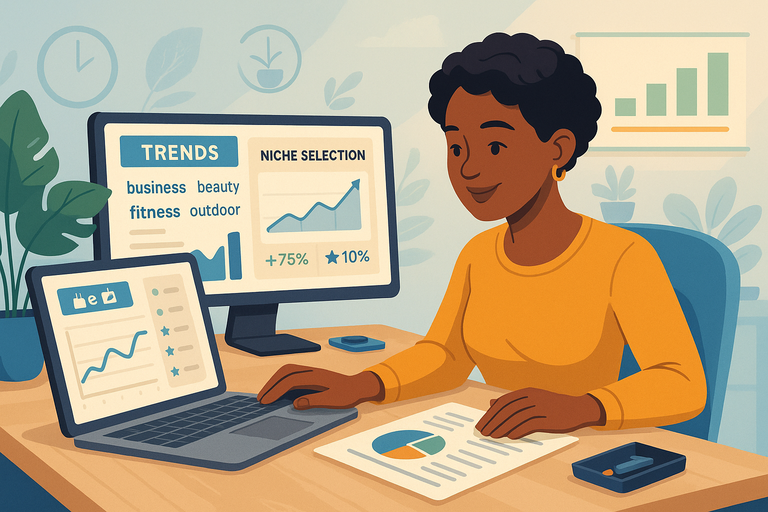
Finding the right niche is the cornerstone of a sustainable Shopify dropshipping business. Your niche determines your brand voice, marketing angles, and long-term growth potential.
How to Identify High-Demand, Low-Competition Niches
The secret lies in spotting products people want but that aren’t yet everywhere. A good niche strikes a balance between passion, demand, and manageable competition.
Here’s what I suggest you look for:
- Emotional triggers: Products that solve a pain point or create delight.
- Specific audiences: Target groups like pet owners, gamers, or travelers.
- Consistent demand: Use Google Trends to check interest stability.
For instance, ergonomic office accessories became a booming niche as remote work exploded. It’s relatable, evergreen, and easily expandable into related product lines.
I recommend asking yourself: “Would I buy this product?” If you wouldn’t, it’s probably not the right niche.
Tools to Research Trending Dropshipping Niches
You don’t need to guess what sells—there are tools to help you find it.
My go-to tools include:
- Google Trends: See search volume trends over time.
- Ecomhunt: Lists trending products and ad examples.
- Niche Scraper: Provides detailed analytics on engagement, pricing, and demand.
When using tools like Ecomhunt, don’t just copy a trending product—analyze why it’s trending. Is it seasonal? Is the creative unique? That insight helps you find your own angle.
Evaluating Profit Margins and Market Sustainability
Not all products are profitable, even if they’re popular. To make sure your niche is sustainable, run a quick margin check.
Here’s how I do it:
- Find your cost per product (from AliExpress or supplier).
- Estimate your shipping cost (or use ePacket-free options).
- Subtract your ad spend per sale.
- Ensure at least a 30–40% margin after all expenses.
Example: If a product costs $10 and ships free, and you sell it for $29.99, your gross margin is roughly $19.99. Subtracting ad and transaction costs leaves about $10 profit—sustainable for scaling.
Think long-term. Choose products you can brand or bundle later instead of quick fads that vanish after one season.
Examples of Evergreen and Seasonal Dropshipping Niches
To give you a clearer idea, here’s a snapshot of proven niche types:
Evergreen Niches (sell all year round):
- Pet care (toys, grooming tools)
- Home fitness (resistance bands, yoga accessories)
- Beauty and skincare (face rollers, serums)
- Smart home gadgets (LED strips, organizers)
Seasonal Niches (spike during certain times):
- Outdoor gear (summer camping, winter hiking)
- Holiday decor (Christmas lights, Halloween costumes)
- Fitness resolutions (January gym products)
The smartest strategy? Blend both. Use evergreen niches to maintain consistent cash flow, and layer in seasonal winners for quick profit bursts.
Finding Winning Products That Actually Sell
Finding products that truly sell is where most Shopify dropshipping stores either win big or fade fast. You can have the best-looking website and clever ads, but without the right products, it all falls apart.
The goal is to find products that hit the sweet spot between demand, profit margin, and long-term scalability.
How to Spot Trending Products Before They Saturate
The trick to Shopify dropshipping success is getting in early—before everyone else floods the market. I’ve learned that identifying trends isn’t about guessing; it’s about watching behavior and data.
Start by checking Google Trends to see if a product’s search interest is rising or falling. Pair that with TikTok Creative Center or Meta Ad Library to see what products are going viral in real time.
If you’re seeing multiple creators advertise similar items, but ads are still getting engagement, you’ve likely found a growing trend.
For example, the “portable blender” niche exploded after influencers started showing smoothie recipes on TikTok. Those who caught on early made consistent five-figure months before it got oversaturated.
Here’s a simple rule I use:
- If you’ve seen a product in fewer than five ads, it’s emerging.
- If you’ve seen it in over ten, it’s competitive but viable.
- If it’s everywhere, move on—it’s saturated.
Trends are temporary, but timing them right gives you the edge.
Using Product Research Tools Like AliExpress, Zendrop, and CJ Dropshipping
You don’t need to reinvent the wheel—there are dedicated tools built to help you uncover top-performing products fast. Each has its strengths, and I’ll explain how I use them in practice.
- AliExpress: It’s the largest global supplier marketplace. To research here, sort by Orders and 4+ star reviews. This tells you what people are buying in volume. But be careful—AliExpress can have long shipping times.
- Zendrop: Offers faster US and EU shipping with branded packaging. Inside Zendrop, navigate to Explore → Trending Products to find high-demand items with verified fulfillment rates.
- CJ Dropshipping: I use CJ when I want to customize packaging or white-label a product. The platform also lets you request sourcing directly if you’ve found a winner elsewhere.
Pro tip: Combine these tools with a browser extension like AliSave to download product images and videos quickly. Then test variations in your ad creatives.
If you’re just starting out, I suggest shortlisting 5–10 potential products, testing them with small ad budgets, and doubling down on what converts best.
Analyzing Product Reviews, Ratings, and Market Fit
Once you’ve found potential items, it’s time to validate them. Product validation is your insurance against wasting money on low-quality or unpopular products.
Here’s what I look for before adding a product to my Shopify store:
- Rating of at least 4.5 stars on supplier sites.
- Over 100 verified reviews showing consistent satisfaction.
- Recent orders—it signals the product is still in demand.
I also study reviews to see what customers love and hate. Those insights help shape your marketing copy. For example, if many customers mention “great for travel,” that phrase becomes part of your ad or product description.
A simple example: When analyzing a mini projector, I noticed multiple buyers said “perfect for small bedrooms.” That became the angle for my Facebook ads—“Turn any bedroom wall into a home theater.”
The goal isn’t just to find products people buy—it’s to find products people rave about.
Criteria for Selecting Products With High Conversion Potential
A “winning” product doesn’t just sell—it converts easily with the right marketing. Over the years, I’ve narrowed my checklist down to a few key factors:
- Solves a clear problem: Problem-solving products (like posture correctors or hair-removal devices) convert faster because the value is obvious.
- Strong emotional pull: Emotional triggers like excitement, confidence, or relief make people click “Buy Now.”
- Lightweight and easy to ship: Keep product weight under 2 lbs to minimize shipping costs and avoid damage.
- Room for a 3x markup: If your supplier cost is $10, aim to sell at $29.99 or higher for healthy profit margins.
- Video potential: If you can demonstrate it in a short TikTok or reel, it’s a winner.
Here’s a personal tip—I always visualize the product in a video ad before testing it. If I can’t imagine a compelling 15-second demo, it’s probably not a strong choice.
A winning Shopify dropshipping product doesn’t need to be flashy—it just needs to connect with real people and solve something they care about.
Setting Up Your Shopify Store for Success
Your Shopify store is your digital storefront—it’s the first impression people get of your brand.
A clean, trustworthy, and easy-to-navigate store can turn browsers into buyers faster than any ad campaign.
Step-by-Step Guide to Launching Your Shopify Store
Setting up your Shopify store only takes a few hours if you follow a clear process. Here’s how I typically do it:
- Sign up for Shopify and start the 3-day free trial.
- Pick a memorable store name—use Shopify’s built-in name generator if you’re stuck.
- Choose your theme (I recommend “Dawn” or “Sense” for clean, conversion-friendly designs).
- Add your products using DSers or Appscenic by clicking Apps → Add Product to Store.
- Set up your domain through Shopify or connect an existing one.
- Configure payment gateways (Settings → Payments → Activate Shopify Payments).
- Test everything by placing a test order.
Think of this step as laying your business foundation. You’re not just launching a store—you’re building a brand.
How to Choose a Theme That Boosts Conversions
Your theme shapes how people experience your store. I believe in keeping it simple, fast, and visually consistent. Avoid clutter.
Here’s what I look for in a Shopify theme:
- Speed: Fast-loading pages increase conversions by up to 15%.
- Clarity: Minimalist layouts help highlight product images and CTAs (Call To Actions).
- Mobile optimization: More than 70% of dropshipping traffic comes from mobile.
Themes like Dawn (free) and Impulse (premium) perform exceptionally well. Once installed, use Online Store → Customize to adjust fonts, button colors, and hero images.
One small trick I use—set your Add to Cart button to a bold color like orange or green. It draws attention and subtly boosts click rates.
Crafting Compelling Product Descriptions and Images
Your product page is where buyers decide to trust you—or leave. The description should answer one question clearly: “Why should I buy this now?”
A strong structure looks like this:
- Hook: One-sentence benefit (“Transform your workspace in seconds.”)
- Problem: Identify the pain point.
- Solution: Introduce your product naturally.
- Features/Benefits: Use bullet points for clarity.
- Call to Action: “Order today to enjoy free shipping.”
I always write in a conversational tone, almost like I’m explaining it to a friend. Avoid manufacturer jargon.
For images, use high-resolution shots from multiple angles. If possible, record a short demo video. Shopify’s Media Upload supports videos directly on product pages—just drag and drop under the Media section.
Setting Up Payment Gateways and Shipping Options
Payments and shipping are where trust and convenience come together.
For payments:
- Use Shopify Payments (quickest setup).
- Add PayPal Express Checkout for customer convenience.
- Offer Shop Pay for one-click mobile checkouts.
In your admin panel:
- Go to Settings → Payments → Manage to enable each option.
For shipping:
- Navigate to Settings → Shipping and Delivery.
- Create flat rates for local and international customers.
- Offer free shipping above a certain threshold to increase average order value.
I usually set mine to: “Free shipping on orders over $50.” It subtly nudges customers to add more items.
Legal Essentials: Refund Policies, Privacy, and Terms of Service
Every professional Shopify dropshipping store needs clear legal pages. These protect both you and your customers while building credibility.
Shopify makes it simple:
- Go to Settings → Policies.
- Use the Create from Template button for Privacy Policy, Refund Policy, and Terms of Service.
- Customize them with your brand tone and contact details.
A quick personal recommendation—always include a transparent Shipping Policy. Mention expected delivery times (e.g., 7–15 days) and update it if you add new suppliers.
These policies aren’t just paperwork—they’re part of building a brand people trust. A customer who feels safe will buy again and again.
Optimizing Your Shopify Dropshipping Store for Conversions
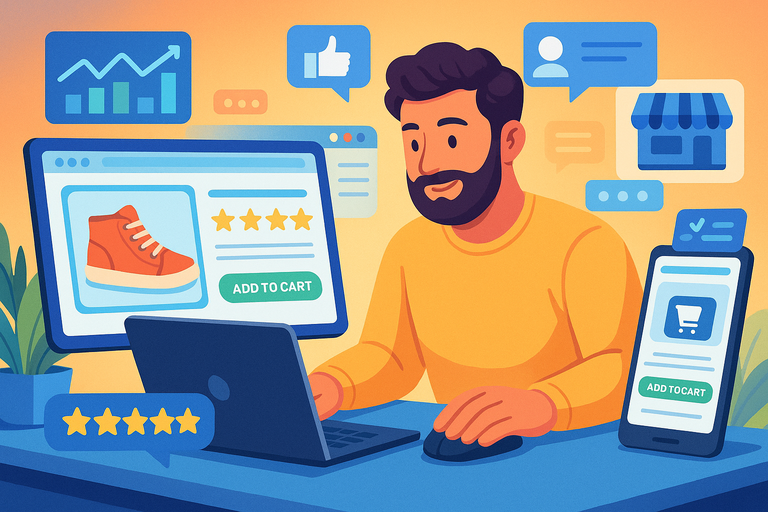
Once your store is live, the real work begins—turning visitors into paying customers. Conversion optimization is about building trust, removing friction, and guiding people toward a purchase naturally.
Every small improvement you make here compounds into more sales and higher profit margins.
How to Design a High-Converting Product Page
Your product page is where people decide whether to buy or bounce. A clean layout, emotional storytelling, and clear CTAs (calls to action) can make all the difference.
Here’s the structure I use for a product page that converts:
- Eye-catching visuals: Use 3–5 high-resolution photos, plus one short product demo video.
- Headline that sells: Focus on benefits, not features. For example, “Sleep Better Every Night with This Memory Foam Pillow.”
- Persuasive copy: Explain how your product solves a specific problem.
- Urgency and scarcity: Use tools like “Countdown Timer by POWR” for limited offers.
- Strong CTA button: Keep it above the fold and use contrasting colors like orange or green.
One small trick: Include “Frequently Bought Together” bundles right below the Add to Cart button. I’ve seen this single tweak increase AOV (average order value) by 20%.
Best Practices for Mobile Optimization and Fast Load Speeds
More than 70% of Shopify dropshipping traffic comes from mobile devices, so mobile-first design isn’t optional—it’s essential.
To optimize for mobile:
- Use Shopify’s built-in mobile preview under Online Store → Themes → Customize.
- Keep text short and scannable; avoid large paragraphs.
- Ensure buttons are big enough for thumbs and placed where users can easily tap.
- Compress images using tools like TinyPNG or Shopify’s Built-in Image Optimizer.
In my experience, aiming for a load time under three seconds can cut bounce rates by nearly half. If your store feels slow, disable unnecessary apps or switch to a lightweight theme like Dawn.
Fast stores don’t just convert better—they rank better on Google, too.
Building Trust Through Reviews, Guarantees, and Social Proof
Trust is your biggest conversion booster. Since dropshipping customers can’t touch or test your product, you must make them feel safe.
Here’s what works best:
- Product reviews: Use apps like Loox or Judge.me to display authentic customer photos and testimonials.
- Trust badges: Add payment and security icons below your Add to Cart button.
- Money-back guarantee: A simple “30-Day Satisfaction Guarantee” often removes buying hesitation.
- Social proof: Showcase real-time purchases using Sales Pop by Beeketing.
A real-world example: When I added Loox photo reviews to one of my gadget stores, conversion rates jumped from 2.3% to 3.9% within two weeks. That’s the power of proof.
Upselling and Cross-Selling Strategies That Increase Order Value
Upselling (encouraging customers to buy a higher-priced version) and cross-selling (offering complementary items) are the easiest ways to boost profit without extra ad spend.
I recommend these simple tactics:
- One-click upsells: Use apps like Zipify for post-purchase upsells.
- In-cart recommendations: Add small accessories that complement the main item.
- Bundles: Offer “Buy 2 Get 1 Free” deals or “Starter Kits.”
For example, if you’re selling a posture corrector, cross-sell a back-stretching mat. These add-ons usually increase total revenue by 10–30%.
The key is to keep offers relevant and non-intrusive—helpful, not pushy.
Driving Traffic to Your Shopify Dropshipping Store
You can have a perfect store and great products, but without traffic, nothing moves. Think of traffic like oxygen—it keeps your Shopify dropshipping business alive.
The trick is balancing short-term paid ads with long-term organic growth.
How to Use Facebook and Instagram Ads for Shopify Dropshipping
Facebook and Instagram remain the bread and butter of paid traffic for dropshippers. The algorithm allows you to reach your ideal audience quickly if you structure your campaigns right.
Here’s a simple setup I often use:
- Campaign type: Start with Sales → Conversions.
- Ad set: Target interests related to your niche (e.g., for home gadgets: “Smart Home,” “DIY,” “Home Decor”).
- Ad creatives: Use short, eye-catching videos (15–30 seconds). Focus on product demonstration, not features.
- Budget: Start small ($10–20 per day per ad set).
Once you see consistent engagement and 2–3 sales per day, duplicate your winning ad and scale gradually.
Pro tip: Use Meta Pixel in Shopify (Online Store → Preferences → Facebook Pixel) to track conversions accurately.
Leveraging TikTok Organic and Paid Strategies for Rapid Growth
TikTok is currently the most underpriced traffic source for Shopify dropshipping. I suggest starting organically before spending on ads—it’s faster than you might think.
Here’s how I approach it:
- Post 2–3 short videos daily showing product use cases or before/after results.
- Keep them native (no fancy editing or logos).
- Use trending sounds and hashtags related to your product.
Once you find a video that gains traction, promote it through TikTok Ads Manager → Create Campaign → Traffic/Conversions.
One of my favorite examples: A store selling “LED Galaxy Projectors” went from zero to 100K followers by posting daily room transformation videos. That’s free viral exposure turned into consistent sales.
The Role of Google Ads and SEO in Sustained Traffic
Paid ads are great for fast results, but SEO and Google Ads are what bring stability over time.
For Google Ads:
- Run Shopping Ads to show your products at the top of search results.
- Use Performance Max campaigns for automated optimization.
For SEO:
- Optimize product titles (include keywords naturally).
- Add meta descriptions under Online Store → Preferences.
- Create blog posts around your niche (e.g., “Best Posture Correction Tools for Remote Workers”).
It may take 2–3 months to see traction, but organic traffic compounds—it’s worth the investment.
Building an Email List and Retargeting Visitors for Repeat Sales
Most visitors won’t buy on their first visit. Retargeting and email follow-ups keep your brand in their mind until they’re ready.
Here’s what I use:
- Pop-ups: Capture emails using Omnisend.
- Automations: Send a welcome sequence with a 10% discount code.
- Retargeting ads: Use Facebook or Google Display to remind visitors of viewed products.
- Abandoned cart recovery: Enable this under Shopify → Settings → Checkout → Abandoned Checkouts.
A quick story: After setting up a three-email abandoned cart flow for one store, recovery rates jumped from 5% to 17%. It’s one of the easiest, highest-ROI fixes you can make.
Mastering Customer Experience and Retention
A happy customer is worth far more than a new one. Great customer experience isn’t just about service—it’s about communication, transparency, and small moments that make people feel valued.
How to Provide Excellent Customer Support Without Burning Out
Customer support can be overwhelming as orders grow, but automation helps.
I recommend setting up:
- Auto-reply emails using Shopify Inbox or Gorgias.
- FAQ page covering delivery times, returns, and order tracking.
- Chatbots for instant responses (Tidio and ManyChat work well).
Still, I personally respond to complex messages when possible—it builds loyalty. Even a quick “Hey, I’m really sorry about that, we’ll fix it” can turn frustration into trust.
Managing Shipping Times and Handling Refunds Professionally
Shipping delays happen—it’s part of dropshipping. The key is managing expectations upfront.
Here’s what I suggest:
- Clearly state shipping times (e.g., “7–15 business days”) on product pages.
- Use 17Track to provide tracking updates automatically.
- Offer refunds gracefully. A polite tone can save your reputation.
I once had a customer receive the wrong color item. I apologized, sent a replacement, and refunded 20%—they later left a 5-star review. Sometimes empathy is better marketing than ads.
Using Loyalty Programs and Email Campaigns to Drive Repeat Purchases
Once customers trust you, give them reasons to return. Loyalty programs and personalized emails make that easy.
Loyalty ideas:
- Reward points for purchases or referrals (via Smile.io).
- Send “birthday discounts” to your subscribers.
- Offer early access to new collections.
Pair this with Klaviyo email automation. Segment buyers by product and send them complementary offers. For example, someone who bought yoga gear could receive an email for new resistance bands.
Turning First-Time Buyers Into Long-Term Customers
Retention comes down to consistency—delivering quality and maintaining connection.
I advise sending a simple post-purchase message like, “Thanks for trusting us. Here’s 10% off your next order.” It shows appreciation without pushing for another sale immediately.
Over time, add value through helpful tips or lifestyle content related to your niche. If you sell pet products, share training guides or pet care tips. The goal is to become more than a store—you want to become part of their routine.
In the long run, customer retention is what turns a Shopify dropshipping store from a side hustle into a sustainable brand.
Automating and Scaling Your Shopify Dropshipping Business
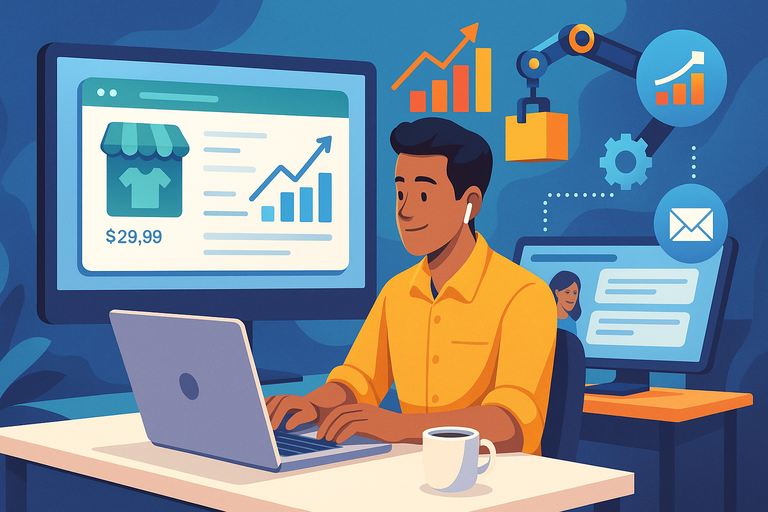
Scaling your Shopify dropshipping store is about creating systems that free up your time while increasing sales.
Automation doesn’t just save hours—it eliminates human error and helps you focus on strategy instead of repetitive tasks.
How to Automate Fulfillment, Inventory, and Customer Communication
Once your store begins to grow, managing orders manually can quickly become overwhelming. Automating your backend processes keeps your store running smoothly, even while you sleep.
Automate Fulfillment:
- Use apps like Dropified or AutoDS to automatically send orders to your suppliers once customers check out.
- In Shopify, enable Automatic Fulfillment Notifications under Settings → Checkout → Order Processing. This ensures customers get instant tracking updates.
Automate Inventory:
- Set up real-time inventory syncing between your supplier and Shopify. This prevents overselling.
- Most apps (like CJ Dropshipping) automatically update product availability, so your listings stay accurate.
Automate Customer Communication:
- Use Shopify Inbox or Gorgias for AI-powered chat responses.
- Create automated email sequences through Klaviyo—for example, an order confirmation, shipping update, and “thank you” email.
I personally recommend writing your first few customer emails yourself. Once they feel right, automate them. That way, your brand voice stays human, not robotic.
Tools and Apps That Simplify Daily Operations (CJ Dropshipping, DSers, AutoDS)
There’s no shortage of tools for Shopify dropshipping, but only a few are worth your time. Here are the ones I actually use and why:
- DSers: The official AliExpress partner for order automation. Great for bulk ordering and auto-tracking updates.
- AutoDS: All-in-one automation for product imports, price monitoring, and smart fulfillment.
- CJ Dropshipping: Ideal for custom packaging and private labeling once you grow.
- Klaviyo: Advanced email marketing tool for abandoned carts and upsells.
- Shopify Flow: Free automation tool for repetitive tasks like tagging high-value customers.
Imagine processing 200 orders a day manually—it’s chaos. These tools turn that into a single click, keeping your workflow clean and scalable.
When and How to Outsource Tasks for Growth
As you scale, outsourcing becomes your best investment. Focus your energy on strategy and creative decisions—let others handle the repetitive work.
I usually suggest outsourcing when you reach about $10,000/month in sales. That’s when your time becomes more valuable than the cost of hiring.
Here’s where to start:
- Customer Support: Hire a VA (Virtual Assistant) from platforms like Fiverr or Upwork for handling support tickets.
- Content Creation: Delegate ad creatives or product photos to freelancers.
- Order Management: Train a VA to double-check automated orders daily.
A helpful tip: document every process in Google Docs before hiring. This makes onboarding faster and ensures your business doesn’t collapse if someone leaves.
Scaling With Data: Using Analytics to Optimize Ads and Profit Margins
Growth without data is guesswork. Shopify Analytics, combined with ad dashboards, tells you exactly where your profit and loss points are.
Track key metrics:
- Conversion rate (CVR)
- Customer acquisition cost (CAC)
- Average order value (AOV)
- Return on ad spend (ROAS)
In Shopify, go to Analytics → Reports → Sales by Channel to see which traffic sources perform best.
I also recommend linking Google Analytics and Meta Pixel to track ad effectiveness. If your ROAS drops below 1.5, pause and re-evaluate your creatives.
When scaling, I like to reinvest 20–30% of profits into testing new audiences and creative formats. That balance keeps growth consistent without overexposing your budget.
Avoiding Common Shopify Dropshipping Mistakes
Dropshipping is powerful—but it’s easy to lose money if you repeat beginner mistakes. I’ve seen many stores fail not because of bad products, but because of poor systems and unrealistic expectations.
Why Most Beginners Fail and How to Avoid Their Pitfalls
Most beginners treat dropshipping like a quick-cash scheme, not a business. That mindset is the first mistake.
Here’s what typically causes failure:
- Chasing trends without testing products.
- Copying competitors blindly.
- Ignoring customer service.
- Not analyzing performance data.
If you focus on quality over quantity and reinvest profits wisely, you’ll last far longer than 90% of new sellers. The key is to treat each failure as data, not defeat.
Red Flags When Choosing Suppliers or Products
A bad supplier can destroy your business faster than a bad ad.
Red flags to watch for:
- Slow or inconsistent communication.
- No real order tracking.
- Generic or copied product descriptions.
- Unrealistic shipping promises.
Before working with a supplier, place a test order yourself. I always do this—it’s the only way to confirm quality, packaging, and shipping times.
Stick with suppliers who have at least a 95% fulfillment rate and consistent product reviews.
Common Ad Spend Mistakes That Drain Profits
Many store owners burn through ad budgets without tracking what’s actually working.
Avoid these pitfalls:
- Running ads without a clear testing strategy.
- Scaling too early (before at least 20 sales).
- Ignoring creative fatigue—ads get stale quickly.
- Not tracking profitability beyond ROAS.
I advise using tools like Triple Whale or BeProfit to calculate real profit margins after ad spend and fees. You’ll be surprised how often “winning” campaigns aren’t actually profitable.
Staying Compliant With Shopify Policies and Advertising Rules
Shopify has strict rules on certain niches (like health, CBD, and supplements). Always review the Shopify Acceptable Use Policy before launching a store.
On Facebook and Google, avoid making exaggerated claims (“Lose 20 pounds in a week”)—it’ll get your account banned.
If you’re running user-generated content ads, make sure to get permission from creators before using their footage. One copyright strike can shut down your ad account.
Compliance isn’t exciting, but it keeps your business alive long enough to grow.
Advanced Strategies to Scale Beyond Six Figures
Once your Shopify dropshipping business is profitable, scaling to six figures and beyond requires thinking like a brand, not a reseller.
Building a Unique Brand Instead of a Generic Store
A branded store builds loyalty and long-term sales. Customers remember you for the experience, not just the product.
Here’s what I do to brand effectively:
- Create a consistent logo and color palette using Canva.
- Customize packaging via SourcinBox.
- Use your own product photos instead of supplier ones.
When people feel connected to your brand story, they’re more likely to buy again—even at higher prices.
Using Influencer Partnerships to Drive Explosive Growth
Influencers can take your Shopify dropshipping business from steady to viral.
Start small: Partner with micro-influencers (10K–50K followers) who actually engage with their audience. Offer them free products or commission-based payments.
Example: A fitness influencer promoting a resistance band store can generate hundreds of sales in one weekend if their content feels authentic.
For paid deals, always request performance metrics (likes, comments, conversion data) before paying. Authenticity beats follower count every time.
Expanding to International Markets Strategically
Scaling globally sounds exciting, but do it smartly.
Steps I recommend:
- Start with English-speaking countries (US, UK, Canada, Australia).
- Once stable, translate your store using Langify.
- Partner with suppliers offering local warehouses to reduce shipping times.
International expansion should feel seamless—customers shouldn’t even realize they’re buying from overseas.
Transitioning From Dropshipping to Private Labeling for Long-Term Success
Private labeling is the natural next step when you’ve validated a winning product. It lets you own your brand, control quality, and build equity.
To start:
- Identify your best-performing product.
- Contact your supplier about custom branding.
- Order a small MOQ (minimum order quantity) to test packaging and logo placement.
Private labeling can double your profit margins while improving customer trust. It’s the difference between a short-term hustle and a long-term brand.
Pro Tips for Sustainable Shopify Dropshipping Growth
Long-term success in Shopify dropshipping is about consistency and adaptability. You don’t need to move fast—you need to move smart.
How to Continuously Test and Improve Your Store’s Performance
I believe testing is the secret weapon behind every profitable store. Every week, test one new thing—headline, price, ad creative, or email subject line.
Use Shopify Analytics → Behavior Reports to identify pages with high bounce rates, then optimize them.
Even small changes, like adjusting button placement or product titles, can lead to big conversion lifts over time.
The Importance of Data-Driven Decision Making
Relying on gut feelings is risky. Data gives you clarity.
I recommend checking these numbers weekly:
- Ad ROAS (return on ad spend)
- Profit margins
- Customer lifetime value (LTV)
- Refund rate
Shopify’s built-in reports plus tools like Lifetimely give you precise insight into performance. Data doesn’t lie—it tells you where to focus next.
Reinvesting Profits Wisely for Long-Term Business Health
When profits start rolling in, it’s tempting to spend big. I suggest a simple reinvestment strategy:
- 40% into scaling ads and testing new products.
- 30% into branding and improving customer experience.
- 20% into savings and taxes.
- 10% personal income or emergency fund.
The goal isn’t just to make money—it’s to build something sustainable.
Expert Insights: What Separates Winning Stores From the Rest
From my experience, winning Shopify dropshipping stores share three traits:
- They obsess over customer experience, not just sales.
- They focus on data and systems, not luck.
- They evolve constantly—adapting to new platforms, trends, and tools.
The truth is, anyone can start a Shopify store. But it’s the ones who treat it like a real business—testing, learning, and improving daily—that build lasting success.
Scaling in Shopify dropshipping isn’t just about making more sales. It’s about building something that runs smoothly, delivers real value, and grows even when you’re not watching every second.

I’m Juxhin, the voice behind The Justifiable.
I’ve spent 6+ years building blogs, managing affiliate campaigns, and testing the messy world of online business. Here, I cut the fluff and share the strategies that actually move the needle — so you can build income that’s sustainable, not speculative.
Related posts:
 How to Use Dsers Shopify for Seamless Dropshipping
 Discover 5 Best Dropshipping Sites: Boost Your Sales Now!
 What Is Dropshipping Meaning? A Complete Breakdown
 How to Launch a Dropshipping Startup From Scratch
 Salehoo and Shopify: How to Connect Them for Profit Fast
 How to Make Money Dropshipping: 7 Secrets to a $10K/Month