
Table of Contents
Some links on The Justifiable are affiliate links, meaning we may earn a small commission at no extra cost to you. Read full disclaimer.
What Is Headless Commerce? Headless commerce is changing the way online stores are built—and fast. But what exactly is headless commerce, and why is it becoming the backbone of modern ecommerce?
As digital shoppers expect more personalized, lightning-fast experiences, traditional ecommerce platforms are struggling to keep up.
Headless commerce promises flexibility, speed, and innovation—but how does it really work, and why are top brands making the switch?
Let’s break it down step by step and explore what makes this approach the future of ecommerce.
Understanding What Headless Commerce Really Means
Headless commerce is like taking the “body” of your online store apart so each part can work smarter, faster, and independently.
Instead of one rigid system doing everything, you separate the frontend (what shoppers see) from the backend (where all the logic, inventory, and payments live).
This gives businesses the freedom to build, experiment, and innovate without breaking the whole structure every time they make a change.
The Separation of Frontend and Backend in Headless Architecture
In traditional ecommerce, the frontend and backend are tightly coupled. Changing one often risks breaking the other. In headless commerce, they’re completely decoupled—connected only through APIs.
Example: Imagine your frontend is built with React or Next.js (the “face” your customers interact with), while your backend runs on Shopify, BigCommerce, or a custom CMS. These two systems talk through APIs—essentially digital translators that pass data back and forth in real time.
Why this matters:
- You can redesign your storefront without touching backend systems.
- Backend processes like order management, checkout, or inventory updates continue to function regardless of how the frontend looks.
- This means faster testing, quicker updates, and more design flexibility.
I often describe it like this: Headless commerce lets your developers experiment on the stage while your backstage systems keep the show running smoothly.
How APIs Connect Content, Design, and Functionality Seamlessly
APIs (Application Programming Interfaces) are the unsung heroes of headless commerce. They act as messengers that deliver data—like product information, user reviews, or prices—from the backend to the frontend in milliseconds.
Let me break it down simply:
- Your CMS (say, Contentful or Strapi) stores content.
- Your ecommerce backend (like Shopify Plus) holds product data.
- APIs connect these two worlds, allowing your site to display updated prices, descriptions, or images instantly.
This approach also means you can connect any service you want—recommendation engines, analytics tools, or even AI-based personalization systems—without rebuilding your whole store. It’s plug-and-play flexibility.
Traditional vs. Headless Commerce: Core Technical Differences
Here’s where the real technical distinction lies.
| Feature | Traditional Ecommerce | Headless Commerce |
| Architecture | Monolithic (single system) | Decoupled (frontend & backend separate) |
| Flexibility | Limited to platform templates | Fully customizable design |
| Speed | Often slower due to coupled systems | Faster with API delivery |
| Integrations | Restricted or complex | Simple API connections |
| Innovation | Slower iteration cycles | Rapid experimentation possible |
Traditional platforms like Magento or WooCommerce tie everything together, which can make customization heavy and slow. Headless commerce removes that constraint, letting you connect best-in-class tools across your stack.
In my experience, once teams experience the freedom of decoupling, it’s hard to go back—it’s like trading an old desktop PC for a modular laptop that lets you upgrade everything easily.
Why Developers and Marketers Benefit from This Split
Headless commerce doesn’t just make developers happy—it empowers marketers too.
For developers:
- They can work with their preferred languages and frameworks.
- They’re not stuck with outdated templating engines.
- Continuous deployment becomes easier and safer.
For marketers:
- Frontend changes (like landing pages or seasonal updates) can go live faster.
- Content teams can use their own CMS without waiting for developer cycles.
- A/B testing and personalization tools are easier to integrate.
It’s a win-win: developers focus on performance and infrastructure while marketers move faster on campaigns and content. That’s the magic of decoupling—you get agility across the board.
Why Businesses Are Adopting Headless Commerce
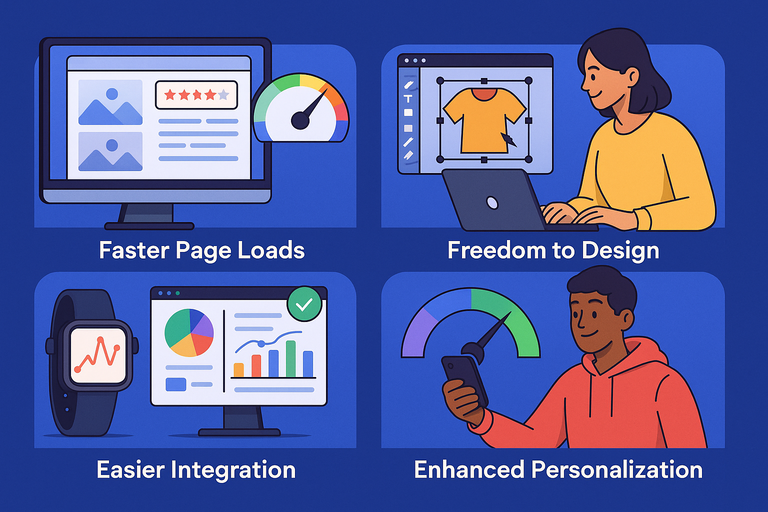
The shift toward headless commerce isn’t just hype—it’s a response to growing expectations for speed, personalization, and seamless experiences.
Businesses are tired of being boxed in by traditional platforms that can’t evolve as fast as customers do.
Faster Page Loads and Improved Customer Experience
In ecommerce, milliseconds matter. A delay of just one second can drop conversions by up to 7%. Headless systems load faster because they can serve content directly from optimized frontend frameworks and CDNs (content delivery networks).
Example: A React-based headless storefront can pre-render pages, meaning your user sees the page almost instantly rather than waiting for the backend to build it on the fly.
Speed not only improves UX but also boosts SEO rankings—Google rewards faster sites. I’ve seen businesses move to headless setups and see double-digit improvements in conversion rates purely from performance gains.
Freedom to Design Unique Frontends Without Platform Limits
Most legacy ecommerce systems force brands into cookie-cutter templates. Headless removes that constraint. Designers and developers can create unique, brand-first experiences using modern frameworks like Next.js or Vue.
You can build:
- Progressive Web Apps (PWAs) for mobile shopping
- Custom landing pages tied to campaigns
- Multi-brand experiences that share a backend but look entirely different
When you’re not locked into rigid templates, creativity flows freely—and so does revenue.
Easier Integration with Modern Tools and Emerging Technologies
In the traditional model, adding a new tool often means hacking the core codebase. Headless commerce solves this elegantly through APIs.
For instance, you can connect:
- AI recommendation engines (like Nosto or Algolia)
- Voice shopping integrations (Alexa, Google Assistant)
- Augmented reality (AR) preview tools for products
This makes your ecommerce setup future-ready. You’re not waiting on a platform’s roadmap—you build your own.
Enhanced Personalization Through Real-Time Data Connections
Customers expect experiences that feel made for them. Headless commerce allows you to pull live customer data from CRMs, analytics tools, or personalization engines and display it instantly.
Imagine showing returning users their favorite categories, abandoned cart items, or dynamic pricing—all powered by real-time APIs. That’s what headless enables.
It’s like upgrading from a static shop window to a responsive, data-driven concierge who knows every customer’s preferences.
The Key Technologies Powering Headless Commerce
Under the hood, headless commerce relies on a few key technologies that make this flexibility possible.
API-First Systems and Their Role in Modern Ecommerce
API-first systems are built with connectivity in mind. Instead of being an afterthought, APIs are the foundation. That means every piece of data—from products to inventory—is available to any frontend or third-party tool via API.
In practice: A platform like Commerce Layer or Shopify Hydrogen provides structured APIs that developers can call to fetch or send data. This opens the door for headless frontends, mobile apps, in-store kiosks, and even IoT devices to share the same backend logic.
The Rise of Microservices Architecture for Scalability
Microservices architecture breaks your ecommerce backend into small, specialized services—like inventory, payments, and search—each running independently.
Benefits include:
- Faster scaling during traffic spikes (like Black Friday)
- Easier debugging and maintenance
- The ability to replace or upgrade one component without affecting others
This modular structure fits perfectly with headless setups, allowing teams to innovate continuously without taking the entire system offline.
JAMstack and Its Influence on Headless Storefronts
JAMstack (JavaScript, APIs, and Markup) is the backbone of many headless storefronts. It allows pre-rendering of static content and then enhancing it dynamically with APIs.
Why it’s powerful:
- Pages load blazingly fast
- Improved security (less server dependency)
- Simplified scaling with global CDN distribution
If you’ve ever browsed a site that loads almost instantly while still being highly interactive—that’s JAMstack in action.
How GraphQL Improves Data Fetching and Performance
GraphQL, an alternative to REST APIs, lets frontends request exactly the data they need—nothing more, nothing less.
Example: Instead of pulling an entire product object when you only need the name and price, GraphQL allows you to fetch those two fields specifically.
Advantages:
- Reduces network load and speeds up page rendering
- Simplifies complex data relationships
- Makes API responses cleaner and more predictable
Developers love GraphQL for its efficiency, and marketers love it for the speed it brings to their campaigns. Together, it’s a perfect match for high-performance commerce.
How Headless Commerce Transforms The Customer Journey
Headless commerce isn’t just a backend evolution—it completely reshapes how customers experience your brand. Every touchpoint, from mobile browsing to smart devices, can be unified under one consistent, data-driven ecosystem.
When your frontend and backend are decoupled, your customers feel that difference instantly—faster pages, smoother checkouts, and experiences that feel crafted just for them.
Delivering Omnichannel Experiences Across Devices and Platforms
One of the most powerful advantages of headless commerce is true omnichannel capability. It means your customers can start a shopping journey on one device and continue seamlessly on another.
Let me paint a picture: A customer adds sneakers to their cart using your mobile app in the morning.
Later, they visit your desktop site to compare colors, and by evening, they complete the purchase through a smart voice assistant like Alexa—all powered by the same backend APIs.
Why this matters:
- Unified data flow: Inventory, prices, and promotions stay consistent across every platform.
- Brand consistency: Whether your store lives on a website, mobile app, or even a car dashboard, your message and tone remain the same.
- Customer convenience: You remove friction from the shopping journey, which boosts conversion rates and loyalty.
I always tell ecommerce teams that headless isn’t just a tech shift—it’s a way of letting customers shop however they want, without you losing control of the experience.
Dynamic Content Delivery For Personalized Shopping
Personalization isn’t a buzzword anymore—it’s an expectation. Headless commerce enables real-time content delivery based on customer behavior, preferences, or even location.
Here’s how it works:
Your backend stores dynamic content rules (for instance, “show winter jackets to users from colder regions”). Through APIs, the frontend fetches relevant data and instantly updates the product grid or homepage banners.
In practice, it feels like your site is reading your customer’s mind. A first-time visitor sees bestsellers, while a returning customer sees items related to their last purchase.
This kind of tailored shopping not only improves engagement but can also increase conversion rates by up to 20%, according to recent Adobe research.
I’ve seen brands use this tactic during major campaigns to double click-through rates on personalized recommendations.
Real-Time Updates And Seamless Checkout Experiences
One of the biggest frustrations for shoppers is lag—slow loading, delayed stock updates, or clunky checkout flows. Headless commerce solves this elegantly.
Because APIs constantly sync data between frontend and backend, inventory changes, price adjustments, or promotions appear instantly—no manual updates required.
For example:
- Inventory sync: When an item sells out on your POS system, it’s automatically marked “Out of Stock” online.
- Price adjustments: Discounts apply in real time during flash sales.
- Checkout process: APIs allow you to integrate third-party payment gateways (like Stripe or Klarna) without rebuilding your entire checkout flow.
In short, headless turns the checkout into a fluid, responsive experience—something I’d argue is essential for mobile-first users today.
Consistent Branding And UX Across All Customer Touchpoints
When you’re managing multiple digital storefronts—say, a main website, app, and regional microsites—maintaining brand consistency becomes tricky.
Headless commerce eliminates that risk by allowing design teams to control every frontend experience from a shared backend.
This leads to:
- Consistent visual identity and tone across channels
- Centralized content management with localized flexibility
- Faster rollout of brand updates globally
I recommend using a headless CMS like Contentful or Sanity for this purpose.
These tools let marketing teams edit global content blocks (like product descriptions or banners) and instantly push updates to every storefront, maintaining brand harmony without slowing down development.
The Business Advantages Of Going Headless
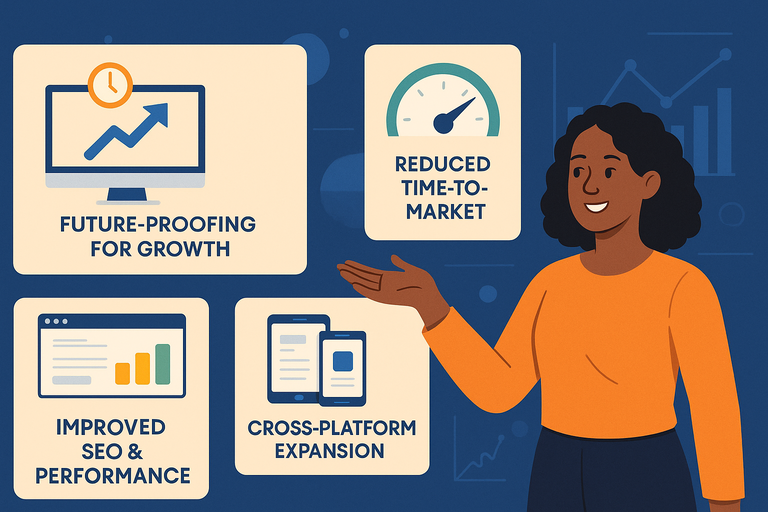
Adopting headless commerce isn’t just a technical decision—it’s a strategic business investment. The payoff comes in scalability, flexibility, and long-term resilience as digital commerce continues to evolve.
Future-Proofing Your Ecommerce Platform For Growth
The ecommerce landscape shifts fast. What’s cutting-edge today might be outdated tomorrow. Headless commerce gives you the flexibility to adapt quickly to new technologies or customer demands.
In practice:
- You can integrate emerging tools (like AI chatbots or AR product previews) without replatforming.
- You can redesign your frontend independently of backend changes.
- You’re never stuck waiting for a vendor to release an update—you control your roadmap.
I often suggest thinking of headless commerce as an insurance policy for innovation. When your tech stack is modular, future trends become opportunities instead of obstacles.
Reducing Time-To-Market For New Features And Campaigns
Speed matters—not just in page load times, but in execution. With headless, teams can launch new campaigns or feature updates faster because frontend and backend work happens in parallel.
For example:
A developer can build a new product category page using Next.js while the backend team updates pricing logic—without stepping on each other’s toes.
This separation reduces dependency bottlenecks and helps marketing teams go live faster. If you’re running frequent product drops or seasonal campaigns, that agility directly translates into revenue.
I’ve personally seen retailers cut campaign launch times from weeks to days after going headless. That’s transformative.
Improving SEO And Site Performance With Modern Frameworks
Performance and SEO go hand in hand. Google prioritizes fast, responsive sites in its ranking algorithm.
Headless commerce allows you to use frameworks like Gatsby, Nuxt, or Next.js to build highly optimized, pre-rendered pages.
The benefits include:
- Better Core Web Vitals (especially LCP and CLS scores)
- Faster mobile load times
- More stable organic rankings
Because the frontend loads independently, search engines can crawl static content easily while still serving dynamic updates through APIs.
I always advise brands that care about SEO to consider headless as their long-term strategy—it’s the most future-ready setup available.
Enabling Cross-Platform Expansion With Minimal Development
Once your backend is built with headless architecture, expanding into new platforms becomes almost effortless. Want to launch a mobile app, a digital kiosk, or even a marketplace integration? You can reuse the same backend and API connections.
That’s the beauty of it—you’re not rebuilding your ecommerce engine each time.
Practical example:
A brand using Shopify Plus as the backend can power multiple frontends:
- A React-based web store
- A mobile app built with Flutter
- A voice shopping integration via Alexa
All pulling from the same product database, pricing rules, and inventory APIs.
This approach dramatically lowers long-term development costs while expanding your reach across every touchpoint your customers use.
Challenges And Considerations Before Going Headless
Headless commerce offers freedom and flexibility, but it’s not a silver bullet. Before jumping in, it’s worth understanding the trade-offs and technical challenges involved.
Initial Development Costs And Technical Complexity
Let’s be honest—headless builds cost more upfront. Because you’re creating a custom frontend and integrating APIs, you’ll need skilled developers familiar with frameworks like React, Vue, or Next.js.
That said, the long-term savings from reduced maintenance, faster deployments, and better conversions often outweigh the initial cost. I’d suggest starting with a phased approach: launch one headless feature, measure results, and expand gradually.
The Need For Skilled Developers And Cross-Team Collaboration
Unlike all-in-one platforms where everything lives under one roof, headless setups require tight collaboration between development, design, and marketing teams.
To make it work smoothly:
- Developers should document APIs thoroughly.
- Marketing should have easy CMS access to manage content.
- Regular syncs between teams are critical to avoid miscommunication.
If you’re building your first headless site, I recommend using platforms like Vercel or Netlify—they simplify deployment and CI/CD (Continuous Integration and Continuous Delivery) processes dramatically.
Managing Multiple Integrations And APIs Effectively
Flexibility brings complexity. A headless ecosystem often includes multiple APIs—payment gateways, shipping systems, personalization tools, and analytics.
Here’s how to manage it:
- Use an API orchestration layer like GraphQL or Apollo Federation to unify data.
- Monitor API performance using tools like Postman or New Relic.
- Establish clear ownership for each service to ensure accountability.
I’ve seen teams run into trouble when no one “owns” an integration. Keeping things organized early on prevents major headaches later.
When A Traditional Platform Might Still Be The Better Fit
Headless commerce isn’t for everyone. If your store is small, has limited custom needs, or lacks development resources, a traditional ecommerce platform might serve you better—at least for now.
Platforms like Shopify or Wix can still deliver strong results for straightforward stores. Going headless makes sense when you’re scaling fast, managing multiple channels, or craving deeper control over user experience.
Think of it this way: you wouldn’t buy a Formula 1 car for city commuting. Go headless when speed, flexibility, and scale are essential to your growth goals.
Expert tip: If you’re planning a headless migration, start by documenting your customer journey first. Identify the touchpoints that matter most, then map out how APIs will connect them. This clarity upfront will save you months of trial and error down the road.
Real-World Examples Of Headless Commerce In Action
Seeing how headless commerce works in the real world can make its value click instantly.
Some of the biggest global brands—and a new wave of direct-to-consumer (DTC) innovators—are already proving how flexible and profitable this architecture can be when done right.
How Major Brands Like Nike And Target Use Headless Architecture
When Nike rebuilt its ecommerce experience, it didn’t just redesign—it went headless. The company moved to a React-based frontend (built on Node.js) that communicates with its backend through APIs.
Here’s what that change achieved:
- Faster mobile experiences: Nike saw significant speed improvements, which translated into higher conversions on mobile—a channel that represents over 60% of its online traffic.
- Personalized user flows: The brand could now adapt product recommendations dynamically based on user behavior.
- Omnichannel consistency: From the app to in-store kiosks, everything syncs perfectly thanks to API-driven data sharing.
Target’s approach was similar but focused on scale. They adopted a microservices architecture to separate key systems—like search, checkout, and inventory—so each could evolve independently.
It’s how Target manages millions of SKUs and real-time promotions during high-traffic seasons without site crashes.
The takeaway here? Headless commerce isn’t just about speed—it’s about resilience and adaptability at scale.
Innovative DTC Brands Leveraging APIs For Custom Experiences
Smaller DTC brands are also using headless commerce to punch above their weight.
Example 1: Allbirds
Allbirds, the sustainable shoe brand, uses Shopify Plus as its backend and a custom frontend built with Next.js. This lets them serve lightning-fast pages globally while maintaining total design freedom.
Their developers use APIs to connect analytics tools and sustainability metrics, giving customers real-time insights into carbon impact per product.
Example 2: Glossier
Glossier’s site is built around storytelling and community engagement. They use a headless CMS (Contentful) to power dynamic blog-style content, product drops, and influencer campaigns.
The frontend pulls everything through APIs, creating an immersive experience where commerce and content blend seamlessly.
From what I’ve seen, these DTC brands succeed because headless gives them freedom—to experiment, to tell richer stories, and to move faster than competitors stuck in rigid templates.
Lessons Learned From Successful Headless Implementations
After reviewing dozens of headless commerce rollouts, a few consistent lessons emerge.
- Plan your content strategy early. Without a clear structure, your CMS and API integrations can get messy fast.
- Invest in API performance monitoring. If your APIs slow down, the whole experience does.
- Start small. Every successful brand I’ve worked with tested headless on a single region, product line, or feature first.
- Train your teams. Headless commerce thrives when marketing, development, and design teams collaborate closely.
I’d sum it up like this: the brands that thrive with headless don’t just adopt new tech—they adopt a new mindset about flexibility, experimentation, and speed.
How To Get Started With Headless Commerce
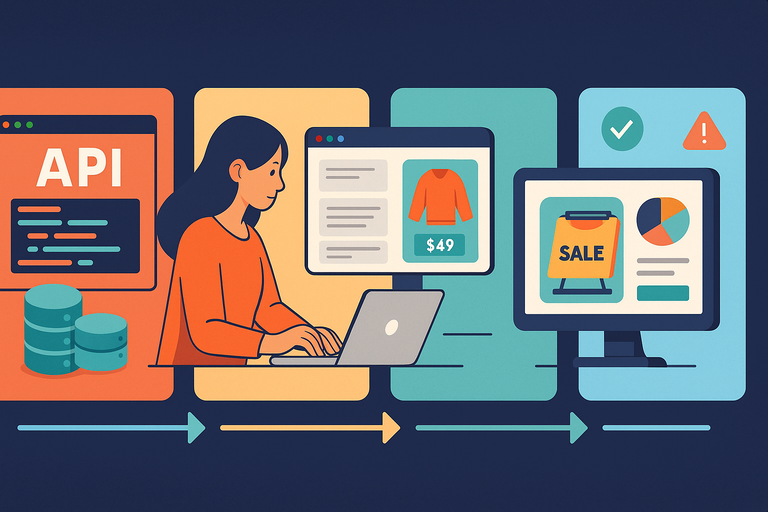
Transitioning to headless commerce can feel intimidating at first, but it doesn’t have to be. The key is to start strategically, test early, and build for scalability rather than trying to do everything at once.
Choosing The Right Platform Or Framework For Your Business
There’s no single “best” headless platform—it depends on your needs, resources, and goals.
If you’re using Shopify, you might explore Hydrogen (Shopify’s React-based headless framework) or connect Shopify’s Storefront API to a custom frontend like Next.js.
If you’re on BigCommerce, it integrates well with Contentful or Strapi for CMS control.
For enterprise brands, CommerceTools and Adobe Commerce (Magento 2 Headless) offer deep API ecosystems.
I suggest thinking about your tech stack like this: choose a backend for reliability, a frontend for flexibility, and a CMS for storytelling. Then, make sure all three speak to each other fluently through APIs.
Setting Up Your API Layer And Backend Infrastructure
APIs are the bloodstream of headless commerce—they carry data between systems. You’ll need to establish a clear structure for how APIs will handle product data, pricing, checkout, and user sessions.
Here’s a practical setup path:
- Define what data each API will serve (e.g., inventory, pricing, content).
- Choose your protocol—REST or GraphQL. I personally prefer GraphQL for its efficiency.
- Implement authentication (OAuth or JWT) to keep your APIs secure.
- Use an API gateway (like AWS API Gateway or Kong) to manage calls and monitor performance.
From experience, investing time in your API layer upfront saves months of pain later. This is the backbone of your headless system—get it right, and everything else flows.
Designing And Deploying A Headless Frontend
This is where creativity meets code. Your frontend is the face of your brand—and with headless commerce, you can finally design it exactly how you want.
Most modern frontends use React, Next.js, or Vue.js. These frameworks allow pre-rendering for speed, dynamic routing for personalization, and easy integration with APIs.
For deployment, platforms like Vercel or Netlify make it simple to push live updates without touching the backend. You can test new layouts, add animations, or optimize checkout flows—all independently.
A small tip from me: prioritize performance from day one. Use lazy loading, optimize images, and keep your Core Web Vitals strong. Speed is your invisible salesperson.
Testing, Monitoring, And Scaling Your New Architecture
Once your headless setup is live, continuous testing becomes your best friend.
Use tools like Lighthouse or WebPageTest to measure performance. Set up A/B tests using Optimizely or VWO to refine UX. Monitor uptime and API health with Datadog.
As your traffic grows, scaling becomes straightforward—you can expand specific microservices (like checkout or product search) independently, without touching the rest of the system.
I’ve seen businesses double traffic during peak sales simply by scaling one microservice cluster, instead of overhauling the entire site. That’s the beauty of going modular.
The Future Of Ecommerce With Headless Architecture
Headless commerce isn’t just a trend—it’s the blueprint for the next decade of online retail. The future belongs to brands that can adapt in real time, deliver personalized experiences, and integrate emerging technologies seamlessly.
The Role Of AI And Machine Learning In Headless Systems
Artificial intelligence (AI) is already transforming headless commerce from reactive to predictive. APIs can connect to machine learning models that personalize product recommendations, optimize pricing, or even generate marketing content dynamically.
For instance:
- AI-driven APIs can adjust pricing based on demand and competitor activity.
- Machine learning models can predict which products a user is most likely to buy next.
- Natural language processing (NLP) enables voice commerce and chatbot support.
I believe AI will eventually act as the “intelligent conductor” of headless systems, making every customer interaction smarter and more contextual.
Predicting The Evolution Of Multi-Experience Commerce
The future of ecommerce isn’t limited to screens. Headless systems will power what’s known as multi-experience commerce—shopping across wearables, smart devices, AR glasses, and even in-car systems.
Picture this: You try on sunglasses in augmented reality, your smartwatch suggests matching accessories, and your car dashboard lets you order and pay—without switching platforms.
Because all these experiences pull from the same headless backend, they stay consistent, personalized, and connected. The lines between online and offline commerce will blur completely.
Why Headless Commerce Will Define The Next Decade Of Retail
In the coming years, consumers will demand faster, more intuitive, and more flexible digital experiences. Traditional ecommerce platforms won’t be able to keep up.
Headless commerce offers:
- Adaptability: Quickly integrate future tech (AR, AI, voice).
- Speed: Deliver performance across any device.
- Longevity: Avoid platform lock-ins and stay agile.
If I had to bet, I’d say that within five years, headless will be the standard rather than the exception. It’s what gives brands the freedom to evolve—without rebuilding from scratch every few years.
Expert Tip: Start Small, Then Scale Strategically
Going headless is exciting, but I’ve seen too many teams dive in too deep, too fast. You don’t need to rebuild your entire store overnight. Start small and scale strategically.
Begin With A Single Channel Or Feature To Test Performance
Pick one high-impact area—like your blog, landing pages, or checkout—and make that headless first. This gives you a safe testing ground to measure ROI and performance improvements.
Once you’ve validated the benefits, you can roll out headless gradually across other parts of your site. This reduces risk and builds internal confidence.
Evaluate User Experience Before Full Migration
The best tech in the world means nothing if it doesn’t improve the customer experience. Run usability tests and gather real feedback from shoppers. Track metrics like bounce rate, page speed, and conversion lift.
If customers love the experience—and your internal teams find it easier to manage—you’ll know you’re heading in the right direction.
Build A Scalable, Modular Foundation For Long-Term Success
Think of headless commerce like a digital city—you want to build solid roads (APIs), flexible buildings (frontends), and efficient utilities (microservices).
Start with clean architecture principles:
- Keep APIs modular and well-documented.
- Separate frontend repositories for easier maintenance.
- Automate testing and deployment early.
The more modular your system, the easier it becomes to evolve with market trends.
Final thought: I believe headless commerce is more than a technical upgrade—it’s a mindset shift. It empowers you to build ecommerce experiences that feel human, adaptive, and limitless.
Start small, learn fast, and let your customers guide your evolution. That’s how you future-proof your business in the headless era.

I’m Juxhin, the voice behind The Justifiable.
I’ve spent 6+ years building blogs, managing affiliate campaigns, and testing the messy world of online business. Here, I cut the fluff and share the strategies that actually move the needle — so you can build income that’s sustainable, not speculative.
Related posts:
 What Is Headless Commerce and Why Does It Matter?
 Headless Ecommerce Platform: Is It the Faster Way to Scale?
 WordPress Ecommerce Developer: 6 Trends Shaping the Future
 B2B Ecommerce Platforms That Power Serious Growth
 Composable Commerce Explained: The Future of Online Stores
 SAP Commerce Cloud Explained: Features, Pricing, and Value