Table of Contents
Some links on The Justifiable are affiliate links, meaning we may earn a small commission at no extra cost to you. Read full disclaimer.
When I first decided to create my own blog and get paid, I honestly had no clue where to begin. I knew people were earning real income from blogging, but the path to turning passion into profit seemed confusing. If you’re feeling the same way, you’re not alone.
The truth is, starting a blog and making money fast isn’t about luck—it’s about knowing the right steps, choosing a profitable niche, and setting up income streams strategically.
Let me show you exactly how to make it happen.
Choose A Profitable Niche That Attracts Paying Readers
Choosing your niche is the first and most important step when you want to create your own blog and get paid. It determines your audience, your income potential, and how fast you can grow.
Let’s break it down step by step.
Identify Topics With High Earning Potential
Not every niche pays the same. Some attract readers who are ready to spend, while others struggle to monetize.
I always recommend starting by exploring profit-driven niches—topics like personal finance, digital marketing, health and fitness, or tech reviews.
A quick way to check if a niche has earning potential is to ask:
- Are there products or services people buy within this niche?
- Do advertisers pay for ads around these topics?
- Are there affiliate programs available?
For instance, if you write about budgeting tips, you can easily promote finance apps or credit-building tools. But if you write about your favorite breakfast cereals—well, monetization might be tougher.
Pro tip: Use affiliate networks like Awin or Impact to see what brands pay affiliates in your target niche. That gives you a clear signal of profit potential.
Validate Your Niche With Keyword And Audience Research
Even if your niche sounds good, you need data to confirm people are actually searching for it. I like to use keyword research tools such as Ahrefs, Ubersuggest, or Semrush.
Type in a few broad ideas and check:
- Monthly search volume (the higher, the better)
- Keyword difficulty (the lower, the faster you can rank)
- Commercial intent keywords (e.g., “best tools for freelancers” instead of “what is freelancing”)
Then, explore online communities—Reddit, Quora, Facebook groups—to see what real people are asking about your topic. If there’s an active conversation, it’s a good sign your blog could find readers fast.
Balance Passion With Market Demand
It’s tempting to chase what’s trending, but if you’re not genuinely interested in your topic, you’ll burn out quickly. The sweet spot is a mix of passion and profit.
Ask yourself:
- Can I talk about this topic for years without getting bored?
- Does it have multiple angles to explore (e.g., tutorials, reviews, stories)?
- Can I help solve real problems within this space?
A blog about “work-from-home productivity,” for example, has endless content ideas—apps, routines, tools, and mindset tips—all with monetization options.
Avoid Overcrowded Niches With Low Monetization Opportunities
Some niches are so saturated that breaking in takes years. Fashion, travel, and food blogging can be fun, but unless you bring something fresh—like a hyper-local travel guide or minimalist fashion angle—it’s hard to stand out.
Instead, go narrow but deep. For example, rather than “fitness,” focus on “fitness for new moms” or “home workouts for men over 40.” Specificity builds authority faster and attracts readers who are ready to buy.
Set Up Your Blog Foundation The Right Way
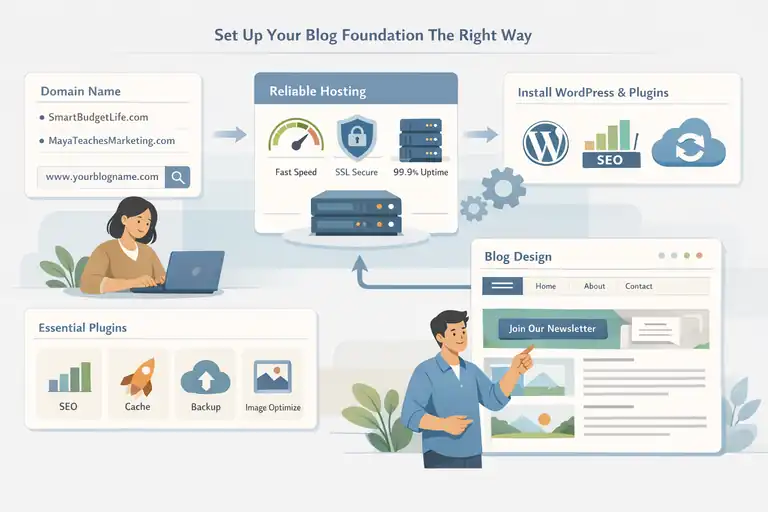
Now that your niche is locked in, it’s time to build the structure for your success. Setting up your blog the right way from the start saves months of frustration later.
Pick A Memorable Domain Name That Builds Trust
Your domain name is your digital home. Keep it simple, short, and easy to remember. Avoid numbers or hyphens—they look unprofessional and are hard to recall.
Try this simple formula: YourName + Keyword (e.g., “MayaTeachesMarketing.com”) or Benefit-Driven Phrases (e.g., “SmartBudgetLife.com”).
If your goal is long-term growth, choose a name that’s flexible enough to evolve. You might start writing about freelancing but later expand into entrepreneurship—you want your domain to grow with you.
Choose Reliable Hosting For Speed And Security
Your hosting service affects how fast your blog loads, and that directly impacts SEO and reader trust. I’ve learned that cheap hosting often leads to expensive headaches later.
Look for hosting that offers:
- Fast load speeds (under 2 seconds)
- 99.9% uptime
- Free SSL certificate for security
- Easy WordPress installation
Companies like Hostinger, Bluehost, or Inmotion Hosting are popular choices because they balance speed, reliability, and support.
Tip: Don’t skip the SSL certificate—it keeps your site secure and helps your ranking on Google.
Install WordPress And Essential Blogging Plugins
WordPress is still the easiest and most customizable platform for blogging. Once it’s installed, add a few essential plugins to make your site functional and SEO-friendly:
- Rank Math – for on-page optimization
- WP Rocket – for faster load times
- UpdraftPlus – for backups
- ShortPixel – for image compression
- Akismet – to filter out spam comments
Keep your plugin list short. More plugins don’t mean more power—they often slow down your site.
Design A Clean, Conversion-Focused Blog Layout
A blog that’s visually cluttered pushes readers away. You don’t need flashy colors or animations—clarity wins every time.
When designing your layout, focus on:
- Clear navigation (Home, Blog, About, Contact)
- Readable fonts and consistent colors
- Prominent “Join Newsletter” or “Work With Me” buttons
- Mobile responsiveness (most readers visit from phones)
In my experience, minimalist designs often convert better because they let your content and CTAs shine. Remember, design isn’t just about looking good—it’s about guiding readers to take action.
Create Compelling Content That Converts Visitors Into Fans
Your content is what turns a casual visitor into a loyal reader—and eventually, a paying customer. So, let’s make every post count.
Craft Value-Packed Blog Posts Around Reader Pain Points
People don’t search for “fun reads.” They search for solutions. The fastest way to connect with readers is by answering the questions they’re already asking.
Start with problem-driven titles like:
- “How to Start Freelancing Without Experience”
- “5 Ways to Save Money When You’re Broke”
Then, write with empathy. Use your own experiences and examples. Break complex ideas into easy steps, and sprinkle in practical takeaways.
I like to use this structure for most blog posts:
- Hook (identify the problem)
- Empathy (show you understand it)
- Step-by-step solution
- Next step or CTA
Use SEO Strategies To Rank Your Blog Quickly
SEO might sound intimidating, but it’s mostly about being strategic with your words. Start by placing your focus keyword in key places—title, introduction, a few subheadings, and meta description.
Then, use semantic keywords naturally throughout your content. These are related phrases Google associates with your topic (for example, if your keyword is “how to start a blog,” semantically related terms could include “WordPress setup,” “blog hosting,” and “domain name”).
Don’t forget internal linking—link to your own relevant posts to keep visitors on your site longer and signal authority to search engines.
Include Engaging Visuals And Interactive Elements
Walls of text are exhausting. Readers need visuals to process information quickly.
Include:
- Screenshots for tutorials
- Infographics for summaries
- Short videos for walkthroughs
- Charts or data visuals for credibility
If you’re using WordPress, tools like Canva or Visme make it easy to design branded visuals even without design experience.
Pro tip: Add alt text to every image—it improves accessibility and SEO.
Build An Editorial Calendar For Consistent Publishing
Consistency is what separates hobby bloggers from professionals. Without a plan, it’s easy to lose focus.
I suggest creating a 30-day content plan using tools like Notion, Trello, or Google Sheets.
Include:
- Post titles and keywords
- Draft and publish dates
- Target word count and CTAs
Set a realistic goal—one quality post per week is better than five rushed ones. Over time, this routine helps your audience trust that you’ll show up regularly with valuable insights.
Build Traffic Fast With Proven Promotion Strategies
Once your blog is up and running, the next goal is to get people to actually read it. Traffic is the lifeblood of your income, especially when you want to create your own blog and get paid quickly.
The good news? You don’t need to wait months for Google to notice you. Let’s look at how to build momentum fast.
Leverage Social Media Platforms To Drive Early Visitors
Social media is your shortcut to visibility. It’s where your audience already spends time, so instead of waiting for search rankings, meet them there.
Start by choosing two main platforms—one for quick engagement and another for long-term growth.
For example:
- Instagram or TikTok for quick visibility through short-form videos.
- LinkedIn or Facebook Groups for deeper connections and community building.
When I started my first blog, I shared “mini-posts” on Instagram that summarized my articles in carousel format. It created curiosity and led readers straight to my website.
Pro tip: Don’t just post links. Create shareable, value-driven content that makes people want to click for more. Use tools like Metricool or Buffer to schedule posts consistently so you’re not constantly chasing content deadlines.
Collaborate With Influencers And Guest Blogging
When you’re new, borrowing credibility from others can skyrocket your reach. Guest blogging and influencer collaborations help you tap into audiences that already trust someone else.
Here’s how to do it effectively:
- Find bloggers or influencers in your niche with a similar audience size or slightly larger.
- Offer something valuable—like a guest post, joint live session, or content swap.
- Focus on providing genuine value instead of asking for promotion upfront.
I once wrote a guest post for a blogger who had around 10,000 monthly readers. That single article brought me over 1,200 visits in a week and dozens of new email subscribers. It works because it builds trust by association.
Use Email Marketing To Keep Readers Coming Back
Email marketing might sound old-school, but it’s still one of the highest-converting channels for bloggers. Think of it as your direct connection to readers—without relying on algorithms.
Start with a free newsletter using a platform like Mailerlite or Aweber. Create a simple opt-in form offering a small freebie, such as a checklist or quick guide related to your niche.
Then, send weekly emails that mix education, updates, and small promotions. Keep it conversational, like writing to a friend. Your goal isn’t to sell in every email—it’s to stay top-of-mind so readers keep returning to your site.
Optimize Pinterest And SEO For Evergreen Traffic
Pinterest is one of the few platforms that can drive consistent, long-term traffic to your blog—almost like a visual search engine.
If your niche is visually friendly (like lifestyle, travel, or food), create Pinterest graphics using Canva. Focus on keyword-rich pin titles and descriptions. Schedule pins using Tailwind or Later to keep your account active without daily effort.
At the same time, strengthen your SEO foundation:
- Use descriptive alt text for images.
- Link between related posts (internal linking).
- Target long-tail keywords—phrases like “easy vegan meal prep for beginners.”
The combination of Pinterest and SEO gives you both short-term spikes and steady organic traffic over time.
Monetize Your Blog Using High-Converting Methods

Once traffic starts flowing, it’s time to turn it into income. There’s no single “right” way to monetize, but the key is matching your method to your audience’s needs and your strengths.
Earn Through Affiliate Marketing Partnerships
Affiliate marketing is one of the fastest ways to earn money from a blog—especially when you don’t have your own product yet. You promote someone else’s product, and when readers buy through your link, you earn a commission.
Start by signing up for affiliate networks like Awin, Impact, or Flexoffers (now part of Awin). Choose products that genuinely fit your content.
For example:
- A tech blogger might recommend software tools.
- A finance blogger might promote budgeting apps or credit repair services.
Use affiliate links naturally in tutorials, reviews, and “best tools” posts. Always disclose your affiliate relationship—it builds trust and complies with FTC guidelines.
Sell Digital Products Or Online Courses
If you’ve built expertise in your niche, turning that knowledge into a product can be a game-changer. Digital products like ebooks, printables, or online courses have high profit margins because there’s no shipping or inventory.
Start simple. Create a downloadable guide that solves a small but pressing problem for your audience—something you can make in Canva or Notion.
If you’re ready for the next step, tools like Teachable, Podia, or ThriveCart Learn make building online courses surprisingly easy. They handle payments, video hosting, and even automated access for students.
Example: A wellness blogger might sell a “7-Day Mind Reset Challenge,” while a travel blogger could create a course on “How to Travel on Points.”
Offer Sponsored Posts And Brand Collaborations
Once you have consistent traffic (even as low as 5,000 monthly visits), brands may pay you to feature their products. Sponsored posts can be very lucrative if you choose the right partnerships.
Here’s what I suggest:
- Create a media kit with your traffic stats, audience demographics, and previous collaborations.
- Reach out to brands whose values align with yours.
- Always review the product yourself to ensure it genuinely helps your readers.
Even microbloggers with small but loyal audiences can earn $100–$500 per sponsored post. It’s about engagement quality, not just numbers.
Add Display Ads Strategically Without Hurting UX
Ads can bring in passive income, but overdoing it can hurt your reader experience. If you’re just starting, Google AdSense is an easy entry point, though earnings may be modest.
Once your traffic grows, apply to premium ad networks like Mediavine or Raptive (formerly AdThrive). They pay significantly higher rates and optimize placements automatically.
Just remember—ads should never dominate your page. Prioritize clean layout and readability. Your visitors come for the content, not to dodge pop-ups.
Create A Simple Funnel To Turn Readers Into Buyers
Even with great traffic, many visitors leave without taking action. That’s where a sales funnel comes in.
Think of it as a gentle system that nurtures casual readers into loyal customers.
Build A Lead Magnet That Solves A Real Problem
Your lead magnet is your hook—a free offer that makes readers excited to join your email list. The best ones are quick, actionable, and directly tied to your niche.
Examples include:
- A 3-day mini course delivered via email
- A checklist or workbook
- A short eBook that solves one specific issue
If you blog about blogging, your lead magnet could be “10 Blog Post Templates That Convert.” It instantly attracts people who want to create their own blog and get paid faster.
Set Up Automated Email Sequences That Sell
Once someone downloads your freebie, don’t leave them hanging. Set up an automated email sequence to build trust and guide them toward your paid offer.
A simple structure works best:
- Welcome email – thank them and deliver the freebie.
- Value email – share 2–3 actionable tips related to their goal.
- Story email – tell a personal story that shows you understand their struggle.
- Offer email – introduce your product or affiliate recommendation.
Platforms like Kit or ConvertBox make automation easy, even for beginners.
Use Landing Pages To Increase Conversions
A landing page is a focused page designed to get readers to take one action—usually subscribing or buying. Unlike your homepage, it removes distractions so the message is clear.
Tools like Thrive Architect, Systeme.io, or Carrd help you design clean, conversion-focused pages without coding.
Make sure your landing page includes:
- A strong headline that promises a result
- Simple bullet points showing benefits
- A single, clear call-to-action (CTA)
Example: “Get My Free 5-Step Blog Launch Checklist” converts far better than a generic “Join My Newsletter.”
Track User Behavior To Improve Your Offers
You can’t improve what you don’t measure. Tracking helps you understand what’s working—and what’s not.
Use Google Analytics or Plausible to track user flow, conversions, and popular posts. Tools like Hotjar even show you how visitors scroll and click, helping you optimize your layout for better results.
If you notice that readers sign up but don’t click on product links, adjust your emails. If a post gets high traffic but low opt-ins, tweak your lead magnet offer.
Pro tip: Treat data as feedback, not failure. Every insight moves you closer to building a blog that consistently earns.
Scale Your Blogging Income Faster With Smart Systems
Once you start earning a bit from your blog, it’s time to think bigger. Scaling isn’t about working harder—it’s about working smarter.
When your systems run smoothly, you’ll spend less time doing repetitive tasks and more time growing your income.
Outsource Content And Design To Save Time
You don’t have to do everything yourself. In fact, trying to handle writing, editing, design, and marketing alone can limit your growth. I learned this the hard way when I spent hours tweaking my site layout instead of writing new posts.
Start by outsourcing the most time-consuming or least enjoyable tasks.
For example:
- Hire a freelance writer or editor on Fiverr or Upwork for content support.
- Use a virtual assistant to manage email outreach and scheduling.
- Find a graphic designer for consistent Pinterest graphics or blog visuals.
The trick is to build a small, reliable team—even part-time—so your blog continues running while you focus on strategy and monetization.
Repurpose Old Content Into New Income Streams
You’ve already put effort into creating great content, so why not make it work twice? Repurposing lets you reach new audiences without starting from scratch.
Here’s how I do it:
- Turn popular blog posts into short YouTube videos or TikToks.
- Combine several related articles into a paid eBook or mini-course.
- Record podcast episodes summarizing your top-performing posts.
For example, one of my top blog posts about affiliate marketing later became a digital guide that generated consistent passive income. You’d be surprised how many readers prefer downloadable or visual formats over reading long posts.
Use Analytics To Identify What’s Working Best
Numbers tell the truth about your blog’s performance. I know analytics can feel intimidating, but once you get comfortable, it becomes your secret growth tool.
Check Google Analytics or Plausible weekly for:
- Which posts bring the most traffic.
- Where your visitors come from (Pinterest, Google, etc.).
- How long they stay and what they click next.
Then, double down on what’s working. Update high-traffic posts with affiliate links or fresh CTAs. Improve underperforming content with better headlines or visuals.
This is how you scale strategically—by focusing effort on what actually drives income instead of guessing.
Diversify Income Sources For Long-Term Stability
Relying on one income stream is risky. Algorithms change, affiliate programs shut down, and ad rates fluctuate. The safest way to grow is to diversify.
You can combine several streams like:
- Affiliate marketing
- Digital products or courses
- Sponsorships or brand deals
- Consulting or coaching services
When one dips, another usually rises. I once saw my ad revenue drop during a slow season, but my affiliate income doubled because I focused more on product reviews. Diversification turns short-term earnings into lasting stability.
Avoid Common Mistakes That Slow Down Your Earnings
Even the best bloggers make mistakes that cost them time and money. The good news is, you can skip most of them if you know what to look out for.
Don’t Focus Only On Page Views Over Profit
It’s easy to obsess over traffic numbers, but high page views don’t always mean high income. What really matters is engaged traffic—the kind that clicks links, joins your email list, and buys your offers.
Instead of chasing viral posts, focus on content that solves problems and includes monetization opportunities. A blog with 5,000 loyal readers can earn more than one with 50,000 random visitors.
I’ve seen this firsthand—my how-to guides with affiliate links outperformed generic listicles that went semi-viral. Quality beats quantity every time.
Avoid Copying Other Bloggers’ Monetization Models
It’s tempting to look at a successful blogger and think, “I’ll just do exactly what they do.” The problem? Their audience, voice, and niche might be completely different.
What works for a food blogger won’t always work for a finance blogger. Learn from others, yes—but adapt strategies to your readers’ needs.
If your audience prefers tutorials, focus on guides and resources. If they love stories, weave personal experiences into every post.
Authenticity converts better than imitation.
Skip Random Topics That Confuse Your Audience
If your blog jumps between too many topics, readers won’t know what to expect. Google will also struggle to understand what your site is about. Both hurt your growth.
Stick to one core theme with 2–3 related subtopics. For instance, if your niche is personal finance, subtopics could include budgeting, saving money, and earning side income.
When your message is clear, readers trust you more—and that trust leads to repeat visits and higher earnings.
Learn To Reinvest Profits For Growth
Once you start earning, it’s tempting to cash out right away. But if you reinvest even a portion of your profits, your blog can grow much faster.
Here’s where I usually put profits back into my business:
- Upgrading hosting for better performance.
- Investing in better tools (email automation, SEO software).
- Paying for ads to promote high-converting content.
- Hiring experts for design or SEO help.
Think of reinvesting as planting seeds for future income. Every upgrade compounds over time.
Keep Momentum: Build A Sustainable Blogging Routine
Blogging success doesn’t come overnight—it’s built through consistency. The trick is to find a rhythm that keeps you motivated without burning out.
Set Weekly Revenue And Content Goals
Goals give structure to your work. Instead of vague intentions like “I’ll write more,” set measurable targets such as:
- Publish one blog post per week.
- Reach $200 in affiliate commissions this month.
- Add 50 new email subscribers.
Write them down somewhere visible—like Notion, Trello, or even a sticky note on your desk. Every small milestone moves you closer to your bigger goal of creating your own blog and getting paid consistently.
Continue Learning About SEO And Monetization
The online world evolves fast. What worked last year might not work today. I suggest setting aside one hour a week to learn something new about SEO, marketing, or content creation.
Follow credible sources like Ahrefs Blog, HubSpot Academy, or Authority Hacker. Even small tweaks—like optimizing your meta descriptions or testing new affiliate placements—can significantly increase income over time.
Continuous learning keeps your blog competitive and your mindset sharp.
Connect With Other Bloggers For Support
Blogging can feel lonely if you’re doing it all solo. That’s why building relationships with other bloggers can make a big difference.
Join blogging communities on Facebook, Slack, or Reddit where people share advice and opportunities. You can also attend virtual meetups or online summits to exchange ideas and even collaborate.
Networking helps you stay motivated and opens doors to guest posting, backlink opportunities, and potential partnerships.
Stay Consistent Even When Results Take Time
Blogging rewards persistence. In the early stages, you might write dozens of posts before seeing significant income. That’s completely normal.
When I started, it took months before I made my first $100—but that small win fueled everything that followed. Keep publishing, keep improving, and your momentum will build.
Consistency creates credibility, and credibility eventually creates income.
Pro Tips To Get Paid Faster As A New Blogger
You’ve done the hard work of building your blog. Now let’s talk about speeding up your results. These strategies can help you earn sooner rather than later.
Focus On One Income Stream Until It Scales
It’s tempting to try everything—ads, affiliates, products, sponsorships—but spreading yourself too thin slows progress. Instead, pick one income stream and master it first.
If affiliate marketing is your choice, focus on writing high-converting review posts and optimizing SEO. Once that stream earns consistently, then branch out to digital products or services.
One focused system always scales faster than five half-baked ones.
Pitch Brands Directly For Early Sponsorship Deals
Don’t wait for brands to find you. Reach out first. Even small blogs can land paid collaborations if you position yourself well.
Send personalized pitches that highlight your audience’s engagement and explain how promoting their product benefits them. Include stats like your traffic numbers, social reach, and past campaign results if you have them.
Example: “My readers are mostly freelance professionals looking for tools to manage projects. Your software would be a great fit for them.”
Brands appreciate initiative and clarity—and yes, they often pay faster than ad networks.
Use Your Blog To Offer Freelance Or Coaching Services
If you have skills like writing, design, marketing, or consulting, your blog can double as your portfolio. Add a “Hire Me” or “Work With Me” page explaining what you offer and who you help.
I started getting freelance clients simply because they enjoyed my blog posts and wanted personalized help. This kind of income is faster and more predictable while you grow your passive streams.
Reinforce Your Authority Through Thought Leadership
To stand out in a crowded space, become the voice people trust. Share personal insights, industry opinions, or behind-the-scenes lessons that others don’t.
For example, if you run a travel blog, share how you negotiate sponsorships or manage remote work on the road. If you’re in finance, break down complex topics into human language.
Authority attracts opportunities—brand deals, interviews, backlinks, and higher-paying clients. The more you show up as a genuine expert, the faster your income grows.
Final Thought: If you stay consistent, focus on your readers, and keep improving a little every week, you’ll see results. Creating your own blog and getting paid isn’t a dream—it’s a system. And once you master it, you’ll have a business that earns, grows, and supports your lifestyle for years to come.
FAQ
How can I create my own blog and get paid quickly?
Start by choosing a profitable niche, setting up your blog on WordPress, and publishing helpful, SEO-optimized content. Then, monetize through affiliate marketing, ads, or digital products.
What’s the fastest way to make money from a new blog?
Affiliate marketing and offering freelance services are the quickest ways to earn. You can also promote relevant products or sell simple digital downloads early on.
How long does it take to get paid from blogging?
Most new bloggers see income within 3 to 6 months if they post consistently, promote their content, and use proven monetization methods.

I’m Juxhin, the voice behind The Justifiable.
I’ve spent 6+ years building blogs, managing affiliate campaigns, and testing the messy world of online business. Here, I cut the fluff and share the strategies that actually move the needle — so you can build income that’s sustainable, not speculative.