
Table of Contents
Some links on The Justifiable are affiliate links, meaning we may earn a small commission at no extra cost to you. Read full disclaimer.
Monetize your blog in ways that actually grow with you—not just quick wins that fade fast. If you’ve ever wondered how successful bloggers turn their websites into full-time incomes while keeping freedom and flexibility, you’re in the right place.
The truth is, there are multiple income streams that can scale over time, but the key is choosing the ones that align with your audience and your goals.
So, how can you build a blog that keeps earning more even when you’re not constantly online?
Let’s break it down.
Build Scalable Income With Affiliate Marketing
Affiliate marketing is one of the most reliable and scalable ways to monetize your blog. The beauty of it is that your income can grow exponentially once your content ranks well and traffic becomes consistent.
The key is to focus on evergreen offers and systems that keep working for you long after the initial setup.
Choose Evergreen Products With High Earning Potential
When I first started with affiliate marketing, I made the mistake of chasing trendy products that went out of demand within months.
Over time, I realized that the best affiliates focus on evergreen products—things people will always need.
These could include:
- Hosting providers like Hostinger or WPengine (bloggers always need hosting).
- Tools like Canva Pro or Quillbot Flow (content creators rely on them daily).
- Learning platforms like Skillshare or Coursera (people are always learning).
The secret is to align these products with your blog’s niche and audience intent. For example, if your blog is about personal finance, recommending tools for budgeting or investing makes sense.
Before promoting, check product longevity and commission models. Programs offering recurring commissions (like Aweber or Teachable) are especially powerful—they let you earn month after month without new effort.
Create SEO-Driven Content That Converts
Affiliate marketing thrives on consistent, targeted traffic. I suggest focusing on SEO-driven content that ranks and converts.
Here’s a quick framework I personally use:
- Keyword Research: Target keywords with buyer intent (e.g., “best email marketing tool for small business”).
- Search Intent Match: Create helpful, comparison-style posts that answer questions before readers even ask them.
- Content Optimization: Include affiliate links naturally, avoid overlinking, and add clear CTAs (calls to action).
A great example would be: “Here’s how I use Kit to grow my newsletter from 100 to 10,000 subscribers—step by step.” Real experiences build trust far better than generic “top 10” lists.
Use Analytics To Identify Top-Performing Links
One of the most overlooked areas of affiliate income is data analysis. I recommend tracking every link using tools like Pretty Links or ThirstyAffiliates—both integrate easily with WordPress.
Here’s what to focus on:
- CTR (Click-Through Rate) – Are readers actually clicking your links?
- Conversion Rate – Which products generate sales most frequently?
- Revenue by Page – Which blog posts make the most money?
By using Google Analytics or dashboards like Affilimate, you can pinpoint high-performing pages and scale them.
For instance, if a single “tools I use” post is responsible for 40% of your income, consider creating a series around it.
Diversify Across Multiple Affiliate Networks
Relying on one network (like Amazon Associates) is risky—one policy change and your income could drop overnight. I advise spreading your affiliate partnerships across multiple networks such as:
- Awin for software and business tools.
- Impact for eCommerce and brand partnerships.
- PartnerStack for SaaS products.
Diversification ensures financial stability and gives you flexibility to pivot if a program shuts down or reduces commission rates.
Pro tip: Track which networks offer lifetime commissions or recurring payments—they’re the true passive earners.
Earn Recurring Revenue Through Digital Products
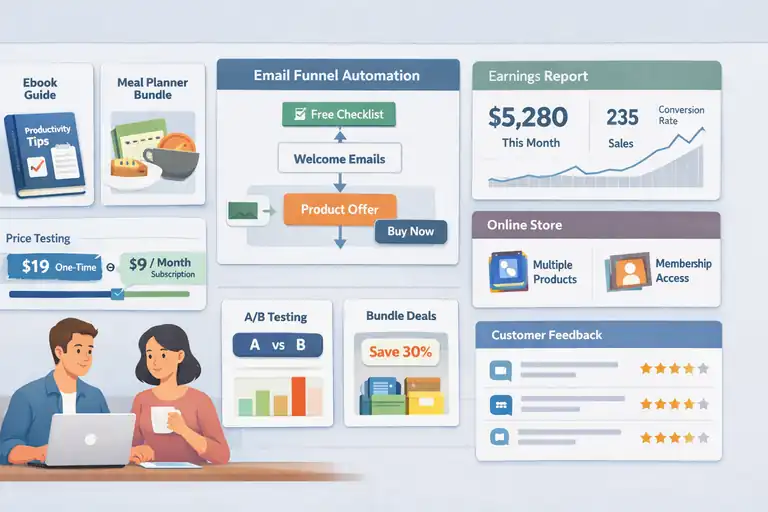
Digital products are an incredible way to create passive income from your blog. Once built, they can sell repeatedly with almost no additional cost.
The trick is to design products that solve real problems your readers face every day.
Develop Ebooks, Templates, or Printables That Solve Problems
Your readers come to your blog looking for solutions. Turn those solutions into downloadable assets. For example:
- A productivity blogger could create daily planners or Notion templates.
- A food blogger could offer meal planning guides or recipe bundles.
- A personal finance blogger could sell budget spreadsheets.
Start small. You don’t need a huge catalog to begin—just one high-value product that solves a specific pain point. In my experience, the most successful products are the simplest ones, often priced between $9 and $29.
Use Email Funnels To Automate Product Sales
Once your product is ready, set up an automated email funnel to sell it. Tools like Aweber, MailerLite, or FloDesk make this seamless.
Here’s how a simple funnel works:
- Lead Magnet: Offer a freebie (like a checklist or guide) related to your product.
- Welcome Series: Introduce yourself, share your story, and build trust.
- Sales Sequence: Present your product as the logical next step to solve their problem.
Automation allows you to keep earning even when you’re not actively promoting.
Test Pricing Strategies for Maximum Profitability
Don’t assume one price fits all. I suggest A/B testing your pricing to find what your audience values most.
For instance:
- Test a $19 one-time payment vs. a $9/month subscription.
- Experiment with bundle offers or tiered pricing.
Use tools like Gumroad to test easily. From what I’ve seen, even a small pricing tweak can boost conversions by 20–30%.
Scale With an Online Store or Membership Library
Once you have multiple products, consider scaling by creating an online store using Shopify, Podia, or ThriveCart. You can also bundle your products into a membership-style model, giving users access to everything for a monthly fee.
This not only increases customer lifetime value but also creates predictable, recurring revenue.
Expert tip: Always collect feedback. Your customers will tell you what they need next—making your next product almost guaranteed to sell.
Launch Online Courses or Workshops That Grow With Demand
Online courses can transform your blog from a content platform into a true business. They allow you to share your expertise at scale and build a loyal learning community.
Identify Knowledge Gaps in Your Niche
Start by asking: What’s something my readers consistently struggle with?
Use your blog comments, email replies, and analytics to find repeated questions.
For example, if you blog about SEO and your readers often ask how to get backlinks, that’s your course topic.
You can validate demand by sending a simple survey or hosting a free webinar. If people show up, it’s a strong sign your topic has potential.
Create Repeatable Course Frameworks for Long-Term Value
Don’t just build a one-time course—create a repeatable framework you can update or expand. I like to structure my courses around a clear, results-driven journey:
- Introduction – What problem the course solves.
- Core Training Modules – Step-by-step lessons with examples.
- Action Plans – Worksheets, templates, and assignments.
- Support Material – Bonus content, Q&A, or community group.
This makes the course scalable—students can learn independently, and you can focus on growth instead of constant maintenance.
Use Pre-Sales To Validate Ideas Before Launching
One of the smartest ways to avoid wasted effort is to pre-sell your course before creating it. Announce the idea, offer early-bird pricing, and see if people buy.
If at least 10–20 people purchase, you have validated demand. This approach gives you upfront capital to build a high-quality course without guessing if it will sell.
Platforms like Podia or Teachable make this easy with built-in checkout and hosting.
Automate Enrollment and Delivery With Course Platforms
To truly scale, automate the entire process—from sign-up to course delivery. Platforms such as Kajabi, Thinkific, or Teachable handle everything: payments, content access, and even certificates.
You can set up automated emails to welcome students, guide them through lessons, and encourage completion. That means more engagement and better testimonials, which drive even more sales.
Pro tip: Record video lessons once, then repurpose snippets into blog posts, social clips, or YouTube previews—each one driving more course traffic.
Generate Passive Income With Display Advertising
If you’ve already built consistent traffic to your blog, display advertising can become a steady, hands-off income stream.
I’ll be honest—it’s not the most glamorous way to monetize your blog, but it’s one of the most dependable when done right.
The secret lies in optimizing ad placements, partnering with the right networks, and treating your readers’ experience like gold.
Understand RPM and How To Increase It Over Time
Let’s start with the core metric: RPM (Revenue Per Mille), which means how much you earn per thousand pageviews. If your RPM is $20 and you get 50,000 monthly views, that’s roughly $1,000 per month—passively.
However, RPM can vary wildly depending on:
- Your niche – Finance, tech, and health blogs typically get higher RPMs.
- Traffic geography – US and UK traffic usually pay more than global audiences.
- Ad viewability – How visible your ads are on the page.
To increase RPM over time:
- Focus on high-intent content (like tutorials or comparisons).
- Use a sticky sidebar ad or in-content ad near the first fold—those get the most impressions.
- Test ad density carefully; more ads don’t always mean more money.
In my experience, the best way to improve RPM is to consistently grow high-quality traffic. When your audience is deeply engaged, advertisers pay more for every impression.
Optimize Ad Placement for User Experience and Earnings
Ad placement is both an art and a science. You want your readers to stay on the page while your ads quietly work in the background.
Here’s a quick setup that’s worked for me:
- In-content ads: After the second or third paragraph.
- Sticky sidebar ad: Always visible but never intrusive.
- Anchor ad (mobile): A small banner at the bottom of the screen.
Tools like Ezoic and AdThrive use AI to automatically test different layouts for you. You can literally let them find the highest-performing spots while you focus on writing.
A small note: avoid clutter. When readers see too many flashing boxes, they bounce—and your earnings drop.
Use Premium Ad Networks for Higher Returns
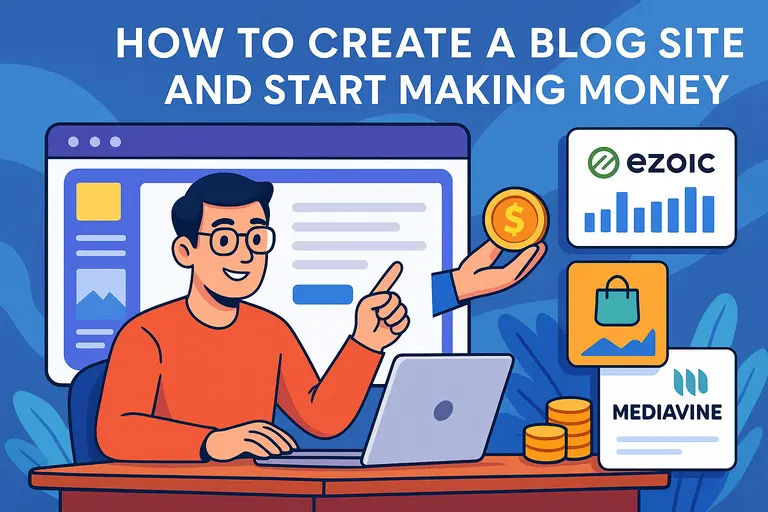
If you’re still on Google AdSense, there’s room to grow. Once your blog hits around 50,000 sessions a month, you can apply to premium networks like Mediavine or AdThrive.
Here’s a quick comparison:
| Ad Network | Traffic Requirement | Average RPM Range | Best For |
| Google AdSense | None | $2–$10 | Beginners |
| Ezoic | 10,000+ sessions | $10–$25 | Growing blogs |
| Mediavine | 50,000+ sessions | $20–$40 | Lifestyle, food, travel |
| AdThrive | 100,000+ sessions | $25–$50+ | Finance, tech, business |
When I switched from AdSense to Mediavine, my ad revenue more than tripled without increasing traffic. That’s the power of network optimization.
Balance Ads With Content Quality for Long-Term Growth
There’s a fine line between monetization and reader satisfaction. Overloading your site with ads might make quick cash, but it kills long-term trust.
Here’s my personal rule: ads should enhance, not interrupt. Always review your pages from a reader’s perspective. If you’d click away, your audience probably will too.
Focus on improving page speed (use WP Rocket) and design minimal, ad-friendly layouts. Over time, you’ll build a balance where your content and ads coexist without friction—turning casual readers into loyal return visitors.
Offer Paid Memberships or Exclusive Communities
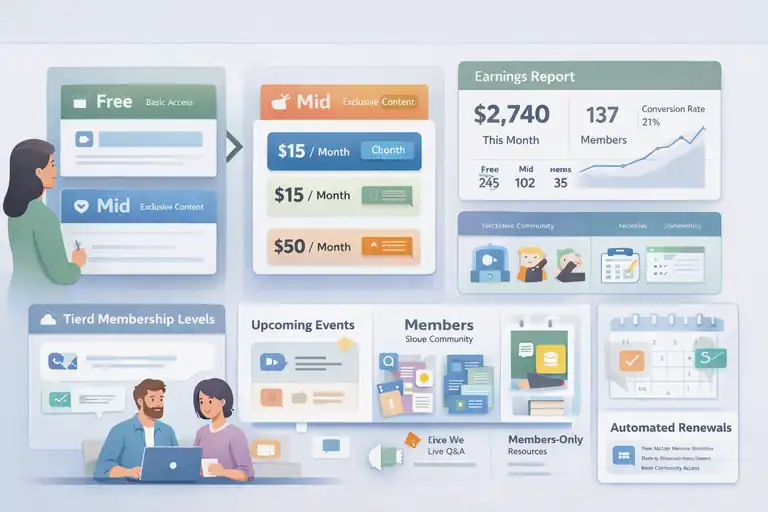
A membership model is one of the most powerful ways to build recurring income while deepening your relationship with your readers.
It shifts your blog from being content-driven to community-driven—and that’s where scalability truly starts.
Create Tiered Membership Levels for Scalable Revenue
Tiered memberships let readers choose the level of access that fits their needs and budget.
For example:
- Free Tier: Access to blog posts and occasional community discussions.
- Mid Tier ($10–$20/month): Exclusive articles, Q&A sessions, and digital downloads.
- Premium Tier ($50+/month): One-on-one coaching calls, group masterminds, or premium resources.
Platforms like Memberstack, MemberPress, or Circle make this structure easy. You can customize access based on pricing levels and deliver tailored experiences.
If you’re just starting, I suggest offering one simple paid tier. You can always expand as your community grows.
Use Value-Based Content to Keep Members Engaged
Keeping members subscribed is all about consistent, meaningful value. This could be weekly updates, live discussions, or behind-the-scenes content that non-members never see.
A few examples:
- Monthly live sessions where you walk through a topic in depth.
- Exclusive templates or tools not available publicly.
- Personalized feedback on member-submitted work.
The more members feel part of something personal and exclusive, the longer they’ll stay—and the more predictable your income becomes.
Automate Renewals and Member Onboarding Processes
Automation ensures smooth scaling without extra stress. Most membership platforms include built-in systems for renewals, reminders, and onboarding sequences.
Here’s a quick automation setup:
- A welcome email sequence that introduces the community.
- Automated renewal notifications 3–5 days before billing.
- A re-engagement campaign for inactive members.
I recommend using ThriveCart Learn+—both make automating memberships easy, even for beginners.
Combine Community and Content for Compounding Value
The best memberships blend education with connection. Think of your blog as the knowledge base and your community as the discussion hub.
When members interact—commenting, sharing wins, or helping each other—they create their own motivation to stay. Over time, your role shifts from “content creator” to community leader.
That’s how blogs like Smart Passive Income Pro built thriving ecosystems where value compounds month after month.
Leverage Sponsored Content and Brand Partnerships
Sponsored content isn’t just about getting paid to promote—it’s about collaborating with brands that genuinely align with your blog’s message.
When done authentically, it can become one of the most rewarding and profitable ways to monetize your blog.
Pitch Brands That Align With Your Audience’s Needs
The best sponsorships start with fit. Don’t wait for brands to find you—reach out to those your readers already trust or want to learn about.
Before pitching, prepare three things:
- Audience insights: Include reader demographics and engagement stats.
- Traffic data: Use Google Analytics to show monthly sessions and top content.
- Collaboration idea: Suggest a sponsored article, review, or tutorial.
Keep your pitch short and personal.
For example:
“Hi [Brand], I’ve been using your [product] for [X months], and my audience has been asking about tools like this. I’d love to collaborate on a post showing how it helps [specific problem].”
Develop Long-Term Retainer Deals for Consistent Income
One-off campaigns are nice, but retainer partnerships are where you’ll see steady growth.
These are ongoing monthly or quarterly deals that include multiple deliverables—like sponsored blog posts, social content, and email mentions.
Brands love this because it builds long-term visibility. And you benefit from predictable income.
I once turned a single $300 sponsored post into a $1,200/month retainer by suggesting a quarterly content plan. The key? Demonstrate results early and communicate consistently.
Use Media Kits To Showcase Blog Metrics and Influence
A media kit is your professional resume for brand collaborations. It should include:
- A brief bio and your blog’s mission.
- Traffic and social stats (with recent screenshots).
- Audience demographics and engagement data.
- Examples of past collaborations.
Tools like Canva offer beautiful templates—just search “media kit.” Update it quarterly to reflect your most recent metrics.
Pro tip: include your rates but mention you’re open to custom packages. It keeps the door open for negotiation.
Set Clear Boundaries To Protect Brand Authenticity
The biggest danger of sponsored content is losing reader trust. I believe authenticity must come first—always.
Only work with brands that align with your values and your readers’ needs. Always disclose sponsorships clearly, and don’t force endorsements.
A good rule of thumb: if you wouldn’t recommend it to a close friend, don’t promote it on your blog. Protecting authenticity ensures your audience stays loyal, and your influence keeps growing.
Monetize Your Blog With Freelance and Consulting Services
If your blog demonstrates real expertise in your niche, freelancing or consulting is one of the fastest ways to monetize your blog without waiting months for traffic-based income.
I’ve seen many bloggers start earning within weeks simply by positioning their content as proof of their skills.
Turn Blog Authority Into High-Paying Service Leads
Your blog is already a portfolio—it shows what you know, how you think, and how you help people. Turning that authority into leads simply means guiding readers toward hiring you.
Here’s what works best:
- Add a “Work With Me” page that lists your services, client results, and a simple contact form.
- Use call-to-action (CTA) lines in posts, like “Need help implementing this? Let’s work together.”
- Showcase small case studies—even one or two sentences showing a past result can build massive trust.
For example, if you’re a content strategist, write a blog post on “How I Doubled My Client’s Organic Traffic in 90 Days.” Real numbers tell your story better than any ad.
Over time, readers who connect with your tone and insights will reach out organically. That’s when you start attracting ideal clients, not just anyone with a budget.
Create Service Packages That Scale Beyond Hourly Work
Charging hourly might feel safe, but it caps your income. Instead, think in terms of value-based packages.
Here’s how I structure mine:
- Starter Package: One-time strategy session or audit (e.g., $250–$500).
- Core Package: Done-for-you service with clear deliverables (e.g., blog content plan, $1,500–$3,000).
- Premium Package: Ongoing consulting or retainer (e.g., $1,000/month).
By packaging services, you create predictable income and scale without working more hours. Tools like HoneyBook or Dubsado automate proposals, contracts, and invoices, saving you hours each week.
Pro tip: price your services based on the result you deliver, not the time it takes. Clients pay for transformation, not hours.
Use Blog Content To Attract Ideal Clients Organically
The best freelancers don’t cold pitch—they attract clients through content that educates and builds credibility.
Here’s a strategy that’s worked for me:
- Write how-to posts solving the exact problems your target clients face.
- Include success stories showing real results.
- End with a soft CTA like “If you’d like me to help with this process, here’s how we can work together.”
For example, a web designer might publish “5 Design Fixes That Tripled a Client’s Conversion Rate.” That kind of post doesn’t just inform—it sells through authority.
Transition From Freelancer to Agency Model Over Time
Once your services are in demand, scaling means building systems and delegating. Transitioning to an agency model allows you to handle more clients without burning out.
Here’s a simple path I recommend:
- Document your processes (e.g., how you onboard clients or deliver reports).
- Hire specialized freelancers for parts of your workflow (design, copy, outreach).
- Use Asana or ClickUp to manage projects and team communication.
You can even white-label your services to other agencies. That’s how small operations turn into scalable, multi-person businesses—without losing personal touch or credibility.
Scale With Email Marketing and Automated Sales Funnels
Your email list is your most reliable asset. Unlike social media, you own it—and it can drive steady sales for years.
When you connect strong email strategy with your blog content, your monetization potential multiplies.
Build a Segmented Email List for Higher Conversions
Not all subscribers are the same. Segmenting means dividing your list by interests, behaviors, or purchase history.
For example, if you run a productivity blog, you might have segments like:
- People interested in goal setting.
- Subscribers who downloaded time-blocking templates.
- Readers who clicked on course-related emails.
Most email tools like Omnisend, MailerLite, or Getresponse allow tags or segments. Inside the dashboard, you can create automation rules such as:
If subscriber downloads X lead magnet → tag them “Interested in digital products.”
That way, your future emails feel personal and relevant—and conversion rates often double.
Use Tripwire Offers To Increase Average Order Value
A tripwire offer is a low-cost, high-value product presented right after someone joins your list. Its goal is to turn a casual subscriber into a paying customer immediately.
Here’s an example funnel:
- Lead magnet: Free “Content Strategy Checklist.”
- Tripwire offer: $9 “90-Day Blog Growth Planner.”
- Main offer: $199 course or service upsell.
Even small tripwire conversions (3–5%) can add thousands in extra revenue each month, especially as your email list grows.
Tools like ThriveCart, Podia, or SendOwl integrate these offers seamlessly into your welcome sequence.
Automate Email Sequences That Sell Without Ongoing Effort
Once your system is set up, sales can literally happen while you sleep. Automated sequences nurture relationships over time, moving subscribers from curiosity to purchase naturally.
A sample email flow might look like this:
- Day 1–2: Welcome and personal story.
- Day 3: Share valuable content or quick win.
- Day 5: Soft product mention.
- Day 7: Offer email with discount or testimonial.
I personally write my automations as if I’m writing to one person. That tone builds trust—and trust drives conversions.
Integrate Funnels With Affiliate or Product Sales
You can connect multiple income streams within your funnel by promoting your own products and affiliate offers.
For example:
- Email 1: Free guide on SEO basics.
- Email 2: “Here are the tools I use” (affiliate links).
- Email 3: “Want to learn SEO deeply? Check out my course.”
Platforms like ConvertKit Commerce and Kajabi handle all of this in one place—email, sales pages, and payment processing—making it easier to scale without tech overload.
Repurpose Blog Content Into Multiple Income Streams
One blog post can be more than just traffic—it can become the foundation for multiple revenue channels. Repurposing content is about working smarter, not harder.
Turn Blog Posts Into YouTube Videos, Ebooks, or Courses
If you’ve already written detailed tutorials or guides, you’re halfway to creating digital products.
Here’s how I repurpose mine:
- Turn long tutorials into YouTube videos with screen recordings (use Loom or Camtasia).
- Bundle blog series into Ebooks using Designrr.
- Expand step-by-step posts into mini-courses hosted on Podia or Teachable.
This approach doesn’t just save time—it multiplies your visibility across platforms and builds authority faster.
Use Content Syndication To Expand Reach and Revenue
Content syndication means republishing your posts on other platforms (like Medium, LinkedIn Articles, or Business2Community) with a link back to your blog.
It’s an underrated strategy that can increase your exposure and attract brand partnerships. I’ve personally gained consulting clients through a single republished post on Medium.
Just remember to include canonical tags or a note like “Originally published on [your blog name]” to protect your SEO.
Create Tiered Offers Using the Same Core Content
Not everyone in your audience has the same budget, so build tiered offers using your existing material.
For example:
- Free blog post → Attract traffic.
- Ebook ($19) → Deliver quick results.
- Full course ($199) → Offer complete transformation.
You’re essentially monetizing the same idea across multiple formats, giving readers options while maximizing your revenue per topic.
Develop Evergreen Campaigns That Compound Over Time
Evergreen campaigns are automated marketing systems that run year-round. They can sell your products, promote affiliate links, or grow your email list continuously.
I suggest using ConvertKit or ActiveCampaign to set up timed campaigns tied to your best-performing content. These create a loop of growth—your blog drives signups, your emails drive sales, and your sales data refines your strategy.
Over time, that compounding system becomes your true passive income engine.
Track, Test, and Optimize Every Income Stream
Scaling your blog income isn’t just about adding new streams—it’s about improving the ones you already have. Optimization turns a decent side hustle into a thriving online business.
Use Analytics To Identify Your Highest ROI Channels
You can’t improve what you don’t measure. Use tools like Google Analytics 4, Plausible, or Fathom to track which pages bring in the most conversions.
Here’s what I watch closely:
- Pages generating affiliate clicks.
- Posts leading to email signups.
- Top-performing traffic sources.
If you notice one post driving 40% of your income, double down on it—update it, promote it again, and build spin-off content.
Eliminate or Automate Low-Yield Income Streams
Not every revenue source deserves your attention. Sometimes, cutting underperforming efforts frees time for what actually grows your income.
I usually ask myself: Is this scalable? Can I automate it? Does it align with my long-term goals?
If the answer is no, I either automate it (using tools like Zapier or Make) or retire it completely.
Reinvest Profits Into Scalable Growth Systems
The smartest bloggers don’t just earn—they reinvest. Whether that’s upgrading your hosting, hiring a virtual assistant, or investing in SEO tools like Ahrefs or SurferSEO, each improvement compounds over time.
Think of it like planting seeds. Every reinvestment creates new opportunities for future growth.
Create a Sustainable Income Plan That Adapts With You
The final step is building flexibility into your business. Online trends shift, algorithms change, and audiences evolve.
I advise reviewing your income mix every quarter. Identify what’s working, what’s slowing, and where you can innovate.
When your income strategy adapts as fast as the internet does, your blog becomes more than just a website—it becomes a sustainable business that grows with you.
FAQ
What’s the best way to monetize your blog for long-term growth?
The best way to monetize your blog long-term is by building scalable income streams such as affiliate marketing, digital products, and online courses that grow as your audience expands.
How can beginners start to monetize their blog quickly?
Beginners can start by joining affiliate programs, placing ads, and offering simple digital downloads or templates that solve reader problems.
What makes a blog income stream scalable?
A scalable blog income stream generates revenue without requiring constant effort, such as automated email funnels, evergreen courses, or recurring subscriptions.

I’m Juxhin, the voice behind The Justifiable.
I’ve spent 6+ years building blogs, managing affiliate campaigns, and testing the messy world of online business. Here, I cut the fluff and share the strategies that actually move the needle — so you can build income that’s sustainable, not speculative.
Related posts:
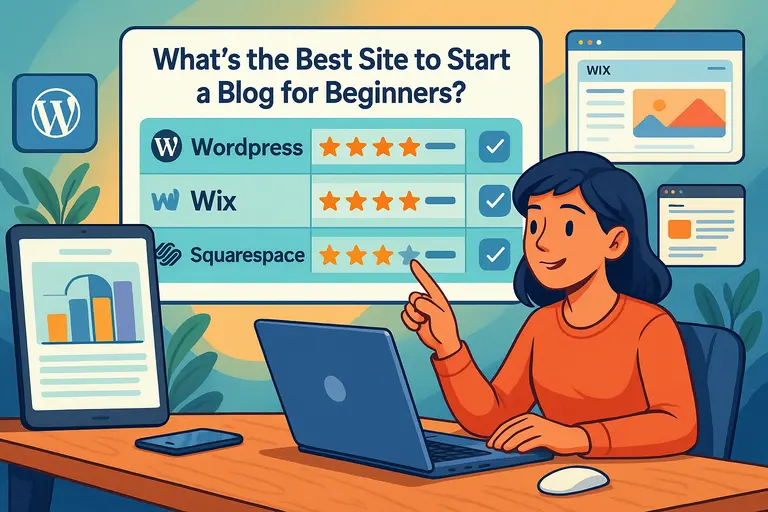
 Discover the Best Blogging Platform: 5 User Favorites
 Can You Make Money Blogging On WordPress
 How to Grow Your Business Online for Free — Step-by-Step Plan
 What’s the Best Site to Start a Blog for Beginners?
 How to Create a Blog Site and Start Making Money
 Free Blog Tips to Grow Traffic Without Spending