
Table of Contents
Some links on The Justifiable are affiliate links, meaning we may earn a small commission at no extra cost to you. Read full disclaimer.
Awin affiliate network review searches usually come from one real question: is this platform actually worth your time, or is it just another big-name network that looks better on paper than in practice?
I’ve gone deep on Awin’s current platform, publisher experience, advertiser setup, and recent product direction to give you a practical answer. If you want the polished marketing version, Awin already has that.
This guide is for the hidden truths: where Awin is genuinely strong, where it feels limiting, and who will get the best results from it in 2026.
What Awin Is And Who It Is Really Built For
Awin is one of the biggest affiliate networks in the market, but size alone does not make it the right fit.
To judge it fairly, you need to understand what the platform is trying to be.
What Awin Actually Does
At its core, Awin sits between advertisers and publishers. It handles tracking, relationship management, reporting, and partner payments, which is the main reason large networks still matter even when brands can run private programs.
Awin says it connects 30,000+ brands with 1M+ approved partners globally, and its advertiser-facing pages position the platform as a performance-based partnership channel rather than a simple “grab links and pray” affiliate marketplace.
What that means in plain English is this: If you are a publisher, you use Awin to discover brands, apply to programs, generate affiliate links, and get paid through one network. If you are a merchant, you use it to recruit affiliates, set commission rules, monitor sales, and manage risk.
The hidden truth here is that Awin feels more mature than beginner-friendly. I’d describe it as an ecosystem built for structured partner marketing, not a casual side hustle dashboard.
That can be a huge advantage if you want stability, reporting depth, and access to established brands. It can also feel a bit heavy if you are brand new and expect instant approvals and frictionless onboarding.
Who Will Usually Do Best On Awin
Not every affiliate network serves the same type of publisher well.
From what I’ve seen, Awin is strongest for content sites, editorial publishers, cashback and loyalty partners, deal sites, comparison publishers, and creators who already have a defined traffic source.
Awin also actively promotes itself to influencers and content creators, including social platform use cases and an Instagram connection flow.
You are more likely to do well on Awin if:
- You already have traffic: A blog, email list, social audience, or niche site gives you leverage when applying to programs.
- You work with commercial intent: Product reviews, comparison pages, travel content, finance content, and shopping guides tend to fit the network well.
- You can handle relationship-driven affiliate marketing: Awin rewards publishers who can think beyond dropping a link and hoping for clicks.
I would not call Awin the easiest platform for a total beginner with zero audience. It is better for someone who is ready to treat affiliate marketing like a real channel, not just a quick experiment.
The Real Pros That Make Awin Attractive
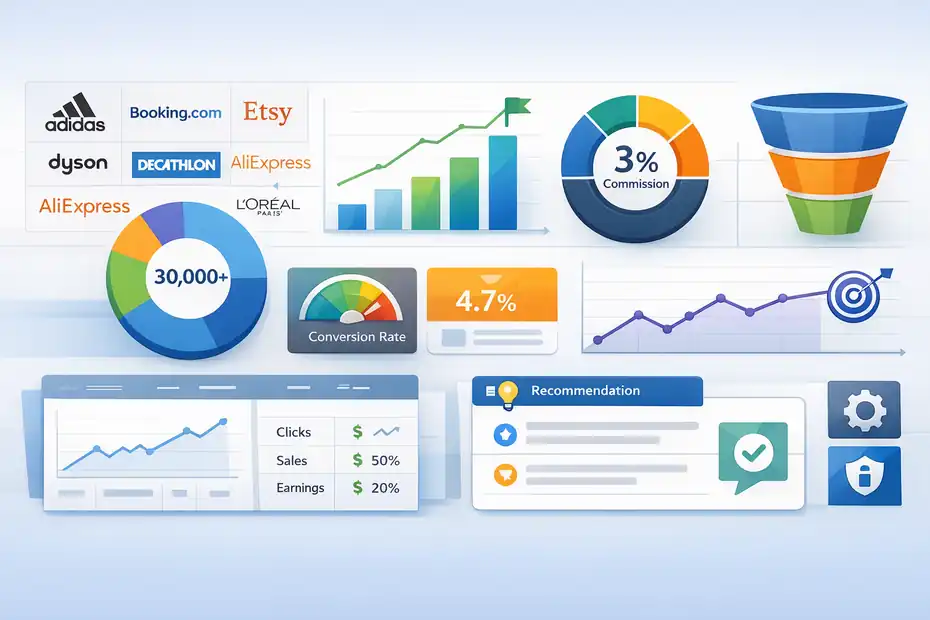
Awin has enough market presence that it would still get signups on brand recognition alone. The better question is why experienced affiliates and brands keep using it.
Access To Big Brands And Broad Category Coverage
One of Awin’s biggest strengths is reach. Awin’s current site highlights 30,000+ brands on the platform, while publisher pages showcase recognizable names such as Adidas, Booking.com, Etsy, Dyson, Decathlon, AliExpress, Groupon, and L’Oréal Paris.
That matters because network quality is not just about how many advertisers exist. It is about whether those advertisers match real buyer intent in profitable categories.
This broad category mix helps in a few ways. First, it lets you build content around multiple adjacent monetization angles without leaving the network.
For example, a travel publisher might combine hotel, luggage, insurance, and activities partners. A home niche creator can pair furniture, décor, bedding, and appliance brands inside one ecosystem.
Second, big-brand availability improves conversion potential. Readers often buy faster from names they already trust. I’ve seen this matter more than commission percentage. A 3% commission on a trusted, high-converting merchant can outperform a 10% offer from a lesser-known store.
The hidden truth is that Awin’s scale is especially useful when you want brand safety and category variety. It is less exciting if your strategy depends on finding weird, undiscovered offers with unusually high payouts.
Stronger Infrastructure Than Many Smaller Networks
Awin’s biggest long-term advantage may be boring infrastructure. That is a compliment. The company’s official material emphasizes industry-leading tracking, reporting, customer journey visibility, secure payment handling, automation, and support content through its Help Center and best-practice resources.
Its Winter 2026 release also introduced a redesigned dashboard, AI-powered recommendations, and faster visibility into metrics and trends.
For publishers, this usually shows up as a platform that feels established rather than improvised.
For advertisers, it shows up as control. Awin’s plan pages reference partner discovery, communication tools, reporting flexibility, customer-journey views, and rule-based commission settings tied to product ID, category, campaign, new versus existing customer status, and more.
I believe this matters more in 2026 than it did a few years ago. Tracking trust, commission accuracy, and attribution logic are becoming more important as affiliate programs get more complex and AI-driven discovery changes shopping behavior.
Awin has been publicly talking about attribution confidence and industry tracking integrity, which suggests the platform understands where the market is heading.
The Hidden Cons Most Reviews Gloss Over
This is the section many “review” articles soften too much.
Awin has real strengths, but it also has friction points that can absolutely slow you down.
The Platform Is Not As Beginner-Friendly As It Looks
Awin markets itself well to creators and new publishers, and the signup flow is clearly designed to feel approachable. But the actual experience can still feel more operational than intuitive, especially if you are new to affiliate marketing terminology, program approvals, and reporting states.
Awin’s older but still official publisher onboarding guide says a $5 deposit is required at signup as a security measure to verify details, and transactions can move through stages such as pending and uncleared before they are payable.
That is not a scam signal. It is normal network plumbing. But beginners often expect immediate acceptance, instant commissions, and Amazon-style simplicity. Awin is not really that.
Here is where people get frustrated:
- Applications take judgment: Many advertisers review your site or traffic quality before approval.
- Payments are not instant: Approval windows can take weeks depending on the merchant’s validation cycle. Awin has said average approval time can run around 30 to 45 days in some cases.
- The interface assumes context: If you do not already understand affiliate workflows, some labels and statuses can feel opaque.
My honest take is that Awin is easier once you understand affiliate mechanics. Before that, it can feel harder than the homepage suggests.
Approval Friction And Program Quality Vary A Lot
A big network does not mean every individual program is equally good. This is one of the hidden truths that matters most. Awin gives you access to a large pool of brands, but each advertiser effectively runs its own mini-world inside the platform.
That means commission rates, cookie lengths, approval speed, creative quality, and communication standards can vary widely.
In practice, one merchant may approve you in a day and provide clean banners, product feeds, and responsive affiliate management. Another may take weeks, convert poorly, and offer little beyond a generic link.
That is not uniquely an Awin problem, but larger networks make this unevenness more obvious because the range is so broad.
I suggest treating Awin like a marketplace, not a guarantee. The network opens doors, but you still have to evaluate each offer. Look at relevance, conversion intent, brand fit, payout logic, and whether the advertiser seems actively managed.
This is why some affiliates love Awin while others say results were disappointing. They are often describing different slices of the same network. On Awin, the platform matters, but merchant selection matters more.
Signing Up And Getting Results As A Publisher
If you are joining Awin as a publisher, your early setup choices will decide whether the network feels profitable or frustrating.
This is where most people either build momentum or quietly stop using the platform.
How To Approach Signup The Smart Way
Awin’s publisher onboarding still includes a small deposit, currently described in official guidance as a $5 verification measure that is returned with your first payout after meeting conditions. That alone filters out some casual signups, which is probably intentional.
The smarter way to join is not to treat signup as the finish line. Treat it as the beginning of your application strategy.
Here is how I would do it:
- Step 1: Prepare a real property. A clean site, social profile, or creator page with visible niche focus helps a lot.
- Step 2: Write a credible profile. Explain how you promote products, what audience you reach, and what kind of content you publish.
- Step 3: Apply selectively first. Start with programs that clearly match your audience instead of mass-applying to everything.
- Step 4: Publish buyer-intent content early. Reviews, comparisons, “best for” guides, and deal roundups give advertisers confidence.
Imagine you run a small fitness blog. You will likely get stronger results applying to sportswear, supplements, recovery products, and health services that directly match your content than to random retail brands with no niche overlap. That sounds obvious, but many new affiliates ignore it.
The hidden truth is that Awin rewards signal quality. The better your positioning, the better your approvals tend to be.
What Your First 90 Days On Awin Should Look Like
Your first three months on Awin should be less about chasing dozens of partnerships and more about validating a repeatable process. I recommend starting with five to ten relevant merchants and building content around real purchase intent.
A simple 90-day approach looks like this:
- Month 1: Join, clean up your publisher profile, and secure your first approvals.
- Month 2: Publish commercial content around those offers, such as comparison pages, alternatives, tutorials, or seasonal buying guides.
- Month 3: Review click data, identify pages with buyer intent, and improve calls to action, link placement, and merchant mix.
A realistic example: Let’s say a travel content site joins Awin and gets approved by Booking.com-style accommodation partners plus activity brands.
Instead of adding affiliate links everywhere, the publisher creates three focused pages: “Best Weekend Trips for Couples,” “Where to Stay in Lisbon,” and “Best Travel Accessories for City Breaks.”
That setup usually monetizes better than generic destination diary posts because the reader is already halfway to a purchase.
I believe this is where many Awin users go wrong. They blame the network when the real issue is weak intent matching. Awin works best when your content sits close to the buying decision.
How Good Awin Is For Advertisers And Ecommerce Brands
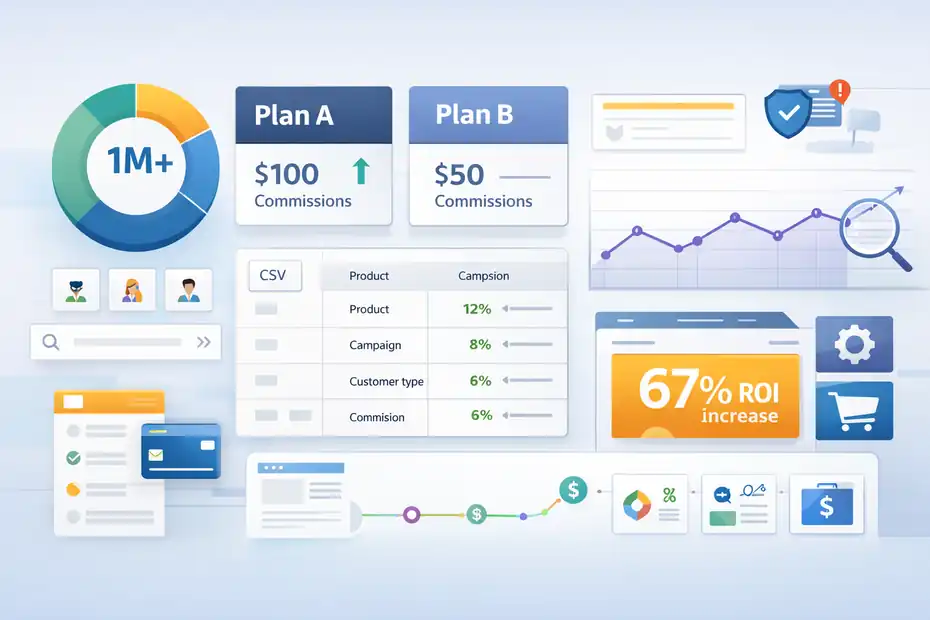
A lot of reviews focus only on affiliates, but merchants searching for an awin affiliate network review have a different concern: will this platform help grow revenue without creating tracking chaos or partner-management headaches?
What Advertisers Get That Is Genuinely Valuable
Awin’s advertiser-facing materials position the platform around partner discovery, tracking, reporting, communication, automation, and flexible commission management.
Current plan pages also highlight sector insights, customer-journey visibility, trigger-based communications, secure payment handling, and rule-driven commission structures based on product, campaign, customer type, or custom data points.
That matters because modern affiliate growth is not just about adding coupon sites. Strong programs increasingly use layered partner types: content publishers, creators, technology partners, loyalty sites, editorial media, and niche experts.
Awin appears well built for that broader model. For example, the platform highlights:
- Large partner supply: 1M+ global partners on the advertiser side.
- Flexible commission design: Useful if you want to pay differently for new customers, specific products, or campaigns.
- Journey and performance reporting: Helpful when you want more nuance than “last click got the sale.”
For a growing ecommerce brand, that can reduce waste. Awin even showcases a Samsung case study claiming a 67% ROI increase through its commission flexibility tooling. Case studies are marketing, of course, but they do show the direction of the platform’s value proposition.
Where Advertisers Should Be Careful
Awin is not magic. If you are a merchant, the network does not replace strategy. It gives you infrastructure. You still need partner recruitment, commission logic, compliance discipline, and ongoing optimization.
The biggest advertiser mistake is assuming network membership alone will attract quality affiliates. In reality, top publishers care about conversion rate, brand trust, payout reliability, EPC potential, and whether your team communicates well. A weak offer inside a great network is still a weak offer.
Another caution is complexity. Awin’s plans include useful features, but businesses that are not prepared to manage the channel may underuse them. There is also no public simple pricing table with flat, transparent entry pricing on the main plan comparison page; users are pushed toward “request pricing” and sales conversations instead.
I would say Awin is strongest for merchants who want a serious affiliate or partnership program and are willing to manage it properly. If you just want a plug-and-play revenue button, you may feel underwhelmed.
Platform Features, Tools, And Reporting: What Matters Most
Features sound impressive in sales copy, but only a few actually change performance. This is where I think Awin has both strengths and some reality checks.
The Features That Actually Move The Needle
Awin’s current platform messaging emphasizes a new dashboard, faster performance snapshots, AI-powered recommendations, to-do prioritization, customer journey visibility, communication tools, and flexible commission rules.
Beta messaging around the redesigned experience says 92% of users loved the platform during testing. I would not overstate that claim, but it does signal active product investment rather than a stale interface.
The features I think matter most are:
- Performance visibility: Quick access to clicks, revenue, top partners, and trends helps you make decisions faster.
- Commission flexibility: This is valuable when different products, partner types, or customer segments deserve different payouts.
- Journey reporting: Useful for brands trying to understand influence beyond simplistic attribution.
- Partner discovery and communication: Important if you are actively recruiting instead of waiting passively.
For publishers, the practical value is less flashy but still important. A stable network, broad merchant access, and centralized payments can be worth more than “cool” features. For advertisers, deeper reporting is often the real reason to stay on a mature platform.
Which Features Sound Good But Need A Reality Check
Not every platform feature changes outcomes. AI recommendations, for example, may help surface insights, but they will not rescue a weak commission structure or a poorly converting site.
Likewise, dashboards can be cleaner and faster, but no dashboard can compensate for irrelevant traffic or uncompetitive offers.
I always recommend separating “useful feature” from “performance lever.” A useful feature saves time. A performance lever changes revenue.
On Awin, the real performance levers are still the fundamentals:
- Offer quality
- Partner fit
- Conversion rate
- Tracking reliability
- Commission design
- Content-to-intent alignment
That might sound less exciting than AI tooling, but it is how affiliate growth actually works. Awin seems aware of that, which is why so much of its platform value is tied to reporting, flexibility, and operational control rather than gimmicks.
My opinion is simple: The feature set is good, maybe very good for the right user, but it is best viewed as infrastructure for smart strategy, not a substitute for it.
Common Mistakes That Make Awin Feel Worse Than It Is
A lot of negative experiences with affiliate networks come from preventable mistakes. Awin is no exception. If you understand these early, the platform usually feels much more logical.
Mistakes Publishers Commonly Make
Publishers often join Awin and then sabotage themselves without realizing it. The most common mistake is applying to too many programs before building a coherent niche presence. Another is using generic content that attracts curiosity clicks instead of buyer-intent traffic.
These mistakes usually show up like this:
- Mistake 1: Chasing high commissions without checking conversion fit. A lower commission from a trusted brand often wins.
- Mistake 2: Publishing broad content. “My thoughts on spring fashion” rarely monetizes like “Best Running Shoes for Flat Feet.”
- Mistake 3: Ignoring program terms. Some advertisers have specific traffic and promotion rules.
- Mistake 4: Expecting instant payouts. Approval cycles are part of network-based affiliate marketing.
I also think many publishers underestimate the importance of merchant selection. You do not need 50 programs. You need a handful of programs that match what your audience is already searching for.
If Awin feels “slow,” it is often because your content is too far from the buying moment.
Mistakes Advertisers Commonly Make
Brands make a different set of errors. The biggest one is setting up an affiliate program as if affiliates owe them traffic by default. Good partners have choices. If your commission, site conversion rate, and communication are weak, they will simply promote someone else.
Common advertiser mistakes include:
- Mistake 1: Offering flat commissions with no nuance. Flexible rules exist for a reason.
- Mistake 2: Under-recruiting content partners. Too many programs lean only on voucher and cashback models.
- Mistake 3: Neglecting reporting. If you do not review partner contribution by type, you cannot optimize intelligently.
- Mistake 4: Treating compliance as optional. Tracking and attribution quality matter more every year.
From what I’ve seen, Awin works best for brands that understand affiliate as a relationship channel, not just a cheap sales source. That mindset shift alone changes results.
Awin Vs Other Affiliate Networks: Where It Sits In The Market
No affiliate network is universally best. The right platform depends on your traffic model, vertical, brand needs, and growth stage.
Still, Awin does have a recognizable market position.
Where Awin Usually Wins
Awin tends to win when you want a mature global network with lots of known brands, broad category reach, and stronger operational infrastructure. Its current positioning around 30,000+ brands, 1M+ partners, flexible commissions, and reporting depth supports that image.
Compared with lighter affiliate platforms, Awin usually looks stronger in these scenarios:
- You want mainstream merchant access
- You need international scale
- You care about structured reporting
- You want one platform for multiple partner models
This makes it appealing for established publishers and serious ecommerce brands. It also helps agencies managing multiple client programs because the infrastructure is already built around complexity rather than simplicity.
Where Awin May Not Be Your Best Option
Awin may not be ideal if your top priority is absolute beginner simplicity, instant onboarding, or highly specialized offers in a niche that performs better through a private program or another network.
It also may not be your favorite if you dislike approval friction or want crystal-clear self-serve pricing as an advertiser, because Awin pushes pricing inquiries through sales conversations rather than transparent public numbers.
I would frame it this way:
- If you want structure, breadth, and maturity, Awin is compelling.
- If you want minimal friction and ultra-simple workflows, it may feel heavier than you want.
- If you want unusual niche offers, another network or direct partnership may outperform it.
That is the real answer most readers need. Awin is not “good” or “bad” in the abstract. It is strong for a certain style of affiliate marketing.
Final Verdict: Is Awin Worth It In 2026?
After looking at Awin’s current platform, publisher experience, advertiser tooling, and product direction, my verdict is that Awin is absolutely worth considering in 2026, but only if you match the platform’s strengths.
For publishers, Awin is best for people with a real niche, real traffic, and a willingness to be selective about merchants. For advertisers, it is best for brands that want a serious partnership program with room for customization, reporting, and scale.
Awin’s large network, recognized brand roster, support resources, flexible commission setup, and continued product development are real advantages.
The hidden truths are these:
- Awin is stronger than many casual reviews suggest.
- It is also less beginner-easy than its marketing can make it seem.
- The platform itself is solid, but your results will depend heavily on merchant selection, content intent, commission logic, and how strategically you use it.
My honest rating is this: For experienced affiliates and growth-focused brands, Awin is a strong option. For total beginners with no audience and no plan, it can feel tougher than expected.
That is not a flaw. It is just the truth of what Awin really is: a serious affiliate network that rewards serious execution.
FAQ
What is Awin affiliate network and how does it work?
Awin is a global affiliate marketing platform that connects publishers with brands. It tracks referrals, manages commissions, and handles payments. Publishers promote products using unique links, and when a sale is completed, they earn a commission based on predefined terms set by the advertiser.
Is Awin affiliate network good for beginners?
Awin can work for beginners, but it is not the easiest platform to start with. It requires a basic understanding of affiliate marketing, approval processes, and content strategy. Beginners with a clear niche and some traffic tend to perform better than those starting with no audience or plan.
How much can you earn with Awin affiliate network?
Earnings on Awin vary depending on niche, traffic quality, and merchant selection. Some publishers earn small monthly commissions, while others scale to thousands per month. Success depends on targeting buyer-intent content, choosing high-converting brands, and consistently optimizing links and content performance.
Does Awin charge a fee to join?
Yes, Awin requires a small $5 deposit during signup as a verification step. This fee is typically returned with your first successful payout. It helps maintain platform quality by filtering out low-quality or inactive accounts, rather than acting as a profit-based charge.
What are the main advantages of using Awin affiliate network?
Awin offers access to thousands of well-known brands, reliable tracking, and flexible commission structures. It also provides strong reporting tools and global reach. These features make it appealing for serious affiliates and advertisers who want a stable and scalable affiliate marketing platform.

I’m Juxhin, the voice behind The Justifiable.
I’ve spent 6+ years building blogs, managing affiliate campaigns, and testing the messy world of online business. Here, I cut the fluff and share the strategies that actually move the needle — so you can build income that’s sustainable, not speculative.
Related posts:
 Top Market Affiliate Programs That Pay High Commissions
 Awin Affiliate Network Success and Struggles
 How to Build a Website Affiliate Marketing Machine from Scratch
 How to Build an Affiliate Site That Makes Money While You Sleep
 Awin Affiliate Marketing Platform Review: Real Pros
 Voluum Pricing: Which Plan Saves You the Most Money?