
Table of Contents
Some links on The Justifiable are affiliate links, meaning we may earn a small commission at no extra cost to you. Read full disclaimer.
Awin affiliate marketing platform review content usually swings too far in one direction. It either treats Awin like a flawless global network or dismisses it because the dashboard feels a little more “performance marketing” than “beginner side hustle.”
My view is more practical: Awin is a strong platform, but it fits certain affiliates and brands much better than others.
If you want a clear, honest breakdown of how it works, what it costs, where it shines, and where it can frustrate you, let me walk you through it without the usual fluff.
What Awin Actually Is And Who It Is Best For
Awin sits in the middle of the affiliate relationship. It connects publishers, creators, media partners, and comparison sites with advertisers that want performance-based growth.
What Awin Does In Simple Terms
At its core, Awin is an affiliate network and partnership platform. Advertisers launch programs there, publishers apply to those programs, and Awin handles the tracking, reporting, and commission infrastructure between both sides.
Awin also positions itself as a global platform, with local-market support across 14 countries, which matters if you want to promote brands beyond one region.
Here is the simple version of how it works:
- Advertiser Side: A brand creates an affiliate program, sets commission rules, and approves partners.
- Publisher Side: An affiliate joins Awin, applies to individual brand programs, and gets tracked links or creatives.
- Platform Layer: Awin attributes sales or leads, processes validation, and manages payment flow.
That sounds basic, but this middle layer is what makes a real network useful. You are not just grabbing a random referral link. You are working inside a system where approvals, attribution, transaction statuses, and partner relationships are all visible in one place.
I believe that is the biggest reason Awin still matters in 2026. Affiliate marketing is no longer just bloggers dropping links into product reviews. It now overlaps with influencer campaigns, coupon partnerships, brand collaborations, and AI-discovered content.
Awin itself highlights that affiliate is expanding into creator and partnership-led growth, and cites eMarketer forecasts saying affiliate marketing is expected to drive $1 in every $7 in US ecommerce sales next year.
Who Will Usually Like Awin Most
This is where an honest awin affiliate marketing platform review needs to be more specific.
Awin tends to work best for these users:
- Content publishers with buyer-intent traffic: Product review sites, comparison blogs, niche editorial properties, and SEO publishers.
- Established creators: Especially those blending affiliate links with influencer or commerce content.
- Brands with structure: Ecommerce companies that want tracking, partner management, and room to scale.
- Agencies and partnership teams: Teams that manage affiliate programs across regions or categories.
Where Awin can feel less ideal is for absolute beginners with no audience, no website, and no idea how affiliate traffic works. The platform itself is not impossible to use, but it assumes you are building a real publishing or partnership operation.
Imagine two people. One runs a home office blog with buying guides, email subscribers, and traffic from Google. The other opens an account hoping to “make passive income” without content, traffic, or a niche.
The first person can turn Awin into a serious revenue channel. The second will probably feel lost fast.
The Quick Verdict Before We Go Deeper
My honest take is that Awin is not the easiest affiliate platform, but it is one of the more credible and scalable ones.
The “real pros” are not hype points like “easy money” or “instant commissions.” The real pros are more practical:
- Access to a broad advertiser ecosystem
- Serious tracking and payment infrastructure
- Global reach
- Good fit for long-term partner programs
- Strong appeal for content, commerce, and brand-partnership models
The tradeoff is that Awin can feel more operational than beginner-friendly. You need patience, and you need to think like someone building a business asset, not chasing quick wins.
That difference matters. In my experience, people who treat affiliate marketing like a publishing business usually appreciate Awin more than people looking for a shortcut.
How The Platform Works For Publishers And Advertisers
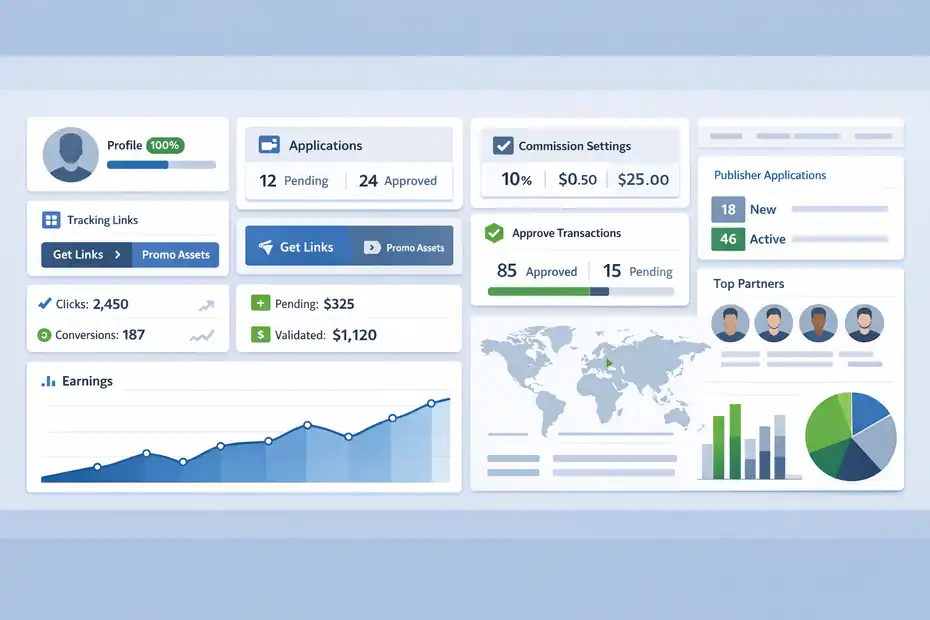
Before judging the platform, it helps to understand the mechanics.
A lot of frustration with Awin comes from expecting it to behave like a simple marketplace, when it actually behaves more like a structured network.
How Publishers Use Awin Day To Day
For publishers, the workflow usually looks like this:
- Step 1: Create an account and complete your publisher profile.
- Step 2: Apply to advertiser programs relevant to your audience.
- Step 3: Get approved, then access links, feeds, or promotional assets.
- Step 4: Send traffic through tracked links and monitor transaction status.
- Step 5: Get paid after transactions are validated.
That last point is important. Awin explains that publishers are paid on validated transactions, not on every raw click or every sale event the second it appears in reporting.
This affects expectations in a big way. You may see transactions recorded, then wait for the advertiser to approve them. That delay is normal in affiliate marketing, especially in categories with returns, cancellations, or lead-quality checks.
If you are used to instant attribution dashboards, this can feel slow. But it is not automatically a red flag. It is part of how networks protect advertisers from paying commissions on reversed or invalid actions.
For publishers, the dashboard is less about “viral growth hacks” and more about performance management. You are checking clicks, conversion rates, approved commissions, pending commissions, and program-level performance.
That is why I say Awin rewards organized affiliates more than casual ones.
How Advertisers Use Awin To Run Programs
For advertisers, Awin is a platform for building and managing affiliate partnerships at scale. Official Awin advertiser pages focus on self-managed and more sophisticated program options, including automation and transaction oversight.
Recent product release material also emphasizes better transaction management visibility and payout control.
The typical advertiser flow looks like this:
- Setup: Define your commission model, program rules, and tracking.
- Recruitment: Review publisher applications and approve partners.
- Optimization: Adjust commissions, promotions, and partner mix.
- Validation: Approve or decline transactions based on actual outcomes.
- Expansion: Use insights to scale into more partner types or markets.
This is where Awin becomes more than a link generator. For brands, it is part relationship tool, part channel-management system.
A smaller merchant might use it to recruit five to twenty quality partners. A larger retailer might run an entire partner ecosystem that includes creators, loyalty sites, content publishers, and technology partners. Same platform, different level of maturity.
Why The Middle Layer Matters More Than People Think
A lot of affiliates underestimate the value of the network layer until something breaks.
Here is what that middle layer helps with:
- Tracking reliability: The platform records referrals and attributed transactions.
- Administrative structure: Payments, approvals, and reporting happen in one system.
- Program governance: Brands can set rules instead of giving every partner direct unmanaged access.
- Partner discovery: Affiliates can find programs, and advertisers can recruit them.
That may sound boring compared with “top affiliate hacks,” but it is exactly what makes Awin useful for serious operators.
I suggest looking at Awin less like a shiny app and more like infrastructure. Infrastructure is rarely exciting. It is valuable because it supports repeatable growth.
If your goal is stable affiliate income from trusted brands, infrastructure matters more than novelty.
Awin Pricing, Fees, And Payment Reality
This is one of the areas where readers usually want the straight answer.
So let me be direct: Awin’s cost experience is very different depending on whether you are a publisher or an advertiser.
What Advertisers Pay To Use Awin
Awin’s official advertiser pricing pages list plan-based entry points. For example, Awin Access is listed at £99 plus VAT per month with a 3.5% transaction tracking fee, while Awin Accelerate starts from £199 plus VAT per month with a 2.5% transaction tracking fee.
Awin also explains that the advertiser separately chooses the commission rate paid to affiliate partners.
That means an advertiser is often thinking about three cost layers:
- Monthly platform fee
- Tracking fee charged by Awin
- Commission paid to publishers
Awin even gives a simple example: on a £100 sale with a 6% affiliate commission, the publisher gets £6 and Awin’s tracking fee can add £3.50 on the Access plan or £2.50 on Accelerate.
This is why brands need margin discipline before launching. Affiliate marketing is performance-based, but not cost-free. If your margins are thin, weak commission design can make the channel feel expensive very quickly.
Still, for many ecommerce businesses, those fees are reasonable if the program brings incrementality, new-customer reach, and partner-driven revenue they would not have won through paid ads alone.
What Publishers Pay And What They Should Expect
For publishers, Awin is much cheaper to enter. Awin’s onboarding guidance has historically referenced a small refundable verification payment for joining as a publisher, and explains that it is returned with the first commission payment if account conditions are met.
Official onboarding content also notes publisher payment thresholds, including examples such as £25 minimum for BACS and £100 for international wire transfers.
The practical takeaway is this:
- You are not paying a major subscription as a publisher
- You may face a small onboarding verification charge
- Your real “cost” is time, traffic, and execution quality
This matters because some beginners fixate on tiny signup costs while ignoring the much bigger question: can you actually drive qualified traffic?
In my opinion, if a small verification fee scares someone away, Awin probably is not the real problem. The real problem is usually lack of a plan, lack of audience, or lack of buying-intent content.
How Payments Really Feel In Practice
Awin’s payment process is structured, not instant. Official guidance explains that publishers are paid on validated transactions and that payment timing depends on approval status and payout cycles.
Older Awin help content also outlines twice-monthly publisher payment timing once commissions are confirmed and thresholds are met.
That creates a very normal affiliate sequence:
- A user clicks your tracked link.
- A transaction is recorded.
- The advertiser reviews and validates it.
- Once approved, it moves toward payout.
- You receive payment after threshold and cycle conditions are met.
So yes, Awin can feel slower than a creator expecting instant monetization. But that does not make it weak. It makes it structured.
I recommend planning cash flow around approved commissions, not pending ones. Pending numbers are encouraging, but they are not money in your account yet. That mindset saves a lot of disappointment.
The Real Pros Of Using Awin
Now let’s get into the part most reviews rush through. “Pros” should not mean marketing slogans.
They should mean practical advantages that improve your ability to earn or scale.
Strong Brand Access And Partnership Breadth
One of Awin’s biggest strengths is access. The platform is built around a large network of advertisers and partner types, and Awin positions itself as serving sectors like retail, travel, finance, telecom, and services.
That matters because good affiliate growth depends on offer-market fit. You do not want just any advertiser. You want advertisers that match your audience’s buying mindset.
For example:
- A travel content site needs brands in booking, luggage, insurance, and experience categories.
- A finance comparison publisher needs lead-gen or service programs with clear validation rules.
- A home and lifestyle blog needs merchants with broad product catalogs and recurring campaign opportunities.
Awin is useful here because it is not locked into one narrow vertical. That gives publishers room to build multiple revenue lines without managing ten different networks.
I believe this is one of the most underrated advantages for growing sites. When one merchant underperforms, you want alternatives nearby. Platform breadth reduces dependency risk.
Better Fit For Serious, Long-Term Affiliate Models
Awin is not a “throw up one link and hope” platform. That is actually a strength.
It works well when you are doing things like:
- Building commercial content hubs
- Running editorial commerce campaigns
- Layering affiliate offers into newsletters
- Testing creator and influencer partnerships
- Segmenting partners by content type and contribution
That serious-business feel can scare beginners, but it helps once you scale. You are operating in a framework where tracking, approvals, commissions, and relationships are formalized.
This becomes especially useful when your affiliate activity grows beyond one blog post. The platform supports a more disciplined way of managing revenue sources, and for brands it supports a more disciplined way of managing partner portfolios.
In most cases, the affiliates who win with Awin are the ones who treat content, traffic, and conversion paths like assets.
Global Reach And Expansion Potential
Awin highlights local market presence across 14 countries and emphasizes global scale with local support.
That is a meaningful advantage if you plan to expand traffic or partnerships internationally.
Let’s say you run an English-language site that starts ranking in the UK, then gains traction in Australia or parts of Europe. A platform with broader international reach gives you more room to align with region-relevant merchants instead of rebuilding your monetization stack from scratch.
For advertisers, this also matters. A brand can start with one program structure and potentially expand to more territories without leaving the platform ecosystem.
I would not call Awin the only global option, but I would absolutely call its international positioning a real operational advantage.
The Cons, Friction Points, And Where Awin Falls Short
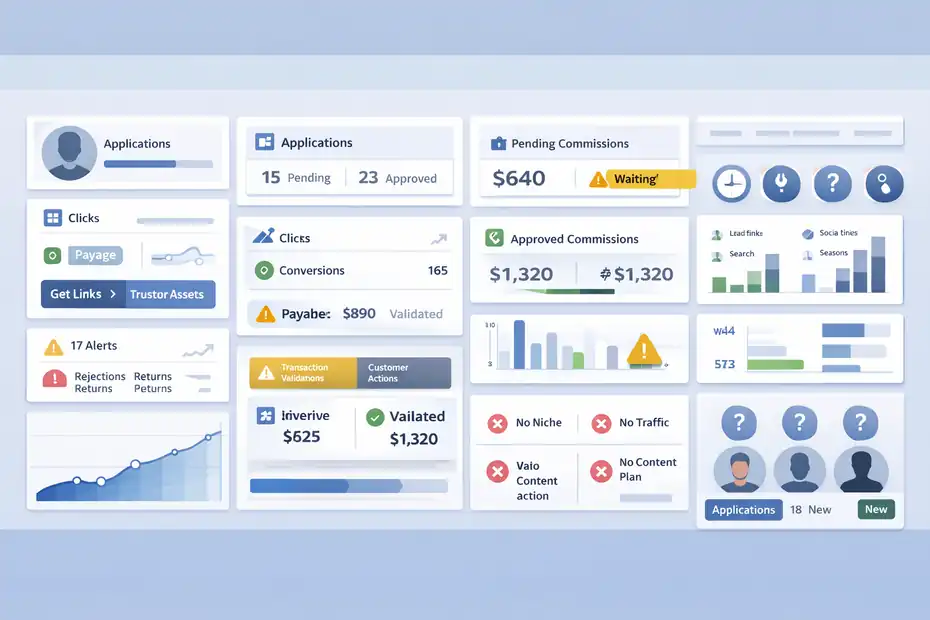
A good awin affiliate marketing platform review should spend real time here. The platform is useful, but it is not frictionless.
The Dashboard And Workflow Can Feel Heavy For Beginners
This is probably the most common practical complaint. Awin can feel a little dense when you first log in.
It is not that the platform is broken. It is that the interface reflects a real affiliate network, not a stripped-down creator app. You may see multiple statuses, partner applications, transaction states, payment rules, and reporting layers before you feel comfortable.
For a beginner, that can create two problems:
- Decision fatigue: Too many moving parts too early.
- Misinterpretation: Confusing clicks, pending sales, validated commissions, and payable balances.
I suggest expecting a learning curve instead of fighting it. Once you understand the basic flow, the platform makes more sense. But no, I would not call Awin the most intuitive affiliate environment for first-time users.
That does not make it bad. It just means the product assumes a bit more seriousness from the user than beginner-friendly marketplaces do.
Approval And Validation Delays Can Test Your Patience
Because Awin pays on validated transactions, there is naturally a waiting period between generating activity and receiving finalized commission. Official guidance is clear that advertiser validation plays a role in payment timing.
This can be frustrating in categories where:
- Returns are common
- Lead quality is reviewed manually
- Sales cycles are longer
- Advertisers move slowly on approvals
Imagine you drive 50 sales to a merchant during a seasonal promotion. Your dashboard shows the transactions, but a chunk of that commission sits pending while validation happens. That can make a strong month feel psychologically weaker than it really is.
My advice is simple: Do not judge Awin using pending revenue snapshots alone. Judge it using approved commission trends over time.
Not Every Publisher Is A Good Fit
This is not always framed as a downside, but for many readers it is one.
Awin is not ideal if you have:
- No niche
- No traffic source
- No content plan
- No purchase-intent audience
- No patience for applications and program review
You can technically join and still struggle badly.
I think that is why Awin reviews sometimes look contradictory. One person says the platform is excellent. Another says it is pointless. Often, they are both describing their own business model more than the platform itself.
Awin is usually better for operators with some base level of audience, intent, and process. If that is not you yet, the platform may feel harder than it needs to.
Setting Up Awin The Right Way As A Publisher
This is where many people quietly lose money.
They join, apply to random programs, paste links in weak content, and then conclude the network does not work.
Build Your Account Like A Real Media Property
Your publisher profile matters because advertisers review it before approval. If your profile is vague, messy, or generic, your application becomes easy to ignore.
Here is how to set it up better:
- Step 1: Define a clear niche. “Lifestyle” is weak. “UK home office buying guides for remote workers” is stronger.
- Step 2: Explain your traffic source. Mention SEO, newsletter, YouTube, social commerce, or comparison content honestly.
- Step 3: Show commercial relevance. Tell advertisers how you help users make buying decisions.
- Step 4: Keep your site clean. Thin pages, broken layouts, and empty categories hurt trust.
I recommend writing your profile like a short partnership pitch, not a bio. Advertisers want to know who you reach, how you promote, and why your traffic converts.
A simple but strong angle can outperform a bigger site with a weak explanation.
Apply To Programs Strategically, Not Emotionally
One of the easiest mistakes is applying to every recognizable brand.
That usually leads to:
- Rejections
- Low relevance
- Poor conversion rates
- Wasted time managing the wrong offers
A smarter approach is to group advertisers into three buckets:
- Core Fit: Perfect match for your audience and content type.
- Complementary Fit: Useful secondary offers that support the same buying journey.
- Test Fit: Interesting programs worth trialing with a small traffic segment.
For example, a mattress review site might choose a core mattress brand, complementary bedding and sleep accessory partners, and a few test offers in sleep tracking or bedroom furniture.
That kind of structured application strategy makes your monetization more coherent. It also improves your content planning because you are not forcing products into articles where they do not belong.
Match Links To Buying Intent, Not Just Traffic Volume
This is where real affiliate performance starts.
A page with 500 visitors can outperform a page with 5,000 if the intent is stronger. Awin works best when your content sits near the decision stage.
Good placements usually include:
- Product comparison pages
- “Best for” roundups
- Brand reviews
- Alternatives pages
- Seasonal buying guides
- Email sequences tied to purchase timing
Weak placements usually include broad informational posts with no buying momentum.
I have seen affiliates obsess over link placement design while ignoring page intent. Intent wins more often than clever button styling.
If someone lands on “best ergonomic office chairs for back pain,” they are far closer to converting than someone reading “what is posture.” Awin rewards the first kind of content far more consistently.
How To Get Better Results On Awin
Once you are approved into good programs, the next challenge is performance. This is where decent affiliates separate from high-earning ones.
Focus On Pages That Influence A Buying Decision
Your best Awin revenue usually comes from content that helps someone move from uncertainty to action.
Prioritize pages such as:
- Comparison Pages: “Brand A vs Brand B”
- Best-Of Lists: “Best Running Shoes For Flat Feet”
- Review Pages: Detailed pros, cons, and who the product is for
- Alternative Pages: “Best Alternatives To X”
- Offer-Led Pages: Seasonal sale roundups or promo-driven guides
These formats work because they align with commercial intent. The reader is not just browsing. They are evaluating.
Awin becomes much more effective when your pages answer the exact hesitation that blocks a sale. That hesitation might be price, quality, compatibility, return policy, or feature differences.
I suggest writing each money page around one decision question: “What is this reader still unsure about?” Then solve that clearly.
Track Approved Revenue By Page, Not Just By Program
Many affiliates review performance at the program level only. That is too shallow.
A better analysis looks at:
- Which pages drive approved commissions
- Which traffic sources bring validated conversions
- Which content formats produce the best approval rates
- Which merchants reverse too many transactions for your liking
This is important because not all revenue is equal. A page that sends fewer clicks but produces consistent approved commissions may be worth scaling harder than a page that gets lots of clicks and weak validation.
A simple example:
- Page A sends 1,000 clicks and earns €80 approved.
- Page B sends 250 clicks and earns €140 approved.
Most people would instinctively scale Page A because it “looks bigger.” I would often scale Page B first because it signals stronger intent and better monetization efficiency.
Improve Conversion Without Stuffing More Links Everywhere
When earnings are flat, many affiliates react by adding more links. I think that is usually the wrong first move.
Better levers include:
- Improve offer matching: Use the merchant that best fits the specific audience need.
- Tighten recommendations: Explain why one option fits one user and another option fits a different one.
- Refresh stale content: Update prices, screenshots, comparisons, and outdated claims.
- Reduce decision friction: Make the call to action clearer and more relevant.
- Use soft trust signals: Mention delivery speed, warranty, returns, or standout features.
The point is to improve confidence, not just increase clicks.
A good affiliate page does not scream, “Click here.” It quietly makes the next step feel obvious.
Common Mistakes That Make Awin Look Worse Than It Is
Sometimes the platform gets blamed for problems created by strategy. I do not say that to defend every limitation. I say it because it is true.
Treating Awin Like A Shortcut Instead Of A System
The biggest mindset mistake is joining Awin expecting immediate passive income.
Awin is not magic. It is a monetization layer sitting on top of your traffic, content, and audience trust.
If those layers are weak, Awin will not fix them.
Common symptoms include:
- Publishing thin review content with no original angle
- Promoting merchants you have not properly researched
- Sending untargeted social traffic to commercial pages
- Applying to programs before your site looks credible
When that happens, low performance is not really a platform failure. It is a business model problem.
In my experience, Awin works better when you already know what kind of user you help and what decision you help them make.
Ignoring Program Terms And Validation Logic
Another major error is failing to understand how each advertiser program works.
Not every program has the same:
- Commission model
- Cookie window
- Validation criteria
- Allowed promotion methods
- Reversal patterns
- Creative resources
If you skip those details, you can end up promoting offers in ways that underperform or violate program expectations.
For example, a lead-gen advertiser might look attractive on paper, but if approval depends on strict lead quality, your raw conversion rate may not reflect real earnings. A retail merchant with lower headline commission might actually pay more consistently because its validation is straightforward.
That is why I recommend choosing programs based on net earning potential, not just the highest advertised commission.
Relying Too Heavily On One Merchant Or One Page Type
Platform concentration is risky.
If 70% of your Awin earnings come from one merchant, you are vulnerable to:
- Commission cuts
- Program closure
- Validation changes
- Stock issues
- Creative changes
- Seasonal drops
The same goes for page types. If your entire revenue model depends on one “best X” page, a ranking drop can hit hard.
A healthier setup spreads risk across:
- Multiple merchants in the same niche
- Multiple page types
- Multiple traffic sources
- Multiple conversion moments in the user journey
This is not just a safety move. It also reveals where your real monetization strength lives.
Awin Vs Other Affiliate Platforms: Where It Wins And Where It Does Not
You do not need a platform to be perfect. You need it to be right for your model.
Where Awin Usually Wins
Awin tends to win when you care about structure, advertiser breadth, and long-term partner management.
I would put its strengths in these areas:
| Area | Where Awin Looks Strong |
|---|---|
| Network Depth | Good access to established advertisers across multiple sectors |
| Operational Structure | Stronger for tracking, approvals, and managed partnerships |
| Global Reach | Useful for international publisher and advertiser expansion |
| Serious Publisher Fit | Better for content sites, commerce publishers, and mature creators |
| Brand Program Management | Solid for advertisers building more organized affiliate ecosystems |
That does not mean every competitor is weaker. It means Awin’s value is clearest when affiliate marketing is part of a bigger growth system, not a side experiment.
Where Some Alternatives May Feel Easier
Some affiliate platforms can feel easier if you want:
- Faster onboarding
- Simpler link generation
- Fewer application steps
- Cleaner beginner UX
- More direct creator-style monetization
That is the honest tradeoff.
Awin often feels more “network-first” than “creator-first.” If you are a solo beginner, that can feel like friction. If you are running a real content operation, it can feel like professionalism.
I believe that difference explains most comparison debates.
The Best Choice Depends On Your Business Model
Ask yourself these questions:
- Do you have real traffic with buyer intent?
- Do you want access to more established advertiser programs?
- Do you care about structured reporting and validation?
- Are you building long-term content assets?
- Do you need global flexibility?
If yes, Awin becomes much more appealing.
If your model is simpler, faster, and less operational, another platform may feel easier at first. But easier does not always mean better over the long run.
Final Verdict: Is Awin Worth It In 2026?
After looking at the platform honestly, my answer is yes, with conditions.
Who Should Use Awin
I recommend Awin most strongly for:
- Content sites with commercial SEO traffic
- Editorial commerce publishers
- Growing creators with strong audience trust
- Brands that want structured affiliate program growth
- Agencies managing partnerships more seriously
Awin also makes sense in a market where affiliate is increasingly blending with creator marketing, brand partnerships, and broader performance ecosystems. Awin’s own 2026 trends coverage points in that direction, and its broader partner-platform positioning reflects it.
If you are building for the next few years rather than the next few weeks, that matters.
Who Should Probably Wait Or Choose Differently
You may want to wait if you currently have:
- No real traffic source
- No niche clarity
- No publisher asset worth reviewing
- No patience for approvals, validation, and reporting
- No plan beyond “post links and hope”
That is not a judgment. It is just the practical reality.
Awin is usually better once you have at least one solid traffic engine and a clear monetization angle.
My Honest Bottom Line
If you want the cleanest one-line verdict for this awin affiliate marketing platform review, here it is:
Awin is a credible, scalable affiliate platform with real advantages for serious publishers and brands, but it asks you to operate like a real partner marketer, not a casual link dropper.
That is the real pro most reviews miss.
The platform’s biggest strength is not that it makes affiliate marketing look easy. It is that it supports affiliate marketing when you are ready to do it properly. And in 2026, with competition higher and buyer trust harder to earn, I believe that is exactly why Awin is still worth serious consideration.
FAQ
What is Awin affiliate marketing platform and how does it work?
Awin is an affiliate marketing platform that connects publishers with brands. You promote products using tracked links, and when users complete a purchase or action, you earn a commission. Awin manages tracking, reporting, and payments between both sides.
Is Awin a good affiliate platform for beginners?
Awin can work for beginners, but it is better suited for those with some traffic or content already. The platform requires applying to programs and understanding validation processes, which may feel complex if you are completely new to affiliate marketing.
How do you get paid on Awin as a publisher?
You get paid after transactions are validated by advertisers. Once approved, commissions are added to your balance and paid out when you reach the minimum threshold. Payments usually follow a scheduled cycle rather than being instant.
What are the main benefits of using Awin?
Awin offers access to many global brands, reliable tracking, and structured affiliate program management. It works especially well for content creators and publishers who want to build long-term partnerships and scale affiliate income across multiple markets.
Does Awin charge fees for affiliates?
Awin may require a small refundable verification fee when joining as a publisher. Other than that, affiliates do not pay ongoing platform fees. The main investment is time, effort, and building traffic that converts into approved commissions.

I’m Juxhin, the voice behind The Justifiable.
I’ve spent 6+ years building blogs, managing affiliate campaigns, and testing the messy world of online business. Here, I cut the fluff and share the strategies that actually move the needle — so you can build income that’s sustainable, not speculative.
Related posts:
 Is Awin Affiliate Marketing Really Profitable?
 10 Digital Marketing Affiliate Marketing Hacks That Work
 The Affiliate Marketing Guide No One Told You About
 10 Best Affiliate Marketing Products That Sell Like Crazy
 How to Find Reliable Affiliate Marketing Partners Fast
 15 Best Companies with Affiliate Programs You Can Join Today