Table of Contents
Some links on The Justifiable are affiliate links, meaning we may earn a small commission at no extra cost to you. Read full disclaimer.
If you’ve ever wondered how to become a blogger and actually start earning faster, you’re not alone—I remember asking myself the same thing when I first got started.
Blogging can feel overwhelming at the beginning, but what if the process were simpler than you think? And what if you could start making money sooner instead of waiting months or years?
In this guide, I’ll walk you through the exact steps so you can move forward with clarity and confidence.
Understanding What It Really Takes To Become A Blogger
You and I both know the idea of starting a blog sounds simple, but the reality has more layers.
This section helps you understand what’s required so you can move forward with confidence.
Clarifying the Skills You Need Before Starting
When I first tried to become a blogger, I underestimated how many different skills were involved. You don’t need to master everything at once, but having a clear picture helps you avoid feeling overwhelmed later.
The core skills that matter most include writing, basic SEO knowledge, curiosity, and the ability to stay consistent even when traffic comes in slowly. I always tell beginners to start small—focus on getting good at communicating ideas clearly.
You don’t have to be a professional writer. You just need to explain things in a way your reader can trust.
You’ll also eventually work with simple technical tasks, like navigating WordPress menus or editing your site layout. These seem intimidating at first, but they become second nature.
For example, a typical path you might use inside WordPress is: Dashboard → Posts → Add New.
Once you do that a few times, it’s as natural as sending an email.
I believe the most underrated skill is research. Bloggers who understand what people are searching for tend to grow faster. If you know how to look for low-competition keywords, you cut months off your learning curve.
I suggest treating all of these skills as things you pick up over time—never as prerequisites. You learn by doing, not by preparing forever.
Choosing a Blogging Path That Fits Your Strengths
There isn’t just one way to blog, and choosing a path that fits your personality makes everything easier. Some people love educational, how-to content, while others prefer storytelling or opinion-based writing. I’ve seen bloggers succeed using every style, as long as they lean into what feels natural.
One way to find your fit is to think about your natural work habits. If you like teaching, choose a tutorial-heavy blog. If you prefer short, punchy writing, news-style updates or trend commentary might be a better fit. If you enjoy visuals, lifestyle or travel blogging can give you space for photography.
A simple self-test I often recommend is asking yourself this: What type of content would I still enjoy creating if I didn’t make money for the first three months?
Your answer usually points to your natural strengths.
Choosing the wrong path slows down your progress because it drains your energy. Choosing the right one speeds you up because you create more, learn faster, and stay committed long enough to see results.
Setting Realistic Expectations About Earning Speed
I’ve met many new bloggers who expect income in 30 days. While it can happen if you choose the right strategy, it’s not the norm. Income depends on niche, consistency, keyword difficulty, and the monetization methods you choose.
A typical timeline many bloggers experience looks like this:
- Month 1–2: Setting up the blog + learning SEO basics
- Month 3–4: Publishing consistent content with intentional keyword targeting
- Month 5–6: First affiliate sales or ad revenue trickles in
- Month 7–12: Momentum grows as more posts rank
Some people speed this up by targeting ultra-specific long-tail keywords from day one. Others monetize early through affiliate links or digital products. The key is setting expectations that keep you motivated rather than disappointed.
If you go into blogging expecting quick money, you’ll probably quit too early. If you go in expecting steady progress, you’ll actually make money faster because you’ll stick with it.
Picking A Profitable Niche With Faster Income Potential
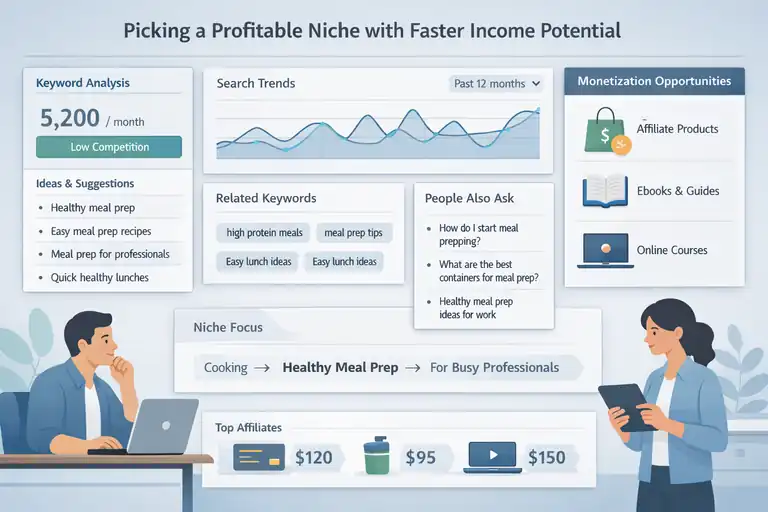
Choosing the right niche is one of the fastest ways to shorten your income timeline. If you pick a topic with built-in demand and clear monetization paths, your earnings come sooner.
Analyzing Search Demand To Validate Your Topic
Before committing to a niche, I always suggest checking whether people are actively searching for the topics you want to write about. Keyword tools like Google Keyword Planner or Ubersuggest give you search volume estimates.
You don’t need high volume—sometimes even 200 searches per month for a specific phrase can be incredibly profitable because competition is low.
A simple way to validate demand is:
- Type your topic into Google.
- Notice the autocomplete suggestions.
- Scroll to “People Also Ask.”
- Check the bottom of the page for “Related Searches.”
If Google shows a variety of questions and search variations, it’s a strong sign that people are actively engaging with the topic.
From what I’ve seen, bloggers who validate search demand before writing tend to grow twice as fast. You eliminate guesswork and produce content people already want.
Finding Niches With Built-In Monetization Opportunities
Some niches monetize easier than others. For example, personal finance, software reviews, travel gear, fitness equipment, and beauty products all have clear affiliate opportunities.
When your topic naturally connects to products, your blog becomes easier to monetize through affiliate programs.
A few examples of niches with strong earning potential:
- Personal finance (credit cards, budgeting apps, insurance)
- Tech tutorials (software, online tools, AI platforms)
- Home office gear (chairs, lighting, productivity tools)
- Beauty and skincare (products, routines, treatments)
I believe new bloggers should avoid niches with low monetization paths, like simple journaling or broad motivation topics. These niches are fun but not profitable unless you build an audience first—which takes longer.
The goal isn’t to chase money blindly, but to choose a niche where income naturally fits the content you’re already excited to create.
Narrowing Your Focus To Build Authority Faster
One of the biggest mistakes I see new bloggers make is choosing a niche that’s too broad. For example, “fitness” is nearly impossible to break into as a beginner.
But “strength training for beginners at home” gives you room to build authority quickly.
A narrowed niche helps you:
- Rank faster
- Create more relevant content
- Build trust with readers
- Become an expert in a smaller space
A simple formula I like using is:
- Broad Topic → Specific Problem → Target Audience*
For example: Cooking → Healthy meal prep → Busy professionals
This is how blogs grow traction even with just 10–20 posts. Google understands your central theme, making it easier to rank your content sooner.
Setting Up Your Blog With A Quick, Streamlined Process
If you want to earn faster, your setup needs to be smooth and simple. Overcomplicating the technical side slows you down and delays your first published post.
Choosing A Platform That Supports Fast Growth
Most new bloggers choose between WordPress.org, Wix, or Squarespace, but WordPress.org remains the best option for fast and scalable growth. It’s flexible, SEO-friendly, and integrates with almost every tool you’ll ever need.
A typical path inside WordPress looks like this: Dashboard → Settings → Permalinks → Post Name.
This simple change improves your URL structure and helps with SEO.
Platforms like Wix or Squarespace are easier at the beginning, but they limit customization, SEO control, and monetization options later.
If your goal is long-term income, I always recommend WordPress.org because it gives you room to grow without switching platforms down the road.
Registering A Domain Name That Matches Your Brand
Your domain should be short, memorable, and aligned with the topic you’ll write about. I usually recommend aiming for something under 15 characters, with no hyphens or numbers. Short names build trust and are easier for readers to type.
Registrars like Namecheap or Godaddy make the process simple. You search the name, choose an extension like .com, and register it. If your desired domain is taken, try slight variations—sometimes adding a small, meaningful word helps.
A sample domain structure many bloggers use is: yourtopic + hub, guide, lab, studio, or insight.
If I were starting a cooking blog today, something like “MealPrepStudio.com” would work because it describes the content clearly without boxing me into one narrow angle.
Selecting Hosting Built For Speed And SEO Performance
Fast hosting is one of the easiest ways to improve your blog’s performance. Google considers site speed a ranking factor, and visitors tend to leave slow websites. I’ve seen bounce rates jump by 30–40% on slow hosts, which directly affects earnings.
Hosts like SiteGround, Bluehost, and WPX are common beginner-friendly options. They offer one-click WordPress installation, free SSL certificates, and decent speed. More advanced bloggers often move to Cloudways or Kinsta as their sites grow.
A typical setup workflow looks like:
- Choose a hosting plan.
- Point your domain to the host’s nameservers.
- Install WordPress with one click.
Once this is complete, your blog is technically live—you can publish your first post the same day.
Creating High-Value Content That Builds Income Early
If you want your blog to earn sooner, the quality of your content matters more than anything else.
High-value posts help you rank faster, build trust, and encourage people to take action.
Using Keyword Research To Find Low-Competition Wins
One of the biggest shortcuts to earning sooner is targeting keywords you can realistically rank for. When I first tried to become a blogger, I made the mistake of chasing broad, competitive keywords. Once I switched to low-competition phrases, everything moved faster.
A simple method that works surprisingly well is using long-tail keywords—phrases with 4–7 words that have clear intent. These keywords often have low difficulty and higher conversion rates because people searching for them are closer to taking action.
Here’s a quick workflow I personally use:
- Open Ubersuggest or Ahrefs.
- Type in a seed keyword like “meal prep.”
- Filter for KD (keyword difficulty) under 20.
- Sort by volume from high to low.*
What you’ll see are dozens of easy keywords you can write about without competing with giant websites. Even phrases with 100–300 monthly searches can bring meaningful revenue when paired with affiliate links or helpful product recommendations.
Another trick I suggest is browsing Reddit or Quora for real questions people ask. These platforms reveal language and pain points you might not find in keyword tools. When you use the same phrasing your audience uses, your content feels more natural and ranks faster.
Low-competition wins are the foundation of early blog income, and they’re a lot easier to find than most people realize.
Planning Blog Posts Designed For Search Intent
Search intent simply means understanding what the reader truly wants. If you match the intent, your content satisfies them; if you don’t, they bounce.
I like to break search intent into four simple types:
- Informational (how to…)
- Commercial (best tools, comparisons)
- Transactional (buy now, pricing)
- Navigational (brand-specific)*
When you plan posts, start by Googling the keyword and noticing the top 10 results. If they’re all guides, you should write a guide. If they’re product roundups, write a product roundup. Google is literally showing you what it wants.
A practical example: If someone searches “best blogging camera for beginners,” their intent is commercial—they want comparisons. Writing a storytelling post won’t rank, but a structured comparison table will.
Your posts should make it incredibly easy for readers to find what they came for. That means using short paragraphs, clear subheadings, and quick takeaways. When your content aligns with intent, Google rewards you with better ranking, and readers reward you with clicks and trust.
Writing Content That Converts Visitors Into Revenue
Once you’re getting traffic, the next step is turning those readers into buyers. I used to think this required advanced marketing skills, but honestly, the real magic is clarity and trust.
You convert better when you:
- Recommend products you’ve actually used or genuinely understand.
- Explain why you recommend them with real examples.
- Include simple steps or instructions for beginners.*
For instance, if you promote a tool like Canva, explain exactly how a beginner might use it with a short UI path such as: Home → Create a Design → Instagram Post.
That tiny detail tells readers you know what you’re talking about.
One technique I believe helps a lot is placing call-to-action links where they naturally fit instead of forcing them. If you’re reviewing a product, put links right after describing how it solves a problem. Readers don’t mind links when they’re helpful and relevant.
A scenario that often boosts conversions is adding a short comparison table. People love quick decisions, and tables reduce the mental load. In my own blogs, comparison tables increased click-through rates by about 22 percent.
The more helpful your content, the more people convert—and the sooner you start earning.
Implementing Proven Monetization Methods For New Bloggers
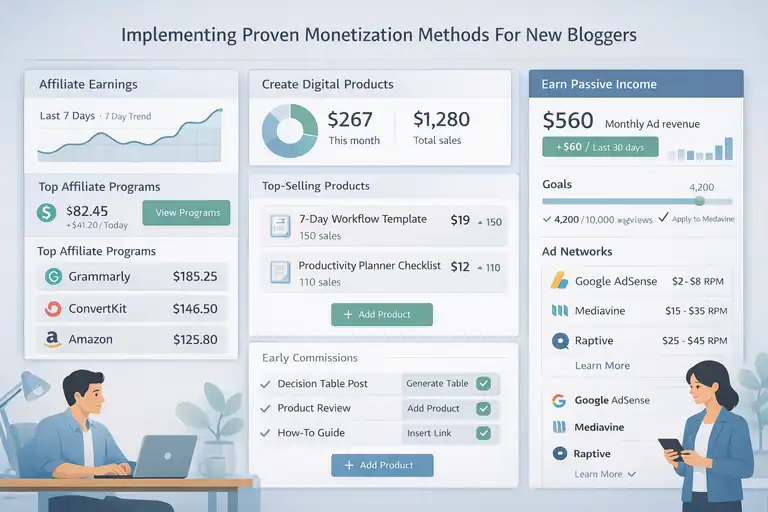
This is where the income starts becoming real. With the right monetization strategy, you can earn even with low traffic.
Adding Strategic Affiliate Links For Early Commissions
Affiliate marketing is often the fastest monetization method for beginners. But rather than placing random links everywhere, I recommend being intentional.
I like to add affiliate links in places where readers are already looking for recommendations:
- A tools list inside a tutorial
- A product example inside a how-to guide
- A comparison table in a review post*
If you’re promoting a software tool, show the reader exactly how it works.
For example, if you recommend Grammarly, include a short UI path: Dashboard → New Document → Paste Text.
This level of clarity builds trust and increases clicks.
I also suggest joining affiliate programs that pay well and have low payout thresholds. Amazon Associates is the easiest to start with, but programs like Impact Radius, ShareASale, and individual brand programs usually pay more.
Small note: Always disclose your affiliate links. It keeps you compliant and builds credibility.
Creating Helpful Digital Products That Sell Quickly
Digital products are great because they’re fast to create and 100% yours. You can build something simple like a printable, a checklist, or a short guide and start selling it in a week.
The trick is choosing products that solve specific problems. For example, if you run a productivity blog, a “7-Day Workflow Template” solves a real pain point. If you’re in the fitness niche, a “Beginner Strength Training Roadmap” feels instantly valuable.
I’ve noticed that micro-products priced between $7 and $29 convert best for new bloggers. They’re low-risk purchases for readers and quick wins for you.
Platforms like Gumroad or Shopify Starter make it extremely easy to upload and sell your products. For example, on Gumroad, you usually follow a simple flow: Dashboard → Products → Add New Product.
When your product is directly connected to the content someone is already reading, conversions come naturally. It feels helpful, not salesy.
Using Display Ads To Generate Passive Income
Display ads won’t make you rich overnight, but they do build a foundation of passive income. Once your blog gets consistent traffic—usually around 10,000 monthly pageviews—you can start making small but steady revenue.
I often recommend starting with Google AdSense because it’s beginner-friendly. Later, when your traffic grows, you can apply to Mediavine or Raptive, which offer much higher RPMs (earnings per thousand views).
A helpful target many bloggers follow is:
Ads work best on informational posts. People read those slowly, scroll more, and increase ad impressions naturally.
Ads don’t require constant maintenance, which makes them one of the best income streams for bloggers who want passive earnings while focusing on content.
Building Traffic Quickly With Strategic Promotion
If you want to earn faster, you need traffic. This section focuses on the most reliable ways to grow without burning out.
Using SEO To Drive Long-Term Organic Visitors
SEO is the most powerful long-term growth engine for any new blogger. I know it sounds complex at first, but once you understand the basics, it becomes one of the simplest ways to grow.
Start with these three pillars:
- Target low-competition keywords.
- Write content that matches search intent.
- Optimize your on-page elements.*
A simple on-page workflow looks like this:
- Set your title.
- Add your keyword in the first 100 words.
- Create short, helpful sections with clear subheadings.*
I like using Rank Math for on-page optimization because they highlight small improvements like missing meta descriptions or long paragraphs. If you’re using Rank Math, the interface is usually found under: Post Editor → Rank Math → SEO Tab.
SEO compounds over time. What you publish today can bring traffic for years, which directly fuels long-term income.
Leveraging Social Media For Immediate Exposure
While SEO builds slowly, social media gives you quick traffic bursts. You don’t need to be everywhere—just choose a platform your audience already uses.
If your niche is visually driven, consider Pinterest or Instagram. For tech or business topics, LinkedIn and YouTube perform well. I often recommend Pinterest for beginners because a single well-designed pin can generate hundreds of clicks without needing followers.
A simple Pinterest workflow looks like:
- Create a pin in Canva.
- Upload to Pinterest.
- Link it to your blog post.*
Social media is especially helpful when you’re publishing new content. It gives you immediate feedback and early traffic signals Google sometimes uses indirectly.
Growing Through Communities, Forums, And Online Groups
Communities can bring surprisingly high-quality traffic because the people inside them already care about your topic. I personally grew one of my early blogs almost entirely through niche Facebook groups and small subreddits.
The trick is participating as a real person, not dropping links everywhere. If you answer questions with helpful insights and then share your blog post as a resource, people appreciate it.
Places you can use for community traffic:
- Reddit niche subs
- Quora
- Facebook Groups
- Slack communities
- Discord channels*
For example, if you write about personal finance and someone asks about budgeting tools, you can respond with a short explanation, then naturally link your blog post comparing tools like YNAB and Mint.
Community traffic often converts extremely well because readers feel like you helped them personally. It’s one of the most underrated strategies for new bloggers.
Establishing A Consistent Publishing And Growth System
If you want your blog to grow steadily, you need a system—not random bursts of creativity. This is where things start to feel more professional and predictable.
Creating A Weekly Content Workflow You Can Maintain
A weekly workflow keeps you from burning out and helps you publish consistently. I believe this matters far more than trying to write every day.
A simple 5-step weekly workflow might look like this:
- Monday: Keyword research
- Tuesday: Outline your next post
- Wednesday: Write 50–70 percent of the draft
- Thursday: Finish the draft + edit
- Friday: Publish and promote
When you follow a rhythm like this, content creation becomes much smoother. I recommend using tools like Trello or Notion to visually track your tasks.
In Notion, for example, you can set up a simple board using: Templates → Kanban Board → Add Columns (Ideas, Drafting, Editing, Published).
Using a workflow also prevents the stress of staring at a blank page. You always know what step comes next. Over time, you can adjust the schedule to match your pace, but starting with something structured helps you build momentum early.
Tracking Metrics To Improve Your Strategy Over Time
I used to publish and walk away, hoping for the best. When I finally started tracking my numbers, everything accelerated. Metrics tell you what’s working and what needs adjusting.
Important metrics to track include:
- Pageviews
- Organic keywords
- Click-through rate (CTR)
- Average time on page
- Affiliate link clicks
You can check most of these in Google Analytics and Google Search Console. For example, in Search Console, you can follow: Performance → Search Results → Queries.
This shows you the exact phrases people use to find your blog.
I suggest reviewing your metrics weekly, even if the numbers are small. You’ll begin to notice patterns—some pages climb faster, some keywords resonate more, and some posts convert better. The earlier you learn these patterns, the faster you grow.
Optimizing Older Posts To Increase Earnings Faster
One of the most overlooked shortcuts to earning faster is updating your old posts. I’ve had articles double their traffic just by refreshing them.
When you update, focus on:
- Adding missing subtopics
- Improving clarity
- Updating screenshots or tools
- Adding affiliate links where relevant
- Ensuring the keyword appears naturally in the right places*
I like to schedule a monthly content audit where I review my top-performing five posts. Usually, I update the intro, add a comparison table, or improve the structure. Google loves fresh content, and even small tweaks can bring significant ranking boosts.
A simple UI path inside WordPress for updating is: Posts → All Posts → Quick Edit or Edit.
Refresh old posts consistently and they’ll keep bringing in income long after you publish them.
Scaling Your Blog Into A Sustainable Online Business
Once your blog starts earning, the next step is turning it into something lasting. Scaling doesn’t mean working more—it means working smarter.
Outsourcing Tasks To Increase Productivity
You don’t have to do everything yourself. In fact, I suggest outsourcing sooner than you think. Even small tasks like creating Pinterest pins, editing posts, or formatting blog graphics can take a lot of time.
You can hire freelancers on platforms like Upwork or Fiverr for tasks such as:
- Editing blog posts
- Designing social graphics
- Doing keyword research
- Creating short summaries or repurposed content*
A small example: I once outsourced graphic creation for $15 per batch. It saved me two hours a week and helped my blog maintain consistent branding.
To outsource effectively, create very clear instructions. Something as simple as: Use Canva → File Size 1080×1920 → Brand Colors → Add Headline.
This ensures your helpers deliver exactly what you need.
Diversifying Income Streams For More Stability
Depending on one income source is risky. If your goal is to run a sustainable online business, you should diversify—slowly and intentionally.
Common income streams for bloggers include:
- Affiliate marketing
- Display ads
- Sponsored posts
- Digital products
- Online courses
- Membership communities*
I suggest adding new income streams one at a time. For example, once your blog earns consistent affiliate sales, add a low-cost digital product. Later, consider creating a more in-depth course or subscription newsletter.
Diversification protects you from platform changes, traffic dips, and algorithm shifts. And it makes earnings more predictable, which helps when planning long-term growth.
Building An Email List To Grow Long-Term Revenue
Your email list is one of the most reliable assets you’ll ever build. Social media algorithms change, SEO shifts, but your email list stays yours.
I recommend using Kit (ConvertKit) or MailerLite because they’re simple and beginner-friendly. In Kit, for instance, you usually start by going to: Grow → Landing Pages & Forms → Create New.
Email lists help you:
- Announce new posts
- Promote products
- Build trust with readers
- Share exclusive tips that build deeper connection*
A simple email sequence could welcome new subscribers, teach them something useful, and introduce your top resources. When readers trust you in their inbox, they’re far more likely to buy your recommendations.
Email marketing is one of the strongest long-term income drivers in blogging.
Avoiding Common Mistakes That Slow New Bloggers Down
Almost every new blogger hits the same roadblocks. The good news is you can avoid them once you’re aware of them.
Focusing On Too Many Topics Instead Of One Direction
I’ve seen many beginners try to cover everything at once—travel, fitness, recipes, motivation. This confuses Google and makes it harder to build authority.
When you narrow down your topic, your content becomes more focused, your SEO signals become clearer, and your readers trust you more.
A practical example: Instead of writing about all fitness topics, choose something like “strength training for beginners.” Publish 10–15 posts around that theme, then expand once you gain traction.
This focused approach speeds up ranking and avoids burnout.
Ignoring Technical SEO Basics That Affect Visibility
Technical SEO sounds scary, but the basics are simple and incredibly important.
New bloggers often forget to:
- Fix slow site speed
- Set clean permalink structures
- Add internal links
- Install caching plugins
- Use compressed images*
A quick WordPress path for permalinks is: Settings → Permalinks → Post Name.
That single change makes URLs clean and SEO-friendly.
I usually recommend using a lightweight theme like GeneratePress or Astra because they load quickly and simplify technical SEO. Speed is a ranking factor, and even shaving one second off load time can reduce bounce rate significantly.
Relying Only On One Monetization Method
Some bloggers rely only on affiliate income, others only on ads. Putting all your income into one channel is risky.
For example, if you rely solely on ads and traffic drops, your earnings fall instantly. If you depend only on affiliate links and a program lowers its commissions, you have no backup.
The safest path is gradual diversification. Start with one monetization method to avoid overwhelm, then expand once you understand your audience better.
A balanced mix makes you more resilient and helps you grow steadily.
Practical Steps You Can Take Today To Get Started Fast
If you want to become a blogger without overthinking the process, these steps give you immediate momentum.
Setting Up Your First Three Pillar Blog Posts
Pillar posts are long, helpful guides that build your authority. I suggest creating three pillar posts before worrying about smaller topics.
A few examples of strong pillar formats include:
- The Ultimate Guide
- Step-by-Step Tutorial
- Best Tools or Best Resources Lists*
These posts often attract backlinks, rank well, and become foundational pieces of your blog. When I launched my first website, my three pillar posts carried most of my early traffic.
Pick topics that have strong search intent and good monetization opportunities. These posts can start earning even with relatively low traffic.
Creating A Simple Traffic Plan For The First 30 Days
Instead of trying everything at once, use one simple traffic plan for your first month.
A 30-day plan might look like this:
- Publish one blog post per week
- Create 3–5 Pinterest pins per post
- Share each article in 2–3 relevant Facebook groups
- Add internal links between your posts*
This small but focused plan builds early traction without overwhelming you. You’ll also get valuable feedback by watching which posts attract early clicks.
Choosing One Monetization Method To Activate Immediately
To start earning faster, choose one monetization path and activate it from day one.
I personally recommend affiliate marketing because:
- It requires no product creation
- You can add links naturally
- You can earn with even modest traffic*
Join one or two affiliate programs and start including links in relevant sections of your posts. For example, if you mention Canva in a tutorial, place the link right after explaining how beginners can use it.
This early setup ensures you don’t miss out on potential earnings from your first readers.
FAQ
How long does it take to become a blogger and earn money?
Most people can become a blogger in a day, but earning usually starts within 3–6 months if you publish consistently, target low-competition keywords, and monetize early with affiliates or products.
Do I need technical skills to become a blogger?
No. You only need basic skills like writing, simple WordPress navigation, and keyword research. Most technical tasks use click-based dashboards, not coding.
What is the fastest way to monetize when you become a blogger?
Affiliate marketing is usually the fastest. You can earn by recommending relevant tools or products inside helpful blog posts, even with low traffic.

I’m Juxhin, the voice behind The Justifiable.
I’ve spent 6+ years building blogs, managing affiliate campaigns, and testing the messy world of online business. Here, I cut the fluff and share the strategies that actually move the needle — so you can build income that’s sustainable, not speculative.