
Table of Contents
Some links on The Justifiable are affiliate links, meaning we may earn a small commission at no extra cost to you. Read full disclaimer.
If you’ve ever wondered how to become a freelancer and finally take control of your income, you’re not alone.
Many people want the freedom to work on their own terms—but how do you actually start, find clients, and build a sustainable income without feeling overwhelmed?
In this guide, I’ll walk you through every step to help you turn your skills into a thriving freelance career that gives you both freedom and financial stability.
Understand What It Really Means to Become a Freelancer
Freelancing isn’t just working for yourself—it’s building a business around your skills, freedom, and self-discipline.
You’re not escaping work; you’re reshaping it to fit your lifestyle and goals.
Identify Your Why and Define Success on Your Own Terms
Before you start chasing clients or building websites, pause and ask: Why do I want to become a freelancer?
Some do it for flexibility, others for creative control or financial independence. Whatever your reason, it becomes your anchor when the work feels uncertain—which it sometimes will.
Here’s what I suggest:
- Write down your “freedom goal.” Maybe it’s earning $4,000/month from home or working four days a week. Be specific.
- Define what success means to you. It might not be about income—it could be impact, time, or location freedom.
- Check your motivation regularly. I often revisit mine every quarter to see if my work still aligns with what I value most.
When your “why” is clear, every decision—what projects to take, what clients to decline, how to price—becomes simpler.
Know the Core Skills Every Freelancer Needs to Thrive
Freelancers succeed through a mix of technical ability and self-management. You could be great at design, writing, or coding, but without project discipline or communication skills, you’ll hit walls fast.
Here are the skills I’ve seen make the biggest difference:
- Time management: Use tools like Toggl or Notion to track time and stay accountable.
- Client communication: Write updates, not essays. Be clear about deliverables and deadlines.
- Financial literacy: Use apps like Wave or PayPal Invoicing to manage payments and taxes easily.
- Problem-solving: Every client will have a different workflow—adapt quickly.
If you can manage yourself well, you’re already ahead of 80% of new freelancers.
Understand the Difference Between Freelancing and Remote Jobs
Many people confuse freelancing with remote employment, but the difference is control.
- Freelancers are independent contractors. You choose clients, set rates, and control your time.
- Remote employees work for one company under their schedule and policies, just from a distance.
Here’s a simple example: If you design logos for five different businesses, you’re freelancing. If you design logos only for Canva under their structure, you’re a remote employee.
I’ve seen people start freelancing to “escape a boss,” only to recreate the same dynamic by taking long-term contracts with demanding clients. Remember—you’re not just trading office walls for Wi-Fi. You’re building autonomy.
Discover the Common Myths That Hold Beginners Back
Many aspiring freelancers hesitate because of misconceptions that sound true but aren’t.
Let’s clear a few up:
- Myth 1: You need tons of experience. False. Many start with portfolio samples and learn on the job.
- Myth 2: You must quit your job first. Not necessary. Start freelancing on the side, validate your skills, and scale when ready.
- Myth 3: It’s unstable. Freelancing can be volatile if you rely on one client. Smart freelancers diversify.
What I believe is this: Freelancing rewards adaptability. Those who learn quickly and network thoughtfully often find more stability than in a 9–5.
Choose Your Freelance Niche Strategically
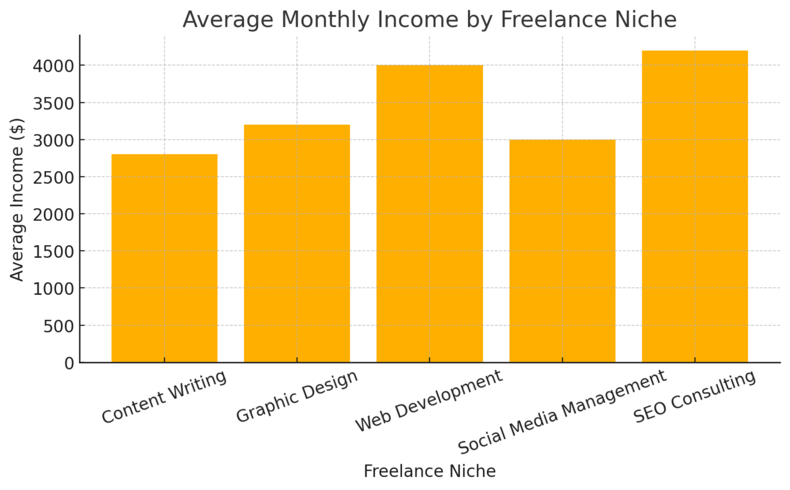
Your niche is the bridge between your skills and what clients will pay for. The narrower and clearer your niche, the easier it is to stand out in a crowded market.
Find the Intersection of Passion, Skill, and Market Demand
Think of your niche as a Venn diagram with three circles: what you love, what you’re good at, and what people will pay for. The sweet spot in the middle is where your freelance business should live.
Try this simple framework:
- List your top 5 skills.
- Write 3 industries you enjoy learning about.
- Check where they overlap—this is your niche zone.
Example: If you love fitness and can write well, “content writing for wellness brands” could be your niche.
I suggest avoiding overly broad labels like “graphic designer.” Instead, say “branding designer for sustainable fashion startups.” That’s how clients instantly know you’re the one they need.
Research Profitable Niches Using Real Market Data
You don’t need to guess what’s in demand—you can see it. Visit freelance platforms like Upwork, Fiverr, or Toptal, and search your skill area.
Look for:
- How many jobs are posted weekly.
- The average price per project.
- What industries are hiring repeatedly.
I often use Google Trends or Exploding Topics to see rising interest areas. For example, “AI content editing” and “YouTube automation” are booming right now.
Use these insights to position yourself ahead of the curve rather than chasing oversaturated markets.
Validate Your Niche with Low-Risk Experiments
Before committing fully, test your idea. Offer small projects or discounted services to gauge demand and refine your positioning.
Here’s how to do it safely:
- Post a limited offer on LinkedIn or Reddit communities.
- Create one landing page using Carrd or Notion.
- Ask for feedback from early clients before scaling.
Think of it as a “freelance MVP” (Minimum Viable Positioning). It’s faster and cheaper than building a full brand around an untested idea.
Avoid Common Mistakes When Picking a Niche
Many beginners fall into traps like:
- Choosing a niche just because it’s “hot.”
- Trying to serve everyone and ending up serving no one.
- Ignoring their long-term interests.
I recommend this mindset: pick a niche you can sustain curiosity about for years. Your skills will evolve, but your focus should be something you’re happy to learn about endlessly.
Build a Portfolio That Attracts Clients Fast
A strong portfolio isn’t about quantity—it’s about clarity. Even one great project can bring high-paying clients if it shows measurable results and professionalism.
Create a Starter Portfolio Even Without Experience
You don’t need paid clients to start. Build mock projects—simulated examples that prove you understand your craft.
For example:
- A designer could create brand mockups for imaginary companies.
- A writer could publish sample blog posts on Medium.
- A web developer could build a simple one-page app showcasing a skill.
Host these samples on a free platform like Behance, Notion, or your own site. Clients care more about how you think than your job history.
Use Case Studies and Mock Projects to Prove Your Skills
Case studies show clients the story behind the work: the challenge, your process, and the result.
Here’s a quick structure:
- Problem: What was the client’s issue or goal?
- Approach: What steps did you take to solve it?
- Result: What measurable outcome did you create?
Even for mock work, invent data points (clearly labeled as examples). This helps clients visualize your problem-solving mindset.
Craft a Personal Brand That Builds Instant Trust
Your personal brand is how clients perceive you before speaking to you. It’s built through your tone, visuals, and consistency.
Focus on three elements:
- Tone: Write your bio in a friendly, professional voice.
- Visuals: Use the same color palette and photo style across platforms.
- Message: Have a clear value statement like “I help small businesses grow through SEO-driven content.”
I’ve found that freelancers with clear, consistent branding often get hired 2–3x faster because clients instantly “get” what they do.
Showcase Results, Not Just Tasks or Services
Don’t say, “I write blog posts.” Say, “I helped a client increase organic traffic by 70% through optimized blog content.”
Clients hire for outcomes, not activities. Whenever possible, include metrics, testimonials, or screenshots that highlight tangible results.
Even if you’re new, use before-and-after examples or hypothetical ROI scenarios. The goal is to demonstrate how your work makes someone’s life easier or business stronger.
Pro Tip: I recommend updating your portfolio every 3–6 months. As your skills grow, your portfolio should evolve too—it’s your living resume.
Set Up Your Freelance Business Foundation
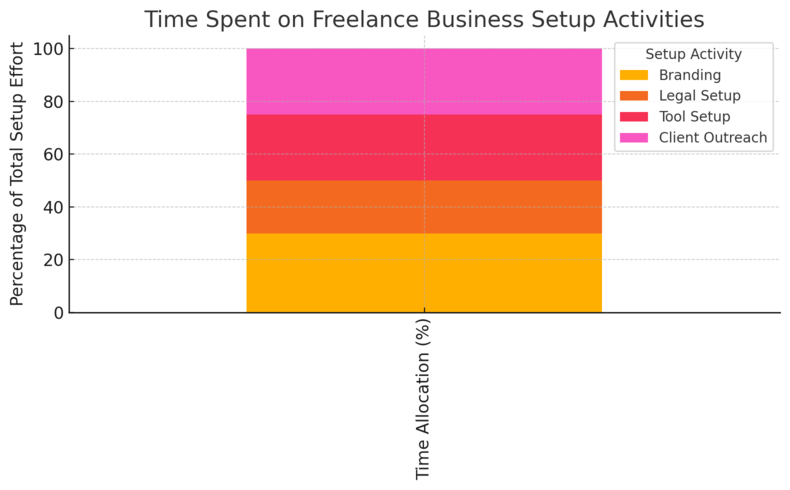
Once you decide to become a freelancer, it’s time to treat your work like a real business—not just a side hustle.
This stage builds your stability and credibility so clients take you seriously from day one.
Register Your Business and Understand Legal Basics
The first step is making your freelance work official. Registering your business gives you legal protection and makes it easier to handle taxes or contracts.
Here’s what I suggest:
- Choose your structure: Most freelancers start as sole proprietors or LLCs (Limited Liability Companies). If you want to protect your personal assets, go with an LLC.
- Register locally: Visit your country’s business registration site. For example, in the U.S., you can register an LLC online through your state’s Secretary of State website.
- Understand taxes: Keep 25–30% of your income aside for taxes. Use tools like QuickBooks Self-Employed or FreshBooks to track expenses automatically.
- Create basic contracts: Use templates from sites like Bonsai. Customize them with clauses about payment terms, project scope, and revisions.
I believe setting this foundation early helps you feel like a professional, not just a gig worker. It’s a small effort that builds long-term trust with clients.
Set Up Invoicing, Contracts, and Payment Systems
Freelancers often lose time or money because they skip systems. A clear process for payments and paperwork keeps things smooth and professional.
Start simple:
- Contracts: Always use one. It defines project scope, deadlines, and payment terms.
- Invoices: Create branded invoices using Wave, PayPal Invoicing, or Notion templates.
- Payments: Offer multiple options—PayPal, Stripe, or Wise for international clients.
A personal tip: Include late fee clauses in your contract (usually 2–5% per week overdue). It discourages delays and shows clients you take your work seriously.
Create a Professional Online Presence and Personal Website
Your online presence is often the first impression you make. It’s what convinces potential clients that you’re the real deal.
Focus on these key elements:
- Website: Use WordPress, Framer, or Carrd to create a clean, one-page portfolio. Include your services, portfolio samples, testimonials, and contact info.
- LinkedIn: Optimize your headline (e.g., “Freelance Copywriter Helping SaaS Brands Grow Organically”) and share one value-driven post per week.
- Email signature: Add your website link, title, and logo—it instantly adds credibility to your outreach.
I recommend treating your website like your “digital home.” Keep it updated every few months to reflect your latest work and pricing.
Use the Right Tools to Stay Organized and Efficient
You don’t need fancy tools, but you do need the right systems to keep your workflow manageable.
Try these essentials:
- Notion for client dashboards and task tracking.
- Google Drive for file storage and collaboration.
- Toggl Track for time management.
- ClickUp or Trello for project organization.
I use Notion daily because it lets me manage projects, client notes, and invoices in one workspace. Keeping everything centralized reduces chaos and helps me stay productive.
Find High-Paying Freelance Clients
Once your foundation is in place, it’s time to find clients who value your work—and pay accordingly.
Leverage Freelance Marketplaces Without Competing on Price
Freelance platforms like Upwork or Fiverr Pro can be great starting points, but the goal isn’t to win the cheapest bids—it’s to find clients who want quality.
Here’s how to stand out:
- Optimize your profile with a results-driven headline. Example: “I help DTC brands increase sales with persuasive landing page copy.”
- Showcase 2–3 portfolio samples with measurable outcomes.
- Focus on niche keywords (e.g., “email automation for coaches”) rather than generic ones.
I’ve seen freelancers double their income just by rewriting their profile to focus on results rather than skills.
Build Client Relationships Through Cold Pitching and Networking
Cold pitching isn’t about spamming—it’s about offering value. Start by identifying businesses that need what you do.
Here’s my quick process:
- Research companies on Crunchbase.
- Find decision-makers (like marketing managers).
- Send a short, value-focused message:
“I noticed your blog hasn’t been updated in two months. I specialize in creating SEO content that boosts organic traffic—could I send you a few ideas?”
Networking also helps. Join communities like Freelance Founders or Indie Worldwide. Authentic relationships often lead to referrals and long-term projects.
Learn How to Position Yourself as a Problem Solver
Clients don’t buy services—they buy solutions. Instead of saying “I’m a copywriter,” say “I help SaaS startups increase trial sign-ups through better onboarding emails.”
Position yourself around outcomes. Use mini case studies or screenshots to show how your work improved conversions, visibility, or sales.
When clients see you as a partner who solves pain points, they’re less likely to negotiate down your rates.
Use Social Proof and Referrals to Attract Repeat Clients
Social proof builds trust faster than any pitch. Even one strong testimonial can convert a hesitant client.
Here’s what works well:
- Ask for feedback right after delivering a project.
- Display testimonials on your website and social profiles.
- Share case study snippets on LinkedIn or Twitter.
I also suggest offering a small referral incentive—like a 10% discount or free audit—to existing clients who bring you new business. This turns satisfied clients into promoters for your brand.
Price Your Services and Negotiate with Confidence
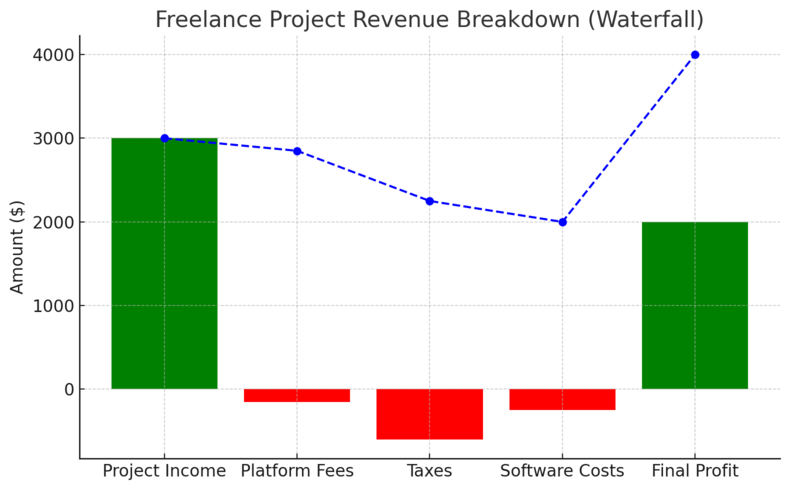
Pricing is one of the hardest parts of freelancing—but also the most powerful lever for growth. The goal isn’t just to charge more, but to charge right.
Determine Your Freelance Rates Based on Value, Not Hours
Hourly pricing caps your income and often undervalues your expertise. Instead, use value-based pricing—charge for the outcome, not the time.
Example: If a sales page helps a brand make $10,000 in new revenue, charging $1,000–$2,000 is reasonable, regardless of hours spent.
Here’s a simple way to calculate starting rates:
- Estimate the value of the result to the client.
- Take about 10–20% of that value as your project fee.
- Reassess every 3–6 months as your skill and demand grow.
I recommend starting slightly above your comfort zone. Confidence grows with every successful project.
Learn the Psychology of Pricing to Win Better Projects
How you present your price can influence how clients perceive your value.
Try these psychological tactics:
- Offer three pricing tiers (basic, standard, premium). Clients often pick the middle one.
- Anchor your proposal with a higher initial price before showing your offer—it makes your actual rate feel more reasonable.
- Avoid ending prices with zeros (e.g., $950 instead of $1000). Studies show clients subconsciously perceive them as more thoughtful.
Understanding pricing psychology isn’t manipulation—it’s communication. It helps you frame your value clearly and confidently.
Use Tiered Packages to Offer Clear Options for Clients
Packages make buying easier and prevent negotiation fatigue.
Example:
- Starter Package: 1 blog post + basic SEO optimization ($350)
- Growth Package: 4 blog posts/month + keyword strategy ($1200)
- Authority Package: 8 posts/month + strategy call + analytics report ($2500)
Tiered pricing lets clients choose based on budget while guiding them toward higher-value options.
Master Negotiation Without Undervaluing Your Work
Negotiation is about alignment, not confrontation. Clients want the best deal; you want fair compensation. The balance is in communicating value.
Here’s how I handle it:
- Always listen first—understand their goals before quoting.
- If they ask for a discount, adjust scope instead of price (e.g., fewer revisions, smaller deliverables).
- Stay calm and confident. Silence after naming your price often works wonders.
Remember, saying “no” to the wrong client opens space for the right one. Long-term freelancing success comes from valuing your expertise and time as much as your skills.
Pro Tip: Keep a “win journal” of every project success—feedback, results, testimonials. Reviewing it before a negotiation boosts your confidence and reminds you how much your work is worth.
Deliver Exceptional Results and Build Client Loyalty
Freelancing isn’t just about landing projects—it’s about delivering work that earns trust, referrals, and repeat business.
Loyal clients are the foundation of consistent income and a calmer work life.
Set Clear Expectations Before Starting Any Project
Misunderstandings often happen not because someone’s difficult, but because the project wasn’t clearly defined at the start. Setting expectations helps you avoid headaches later.
Here’s what I recommend:
- Create a clear project scope: Define deliverables, deadlines, revisions, and communication channels.
- Use a simple onboarding document: I often use a Notion page or Google Doc that outlines goals, payment structure, and next steps.
- Confirm understanding in writing: A short email summary after the kickoff call works wonders.
This structure makes clients feel secure and gives you written clarity when scope creep tries to sneak in later.
Communicate Like a Pro to Prevent Scope Creep
Scope creep—the slow expansion of a project beyond what was agreed—is every freelancer’s nemesis. But you can prevent it through confident communication.
Practical steps that work:
- Set a feedback window: Let clients know revisions must be shared within a specific timeframe (like 5 business days).
- Use structured updates: I use weekly check-ins via Slack or Loom videos to show progress without unnecessary meetings.
- Politely reframe extras: If a client asks for something outside the scope, respond with: “Happy to include that—let’s review how it affects timeline and cost.”
I’ve found that clients respect clarity more than constant “yeses.” It’s about professionalism, not people-pleasing.
Go Beyond Deliverables to Create Client Delight
Clients remember how you make them feel, not just what you deliver. Exceeding expectations doesn’t mean overworking—it means adding thoughtful touches.
Examples that genuinely work:
- Include a short how-to guide after delivering a project so clients can use it effectively.
- Send a “launch day” message to celebrate milestones together.
- Offer a free audit or suggestion list for future improvements.
One of my clients once said, “You make it easy to work with you.” That’s the goal—reliability that feels effortless on their end.
Turn One-Time Projects into Long-Term Partnerships
The best clients are the ones who come back. Turning projects into partnerships starts with results, but continues through proactive relationship building.
Try these tactics:
- Follow up after 30 days: Ask how the project performed or if they need updates.
- Offer retainer options: Example—monthly blog maintenance, social media design, or website support.
- Send occasional check-ins: A short email like, “Noticed you launched a new product—want help optimizing your landing page?” works beautifully.
Clients stick around when they feel seen and supported—not sold to.
Scale Your Freelance Income Strategically
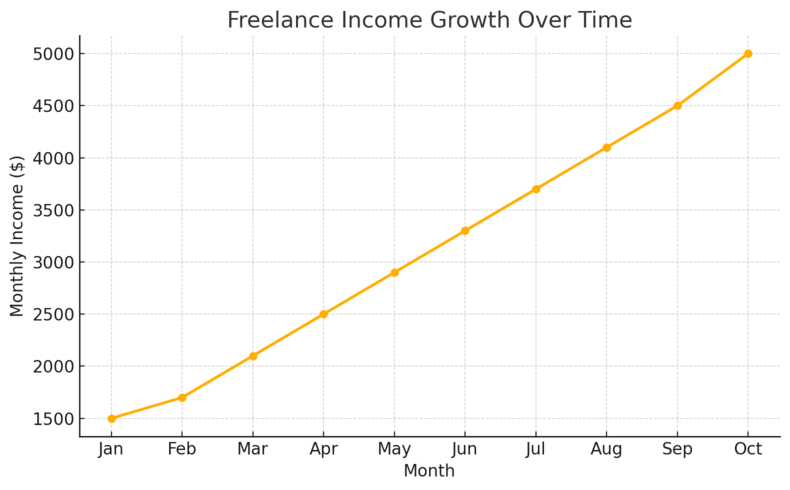
Once you have consistent clients, the next step is scaling—earning more without doubling your workload.
Diversify Your Income Streams Through Retainers or Products
The fastest way to stabilize freelance income is through retainers—ongoing monthly agreements that guarantee revenue.
Example: If you’re a writer, offer a monthly blog content package. If you’re a designer, offer ongoing brand maintenance.
Beyond retainers, digital products can create passive income:
- Ebooks or templates for your niche.
- Mini-courses on your process.
- Consulting calls for newer freelancers.
I suggest starting small—one product or one retainer client. Gradual scaling keeps you profitable without burnout.
Automate Repetitive Tasks to Save Time
Automation frees up your brain for creative work. You can easily automate tasks like invoicing, client reminders, and file delivery.
Tools I personally use:
- Zapier: Connects apps like Gmail, Google Drive, and Notion to automate workflows.
- Calendly: Handles client calls without email back-and-forth.
- Dubsado or HoneyBook: Automates contracts and payments.
Automation isn’t about replacing effort—it’s about making room for more meaningful work.
Outsource or Collaborate to Expand Your Capacity
You don’t have to do everything alone. Outsourcing lets you take on bigger projects or offer full-service packages.
Here’s how I do it:
- Hire specialists on Upwork or Contra for tasks outside my expertise (e.g., video editing, research).
- Partner with other freelancers on larger contracts, splitting revenue clearly upfront.
- Keep a trusted list of collaborators to call on when work spikes.
Delegation is a skill. It feels strange at first but quickly becomes your secret weapon for scaling without exhaustion.
Build Systems That Help You Earn More with Less Effort
Systems are repeatable processes that remove decision fatigue.
For example:
- Use a proposal template in Notion to pitch faster.
- Have a client onboarding checklist to save 30 minutes per project.
- Track metrics like project profit margin or hours per client to see where your time actually pays off.
The goal is freedom—earning predictably while having energy left for the parts of freelancing you actually enjoy.
Stay Consistent, Motivated, and Professionally Growing
Freelancing is a long game. Success depends less on hustle and more on consistency and growth.
Manage Burnout and Create Healthy Work Boundaries
Burnout is common because freelancers often mix rest and work without realizing it.
Here’s what I recommend:
- Define office hours: Even if you work from home, set start and end times.
- Schedule breaks intentionally: I block out a 30-minute walk every afternoon—it resets my focus.
- Learn to say no: If a project doesn’t align with your goals or energy, decline it respectfully.
You’re not lazy for needing rest; you’re maintaining the engine that drives your business—you.
Keep Learning New Skills to Stay Competitive
The freelance world evolves fast. What’s profitable today might be outdated next year.
Keep up through:
- Online platforms like Skillshare, LinkedIn Learning, or Coursera.
- Industry newsletters and podcasts (e.g., Freelance Friday or The Future).
- Testing new tools or trends with small client projects.
I treat learning as part of my business, not an optional hobby. The more I grow, the more valuable—and confident—I become.
Join Freelance Communities for Support and Growth
Freelancing can be isolating, especially when you’re working solo for months. Communities keep you connected, motivated, and informed.
My go-to spaces:
- Freelance Founders – for mentorship and strategy discussions.
- Reddit’s r/freelance – for advice and honest experiences.
- Indie Worldwide – for networking and collaboration opportunities.
You’ll find inspiration, accountability, and sometimes even new clients just by showing up.
Track Progress and Set Income Milestones
It’s easy to lose sight of how far you’ve come when you’re constantly chasing new projects.
Simple tracking habits that help:
- Use Google Sheets or Notion to log income monthly.
- Track metrics like client retention rate or average project value.
- Celebrate milestones, even small ones—it keeps you motivated.
Every freelancer I know who tracks progress ends up feeling more confident in their growth trajectory.
Pro Tips to Build a Freelance Career That Lasts
A long-term freelance career isn’t about perfection—it’s about sustainable habits and authentic relationships.
Focus on Relationships, Not Just Revenue
Clients who trust you become your biggest advocates. Instead of chasing one-off wins, focus on connection.
I often schedule 15-minute catch-up calls with past clients—no selling, just genuine curiosity about their business. These conversations often lead to more work naturally.
Reinvest in Tools, Education, and Personal Branding
Your freelance career is your product. Keep upgrading it.
Reinvest part of your income into:
- Skill courses or mentorships.
- Branding assets like a logo, photos, or website upgrades.
- Productivity tools that save time (like Notion AI or Grammarly Premium).
These small reinvestments compound into professional authority over time.
Create a Routine That Supports Both Work and Freedom
Freelancing gives flexibility—but too much flexibility can turn into chaos. Build structure that protects both income and sanity.
Try this structure:
- Mornings: Deep work (client projects).
- Afternoons: Admin, outreach, or learning.
- Evenings: Rest and recharge.
Consistency beats intensity in freelancing. It’s not about working more; it’s about working well.
Keep Adapting—Freelancing Is a Marathon, Not a Sprint
The freelance world never stands still. New platforms, technologies, and client expectations will always shift.
The key is adaptability: stay curious, refine your offers, and experiment regularly. I’ve changed my service focus three times in six years—and each pivot made my business stronger.
Freelancing is freedom, but also responsibility. When you approach it with patience, systems, and self-awareness, you don’t just survive—you thrive for years.
Pro Tip: Treat every project like a stepping stone. Whether it’s a win, a challenge, or a lesson, it all compounds into mastery. Freelancing isn’t just a career path—it’s an evolving journey toward independence and self-growth.

I’m Juxhin, the voice behind The Justifiable.
I’ve spent 6+ years building blogs, managing affiliate campaigns, and testing the messy world of online business. Here, I cut the fluff and share the strategies that actually move the needle — so you can build income that’s sustainable, not speculative.
Related posts:
 Top 6 Freelancing Jobs That Promise Financial Freedom
 Best Upwork Virtual Assistant Tips to Land Clients Fast
 The Best Platforms to Find Freelance Writing Jobs Fast
 11 Proven Ways to Find Freelance Work That Pays Well
 Best Freelance Websites For Beginners Who Want Fast Work
 Is Freelancer Worth It: Make Good Money