
Table of Contents
Some links on The Justifiable are affiliate links, meaning we may earn a small commission at no extra cost to you. Read full disclaimer.
BrightLocal review for lead generation agencies usually sounds simple on paper: local SEO software, white-label reports, lead-gen widgets, done. In practice, it is more nuanced than that.
If you run an agency that sells local visibility, reputation growth, map rankings, or citation cleanup, BrightLocal can be genuinely useful. But whether it actually helps you win and keep clients depends on how you use it, what you sell, and where your delivery model breaks down.
This guide gives you the honest version, including where BrightLocal shines, where it creates friction, and what I believe matters most for agencies.
What BrightLocal Actually Is For Agencies
BrightLocal is best understood as a local SEO operations platform with agency-friendly sales and reporting layers.
That distinction matters, because a lot of agencies buy it expecting a miracle lead machine when it is really a system for auditing, tracking, presenting, and improving local search performance.
BrightLocal Is Not A Full Lead Generation System
If your agency sells appointment-setting, outbound prospecting, PPC funnels, or full-funnel B2B demand generation, BrightLocal will not replace your sales stack. It is not your CRM, your outbound sequencer, or your pipeline forecasting tool. What it does well is help you identify local SEO problems, turn those problems into sales conversations, and show ongoing progress after a client signs.
That makes it especially relevant for agencies serving businesses with physical locations or service areas. Think dentists, law firms, med spas, roofers, home services, clinics, franchises, and multi-location retail. These businesses care about map pack visibility, reviews, citations, and localized rankings. BrightLocal speaks that language clearly.
For many agencies, that is enough to make it valuable. A prospect rarely buys “SEO” in the abstract. They buy the outcome they can understand. They want to know why they are invisible in Google Maps, why competitors outrank them three miles away, or why their reviews look weaker than the shop across town. BrightLocal helps you show that visually.
I believe this is where many reviews miss the point. BrightLocal is not powerful because it promises more leads by itself. It is powerful because it shortens the distance between local search problems and a client saying yes.
The Core Use Case Is Sales Enablement Plus Retention
The strongest agency use case is not just campaign execution. It is the combination of pre-sale proof and post-sale reporting. You can audit a prospect, uncover obvious local SEO gaps, turn those findings into a pitch, then keep reporting on rankings, citations, reviews, and visibility once they become a client.
That matters because lead generation agencies often lose deals for one of two reasons. Either the prospect does not understand the problem, or they do not trust the agency to fix it. BrightLocal helps with both. A clean local audit is easier to sell than a vague promise about “improving online presence.”
Once the client is in, the reporting layer becomes just as important. Retention is where most agency profit lives. If a client pays you for six months instead of two, your acquisition economics improve fast. BrightLocal helps you keep clients by giving them recurring proof that something measurable is happening.
Here is the plain-English version: it helps you sell a clearer offer, and it helps you defend that offer every month.
I suggest thinking of BrightLocal as a trust-building platform first and a task platform second. Agencies that use it that way usually get more value from it.
Who Should And Should Not Use BrightLocal
Not every lead generation agency will benefit equally. BrightLocal is a strong fit for some models and a weak fit for others.
Best Fit: Local SEO Agencies And Hybrid Lead Gen Shops
BrightLocal makes the most sense if your agency offers one or more of these services:
- Local SEO for single-location businesses
- Multi-location SEO
- Google Business Profile optimization
- Citation cleanup and submission
- Review monitoring or reputation management
- Rank tracking for maps and localized search
- White-label monthly reporting
- Prospect audits for local businesses
If that sounds like your service catalog, the platform lines up naturally with your day-to-day work. You can use it to find issues, prioritize work, package deliverables, and keep reporting consistent.
It is also a smart fit for hybrid agencies that sell SEO plus web design, paid search, or call-driven lead generation. In those cases, BrightLocal becomes the local visibility layer inside a broader growth offer.
A roofer may come to you because of PPC, but if their reviews are weak and their local rankings are unstable, that weakness still hurts conversion and trust. BrightLocal helps you surface and fix that.
In my experience, agencies with a clear local niche get the best results. If you serve one vertical, your audit process gets sharper, your reports become easier to explain, and BrightLocal data becomes more persuasive because you know what “good” actually looks like in that market.
Weak Fit: Broad Digital Agencies Without A Local SEO Offer
If you do general marketing for SaaS, eCommerce, info products, influencers, or national brands with no location-based strategy, BrightLocal is usually not the right centerpiece. You may still find a use for localized rank tracking in edge cases, but it will not feel essential.
The same goes for agencies that call themselves lead generation agencies but mainly sell cold email, cold calling, paid media, or affiliate traffic. Those are different systems with different bottlenecks. BrightLocal might help on the margin for a local business client, but it is not the engine of growth there.
Another weak-fit scenario is when your agency is too early-stage to operationalize the platform. Buying software is easy. Building a repeatable sales process around audits, onboarding, reporting, and local optimization is harder. If you are not yet packaging local SEO into a clear offer, BrightLocal can feel underused.
That does not mean it is bad. It means the platform is only as strong as the service model wrapped around it.
The Features That Actually Help Agencies Generate Leads
This is the part most people care about. Which BrightLocal features genuinely help agencies win business, and which ones are more “nice to have” than deal-closing assets?
Agency Lead Generator: Useful, But Not Magic
The Agency Lead Generator is one of BrightLocal’s most agency-specific features, and it is easy to see why it gets attention. You can place a white-label audit widget on your site, let prospects request a report, and capture lead details in exchange for local SEO insights.
That sounds great, and sometimes it is. But I would not treat it like a passive lead machine that automatically fills your pipeline. In reality, it works best when your site already gets qualified local business traffic and your offer is clear. If your messaging is weak, the widget will not save you.
Where it does help is intent capture. A prospect who asks for an audit is not a random browser. They are raising their hand. That gives your agency a warmer starting point than cold outreach. You also get a natural conversation opener because the report surfaces concrete issues you can discuss.
A realistic scenario looks like this: A local law firm visits your site after searching for help with map rankings, runs a free audit, sees inconsistent citations and weak review signals, then books a call because the problem feels real. That is a much better entry point than “Hi, just following up.”
I recommend using the widget as a conversion asset on service pages, not as your whole acquisition strategy.
Local Search Grid Is One Of BrightLocal’s Strongest Sales Tools
If you sell local SEO, the Local Search Grid is one of BrightLocal’s biggest practical advantages. Standard rank tracking can feel abstract to business owners. A grid-based map showing weak visibility across different parts of a city is much easier to grasp.
That visual matters because local rankings are not uniform. A business might rank well near its office and poorly a few neighborhoods away. When you show that spread on a map, prospects understand the gap immediately. It becomes tangible.
This is especially effective in sales calls. Instead of saying, “Your local visibility is inconsistent,” you can show a geographic pattern and connect it to lost opportunities. That makes the conversation feel less like theory and more like diagnosis.
For retention, it is just as useful. When a client sees grid improvements over time, they can connect your work to something visible and local. That is important because SEO often fails at the communication layer, not the performance layer.
If your agency wins deals by helping businesses dominate a target service area, this feature pulls real weight. I would put it near the top of the reasons to choose BrightLocal.
Citation Builder And Citation Tracking Save Real Delivery Time
Citation work is rarely glamorous, but for local businesses it still matters. Inconsistent business data across directories creates trust problems, indexing issues, and unnecessary cleanup work. Agencies can do this manually, but it becomes a time drain fast.
This is where BrightLocal becomes operationally useful. Its citation workflow helps you find listing issues, identify duplicates, and order or manage citation submissions without turning every campaign into spreadsheet chaos.
For a lead generation agency, this matters for two reasons. First, it lets you package a concrete deliverable. Second, it reduces fulfillment friction. A service that takes four hours manually but forty minutes with a better workflow is easier to sell profitably.
I would not oversell citations as the main ranking lever in every campaign, because they are not. But they are often foundational. If a prospect’s local footprint is messy, citations are one of the easiest “before and after” wins to show.
A simple agency shortcut is to offer citation cleanup as an entry-level local SEO package. It is easier for skeptical prospects to buy a defined cleanup project than a broad retainer right away.
Reputation Management Is More Valuable Than Many Agencies Realize
A lot of lead generation agencies focus on rankings and forget that conversion starts before the click. Reviews shape whether a searcher trusts the business at all. BrightLocal’s reputation tools help you monitor reviews, centralize visibility, and track performance in a way that is easier to present to clients.
This matters because local business owners understand reviews emotionally. They may not care about a ranking shift from position seven to position four, but they care if a prospect chooses a competitor with better ratings and fresher feedback.
From an agency perspective, reputation tracking also expands your offer. Instead of selling only traffic growth, you can sell visibility plus trust improvement. That is a stronger story.
Imagine you run campaigns for dental clinics. One clinic ranks similarly to local competitors, but its review velocity is low and its average perception is weaker. BrightLocal helps you show that issue and create a response plan. Suddenly, your strategy is not just about SEO. It is about revenue friction.
I believe this is one of the platform’s more underrated strengths for agencies that want stickier retainers.
How BrightLocal Fits Into A Real Agency Workflow
Software reviews are often too feature-heavy and not operational enough. So let’s talk about how BrightLocal works when you actually run client acquisition and delivery week after week.
Step 1: Use Audits To Open Conversations
The best place to start is prospecting. Whether leads come from your website, referrals, outbound, or networking, BrightLocal gives you a faster way to evaluate local performance before a sales call.
A good process looks like this:
- Run a local SEO audit before the call.
- Check localized ranking patterns, not just broad rankings.
- Review citation consistency and review profile strength.
- Pull out three to five business-impact issues.
- Turn those into a short, focused pitch.
That last step is where agencies often mess up. They dump too much data on the prospect. More information does not always mean more trust. What closes deals is a simple narrative. Here is the problem, here is why it costs you leads, here is how we would fix it.
BrightLocal gives you the raw material for that narrative. Your job is to simplify it.
I suggest building a standardized audit framework by niche. A med spa audit should not look identical to a plumber audit. The closer your language matches the client’s buying reality, the better your close rate tends to be.
Step 2: Turn BrightLocal Data Into A Clear Offer
The platform is useful, but the software alone does not create positioning. You still need to package what you do in a way clients can buy.
A lot of agencies say they offer “local SEO,” which is too vague. BrightLocal works better when you translate its outputs into named services. For example:
- Visibility recovery package
- Citation cleanup sprint
- Review growth and trust package
- Local rankings acceleration retainer
- Multi-location reporting and optimization program
That kind of packaging makes sales easier because clients can understand what they are purchasing. BrightLocal data then becomes supporting evidence, not the service itself.
Here is a practical example. Let’s say you notice a prospect ranks well near the office but disappears in outer zip codes. Instead of saying, “We’ll do local SEO,” you can say, “We help service-area businesses expand map visibility across the neighborhoods that actually produce booked jobs.”
Same work, better framing.
This is one reason BrightLocal can outperform more bloated platforms for smaller agencies. It is focused enough that it naturally pushes you toward clearer local offers.
Step 3: Build Reporting That Defends Retainers
Retention is where BrightLocal can quietly earn its keep. Agencies lose clients when reporting is confusing, overly technical, or disconnected from business outcomes. BrightLocal’s reporting and white-label options help solve that, but only if you present the information the right way.
Do not send clients every chart just because you can. Curate the story. Show movement in local rankings, citation health, review trends, and visibility areas that matter. Then connect that to what the client cares about, such as calls, booked appointments, or store visits.
This is where outside reporting layers can help. Some agencies blend BrightLocal with Looker Studio, Google Analytics 4, and Google Search Console to create a fuller performance picture. That can work well, especially if you want to connect local SEO signals with traffic and conversions.
Still, I would not overcomplicate things early. For many clients, a sharp local report with plain-English commentary is more persuasive than a giant dashboard.
I believe agencies keep more clients when they explain less, but explain it better.
What BrightLocal Does Better Than Many Alternatives
BrightLocal is not the only local SEO platform on the market, so the real question is not whether it has features. It is whether the feature mix matches agency reality better than the alternatives.
BrightLocal’s Main Advantage Is Focus
Some platforms try to do everything. They cover SEO, content, PPC, social, competitor research, outreach, analytics, and local. That sounds efficient, but it often creates a tradeoff. The local functionality becomes one module among many instead of the core experience.
BrightLocal feels different because local SEO is the center of the product, not an add-on. That focus shows up in the grid tracking, citation workflows, agency lead generation angle, and white-label reporting setup.
If your agency lives in local search all day, that focus is a strength. You spend less time fighting irrelevant features and more time using workflows built for your service model.
That does not mean broader tools are bad. Semrush and Ahrefs are still valuable for broader SEO research. But for agencies whose sales pitch depends on local visibility evidence, BrightLocal often feels more immediately useful in client-facing scenarios.
Here is the simple distinction: broad SEO platforms help you research. BrightLocal helps you present and operationalize local SEO.
It Is Especially Good For Small To Mid-Sized Agencies
Enterprise software often gets attention, but many lead generation agencies are small teams with limited capacity. They need tools that help them move faster without requiring a full ops department to maintain them.
BrightLocal fits that middle ground well. It can support multiple clients, recurring reporting, local tracking, and fulfillment workflows without feeling overly enterprise-heavy. That makes it attractive to boutique agencies, niche consultancies, and growth-stage firms that want to standardize delivery.
A common situation looks like this: a five-person agency has strong sales ability but inconsistent account delivery. BrightLocal gives them a more consistent system for onboarding, reporting, and identifying client issues. That alone can raise perceived professionalism.
I would also say the platform has a lower “explanation burden” than some alternatives. Team members can understand what the reports mean fairly quickly, which matters if you are hiring account managers or junior strategists.
If your agency is huge and deeply customized, you may eventually want more specialized integrations or broader BI layers. But for many agencies, BrightLocal hits a very practical sweet spot.
Where BrightLocal Falls Short
No honest review should pretend the platform is perfect. BrightLocal is useful, but it has limitations that matter depending on your agency model.
It Will Not Replace Your Full Sales Stack
The lead generation angle is real, but it can be overstated. BrightLocal helps convert interest and strengthen pitches. It does not create positioning, write your outbound emails, close calls for you, or manage your sales pipeline.
Agencies sometimes buy tools like this hoping the software will fix weak demand generation. It won’t. If your site gets little traffic, your offer is unclear, or your follow-up is inconsistent, an embedded audit widget will not suddenly fill your calendar.
That is why I recommend judging BrightLocal by a more realistic standard: does it make your existing lead flow easier to convert, and does it make your retainers easier to defend? If yes, it can be worth it. If you expect it to manufacture demand from nothing, you will probably feel disappointed.
This is not a flaw unique to BrightLocal. It is just a common mismatch between software expectations and agency reality.
Some Agencies Will Still Need A Broader Reporting Stack
BrightLocal reporting is useful, but some agencies want deeper cross-channel reporting. If you are selling local SEO alongside paid media, call tracking, CRM attribution, landing page testing, and revenue reporting, you may outgrow a local-first reporting setup on its own.
In those cases, BrightLocal becomes one layer in the stack rather than the whole dashboard. You might pair it with CallRail for call attribution or build combined client reporting outside the platform.
That is not necessarily a downside. In fact, I think it is the right way to use specialized software. But it does mean you should not expect BrightLocal to be your single source of truth for everything.
Agencies that want one login for every metric under the sun may prefer a different setup. Agencies that care most about local visibility clarity will probably be happy with BrightLocal’s specialization.
It Is Best When You Already Understand Local SEO Strategy
BrightLocal helps you execute and communicate local SEO. It does not substitute for strategic judgment. You still need to know which issues matter, how to prioritize fixes, how reviews affect conversion, when citations matter more or less, and how to turn local visibility into client growth.
That means beginner agencies can use it, but the best results come when someone on the team already understands local search mechanics. Otherwise, you risk sending lots of reports without making the right decisions.
To be fair, that is true of almost any serious marketing software. Tools amplify competence. They rarely create it.
If you are new, BrightLocal can still support your learning because the workflows are more approachable than some enterprise platforms. Just do not confuse usability with strategic automation.
BrightLocal Vs Other Common Options For Agencies
The best platform is usually the one that matches your service model, not the one with the longest feature list.
Quick Comparison Table
| Platform | Best For | Where It Wins | Where It Falls Short For Lead Gen Agencies |
|---|---|---|---|
| BrightLocal | Local SEO agencies and local lead gen shops | Local rank grids, citations, review monitoring, white-label local reporting, agency lead widget | Not a full CRM or full-funnel lead gen stack |
| Whitespark | Citation and local search specialists | Strong local search focus and useful local SEO tools | Less of an all-around agency sales-and-reporting feel for some teams |
| Semrush | Broader SEO and digital marketing agencies | Wide feature set across SEO and marketing research | Local agency workflows can feel less central |
| Ahrefs | SEO research-heavy agencies | Excellent keyword and backlink research | Less tailored to local client reporting and lead capture |
| Moz Local | Businesses prioritizing listing management | Simpler listing-focused use case | Less flexible for agencies needing stronger lead-gen and reporting angles |
How To Choose Without Overthinking It
Choose BrightLocal if local visibility is central to your service and you need a tool that helps both sales and delivery. Choose a broader platform if your agency’s main value is research, national SEO, or multi-channel strategy rather than local client management.
A useful rule of thumb is this: if your sales calls frequently involve maps, reviews, directories, local competitors, and service areas, BrightLocal is probably closer to what you actually need.
If your calls are more about backlinks, content clusters, site migrations, and national search campaigns, another platform may deserve the top budget slot.
For many agencies, the smartest move is not either-or. It is BrightLocal plus one broader research tool.
The Best Way To Use BrightLocal For More Client Wins
A good tool gets much better when wrapped in a smart process. If you want BrightLocal to improve lead generation, these are the usage patterns I would prioritize.
Build A Simple Three-Offer Funnel
Do not throw every service at every lead. Use BrightLocal to support a progression:
- Entry offer: Audit or local visibility assessment
- Core offer: Ongoing local SEO retainer
- Expansion offer: Reviews, citations, multi-location scaling, or broader reporting
That structure works because it lowers resistance. A prospect who does not trust you enough for a six-month retainer may still pay for an audit or small cleanup project. Once you prove value, expansion becomes easier.
BrightLocal supports this well because the same data can power all three stages. The audit starts the conversation. The tracking supports the retainer. The reporting helps secure renewals and upsells.
This is a lot more effective than trying to sell a huge package on the first call with no proof.
Standardize Your Niche Reporting
If you work with one or two main industries, build reporting templates around what that niche actually cares about. A personal injury lawyer, plumber, and med spa owner do not read performance reports the same way.
BrightLocal gives you enough structure to standardize reporting, but the real advantage comes from customizing the story. For a home services client, service-area visibility and review growth may be the headline. For a multi-location retail brand, listing consistency and store-by-store comparisons may matter more.
This is where agencies create differentiation. The software gives you the data. Your niche knowledge makes it persuasive.
I recommend creating one signature monthly report structure per niche. That reduces prep time and makes client communication stronger.
Use BrightLocal To Support Sales Calls, Not Replace Them
The most profitable agencies usually have a human-led consultative sales motion. BrightLocal strengthens that motion by giving you better evidence and clearer visuals.
What it should not do is turn your sales process into a link to “download a report” and nothing else. Prospects still buy from people, not dashboards. Use the tool to frame a conversation, not avoid one.
A good sales call flow is simple: show the issue, explain the business impact, outline the fix, and make the next step obvious. BrightLocal helps most with the first two parts.
That is a real advantage, but only when a strong offer and strong communication are already in place.
Common Mistakes Agencies Make With BrightLocal
Most disappointment with software comes from implementation mistakes, not product failure.
Mistake 1: Selling Reports Instead Of Outcomes
Clients do not pay for dashboards. They pay for more calls, better visibility, stronger trust, and cleaner local presence. If your agency centers the conversation on reports instead of outcomes, BrightLocal can accidentally make you sound more technical and less valuable.
Use the data, but translate it. A grid map is not the point. The point is missed visibility in neighborhoods that should produce leads. Citation inconsistency is not the point. The point is trust and discoverability problems.
This may sound obvious, but many agencies forget it once they get excited about shiny tools.
Mistake 2: Tracking Too Much Too Early
More metrics do not always help. In early client relationships, too much reporting can create confusion and stall momentum. Focus on the handful of indicators that match the problem you were hired to solve.
For many local clients, that means localized rankings, review health, listing consistency, and a simple explanation of the work completed. That is usually enough to justify progress early on.
As the relationship matures, you can expand the reporting story. But do not start with a wall of charts.
Mistake 3: Not Pairing BrightLocal With A Strong Follow-Up System
Leads generated through a site widget or audit request still need fast follow-up. Agencies sometimes install the lead generator and assume the tool will handle the rest. Then they respond two days later and wonder why nothing closes.
Your speed-to-lead, follow-up quality, and call structure still matter just as much as the software. BrightLocal can improve the top of that process, but it cannot replace discipline.
Final Verdict: What Actually Delivers
BrightLocal is a strong choice for lead generation agencies that sell local SEO or local visibility services and need a better way to win trust, package findings, and report progress. It is not a magic lead engine, and it will not replace your CRM, sales process, or strategy brain. But it does solve several agency problems unusually well.
What actually delivers is not one flashy feature. It is the combination of prospect audits, Local Search Grid visuals, citation workflows, review tracking, and white-label reporting. Together, those features help agencies do three important things better: start smarter sales conversations, productize local SEO work, and keep clients longer through clearer reporting.
If your agency works with location-based businesses and you want a tool that supports both client acquisition and fulfillment, BrightLocal is worth serious consideration. If your version of lead generation is mostly outbound, paid acquisition, or national SEO, it will feel more like a supporting tool than a core platform.
My honest take is simple: BrightLocal delivers best when your agency already has a clear local offer and needs better proof, better process, and better retention. In that situation, it can absolutely earn its place.

I’m Juxhin, the voice behind The Justifiable.
I’ve spent 6+ years building blogs, managing affiliate campaigns, and testing the messy world of online business. Here, I cut the fluff and share the strategies that actually move the needle — so you can build income that’s sustainable, not speculative.
Related posts:
 4 Different Types of SEO: Increase Website Traffic
 5 Local SEO Strategy Mistakes You’re Making Now
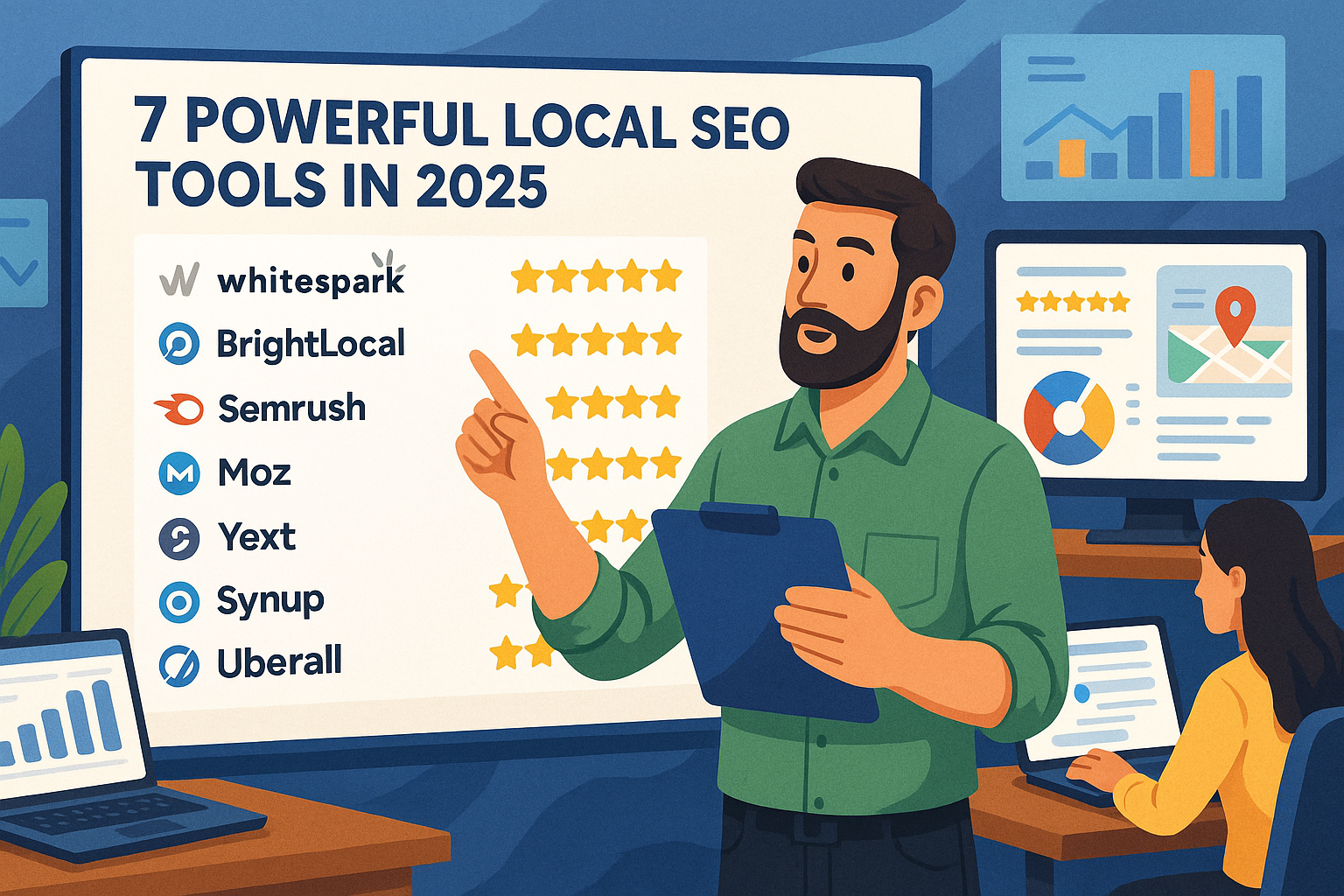 Whitespark Alternative: 7 Powerful Local SEO Tools in 2025
 BrightLocal Review For Citation Building: Is It Worth Your Money?
 How Good Is My Website SEO? Find Out Instantly!
 What Is Content Marketing in SEO? The Key to More Leads