
Table of Contents
Some links on The Justifiable are affiliate links, meaning we may earn a small commission at no extra cost to you. Read full disclaimer.
Dropshipping for beginners can feel like trying to assemble a puzzle without seeing the picture on the box. You’ve heard it’s a low-risk way to start an online business—no inventory, no upfront stock—but how does it really work?
And more importantly, how do you actually make it profitable without getting lost in the noise of millions of others doing the same thing?
In this complete no-fluff guide, I’ll walk you through the essentials you truly need to know to launch, run, and scale your dropshipping store successfully—without wasting time on outdated or hype-driven advice.
Understanding How Dropshipping Actually Works
Before you dive into product hunting or Shopify trials, it’s worth truly understanding how dropshipping operates from the inside out.
Knowing the mechanics will help you make smarter decisions later.
What Dropshipping Really Means in Practice
Dropshipping is a retail model where you sell products online without holding any inventory. Instead, when a customer places an order in your store, that order goes directly to your supplier—who then ships the product straight to the customer.
Think of it as being the middle link in a supply chain. Your job is to market, sell, and manage the customer experience; your supplier handles the inventory and shipping logistics.
For example:
- You list a $40 wireless charger on your store.
- Your supplier charges you $20 per unit.
- When a customer buys it, you forward the order and pay your supplier $20.
- The supplier ships it to your customer, and you keep the $20 profit margin.
It’s simple on paper—but the real work happens in marketing, customer service, and choosing reliable partners.
The Core Players: Supplier, Seller, and Customer
There are three key players in the dropshipping process:
- Supplier – The manufacturer or wholesaler who holds and ships inventory.
- Seller (You) – The marketer, brand-builder, and storefront owner.
- Customer – The person purchasing the product, who typically never knows the supplier exists.
The seller acts as the bridge between supplier and customer. Your credibility depends on your ability to manage both sides smoothly—especially ensuring products arrive on time and match what was promised on your store.
Common Myths About Dropshipping (and Why They’re Misleading)
Let’s clear up some of the most common misconceptions:
- “Dropshipping is dead.” Not even close. It’s evolved. Today’s winners treat it like a real business, focusing on brand and customer experience—not quick cash.
- “It’s passive income.” You’ll automate parts later, but early on it’s hands-on. Expect to test ads, analyze traffic, and handle support daily.
- “You can sell anything.” Not true. Success comes from solving real problems, not just pushing random trending products.
I believe most beginners fail because they underestimate the strategy required. Dropshipping still works—but not if you treat it like a shortcut.
Why Dropshipping Still Works in 2026
Despite all the competition, dropshipping remains a proven entry point for ecommerce entrepreneurs. Why? Because it still offers:
- Low startup risk – You don’t buy stock upfront.
- Flexibility – You can test multiple niches quickly.
- Global reach – You can sell anywhere without handling shipping.
What’s changing in 2026is how it’s done. With improved tools like Shopify Flow, TikTok Shop integrations, and faster fulfillment partners, modern dropshippers can now deliver near-Amazon levels of convenience.
The key is adapting to consumer expectations for transparency, speed, and trust.
Choosing the Right Dropshipping Niche

Your niche defines everything—your brand, audience, and profits. Picking the wrong one can sink your business before it starts, while the right one can create a clear lane to success.
How to Identify a Profitable Niche That Matches Demand
When I help beginners choose a niche, I suggest they look for three things: consistent demand, emotional appeal, and pricing flexibility.
Ask yourself:
- Does this solve a specific problem or desire?
- Are people actively searching for it online?
- Can I mark it up at least 2–3x without resistance?
For instance, “ergonomic office accessories” ticks all boxes—it solves pain (literally), appeals to remote workers, and has room for creative marketing angles.
Avoid going too broad (“home goods”) or too obscure (“left-handed dog scissors”). You want to be specific, but with enough audience size to grow.
Tools to Validate Niche Profitability (Google Trends, Ecomhunt, etc.)
I recommend validating your niche before committing. Here’s how:
- Google Trends: Check if interest in your niche is stable or rising.
- Ecomhunt / Niche Scraper: Spot trending products and profit margins.
- Facebook Ads Library: See what competitors are actively promoting.
- Keyword Planner: Discover how often people search your product terms.
For example, if you search “posture corrector” on Google Trends and see steady growth, that’s a positive sign. Pair it with Facebook ads showing consistent engagement—now you’ve got something worth testing.
Avoiding Oversaturated Niches and Finding Fresh Angles
Oversaturated doesn’t always mean dead—it means you need to reposition. Take fitness, for example. Instead of generic gym gear, you could specialize in portable home workout kits for busy parents.
You can find fresh angles by combining existing niches:
- Pet + Tech = Smart pet feeders.
- Beauty + Eco = Sustainable skincare tools.
- Travel + Productivity = Compact workspace kits.
I believe creativity often wins more than novelty. It’s not about finding a product no one sells—it’s about positioning it in a way no one else does.
Balancing Passion vs. Profit in Your Niche Decision
You’ll hear two camps: “Follow your passion” or “Follow the money.” I suggest aiming for the middle.
Passion helps when things get tough—you’ll stay motivated to improve. But profitability ensures your store survives. If you love eco-friendly fashion, find a way to sell it profitably—like bamboo sunglasses or reusable travel kits.
If you’re unsure, lean on data first, emotion second. Passion grows when the business starts working.
Finding Reliable Dropshipping Suppliers
A reliable supplier is the backbone of every dropshipping business. Even the best marketing can’t save you from poor product quality or delayed shipping.
What Makes a Supplier Trustworthy and Worth Partnering With
Here’s what to look for before committing:
- Consistent product quality – Order samples before selling.
- Fast, trackable shipping – Aim for under 10 days to major regions.
- Clear communication – Quick, fluent responses in English.
- Order accuracy – Minimal mistakes or missing items.
I usually test suppliers by sending them small orders first, then rating them on packaging, response time, and accuracy. A good supplier treats your customers as their responsibility too.
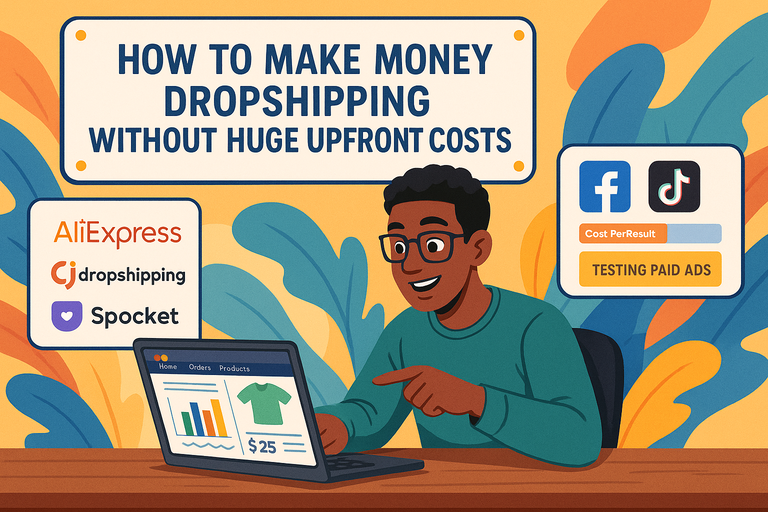
Top Platforms to Find Suppliers (AliExpress, CJ Dropshipping, Spocket)
There are several platforms where you can connect with suppliers directly:
- Doba: The most common starting point, with low MOQs (minimum order quantities) but longer shipping.
- CJ Dropshipping: Offers faster delivery times and product sourcing from multiple warehouses.
- Spocket: Focuses on US/EU suppliers—ideal for brands targeting Western markets.
Example UI path in Shopify: Apps → Search “Spocket” → Install → Browse Suppliers. You can then import products directly into your store with one click.
How to Communicate and Negotiate with Suppliers
Treat suppliers like long-term partners, not vendors.
I suggest:
- Be respectful and professional in all chats.
- Ask direct questions about delivery times and stock levels.
- Negotiate bulk pricing after you’ve made consistent sales.
You might say: “We’ve seen good traction with your product—can you offer a better rate for 50+ monthly orders?” Suppliers are more open to deals once you prove consistent volume.
Red Flags That Signal a Bad Supplier Relationship
Walk away if you notice any of these:
- Slow or evasive communication.
- Frequent order errors or wrong tracking numbers.
- Poor packaging or inconsistent product quality.
- Unwillingness to fix mistakes or offer refunds.
In dropshipping, your supplier’s reliability is your reputation. One bad experience can ruin customer trust—and that’s far harder to rebuild than to protect from the start.
Building Your Dropshipping Store From Scratch
Once you’ve chosen your niche and suppliers, it’s time to bring your vision to life with a store that looks trustworthy, loads quickly, and converts visitors into paying customers.
This is where you move from theory to action—where your dropshipping for beginners journey truly begins.
Picking the Right Ecommerce Platform (Shopify, WooCommerce, Wix)
Choosing the right ecommerce platform determines how easily you’ll manage your store. Each one has its strengths depending on your goals, budget, and tech comfort level.
- Shopify: I recommend Shopify for beginners because it’s all-in-one and user-friendly. It handles hosting, payments, and integrations smoothly. You can install it by visiting Shopify.com → Start Free Trial → Add Products → Choose Theme.
- WooCommerce: Ideal if you already have a WordPress site and prefer flexibility. It’s free to start, but you’ll need hosting and plugins. Example path: WordPress Dashboard → Plugins → Add New → Search “WooCommerce.”
- Wix: A visual, drag-and-drop builder with a gentle learning curve. It’s great for creatives or small stores but offers fewer scaling tools than Shopify.
I personally suggest Shopify if you want a plug-and-play setup and WooCommerce if you’re confident with a bit of tech tweaking.
How to Choose a High-Converting Store Theme
Your theme sets the first impression. A clean, intuitive layout builds instant trust. Look for these features when choosing:
- Mobile responsiveness (over 75% of ecommerce traffic is mobile).
- Fast load times.
- Easy navigation and visible “Add to Cart” buttons.
- Space for large product images and reviews.
Shopify’s Dawn theme is a strong free option—lightweight, clean, and conversion-focused. If you want something more premium, Impulse and Booster are popular for their built-in upsell and optimization tools.
Avoid cluttered designs or unnecessary animations. Simplicity sells. A store that feels calm and professional makes shoppers stay longer.
Crafting Product Pages That Actually Sell
Think of your product page as your salesperson—it should persuade without exaggerating.
Here’s a simple framework:
- Headline: Focus on the benefit, not just the feature. Example: “Sleep Better With This Memory Foam Pillow.”
- Photos: Use 5–7 high-quality images from different angles, preferably lifestyle shots.
- Description: Keep it scannable. Highlight benefits, dimensions, and shipping times.
- Trust signals: Include guarantees, payment icons, and reviews.
Example Shopify path: Products → Add Product → Title, Description, Media → Save.
I advise testing your product page on both desktop and mobile. What looks great on a laptop might feel awkward on a phone—and most of your visitors will shop there.
Essential Store Settings for a Smooth Customer Experience
A polished backend equals fewer headaches later. Make sure these essentials are configured:
- Payment Gateways: Activate options like Shopify Payments, PayPal, and Apple Pay for flexibility.
- Shipping Zones: Set clear regions and delivery times. Example: Settings → Shipping and Delivery → Manage Rates.
- Policies: Add refund, privacy, and terms pages (Shopify has auto templates).
- Notifications: Customize email confirmations to match your brand voice.
Little details—like a branded thank-you page or real-time order tracking—create a sense of reliability that turns one-time buyers into repeat customers.
Selecting and Pricing Products Strategically
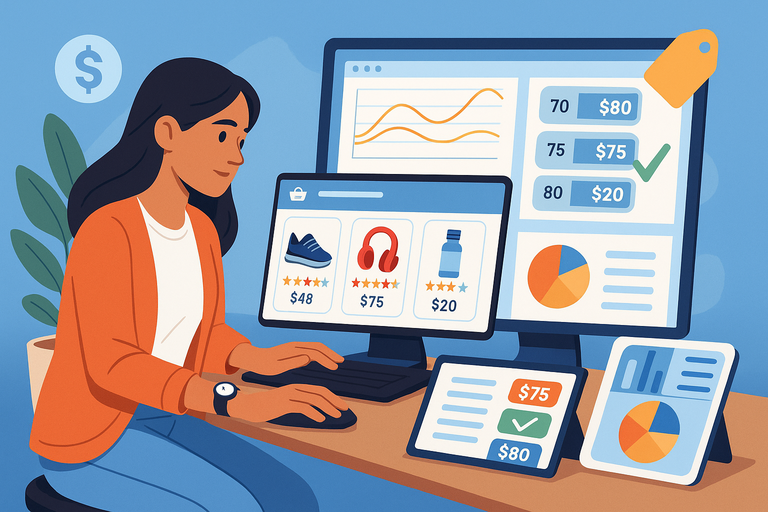
Even the best store can fail if your products don’t hit the mark. This stage is about spotting what sells, pricing it profitably, and refining your selection before scaling.
How to Spot Winning Products in Your Niche
Winning products share three traits: clear demand, uniqueness, and emotional or practical appeal.
To identify them, I recommend:
- Browsing AliExpress → “Orders” filter to see what’s trending.
- Using TikTok Creative Center to find viral product content.
- Studying Amazon Best Sellers in your niche for validation.
A quick test I use: If I can describe the product in one line and it sounds instantly valuable (“This phone stand lets you FaceTime hands-free anywhere”), it’s probably worth testing.
Setting Competitive Prices Without Killing Profit Margins
Pricing is both art and math. I suggest starting with the Keystone Formula—double your product cost—and adjust based on competition.
For instance, if your supplier charges $12 for a gadget, price it between $24–$30. Then test how customers respond through ad clicks and conversion rates.
Also, don’t forget hidden costs: payment fees (2.9%), ad spend, returns, and apps. Build at least a 20–30% buffer to stay profitable.
Use tiered pricing for bundles or upsells. Example:
- 1 item = $29.99
- 2 items = $49.99 (Save 15%)
People love feeling they’re getting more value for slightly more money.
Testing Product Performance Before Scaling
Before spending big on ads, validate your product with small tests. I recommend using:
- Facebook Ads: Run a $20–$30 daily budget for 3 days and track CTR (click-through rate).
- Google Analytics: Check if visitors stay over 1 minute on your product page.
- Conversion Benchmarks: Aim for a 2–3% conversion rate before scaling.
Once a product hits consistent sales and positive feedback, increase your budget gradually by 20–30% daily. Rapid scaling too early can break your ad performance.
Managing Product Quality and Return Rates
Poor quality is a silent killer in dropshipping. I suggest ordering samples from at least two suppliers before selling publicly. Check:
- Packaging durability.
- Product match with images.
- Functionality and materials.
If returns exceed 5%, pause ads and re-evaluate your supplier. You can also create a “Quality Checklist” before sourcing new products. Over time, that habit protects your brand and saves you from reputation damage.
Creating a Strong Brand for Your Dropshipping Business
Branding transforms a generic store into a recognizable, trusted business. It’s not just about logos—it’s about the story and consistency that make customers remember you.
Why Branding Matters More Than Ever in 2025
Consumers are smarter than ever. They can spot a “cookie-cutter” dropshipping store in seconds. Branding helps you stand out from copycats and build long-term customer loyalty.
Statistics show that 81% of consumers need to trust a brand before purchasing. I believe trust is earned through a combination of visual appeal, reliability, and authenticity.
If your store feels cohesive—logo, colors, copy, and tone all aligned—your customers are more likely to buy again without hesitation.
How to Create a Memorable Brand Identity (Logo, Colors, Messaging)
Your brand identity should reflect your niche and audience mood.
Here’s how I suggest building it:
- Logo: Use tools like Canva or Hatchful to create a simple, readable logo. Avoid overcomplicating it.
- Colors: Stick to 2–3 core colors that align with your niche (e.g., green for eco brands, black/gold for luxury).
- Messaging: Craft a one-sentence brand promise. Example: “Helping pet owners keep their furry friends safe and stylish.”
Shopify path: Online Store → Themes → Customize → Branding.
Consistency is what makes a visitor think, “This feels professional.” Every pixel should say, “You can trust me.”
Writing Copy That Builds Trust and Drives Conversions
Good copy connects emotionally before selling logically. Write as if you’re talking to one person:
- Focus on you instead of we.
- Highlight transformation (“You’ll save time every morning”) instead of features (“Made of stainless steel”).
- Use plain, sincere language—avoid hype.
Example: Instead of saying “Limited-time deal! Buy now!”, try “Our customers love this because it solves a small daily frustration. You might, too.”
Using Customer Reviews and Social Proof Effectively
Reviews turn browsers into buyers. In fact, 93% of shoppers say reviews influence their purchase decisions.
To maximize trust:
- Add real customer photos and short testimonials.
- Include a “Verified Purchase” tag or badge if possible.
- Display ratings at the top of product pages, not buried below.
Apps like Loox or Judge.me integrate easily with Shopify. Example setup path: Apps → Search “Loox” → Install → Import Reviews.
You can also repurpose user-generated content (like unboxing videos or Instagram posts) as part of your ads. It’s the most authentic form of marketing available—and it costs nothing extra.
Marketing Strategies That Drive Sales
This is where most beginners either break through or burn out. Marketing is the fuel of every dropshipping business, and understanding where to spend your time (and money) matters just as much as what you sell.
Let’s talk about the strategies that actually work in 2025—without wasting your budget.
How to Use Paid Ads Without Wasting Your Budget
Paid advertising gives your store visibility fast, but it’s easy to lose money if you’re not strategic. I suggest starting with a small, data-driven approach instead of chasing viral success.
Start with one platform: Focus on either Meta Ads (Facebook/Instagram) or TikTok Ads. Each platform has unique audiences and learning curves. For example, if your products are visually appealing or trendy, TikTok Ads can outperform Facebook with less cost per click.
Begin small: Set a testing budget of around $20–$30 per day for 3–5 products. Track key metrics like CTR (Click-Through Rate) and CPA (Cost Per Acquisition).
Optimize quickly:
- Pause ads with low engagement after 3 days.
- Scale those with steady CTRs above 2% and profitable conversions.
- Use UTM links (small tracking codes in your URLs) to see which ad variations perform best in Google Analytics.
Example UI path on Shopify: Marketing → Create Campaign → Connect Facebook → Track Results in Analytics.
Paid ads aren’t about luck—they’re about reading signals fast and redirecting your budget to what works.
The Power of TikTok and Instagram for Organic Traffic
If you’re on a tight budget, organic content is your best friend. TikTok and Instagram remain goldmines for dropshippers because short, authentic videos drive massive exposure without ad spend.
You don’t need professional gear. I often suggest using your phone camera and natural light. Show your product in action—people love seeing real results.
For example, instead of saying “Best kitchen gadget ever,” record a 10-second clip of the product solving an annoying kitchen problem.
Content ideas that work:
- “Before vs. after” transformations.
- Real customer reactions.
- Quick tutorials or mini hacks.
- Unboxing experiences.
Use trending sounds and hashtags like #TikTokMadeMeBuyIt or #EcomFinds to boost visibility. Even one viral clip can drive hundreds of free sales overnight.
Building an Email List That Actually Converts
An email list is your safety net—it lets you own your audience instead of relying on algorithms. I recommend setting this up early with a simple opt-in offer.
Here’s what works best:
- Offer something valuable: 10% off, a free guide, or early access to new products.
- Keep it personal: Write like you’re talking to a friend, not a crowd.
- Automate follow-ups: Use Omnisend or Klaviyo to send welcome and abandoned cart sequences.
Example flow in Klaviyo: Flows → Create Flow → Abandoned Cart → Add Reminder Email After 4 Hours.
Your goal isn’t to spam inboxes—it’s to build trust over time. A warm, engaged list can easily convert 3x higher than cold ad traffic.
Retargeting and Upselling: Maximizing Every Sale
Most customers don’t buy the first time they visit. That’s why retargeting is essential.
You can set up retargeting ads using Facebook Pixel or TikTok Pixel. These tools “remember” visitors who didn’t buy and show them ads later—reminding them to return.
Example setup:
- Shopify → Sales Channels → Facebook & Instagram → Enable Facebook Pixel.
- Create a custom audience for users who visited but didn’t purchase.
For upselling, I suggest apps like Frequently Bought Together or Bold Upsell to recommend complementary items. For instance, if a customer buys a phone case, offer a screen protector at checkout.
Upsells and retargeting can increase your revenue by 20–30% without acquiring new customers—pure profit from smarter selling.
Managing Orders, Shipping, and Customer Service
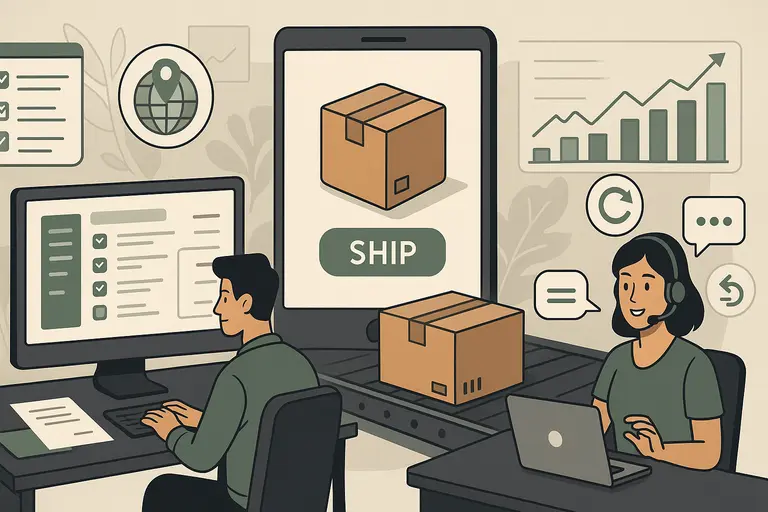
Now that sales are coming in, operations become your backbone. Managing orders, shipping, and customers efficiently keeps your store’s reputation solid and your workload manageable.
How the Order Fulfillment Process Works Step-by-Step
Here’s how fulfillment typically flows in dropshipping:
- Customer places an order on your store.
- Order syncs automatically with your supplier platform (like CJ Dropshipping).
- You confirm and pay for the product at wholesale price.
- Supplier ships directly to your customer and provides tracking details.
- Shopify updates the tracking info automatically in your store.
Example Shopify path: Orders → View Order → Request Fulfillment → Mark as Fulfilled.
I recommend fulfilling orders daily to avoid delays. A small delay early on can lead to big customer frustration later.
Setting Clear Shipping Policies and Delivery Expectations
Transparency prevents most disputes. Always set realistic delivery times—customers are more forgiving of slow shipping when they know upfront.
Your policy page should include:
- Average delivery times by region.
- Processing times (1–3 days).
- A simple explanation of tracking updates.
Example: “Due to high demand, orders take 8–14 business days for delivery. You’ll receive a tracking link once shipped.”
Never promise 3-day delivery unless you work with a local supplier—it’s a quick way to lose trust.
Handling Refunds, Returns, and Difficult Customers
Even with great products, refunds happen. I suggest setting clear guidelines like:
- Returns accepted within 30 days.
- Items must be unused and in original packaging.
- Customer pays return shipping unless the item is defective.
When dealing with angry customers, stay calm. A professional tone can turn frustration into loyalty. For instance:
- “I completely understand your concern. Let me fix this right away and make sure you’re satisfied.”
Sometimes offering a small store credit resolves an issue faster than arguing over policy.
Tools to Automate Customer Support (Zendesk, Gorgias)
Customer support can easily eat up your time, so automation is your ally.
Two tools I personally recommend:
- Zendesk: A full support desk that centralizes messages from email, chat, and social media.
- Gorgias: Designed for Shopify. It pulls order info directly into the support chat so you can reply faster.
Example setup path in Shopify: Apps → Search “Gorgias” → Connect → Sync Orders.
Set up automated replies for common questions like shipping times or returns. That small setup saves hours every week—and keeps customers happy.
Analyzing Data and Scaling Your Dropshipping Business
Once you’ve got consistent sales, your next challenge is scaling intelligently.
Growth in dropshipping isn’t about guessing—it’s about interpreting data and doubling down on what’s already working.
Using Analytics to Identify Profitable Products
Data shows you what’s truly driving profit. Inside your Shopify dashboard, go to Analytics → Reports → Sales by Product. You’ll see which products have the highest conversion rates and profit margins.
To refine insights further, track:
- Conversion Rate (CR): Percentage of visitors who buy.
- Customer Acquisition Cost (CAC): Total ad spend divided by new customers.
- Lifetime Value (LTV): Average revenue per customer over time.
I suggest focusing only on products with high CR and low CAC. Drop the rest. It’s better to scale one winner than juggle five average performers.
How to Optimize Conversion Rates with A/B Testing
A/B testing means running two variations of a page or ad to see which performs better.
For example, test:
- Different product titles or images.
- “Free Shipping” banners vs. “10% Off” banners.
- Short vs. long descriptions.
Tools like VWO or Shopify A/B Testify make this easy. Example path: Online Store → A/B Test → Create New Variant.
Even small improvements (like a 0.5% increase in CR) can make a massive impact once you start scaling traffic.
When and How to Scale Ad Campaigns
The rule of thumb I use: Scale what’s profitable, not what’s popular.
Once your ad has a positive ROI for 3 consecutive days, increase its budget by 20–30% every 24 hours. Avoid doubling budgets overnight—it confuses ad algorithms.
Also, duplicate winning ads into new audiences (age groups, countries, or interests). This way, you expand reach without messing up a proven formula.
Remember, scaling too fast without stable fulfillment or customer service can backfire. Grow steadily and protect your brand’s reputation.
Expanding to New Markets and Niches
When your main store becomes stable, expansion becomes your next frontier. I recommend two paths:
- Geographic expansion: Translate your store and target new countries. Tools like Weglot can auto-translate content.
- Product line expansion: Add complementary products that solve related problems for your current audience.
For instance, if your niche is “home fitness,” expand into “recovery gear” or “nutrition accessories.”
Diversifying intelligently protects you from sudden dips in demand. I’ve seen many stores go from side hustle to full business by mastering one niche first—then cloning that model into the next.
Avoiding Common Mistakes Beginners Make
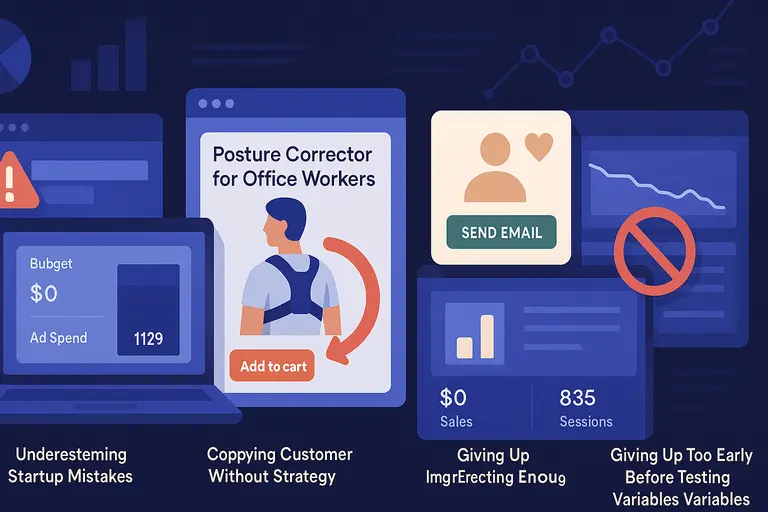
Every beginner in dropshipping goes through a learning curve. The key is to shorten that curve by understanding what not to do.
I’ve seen countless new sellers fail not because the model doesn’t work, but because they overlooked the fundamentals.
Underestimating Startup Costs and Ad Spend
Dropshipping is low-cost, but not no-cost. Many beginners believe they can start with $50 and instantly profit. In reality, you’ll need a few hundred dollars for testing products and running ads effectively.
Here’s where most of the budget goes:
- Shopify or WooCommerce plan: around $30/month.
- Domain name: about $15/year.
- Apps and integrations: $20–$60/month depending on setup.
- Ad testing: $10–$30 per day per product.
I suggest starting with at least $400–$600 to cover 2–3 weeks of product testing. That gives you enough room to analyze data and make adjustments without panicking.
Remember, ads are not expenses—they’re data collection tools. Even losing campaigns teach you what doesn’t work, and that’s just as valuable.
Copying Competitors Without Strategy
It’s easy to think copying a successful store guarantees success, but that approach almost always fails. Here’s why: algorithms reward originality, not replication.
Instead of cloning a competitor, study them. Look for patterns in how they present their products—headline structure, product videos, or trust badges—and then build your own version.
For example: If a competitor uses “Posture Corrector for Office Workers,” try repositioning it as “Stay Comfortable During Long Workdays.” Same intent, fresh angle.
I believe in being inspired, not duplicated. You can use a tool like Koala Inspector to see which products are selling well on a store and then create your unique variation with different visuals and copy.
Ignoring Customer Retention and Repeat Sales
New dropshippers often focus only on acquiring new customers, forgetting that retention is where real profit lives. It costs five times more to attract a new buyer than to retain one.
Here’s how you can fix that:
- Send follow-up emails post-purchase with care tips or product guides.
- Offer loyalty discounts or “returning customer” deals.
- Retarget past buyers with complementary products (for example, selling a matching accessory).
I’ve seen stores double their monthly profits just by nurturing past customers. When people feel cared for, they remember—and they come back.
Giving Up Too Early Before Testing Enough Variables
Dropshipping success rarely happens overnight. I often tell beginners: if you’ve tested only one product, one ad, or one audience, you haven’t failed—you’ve just started.
Variables that affect results include:
- Product quality and demand.
- Pricing strategy.
- Ad creative and copy.
- Target audience segmentation.
Before abandoning a product, test at least three ad variations, two audiences, and one offer change (for instance, free shipping or a bundle). Sometimes, a small tweak—like a different thumbnail or ad caption—can flip results completely.
Persistence beats perfection. The ones who stay curious and keep testing eventually find what works.
Legal and Tax Basics for Dropshipping Beginners
Many beginners overlook the legal side of dropshipping until problems arise. Setting up your business correctly from day one protects you from unnecessary stress and penalties later.
Understanding Business Licenses and Legal Requirements
Even though dropshipping is online, it’s still a real business. Depending on your country, you’ll likely need a basic business registration or a sole proprietorship setup.
For example, in the U.S., you can register as an LLC (Limited Liability Company) to separate personal and business liabilities.
Shopify makes it simple to add your business details under Settings → Store Details → Business Information.
If you’re unsure, check your local government website for small business registration requirements. Having your business legally recognized not only keeps you compliant but also helps build trust with payment processors and banks.
How to Handle Taxes and VAT for International Orders
Taxes in dropshipping depend on where you and your customers are located. Most beginners get confused here, so let me simplify:
- If you sell locally: You may need to collect sales tax or GST (Goods and Services Tax).
- If you sell internationally: VAT (Value-Added Tax) might apply, especially for EU countries.
Shopify has built-in tax automation tools. Go to Settings → Taxes and Duties → Set up automatic tax collection.
You can also use services like TaxJar to automate calculations. Always keep digital records of transactions—you’ll thank yourself during tax season.
I recommend speaking to a local accountant after your first few months of sales. A one-hour consultation can save you from costly tax errors later.
Protecting Your Store from Copyright or Trademark Issues
This is a mistake I see too often: Using copyrighted images, branded logos, or unlicensed designs. It can get your store shut down overnight.
Here’s how to stay safe:
- Use only supplier-provided images or take your own product photos.
- Don’t use brand names (like “Apple-style phone cases”) unless you’re authorized.
- Check the U.S. Patent and Trademark Office (USPTO) or EUIPO database if you’re unsure about product names.
If you use design tools like Canva or Photoshop, ensure you’re using royalty-free elements under commercial use licenses.
Writing a Proper Refund and Privacy Policy
A clear refund and privacy policy builds trust—and helps you handle disputes smoothly.
Shopify offers free templates under Settings → Policies. Customize them to match your tone and business terms.
At a minimum, your policy should include:
- Refund timeframe (e.g., within 30 days).
- Return conditions (unopened, unused).
- Data handling statement (how customer info is stored).
Customers appreciate transparency. It’s better to be upfront than to face angry emails later.
Pro Tips for Long-Term Dropshipping Success
Once you’ve built a stable store, the goal shifts from surviving to thriving. Scaling smartly and thinking long-term helps you build something sustainable—not just a quick hustle.
How to Build Supplier Relationships for Exclusive Deals
Long-term success often comes down to strong supplier relationships. When you build trust, suppliers prioritize your orders, offer better rates, and even alert you to new trending products.
Here’s how to strengthen your relationship:
- Communicate consistently and politely.
- Pay invoices on time.
- Send feedback about product quality or customer complaints.
After a few months of consistent orders, ask for exclusive deals or faster shipping options.
Example:
- “We’ve had strong sales for your product this quarter. Could we discuss a better rate or dedicated stock?”
That kind of professionalism separates you from “random resellers” and gets you VIP treatment.
Reinventing Product Offers to Stay Ahead of Competitors
The dropshipping landscape changes fast. What sold last year might flop today. That’s why reinventing your offers keeps your brand relevant.
Ways to refresh your offers:
- Repackage items as bundles (e.g., “Starter Kits” or “Gift Sets”).
- Introduce seasonal themes (like “Holiday Edition” or “Summer Essentials”).
- Add limited-edition versions with small tweaks (new color, extra accessory).
These strategies not only attract attention but also justify higher pricing without increasing costs.
Outsourcing Tasks to Scale Your Business Efficiently
As your store grows, you’ll quickly realize you can’t do everything alone. Outsourcing helps you focus on strategy instead of repetitive work.
Start small with freelancers for:
- Product listing and description writing (Fiverr, Upwork).
- Customer support management (VA from OnlineJobs.ph).
- Ad creative design (Canva-trained freelancers or design studios).
Example workflow: Hire VA → Share Google Sheets Access → Assign Tasks (Order Tracking, Emails).
Delegating even 10 hours a week can free your time to focus on testing new products or improving branding.
Building an Exit Strategy for Your Dropshipping Brand
Every business should have an exit plan—even dropshipping ones. Some entrepreneurs sell their stores on marketplaces like Flippa or Empire Flippers once profits are stable.
If you plan to sell, focus on:
- Building consistent monthly revenue for at least 6 months.
- Having clean financial reports and supplier agreements.
- Ensuring your brand has strong customer reviews.
A well-run dropshipping store can sell for 20–40x its monthly profit. So, if your store earns $2,000 monthly, it could sell for $40,000–$80,000.
Thinking ahead turns your store from a side hustle into a real, sellable asset.

I’m Juxhin, the voice behind The Justifiable.
I’ve spent 6+ years building blogs, managing affiliate campaigns, and testing the messy world of online business. Here, I cut the fluff and share the strategies that actually move the needle — so you can build income that’s sustainable, not speculative.
Related posts:
 Discover 5 Best Dropshipping Sites: Boost Your Sales Now!
 How To Start A Dropshipping Business With No Money
 How to Use Dsers Shopify for Seamless Dropshipping
 The Best Way to Start Dropshipping With Little to No Money
 How to Build a Dropshipping Store That Actually Converts
 How to Make Money Dropshipping Without Huge Upfront Costs