Table of Contents
Some links on The Justifiable are affiliate links, meaning we may earn a small commission at no extra cost to you. Read full disclaimer.
If you’ve been running a free blog for a while, you probably know how tough it can be to grow traffic without spending a dime. Maybe you’ve tried social media, SEO, or content updates, but the numbers just won’t budge.
So how do you actually attract readers, boost visibility, and keep your blog growing—all without paying for ads?
Let me walk you through proven, free blog tips that can genuinely make a difference.
Optimize Every Post for Search Engines
If you want your free blog to grow organically, you have to make each post work smarter for you.
SEO isn’t about stuffing keywords—it’s about making your content easy for both readers and search engines to understand.
Here’s how to do it step by step.
Use Long-Tail Keywords to Target Specific Audiences
One of the most powerful ways to drive free traffic is by using long-tail keywords—phrases that are more specific and less competitive.
For example, instead of writing about “blog tips,” try something like “free blog tips for food bloggers” or “how to grow a travel blog without ads.” These keywords help you connect with people who are already searching for what you offer.
How to find them for free:
- Use Google’s autocomplete — start typing your topic and note the suggested searches.
- Check AnswerThePublic to see what questions people are asking.
- Use Ubersuggest or Google Keyword Planner for keyword difficulty and search volume.
I often recommend focusing on keywords that have medium search volume but low competition. They’re easier to rank for and attract readers who are more likely to engage.
Craft Click-Worthy Titles That Match Search Intent
A great title doesn’t just sound good—it solves a problem. Search intent means understanding why someone is searching for a topic.
If someone types “how to start a blog for free,” they’re not looking for history—they want actionable steps. Your title should promise exactly that.
Quick title formula:
- How to [Achieve Result] Without [Common Obstacle]
Example: “How to Grow a Free Blog Without Spending on Ads.”
Use tools like CoSchedule Headline Analyzer to refine your titles for clarity, emotion, and SEO strength.
Remember: your title is your first impression—make it irresistible, not misleading.
Add Internal Links to Boost Page Authority
Internal linking is like showing Google a roadmap of your content. It helps readers navigate your site and spreads SEO value between pages.
When I update posts, I always look for spots to naturally link to related articles. For instance, in a post about “SEO basics,” I might link to another on “keyword research tools.”
Pro tip:
- Link naturally—never force it.
- Use descriptive anchor text like “learn free keyword research methods” instead of “click here.”
- Keep a spreadsheet of internal links to maintain balance and avoid overlinking to one page.
Tools like Rank Math can help you track and suggest internal links automatically.
Optimize Meta Descriptions for Higher Click-Throughs
Your meta description doesn’t directly affect rankings, but it does affect whether people click your result. Think of it as your blog post’s elevator pitch.
A good meta description should:
- Stay under 160 characters.
- Include your main keyword naturally.
- Promise clear value or benefit.
Example: “Learn practical free blog SEO tips to grow your traffic fast—without paid ads or technical headaches.”
I always suggest writing meta descriptions manually. It gives you control and ensures each post stands out in search results.
Leverage Free Blog Promotion Channels
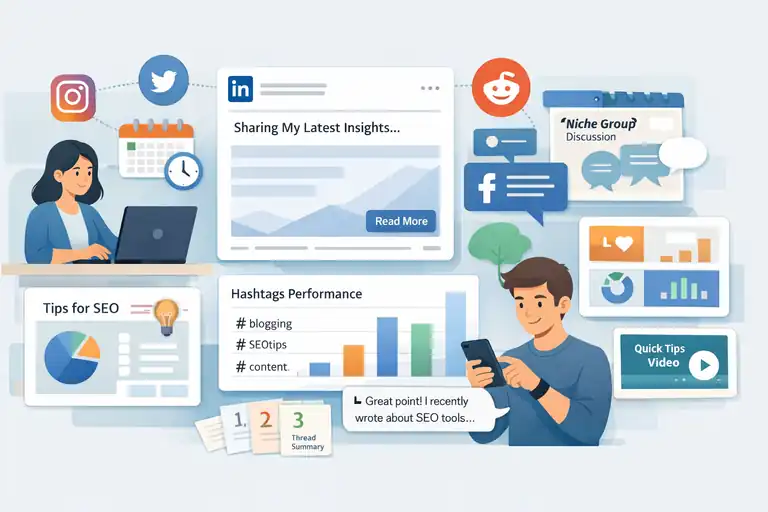
Once your post is optimized, it’s time to get eyes on it—without paying for ads. Free promotion takes creativity and consistency more than money.
Share Posts Strategically on Social Media Platforms
Social media is powerful, but only when used with purpose. Instead of dropping your link everywhere, think about where your audience actually hangs out.
Smart sharing approach:
- Post snippets or teasers instead of full links. Example: share a tip from your blog post with a short caption and link in the comments.
- Use relevant hashtags on Instagram and X (Twitter) to increase visibility.
- Schedule posts with Later to stay consistent.
In my experience, one high-quality post on LinkedIn with personal insight performs better than five generic link drops.
Join Niche Facebook Groups and Reddit Communities
These communities can drive tons of targeted traffic—if you engage genuinely. Don’t just promote your content. Instead, contribute value first.
Here’s what I suggest:
- Spend a week observing discussions before posting.
- Answer questions using insights from your blog.
- When it feels natural, share your post as a resource—not a promotion.
For example, if someone asks about “free blog SEO tools,” you can share a helpful snippet from your post, then link to your article for full details.
Platforms like Reddit (subreddits like r/Blogging or r/Entrepreneur) reward helpfulness, not self-promotion.
Repurpose Blog Content Into Visual Posts or Threads
Every blog post can become 5–10 pieces of content if you repurpose it right. This keeps your blog visible without constant writing.
Ideas for repurposing:
- Turn blog quotes or stats into infographics using Canva.
- Create a Twitter/X thread summarizing your main takeaways.
- Film a short video explaining one point and post it on Reels or TikTok.
This strategy not only extends your content’s lifespan but also helps new readers discover your blog from multiple platforms.
Engage in Comment Marketing Without Spamming
Comment marketing means leaving thoughtful responses on related blogs or social posts. It builds visibility and authority—if done right.
Here’s my method:
- Follow 5–10 bloggers or creators in your niche.
- Comment meaningfully on their posts once or twice a week.
- Add a subtle reference to your expertise (not your link).
For instance: “I recently wrote about free blog SEO tools and totally agree—long-tail keywords are underrated.”
That curiosity often drives people to check out your blog naturally.
Build Backlinks Using Free and Ethical Methods
Backlinks are still one of the biggest ranking factors in SEO. But you don’t have to pay for them—if you’re strategic.
Guest Post on Authority Blogs Within Your Niche
Guest posting lets you tap into another site’s audience while earning a quality backlink.
Steps I recommend:
- Research blogs in your niche with good domain authority using Ahrefs’ free checker or MozBar.
- Pitch a topic that complements their existing content.
- Write a genuinely helpful, well-researched post.
Avoid generic outreach emails—show that you’ve actually read their blog.
Example: “I loved your recent post on content strategy. I’d love to contribute something complementary: a guide to optimizing free blog SEO.”
Offer Expert Quotes to Journalists Through HARO
HARO (Help A Reporter Out) is a platform where journalists seek expert input. You can submit short quotes in response to their queries.
If your quote gets featured, you’ll usually get a backlink from a reputable site.
How I use it:
- Sign up for free at helpareporter.com.
- Respond quickly—reporters often choose the first few replies.
- Keep your answers concise, credible, and relevant to your niche.
Over time, even one or two strong HARO links can boost your blog’s authority significantly.
Create Resource Lists That Attract Natural Links
Resource lists—like “Top Free Tools for Bloggers”—tend to attract backlinks naturally because others reference them.
When writing a resource post:
- Include unique, genuinely helpful tools.
- Explain how to use each one briefly.
- Keep it updated every few months.
For example, a list of “Best Free SEO Tools for Bloggers in 2025” can gain traction fast if you promote it on social media and in communities.
Use Broken Link Outreach to Gain Quality Backlinks
Broken link outreach involves finding outdated or broken links on other sites and offering your post as a replacement.
Here’s how:
- Use a free tool like Check My Links (Chrome Extension).
- Find a relevant page with broken links.
- Email the site owner politely, mentioning the broken link and suggesting your content as a fix.
This works because you’re offering real value, not just asking for a favor.
Pro Tip: Don’t chase backlinks just for numbers. Focus on relevance and quality. One link from a respected niche site is worth far more than ten random ones.
Grow Organic Reach With Smart Content Planning
If you’ve ever felt like your free blog isn’t reaching new readers fast enough, you’re not alone. Growing organically takes more than just writing great posts—it’s about creating the right content, at the right time, using smart planning tools and strategies.
Let me walk you through how I approach it.
Use Free SEO Tools to Discover Content Gaps
One of the easiest ways to grow your traffic for free is by finding content gaps—topics your competitors rank for that you don’t. When you identify those missing opportunities, you can fill them with better, more targeted content.
Here’s how I usually do it using free tools:
- Google Search Console: Go to Performance → Queries to see which keywords are driving impressions but not clicks. These are quick wins—you’re already visible but need stronger optimization.
- Ubersuggest (free version): Enter your competitor’s blog URL. Check their Top Pages section to see which articles bring them traffic. That’s your clue to similar topics.
- AlsoAsked.com: A goldmine for discovering related questions users ask around your topic.
For example, if you write about “travel blogging,” but a competitor has traffic for “how to write travel itineraries,” that’s a gap worth covering. I always recommend starting with 3–5 new posts based on uncovered gaps—it’s manageable and brings steady growth.
Focus on Evergreen Topics With Long-Term Potential
Evergreen content stays valuable long after publication. Unlike trend-based posts that fade, evergreen topics bring consistent search traffic.
To choose evergreen ideas:
- Focus on “how-to” guides, tutorials, or timeless topics (e.g., “How to Write an SEO-Friendly Blog Post”).
- Avoid overly time-sensitive topics like “Top Blogging Trends for 2023.”
- Use Google Trends to confirm steady search interest over time.
From what I’ve seen, evergreen posts act like traffic anchors—they keep attracting visitors while you experiment with newer content.
For instance, my own guide on “free blog SEO basics” has stayed in my top five pages for over a year with only minor updates.
Refresh and Update Old Posts for SEO Gains
Your old content can be a hidden goldmine. Refreshing it is one of the fastest, least expensive ways to boost rankings.
Here’s my 4-step refresh process:
- Audit existing posts: Use Google Analytics to find posts with declining traffic.
- Update outdated data: Replace old stats, examples, or screenshots with current ones.
- Add new keywords: Check Google Search Console for related queries your post already ranks for. Add them naturally into your copy.
- Reshare the post: Once updated, republish or promote it again across social channels.
Even small tweaks—like improving readability or adding new subheadings—can lead to a visible traffic spike. I’ve personally seen 40–60% traffic improvements from refreshed posts within a month.
Plan Content Around Seasonal Search Trends
While evergreen content keeps you steady, seasonal content brings quick bursts of traffic. This strategy works well for bloggers in niches like travel, food, or lifestyle.
Here’s what I do:
- Use Google Trends to spot yearly spikes (e.g., “best holiday blog ideas” in November).
- Create posts one month ahead of the trend so Google has time to index them.
- Refresh the same post annually with new visuals or examples.
For example, a “Free Blog Content Calendar for 2025” can drive huge early-year traffic if published in December. Timing matters just as much as the topic.
Increase Engagement to Improve Blog Retention
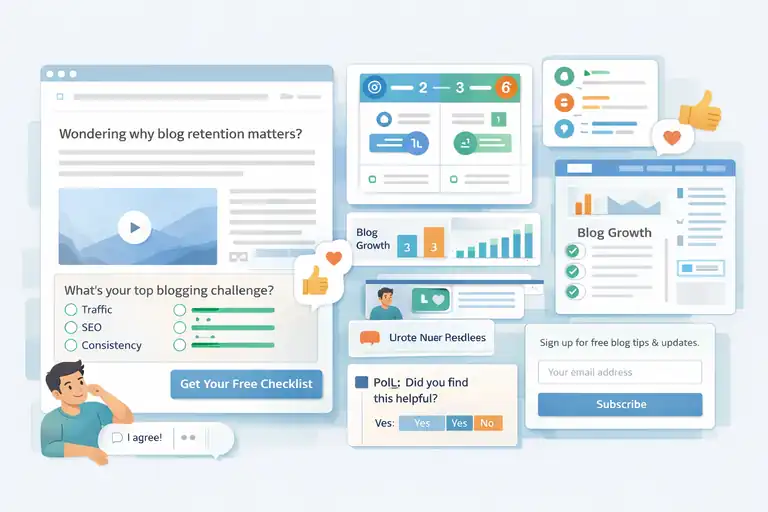
Getting traffic is one thing; keeping readers is another. If people visit your free blog but leave after a few seconds, your effort doesn’t pay off. Engagement is what turns casual visitors into loyal readers—and loyal readers into subscribers.
Use Conversational Writing to Connect With Readers
The best blogs don’t sound like textbooks—they sound like a real person talking to you. I always suggest writing as if you’re explaining something to a friend.
A few simple tricks help:
- Write shorter sentences and paragraphs.
- Use you, I, and we to make your tone more human.
- Ask rhetorical questions to keep readers thinking.
For instance, instead of writing “Readers should optimize their blog structure,” say “Have you ever wondered why your blog posts don’t rank higher?” That change alone makes your writing instantly more relatable.
Add Visuals, Infographics, and Interactive Media
People remember visuals more than text, and adding them can increase engagement dramatically.
You don’t need paid tools for this—here’s what I use:
- Canva: Create infographics, post banners, or simple charts.
- Google Charts or Datawrapper: Perfect for quick, free visual data representations.
- YouTube embeds: Add relevant videos to keep readers on your page longer.
Try this: next time you publish a long post, break it up with a simple comparison table or step-by-step infographic. It improves readability and helps your SEO metrics like “time on page.”
Encourage Comments, Polls, and User Feedback
Interaction signals trust and community. The more you invite participation, the stronger your blog’s audience becomes.
A few engagement ideas that work well:
- Ask one clear question at the end of each post (e.g., “What’s one SEO tool you can’t live without?”).
- Add a quick poll using free plugins like WPForms.
- Respond to every comment personally. It shows authenticity and builds loyalty.
I’ve noticed that when readers see their comment answered, they’re 3x more likely to return for future posts.
Include Clear CTAs to Guide Reader Action
A CTA (Call to Action) is simply the next step you want readers to take—subscribe, share, or read another article.
CTAs work best when they’re:
- Simple and specific (“Download your free checklist here”).
- Naturally placed at the end or mid-way through content.
- Matched with value (offer something useful in return).
I believe every blog post should end with at least one clear CTA. Without it, readers leave unsure what to do next, and your engagement potential drops.
Build an Email List Without Paid Tools
Even in 2025, email marketing remains one of the most effective ways to grow a blog. And yes—you can build a strong list without spending a cent.
Offer a Free Download or Checklist to New Subscribers
People rarely sign up for newsletters just because they can. You need to give them something in exchange for their email—something small but valuable.
Free ideas that work well:
- A short “SEO checklist for beginners.”
- A printable content calendar template.
- A one-page blog promotion strategy guide.
Keep your lead magnet simple and directly related to your niche. I’ve found that highly specific offers attract the right audience, not just random subscribers.
Use Free Email Marketing Tools Like MailerLite or ConvertKit
Both MailerLite and Aweber offer solid free plans that let you create forms, automate emails, and manage subscribers.
Here’s a quick setup path using MailerLite:
- Sign up for the free plan.
- Create a Form → Embedded Form → Customize Colors.
- Add it to your blog’s sidebar or end of posts.
The beauty of these tools is that they also allow you to segment your audience later—so you can send more personalized updates once your list grows.
Create Simple Welcome Sequences That Build Trust
Once someone subscribes, your first few emails should feel like a friendly introduction—not a pitch.
Here’s what I usually include in a 3-part sequence:
- Email 1: A warm welcome with your story and what to expect.
- Email 2: A quick guide or tip that delivers instant value.
- Email 3: Invite them to follow you on social media or read your best blog post.
This sequence helps readers connect with you as a person and see the real value behind your free blog.
Share Blog Updates Regularly to Maintain Engagement
Consistency keeps your list alive. Whether you email weekly or twice a month, stick to your schedule.
To keep engagement high:
- Share snippets or takeaways instead of full articles.
- Personalize subject lines with first names if your tool allows it.
- Mix educational and conversational tones—your emails shouldn’t always feel like “content.”
I suggest ending every email with a small question, like “What’s one topic you’d love me to cover next?” That simple question builds trust and opens a genuine conversation.
Collaborate And Cross-Promote With Other Bloggers
No matter how much SEO you do, collaboration remains one of the most powerful—and free—ways to grow a blog.
Working with other bloggers expands your reach, builds credibility, and helps you attract new audiences without relying on ads.
Let’s explore some of the best ways to make collaboration work for your free blog.
Partner With Bloggers In Complementary Niches
When two bloggers in related niches team up, both win. You get access to each other’s audiences while offering readers fresh perspectives.
I recommend partnering with bloggers who share your values but focus on slightly different areas.
For instance, if your blog is about content marketing, collaborate with someone in branding or design. Together, you create synergy rather than competition.
Here’s how to start:
- Comment regularly on their posts or engage with them on social media before reaching out.
- Pitch a clear, mutually beneficial idea—like a co-written article or expert roundup.
- Keep communication open and honest. Good collaborations often turn into long-term friendships.
As an example, when I teamed up with a productivity blogger to create a joint “Content Creation Checklist,” both our newsletters saw a 30% increase in engagement that week. It’s a small step, but a meaningful one.
Host Free Webinars Or Joint Challenges
Free webinars or challenges give both bloggers visibility and credibility. They also create an instant sense of community.
You can host these on Zoom, YouTube Live, or even Instagram Live—all at no cost.
A quick structure that works well:
- Choose a practical, narrow topic (e.g., “How to Write Better Headlines in 30 Minutes”).
- Promote it jointly on both blogs and email lists.
- Share the replay link later for those who couldn’t attend.
I’ve seen these sessions double subscriber counts overnight, especially when paired with a follow-up resource like a free PDF or workbook.
Swap Guest Posts To Reach New Audiences
Guest posting is one of my favorite free promotion methods. It’s simple, effective, and mutually rewarding.
Here’s what I suggest:
- Swap posts with bloggers of similar authority in your niche.
- Write original, high-value content tailored to their audience.
- Include a short, friendly bio that links back to your blog.
This technique exposes you to new readers who are already interested in your topic. Even two or three quality guest post swaps a year can significantly boost your organic traffic and domain authority.
Feature Others’ Work To Build Reciprocal Links
Featuring others’ work is a quiet but effective way to build lasting connections—and backlinks.
You can do this by:
- Creating “best of” lists featuring other bloggers’ articles.
- Including short expert quotes or mentions within your posts.
- Sharing your featured list with those bloggers to encourage reciprocation.
From what I’ve seen, bloggers often appreciate being highlighted and will naturally share your post or link back to it. A single round-up post can introduce your free blog to dozens of new readers overnight.
Use Analytics To Guide Your Free Blog Growth
Without tracking your data, blogging is like driving blindfolded—you never really know what’s working.
Analytics tools (most of which are free) help you understand what attracts readers, what loses them, and how to keep improving your strategy.
Track Your Best-Performing Posts In Google Analytics
Start by identifying which posts are bringing you the most traffic.
In Google Analytics, go to Reports → Engagement → Pages and Screens. Here, you’ll see your top-performing posts.
Once you identify your top three, ask yourself:
- What topics do they cover?
- How are they structured (length, format, visuals)?
- What keywords do they seem to target?
I usually replicate the structure or style of my best performers for future posts. It’s a low-cost, high-return strategy that keeps momentum growing.
Monitor Traffic Sources And Reader Behavior
Knowing where your readers come from is key to maximizing your efforts.
In Google Analytics, under Reports → Acquisition → Traffic Acquisition, you’ll see sources like:
- Organic Search
- Social Media
- Direct Traffic
- Referral (other sites linking to you)
If you notice that one platform consistently drives traffic, double down there. For example, if 40% of your visitors come from Pinterest, focus on creating more shareable visuals.
Identify And Fix High-Bounce Pages
High bounce rates usually mean one of two things: the content isn’t matching intent, or it’s not engaging enough.
To fix this:
- Check your bounce rate in Reports → Engagement → Pages.
- Revisit posts with bounce rates over 70%.
- Add visuals, improve readability, or clarify your introduction to better match reader expectations.
I once reduced a post’s bounce rate from 82% to 54% just by rewriting the intro and adding a simple infographic explaining the process visually. Small tweaks matter.
Set Clear Monthly Goals Based On Real Data
Data without goals is just noise. I like to set simple, trackable objectives such as:
- Increase organic traffic by 10% in 30 days.
- Boost average session duration to 2 minutes.
- Gain 50 new email subscribers per month.
Use a free tool like Notion to log monthly metrics and progress. When you measure consistently, you’ll start spotting patterns that reveal what actually works for your free blog.
Leverage Free Tools To Streamline Your Blogging Workflow
Running a free blog doesn’t mean doing everything manually. With the right tools, you can save hours of time and stay organized without paying a cent.
Use Canva For Visuals And Featured Images
Canva is a lifesaver for bloggers who want clean, professional visuals without design experience.
Here’s how I use it:
- Search templates for blog banners or Pinterest pins.
- Customize with your colors and fonts.
- Export as PNG for sharper image quality.
You can even resize the same image for different platforms with one click. Visual consistency builds brand recognition over time, even on a small budget.
Try Google Search Console For SEO Insights
Google Search Console (GSC) is one of the most underrated free tools for bloggers. It tells you exactly how your site performs in Google search.
In GSC, check these tabs:
- Performance: See which keywords are ranking and their click-through rates.
- Coverage: Identify and fix indexing issues.
- Links: View internal and external link reports.
I suggest checking it weekly—it helps you catch technical issues early before they affect rankings.
Plan Editorial Calendars With Notion Or Trello
Planning content visually helps you stay consistent.
In Notion:
- Create a table or board view.
- Add columns for Post Idea, Keyword, Status, Publish Date.
In Trello:
- Create cards for each blog post.
- Move them through stages like Idea → Draft → Published.
I personally prefer Notion because it lets me attach drafts, research notes, and SEO data in one place.
Schedule Posts With Free Social Media Tools
Consistency on social media can triple your reach, but manual posting drains time.
Use free tools like:
- Buffer: Schedule posts on multiple platforms.
- Metricool: Get simple analytics and best posting times.
- Later: Great for Instagram planning with visual previews.
Scheduling ensures your free blog stays visible even on days you’re not actively promoting.
Stay Consistent And Build Authority Over Time
Consistency is the silent force behind every successful blogger. You don’t need fancy tricks—just small, steady effort that builds trust and authority with time.
Set A Manageable Publishing Schedule You Can Maintain
It’s better to post once a week consistently than five times in one month and disappear.
Here’s a rhythm that works for most bloggers:
- 1 new post weekly
- 1 update or refresh monthly
- 1 newsletter every two weeks
Find a pace you can realistically sustain. Overcommitting leads to burnout, and readers value reliability over volume.
Build A Unique Voice That Readers Recognize
Your writing voice is what makes your blog memorable. I suggest writing the way you speak—with honesty, small imperfections, and warmth.
A few ways to shape your voice:
- Use relatable examples from your own experience.
- Let your opinions show (respectfully).
- Keep jargon minimal—explain things simply.
When readers feel like they “know” you, they’ll come back not just for information, but for connection.
Focus On Value, Not Just Volume
I’ve seen many bloggers chase quantity—publishing multiple shallow posts instead of one great one. Quality wins every time.
Ask yourself: Does this article solve a real problem? If not, it’s better to hold off and improve it. One deeply helpful post often brings more traffic and backlinks than ten rushed ones.
Celebrate Small Wins To Stay Motivated
Blogging success takes time. Celebrate milestones like your first 1,000 views or 100 subscribers—they’re proof you’re growing.
Keep a simple “win log” where you note down:
- Positive reader comments
- Traffic spikes
- SEO improvements
These small celebrations keep your motivation alive and remind you that progress—even slow—is still progress.
Final Takeaway: Growing a free blog isn’t about quick hacks or luck. It’s about steady effort, smart collaboration, and the willingness to keep learning. Every small improvement compounds over time—and if you stay consistent, your audience will too.
FAQ
How can I grow my free blog without spending money?
You can grow your free blog by using SEO optimization, promoting posts on social media, building backlinks, and engaging with readers to boost organic traffic.
What are the best free tools to improve a free blog’s traffic?
Top free tools include Google Search Console for SEO insights, Canva for visuals, Notion for planning, and Buffer for social media scheduling.
How often should I post on my free blog to see results?
Posting once a week consistently helps build authority, improve SEO, and keep readers engaged without overwhelming your schedule.

I’m Juxhin, the voice behind The Justifiable.
I’ve spent 6+ years building blogs, managing affiliate campaigns, and testing the messy world of online business. Here, I cut the fluff and share the strategies that actually move the needle — so you can build income that’s sustainable, not speculative.