
Table of Contents
Some links on The Justifiable are affiliate links, meaning we may earn a small commission at no extra cost to you. Read full disclaimer.
If you’ve ever thought about becoming a freelance NET developer, you’ve probably wondered: how do you actually find clients willing to pay for your skills?
The truth is, technical knowledge alone isn’t enough—you need strategy, visibility, and the right mindset to build a sustainable freelance business.
In this guide, you’ll learn how to position yourself, attract high-paying clients, and turn your NET skills into a thriving freelance career.
Understand What It Takes to Be a Successful Freelance NET Developer
Becoming a freelance NET developer isn’t just about coding—it’s about understanding what businesses actually need, positioning yourself as a solution provider, and running your work like a business.
Let’s break down what really matters.
Identify the Skills Clients Are Looking For
Clients don’t just hire developers—they hire problem solvers. To succeed, you’ll need to master both the core technical skills and the soft skills that win trust.
Core technical skills to focus on:
- C# proficiency: This is the foundation of .NET. Most projects revolve around it, from API development to backend logic.
- .NET Core & ASP.NET MVC: Companies love cross-platform and scalable web apps, so being strong in .NET Core and MVC frameworks is essential.
- SQL & Entity Framework (EF): Clients expect you to design and manage databases seamlessly. EF makes database operations smoother.
- API development: Learn to build and integrate RESTful APIs—these power most modern web and mobile apps.
- Azure basics: Many .NET clients host their applications on Microsoft Azure. Knowing how to deploy, scale, and manage cloud environments gives you an edge.
Beyond the technicals, communication, problem-solving, and reliability are often the deciding factors in who gets hired. I’ve seen great developers lose work not for lack of skill—but for poor communication.
Choose Your .NET Specialization (Core, MVC, Blazor, or Azure)
One of the biggest mistakes new freelancers make is trying to do everything. I recommend focusing on a niche within .NET—it builds authority and helps clients see you as a specialist, not a generalist.
Popular .NET specializations:
- ASP.NET Core Developer: Ideal for scalable web apps and APIs.
- Blazor Developer: Great if you prefer front-end interactivity with C# instead of JavaScript.
- Azure Cloud Developer: Perfect for enterprise clients needing cloud-native solutions.
- .NET MAUI Developer: A good fit if you want to build cross-platform apps for mobile and desktop.
You might start broad, but over time, double down on what brings the most consistent work or enjoyment. Clients love specialists who understand their tech stack inside out.
Build a Portfolio That Proves Your Expertise
A strong portfolio does more than show code—it demonstrates impact. Instead of just listing projects, show how your work solved business problems.
For example, instead of saying “Developed a web app using ASP.NET Core,” say “Built a responsive ASP.NET Core web app that reduced order processing time by 40% for a logistics company.”
Key portfolio tips:
- Include three to five projects that showcase a range of skills.
- Add context: the client’s challenge, your approach, and measurable results.
- Link to GitHub repos or live demos when possible.
- Use screenshots or short Loom videos to demonstrate functionality.
If you’re just starting, build sample projects that mimic real-world scenarios—like a CRM dashboard or eCommerce backend. It shows initiative and skill even without client work.
Learn Business and Communication Basics
Freelancing is half coding, half communication. You’ll need to handle proposals, pricing, feedback, and timelines professionally.
Core business skills:
- Client communication: Learn to ask clarifying questions early and summarize feedback in writing.
- Project estimation: Break work into milestones to make pricing transparent.
- Contracts and invoicing: Use tools like Bonsai or Wave to manage agreements.
- Time tracking: Clients love transparency—apps like Clockify make this easy.
I suggest thinking like a consultant rather than a contractor. Don’t just do tasks—offer insights and recommendations. That’s how you go from “hired help” to “trusted expert.”
Set Up a Strong Personal Brand That Attracts Clients
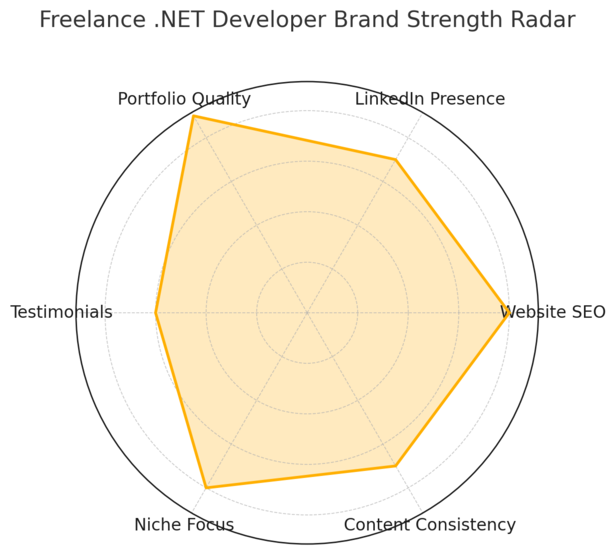
Your brand is the bridge between your skills and your clients. It’s how you communicate your value before you even start a conversation.
Create a Professional Freelance Identity and Website
Your website is your online office—it should look polished, trustworthy, and focused on what you offer.
What to include:
- A clean landing page summarizing your expertise.
- A “Services” section that lists what you do (e.g., .NET Core API Development, Azure Deployment).
- A “Portfolio” with visuals and case studies.
- A clear “Hire Me” or “Book a Call” button.
If you’re not a designer, use builders like Framer or Carrd for quick, professional results. I recommend using a domain name like yourname.dev or yourname.net—it looks sharp and personal.
Write a Portfolio That Tells a Client-Focused Story
Clients care less about what you did and more about what it achieved. Shift your portfolio copy from “I built X” to “I helped Y achieve Z.”
Example rewrite:
- Instead of: Developed a Blazor app for internal task management.
- Try: Created a Blazor-based task management app that cut project delays by 25%.
Focus on benefits, not features. If you can quantify results, even better—it makes your work more memorable.
Optimize Your LinkedIn and GitHub for Visibility
LinkedIn and GitHub are your credibility platforms. Together, they show both your professional and technical sides.
LinkedIn optimization tips:
- Use a headline like: “Freelance .NET Developer | ASP.NET Core, Azure, C#, APIs.”
- Post short insights about your projects or tech lessons weekly.
- Engage with .NET community posts to increase visibility.
GitHub optimization:
- Keep repositories clean and well-documented.
- Use README files to explain what each project does and which technologies were used.
- Pin your best work to your profile for quick viewing.
I’ve seen clients discover freelancers purely from GitHub profiles—it’s your living portfolio.
Use Social Proof and Testimonials Strategically
Social proof is the digital version of word-of-mouth. It builds instant trust.
Ways to get testimonials:
- Ask past clients for short quotes after successful projects.
- Use screenshots of client feedback from Upwork or emails.
- Add a “Results” or “What Clients Say” section on your website.
If you’re new and don’t have testimonials yet, request feedback after delivering small tasks—it’s a great way to start building social proof fast.
Build a High-Converting Freelance .NET Developer Portfolio
Your portfolio is your sales pitch on autopilot. A good one can close clients before you even talk to them.
Include Real-World Project Examples with Measurable Results
Show real data wherever possible. Use short project summaries that outline:
- The client’s goal or challenge.
- The solution you built.
- The measurable result.
For instance, “Built a custom ASP.NET Core CRM that automated reporting, saving 8 hours per week for a SaaS team.”
Use visuals—before-and-after screenshots or mini diagrams—to make your impact tangible.
Highlight Technical Stack and Problem-Solving Approach
Clients often skim portfolios for specific tools or frameworks. Clearly list your stack (e.g., ASP.NET Core, C#, Entity Framework, Azure, React).
Then, describe how you solved key challenges. Example:
“To optimize performance, I used Entity Framework caching and asynchronous calls to reduce API response time by 60%.”
This shows both technical depth and strategic thinking—two things clients value most.
Write Case Studies That Demonstrate Business Value
Case studies tell your professional story in a structured, persuasive way.
A good case study includes:
- The challenge: What problem was the client facing?
- The solution: What did you build, and how did it help?
- The result: Quantify improvements (speed, revenue, usability).
Keep it concise—around 300–500 words each—and use a consistent format for all.
Pro Tip: Always frame your portfolio and brand around client results, not your skills alone. When you show how your .NET expertise drives business value, you become far more than a coder—you become a strategic partner.
Choose the Right Freelance Platforms for .NET Developers
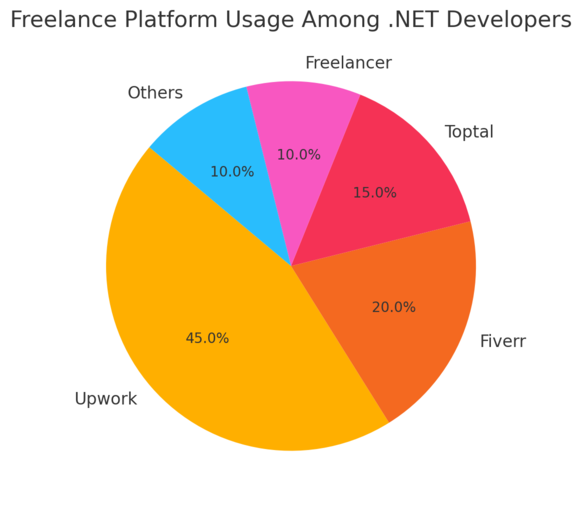
Finding the right platform as a freelance .NET developer can make the difference between chasing low-paying gigs and landing consistent, rewarding work.
The goal isn’t to be on every platform—it’s to find where your ideal clients are and position yourself strategically.
Leverage Upwork, Fiverr, and Toptal Effectively
Each platform attracts different client types, so the strategy for success changes slightly with each one.
Upwork:
I believe Upwork is the most reliable starting point for .NET developers. It offers everything from short-term fixes to long-term enterprise projects. To stand out:
- Create a title like “Experienced .NET Core Developer | C#, API, Azure.”
- Write proposals that start with the client’s pain point before mentioning your skills.
- Use Upwork’s Project Catalog to list fixed-price services like “Migrate legacy ASP.NET app to .NET 8.”
Clients often search by keyword, so naturally include relevant ones like “ASP.NET Core” or “Azure Deployment.”
Fiverr:
Fiverr works well if you’re targeting smaller, well-defined tasks. Create gigs that are clear and solution-oriented. For example:
- “Fix your ASP.NET MVC bug within 24 hours.”
- “Deploy your .NET Core app on Azure.”
Use short demo videos or screenshots of your work—they help build trust fast.
Toptal:
Toptal is for advanced developers who already have solid portfolios. It screens freelancers rigorously, but once you’re in, the clients and pay rates are excellent. The average .NET freelancer on Toptal earns 30–50% more than on standard platforms.
If you have enterprise experience or have worked with technologies like Entity Framework, Blazor, or Azure DevOps, I recommend applying to Toptal once you have several client projects to show.
Explore .NET-Specific Job Boards and Communities
Outside of mainstream freelance platforms, there are communities and job boards designed specifically for .NET developers. They’re less crowded and often offer better-quality leads.
Where to look:
- DotNetJobs: A niche board focused exclusively on .NET roles.
- Stack Overflow Jobs (archived listings + community reach): Many recruiters still post .NET-related gigs within developer communities.
- Reddit’s r/dotnet & r/freelance: Networking here can lead to direct client work.
- LinkedIn Groups: Search for “.NET Freelancers,” “C# Developers,” or “Azure Developers Network.”
These spaces are perfect for building relationships, not just finding jobs. I’ve personally seen freelancers secure consistent contracts just from being helpful in forums and answering technical questions.
Combine Platforms with Direct Outreach for Consistent Work
Relying solely on freelance platforms can limit your growth. I suggest mixing them with direct client outreach—it’s faster and more personal.
How to do it effectively:
- Identify potential clients using LinkedIn Sales Navigator or Crunchbase.
- Send personalized messages explaining how you can help solve a specific problem.
- Share one or two relevant portfolio links and invite them to a short call.
Here’s a simple template I’ve seen work well:
“Hey [Name], I noticed your company is using .NET for its web app. I specialize in optimizing .NET Core applications for performance and scalability. Would you be open to a quick 15-minute chat?”
You’ll be surprised how often genuine, well-written outreach outperforms platform proposals.
Learn How to Pitch and Win .NET Freelance Projects
Winning projects as a freelance .NET developer is more about communication than code. Clients hire clarity and confidence before skill.
Craft a Proposal That Focuses on Client Outcomes
Your proposal shouldn’t read like a resume—it should sound like a solution.
Here’s what works best:
- Open with empathy: Identify the problem. Example: “I see you’re looking for help optimizing your ASP.NET Core API—slow response times can really affect user experience.”
- Propose a plan: Mention how you’ll tackle it and what the result will be.
- Show proof: Add a short example of a similar project or measurable result.
Keep it short—three paragraphs max—and avoid technical jargon unless it directly supports your expertise. I’ve found that ending proposals with a clear next step (“Would you like me to review your codebase first?”) gets more replies.
Use Clear Communication and Technical Confidence
Once you’re in conversation, how you communicate is what seals the deal. Clients want to feel you understand their world.
Be clear, not complex: Avoid explaining things like dependency injection or middleware in depth unless the client asks. Instead, summarize the benefit: “This setup will make your app faster and easier to maintain.”
Follow up proactively: After a call, send a short summary of what was discussed and next steps. This tiny habit builds massive trust.
I recommend using Loom or Zoom screen shares to walk clients through your thinking—it gives them confidence in your expertise without overwhelming them.
Negotiate Rates Without Undervaluing Your Work
Negotiation is where many freelancers lose money. I suggest setting a minimum acceptable rate and sticking to it.
Quick negotiation tips:
- Anchor your rate with value, not time. Example: “This migration will save your team weeks of manual work, so my quote reflects the complexity and long-term benefit.”
- Always include a range (e.g., $40–$60/hour) to give flexibility.
- If the client hesitates, offer project-based pricing instead—it feels more predictable to them.
You’re not competing on price; you’re competing on reliability and results. The clients who pay more are usually the ones who value quality communication.
Set Competitive Rates and Build Long-Term Client Relationships
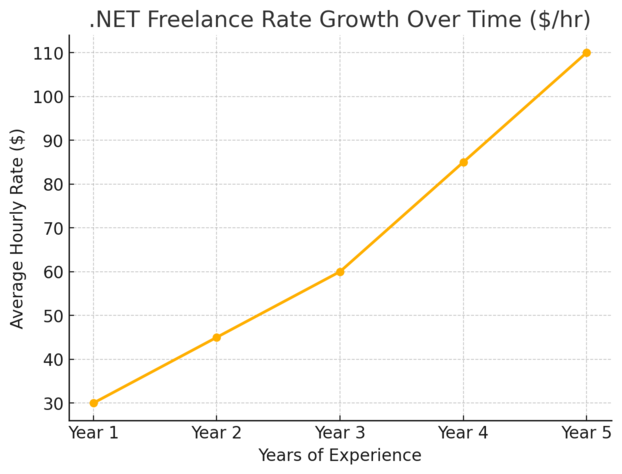
Your rates and relationships determine how sustainable your freelancing career becomes. As a freelance .NET developer, you’re not just selling code—you’re selling consistency, problem-solving, and trust.
Research Market Rates for .NET Freelancers
Rates vary by geography, experience, and project complexity. Here’s a general breakdown (as of 2025 data from Upwork and Glassdoor):
- Entry-level (0–2 years): $25–$40/hour
- Mid-level (3–5 years): $50–$80/hour
- Senior or specialist (5+ years): $90–$150/hour
You can also check Glassdoor, Arc.dev, and Codementor for current benchmarks.
I advise starting near the middle of your range and adjusting based on demand. If you’re constantly booked, it’s a clear sign to raise your rate.
Structure Your Pricing for Hourly vs. Project-Based Work
Choosing between hourly and project-based pricing depends on your client’s needs and your comfort level.
Hourly works best when:
- The project scope is unclear or evolving.
- You’re handling ongoing maintenance.
Project-based works best when:
- The scope is clearly defined (e.g., “Build an API for X system”).
- You can estimate the total effort accurately.
I’ve often used hybrid models—charging hourly for discovery and fixed for execution. It helps clients feel safe while keeping things fair for you.
Use Retainers and Maintenance Contracts for Recurring Income
The smartest freelancers don’t chase endless one-off projects—they build recurring income streams.
How to do it:
- Offer monthly retainers for tasks like monitoring, updates, or performance optimization.
- Create maintenance contracts that include small feature enhancements or bug fixes.
- Set up support packages (e.g., 10 hours/month at a fixed rate).
This gives you financial stability while clients enjoy ongoing support.
In one example, a .NET freelancer I know built a simple Azure app for a SaaS company, then signed a six-month retainer to handle updates. That one project became a steady income stream—no constant pitching required.
Pro Tip: You don’t need hundreds of clients—just a few good ones who value your reliability. Focus on building long-term relationships rather than constantly finding new work. In the freelance world, trust compounds faster than skill alone.
Use Proven Marketing Tactics to Find .NET Clients
Marketing yourself as a freelance .NET developer doesn’t mean shouting online—it means showing up in the right places, in the right way, so clients see you as the solution to their problems.
You’re not just selling code; you’re building trust through visibility, proof, and connection.
Build a Personal Website That Generates Leads
Your website is your digital storefront. It doesn’t need to be fancy—it needs to be clear, credible, and conversion-focused.
Here’s what to include:
- A focused homepage: Introduce yourself with one strong sentence, like “I help SaaS businesses scale with fast, reliable .NET applications.”
- A services page: List specific offerings—API integrations, Azure deployment, performance optimization, etc.—so clients know exactly what you do.
- Case studies and testimonials: Show measurable results with client feedback.
- A clear call-to-action: Buttons like “Schedule a Free Consultation” or “Let’s Build Something” should appear throughout the site.
I recommend using WordPress with Elementor or Framer for simplicity. Optimize for SEO with plugins like Rank Math—target terms like “freelance .NET developer” and “ASP.NET Core developer for hire.”
One extra tip: Include a “Free Technical Audit” offer. It opens conversations without clients feeling pressured to commit.
Write Technical Blog Posts That Attract Businesses
Blogging can position you as an authority and attract organic leads. You don’t need to write for developers—write for decision-makers.
Focus your content on topics like:
- “How to Migrate Legacy Systems to .NET 8 Without Downtime”
- “Why Startups Choose .NET Core for Long-Term Scalability”
- “5 Common ASP.NET Performance Issues and How to Fix Them”
Use real examples from your projects. When you explain solutions you’ve actually implemented, readers see credibility, not theory.
You can repurpose these posts as LinkedIn articles or newsletter content later. The goal is simple: become the go-to person when someone searches for .NET solutions.
Network in Developer Communities and Tech Conferences
Freelance success often comes from relationships, not job boards. Networking helps you stay visible and trusted.
Start here:
- Join .NET Foundation, Stack Overflow, and Reddit’s r/dotnet discussions.
- Attend Microsoft Build, DevIntersection, or local .NET meetups.
- Share quick insights on LinkedIn weekly—small tips like optimizing EF Core queries can spark engagement.
If you’re introverted, networking online counts. Comment on other developers’ posts, offer help, or share code snippets. Over time, that visibility compounds into referrals and collaboration offers.
Use Cold Email Outreach That Actually Gets Replies
Cold email can feel intimidating, but when done right, it’s one of the fastest ways to find clients.
How to make it work:
- Research the company and find a technical or product contact.
- Personalize your message—mention something specific about their app or stack.
- Focus on outcomes, not your skills. Example:
“I noticed your platform uses .NET Framework 4.7. I specialize in upgrading to .NET 8 with zero downtime. Would you be open to a 10-minute call?” - Keep it short, under 100 words.
- Follow up once a week (up to 3 times) if you don’t get a reply.
Tools like Hunter.io and Lemlist help automate outreach without sounding robotic.
Manage Freelance Projects Like a Professional Developer
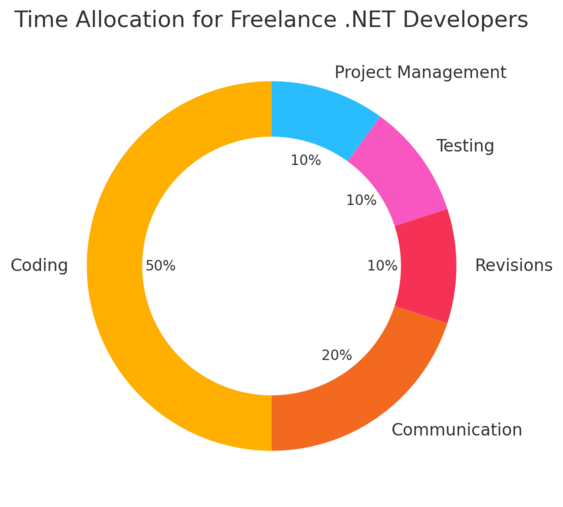
Delivering great code is only part of freelancing. Managing your projects efficiently builds reputation, trust, and repeat business.
Use Tools Like Jira, Trello, and Notion for Organization
Project management tools keep you sane—and your clients impressed.
- Jira: Ideal for large or agile projects. You can create user stories, sprints, and track issues visually.
- Trello: Perfect for solo developers. Create simple boards like “To Do / In Progress / Done.”
- Notion: Great for all-in-one use. You can combine notes, project tracking, and client documentation.
For example, I like to create a Notion workspace per client, with tabs for deliverables, meeting notes, and timelines. It saves endless back-and-forth emails and shows clients you’re organized.
Communicate Progress Clearly and Manage Expectations
The best freelancers over-communicate, not over-code. Regular updates show reliability and professionalism.
Best practices:
- Send weekly progress summaries, even for short projects.
- Use simple, non-technical language unless the client is technical.
- Confirm scope and milestones in writing before development starts.
For example:
“This week, I completed the API integration and started on the authentication module. Next week, I’ll move to testing and optimization.”
Clients love clarity. It prevents misunderstandings and strengthens trust.
Handle Revisions, Feedback, and Client Boundaries
Revisions are inevitable—how you handle them defines your reputation.
Tips to stay in control:
- Define revision limits in your contract (e.g., “Includes two rounds of revisions”).
- Always ask for consolidated feedback, not piecemeal notes.
- If changes go beyond scope, explain why it’s additional work before proceeding.
A gentle phrase that works well: “I’d be happy to include that feature—let’s review the impact on timeline and pricing.”
It keeps boundaries clear without sounding defensive.
Keep Learning and Stay Ahead in the .NET Ecosystem
The .NET landscape evolves fast. Staying updated ensures you remain valuable, competitive, and confident in your technical direction.
Stay Updated with .NET 8 and Microsoft Tech Trends
Microsoft releases major .NET updates annually. .NET 8, for example, introduced better performance, simplified hosting, and improved Blazor features.
Stay current by:
- Following the Microsoft Developer Blog.
- Watching .NET Conf sessions on YouTube.
- Subscribing to newsletters like The Morning Brew (.NET Edition).
I suggest testing new features in small side projects. For example, rebuild one of your old APIs using .NET 8 to compare speed and simplicity. It keeps your skills sharp and portfolio fresh.
Contribute to Open Source or Build Personal Projects
Open source work builds credibility faster than any resume.
Ways to start:
- Contribute bug fixes or documentation to GitHub projects (like Entity Framework Core or ASP.NET Boilerplate).
- Join discussions on issues and pull requests—it helps you learn from senior developers.
- Build a personal tool or library, such as a .NET API wrapper or reusable Blazor component.
These projects show initiative and help clients see your passion for the craft.
Invest in Courses, Certifications, and Mentorship
Continuous learning is your competitive edge.
Smart investments include:
- Microsoft Certified: .NET Developer Associate certification.
- Udemy or Pluralsight courses on advanced C# patterns or Azure architecture.
- Mentorship—find someone ahead of you who’s freelancing successfully and learn their workflow.
I advise setting aside at least 5–10 hours per month for skill upgrades. It’s one of the highest-return investments you can make.
Scale Your Freelance .NET Business for Growth
Once you have steady clients and income, it’s time to think beyond solo freelancing. Scaling allows you to earn more without working endless hours.
Transition from Freelancer to Independent Consultant
This shift happens when clients start hiring you for advice as much as implementation.
How to make that leap:
- Offer architecture reviews or performance audits as standalone services.
- Start documenting your processes to create repeatable frameworks.
- Use pricing models like day rates or value-based pricing for strategic projects.
You’ll start attracting higher-paying clients who see you as a partner, not just a developer.
Build a Small Remote Team or Subcontract Work
Once you’re fully booked, it’s smarter to delegate than to decline projects.
Start small:
- Hire other freelancers for design, frontend, or testing tasks.
- Use Slack and Trello for team coordination.
- Create SOPs (Standard Operating Procedures) for recurring tasks.
I’ve seen solo .NET developers turn into micro-agencies this way, doubling income while maintaining flexibility.
Create Digital Products or Training Services Around .NET
When your expertise is solid, you can package it into scalable products.
Ideas worth trying:
- Sell mini-courses on “.NET Core for Freelancers.”
- Build and sell reusable NuGet packages or Blazor templates.
- Offer one-on-one mentorship or consulting sessions.
It’s a natural evolution—your experience becomes an asset that earns even while you’re not coding.
Pro Tip: Think long-term. Every client relationship, project, and skill you build today compounds into authority tomorrow. A freelance .NET career isn’t a sprint—it’s a well-designed, sustainable system for freedom and growth.

I’m Juxhin, the voice behind The Justifiable.
I’ve spent 6+ years building blogs, managing affiliate campaigns, and testing the messy world of online business. Here, I cut the fluff and share the strategies that actually move the needle — so you can build income that’s sustainable, not speculative.
Related posts:
 Best Sites to Find Freelancer Web Developer Jobs Fast
 Best Places To Get Freelance React Jobs That Pay Well
 Is Freelancer Worth It: Make Good Money
 Legitimate Transcription Work From Home
 How Fiverr Affiliate Program Will Make You Tons Of Cash
 How Does Udemy Work? Your Ultimate Guide to the Online Learning Platform