
Table of Contents
Some links on The Justifiable are affiliate links, meaning we may earn a small commission at no extra cost to you. Read full disclaimer.
Freelance React work has become one of the most in-demand opportunities for developers looking to build flexible, high-paying careers.
But with so many platforms and job boards out there, where can you actually find freelance React jobs that pay well and aren’t just a race to the bottom?
This guide breaks down the best places to land quality React gigs—platforms that value skill, not just cheap labor.
Top Freelance Marketplaces for React Developers
Finding consistent, well-paying freelance React work often starts on trusted marketplaces. These platforms act as meeting points between developers and clients worldwide.
Each caters to different skill levels and project types, so choosing the right one matters more than most think.
Best Platform for Experienced React Freelancers
If you already have several projects under your belt, Toptal is one of the best platforms to consider. It’s a curated network for top freelance developers — meaning clients expect senior-level expertise and are willing to pay premium rates.
To join, you’ll go through a vetting process that tests technical skills, communication, and professionalism. Once accepted, you can expect long-term, remote React contracts that often range from $60 to $120 per hour.
Another strong contender is Gun.io, which focuses on connecting vetted developers with reliable U.S.-based companies.
I recommend Gun.io for freelancers who want to avoid endless bidding wars and prefer steady, repeat clients. The platform manages contracts, payments, and even tax documentation, freeing you up to focus on writing code.
A small tip: Focus your profile description on results, not just skills. Instead of writing “React developer with 3 years of experience,” write “Built responsive dashboards in React that reduced client support tickets by 25%.” That kind of measurable outcome gets attention.
Where Beginners Can Land Their First React Projects
If you’re just starting, Upwork and Fiverr Pro are still solid entry points — but only when approached strategically. Avoid competing on price. Instead, craft your first few offers around speed and clarity.
For instance, offer “React bug fixing within 24 hours” or “Convert Figma designs to React components fast.”
Beginners often make the mistake of applying to massive projects. Start smaller. Build quick wins and collect 5-star reviews. Once you hit five completed projects, you’ll start appearing in more searches organically.
Platforms like Freelancer.com can also help if you’re willing to work on shorter contracts. Use Upwork’s filters to target React jobs with “Entry Level” experience and budgets under $500 — these are usually clients testing the waters.
How to Create a Standout React Profile That Attracts Clients
Clients decide whether to click your profile within five seconds. Your headline, portfolio, and intro paragraph do the heavy lifting.
Here’s a quick structure that works:
- Headline Example: “Freelance React Developer | Responsive UI + API Integration Expert.”
- Intro Paragraph: Start with one sentence that clearly explains what you do. Then show proof: “I’ve helped SaaS founders turn Figma mockups into interactive React dashboards with clean code and strong UX.”
- Portfolio: Add 2–3 project links or screenshots. Even small projects count if they show your problem-solving process.
If possible, link your GitHub. Many clients won’t say it, but they do check your commits. Clean, well-commented code speaks louder than any buzzword.
Niche Job Boards That Specialize in React Roles
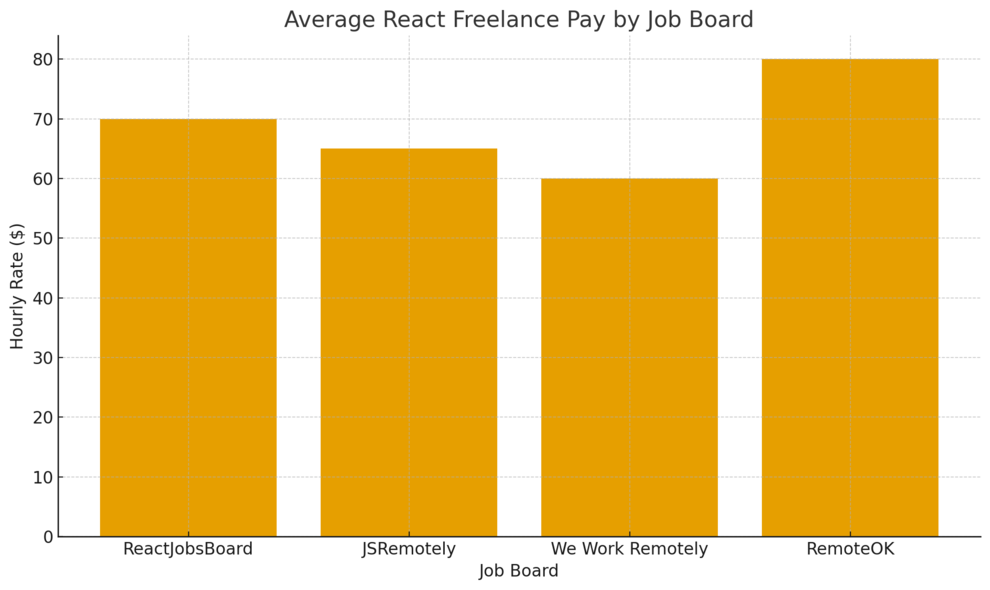
Niche job boards are like hidden gems for React developers.
Instead of competing with thousands of generalists, you’re surrounded by focused listings tailored to JavaScript and frontend frameworks.
React-Specific Job Boards With High-Paying Listings
Websites such as ReactJobsBoard.com and JSRemotely.com are perfect for React professionals seeking high-paying gigs.
They often feature contract roles from startups, SaaS companies, and digital agencies looking for quick project help or long-term part-time support.
Another underrated platform is We Work Remotely. Despite covering various tech stacks, its “Frontend Development” category is full of React-based roles. You can easily filter by “Contract” or “Freelance” to find matching projects.
One of my go-to spots is RemoteOK. It curates developer roles with tags like “React,” “Next.js,” or “Frontend.” Many listings are remote-first companies willing to pay globally competitive rates — often between $40 and $90 per hour for React specialists.
Why Niche Boards Often Offer Better Rates Than General Sites
Clients who post on niche boards already know what they need. Unlike Upwork, where some clients are still figuring things out, niche boards attract teams ready to invest in solid React talent.
Here’s what makes the difference:
- Quality over quantity: Fewer listings, but each is more targeted.
- Technical understanding: Job posters are often developers or CTOs themselves.
- Longer project durations: These are rarely one-off bug fixes — more like component library builds or dashboard interfaces.
Because of that, you’ll rarely face underpricing. It’s not uncommon to find freelance React contracts on niche boards that start at $5,000 and go upward.
How to Use Job Board Filters to Find Remote React Projects Fast
Let me share a quick filtering strategy that saves time:
- Search by keyword: Use “React,” “React.js,” or “Next.js.”
- Set job type: Choose “Contract” or “Freelance.”
- Filter by timezone: Many clients list “Flexible” or “Worldwide.”
- Save alerts: Websites like RemoteOK and ReactJobsBoard let you create instant email notifications.
I recommend setting two alerts — one for “React remote freelance” and another for “Frontend contract.” This way, you’ll catch both React-specific and adjacent roles like UI or JavaScript dev.
Remote-First Companies Hiring Freelance React Developers
Some companies are remote by design — meaning they frequently hire freelance React developers for short and long-term contracts.
If you prefer stability without giving up independence, these are worth exploring.
Trusted Companies That Regularly Hire React Contractors
Companies like Automattic (makers of WordPress.com), Toptal, Contra, and X-Team are known for consistently hiring React talent.
- X-Team: Offers long-term freelance contracts with global brands. You stay remote but work on enterprise-level projects like FOX, Coinbase, or Riot Games.
- Contra: A platform for independent professionals that partners directly with product companies. React developers here can find roles without middlemen or bidding wars.
If you want corporate-level pay with freelance flexibility, I also recommend checking Crossover.
It often lists contract positions for React developers at $60k–$100k annually, depending on performance and hours worked.
How to Approach Companies for Freelance React Work
Reaching out directly can work wonders — especially if your portfolio is solid.
Here’s a short approach:
- Find companies that already use React (you can check with tools like BuiltWith).
- Send a concise email introducing yourself. Mention a specific detail about their site or app, then explain how you could add value.
- End with a simple call to action like: “Would you be open to a short chat about frontend improvements?”
This method works because it’s personal and specific. You’re not begging for work — you’re offering insight.
Using LinkedIn and AngelList to Identify Remote React Hiring Trends
LinkedIn Jobs and AngelList (now Wellfound) are two of the best places to spot hiring patterns.
On LinkedIn, use filters like:
- Job type: “Contract” or “Freelance.”
- Keywords: “React,” “Frontend,” “Next.js.”
- Location: “Remote” or “Worldwide.”
I also suggest following startup investors and incubators on AngelList — they often post freelance needs for early MVPs. When you apply, reference their mission or product idea.
For example: “I saw you’re building a logistics dashboard — I’ve built React dashboards for SaaS platforms that handle similar data flows.”
That kind of personalized relevance instantly sets you apart from generic applicants.
Pro Tip: Build a system for tracking applications. Whether it’s Notion, Airtable, or a simple Google Sheet, keep track of who you’ve contacted, what stage you’re in, and when to follow up. Organization turns random luck into consistent freelance income.
Developer Communities and Networks That Share React Gigs
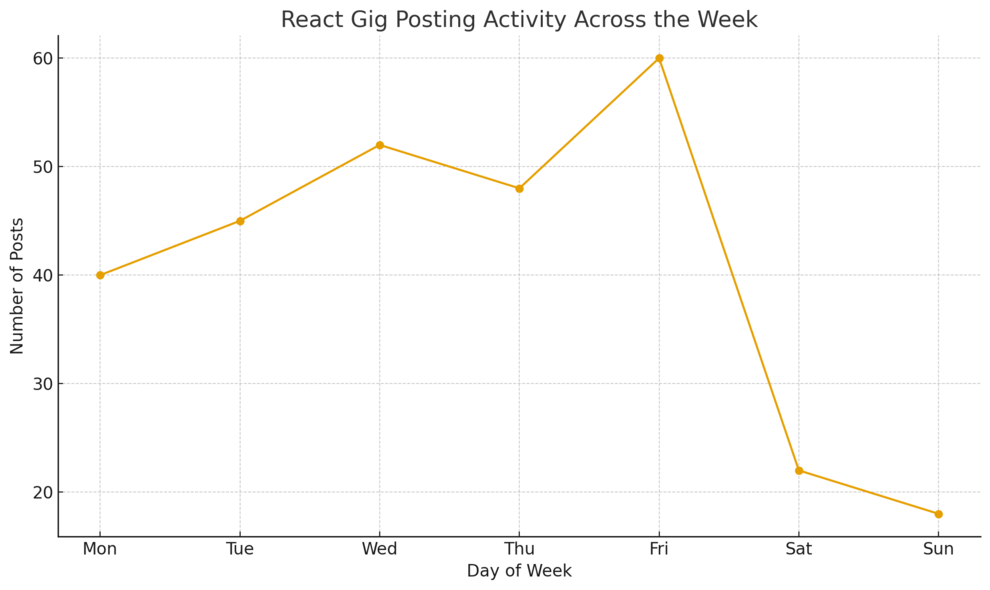
Finding high-paying freelance React opportunities isn’t just about applying through job boards.
Many skilled developers land gigs through communities, Slack groups, or open-source collaborations where real connections happen.
Online React Communities Where Freelance Jobs Are Posted Daily
Some of the best freelance React jobs never make it to Upwork or job boards—they’re shared privately in developer groups. Platforms like Reactiflux (a large Discord server for React developers) and Frontend Developers Slack are great examples.
These spaces have active job channels where new freelance projects are posted daily, often directly from hiring managers.
Other communities worth joining include Dev.to, Indie Hackers, and Hashnode.
I suggest participating beyond just job hunting—share code snippets, answer questions, or post about your latest project. That kind of visibility builds trust and often leads to direct outreach from recruiters who notice your expertise.
Example scenario: A developer I know landed a recurring React contract through a GitHub discussion thread. The client noticed his contributions to a UI library issue and reached out privately. Engagement often beats cold applications.
How to Network With Recruiters and CTOs in React Circles
Networking isn’t about spamming your portfolio—it’s about starting genuine, helpful conversations.
I recommend joining LinkedIn React groups or following React-focused hashtags like #ReactJS and #FrontendDevelopment. Comment thoughtfully on recruiter posts or CTO insights; they’ll remember you when hiring.
You can also use Twitter (X) strategically. Follow tech leads or hiring managers from startups that use React. Many post freelance roles informally before publishing official listings.
A polite DM like “Hi [Name], I saw you’re hiring for a React role—I specialize in [specific skill]. Would love to discuss how I could help.” can go further than a cold resume.
Quick tip: Attend online meetups via Meetup.com or React conferences like React Summit. Even virtual chat participation helps build name recognition in the React community.
Leveraging Open Source Contributions to Get Noticed by Clients
Open source is the quiet resume builder that works in the background 24/7. When you contribute to well-known projects—say React Query or Next.js—your GitHub profile becomes a living showcase of real-world problem-solving.
I recommend focusing on small but meaningful contributions: fixing documentation typos, improving error handling, or adding tests. These contributions show collaboration, attention to detail, and initiative—qualities clients value deeply.
Once you’ve contributed a few times, highlight it on your portfolio and LinkedIn with phrases like “Contributor to React Query – improved form handling logic.”
It gives instant credibility. Many developers I know have been hired purely from consistent GitHub visibility.
Tech-Focused Freelance Platforms With Verified React Jobs
Freelance platforms designed specifically for developers tend to filter out low-quality projects.
That means less time dealing with ghost clients and more focus on meaningful React work.
Why Vetting and Client Verification Matter for React Developers
A common frustration in freelance React work is dealing with unreliable clients—late payments, unclear specs, or ghosting after delivery.
Platforms that vet clients upfront, like Toptal and Gun.io, remove that risk. They ensure both sides are serious before introductions happen.
For React freelancers, this means you only see real projects with verified budgets. I’ve seen freelancers on Toptal consistently earn $80–$100 per hour with minimal downtime because the platform handles client qualification and contracts.
Pro insight: Even if you prefer flexibility, using one vetted platform can anchor your income while you explore other gigs independently. It’s like having one stable client while experimenting elsewhere.
Top Platforms That Match React Freelancers With Serious Clients
If you want high-trust React work, these are worth exploring:
- Toptal: Rigorous screening, high pay, long-term enterprise projects.
- Gun.io: Matches vetted U.S.-based clients with proven developers.
- Contra: Focused on independent creators and React professionals—zero bidding.
- CodementorX: Great for part-time, project-based React contracts with mentorship opportunities.
Each platform prioritizes project quality and communication. F
or instance, Gun.io assigns you a personal recruiter who understands your React experience and helps you negotiate fair rates.
Contra, on the other hand, is entirely commission-free, so you keep 100% of what you earn.
I suggest creating profiles on at least two of these. Rotate active status depending on availability—it keeps opportunities flowing without overwhelming you.
How to Pass Platform Skill Tests and Increase Your Earnings
Skill assessments can be intimidating, but they’re an opportunity to stand out. Most platforms test core React concepts like hooks, state management, and component optimization.
Here’s how to prepare effectively:
- Revisit fundamentals: Be solid on React lifecycle, context API, and modern syntax (like useEffect and useMemo).
- Practice coding challenges: Use sites like Coderbyte or LeetCode to stay sharp.
- Show project depth: If asked about a project, discuss the why, not just the what—for example, “I used React Query to reduce unnecessary API calls and improve render speed by 30%.”
Once accepted, maintain consistent communication and delivery quality. Platforms often promote freelancers who receive positive client feedback—meaning you’ll start getting premium, higher-paying invitations automatically.
Cold Outreach and Personal Branding for React Freelancers
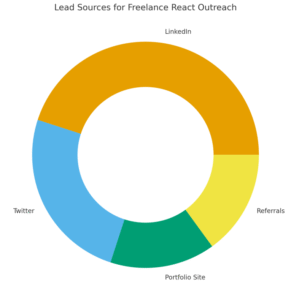
Sometimes the best freelance React jobs aren’t advertised—they’re created through personal outreach and strong online branding.
I believe this is where most freelancers miss big opportunities.
How to Pitch Your React Skills to Potential Clients
A good pitch is short, specific, and problem-focused. Instead of writing long paragraphs about yourself, identify a pain point and show a clear solution.
Here’s a quick structure:
- Personalize your greeting: Mention something about their company or project.
- Identify a problem: “I noticed your app’s dashboard could benefit from improved state handling for faster interactions.”
- Offer a solution: “I specialize in optimizing React apps for performance—recently helped a SaaS reduce load time by 40%.”
- Close with a call to action: “Would you be open to a quick 10-minute chat?”
You can use this approach in LinkedIn DMs or cold emails. The key is focusing on their outcome, not your résumé.
Using Portfolio Websites and GitHub to Build Credibility
A strong portfolio is often your best salesperson. Your website doesn’t need to be fancy, but it should instantly communicate credibility.
Include:
- A short intro (“I’m a freelance React developer helping startups build lightning-fast UIs.”)
- 3–4 case studies or mini-projects with screenshots and short problem-solution summaries.
- Links to GitHub, LinkedIn, and any published apps or demos.
GitHub adds a technical layer of proof. Even small, clean repositories showing component design or API integration demonstrate your capability better than any testimonial.
If you can, host your site using Next.js—not only does it load faster, but it’s also a subtle way to showcase your frontend expertise in action.
Email Templates That Win Freelance React Contracts
Here’s a simple yet effective cold email template you can adapt:
Subject: Helping [Company Name] Improve Frontend Performance
Hi [First Name],
I came across [Company/Product] and loved what you’re building with [specific feature]. I noticed [specific area] could benefit from smoother frontend performance or UI consistency.
I’m a freelance React developer specializing in creating fast, scalable interfaces. Recently, I helped [brief client example] reduce load time by 35%.
Would you be open to a quick chat to explore if I could help your team achieve something similar?
Best,
[Your Name]
This email works because it’s personalized, concise, and focuses on results. Track follow-ups using tools like HubSpot CRM or Mailtrack—these let you see when emails are opened and plan timely nudges.
Pro Tip: Consistency beats luck. Spend 30 minutes a day nurturing your React network—whether posting code insights on LinkedIn, contributing to a repo, or checking Discord job threads. Over time, these micro-actions compound into a steady stream of freelance React clients who trust your expertise before you even pitch.
Social Media Strategies to Find Freelance React Work
Social media isn’t just for developers sharing memes or tech opinions—it’s one of the most underused tools for landing freelance React projects.
When used intentionally, platforms like X (Twitter), Reddit, and LinkedIn can become constant sources of quality client leads.
How to Use X (Twitter) and Reddit to Source React Projects
I’ve personally seen developers get React jobs on X (formerly Twitter) just by engaging in public conversations. The secret lies in being visible and useful.
Start by following hashtags like #ReactJS, #Frontend, #WebDev, and #HiringDevelopers. These tags attract both recruiters and founders looking for help.
To make it work, don’t just scroll—interact:
- Reply to hiring tweets with short, helpful insights like “I’ve built dashboards with React Query before—happy to help!”
- Share snippets of your work or short coding threads (“5 quick React optimizations I use in every project”).
- Use visuals—screenshots of interfaces, GitHub previews, or short Loom demos of React features.
Reddit, on the other hand, thrives on authenticity. Subreddits like r/forhire, r/webdev, and r/reactjs regularly feature freelance posts.
Avoid self-promotion there—instead, engage in problem-solving discussions and DM users who mention needing React help.
I’ve seen freelancers get $1,000+ mini-projects this way.
Creating Value-Driven Content That Attracts React Clients
You don’t have to be an influencer to attract clients. You just need to share consistent, useful content. When potential clients see that you understand their pain points, they’ll reach out to you directly.
A few content types that work well:
- Mini-tutorials: Quick posts showing how you solved a React problem.
- Before/after results: Show performance improvements, like “Cut API response rendering time by 35% using React Suspense.”
- Client lessons: Without naming names, talk about project insights. For example, “One client’s React app lagged until I restructured their state management. Here’s what fixed it.”
That kind of transparency builds credibility without feeling salesy. I suggest posting once a week and engaging daily with others’ posts to keep your profile in circulation.
Building a Personal Brand That Commands Higher React Rates
A strong personal brand can easily double your earning potential as a freelance React developer. Clients pay more when they perceive you as an authority.
Start by making your profiles consistent: same photo, similar descriptions, and links to your portfolio or GitHub. Write bios that speak to results, not just skills. Example: “Helping SaaS founders build high-performance React apps that scale.”
Then, back that up with proof. Share testimonials, project screenshots, or metrics that show business impact. If a React project improved conversion rates or speed, say so.
You can even record short video walkthroughs of your work. Clients trust faces more than anonymous code. The more you show your process, the more valuable you appear—and value is what gets you higher rates.
Agencies and Talent Collectives That Hire React Freelancers
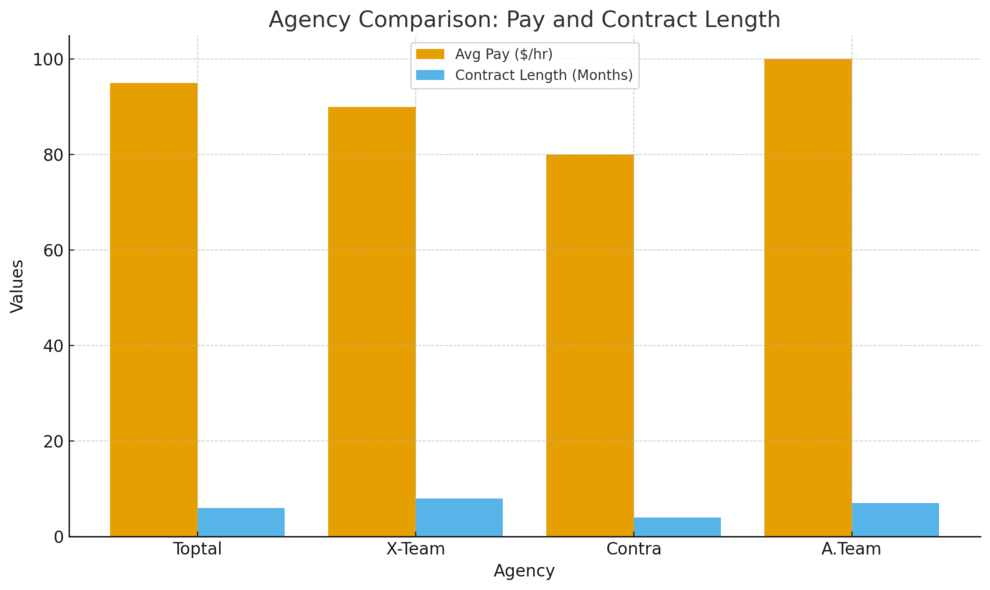
Working with agencies or collectives can give you consistent freelance React projects without spending time chasing clients.
These organizations handle client acquisition so you can focus purely on development.
How Freelance Collectives Connect React Developers With Clients
Freelance collectives like Gigster, Braintrust, and Contra function like curated communities of professionals. They match React developers with startups and enterprises based on skill fit and availability.
Unlike marketplaces, collectives often take fewer members but provide deeper support—contract management, team coordination, and direct access to vetted clients. If you enjoy working in teams and want to skip bidding, this setup can be ideal.
Collectives usually require you to pass a short technical screening or project-based test. Once approved, you’ll be listed in their network and receive direct project invitations.
Trusted Agencies That Offer Ongoing React Projects
Some agencies specialize in pairing skilled React developers with clients who need flexible help.
The most reputable ones include:
- X-Team: Focuses on long-term remote contracts with companies like Riot Games and Coinbase.
- Toptal: Offers curated access to top-tier projects with guaranteed payment.
- CrewScale: Matches experienced React developers with enterprise clients across industries.
- A.Team: Invites elite engineers to collaborate on high-impact digital products.
I suggest keeping profiles active on one or two agencies to maintain a steady stream of work while balancing independent clients.
What to Look for in Agency Contracts to Protect Your Rates
Before signing with any agency, always read the contract carefully.
Look out for:
- Rate control: Ensure you set your own rate or that the agency offers transparent pricing.
- Payment schedule: Check how and when payments are released (weekly, biweekly, or after milestones).
- Ownership rights: Confirm you retain credit for your work unless stated otherwise.
I advise negotiating for flexibility—ask to adjust your rate after six months based on project complexity or feedback. Agencies respect developers who treat freelancing like a professional partnership.
Hidden or Underrated Places to Find Freelance React Jobs
Not all freelance React jobs are visible online. Some of the most lucrative opportunities live in small communities, events, and collaborative networks where trust drives hiring decisions.
Slack Channels and Private Discord Servers With React Gigs
Many tech professionals share freelance leads in private Slack and Discord communities.
I recommend joining spaces like Reactiflux (Discord), Frontend Developers (Slack), and Work Remotely Club (Slack). These communities have active job boards that update daily, often with exclusive projects.
Once inside, don’t just lurk—interact. Offer feedback on code, share insights, or volunteer for small open-source fixes. When people see your consistency, they’ll tag you in posts when React gigs pop up.
Local and Virtual Hackathons That Lead to Paid React Work
Hackathons might seem like just coding marathons, but they’re networking goldmines. Many companies use hackathons to spot freelance talent.
Platforms like Devpost and Hackathons.com host virtual events regularly where you can showcase your React expertise to sponsors or judges.
Even if you don’t win, your submission becomes a live portfolio piece. I know developers who landed $5,000+ contracts from hackathon connections alone.
Pro tip: Choose hackathons related to your niche—like fintech or healthtech—so your projects align with real client industries.
Partnering With Designers or Product Teams for Shared Projects
If you know UI/UX designers or product managers, team up. They often need React developers to bring their designs to life. These partnerships can create steady pipelines of small projects without you ever needing to bid publicly.
Platforms like Dribbble and Behance are great for outreach. Search for designers working on web app projects and send a simple message: “I love your design style—would you be open to collaborating on React builds for future clients?”
This approach not only builds relationships but also expands your visibility into design-focused client networks.
Expert Tips to Consistently Land High-Paying React Work
Getting freelance React jobs is one thing—maintaining steady, high-paying work is another.
Long-term success depends on pricing smartly, building client trust, and managing your workload efficiently.
How to Price Your React Services Competitively but Fairly
Don’t fall into the trap of underpricing. A good starting range for experienced React freelancers is between $50 and $100 per hour, depending on project scope and complexity.
Use this formula to determine your rate:
Hourly Rate = (Desired Monthly Income + Expenses) / (Billable Hours per Month)
If you charge per project, estimate hours carefully and add 10–15% as a buffer for revisions or meetings.
I also suggest offering fixed-price options for smaller tasks like “Landing page build in React” to attract clients who prefer clarity.
Over time, as you deliver more projects and gain testimonials, increase your rate gradually—clients respect steady, justified growth.
Building Long-Term Client Relationships for Recurring React Projects
Returning clients are the secret to stable freelance income. After completing a project, always follow up to check if they need maintenance, optimization, or feature additions.
Small actions that make a big impact:
- Deliver on time and communicate proactively.
- Share performance tips post-launch (“I suggest lazy loading for faster UI rendering”).
- Send occasional check-ins, not just when pitching new work.
A satisfied client becomes your best referral engine. I’ve had clients who referred me to three new projects simply because I followed up after a few weeks.
Systems to Manage Multiple Freelance React Clients Efficiently
Managing several clients at once requires structure. Tools like Trello, ClickUp, or Notion can help you track project stages, deadlines, and payments in one place.
I recommend this simple workflow:
- Create a task board: Each column represents a project stage (Planning, Coding, Review, Completed).
- Use time tracking: Tools like Toggl or Clockify help measure productivity and bill accurately.
- Automate payments and contracts: Use Bonsai or HelloSign to handle invoicing and legal docs.
These small systems reduce stress and make you appear more professional. When clients see you run your freelance business like a well-oiled operation, they’re more likely to trust you with bigger, ongoing React work.
Pro Tip: The best freelance React developers don’t chase every opportunity—they build ecosystems where work comes to them. Whether that’s through communities, agencies, or personal branding, consistency and visibility turn sporadic gigs into a sustainable freelance career.

I’m Juxhin, the voice behind The Justifiable.
I’ve spent 6+ years building blogs, managing affiliate campaigns, and testing the messy world of online business. Here, I cut the fluff and share the strategies that actually move the needle — so you can build income that’s sustainable, not speculative.
Related posts:
 How to Become a Freelance Net Developer and Get Clients
 Python Freelance Jobs Where to Land High-Paying Projects
 Freelance Developer: How to Find the Perfect Fit for Your Project
 WordPress Freelancer: How to Hire Experts Without Overpaying
 Upwork Freelancer Tips to Avoid Scams and Wasted Money
 Freelance Data Entry Jobs You Can Start From Home Today