Table of Contents
Some links on The Justifiable are affiliate links, meaning we may earn a small commission at no extra cost to you. Read full disclaimer.
How to build a blog from scratch sounds simple until you actually sit down and try to choose a niche, pick a platform, publish your first posts, and somehow get real people to read them.
I’ve been there, and honestly, most beginners don’t fail because blogging is too hard. They fail because they start in the wrong order.
In this guide, I’ll walk you through the process step by step, from choosing your topic and setting up your site to writing posts that rank and getting your first readers faster than most new bloggers do.
Understand What Makes A Blog Worth Reading
Before you touch hosting, themes, or SEO settings, you need a clear idea of what kind of blog you are building and why someone should care.
This is where many people rush, and it usually costs them months.
Pick A Blog Direction That Solves One Clear Problem
A good blog is not just a collection of random thoughts. It is a useful resource built around a clear reader need. In my experience, the fastest-growing blogs usually help a specific person solve a specific kind of problem.
Think about it this way. “Lifestyle blog” is vague. “Simple meal prep for busy parents” is much clearer. “Personal finance” is broad. “Paying off debt on a teacher’s salary” is focused. That focus gives you a better chance of standing out, writing useful content, and showing up in search results for the right queries.
Here’s a simple way to pressure-test your idea:
- Audience: Who are you trying to help?
- Problem: What are they struggling with right now?
- Outcome: What result do they want?
- Angle: Why are you a believable guide for this topic?
Imagine you want to blog about fitness. That sounds fine, but it is crowded and unfocused. Now narrow it to “strength training for women over 40 at home.” Suddenly, your article topics, product recommendations, email ideas, and SEO keywords become much easier to plan.
I suggest choosing a niche that sits at the overlap of three things: something you know, something people actively search for, and something you can keep talking about for at least 50 articles. That last part matters more than people think. A blog built from scratch needs content momentum, not just a clever name.
I believe the best blog niche is rarely the broadest one. It is the one you can explain clearly in one sentence and keep serving better than bigger sites.
Validate Your Topic Before You Invest Time And Money
You do not need a giant business plan before you start, but you do need signs that people care. That means checking whether your niche has search demand, content gaps, and room for your point of view.
A simple validation process works well:
- Search your core topic on Google: Look at the kinds of articles already ranking.
- List 20 article ideas: If this feels impossible, the niche may be too narrow.
- Check keyword variations: Use Semrush or Ahrefs to see what people actually search for.
- Scan communities: Reddit, Facebook groups, YouTube comments, and Quora can reveal recurring questions.
- Look for monetization paths: Ads, affiliate content, digital products, consulting, or email sponsorships.
You are not looking for a niche with zero competition. That niche usually has zero demand too. You are looking for a niche where people clearly care, but the existing content is incomplete, outdated, too generic, or too hard to follow.
For many of us, the sweet spot is not “inventing” a topic. It is taking an existing topic and making it more useful, more specific, and easier to act on. That is how small blogs beat larger sites in the early stages.
Google continues to reward content that is helpful, people-first, and genuinely satisfying to readers. That means clarity, usefulness, and relevance matter more than trying to sound impressive.
Set Up The Technical Foundation The Right Way
This is the part people often overcomplicate. You do not need a perfect logo, a custom-coded design, or 27 plugins.
You need a blog that loads fast, looks trustworthy, and is easy to update.
Choose The Best Blogging Platform For Long-Term Growth
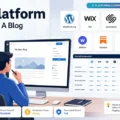
If you want the easiest path to control, SEO flexibility, and future monetization, self-hosted WordPress is still the default recommendation for most bloggers. It powers a huge portion of the web, which is one reason so many themes, plugins, tutorials, and integrations exist around it.
That does not mean it is the only option. Some creators prefer simpler publishing tools. The question is not “What is the coolest platform?” It is “What will help you publish consistently and grow without boxing you in?”
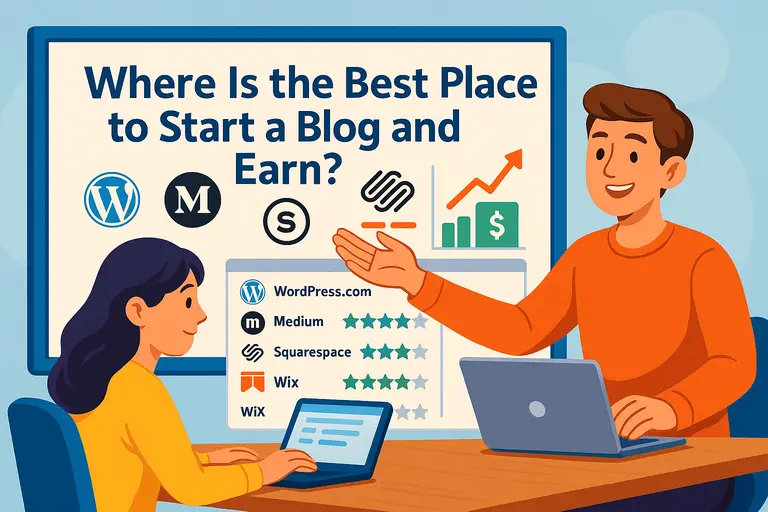
Here is a practical comparison:
| Platform | Best For | Pros | Cons |
|---|---|---|---|
| WordPress.org | Long-term blog growth | Flexible, scalable, strong SEO options | Slight learning curve |
| Ghost | Writers focused on publishing and memberships | Clean writing experience, fast | Smaller ecosystem |
| Substack | Newsletter-first creators | Simple setup, built-in email | Less ownership and design flexibility |
| Blogger | Hobby blogs | Free and easy | Limited growth potential |
| Medium | Casual publishing | Built-in audience potential | Weak brand ownership |
For most people asking how to build a blog from scratch, I recommend WordPress because it gives you control over SEO, structure, design, monetization, and analytics. If your goal is to build a real asset, not just publish occasionally, that flexibility matters.
The mistake I see all the time is choosing a platform based only on what feels easy in week one. You want a platform that still works for you in year two.
Buy Hosting, Connect A Domain, And Keep It Simple
Your domain is your blog’s address. Your hosting is the server space where your site lives. That sounds technical, but the setup today is much easier than it used to be.
A practical starter stack usually includes:
- Domain name: Short, clear, easy to spell
- Hosting plan: Reliable shared hosting is fine for a new blog
- SSL certificate: This gives you HTTPS and basic trust
- One-click CMS install: So you can launch quickly
If you are comparing hosts, these are commonly used options:
| Hosting Provider | Good Fit For | Strengths | Watchouts |
|---|---|---|---|
| Bluehost | Beginners | Easy onboarding, common starter option | Upsells during checkout |
| SiteGround | Bloggers who want strong support | Good performance, helpful dashboard | Renewal pricing can jump |
| Hostinger | Budget-conscious starters | Low entry pricing, simple setup | Lower-tier plans have limits |
I suggest spending more energy on choosing a good domain than choosing a “perfect” host. A clean domain is easier to remember, easier to trust, and easier to brand across email and social channels.
Keep the name broad enough to grow with you. “sarahscrockpotdinners.com” works if you only ever want to write about crockpot recipes. “homecookedweeknights.com” gives you more room. That flexibility matters when your blog evolves, and it usually does.
Install A Lightweight Theme And Only Essential Plugins
New bloggers often make the same mistake here: they build a site that looks fancy but feels slow, cluttered, and hard to use. A blog does not need to be flashy. It needs to be readable, clean, and fast.
Start with a lightweight theme and keep your plugin stack tight. Every extra plugin adds complexity, and sometimes performance issues too.
Your core plugin categories usually look like this:
- SEO plugin: Rank Math is a common choice for titles, metadata, schema, and indexing basics.
- Caching or performance plugin: WP Rocket can help improve load times if your site starts getting heavier.
- Forms plugin: Needed for contact pages or lead capture.
- Backup plugin: Important even for small sites.
- Security plugin: Helpful, but do not pile on multiple overlapping tools.
I recommend designing your homepage and blog layout around one question: can a new visitor instantly understand what this site helps with? If not, simplify it.
A strong beginner layout usually includes a clear headline, a short explanation of who the blog is for, a few recent or featured posts, and a simple navigation menu. That is enough.
Speed matters more than many beginners realize. Even small improvements in load time can improve engagement and conversions. More importantly, a fast site creates a better first impression, and that affects whether people stay or bounce.
Build A Content Plan Before You Publish Random Posts
A blog with no content strategy usually becomes a digital junk drawer. You do not need a huge editorial team, but you do need a clear map.
Create Core Content Buckets That Support Search Intent
Content buckets are your repeatable topic categories. They help you organize ideas, avoid repetition, and build topical authority over time. If you skip this step, your blog often ends up with scattered posts that do not reinforce each other.
Let me break it down with an example. Imagine you are starting a gardening blog. Your content buckets might look like this:
- Beginner guides: Starting seeds, choosing soil, basic tools
- Problem solving: Yellow leaves, pests, overwatering
- Seasonal content: Spring planting, fall cleanup, winter prep
- Crop-specific posts: Tomatoes, herbs, peppers, cucumbers
- Product-driven content: Grow lights, raised beds, irrigation kits
Each bucket reflects a different type of reader intent. Some readers want education. Others want troubleshooting. Others are ready to compare products. That mix matters because search traffic is not one-dimensional.
For a new blog, I usually suggest building around three types of articles first:
- Foundational tutorials
- Specific problem-solving posts
- Comparison or decision-making content
This creates a healthy mix of evergreen traffic opportunities and practical reader value. It also gives you more chances to internally link posts together, which helps both usability and SEO.
A smart content plan is not about publishing everything. It is about publishing the right things in the right order.
Research Keywords Like A Blogger, Not Like A Spreadsheet Robot
Keyword research matters, but many beginners turn it into a sterile data exercise. The goal is not just to collect phrases. The goal is to understand what readers actually want when they type something into Google.
Start by identifying one main topic, then branch into supporting queries. If your blog is about home workouts, a primary article might target “beginner home workout plan.” Related posts could include “best dumbbells for small spaces,” “how often should beginners work out,” and “home workout mistakes.”
When evaluating keywords, pay attention to:
- Search intent: Is the user looking to learn, compare, buy, or fix something?
- SERP quality: Are the top-ranking articles weak, outdated, or generic?
- Keyword difficulty: Can a newer blog realistically compete?
- Content angle: Can you make the article more useful than what exists now?
I advise beginners to look for lower-competition, longer-tail phrases first. They are often less glamorous, but they are more realistic and more targeted. Ranking for “best trail running shoes for beginners with flat feet” is much easier than ranking for “running shoes.”
You can use Ahrefs or Semrush for deeper research, but even Google’s own autocomplete, related searches, and People Also Ask boxes are surprisingly useful.
The real win is learning to hear the question behind the keyword. That is where better content comes from.
Plan Your First 10 To 15 Posts In A Strategic Order
This step can save you months. Instead of publishing whatever pops into your head, sequence your first posts so each one strengthens the next.
A strong early publishing order often looks like this:
- Post 1: A broad beginner guide
- Post 2: A common problem-solving article
- Post 3: A practical checklist or tutorial
- Post 4: A product comparison or recommendation
- Post 5: A myth-busting or mistakes article
- Posts 6–10: Supporting questions linked back to your main guides
For example, if you are building a coffee blog, your first cluster could look like this:
- How to make pour-over coffee at home
- Common pour-over mistakes beginners make
- Best kettles for pour-over coffee
- How to grind coffee correctly
- French press vs pour-over for beginners
Now your blog starts to look like a real resource instead of a random collection of posts. That structure also creates obvious internal linking opportunities, which helps visitors explore and helps search engines understand your expertise.
In my experience, this is one of the biggest differences between blogs that gain traction and blogs that stay stuck. The successful ones do not just publish more. They publish with a system.
Write Blog Posts That People Actually Want To Read
Traffic does not come from publishing “content.” It comes from publishing genuinely useful pages that meet search intent and keep people engaged.
Use A Reader-First Structure That Also Supports SEO
The best blog posts are easy to skim but deep enough to satisfy the query. That balance matters. If your post is too thin, it will not help enough. If it is too bloated, people leave halfway through.
A reliable structure for most posts looks like this:
- Clear promise in the title: Tell the reader exactly what they will get
- Short opening hook: Confirm they are in the right place
- Logical headings: Break the topic into steps or themes
- Examples and specifics: Show, do not just tell
- Quick wins: Help the reader make progress fast
- Conclusion with next step: Do not just end abruptly
Google’s documentation has long emphasized helping users and making content easy to understand. That aligns with what real readers want too. Nobody opens a blog post hoping to read padded paragraphs that say nothing.
When writing, ask yourself three questions:
- What is the reader trying to do?
- What might confuse them?
- What practical detail would make this easier?
Imagine someone searches “how to build a blog from scratch.” They are not looking for a vague essay about creativity. They want setup steps, platform choices, content planning, beginner mistakes, and ways to get traffic. Give them the answer they hoped to find when they clicked.
That is SEO in plain English. Serve the search intent better than the other pages do.
Make Your Posts More Credible With Examples And Specifics
Generic advice is forgettable. Specific advice sticks. If you want your blog to feel trustworthy, include examples, realistic scenarios, metrics, screenshots later on, and practical details that show you understand the work.
Here is a simple example. Instead of saying, “Write a strong headline,” say, “A headline like ‘How To Start Composting In A Small Apartment’ is clearer and stronger than ‘Composting Tips’ because it identifies the audience, action, and setting.”
The same goes for recommendations. If you say site speed matters, explain why. If you say internal linking matters, show what it looks like. If you say long-tail keywords are easier, give an example.
Try using these credibility boosters inside your posts:
- Mini scenarios: “Imagine you run a small Etsy shop and want your blog to bring in gift-buying traffic before the holidays.”
- Before-and-after framing: Weak topic vs targeted topic
- Short process explanations: Show how the outcome happens
- Simple metrics: Click-through rate, load speed, email signup rate, time on page
When I review underperforming blogs, the issue is rarely a total lack of effort. Usually, the advice is just too vague. The writer knows what they mean, but the reader still has to guess how to apply it.
Your job is to remove that guesswork.
Publish On A Consistent Schedule Without Burning Out
Consistency matters, but consistency does not mean posting daily until you resent your own blog. It means choosing a pace you can sustain long enough to build momentum.
For a new blog, one strong post per week is often enough. Two is great if you can maintain quality. What matters is building a publishing habit and giving each post enough depth to deserve attention.
A simple weekly system might look like this:
- Day 1: Keyword research and outline
- Day 2: Draft the article
- Day 3: Edit, format, optimize, publish
- Day 4: Share, link internally, and update older posts
This is where many bloggers get trapped by perfectionism. They keep tweaking the logo, changing fonts, or rebuilding the homepage while the blog itself has three articles. That is not growth. That is productive procrastination.
I suggest focusing on publishing enough useful content to create a real footprint. Once you have 10 to 20 solid articles, your blog starts to feel more trustworthy to both readers and search engines. That is when momentum gets easier.
Get Your First Readers Faster With Smart Promotion
Publishing is only half the job. If nobody sees the post, it cannot help anyone. The good news is that early blog promotion does not have to be complicated.
Set Up Basic SEO, Indexing, And Performance Signals
A new blog should make it easy for search engines to crawl, understand, and index its pages. This does not require advanced technical SEO, but the basics matter a lot.
Your early checklist should include:
- Submit your sitemap: Use Google Search Console so Google can discover your pages faster.
- Write useful title tags and meta descriptions: These affect click appeal in search results.
- Use clean URLs: Short, readable slugs are better than cluttered ones.
- Add internal links: Help users and search engines move through related content.
- Compress images: Heavy image files quietly slow your site down.
- Check mobile experience: Many first-time visitors will come from phones.
A simple rule I like is this: every post should be easy to understand in three seconds. The title should be clear. The intro should confirm relevance. The structure should be obvious.
Search visibility usually takes time, but indexing issues, thin pages, or technical clutter can slow things down even more. That is why getting these basics right early is worth it.
Also, do not panic if your first post does not rank in a week. New sites need time, consistency, and enough content to build trust. Early traffic often comes from a mix of search, communities, referrals, and direct sharing.
Use Social, Communities, And Email To Get Early Traffic
Search traffic is powerful, but it is not your only path. Early on, communities and direct distribution can help you get your first real readers much faster.
Here is where I would start:
- Pinterest: Strong for visual niches like recipes, home decor, DIY, travel, and parenting
- Facebook groups: Useful if you genuinely participate and do not spam links
- Reddit: Powerful for niche communities, but only if your content truly answers the question
- Email list: Small at first, but one of the best long-term traffic assets you can build
For email capture, even a simple freebie can help. A checklist, template, short guide, or printable resource is often enough. If you want a straightforward beginner email platform, Mailchimp is commonly used.
For visuals, especially featured images, Pinterest graphics, and content upgrades, Canva is useful because it lowers the design barrier for non-designers.
Imagine you publish a post on “small balcony herb garden ideas.” That article could bring search traffic later, but right now you could also create a Pinterest pin, answer a related Reddit thread, and send the post to a tiny email list of 27 subscribers. That still counts. Those early readers are how momentum begins.
Build Internal Links That Turn One Reader Into Three Pageviews
Internal linking is one of the most underused growth levers for new bloggers. It helps search engines understand how your content fits together, but just as importantly, it helps readers keep exploring.
A good internal link does not feel forced. It appears exactly where the reader naturally needs the next step.
For example:
- A beginner guide can link to a tools comparison
- A product roundup can link to a setup tutorial
- A troubleshooting article can link back to the foundational guide
- A checklist can link to a deeper how-to resource
This creates content clusters. Over time, clusters make your blog feel more complete and more authoritative.
Let’s say your blog is about freelancing. You publish “How To Start Freelancing With No Experience.” Inside that post, you link to “How To Create A Simple Portfolio,” “Best Invoicing Tools For Freelancers,” and “How To Find Your First Client.” Now one visitor can move through a logical path instead of leaving after one page.
That improves usability, helps distribute authority across pages, and often lifts engagement metrics as your site grows. For a new blog, that kind of compounding matters a lot.
Avoid The Mistakes That Keep New Blogs Invisible
Most blogs do not fail because blogging is dead. They fail because the fundamentals are weak and the owner quits before the compounding starts.
Stop Writing Broad Topics You Cannot Realistically Rank For
This is one of the biggest beginner traps. You publish articles like “Best Workout Tips” or “How To Save Money,” then wonder why nothing happens. The problem is not effort. The problem is that those topics are too broad for a new site.
Broad keywords usually have three problems:
- Huge competition
- Unclear intent
- Weak differentiation
A newer blog needs sharper angles. Instead of “meal prep ideas,” try “high-protein meal prep for college students without a microwave.” Instead of “SEO tips,” try “on-page SEO checklist for small local business blogs.”
The narrower version has lower competition and clearer relevance. It also tends to attract readers who are more likely to trust you because the content feels written for them.
I recommend using this formula often: Audience + situation + outcome. It is not magic, but it does force clarity. And clarity is usually what makes content more rankable and more helpful.
Do Not Chase Design Perfection Before Content Quality
I say this with love because I have watched this happen too many times. Some people spend six weeks adjusting fonts, colors, and homepage blocks before publishing their fourth article. That feels productive, but it delays the thing that actually grows a blog.
Readers come for answers, not clever hover effects.
Yes, design matters. Trust matters too. But once your blog looks clean, readable, and functional, content quality becomes the main lever. That means:
- Better topic selection
- Better outlines
- Better examples
- Better clarity
- Better updates over time
A polished site with five weak articles is still weak. A simple site with 30 deeply useful articles has real potential.
I suggest giving yourself one design week, then moving into publishing mode. You can improve branding gradually. In fact, you usually should, because your voice and audience become clearer once you have written enough content.
Measure What Matters Instead Of Guessing
A surprising number of bloggers publish for months without checking what is working. They rely on feelings instead of data. That makes improvement much slower than it needs to be.
You do not need enterprise-level analytics, but you do need a few key signals:
| Metric | Why It Matters | Early Goal |
|---|---|---|
| Indexed pages | Shows whether content is getting discovered | Make sure new posts appear in search |
| Click-through rate | Reveals if titles and descriptions attract clicks | Improve weak snippets |
| Time on page | Suggests whether readers engage | Look for stronger introductions and structure |
| Internal pageviews | Shows content flow between posts | Increase relevant internal links |
| Email signups | Measures reader trust and repeat interest | Add stronger opt-ins and lead magnets |
Review your data monthly. Look for posts that are getting impressions but few clicks. Those often need better titles. Look for posts with traffic but weak engagement. Those may need stronger formatting, examples, or internal links.
Growth gets easier when you stop guessing and start observing patterns.
Scale Your Blog Into A Real Asset
Once you have the basics working, the next step is improving what already exists and building systems that make growth less chaotic.
Update Existing Posts Before Writing Endless New Ones
Many bloggers are addicted to publishing new content because it feels fresh. But updates are often where real gains happen. A post that already has impressions or early rankings may respond quickly to a better intro, stronger subheadings, fresher examples, or a sharper title.
Here is a smart update routine:
- Refresh intros: Match reader intent more clearly
- Improve headings: Make the structure easier to scan
- Add examples: Increase usefulness and trust
- Strengthen internal links: Push readers deeper into the site
- Expand weak sections: Cover missing questions
- Improve snippets: Rewrite title tags and meta descriptions
Let’s say one of your posts sits around position 11 for a useful keyword. That is frustrating, but it is also an opportunity. With better formatting, more specific examples, improved topical coverage, and a stronger click-worthy title, that page may move much faster than a brand-new article would.
I advise treating your blog like a library, not a social feed. Good pages are assets. They deserve maintenance.
Add Monetization Only After The Reader Experience Works
You can monetize early, but I believe the smartest blogs earn because they are useful first, not because every paragraph is trying to sell something.
Common blog monetization options include:
- Affiliate content
- Display ads
- Sponsored content
- Digital products
- Services or consulting
- Memberships or paid newsletters
The right timing depends on your niche and traffic, but a good rule is this: if your content does not yet solve problems well, adding monetization will just make the weakness more obvious.
For example, if you are writing product comparison posts, affiliate links can make sense. If you are teaching a skill, a template or mini course may fit naturally. If your readers want ongoing help, a membership could work better later on.
The best monetization feels like the next logical step in helping the reader, not an awkward detour. That is what creates both trust and revenue over time.
Build Repeatable Systems So The Blog Keeps Growing
At some point, growth becomes less about hustle and more about systems. You stop reinventing the wheel every time you publish.
A repeatable blogging system usually includes:
- Topic pipeline: A running list of validated article ideas
- Content template: A default article structure you can adapt quickly
- Optimization checklist: Titles, links, images, SEO basics, CTAs
- Update calendar: Monthly review of old content
- Promotion workflow: Search, email, communities, visual assets
This is where blogging starts to feel less random and more like a real publishing business.
Imagine you have 40 articles live. Without systems, managing them becomes messy. With systems, you can see what to update, what to write next, what is earning, and where readers are dropping off.
That is the long game behind how to build a blog from scratch successfully. You are not just launching pages. You are building a content engine that gets smarter, more visible, and more valuable over time.
Final Thoughts
If you want the honest answer, how to build a blog from scratch is not really about installing software. It is about building something useful enough that people want to read it, share it, and come back to it.
Start with a focused niche. Set up a simple, fast site. Plan your first content cluster before you publish random posts. Write with real examples and clear intent. Then promote your work like it deserves to be seen.
You do not need to do everything at once. You just need to do the right things in the right order. That is how small blogs start looking serious, and how serious blogs start getting readers.

I’m Juxhin, the voice behind The Justifiable.
I’ve spent 6+ years building blogs, managing affiliate campaigns, and testing the messy world of online business. Here, I cut the fluff and share the strategies that actually move the needle — so you can build income that’s sustainable, not speculative.