
Table of Contents
Some links on The Justifiable are affiliate links, meaning we may earn a small commission at no extra cost to you. Read full disclaimer.
Is a personal blog still worth starting in 2026? I believe yes, and not just for nostalgia. Social media can absolutely help you grow faster, meet people, and test ideas, but a blog gives you something those platforms never fully will: control.
You own the archive, shape the experience, build search traffic, and create a home for your best thinking.
If you’re wondering whether starting a blog is still smart when everyone is posting on TikTok, Instagram, and LinkedIn, the real answer is this: social media is useful, but it is rarely enough on its own.
What A Personal Blog Actually Gives You Today
A personal blog is not just a place to “write online.” It is your home base, your searchable archive, and often the one platform you can keep building no matter what happens to the latest algorithm.
Your Blog Is An Owned Asset, Not Borrowed Reach
Social media is great for distribution, but it is rented land. Your reach can drop overnight because a platform changes priorities, pushes a new format, or decides your audience should see more ads and fewer creators. That is the part many people learn the hard way.
A blog works differently. You publish on a property you control. Your posts can rank in search, get shared in newsletters, bring in links, and keep working months or even years after you hit publish. A good social post can spike for 24 hours. A good blog post can quietly bring the right readers for three years.
That difference matters more now because discovery is fragmented. Some people find creators on social media. Others search Google. Others find recommendations in AI tools, communities, email newsletters, and YouTube. A blog helps you show up across more of those paths because it gives your ideas a stable place to live.
I suggest thinking about it this way: social media gets attention, but a blog stores trust. If someone likes one of your posts on Instagram, that is nice. If they read three articles on your site, join your email list, and remember your name, that is momentum.
I would never build an online presence on platforms I do not control alone. Social media can introduce you, but your blog is where people actually get to know you.
A Blog Helps You Build Depth, Not Just Visibility
Most social platforms reward speed, simplicity, and repetition. That is useful when you want reach. It is not always useful when you want authority.
A personal blog lets you explain what you really mean. You can show your thinking, write a tutorial, tell a story, share screenshots, compare options, and answer objections in one place. That is almost impossible to do well in a short caption or a 45-second clip.
This is why blogs still matter for people who want to become known for something specific. If you are a designer, a personal blog can become your library of case studies and opinions. If you are a coach, it can answer questions people ask before they buy. If you are changing careers, it can show how you think, not just what you post.
From what I’ve seen, the internet is getting noisier but not necessarily deeper. That creates an opportunity. If most creators are chasing short-term attention, the person who explains things clearly and consistently in long-form stands out.
That does not mean every post has to be 3,000 words. It means your blog gives you room to say something real. That room is still valuable.
Why Social Media Alone Usually Leaves Gaps
Social media can absolutely work if your goal is fast attention, casual community, or creator-style visibility. But it usually leaves four big gaps.
- Search gap: Most social posts are hard to find later unless someone already knows your account.
- Context gap: A short post rarely answers a full question from start to finish.
- Conversion gap: It is harder to move someone from casual viewer to subscriber, client, or customer.
- Durability gap: Content often fades quickly unless it keeps getting boosted.
A blog fills those gaps. Someone can search for a question, land on your article, read your explanation, and take the next step in one session. That is a very different journey from hoping they watch a Reel, remember your username, and come back later.
This is also why many smart creators now use social media as the top of the funnel and their blog or newsletter as the real engine underneath. Short-form creates the first touch. Long-form builds the relationship.
So yes, social media is powerful. But in most cases, it is more powerful when it points to a blog than when it replaces one.
How Blogs And Social Media Really Work Together
You do not need to choose one or the other. In practice, the strongest personal brands usually combine both, but they use each channel for a different job.
Social Media Is Distribution, Your Blog Is The Destination
Here is the simplest model I recommend: use social media to get discovered and use your blog to deepen the relationship.
That means your TikTok, Instagram, LinkedIn, YouTube, or Pinterest content should spark curiosity. It should make someone think, “I want more of this.” Your blog is where they go when they want the full answer, your framework, your story, or your process.
A useful way to split the roles looks like this:
| Channel | Best Use | Weakness |
|---|---|---|
| Social media | Reach, testing ideas, conversation, fast feedback | Shallow context, weak shelf life |
| Blog | Search traffic, trust, authority, conversion | Slower to grow at first |
| Email list | Direct relationship, repeat traffic, offers | Needs something valuable to send |
That setup is powerful because each piece supports the others. A blog post can become five social posts. A social post can bring readers back to a blog article. A blog article can lead to an email signup. An email can bring people back to your newest post.
This is how smaller creators compete now. Not by trying to beat big accounts at raw attention, but by building an ecosystem where every piece of content has a job.
In my experience, this removes a lot of pressure. You stop asking one platform to do everything.
Blogging Makes Your Content Easier To Repurpose
One underrated reason to start a personal blog is that it gives you source material. Instead of sitting down every day asking, “What do I post today?” you can pull from your own articles.
One blog post can become:
- A short LinkedIn post with one insight
- An Instagram carousel with 5 takeaways
- A TikTok talking-head script
- A Pinterest pin that points to the article
- A newsletter edition with a personal angle
- A YouTube outline for a deeper video
This is a much calmer way to create. You are not inventing content from scratch every time. You are building once, then adapting.
Recent marketing data keeps pointing in the same direction: blogs are still one of the content formats marketers invest in because they support search, lead generation, and repurposing better than most short-form assets. Even when short-form video grabs more immediate attention, long-form written content often does the heavy lifting after that initial discovery.
That is why I do not see blogging and social media as rivals. I see blogging as the content backbone and social media as the distribution layer.
The Best Strategy Is Usually “Blog First, Social Second”
If you are busy, this one shift can save you a lot of wasted effort.
Instead of starting with random social posts, start with one useful blog article each week or every two weeks. Then break it apart. Pull out the strongest line, the most surprising example, the common mistake, and the contrarian opinion. Those become your social content.
This works because blog writing forces clarity. You have to think through the argument, the steps, and the examples. Once that is done, social content gets easier and stronger.
Here is a simple workflow:
- Pick one question your audience keeps asking.
- Write a blog post that answers it fully.
- Pull 5 to 10 smaller content angles from that post.
- Post those angles on social platforms where your audience already spends time.
- Link interested people back to the full article or your email signup.
That process is slower than posting random hot takes, but it compounds better. It also creates a body of work you can point to later.
If you want a presence that still makes sense two years from now, this is the model I would choose.
When Starting A Personal Blog Is Absolutely Worth It
Not every online goal needs a blog. But for a lot of people, a personal blog still makes a ton of sense, especially when you care about long-term visibility and trust.
It Is Worth It If You Want Search Traffic And Evergreen Reach
This is the biggest reason blogs still matter. Search traffic is different from social traffic because the person is already looking for something specific. They have intent.
If someone searches “how to start freelance copywriting” or “best budget home gym setup,” they are not casually scrolling. They want help now. A well-written blog post can meet that need in a way a short social post usually cannot.
That kind of traffic is also evergreen. A post you publish today can keep bringing readers months later if the topic stays relevant and you update it occasionally. Social content, by comparison, often fades quickly unless the platform keeps surfacing it.
I believe this is where blogging still has a huge edge. It captures demand that already exists instead of only trying to manufacture attention in a crowded feed.
A practical example: Imagine you are a nutrition coach. A Reel about high-protein snacks might get views this week. But a blog post on “high-protein breakfast ideas for busy professionals” can rank, get bookmarked, and convert readers into email subscribers over time. Same topic, different lifespan.
If your niche has searchable questions, a blog is still one of the smartest assets you can build.
It Is Worth It If You Want To Sell Services, Products, Or Expertise
Blogs are especially valuable when money enters the picture. If you want to sell coaching, freelance services, consulting, digital products, courses, speaking, or even physical products, a blog makes your offer easier to trust.
Why? Because it pre-sells your expertise.
A strong article can answer objections before a sales call. It can show your process before someone asks. It can rank for problem-aware keywords that bring in people who are already close to acting.
This works for personal brands and businesses. A freelance designer can write articles that attract better-fit clients. A consultant can publish breakdowns that show strategic thinking. A creator can use a blog to support sponsorships, memberships, and products without depending on algorithmic reach alone.
And if you ever add a shop, a booking page, or a lead magnet, your blog becomes the bridge between content and revenue.
For creators selling something, I usually recommend building on a platform that can grow with you. That could mean WordPress.com for flexibility, Ghost for a cleaner publishing-first setup, Substack or Beehiiv if newsletter-led growth is central, or even Shopify if content supports ecommerce.
The right tool matters less than the principle: your content should support your business, not just your visibility.
It Is Worth It If You Want A Stronger Personal Brand
A real personal brand is not just a recognizable profile picture. It is a pattern. People start associating you with a certain perspective, way of explaining things, and type of value.
A blog helps create that pattern because it lets your ideas stack. One good article is helpful. Twenty good articles create a body of work. That body of work becomes proof.
This matters for job seekers, founders, creators, and independent professionals. When someone looks you up, what do they find? A few scattered social profiles, or a clear body of thought that shows what you believe and how you solve problems?
That difference can shape opportunities. I have seen people get podcast invites, inbound leads, partnerships, and speaking opportunities simply because their blog made them easier to understand and trust.
If you want people to remember what you stand for, write in a place where your best ideas can live longer than a 24-hour content cycle.
A blog is not the only way to build a personal brand, but it is one of the best ways to build one with depth.
When Social Media Might Be Enough On Its Own
To be fair, there are cases where a personal blog is not the best first move. Sometimes social-first is enough, at least for the season you are in.
Social Media May Be Enough If Your Goal Is Speed And Testing
If you are still figuring out your niche, your offer, or your voice, social media can be a faster feedback loop. You can test ideas quickly, see what gets attention, and notice what people ask in comments and DMs.
That is useful. I would not ignore it.
For example, if you are a fitness coach just starting out, posting simple training tips on TikTok or Instagram may help you learn what resonates before you commit to deeper written content. If you are in a highly visual niche like fashion, food, or travel, short-form content may create momentum faster at the beginning.
But fast feedback and long-term ownership are not the same thing. Social can tell you what catches attention. A blog helps you build around what deserves to last.
So yes, social media can be enough for testing. It is usually weaker as your only long-term foundation.
Social Media May Be Enough If You Thrive In Video Or Community-First Formats
Some people are naturally better on camera than on the page. That is real, and it matters.
If your strength is teaching through video, live interaction, or personality-led storytelling, then platforms like YouTube or even LinkedIn video may drive stronger results than forcing yourself to publish long articles you hate writing. A creator who can clearly explain something on video should use that strength.
The same applies if your business runs mostly on referrals, DMs, or community engagement rather than search. In those cases, social platforms can carry more weight.
Still, I would be careful about treating that as an excuse to avoid all long-form content. Even strong video creators benefit from having a simple site, a few cornerstone articles, or a newsletter archive that makes their work easier to search and reference.
A blog does not have to be your main channel to be worth having. Sometimes it just needs to exist as the place that supports everything else.
The Risk Of Going Social-Only Is Fragility
Here is the uncomfortable truth: social-only businesses can look strong right until something changes.
Your views dip. A platform pushes a new format. Your account gets restricted. Your niche gets crowded. Referral traffic falls. Suddenly the thing that worked last year does not work the same way now.
That fragility is the main reason I still favor having a blog or site underneath your social presence. It gives you resilience.
This matters even more now because audience behavior shifts quickly. People move between platforms. Discovery habits change. AI tools and search experiences keep evolving. If your audience cannot easily find your best work outside a feed, you are more exposed than you think.
So while social media may be enough for some creators in the short term, I rarely think it is the strongest long-term setup by itself.
How To Start A Personal Blog Without Making It Complicated
One reason people delay blogging is that they picture a huge technical project. It does not need to be that way. A personal blog can start lean.
Pick The Right Platform For The Way You Want To Grow
You do not need the perfect platform. You need a platform that matches your current goals.
Here is a simple comparison:
| Platform | Best For | Tradeoff |
|---|---|---|
| WordPress.com | Flexibility, blogging, long-term control | More setup choices |
| Substack | Newsletter-first creators | Less site customization |
| Ghost | Clean publishing plus memberships | Smaller ecosystem |
| Medium | Fast start, built-in reading network | Less ownership |
| Wix | Simplicity and all-in-one setup | Less publishing depth |
| Squarespace | Design-led personal sites | Less flexible for content-heavy growth |
My advice is simple. If you want a real long-term content asset, start where you can publish consistently and still grow later. Do not over-optimize this step.
If writing and email are your core model, Substack or Beehiiv can make sense. If you want broader site flexibility, WordPress is still the safest bet for many people. If you care more about a polished portfolio feel, Squarespace or Wix may be enough.
Choose one and move.
Publish Cornerstone Content Before You Worry About Volume
Most people start with random posts. I think that is a mistake.
Start with 3 to 5 cornerstone articles that answer the main questions your audience, clients, or future readers care about. These should be the pieces you want to be known for.
A simple set might include:
- Your core beginner guide
- A mistakes article
- A tools or resources article
- A personal story or philosophy article
- A case study or process breakdown
This gives your blog shape right away. When someone visits, they see depth instead of a blank archive with two diary-style posts.
For example, if your blog is about freelancing, your first five posts could cover getting first clients, pricing, outreach mistakes, your service process, and the tools you actually use. That gives your site a clear identity from day one.
This approach also helps with confidence. You stop feeling like you are “starting a blog” in the abstract and start building an actual useful resource.
Add Basic Tracking And Email Capture Early
You do not need a giant analytics stack. But you should know what people read and give them a way to come back.
At minimum, set up Google Search Console so you can see which queries bring impressions and clicks. Add Google Analytics 4 if you want a broader picture of traffic behavior. Then connect a simple email tool like Kit (formerly ConvertKit) or Aweber so readers can subscribe.
This is important because traffic without retention is slippery. A blog starts compounding faster when your best readers can come back directly.
Keep the signup offer simple. It could be “weekly notes,” “new posts by email,” or a small free resource that fits your topic. No need to overbuild.
The goal at this stage is not perfection. It is basic signal collection:
- What are people reading?
- What are they searching?
- What makes them subscribe?
Once you know that, your next posts get much easier to plan.
Common Mistakes That Make Blogging Feel “Dead”
A lot of people conclude blogging no longer works when the real issue is that the approach was weak from the start. The channel is not dead. The expectations are often off.
Posting Like It Is 2016 Instead Of 2026
Old-school blogging advice still floats around everywhere: publish constantly, chase word count for its own sake, and write generic posts on broad topics. That is not enough anymore.
Today, better blogging usually means tighter positioning, clearer opinions, stronger structure, and content that genuinely solves a problem. It also means understanding that your blog is part of a wider system that may include search, social, email, partnerships, and community.
Recent survey data from marketers shows a useful pattern: blogging still produces results, but not usually from shallow, rushed posts. The stronger outcomes tend to come from better-researched, more useful content and consistent distribution.
So if blogging feels dead, ask a better question: was the content memorable, specific, and designed for a real reader journey? Or was it just another generic article dropped into an empty site?
That is an important difference.
Expecting Traffic Too Fast
This is probably the biggest mindset issue. People start a blog, publish four posts, and assume it failed because traffic is low after six weeks.
Blogs usually grow slower than social accounts in the beginning. That is normal. Search takes time. Internal links take time. trust takes time. The archive effect takes time.
But once a blog starts working, it often becomes more stable than social growth. One post ranks, then another. One article gets shared in a newsletter. Another starts attracting backlinks. Suddenly the site has momentum.
I suggest treating your first 20 posts as the real starting line, not the finish line. That mindset changes everything. It helps you stop judging too early.
If you want instant feedback, use social media. If you want compounding value, keep publishing on your blog long enough for it to compound.
Writing Without A Clear Reader Or Outcome
A personal blog can still be personal without being vague.
One of the most common mistakes is writing whatever comes to mind without knowing who it is for or what it should do. That usually leads to inconsistent content, weak search fit, and low reader loyalty.
Before each post, ask:
- Who is this for?
- What exact question am I answering?
- What should this reader understand or do next?
That does not make the writing robotic. It makes it useful.
Even highly personal blogs work better when they are anchored in a recognizable point of view or promise. Maybe you help early-stage founders simplify marketing. Maybe you share slow travel systems for remote workers. Maybe you write honest essays about career reinvention in your 40s.
Personal does not mean random. It means distinct.
How To Make A Personal Blog Work In 2026
The opportunity is still there, but the way you approach it matters. Blogging works best now when it is intentional, strategic, and connected to the rest of your ecosystem.
Focus On A Clear Content Angle, Not Just A Broad Niche
“Lifestyle blog” is too broad. “Marketing blog” is too broad. Even “personal finance blog” can be too broad unless you bring a clear lens.
A better approach is to define your angle. That is the intersection of topic, audience, and perspective.
For example:
- Career advice for introverted professionals
- Email marketing lessons for one-person businesses
- Budget travel for people who still want comfort
- Strength training for women over 40 with limited time
That angle makes content easier to plan and easier to remember. It also helps your blog compete because you are no longer trying to out-publish giant sites on generic topics.
This matters on social media too. A clear angle makes it easier for people to follow you for a reason, not just because one post happened to be useful.
If your blog has felt fuzzy, this is the first thing I would fix.
Build A Simple Distribution Habit Around Every Post
Publishing is only half the job now. Distribution matters.
That does not mean you need a huge promotion machine. It means each time you publish, you should have a small repeatable plan.
A practical example:
- Share one strong takeaway on LinkedIn
- Turn a key idea into a short script for YouTube or Instagram
- Create a visual summary for Pinterest
- Send the article to your email list
- Re-share the post a few weeks later from a different angle
This is where many blogs quietly fail. The content is decent, but no distribution habit exists around it. So the post gets one day of visibility and disappears.
I would rather see you publish two solid articles per month and promote them well than publish eight and barely share them.
That is one of the most modern blogging lessons: the writing still matters, but the system around the writing matters too.
Treat Your Blog Like A Living Asset
A blog is not a one-time publishing machine. It is a living asset.
That means updating old posts, improving intros, adding examples, refreshing screenshots, tightening headlines, and linking newer posts to older ones. It also means watching what content actually attracts the right audience, not just raw traffic.
One post may bring fewer visitors but more subscribers. Another may get lots of clicks but weak engagement. That information helps you shape the next quarter of content more intelligently.
This is also where a lot of hidden growth lives. Updating an existing article is often faster than writing a new one and can produce better returns.
So if you start a personal blog, do not think only like a writer. Think like an editor and asset builder. That mindset is what makes a blog more than a hobby.
Final Verdict: Is A Personal Blog Still Worth Starting?
Yes, a personal blog is still worth starting, and for many people it is more valuable now precisely because social media is so crowded, fast, and unstable.
Social platforms are great for discovery, conversation, and testing ideas. But they are not a full replacement for a place you control. A blog gives you depth, search visibility, credibility, and an archive that keeps working while your social posts fade.
If all you want is quick feedback and casual visibility, social media may be enough for now. But if you want long-term authority, better conversions, a stronger personal brand, and an asset that compounds, I believe a blog is still one of the smartest things you can build.
The real answer is not blog or social. It is blog with social, with each one doing the job it is best at.
So if you have been waiting for a sign, this is it: Start the blog. Keep it simple, make it useful, and let social media bring people home.

I’m Juxhin, the voice behind The Justifiable.
I’ve spent 6+ years building blogs, managing affiliate campaigns, and testing the messy world of online business. Here, I cut the fluff and share the strategies that actually move the needle — so you can build income that’s sustainable, not speculative.
Related posts:
 Blog Content Ideas That Make Money and Rank Fast
 How to Build a Blog Post Website That Makes Money
 What’s the Best Way to Create a Blog for Income?
 Creating a Blog to Make Money With Smart Strategies
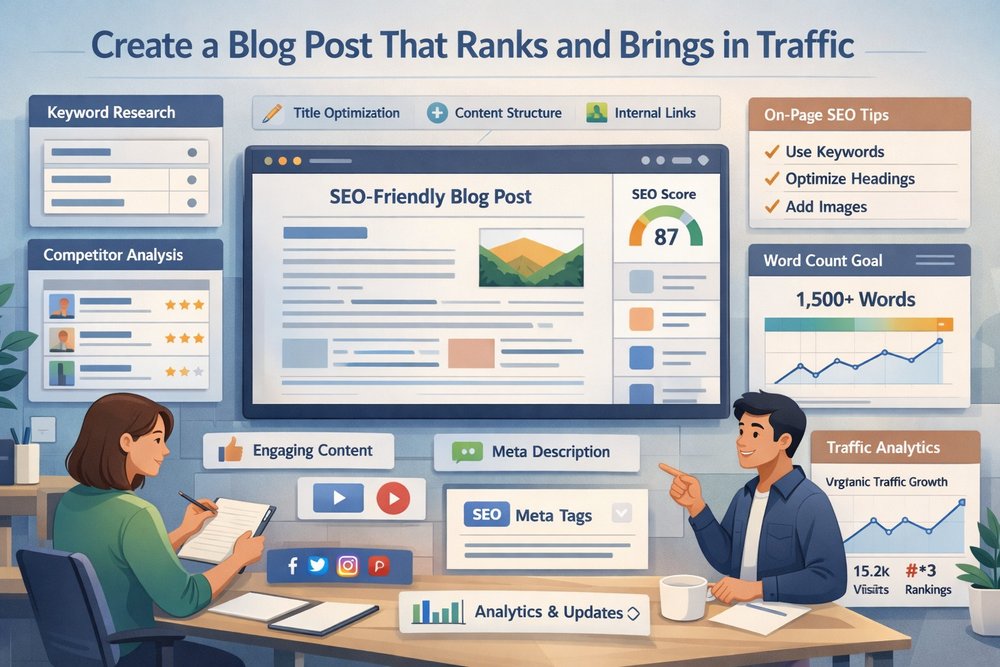 Create a Blog Post That Ranks and Brings in Traffic
 SurveyMonkey Honest Review For Bloggers Collecting Emails: Smart Or Risky?