
Table of Contents
Some links on The Justifiable are affiliate links, meaning we may earn a small commission at no extra cost to you. Read full disclaimer.
If you’re wondering whether simpletexting worth it for small business is a real yes or just good marketing, the honest answer is this: it depends on how often you text customers, how simple you want setup to be, and whether you need marketing-focused SMS more than a custom-built messaging stack.
SimpleTexting is positioned as an easy-to-use business texting platform with plans starting at $39 a month billed yearly for 500 credits plus a $10 local number fee and additional carrier fees, and it offers a 14-day free trial.
What SimpleTexting Actually Is
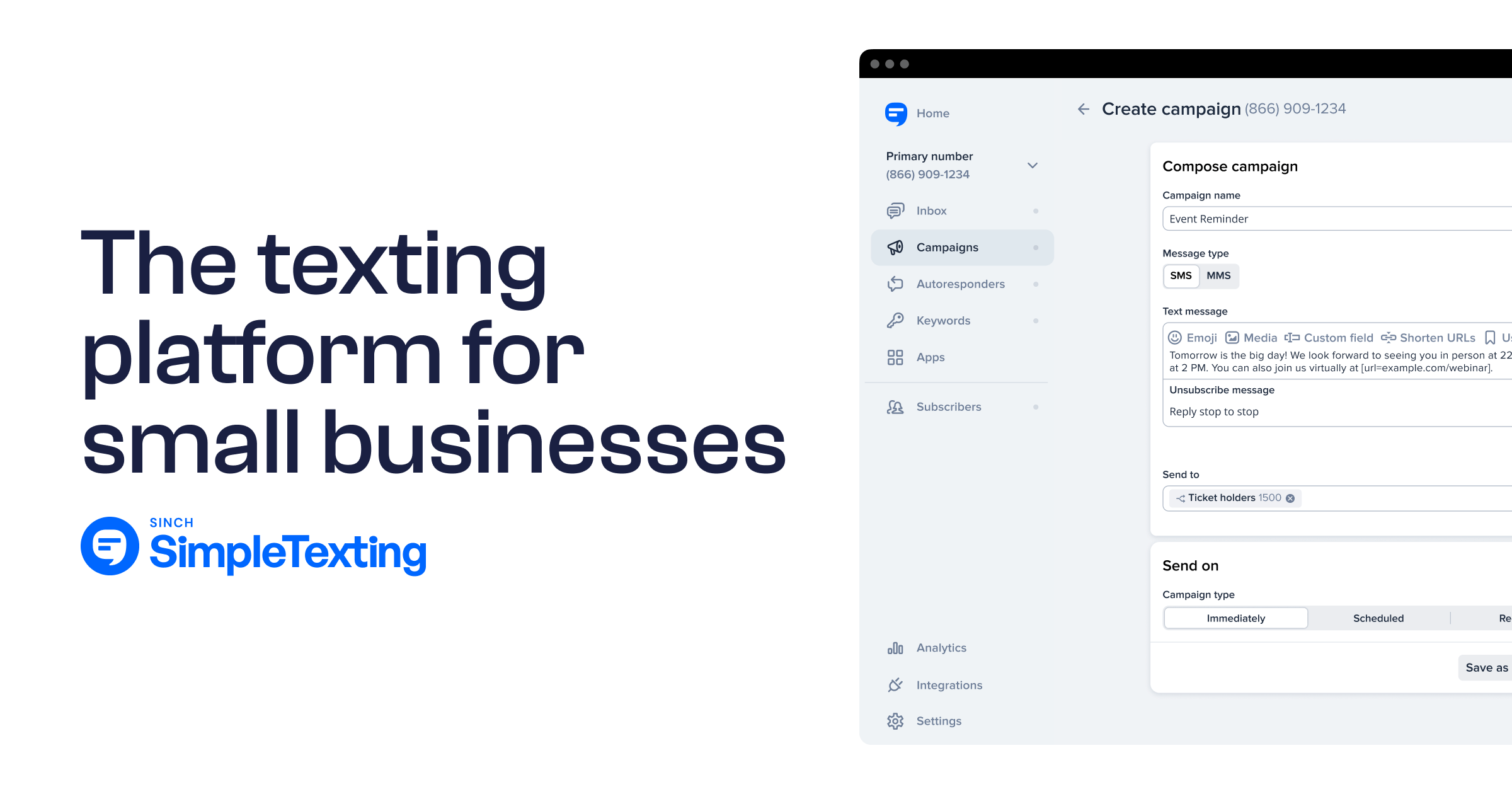
SimpleTexting is a business texting platform built for SMS and MMS marketing, two-way conversations, list growth, and customer communication.
On its own site, it presents itself as an SMS marketing and texting platform with features, integrations, mobile apps, and options for local numbers, toll-free texting, text-to-landline, and short codes.
Who It Is Really Built For
For a small business owner, SimpleTexting makes the most sense when texting is not just a side feature but a channel you plan to use every week. Think appointment reminders, flash promotions, lead follow-up, event updates, or quick customer service conversations.
The platform also says it serves industries like restaurants, e-commerce, healthcare, education, real estate, nonprofits, home services, and franchises, which tells you it is built more for organized customer communication than random one-off texting.
- Best fit: Small teams that want campaigns, replies, list growth, and reporting in one dashboard.
- Less ideal fit: Businesses that only text a few people a month or need deep developer-level customization first. This is an inference based on SimpleTexting’s packaged pricing and marketing-led feature set rather than a code-first model.
In my view, this is one of those tools that feels valuable only if you actually use the system it gives you. If you just want to send occasional manual texts, it can feel like overkill. If you want a repeatable SMS process, it starts making a lot more sense.
How It Differs From Just Texting Customers Manually
A lot of small businesses start by texting customers from a personal phone or a shared company cell. That works for about five minutes, then it gets messy. You lose tracking, opt-ins, unsubscribe handling, templates, segmentation, scheduled sends, and team visibility.
SimpleTexting is designed to solve exactly that. Its platform includes campaigns, mass texting, contact management, automations, inbox-style messaging, and integrations.
It also supports registered business messaging routes like local numbers, toll-free numbers, and dedicated short codes, which matters because carriers increasingly expect formal registration for business texting.
Here is the practical difference. Imagine you run a dental office. Manual texting works for replying to one patient. A platform works for sending reminder sequences, tracking opt-ins, routing replies, and making sure STOP requests are handled correctly. That is the point of paying for software instead of relying on a phone in someone’s pocket. The value is not “sending a text.” The value is turning texting into a process.
How SimpleTexting Pricing Works For Small Business
This is where most small business owners decide yes or no.
As of the current pricing page, SimpleTexting’s estimated monthly cost for the entry setup shown is $39 per month billed yearly at $398.40 for 500 credits, including $29 for the credits and $10 for a local number, plus a $4 one-time carrier registration fee and additional carrier fees.
Extra credits are listed at 5.5 cents each.
What You Are Paying For At The Entry Level
SimpleTexting does not price the way some people expect. You are not just paying for a vague “SMS plan.” You are paying for a bundle of message credits, access to the platform, and number setup, with carrier-related costs layered in.
| Item | Current Detail |
|---|---|
| Base credits | 500 credits for $29 |
| Local number | $10 |
| Estimated monthly total | $39 billed yearly |
| One-time registration | $4 |
| Overage | 5.5¢ per extra credit |
| Trial | 14-day free trial |
| Refund promise | 30-day refund window mentioned on pricing page |
That looks fair on the surface, but the hidden issue for some small businesses is not the base price. It is the way credits get used up.
Why Credits Matter More Than The Sticker Price
SimpleTexting explains that a standard 160-character SMS uses 1 credit, an extended SMS from 161 to 306 characters uses 2 credits, and an MMS uses 3 credits. That means your true cost depends on how long your messages are and whether you send images.
This matters a lot in real life. A salon might think 500 texts sounds fine, then burn through credits faster because:
- Long reminders: A detailed reminder with date, time, address, and reschedule instructions can cross 160 characters.
- Photos: A product drop, coupon graphic, or event flyer counts as MMS and costs more credits.
- Follow-ups: Two-way conversations may create more message volume than expected. This is an inference from the platform’s two-way messaging design and usage model.
I suggest doing a simple volume check before buying. Count how many customers you expect to text each month, multiply by your likely message count, then adjust for long messages and MMS. That one exercise tells you whether the entry plan is a bargain or a trap.
What Features Small Businesses Actually Get
The reason many businesses consider SimpleTexting is not just price. It is the convenience stack around the messages.
The platform’s public materials highlight messaging campaigns, integrations, automations, business number options, and mobile access.
The company also points to support availability seven days a week and a mobile app presence on both major app stores.
The Most Useful Features For Everyday Operations
From a small business angle, not every feature matters equally. The features that usually decide whether a tool is worth paying for are the ones that save time or prevent mistakes.
- Mass texting: Useful for promotions, weather closures, event reminders, or inventory alerts.
- Two-way inbox: Good when customers reply with questions, confirmations, or support needs.
- Automations: Helpful for welcome texts, drip sequences, or recurring updates. SimpleTexting also advertises advanced automations and API-connected workflows.
- Number options: Local, toll-free, text-enabled landline, and short code support can matter depending on trust, branding, and scale.
- Mobile access: Important if you or your staff answer texts on the go.
The biggest advantage here is simplicity. In many cases, small businesses do not need dozens of exotic features. They need a clean workflow where campaigns go out, replies come in, and the team is not confused.
The Advanced Features That Matter Later
There is also a second layer of value that does not look exciting on day one but matters later. That includes integrations, API access, and custom automation support. SimpleTexting says that if a system has an API, its team can connect it through done-for-you advanced automations with custom pricing. It also offers a public API product page.
That tells me the platform has two paths:
- Path one: Easy, marketing-led, do-it-yourself texting for normal small business use.
- Path two: More advanced workflow building once your texting starts tying into e-commerce, support, events, or CRM systems.
If you run a smaller operation now but expect more complexity later, that matters. You do not necessarily outgrow the platform immediately. But if you already know you want very custom messaging logic from day one, you may want something more developer-centric.
Where SimpleTexting Feels Worth It
This is the real question behind the keyword. Not “is it good,” but “when is it worth paying for?”
From what I’ve seen in the official materials and public review summaries, the strongest case for SimpleTexting is ease of use, fast deployment, and reliable day-to-day business texting without a big learning curve.
Public review pages also repeatedly mention usability, campaign creation, contact importing, and customer support as positives.
It Is Worth It If You Need Revenue Or Time Savings Fast
SimpleTexting tends to be worth it when SMS solves an immediate business problem. Here are a few realistic examples.
- Appointment-based business: A med spa, clinic, or salon sends reminders and last-minute openings. One filled cancellation slot can easily cover a month of software cost. This is an inference, but it is a very common small business math problem.
- Retail or e-commerce shop: Texting a limited-time sale to opted-in customers can drive quick traffic because SMS is highly visible. SimpleTexting’s own 2025 statistics page says 84% of consumers are opted in to receive texts from businesses.
- Service business: A home services team can confirm arrival windows, reduce no-shows, and answer customer questions in a channel people actually check.
In each case, the tool is worth it because texting is tied to money saved or earned. If your business cannot point to that connection, the monthly fee will feel heavier.
It Is Worth It If Your Team Needs Something Easy
A surprising amount of software gets rejected not because it lacks power, but because nobody uses it. SimpleTexting leans hard into being straightforward, and that seems consistent across its site, app listings, and multiple review snippets.
The Google Play listing says it simplifies communication for small businesses and notes more than 17,000 customers. Review snippets on G2 and other directories repeatedly mention ease of use and fast campaign setup.
I believe this is one of the strongest arguments in its favor. A simpler tool with an 80% feature set often beats a more powerful tool that your staff avoids. For many small businesses, software ROI comes from adoption, not theoretical capability.

Where SimpleTexting May Not Be Worth It
An honest review has to say this clearly: SimpleTexting is not automatically the smartest choice for every small business.
Some businesses will pay for convenience they barely use. Others will outgrow the credit model or want more custom control.
It May Not Be Worth It If Your Message Volume Is Tiny
If you only send a handful of texts each month, the platform may feel like paying for a system before you truly need one. The entry plan’s value improves as your business texts more consistently, but the fixed monthly cost is harder to justify if texting is occasional.
Picture a solo consultant who sends ten appointment texts a month. That person may not need campaigns, segmentation, or automations yet. On the other hand, a dental office or boutique with repeat appointments and promotions probably does.
That is why I would not frame this as “good” or “bad” pricing. It is really a usage-fit question.
It May Not Be Worth It If You Hate Credit-Based Billing
Credit-based pricing is workable, but it creates friction for some owners because it is not always intuitive. Longer messages and MMS content use more credits, so your campaign style changes your cost.
Public software directory summaries also mention that some users feel costs can rise with larger lists and that MMS and overages can get expensive.
Here is the issue in plain English. A simple “20% off today” text is cheap. A prettier message with an image and extra copy is not. If your marketing style relies on rich media, the math changes fast.
That does not make the platform unfair. It just means you need to know your sending habits before deciding it is affordable.
It May Not Be Worth It If You Need A Heavy Custom Setup From Day One
SimpleTexting does offer API access and custom automations, but its core positioning is still easy business texting, not raw developer infrastructure first.
If you already know you need deeply custom routing, unusual data flows, or engineering-owned messaging architecture, you might prefer a platform designed around build-it-yourself flexibility.
That is an inference from the product positioning, API offering, and the fact that custom advanced automations require sales contact and custom pricing.
For a normal local business, that probably does not matter. For a startup with technical staff, it might matter a lot.
Setup, Compliance, And The Real Work Behind “Easy”
One thing I appreciate is that SimpleTexting does not pretend business texting is just “buy a number and start blasting messages.”
Its compliance content is actually pretty clear that businesses need opt-in consent, registration or verification, clear expectations, HELP and STOP handling, and attention to laws and local rules in the US and Canada.
What You Need To Do Before Sending Campaigns
If you are new to SMS marketing, the software is only half the job. The other half is setting things up correctly so your messages are delivered and your list is compliant.
- Register or verify your number: SimpleTexting says business numbers need registration or verification.
- Get opt-in permission: Customers need to agree before you text them.
- Set expectations: Tell subscribers what kinds of messages they will get and roughly how often.
- Make opt-out easy: STOP handling should not be optional.
This is one reason a platform can be worth paying for. It helps formalize behavior that becomes risky when managed manually.
Why Compliance Matters For Small Business ROI
Compliance sounds boring until it affects delivery and customer trust. A small business can wreck a promising SMS channel by texting without proper permission or sending too often. SimpleTexting’s own guidance emphasizes appropriate timing, appropriate frequency, and avoiding prohibited content.
From what I’ve seen, the businesses that win with SMS treat it as permission-based relationship marketing, not a megaphone. That means:
- Send fewer, better texts.
- Make each text feel useful.
- Respect opt-outs immediately.
- Use SMS where speed actually matters.
That approach usually improves both results and customer goodwill.
What Small Business Owners Usually Like And Dislike
No software review is complete without the human side. Official pages will always sound polished, so public review platforms help balance that. G2 snippets emphasize ease of use, fast campaign creation, contact imports, and tracking.
Capterra and GetApp summaries point to affordable entry pricing, rollover credits, and free trial value, while also noting complaints about rising costs, MMS pricing, plan clarity, or refund/policy frustrations from some users.
Common Positives
| What Users Commonly Praise | Why It Matters For Small Business |
|---|---|
| Ease of use | Less staff training and faster launch |
| Campaign creation | Faster promotions and reminders |
| Contact importing | Easier list migration from spreadsheets or other tools |
| Support responsiveness | Helpful when compliance or setup gets confusing |
| Mobile access | Owners and staff can manage texts on the go |
These are not flashy benefits, but they are real. Most small businesses care more about “can my team use this by next week?” than “does this platform have a beautiful architecture diagram?”
Common Complaints
The most repeated concern in public software-directory summaries is cost creep. Not necessarily the starting price, but how pricing feels once volume grows, MMS is involved, or expectations do not match how credits work. Some users also seem to have concerns around policy clarity or refunds.
That tells me the platform is strongest when you understand the pricing model before committing. Businesses that go in expecting simple, predictable texting tend to be happier than businesses that assume everything will stay cheap no matter how they send.
A Simple Decision Framework For Small Business Owners
If you are still stuck, let me make this practical. Here is the framework I would use if I were deciding whether to pay for it this month.
Choose SimpleTexting If Most Of These Are True
- You text customers weekly or daily, not rarely.
- You want marketing and conversations in one place.
- You value ease of use over deep custom engineering.
- You need compliant opt-ins, scheduled sends, and team visibility.
- You can clearly connect texting to revenue, bookings, or saved time.
These points line up with the product’s pricing, features, positioning, and public review themes.
Imagine a small gym, med spa, local retailer, or real estate office. Those businesses often get real value because texting supports recurring offers, reminders, and fast replies.
Skip Or Delay It If Most Of These Are True
- You only send a few texts each month.
- You do not yet have an SMS list or opt-in strategy.
- You dislike monitoring credits and message length.
- You need engineering-heavy control from day one.
- You are mainly shopping on price without a texting plan.
I say “skip or delay” because the tool itself may still be fine later. It just might not be the right stage-fit today.
Final Verdict: Is SimpleTexting Worth It For Small Business?
My honest answer is yes, SimpleTexting can absolutely be worth it for a small business, but only when texting is a real operating channel for you and not just an experiment.
The platform offers a low-friction way to launch business texting, supports multiple number types, includes marketing and conversational features, provides a 14-day free trial, and backs that up with strong ease-of-use signals in public reviews.
If I had to summarize it in one sentence, I’d say this: SimpleTexting is worth it when simplicity, speed, and structure matter more to you than squeezing every last cent out of SMS pricing.
For many small businesses, that is a perfectly fair trade.
The catch is that you need to respect the credit model and go in with realistic expectations. Standard SMS, longer SMS, and MMS do not cost the same in credits, and that changes your real monthly spend.
Compliance also matters more than many owners realize, so the platform works best for businesses ready to treat SMS like a real channel with opt-ins, message strategy, and customer respect.
So, is simpletexting worth it for small business?
Yes, if you want a user-friendly SMS system that helps you market, remind, and respond without building everything from scratch. No, if you barely text customers, need heavy customization from day one, or expect image-heavy campaigns to stay cheap.
That is the honest review.
FAQ
What is SimpleTexting and how does it work for small businesses?
SimpleTexting is an SMS marketing platform that lets small businesses send bulk texts, manage contacts, and handle replies in one dashboard. It works by using message credits to send SMS or MMS campaigns, automate follow-ups, and communicate with customers in real time through a dedicated business number.
Is SimpleTexting worth it for small business owners?
SimpleTexting is worth it for small businesses that regularly use SMS for marketing, reminders, or customer support. Its value comes from saving time and increasing engagement, but businesses with low texting volume or limited budgets may find the monthly cost and credit system less efficient.
How much does SimpleTexting cost for a small business?
SimpleTexting pricing starts around $39 per month billed yearly for 500 message credits plus number and carrier fees. Costs increase based on usage, especially if messages exceed 160 characters or include images, which consume more credits and can raise the total monthly spend.
What are the main pros and cons of SimpleTexting?
The main advantages of SimpleTexting are its ease of use, fast setup, and strong SMS marketing features. The main drawbacks include credit-based pricing, potential cost increases with higher usage, and limited value for businesses that do not send texts frequently or consistently.
Who should not use SimpleTexting for their business?
SimpleTexting may not be ideal for businesses that send very few messages, prefer predictable flat pricing, or require advanced technical customization from the start. It works best for businesses that actively use SMS as a core communication and marketing channel rather than occasional outreach.

I’m Juxhin, the voice behind The Justifiable.
I’ve spent 6+ years building blogs, managing affiliate campaigns, and testing the messy world of online business. Here, I cut the fluff and share the strategies that actually move the needle — so you can build income that’s sustainable, not speculative.
Related posts:
 SimpleTexting Pricing Explained: Hidden Costs Or Fair Deal?
 SimpleTexting Features Overview: Tools That Drive Results
 10 Digital Marketing Affiliate Marketing Hacks That Work
 Easy Blog Maker Tools That Help You Earn Fast
 Blog Writing Format That Boosts Traffic and Earnings
 Make My Own Blog and Grow a Loyal Audience