
Table of Contents
Some links on The Justifiable are affiliate links, meaning we may earn a small commission at no extra cost to you. Read full disclaimer.
When I first decided to start affiliate marketing, I had no idea where to begin—just a laptop, curiosity, and the hope of earning some extra income online.
What I quickly learned is that affiliate marketing isn’t about luck; it’s about strategy, smart partnerships, and consistent effort.
If you want to make money fast with affiliate marketing, you need to understand which steps actually move the needle.
Let’s break it down into a clear, actionable roadmap that helps you start strong and see real results quickly.
Understand How Affiliate Marketing Really Works
Before you can start affiliate marketing effectively, you need to understand the system behind it. Think of it as building a bridge between a company that sells products and people who want to buy them.
You’re the connector—and you earn money for every successful referral you make.
Learn the Core Concept of Affiliate Marketing
At its simplest, affiliate marketing is a performance-based income model. You promote someone else’s product using a special link, and when a person buys through your link, you get a commission.
For example, let’s say you recommend a new ergonomic chair on your blog. When someone clicks your affiliate link and purchases that chair, you earn a small percentage of that sale.
The company handles everything else—inventory, shipping, and customer support—while you focus on driving traffic and influencing buying decisions.
The key to success isn’t just placing links everywhere. It’s about building trust so people believe your recommendations genuinely help them.
Identify the Key Players: Merchant, Affiliate, and Customer
To really start affiliate marketing the right way, you should know who’s involved in every transaction:
- Merchant (or Advertiser): The company selling the product or service. For example, Amazon, Bluehost, or Awin merchants.
- Affiliate (that’s you): The person promoting the merchant’s product in exchange for a commission.
- Customer: The end user who buys the product through your link.
There’s also sometimes an affiliate network, like CJ Affiliate, that acts as the middleman—providing tracking, payments, and program access all in one place.
Understanding these relationships helps you choose better offers and know exactly how you fit into the earning chain.
Discover How Affiliate Links and Tracking Work
Affiliate links are your unique identifiers. They tell the system that a visitor came from you.
Here’s what happens step-by-step:
- You get a special link from your affiliate dashboard.
- It might look like: https://www.awin.com/link?affid=12345
- A visitor clicks it.
- A tracking cookie is stored in their browser, often lasting 30–90 days.
- If that person buys within that window, you earn a commission.
Most affiliate networks provide real-time dashboards where you can track link clicks, conversion rates, and earnings. Keeping an eye on this data helps you see which content performs best—and where you should double down.
Explore the Difference Between One-Time and Recurring Commissions
There are two main types of affiliate earnings:
- One-time commissions: You get paid once for each sale (for example, Amazon Associates).
- Recurring commissions: You earn monthly as long as the customer keeps paying for the service (for example, promoting SaaS tools like Aweber for email automation).
If you want to make money faster but more sustainably, recurring programs are gold. You can build a base of passive income that grows each month without constantly chasing new buyers.
Choose a Profitable Niche You Can Monetize Fast
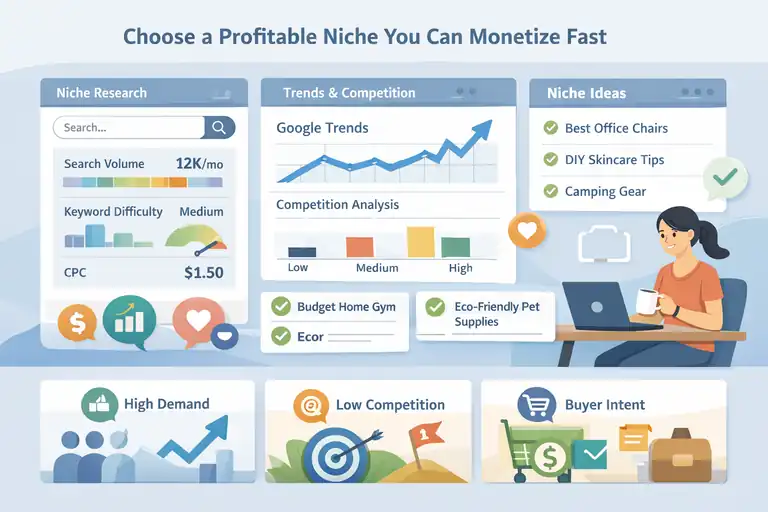
Once you understand how affiliate marketing works, the next step is finding a niche that’s both profitable and sustainable.
The right niche determines how quickly you’ll see income, who you’ll attract, and what kind of products you’ll promote.
Find Niches with High Demand and Low Competition
Here’s the sweet spot: find a niche that people are searching for often but that isn’t overcrowded with expert affiliates.
You can use Google Trends to check interest levels or tools like Ahrefs and Ubersuggest to analyze keyword difficulty.
For example, “budget home gym equipment” or “eco-friendly pet supplies” are high-demand areas with growing audiences but fewer established sites than tech or finance.
If your niche solves a real problem and has a clear buyer intent (people are ready to spend money), you’re on the right track.
Validate Your Niche Using Keyword Research Tools
Before fully committing, you should test your niche’s profitability.
Try this quick validation method:
- Use Google Keyword Planner.
- Search your niche idea, e.g., “best home office chairs.”
- Look at search volume (ideally over 10,000/month) and CPC (Cost Per Click). High CPC usually means strong buyer intent.
- Check what affiliate programs already exist in that niche on Awin or CJ Affiliate.
If multiple programs offer decent commissions in that area, that’s a good sign you’ve found a viable space.
Focus on Problems You Can Solve Through Recommendations
The most profitable affiliates focus on solutions, not just products.
Ask yourself:
- What problems can I help people solve?
- What’s something I’ve personally struggled with and found a product that helped?
For example, if you’ve struggled with productivity, recommending focus apps or ergonomic setups feels authentic and relatable. People can sense when your advice comes from real experience—and that trust converts.
Avoid Common Niche Mistakes Beginners Make
Here are pitfalls to watch out for:
- Choosing a niche just because it’s trendy. It might fade before you make a profit.
- Being too broad. “Health” is too wide; “gut health for busy professionals” is focused.
- Ignoring your interest. If you don’t care about the topic, you’ll burn out.
- Skipping validation. Always check demand before building content.
Starting affiliate marketing in a niche you understand deeply leads to more credibility, faster growth, and stronger long-term returns.
Pick the Right Affiliate Programs for Beginners
After choosing your niche, it’s time to partner with affiliate programs that actually pay well and fit your audience.
Your goal isn’t to join as many programs as possible—it’s to choose a few that are reputable, profitable, and aligned with your content.
Join Trusted Networks Like Awin, Amazon Associates, and CJ Affiliate
If you’re just starting out, these are great platforms to begin with:
- Awin: Offers access to thousands of global brands across every niche. It replaced ShareASale, which is no longer active.
- Amazon Associates: Easy to join, huge product variety, though commission rates are modest.
- CJ Affiliate: Great for higher-paying offers and professional tracking dashboards.
When signing up, always complete your profile accurately—networks approve affiliates faster when they see a clear marketing plan and niche alignment.
Compare Commission Rates, Cookie Durations, and Payout Options
Each program has different payment structures.
Before committing, look for:
- Commission rate: The percentage you earn per sale (usually 5–50%).
- Cookie duration: How long your referral stays valid—longer is better.
- Minimum payout: Some programs pay monthly once you hit a certain threshold.
Here’s a quick comparison example:
| Network | Average Commission | Cookie Duration | Payout Type |
| Awin | 10–30% | 30–90 days | Direct deposit |
| Amazon Associates | 3–10% | 24 hours | Gift card or deposit |
| CJ Affiliate | 5–50% | Varies | PayPal or ACH |
This table helps you see at a glance where your early earnings might grow fastest.
Understand the Difference Between High-Ticket and Low-Ticket Offers
- Low-ticket offers: Lower commissions but higher conversion rates (e.g., Amazon products).
- High-ticket offers: Fewer sales but big payouts (e.g., software subscriptions, online courses).
If you’re a beginner, start with low-ticket items to gain traction and build trust. As your audience grows, you can shift into high-ticket offers for higher returns.
Example: promoting Mailerlite (email marketing tool) gives recurring income each month someone stays subscribed—making it a great hybrid between high and recurring commissions.
Choose Programs That Align with Your Niche and Audience
Always ask: Would my audience actually buy this?
If your content is about remote work, promoting ergonomic desks or productivity tools makes sense. But pitching skincare products would confuse readers.
Use affiliate programs that align with your brand story and audience needs. Relevance builds trust—and trust drives clicks.
Build a Simple and Conversion-Focused Website
To start affiliate marketing successfully, you need a home base—a website that’s simple, credible, and built to convert.
You don’t need to be a tech genius or hire a developer. With today’s tools, you can create a professional, money-making site in a weekend if you follow the right steps.
Pick an Easy Platform Like WordPress or Webflow
If you’re new, WordPress is the most beginner-friendly option. It’s free, flexible, and supported by thousands of plugins that make customizing easy. You can install it with one click through most hosting providers.
Once it’s live, choose a clean, fast theme. Avoid heavy designs with too many animations or pop-ups—they slow down your site and hurt conversions.
If you prefer a visual approach, Webflow is another great choice. It lets you design by dragging and dropping elements instead of coding. For example, you can drag in a “Call to Action” block, change colors, and link your affiliate offer right there in the editor.
Pro tip: Start simple. A well-structured site with good content beats a flashy one with no direction.
Create Pages That Convert: Home, Blog, and Resources
A good affiliate site doesn’t need dozens of pages—it just needs the right ones:
- Home Page: Clearly state what your site helps people with. For example, “Helping freelancers find the best remote tools to work smarter.” Include one clear call-to-action like “See my top recommendations.”
- Blog Page: This is where your traffic will come from—product reviews, comparisons, and how-to guides.
- Resources Page: A page dedicated to your most trusted tools and affiliate links. Think of it as your “recommended toolbox.”
Here’s what a basic structure might look like:
Home

│

├── Blog

│   ├── Best Productivity Apps for Remote Work

│   ├── How to Create an Email List with Kit

│

└── Resources

     ├── Tools I Use

    ├── Affiliate Disclosure
Keep each page focused and visually clean. Every page should answer a question or encourage one simple action—click, subscribe, or buy.
Learn Basic SEO to Drive Free Traffic from Google
SEO might sound intimidating, but once you get the basics, it becomes your best friend. You’re basically helping Google understand what your site is about so it can send you free, targeted visitors.
Start with this simple SEO checklist:
- Use your main keyword (like “start affiliate marketing”) in your title and meta description.
- Add headings (H2s, H3s) with related terms—Google loves organized structure.
- Optimize images with descriptive file names (e.g., affiliate-marketing-guide.jpg).
- Write valuable, unique content that actually helps readers.
Once your pages start ranking, you’ll get consistent organic traffic without paying for ads.
Use Analytics Tools to Track Clicks and Conversions
You can’t grow what you don’t measure. Analytics show what’s working and what’s not.
I recommend setting up:
- Google Analytics 4: To see where your traffic comes from and which pages keep visitors the longest.
- Google Search Console: To track what keywords you’re ranking for.
- Affiliate Dashboard Tracking: Each network like Awin or CJ Affiliate has its own built-in stats (clicks, sales, conversion rates).
Check these weekly. For example, if your “Best Laptops for Designers” post gets traffic but few clicks, you can test a stronger CTA or better product placement. Small tweaks can double your income over time.
Create Content That Converts Visitors into Buyers
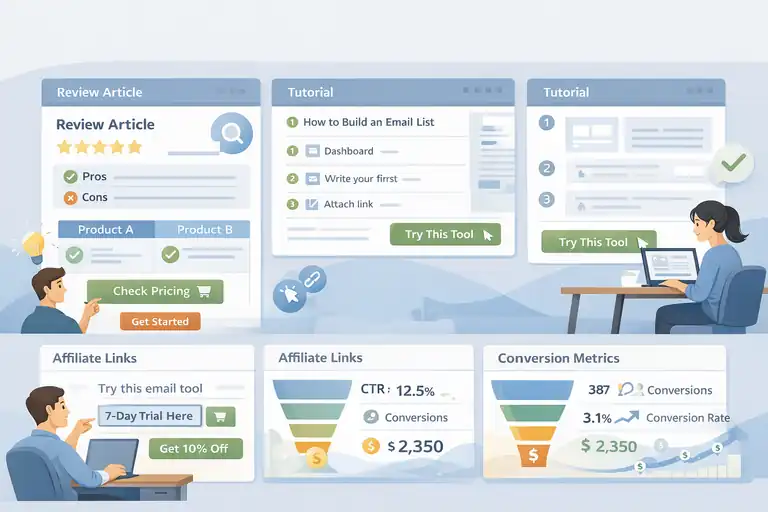
Once your website is live, your next mission is to create content that sells without sounding salesy.
The goal is to educate first, recommend second. Readers should feel that you’re helping them make smarter decisions, not pushing them into buying.
Write Review Articles and Comparison Posts That Sell
Product reviews and “X vs. Y” comparisons work because people search for them right before buying.
To write reviews that convert:
- Start with your personal experience or a relatable story.
- Explain what makes the product valuable and who it’s best for.
- Include pros and cons to stay honest.
- End with a clear recommendation and your affiliate link.
For example, a post titled “Awin vs. CJ Affiliate: Which One Pays Better?” naturally attracts users ready to join a network. When you share both sides fairly, your recommendation feels genuine—and that’s what gets clicks.
Use Tutorials and “How-To” Guides to Build Trust
Tutorials work beautifully because they solve real problems. When someone follows your step-by-step guide and gets results, they trust your next recommendation instantly.
For instance, if you write “How to Set Up Your First Email Campaign Using Kit”, you can walk through each step visually:
- Log in to Kit.
- Click Create Broadcast from your dashboard.
- Write your email and attach your affiliate link.
People love actionable, clear steps. The more helpful your guide, the higher your conversions.
Integrate Affiliate Links Naturally Within Your Content
Affiliate links should feel like helpful suggestions, not sales pitches.
Here’s what works best:
- Add links where they naturally fit—right after you mention a product or tool.
- Use buttons or text links with context, like “Try Brevo free for 30 days.”
- Avoid overlinking; 2–3 links per article is plenty.
If your content truly helps readers, they’ll click because they trust your judgment.
Optimize Headlines and CTAs for Higher Conversions
Your headline is your first impression. If it doesn’t catch attention, your article won’t get read.
Try these quick tips:
- Use numbers and benefit-driven phrases. Example: “5 Tools That Made My First $500 in Affiliate Marketing.”
- Add emotional pull words like “fast,” “simple,” or “proven.”
- End every post with a clear call to action (CTA), such as “Check current pricing on Awin.”
You can even A/B test headlines with tools like VWO to see which ones get more clicks. Small tweaks here can massively boost results over time.
Drive Targeted Traffic to Your Affiliate Offers
Even the best website won’t make money if no one visits it. Traffic is the lifeblood of affiliate marketing.
You don’t need millions of visitors—you need the right ones: people who are ready to buy or deeply interested in your niche.
Leverage Social Media Platforms Like TikTok, Instagram, and YouTube
Social media is one of the fastest ways to get visibility for free. The key is to educate and entertain at the same time.
- On TikTok, post short tutorials or product demos (under 60 seconds). Use captions like “3 Tools That Make Freelance Life Easier.”
- On Instagram, share carousel posts or reels showing before-and-after transformations.
- On YouTube, focus on evergreen videos like reviews, comparisons, and how-tos.
For example, a 5-minute video reviewing “Top 3 Freelance Tools from Awin” can generate consistent traffic for months, especially if optimized with strong keywords in the title and description.
Learn the Basics of Paid Ads: Google Ads and Meta Ads
If you want faster results, paid ads can speed things up—but only if done wisely.
Start small. Use Google Ads for intent-based keywords like “best productivity apps for freelancers.” These people are already in a buying mindset.
Meta Ads (Facebook and Instagram) work better for awareness—showing products to people who didn’t know they needed them. Use eye-catching visuals and a short, benefit-driven headline.
Always track conversions through your affiliate dashboard to make sure the ad spend is worth it.
Use Pinterest SEO for Long-Term Passive Traffic
Pinterest isn’t just for recipes—it’s a visual search engine that’s perfect for affiliate content.
To use it effectively:
- Create pins for every blog post or review.
- Add your focus keyword in the pin title and description.
- Link each pin directly to your site.
Because pins can resurface months or even years later, Pinterest acts like evergreen SEO. You create once and get ongoing traffic.
Build an Email List Using Tools Like Kit or Brevo
Your email list is your most valuable traffic source because you own it. Unlike social platforms, no algorithm can take it away.
- Kit (previously ConvertKit) is perfect for beginners—it lets you build opt-in forms and automate emails easily.
- Brevo (formerly Sendinblue) offers all-in-one email marketing and CRM features, great for managing leads and sending newsletters.
Example workflow:
- Add a sign-up form to your blog posts offering a free checklist (e.g., “Top 10 Affiliate Tools”).
- Use Kit to send a welcome sequence introducing yourself and your favorite affiliate tools.
- Add affiliate links naturally in helpful follow-up emails.
Your email list becomes a consistent traffic and sales engine—one you control completely
Use Automation Tools to Scale Your Affiliate Business
Once your affiliate marketing foundation is in place, automation becomes your best friend. It saves time, eliminates repetitive work, and helps you scale your income without constantly being online.
With the right systems, you can grow your business while focusing on what truly matters—building relationships and creating value.
Automate Email Sequences with Kit for Lead Nurturing
Email automation is one of the most powerful ways to turn casual visitors into loyal buyers. Kit (formerly ConvertKit) makes it simple for creators and affiliates to manage email marketing without the usual complexity.
Here’s how it works in practice:
- Create a sign-up form on your site—something like “Join my free 5-day affiliate marketing challenge.”
- Inside Kit, go to Automations → Create Sequence.
- Write a short 4–6 email series that teaches something valuable while softly recommending relevant affiliate products.
For example, Day 1 could share your story, Day 3 introduces your top tools, and Day 5 includes your best affiliate offer. Once set up, every new subscriber receives these automatically—no manual follow-up needed.
I’ve found that nurturing your audience with value-driven emails builds far more trust than pushing links immediately. It’s slow at first, but it pays off long term.
Track Performance Using Analytics Dashboards
When you start affiliate marketing seriously, data becomes your secret weapon. The best affiliates don’t guess—they track.
Here’s what to focus on:
- Affiliate Dashboards: Platforms like Awin and CJ Affiliate show real-time data on clicks, conversions, and commissions.
- Google Analytics 4: Helps you see which content brings visitors who actually convert.
- UTM Parameters: Add small tracking tags to your links (e.g., ?utm_source=blog&utm_campaign=review_post) to see which traffic sources perform best.
By checking your analytics weekly, you can identify top-performing pages and double down on what’s already working. For instance, if one article consistently drives sales, update it regularly and promote it more aggressively.
Manage Affiliate Links Efficiently with Tools Like Pretty Links
If you’ve ever tried managing dozens of raw affiliate URLs, you know how messy it gets. That’s where Pretty Links comes in. It lets you shorten, track, and organize all your affiliate links in one dashboard.
Instead of sharing a long, messy URL like: https://www.awin.com/affiliate/merchant/xyz/?ref=12345
You can create something neat like: https://yourwebsite.com/recommends/awin
Benefits of using Pretty Links:
- Easier to manage or update if a link changes.
- Cleaner, more trustworthy appearance.
- Built-in click tracking.
When I started using Pretty Links, it saved me hours each month and made updating links across multiple posts effortless.
Schedule Content and Optimize Posting Times
Consistency is everything. Using automation tools helps you stay visible without being glued to your screen.
Try this approach:
- Use Buffer or Later to schedule social media posts across Instagram, TikTok, and X (formerly Twitter).
- In WordPress, schedule blog posts ahead of time by setting a future publish date under the “Publish” tab.
- For YouTube, plan weekly uploads—YouTube’s algorithm rewards consistency.
Experiment with posting times to find when your audience is most active.
For example, I noticed my affiliate content performed best around 7 PM (people tend to browse after work). Once you find your sweet spot, automate your schedule to keep traffic flowing steadily.
Optimize, Test, and Grow Your Affiliate Income
Scaling affiliate income isn’t about doing more—it’s about doing better.
Testing, analyzing, and refining your content helps you uncover what converts and what doesn’t. Small tweaks can often double your earnings.
Test Different Content Formats and Offers for Better ROI
Every audience responds differently. Some prefer in-depth blog guides, while others love quick comparison tables or short videos.
Here’s how to test effectively:
- Create two or three versions of the same topic—like a full blog post, a YouTube video, and a short reel.
- Promote them equally and track engagement.
- Focus more on the format that converts best.
For example, one of my “Best Tools for Freelancers” posts performed average as a blog but tripled conversions after I turned it into a YouTube walkthrough. People love seeing tools in action.
Always test new affiliate programs, too. Sometimes a different merchant on Awin or CJ Affiliate will have higher commissions or better landing pages, boosting your ROI.
Use A/B Testing Tools Like VWO or Optimizely
A/B testing sounds technical, but it’s just comparing two versions of a page to see which performs better.
Tools like VWO or Optimizely make this easy—even without coding.
For example:
- Test two headlines: “Top 5 Productivity Apps” vs. “Boost Work Efficiency with These 5 Tools.”
- Test button colors or placement of your affiliate links.
- Compare two CTAs: “Try for Free” vs. “Start Your Free Trial Today.”
I recommend testing one change at a time and running it for at least two weeks to gather enough data. You’ll be surprised how often small details can boost conversion rates by 10–30%.
Analyze Conversion Data to Refine Your Strategy
Once you have data, use it to make smarter decisions. Look at your affiliate dashboards and identify:
- Which products bring the most commissions.
- Which pages have high traffic but low conversions.
- Where visitors drop off (using Google Analytics’ “Behavior Flow”).
If a page gets a lot of visitors but few clicks, adjust your CTA or add stronger proof (like user testimonials or screenshots). If another page converts well, repurpose that strategy into other articles or formats.
Affiliate marketing is really a game of continuous refinement—track, tweak, repeat.
Set Realistic Goals and Scale Gradually
When you’re starting, it’s tempting to aim for $5,000/month right away. But affiliate marketing builds like compound interest.
Set short-term goals like:
- First 1,000 monthly visitors.
- First 10 email subscribers.
- First $100 in commissions.
Each small win proves your system works. Once you see steady growth, you can scale with paid ads, partnerships, or more content. Sustainable scaling always beats quick spikes that crash.
Stay Compliant and Build Long-Term Credibility
Affiliate marketing isn’t just about making money—it’s about maintaining trust and following the rules.
Compliance protects both your reputation and your income streams.
Follow FTC Guidelines for Affiliate Disclosures
The FTC (Federal Trade Commission) requires affiliates to clearly disclose relationships with brands. This means you must tell readers when you earn commissions from recommendations.
The simplest approach: add a short line near your links like: “This post contains affiliate links. I may earn a small commission if you make a purchase through my links, at no extra cost to you.”
You can also include a full disclosure page linked in your footer. Transparency isn’t optional—it’s a trust builder.
Be Transparent with Your Audience About Recommendations
People can sense authenticity. If you promote everything under the sun, they’ll tune out.
Only recommend products you’ve used, tested, or genuinely believe in. For instance, when I first promoted Kit, I had already built my own email automation there, so I could honestly show how it worked step-by-step.
Honesty creates loyalty—and loyal readers become repeat buyers.
Prioritize Value Over Sales for Sustainable Growth
If your entire site screams “buy now,” it’ll push people away. Instead, focus on education first, recommendation second.
Share personal experiences, insights, and even mistakes. Helping someone avoid your past pitfalls is often more valuable than pitching a product. The sales will come naturally from that trust.
Build Brand Trust to Increase Lifetime Affiliate Earnings
The most successful affiliates aren’t the ones chasing quick wins—they’re the ones building brands.
Here’s how to build trust long-term:
- Maintain a consistent publishing schedule.
- Keep your content updated with accurate information.
- Engage with your audience via comments, emails, or social media.
When people start recognizing your name as a reliable source, your links carry more weight. That’s when affiliate marketing turns from side hustle to sustainable income.
Pro Tips to Make Money Fast with Affiliate Marketing
Let’s wrap up with some practical tips that can help you grow faster while staying smart and authentic. These aren’t shortcuts—they’re accelerators that come from experience.
Focus on Evergreen Content That Generates Long-Term Income
Evergreen content keeps bringing in traffic and commissions long after you publish it. Examples include “Best Tools for Bloggers” or “How to Start Affiliate Marketing.”
Spend time optimizing these posts with updated info every few months. They’ll quietly build income for years, unlike trend-based posts that fade quickly.
Repurpose Winning Content Across Multiple Platforms
If a blog post performs well, don’t stop there. Turn it into a YouTube video, Instagram reel, Pinterest pin, or email sequence.
For example, your “Top 5 Affiliate Networks” article can become a 3-minute video titled “Affiliate Programs That Actually Pay.” Repurposing multiplies your reach without creating new content from scratch.
Network with Other Affiliates to Learn and Collaborate
Joining affiliate communities helps you learn faster and discover opportunities. Platforms like Reddit’s r/AffiliateMarketing or Facebook groups for digital marketers are great places to connect.
Collaborations can also drive traffic—guest posting or co-hosting webinars with fellow affiliates exposes you to new audiences.
Continuously Update and Optimize Your Top-Performing Posts
Your best-performing content deserves ongoing attention.
Check your analytics every month and:
- Update old stats and screenshots.
- Add new affiliate offers.
- Improve readability and structure.
By keeping your top posts fresh, you not only maintain rankings but often boost conversions further.
Pro Tip: The secret to long-term affiliate success isn’t chasing fast money—it’s building systems that make money while you sleep. Be consistent, stay authentic, and let automation and optimization do the heavy lifting over time.
FAQ
What is the easiest way to start affiliate marketing?
The easiest way to start affiliate marketing is by choosing a profitable niche, joining trusted programs like Awin or Amazon Associates, and creating valuable content that promotes useful products.
How long does it take to make money with affiliate marketing?
Most beginners start earning within 3–6 months, depending on how consistently they publish content, build traffic, and optimize affiliate links.
Do I need a website to start affiliate marketing?
While not mandatory, having a website helps you build authority, attract organic traffic from Google, and convert visitors into buyers more effectively.

I’m Juxhin, the voice behind The Justifiable.
I’ve spent 6+ years building blogs, managing affiliate campaigns, and testing the messy world of online business. Here, I cut the fluff and share the strategies that actually move the needle — so you can build income that’s sustainable, not speculative.
Related posts:
 10 Proven Strategies for Creating Passive Income Streams
 How To Post Affiliate Links On Pinterest
 How to Use ShareASale Affiliate Program Without Any Hassle
 How to Get Into Affiliate Online Marketing in 5 Easy Steps!
 How the Aweber Affiliate Program Pays: Fast Profits Guide
 How to Start Amazon Affiliate Marketing Without a Website