
Table of Contents
Some links on The Justifiable are affiliate links, meaning we may earn a small commission at no extra cost to you. Read full disclaimer.
If you’re a freelance landscape designer, figuring out how to price your projects can feel like walking a tightrope. Charge too little, and your work loses value.
Go too high, and clients vanish faster than a morning dew. So how do you find that perfect balance between fair pricing and profit?
This guide breaks down exactly how to price freelance landscape design projects smartly — blending art, science, and strategy — so you can confidently quote clients, protect your time, and scale your income sustainably.
Understanding The True Value Of Your Landscape Design Work
Before you can confidently price your services as a freelance landscape designer, you need to understand the true value behind what you offer.
Pricing isn’t just about time spent—it’s about skill, experience, creativity, and the transformation you deliver.
Assessing Skills, Experience, And Market Demand
Your expertise directly impacts how much clients are willing to pay. A designer with five years of experience and a strong portfolio commands higher rates than someone just starting out—and rightly so.
Start by asking: What specific outcomes do my clients get from working with me? If your designs increase property value, improve environmental sustainability, or help commercial clients win planning approval faster, those are measurable results worth charging for.
To gauge market demand, explore local trends.
For example, in regions like California or Florida, eco-friendly and drought-tolerant landscapes are in high demand. Search local job boards, Houzz listings, or Facebook business groups to see what similar designers are offering.
Pro tip: Keep a simple spreadsheet comparing your rates, years of experience, and deliverables against competitors. You’ll quickly see where you can position yourself as a high-value provider, not a budget option.
Evaluating The Scope And Complexity Of Each Project
Every project varies in complexity. A backyard refresh and a full commercial site plan are two completely different beasts.
Break each project into components:
- Design complexity: Does it require custom features, 3D modeling, or unique plant palettes?
- Time investment: How many design revisions, meetings, and site visits will it need?
- Technical requirements: Will you collaborate with architects, engineers, or construction teams?
Use tools like Trello or Notion to visualize project stages. In my experience, estimating hours for each stage (research, design, revisions, presentation) gives a more accurate quote—and helps you communicate your process transparently with clients.
Identifying What Makes Your Design Approach Unique
Your value also lies in how you design. Maybe your layouts maximize biodiversity, or your 3D renderings help clients visualize every plant before installation. Those touches create differentiation.
Write down three things that make your approach distinct—your “signature style.” Then integrate that value into your proposals.
For instance: “My designs balance native plant ecology with low-maintenance beauty, reducing upkeep costs by up to 30%.”
That’s how you move from being seen as a service provider to a problem-solver—and charge accordingly.
Calculating The Core Costs Behind Every Project
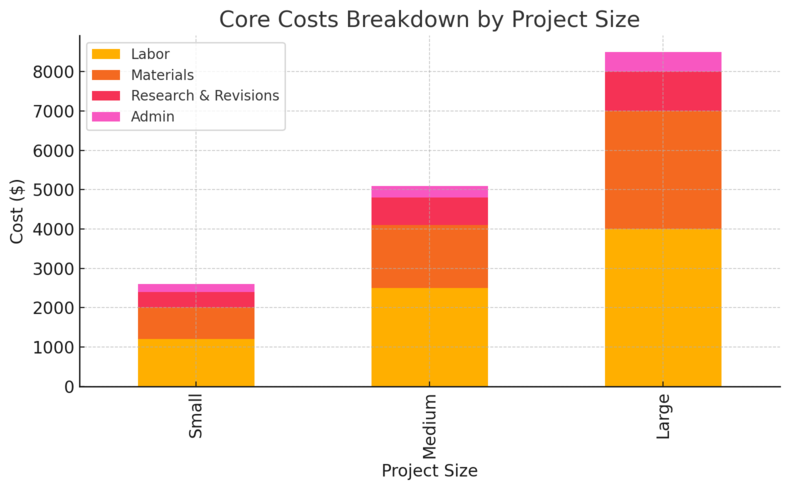
Smart pricing starts with clarity.
Before quoting a project, you must know exactly what it costs you to deliver high-quality work—because profit isn’t what’s left over, it’s what you plan for.
Accounting For Labor, Materials, And Equipment
Begin with the obvious: your time. Include everything from client meetings to drafting, revisions, and post-project communication. A good rule is to multiply your hourly rate by estimated project hours, then add:
- Materials: Plants, hardscape elements, and design supplies
- Software: Subscriptions for tools like SketchUp, AutoCAD, or Adobe Illustrator
- Equipment: Maintenance, fuel, or upgrades for field tools
If you’re subcontracting specialists (like irrigation planners or lighting experts), include their rates plus a margin.
For transparency, you can separate these costs in your estimate or fold them into one total project fee.
Factoring In Research, Revisions, And Site Visits
These hidden hours often go unpaid—but they shouldn’t. If a client expects multiple revisions or ongoing site checks, price for it upfront.
I suggest setting limits like “Includes up to two design revisions” or charging hourly after that.
For large or remote sites, include travel costs, mileage, and parking fees. Apps like MileIQ automatically log your trips, saving you hours of admin time.
Using Cost-Tracking Tools To Maintain Profit Margins
Keeping tabs on project finances doesn’t have to be tedious. Modern tools make it almost effortless:
- QuickBooks: Tracks income, expenses, and taxes automatically.
- Toggl Track: Logs work hours per task for precise time-based costing.
- Bonsai: Combines contracts, proposals, and invoicing in one place.
Use these to calculate your actual profit margins. I recommend reviewing them monthly—you’ll quickly notice which types of projects deliver the best ROI and which ones aren’t worth the effort.
Choosing The Right Pricing Model For Your Services
Your pricing structure shapes how clients perceive you. The goal is to align your model with both your workflow and your client’s expectations.
When To Use Hourly Rates Versus Flat Fees
Hourly rates work best for short consultations, on-demand site visits, or projects with many unknowns. They offer flexibility—but clients might worry about open-ended costs.
Flat fees, on the other hand, provide clarity. You can quote a set price for a complete deliverable—like a full garden redesign or planting plan.
To set one, calculate your expected hours, then add a 10–15% buffer for revisions and unexpected delays.
In my experience, flat fees build trust and let you focus on creative work instead of clock-watching.
Setting Retainer Agreements For Ongoing Maintenance Work
For repeat clients—especially property managers or developers—retainer agreements are gold. You charge a fixed monthly fee covering a set number of design hours or consultations.
Benefits include:
- Predictable income: Smooths out seasonal fluctuations.
- Loyal client base: Encourages long-term relationships.
- Priority scheduling: Clients value your ongoing availability.
To set one up, outline what’s included (e.g., two site visits per month, ongoing design updates). Use Dubsado or HoneyBook to automate retainer invoices and renewals.
Structuring Tiered Packages For Design And Consultation
Tiered pricing lets you serve different client budgets without undervaluing your time.
Here’s a simple structure:
- Basic Package: Concept sketches + 1 revision + plant list.
- Standard Package: 2D plan + 3D visualization + 2 revisions.
- Premium Package: Full 3D rendering, material sourcing, and installation oversight.
This method showcases your value while giving clients choice and control. It also reduces negotiation stress since you’re offering options instead of discounts.
Expert tip: Display these packages visually on your website or proposal PDF. Clients understand faster when they see the difference between levels of service.
Researching Industry Benchmarks And Competitor Rates
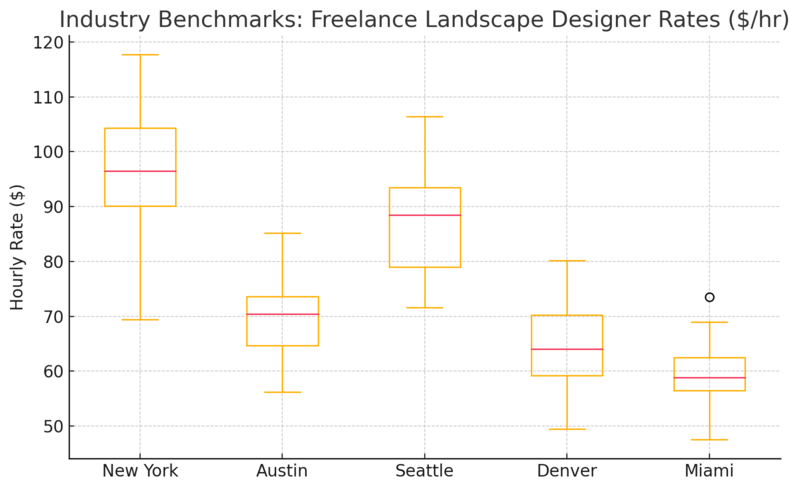
Knowing what others charge is one of the smartest ways to set fair yet profitable rates as a freelance landscape designer. You don’t want to undercut the market—or price yourself out of it.
Research helps you find the balance between value, demand, and sustainability.
Analyzing What Other Freelance Landscape Designers Charge
Start with a simple comparison. Search platforms like Upwork, Houzz, or Thumbtack to see what landscape designers in your region charge. You’ll often find three pricing tiers: entry-level, mid-range, and premium.
A quick example:
- Entry-level designers: $25–$40 per hour (typically 1–2 years of experience)
- Mid-level designers: $50–$80 per hour (3–5 years of experience and solid portfolio)
- Senior designers or specialists: $100+ per hour (advanced design systems, CAD skills, or niche focus)
However, don’t just copy these numbers—context matters. Evaluate what’s included in their services. Are they providing full 3D renderings, project supervision, or just conceptual sketches? The depth of work changes everything.
I suggest collecting at least 10–15 pricing references from real competitors to establish a benchmark. Then, use those as a foundation—not a ceiling—for your own pricing.
Adjusting Your Rates For Location And Project Scale
Your location plays a huge role in determining what clients are willing to pay. Designers in urban areas like Los Angeles, Sydney, or London can charge significantly more due to higher living and material costs.
Here’s how to fine-tune your rates:
- Urban markets: Increase rates by 15–25% if local competition is strong and clients value premium design aesthetics.
- Rural or suburban areas: Keep rates competitive but emphasize value—such as sustainability or long-term savings.
- Large-scale commercial projects: Charge by project size (per square meter or acre) rather than hourly; this ensures scalability and clarity.
One thing I’ve learned is that commercial projects often demand more coordination and compliance, which justifies higher pricing. Don’t shy away from adjusting accordingly.
Using Data From Professional Associations And Market Platforms
To validate your pricing, turn to trusted industry data. Organizations like the American Society of Landscape Architects (ASLA) or Landscape Institute (UK) regularly publish salary and fee structure surveys.
These can help you understand what established firms are charging and where freelancers fit into the market.
For digital insight, tools like Glassdoor or Indeed offer average hourly rates for freelance designers by region. Combine that with what you see on Houzz Pro’s “Hire a Designer” directory to get a clear market snapshot.
If you want a more data-driven approach, create a comparison chart in Google Sheets—list average hourly rates, project sizes, and deliverables. Seeing numbers side by side helps you justify your pricing to clients confidently.
Communicating Pricing Confidently With Clients
Once your pricing is solid, the next challenge is communication. How you present your price matters as much as the number itself. Clients feel confidence—or hesitation—instantly.
Presenting Quotes That Build Trust And Transparency
Clients appreciate clarity. Instead of giving one lump sum, break your quotes into categories like Design, Materials, and Project Management. It makes your proposal feel professional and easy to digest.
For example, if you’re using Houzz Pro or Bonsai, structure your estimate like this:
- Concept Design: $1,500
- 3D Visualization: $800
- Site Visits & Consultations: $300
Then show what’s included in each section. This transparent approach eliminates confusion and establishes immediate trust.
I’ve noticed clients rarely argue pricing when they understand why something costs what it does.
Explaining Value Without Undercutting Your Worth
Avoid phrases like “I can give you a discount” or “I’ll match other quotes.” Those words diminish your expertise. Instead, communicate value.
Say something like: “My design process includes high-resolution 3D previews and local plant recommendations, which helps reduce post-installation costs by 20%.” That’s how you demonstrate return on investment.
If clients hesitate, redirect the conversation to benefits: longer-lasting results, sustainability, or increased property value. Remember—people aren’t buying your time, they’re buying transformation.
Handling Negotiations And Pushback Professionally
Clients will test boundaries—it’s part of business. The key is preparation. Decide your minimum acceptable rate before negotiations begin.
If someone says, “That’s higher than I expected,” respond calmly:
“I completely understand. I focus on delivering designs that last and fit both aesthetic and environmental goals. If the budget is fixed, we can adjust scope instead of quality.”
That single sentence keeps the discussion constructive while protecting your pricing integrity. I suggest documenting this in your proposal too, under a section like Scope Adjustments Available.
Leveraging Tools To Simplify Pricing And Proposals
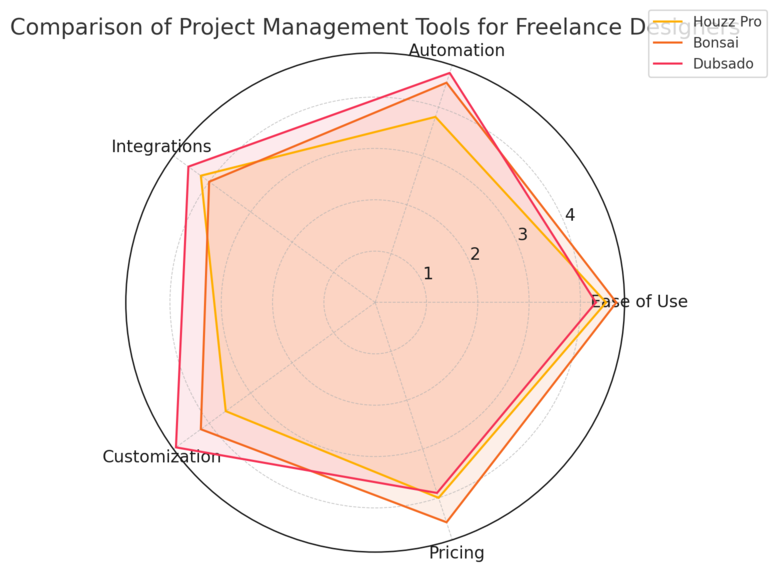
Pricing and proposals don’t have to drain your creative energy. The right tools automate repetitive tasks, keep your finances organized, and make you look more professional.
Using Software Like Houzz Pro, Bonsai, Or Dubsado
Each of these tools helps you create polished proposals in minutes:
- Houzz Pro: Ideal for designers—it combines project estimates, client communication, and portfolio showcases in one dashboard. You can create templates for different project types and duplicate them easily.
- Bonsai: Perfect for freelancers managing multiple clients. It generates proposals, contracts, and invoices automatically. You can even embed e-signature fields to speed up approvals.
- Dubsado: Great for building client workflows. It lets you automate follow-ups, reminders, and questionnaires to personalize the experience.
If you’re just starting, I recommend Bonsai—it’s the most intuitive and affordable option for individual designers.
Automating Proposals, Contracts, And Invoicing
Automation is your hidden ally. Once you’ve created a pricing template, reuse it for future projects by updating only client-specific details. This consistency saves hours every month.
Here’s how a simple automation workflow might look in Bonsai:
- Client inquiry via your website → triggers an email with a project questionnaire.
- Once filled, Bonsai automatically generates a draft proposal.
- After client approval, an invoice and contract are sent instantly.
No manual copying or chasing paperwork. Just seamless flow.
Tracking Profitability With Tools Like QuickBooks Or Notion
To keep tabs on your earnings and expenses, integrate a simple financial tracker into your routine.
- QuickBooks: Connects directly to your business account to categorize expenses and calculate quarterly taxes automatically.
- Notion: Ideal for visual thinkers. You can create a custom dashboard tracking projects, invoices, and payment timelines.
I suggest reviewing your profits monthly—compare revenue versus time spent per project. This helps you identify which types of clients or services are most profitable.
Over time, you’ll see patterns that reveal where to raise prices or refine offers.
Factoring In Seasonal Demand And Economic Shifts
Freelance landscape design work naturally ebbs and flows with the seasons.
Understanding how to adjust your pricing and contracts around these shifts can protect your income and give you a clear advantage in a competitive market.
Adjusting Rates Based On Busy And Slow Seasons
Landscape design is cyclical. Most projects surge during spring and early summer when property owners plan renovations.
During off-seasons—like winter in colder regions—demand drops.
Here’s how to handle that:
- Increase rates slightly during peak demand. Clients are often willing to pay more to secure your time when you’re busiest.
- Offer off-season discounts strategically. This keeps your calendar filled while maintaining client relationships. For example, promote winter design consultations that prepare clients for spring installations.
- Diversify income streams. I suggest adding services like digital design consultations or online plant selection workshops to keep revenue steady.
Tracking your booking trends in a tool like Notion or Airtable helps you identify when to raise or lower rates confidently.
Building Flexibility Into Contracts For Material Price Changes
Material costs—especially plants, pavers, and timber—fluctuate constantly. When you quote fixed prices months in advance, those changes can eat into profits.
Protect yourself with a clause in your contracts that covers material price adjustments. A simple statement like: “Final project costs may be revised if material prices increase by more than 5% between proposal and installation.”
If you’re using software like Bonsai or Dubsado, you can include these clauses as reusable templates in your contracts. This small addition saves you from awkward client conversations when supply costs spike unexpectedly.
Staying Competitive During Market Fluctuations
Economic downturns affect design spending. Some clients pause projects; others shop around for cheaper alternatives. The key is positioning yourself as a value-driven professional, not a low-cost one.
During slow periods:
- Highlight long-term savings from sustainable or low-maintenance designs.
- Offer flexible payment plans through Houzz Pro’s invoicing feature.
- Maintain visibility—keep posting completed projects and client testimonials online.
In challenging times, consistency builds credibility. Clients remember designers who stay active even when the market slows down.
Including Hidden Costs That Designers Often Miss
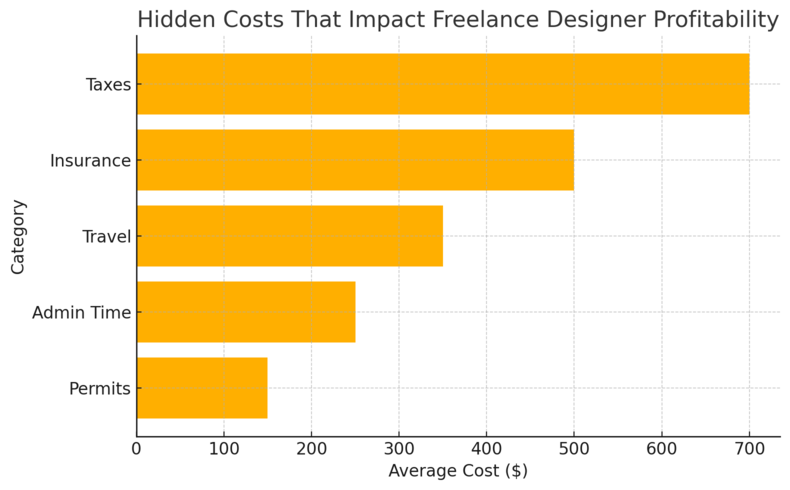
Even seasoned freelance landscape designers sometimes forget to factor in hidden costs that quietly erode profits. These small details—when ignored—can add up to hundreds each month.
Accounting For Travel, Consultations, And Permits
Site visits, client consultations, and local permits all take time and money. Many freelancers overlook these when setting prices.
I recommend tracking every client visit with a mileage app like MileIQ or Everlance. Then, build that cost directly into your proposals. For example: “Includes two on-site visits within 20 miles. Additional travel billed at $0.60/mile.”
If permits are needed, charge an administrative fee to handle them. You’re not just filling forms—you’re managing compliance, which is valuable expertise.
Covering Insurance, Taxes, And Administrative Time
Running a freelance business comes with unavoidable overhead:
- Insurance: Liability and professional indemnity coverage are essential for site work.
- Taxes: Set aside 20–25% of your income for taxes unless you have quarterly payments automated through tools like QuickBooks Self-Employed.
- Admin hours: Time spent on emails, proposals, and scheduling adds up. I include 5–10% of every project’s total fee as an “operational buffer” to cover this.
Without accounting for these, your real hourly rate can drop far below what you think you’re earning.
Setting A Contingency Buffer For Unexpected Delays
Every project faces surprises—bad weather, supplier delays, or client indecision. Adding a 10–15% contingency buffer ensures you don’t end up working unpaid hours.
If your proposal total is $5,000, quote $5,500. That $500 isn’t greed—it’s risk management. Communicate it clearly as “project flexibility for unforeseen circumstances.” Most clients appreciate your foresight.
You’ll thank yourself later when that unexpected revision round doesn’t eat into your profit.
Raising Your Rates Strategically Over Time
Raising rates isn’t just about earning more—it’s about matching your growing skill set, demand, and results. The trick is timing and communication.
Recognizing The Right Moment To Increase Prices
You’ll know it’s time to raise rates when:
- You’re consistently booked months in advance.
- Clients rarely negotiate your quotes.
- Your portfolio and client base have expanded significantly.
In my experience, reviewing rates every 6–12 months works best. Even a 10–15% increase annually keeps you aligned with inflation and experience growth without shocking clients.
A small experiment helps: quote slightly higher for new inquiries first. If conversion rates remain strong, it’s a clear sign the market supports your new pricing.
Communicating Price Changes To Repeat Clients
Long-term clients deserve transparency. Send them a polite message like:
“I wanted to let you know my rates will be increasing starting next quarter to reflect new services and continued investment in design tools. I value our collaboration and wanted you to hear directly from me first.”
It’s respectful and professional. Most loyal clients stay because of your trust and quality, not price alone.
Using Testimonials And Portfolio Growth To Justify Premium Rates
When you raise prices, proof matters. Display before-and-after photos, client testimonials, and measurable results on your website.
Example: “Our eco-friendly design reduced irrigation needs by 40% within the first year.”
That kind of evidence justifies your premium rates better than any sales pitch. Platforms like Houzz and Behance make it easy to showcase your growth visually.
Creating A Long-Term Pricing Strategy For Growth
Smart pricing isn’t static—it evolves with your career. Building a long-term pricing plan helps you move from survival mode to sustainable growth as a freelance landscape designer.
Forecasting Income Goals And Future Service Offerings
Start by setting annual income goals. If you want to earn $80,000 per year, break that down:
- $6,667 per month
- If your average project is $2,000, that’s roughly 3–4 projects monthly
Now identify how to reach that sustainably—whether it’s through higher rates, more clients, or expanded offerings.
For instance, offering virtual design packages or premium consultations via Zoom can scale income without extra site work.
Transitioning From Freelancer To Design Studio Owner
Eventually, you may want to shift from solo work to running a small studio. That requires new pricing structures.
Consider:
- Charging project management fees for subcontractors.
- Creating standardized design packages your team can deliver.
- Investing in business software like Asana or ClickUp for team coordination.
This transition allows you to handle more clients simultaneously without losing creative control.
Balancing Creative Freedom With Sustainable Profit
It’s easy to chase beautiful projects and forget profitability. To maintain both creativity and financial health, I recommend:
- Reviewing your income-to-hours ratio quarterly.
- Dropping low-margin services that drain energy.
- Reserving time for personal or portfolio projects that fuel inspiration.
Success in landscape design isn’t about working nonstop—it’s about building a business that funds your creativity and lifestyle long-term.

I’m Juxhin, the voice behind The Justifiable.
I’ve spent 6+ years building blogs, managing affiliate campaigns, and testing the messy world of online business. Here, I cut the fluff and share the strategies that actually move the needle — so you can build income that’s sustainable, not speculative.
Related posts:
 Python Freelance Jobs Where to Land High-Paying Projects
 Freelance Developer: How to Find the Perfect Fit for Your Project
 WordPress Freelancer: How to Hire Experts Without Overpaying
 Upwork Freelancer Tips to Avoid Scams and Wasted Money
 Freelance Data Entry Jobs You Can Start From Home Today
 How to Set Up a Freelancer Home Office That Actually Works