
Table of Contents
Some links on The Justifiable are affiliate links, meaning we may earn a small commission at no extra cost to you. Read full disclaimer.
If you’re doing freelance legal work, figuring out how much to charge can feel like walking a tightrope. Charge too little, and you undervalue your expertise. Charge too much, and you risk losing potential clients.
So how do you set your rates confidently and fairly—without second-guessing yourself or undercutting your worth?
This guide walks you through a practical, step-by-step process to determine, evaluate, and adjust your freelance legal rates with confidence and clarity.
Understand the Value of Your Freelance Legal Work
Before setting your freelance legal rates, you need to know what your expertise is truly worth.
This means understanding not only your skills but also what the market is willing to pay for them.
Identify Your Core Legal Expertise and Market Demand
Start by defining what kind of freelance legal work you actually do best. Are you drafting contracts, offering compliance consulting, or handling intellectual property filings?
Each area of law has different market demand and rate expectations.
If you specialize in contract law for startups, for example, you’ll likely find a steady stream of clients looking for clarity and protection in their early-stage documents.
Meanwhile, freelance attorneys in data privacy or corporate law often command higher rates due to the complexity and risk involved.
Here’s a quick self-assessment approach:
- List your top 3–5 legal skills and services.
- Identify which of these solve urgent or expensive problems for clients.
- Check platforms like LawClerk, UpCounsel, or LinkedIn Services to see what similar freelancers are charging.
I recommend choosing one or two high-value niches where your expertise directly supports business-critical outcomes. That’s where your pricing power lives.
Evaluate Your Experience and Professional Credentials
Your education, years of experience, and professional reputation directly affect your value in the freelance legal market. Clients aren’t just paying for hours—they’re paying for your judgment and ability to reduce risk.
If you’re a licensed attorney with five or more years in a specialized field, you can confidently charge on the higher end of the scale.
Paralegals or legal consultants without a bar license may need to price slightly lower but can still command solid rates if they demonstrate strong results or niche expertise.
Ask yourself: What do my credentials communicate about the level of risk or confidence I bring to a client’s legal matter? The clearer your answer, the easier it becomes to justify premium pricing.
Research What Clients Are Willing to Pay
Pricing shouldn’t happen in isolation. Look at what clients are actually paying for similar freelance legal work in your region or online.
To research:
- Use Upwork, Freelancer, and PeoplePerHour to compare rates across legal categories.
- Search Google for “[type of legal work] freelance hourly rate” to see updated survey data.
- Check Clio’s Legal Trends Report, which provides annual insights into typical billing rates by practice area and geography.
I suggest creating a simple spreadsheet comparing your services with three or four competitors.
Include rate range, specialization, and credentials. You’ll quickly see where your pricing fits—and where you might be underselling.
Compare Rates Across Similar Legal Niches
Not all legal work is valued equally. Drafting a basic NDA isn’t priced the same as advising on a multi-jurisdictional merger. That’s why it helps to benchmark against similar niches.
For example:
- Corporate and IP law: $150–$400/hour, depending on experience.
- Employment law or HR compliance: $100–$250/hour.
- Paralegal document preparation: $40–$100/hour.
These are ballpark ranges, but they highlight the spread. If you work in a highly regulated or high-stakes area, you can and should charge more.
The goal is to avoid “averaging” your rate across unrelated niches. Instead, align your pricing with the complexity and value of the specific services you provide.
Choose the Right Pricing Model for Your Legal Services
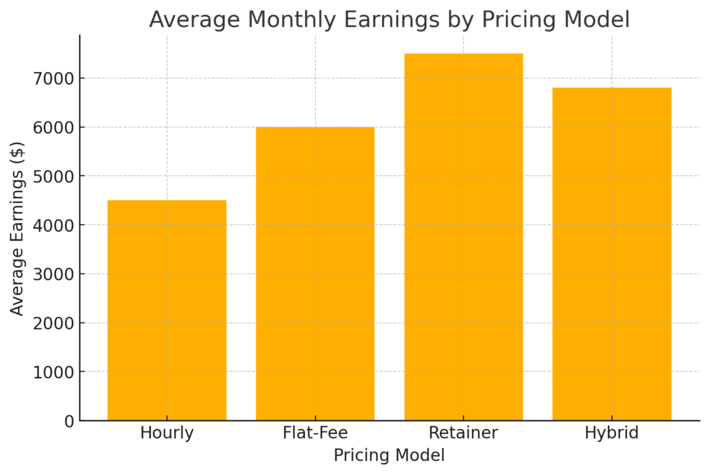
How you charge can matter as much as how much you charge.
Choosing the right pricing structure helps you align your value with client expectations and cash flow stability.
When to Use Hourly Rates for Freelance Legal Work
Hourly billing still dominates in legal freelancing because it’s flexible and transparent. It works best when:
- The project scope is unclear or open-ended.
- You’re working with corporate legal departments used to hourly invoices.
- You want to bill for research or consultation time.
However, hourly billing can discourage efficiency since you earn less for working faster. I often suggest tracking your time using Toggl or Clockify so you can later shift toward project or retainer pricing once you know your average hourly output.
How to Set Project-Based or Flat-Fee Pricing
Project pricing is ideal when the scope is clearly defined, such as drafting a contract, filing a trademark, or reviewing policies. Clients love it because it provides predictability.
To calculate a fair project fee:
- Estimate the total hours you’d spend.
- Multiply by your target hourly rate.
- Add a buffer (10–15%) for unexpected revisions or complexities.
Example: If you normally charge $150/hour and expect a project to take 6 hours, a flat rate of around $1,000 feels balanced for both sides.
This model rewards efficiency and can scale well when you’ve built repeatable workflows.
Retainer Models and Their Benefits for Ongoing Legal Work
A retainer means a client pays you a set fee upfront each month in exchange for a specific scope of ongoing work—like reviewing contracts, drafting policies, or providing general counsel support.
Benefits include:
- Predictable income: You know your baseline monthly revenue.
- Long-term relationships: Clients commit to consistent collaboration.
- Efficient workflow: You spend less time negotiating new contracts.
A $2,500 monthly retainer for 10 hours of dedicated legal support, for instance, provides both stability and scalability.
I often advise freelancers to start with small retainers and gradually increase as trust builds.
Hybrid Pricing: Combining Different Models Strategically
Hybrid pricing mixes models to fit diverse projects. For instance, you might charge a flat fee for drafting contracts and hourly for revisions or consultations beyond the agreed scope.
This approach helps balance risk and reward. Clients know what to expect, and you’re protected against scope creep—a common pain point in freelance legal work.
Hybrid pricing works especially well for multi-phase projects, like handling a startup’s incorporation, compliance setup, and later fundraising documentation. Each phase can use a different structure to reflect its nature.
Calculate a Baseline Rate You Can Justify
Once you’ve defined your value and model, it’s time to translate that into numbers you can stand behind—without hesitation or apology.
Factor in Your Desired Annual Income and Workload
Start with what you actually want to earn annually. Let’s say your goal is $120,000 per year, and you plan to work 48 weeks. That means $2,500 per week.
Now, if you can realistically bill 20 hours a week (accounting for admin, marketing, and downtime), your hourly rate should start around $125/hour just to hit your goal.
This isn’t about guessing—it’s about designing your freelance business to meet real financial needs.
Include Taxes, Overhead, and Business Expenses
Your rate must cover more than your take-home pay. You also need to factor in:
- Self-employment tax: Typically around 15%.
- Software costs: Think Clio, Notion, or Google Workspace.
- Insurance: Professional liability or malpractice coverage.
- Marketing expenses: Website hosting, ads, or networking memberships.
If your total annual expenses are $12,000, adjust your rate upward accordingly. I suggest adding 10–20% to your baseline to cover these costs comfortably.
Determine Your Billable Hours Accurately
A common mistake is assuming you’ll bill 40 hours a week. In reality, most freelancers only bill 50–60% of their working time. The rest goes to client acquisition, admin, and strategy.
To find your realistic number:
- Track your time for 2–3 weeks using Harvest.
- See how many hours are billable vs. non-billable.
- Adjust your pricing to reflect true capacity.
Once you know your billable ratio, your rates will start to feel more grounded—and your workload more sustainable.
Use Legal Rate Calculators and Benchmark Tools Effectively
Tools like Lawyerist’s Rate Calculator or Clio’s Hourly Rate Benchmark Tool can help you cross-check your math.
These calculators let you input location, experience level, and practice area to estimate competitive hourly rates. Use them as a sanity check, not a final answer.
For example, if Clio suggests a $180/hour rate for your niche but you’re charging $90, it’s a signal you’re undervaluing your services. Raise it gradually to match your expertise.
Pro Tip: Always price from a place of clarity, not comparison. Confidence in your rates starts when you understand why they exist—not just what others charge.
Adjust Your Rates Based on Client Type and Case Complexity
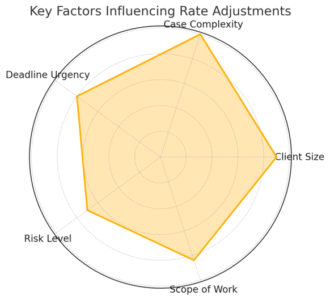
Your freelance legal work won’t fit neatly into one price point. Different clients bring different budgets, expectations, and levels of risk.
Adjusting your rates with intention helps you stay fair while protecting your income and value.
Setting Rates for Corporate vs. Individual Clients
Corporate clients usually have larger budgets but expect a higher standard of expertise, speed, and communication. Individual clients, on the other hand, are often more price-sensitive and value transparency.
Here’s how I suggest approaching each type:
- Corporate clients: Charge premium rates. They’re paying not only for your legal knowledge but also for the trust and reliability you bring to their business. For example, reviewing a SaaS company’s vendor agreement might be priced at $250/hour or $1,200 flat for full review and redline.
- Individual clients: Offer clear, outcome-based pricing. Think of wills, lease agreements, or basic contracts. A flat fee of $300–$500 can make pricing predictable and approachable for them.
What matters most is how you frame your pricing. Corporate clients appreciate value alignment and speed. Individuals value clarity and fairness. Adjust your structure, not just your number.
How Complexity and Urgency Affect Your Pricing
Legal work varies in complexity—from simple NDA reviews to multi-jurisdictional compliance advice. Complexity and urgency are two powerful pricing levers you should never ignore.
I often use what I call the “Complexity Multiplier” method:
- Low complexity (routine drafting) – baseline rate.
- Moderate complexity (research + drafting) – baseline × 1.5.
- High complexity (strategic or multi-party) – baseline × 2.
- Urgent delivery (less than 48 hours) – add 20–30%.
Example: If your base rate is $150/hour, a complex, time-sensitive project could be billed at $300/hour. This isn’t overcharging; it’s compensating for the additional expertise, stress, and opportunity cost.
When urgency meets complexity, your time becomes a premium asset. Always price accordingly.
Handling Long-Term Clients Without Undervaluing Yourself
It’s tempting to keep the same rate for loyal clients—but that’s how many freelancers quietly lose thousands over the years. You can stay loyal without staying underpaid.
Here’s what I recommend:
- Review every 6–12 months. Evaluate whether the scope or responsibility has grown.
- Reward loyalty with consistency, not discounts. Keep rates stable for clients who pay promptly or offer ongoing work, but adjust for inflation and added complexity.
- Communicate rate changes early. Give 30 days’ notice with a clear explanation.
For example, you might say: “As my services have expanded to include compliance support, my rate will increase to $180/hour starting next month.” Clear, respectful communication maintains trust and professionalism.
Creating Tiered Pricing for Different Legal Services
Tiered pricing lets clients choose from several service levels—ideal for balancing affordability and profitability.
You can structure tiers like this:
- Basic: Document review or consultation (e.g., $250 flat).
- Standard: Review + revisions + brief summary report (e.g., $450 flat).
- Premium: End-to-end drafting + negotiation support (e.g., $750–$1,000).
This model works beautifully for freelancers handling contract drafting, employment policies, or compliance reviews. It empowers clients to select the value they want—and subtly guides them toward higher-value options.
Tiered pricing also simplifies negotiation. Instead of lowering your rate, you can adjust scope. That’s the smartest way to stay flexible without losing authority.
Confidently Communicate Your Rates to Clients
Even perfectly calculated rates can crumble if you don’t communicate them confidently. The way you present pricing signals your professionalism as much as the price itself.
How to Present Rates Professionally and Persuasively
Confidence doesn’t mean arrogance—it means clarity. Present your rates as part of your process, not an afterthought.
A few practical approaches:
- In proposals: State your rate or fee structure clearly, e.g., “Flat fee of $800 for complete contract drafting and review.”
- In discovery calls: Explain how your pricing aligns with the value and outcomes.
- In follow-ups: Summarize in writing to avoid confusion.
I often use phrases like: “This rate reflects the level of care and precision required to ensure your agreement is enforceable and risk-free.” It ties price to outcome, not time.
Remember: when you sound confident, clients feel confident paying you.
Responding to Clients Who Push for Discounts
Every freelancer faces this. A client asks, “Can you lower your rate?” The worst move is to panic and discount out of fear.
Here’s how to handle it gracefully:
- Reframe the question: “I can adjust scope to fit your budget” rather than “I can cut my rate.”
- Highlight value: Emphasize results, reliability, and your professional liability.
- Offer trade-offs: For example, “If we simplify the deliverables to exclude policy updates, I can offer $200 less.”
Discounting should always come with a clear adjustment in value—not a devaluation of your expertise. I believe freelancers who maintain boundaries attract better clients over time.
Positioning Your Value Instead of Justifying Your Price
Clients respect lawyers and legal freelancers who stand by their pricing. The goal isn’t to defend your rates—it’s to demonstrate the impact behind them.
Try leading with outcomes:
- “My role is to protect your business from potential liability.”
- “This package includes full legal compliance checks to prevent future disputes.”
When you connect pricing to results—reduced risk, peace of mind, legal compliance—clients see you as a solution, not a cost.
In conversations, silence is powerful too. After stating your rate, pause. Confident professionals don’t rush to fill the gap.
Including Clear Terms in Your Freelance Legal Proposals
Every proposal should outline terms that protect both sides. It not only prevents misunderstandings but also reinforces your professionalism.
Include:
- Scope of work: Define exactly what’s included (and excluded).
- Payment terms: Specify deposits, due dates, and late fees.
- Revision policy: Clarify how many rounds are included.
- Delivery timelines: Make them realistic, not rushed.
If you’re using tools like HoneyBook, Bonsai, or PandaDoc, these platforms let you create customizable proposal templates with built-in e-signature options. Clients appreciate the structure—it signals you run your freelance business like a true legal professional.
Review and Raise Your Rates Over Time
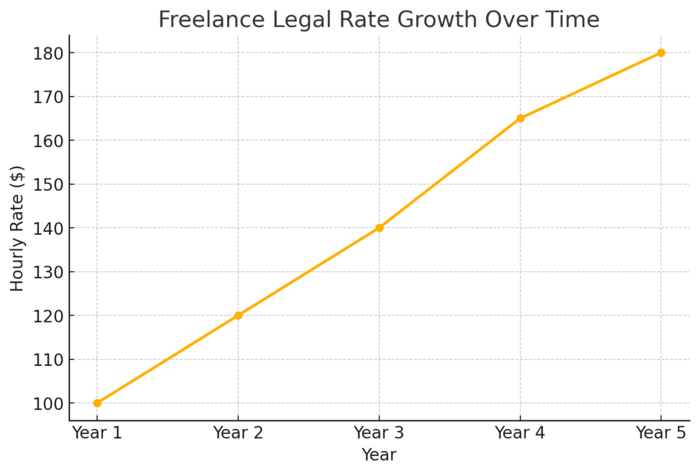
Raising your rates isn’t about greed—it’s about growth. As your experience deepens, so does your value.
The key is to do it thoughtfully and transparently.
Signs It’s Time to Increase Your Freelance Legal Rates
You’ll know it’s time when:
- You’re fully booked and turning away work.
- Your workload has grown, but income hasn’t.
- You’ve developed specialized expertise or certifications.
- Competitors with similar credentials charge more.
If you consistently deliver high-value results, that’s your cue. Clients who recognize your worth won’t flinch at reasonable increases.
How to Inform Clients About Rate Changes Gracefully
Raising rates is best done with clear communication and advance notice.
I suggest this structure for client messages:
- Acknowledge the partnership: “I’ve really valued working with you.”
- Explain the reason: “My rates are being updated to reflect expanded services and market standards.”
- Provide notice: “The new rate of $175/hour will apply starting January 1.”
- Express appreciation: “I look forward to continuing to support your legal needs.”
Giving at least 30 days’ notice helps clients plan and preserves goodwill.
Using Performance Data to Support Rate Increases
If you track project results—like time saved, disputes prevented, or compliance audits passed—you have real proof of value.
Use tools like Clockify or Notion to record project durations, outcomes, and feedback. For instance, if your revisions consistently take less time due to improved efficiency, you’ve earned a raise through skill growth, not just time served.
Clients respect evidence. Showing how your performance improved over time makes rate increases a natural next step, not a surprise.
Reassessing Your Value as You Gain Experience
Your pricing isn’t static—it should evolve with your expertise and confidence. I suggest a simple practice: conduct a Value Audit every six months.
Ask yourself:
- Have my skills or certifications expanded?
- Am I handling more complex projects?
- Has client feedback improved?
If the answer to two or more is yes, it’s time to review your rates. Freelance legal work thrives on consistency and evolution; your pricing should reflect both.
Expert Tip: Always connect rate increases to measurable growth—skills, efficiency, or client results. It shows professionalism, not ego, and reinforces your credibility as a trusted freelance legal expert.
Tools and Resources to Help You Set Smarter Rates
Using the right tools makes setting and managing rates for your freelance legal work much easier.
These resources help you track the market, calculate accurate prices, and stay organized financially.
Freelance Platforms and Marketplaces for Legal Professionals
If you’re starting out or expanding your client base, platforms designed for legal freelancers can give you a clear sense of competitive rates.
Some of the best platforms include:
- LawClerk: Connects freelance attorneys with law firms that need contract support. You can browse projects, compare bids, and see what firms typically pay for similar work.
- UpCounsel: Ideal for licensed lawyers offering ongoing legal support. Projects here often involve contract law, compliance, or IP—great benchmarks for professional rates.
- LinkedIn Services Marketplace: Lets you market your legal services directly to business owners and entrepreneurs. Search similar profiles to gauge your pricing range.
I suggest using these platforms less as job boards and more as market research tools. Study what clients are requesting, how freelancers package their services, and which pricing models perform best.
Legal Industry Rate Surveys and Reports
To price confidently, it helps to ground your decisions in real data. Fortunately, several legal rate reports offer detailed insights.
A few reliable sources are:
- Clio Legal Trends Report: Publishes annual data on hourly billing rates across the U.S., segmented by state and practice area.
- Statista Legal Services Data: Provides global insights on law firm billing, corporate legal budgets, and freelance trends.
- Upwork Skills Index: Useful for identifying high-demand freelance categories and corresponding rates.
For instance, the 2024 Clio report showed average hourly rates of $187 for solo practitioners, $225 for small firms, and $145 for paralegals. Knowing these numbers helps you avoid guessing and price with evidence.
Financial Tools to Track Income and Expenses
Financial clarity is the backbone of sustainable freelance legal work. When you know exactly where your money goes, you can confidently adjust rates.
Here are some tools I personally recommend:
- QuickBooks Self-Employed: Automatically tracks income, expenses, and estimated taxes—great for solo legal professionals.
- Wave Accounting: A free alternative that simplifies invoicing and cash flow management.
- Airtable: Excellent for building custom dashboards that track billable hours, retained clients, and monthly goals.
I advise reviewing your finances monthly. Seeing hard data—like profit margins or billable hour averages—gives you objective reasons to raise or restructure your rates.
Rate Calculators and Proposal Templates for Legal Freelancers
Instead of guessing what to charge, use rate calculators to determine a logical starting point.
Helpful tools include:
- Lawyerist’s Hourly Rate Calculator: Lets you input annual income goals, work hours, and overhead to calculate sustainable rates.
- Clio’s Pricing Benchmark Tool: Provides localized rate data for legal professionals in your area.
- Bonsai Proposals: Offers editable legal proposal templates with embedded pricing sections and e-signature options.
Using these tools not only saves time but also helps standardize how you present pricing. The consistency itself builds trust with clients—because professional communication signals professional value.
Common Pricing Mistakes to Avoid in Freelance Legal Work
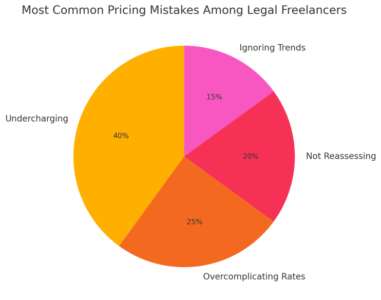
Even experienced freelancers fall into pricing traps that eat into profit or credibility. Recognizing them early keeps your business healthy and your confidence intact.
Undercharging Due to Fear or Inexperience
Many new freelancers start too low, thinking lower prices attract clients faster. The truth is, underpricing often signals inexperience or desperation—and attracts price-sensitive clients who rarely become loyal.
If you’ve ever thought, “I’ll raise my rates later,” challenge that mindset. Clients who hire you at $50/hour may hesitate to pay $150/hour later, even if your work improves. Start closer to fair market value and grow from there.
Overcomplicating Your Pricing Structure
Overly complex pricing confuses clients. Packages with too many variables—different hourly tiers, unclear add-ons, or unexplained discounts—make clients hesitant to commit.
Simplify instead. Offer 2–3 service tiers or clearly defined deliverables.
For example:
- Contract review and summary: $350
- Full drafting with two revisions: $750
- Comprehensive negotiation package: $1,200
Simplicity feels trustworthy. It shows you respect your client’s time as much as your own.
Failing to Reassess Rates as You Grow
Rates aren’t static. As your skills expand, so should your income. Yet many freelancers keep the same rates for years out of fear of losing clients.
Here’s what I suggest:
- Review your pricing every 6 months.
- Compare against current market benchmarks.
- Increase gradually (5–15%) with clear notice to clients.
Growth should feel like a natural reflection of experience—not a sudden jump. Consistent adjustments make it easier for clients to understand and accept.
Ignoring Market Trends and Client Feedback
The legal industry evolves quickly. If you don’t keep up with trends—like new data privacy laws or emerging business models—you risk pricing yourself out of relevance.
Set aside time each quarter to check:
- LegalTech platforms: New tools often shift demand and expectations.
- Client feedback: Ask what they valued most and where they saw the most return.
- Economic context: Inflation and regional demand can impact acceptable rates.
Pricing confidently means balancing data with intuition. I believe the best freelancers treat feedback not as criticism but as guidance for smarter decisions.
Expert Tips to Stay Confident About Your Rates
Confidence in pricing isn’t about being the most expensive—it’s about being aligned with your worth and results.
Build Confidence Through Transparency and Boundaries
Be upfront about your rates early in the client conversation. Clear pricing signals professionalism and filters out mismatched leads.
Set boundaries too—like charging consultation fees or requiring deposits. These small practices reinforce the value of your time and expertise.
A confident freelancer says, “Here’s what I offer and what it costs,” instead of “What’s your budget?” That shift alone changes how clients perceive your authority.
Keep Refining Your Value Proposition Over Time
Your value proposition—the “why” behind your pricing—should evolve as you do. As you gain experience, you’ll likely move from generalist tasks (e.g., contract drafting) to strategic advisory roles (e.g., risk management or compliance consulting).
Each step up justifies higher rates. Regularly update your website, proposals, and portfolio to reflect this.
I suggest including metrics like “helped reduce dispute rates by 30%” or “negotiated contracts worth $2M.” Hard results build pricing confidence.
Network with Other Legal Freelancers for Benchmarks
Freelance legal work can feel isolating, so it helps to compare notes. Join online communities like LawyerSmack, FreelanceLaw, or LinkedIn legal freelancer groups.
Conversations about pricing, client trends, and project structures reveal real-world insights no report can match. I’ve seen freelancers increase their rates 20–30% after realizing peers in similar niches charge more for equivalent work.
Community brings perspective—and confidence.
Focus on Quality, Not Quantity, in Your Client Base
More clients don’t always mean more profit. Taking on fewer, higher-value clients often leads to better relationships, less burnout, and stronger long-term revenue.
Ask yourself: Would I rather have five clients paying $500/month or two paying $1,500/month?
High-quality clients pay for expertise, respect boundaries, and value efficiency. They’re also more likely to refer others like them. The right clients let you charge what you’re worth—without hesitation.
Pro Tip: Anchor Your Rates in Real Value
The most effective pricing strategy in freelance legal work is to connect your rates directly to measurable outcomes. Clients pay for results, not hours.
Focus on the Results You Deliver, Not Just the Time You Spend
Shift your mindset from “time spent” to “risk reduced” or “value created.” For example, if your contract saves a startup from a potential $50,000 dispute, your $1,000 fee becomes a bargain.
When discussing pricing, highlight how your work prevents liability, saves time, or improves compliance—not how long it takes.
Use Testimonials and Case Outcomes to Reinforce Your Worth
Testimonials and case examples create social proof that supports your rates better than any pitch. Ask satisfied clients for short, specific statements that describe your impact.
Example: “Eugene reviewed our SaaS contracts and saved us from a potentially costly compliance issue.”
Include these quotes on your proposals and website. They make your value tangible and credible.
Remember: Confidence in Your Pricing Reflects Confidence in Your Work
Clients can sense when you’re uncertain about your rates. Confidence comes from preparation—knowing your value, your market, and your results.
Trust the process: research, benchmark, adjust, and communicate transparently. You’ll soon realize that confident pricing isn’t about being bold—it’s about being honest with yourself and the value you bring to every client relationship.
Final Tip: The smartest freelancers treat pricing as an evolving system, not a static decision. Stay informed, keep improving your value, and your confidence—and income—will grow naturally alongside it.

I’m Juxhin, the voice behind The Justifiable.
I’ve spent 6+ years building blogs, managing affiliate campaigns, and testing the messy world of online business. Here, I cut the fluff and share the strategies that actually move the needle — so you can build income that’s sustainable, not speculative.
Related posts:
 Python Freelance Jobs Where to Land High-Paying Projects
 Freelance Developer: How to Find the Perfect Fit for Your Project
 WordPress Freelancer: How to Hire Experts Without Overpaying
 Upwork Freelancer Tips to Avoid Scams and Wasted Money
 Freelance Data Entry Jobs You Can Start From Home Today
 How to Set Up a Freelancer Home Office That Actually Works