
Table of Contents
Some links on The Justifiable are affiliate links, meaning we may earn a small commission at no extra cost to you. Read full disclaimer.
If you’ve ever spent sleepless nights wondering how to cut shipping costs and still keep your customers happy, you’re not alone. As online competition grows, partnering with the right ecommerce fulfillment companies can make or break your profit margins.
I’ve seen brands go from struggling with delayed deliveries to thriving after choosing a fulfillment partner that actually fits their needs. Let’s break down the top players that don’t just ship your products—but help boost your bottom line.
1. ShipBob: Fast-Growing Fulfillment for DTC Brands
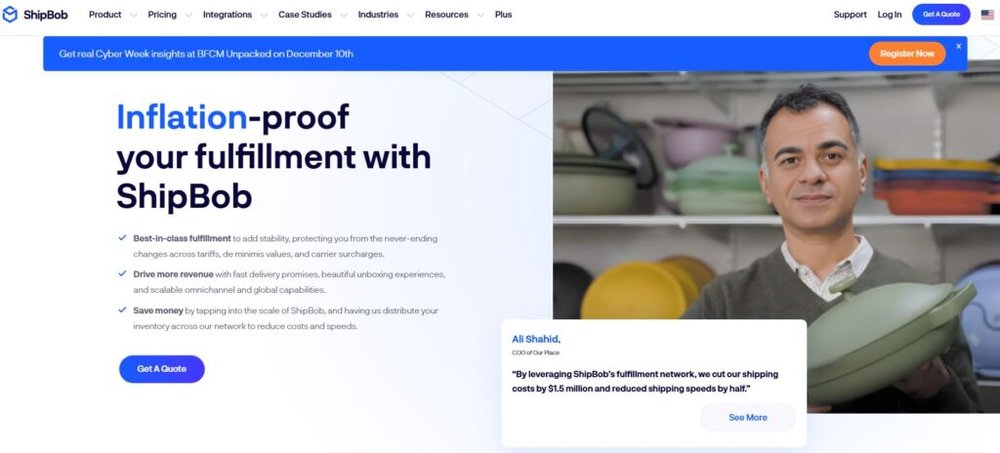
If you run a direct-to-consumer (DTC) brand, ShipBob is one of those ecommerce fulfillment companies that feels built with you in mind.
It combines the scalability of big logistics players with the personal touch of a smaller partner—something I think every growing online business needs.
Streamlined Order Fulfillment With Nationwide Warehousing
What makes ShipBob stand out is its extensive network of fulfillment centers across the U.S., Europe, and Canada. This setup allows you to store inventory closer to customers, cutting delivery times and costs dramatically.
I’ve noticed that brands using ShipBob often see average shipping times drop to 2–3 days without paying express rates.
Their platform syncs in real-time with Shopify, WooCommerce, BigCommerce, and Amazon, so every order update is automatic. That means no more manually checking spreadsheets or worrying if inventory data is outdated.
Quick takeaway: The closer your products are to your customers, the less you pay for shipping—and the faster your delivery promise is met.
Transparent Pricing That Supports Scalability
ShipBob’s pricing structure is surprisingly straightforward. You pay for:
- Receiving (based on hours worked)
- Storage (per bin, shelf, or pallet)
- Picking, packing, and shipping
There are no hidden fees, which I appreciate because many fulfillment services bury costs in “handling” or “inventory transfers.” As your business grows, you can easily forecast costs since ShipBob provides detailed reports on spending trends.
For small to medium-sized DTC brands, this clarity makes scaling far less intimidating. You can plan marketing, restocks, and promotions with a clear view of logistics costs—something that directly helps maintain healthy profit margins.
How ShipBob’s Technology Improves Profit Margins
ShipBob’s tech platform is the real hero here. It gives you real-time visibility into inventory, orders, and delivery performance. For instance, you can see which warehouses are moving inventory fastest or which SKUs are most profitable.
They also offer inventory distribution recommendations, suggesting where to store stock for the best cost-to-delivery ratio. That’s the kind of optimization big brands spend millions to achieve—but ShipBob puts it in your dashboard.
Expert tip: Use ShipBob’s analytics dashboard to identify your “profit zones”—the regions where you make the highest margin after shipping costs.
2. Shopify Fulfillment Network: Seamless Integration for Shopify Stores
Shopify Fulfillment Network (SFN) is designed for businesses that already live inside Shopify’s ecosystem. It’s an all-in-one solution that keeps fulfillment, inventory, and orders synced automatically.
From my experience, it’s best suited for growing ecommerce stores that value simplicity and automation over deep customization.
Real-Time Inventory Management Across Multiple Channels
One of the biggest perks of SFN is real-time inventory visibility. Whether you sell through your Shopify storefront, Facebook Shop, or even other channels, SFN updates your stock automatically.
What’s impressive is its predictive inventory tools. Shopify uses machine learning to forecast demand, helping you prevent stockouts and overstocking—two silent killers of profit margins.
Here’s how it helps in practice:
- Avoid overstocking: The system predicts how much inventory to store and where.
- Auto-reorder alerts: You’ll know when it’s time to restock before sales dip.
- Unified dashboard: No need to jump between multiple platforms.
Cost Efficiency Through Data-Driven Shipping Routes
Shopify Fulfillment Network optimizes routes by automatically selecting the closest warehouse to the customer. This means lower shipping costs and faster delivery—without you lifting a finger.
Shopify’s data-driven logistics also reduce last-mile delivery costs, which often eat up to 53% of total shipping expenses for small businesses.
If you’ve ever struggled with keeping shipping affordable without compromising delivery speed, this system helps bridge that gap.
Pro insight: Shopify’s bulk shipping discounts can often beat rates you’d negotiate directly with carriers. That’s worth factoring in when you calculate your actual cost per order.
Why Shopify Fulfillment Network Suits Growing Ecommerce Brands
SFN is perfect for brands that want fulfillment that “just works” behind the scenes. You don’t have to manage multiple third-party apps or integrations. It’s plug-and-play if you’re already in the Shopify ecosystem.
Where SFN shines is in automation. You can scale quickly without hiring more staff or worrying about logistics complexity.
However, if your brand operates across multiple platforms outside Shopify (like Walmart or Amazon), you might find SFN limiting. But for pure Shopify sellers aiming to maximize profit per order, it’s an elegant and efficient choice.
Pro tip: Use Shopify’s analytics to identify your top-performing regions, then let SFN store inventory there to cut average delivery times further.
3. Amazon FBA: Reliable Global Reach for Marketplace Sellers
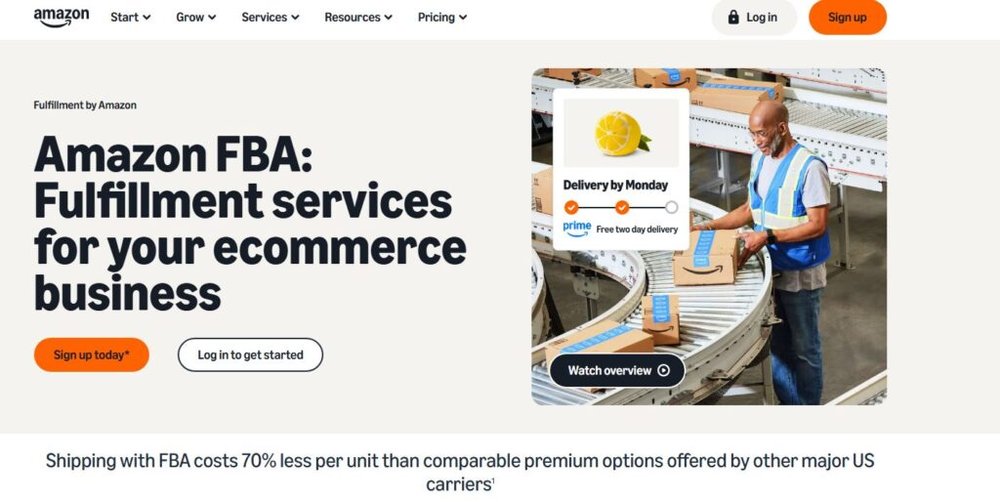
Amazon FBA (Fulfillment by Amazon) is one of the most recognized ecommerce fulfillment companies globally.
It gives sellers immediate access to Amazon Prime customers, which can dramatically increase conversions. But it’s not without tradeoffs—mainly around cost and control.
How FBA’s Infrastructure Maximizes Delivery Speed
Amazon’s fulfillment network is one of the largest and most advanced in the world. Products stored in FBA centers automatically qualify for Prime two-day (or even same-day) delivery, which massively boosts buyer confidence.
If your goal is to increase sales volume and reach, there’s no other platform with this level of logistical infrastructure. From what I’ve seen, sellers using FBA often report a 20–30% jump in sales simply due to the Prime badge.
Still, it’s not just about speed—it’s also reliability. FBA manages returns, customer service, and delivery tracking automatically. That saves you time and helps maintain a positive customer experience without manual effort.
The Cost vs. Control Tradeoff of Amazon Fulfillment
Now, the downside. Amazon’s fulfillment fees can add up quickly—especially for oversized or slow-moving products. They also charge long-term storage fees for inventory that doesn’t sell fast.
You’re also giving up some control over customer relationships. Amazon owns the customer data, not you, meaning follow-up marketing and retargeting can be tricky.
To make FBA profitable, you have to manage your inventory aggressively and factor in all fees before pricing your products.
Pro insight: Use Amazon’s Fee Calculator to model your costs before committing to FBA. It’s the easiest way to see your true profit margin after fulfillment and storage fees.
When FBA Is the Right Choice for Profit Growth
FBA makes the most sense when you’re focused on high-turnover products that benefit from Prime exposure. It’s ideal for businesses that prioritize speed, convenience, and sales volume over brand control.
If you already generate solid Amazon sales but struggle with logistics, FBA can free up your time and scale your business faster than managing in-house fulfillment.
However, for brands that want to build a direct customer relationship and maintain margin flexibility, pairing FBA with a secondary 3PL (like ShipBob or Flowspace) can be a smart hybrid strategy.
Pro tip: Use FBA for your best-selling SKUs and another 3PL for niche or slower-moving items. It’s a powerful way to balance speed, cost, and control without overpaying for storage.
4. ShipMonk: Scalable Fulfillment for Subscription and B2C Brands
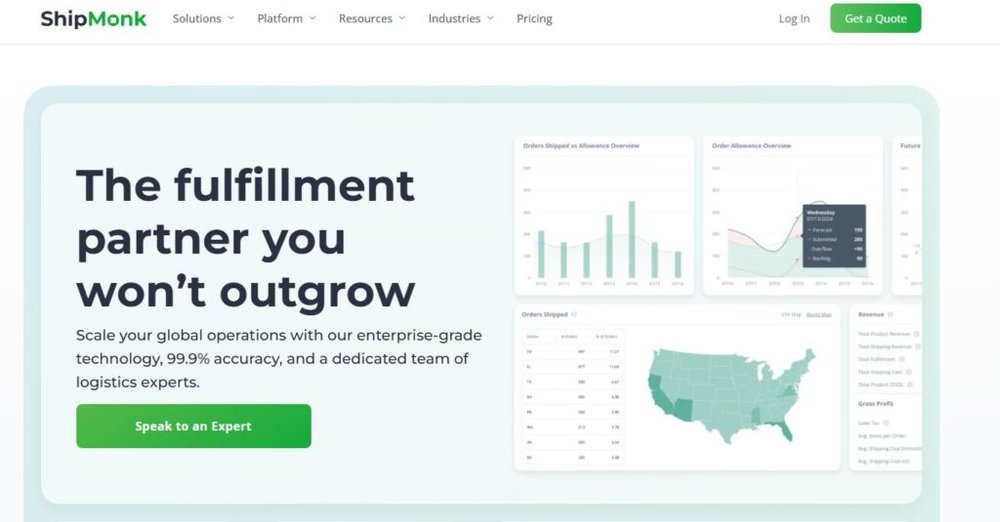
ShipMonk is one of those ecommerce fulfillment companies that really understands the needs of modern brands—especially subscription-based and direct-to-consumer (B2C) businesses.
I like how it combines automation with flexibility, giving you the control to scale without losing your sanity (or your margins).
Advanced Automation for Lower Operational Costs
ShipMonk’s platform uses advanced automation to handle the repetitive parts of fulfillment—things like picking, packing, and shipping—without requiring a huge operations team.
In simple terms, the system does the manual work that normally slows down order processing.
Here’s where that really helps:
- Automated workflows: Orders sync instantly from Shopify, WooCommerce, or Amazon.
- Smart routing: The system chooses the best warehouse based on customer location.
- Real-time tracking: Both you and your customers get live updates.
I’ve seen small brands save up to 30% on labor costs within months of switching to ShipMonk simply because automation replaces the need for manual fulfillment staff.
The fewer hands touching a product, the lower your chances of human error—and that’s money saved.
Another underrated advantage is accuracy. ShipMonk claims a 99.9% order accuracy rate, and that matters because returns and replacements can eat up as much as 20% of potential profit for ecommerce stores.
Flexible Storage and Fulfillment Options for Seasonal Businesses
ShipMonk is built for flexibility, which makes it perfect for brands that experience seasonal spikes—think holiday gift boxes, wellness products, or fashion retailers.
Instead of locking you into rigid contracts or minimum order requirements, ShipMonk scales storage and labor dynamically. You only pay for what you actually use.
Imagine you run a candle subscription business that doubles orders every November. With ShipMonk, you can ramp up inventory storage and fulfillment support for two months, then scale back in January without penalties.
That kind of elasticity helps preserve cash flow while still keeping customers happy during peak seasons.
A lot of fulfillment providers struggle to maintain this balance, but ShipMonk’s combination of tech and human oversight keeps it consistent.
Why ShipMonk Helps Boost Margins With Smarter Workflows
What really sets ShipMonk apart is how its technology works for you, not against you. Their dashboard shows detailed analytics on cost per order, fulfillment time, and storage efficiency—all key factors for maintaining profitability.
You can actually pinpoint where your money goes and find areas to cut costs, such as:
- Shipping zones that cost more than they return.
- SKUs that take too long to move through fulfillment.
- Carriers that consistently underperform.
For me, this is where ShipMonk moves from being just another 3PL to a true strategic partner. It gives you insight, not just storage space. And that insight directly translates into healthier profit margins.
5. Red Stag Fulfillment: Heavy and High-Value Product Specialists
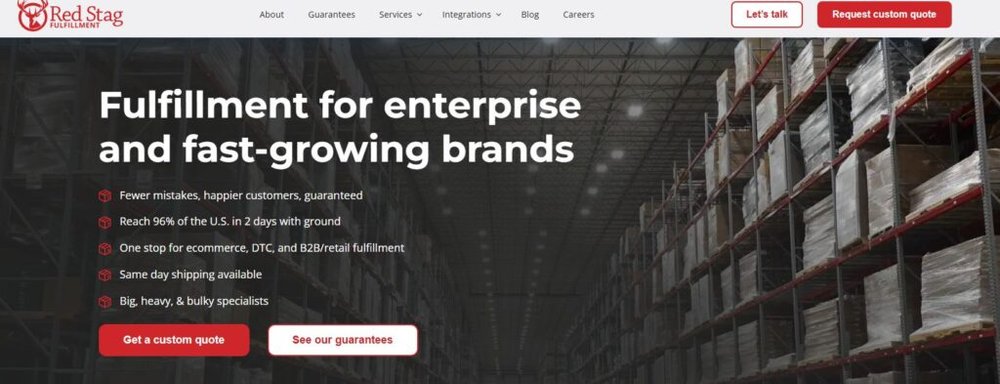
If you sell bulky, heavy, or expensive products, Red Stag Fulfillment is in a class of its own.
While many ecommerce fulfillment companies shy away from handling oversized goods, Red Stag built its entire model around it.
Secure Handling and Reduced Damage Rates for Expensive Goods
What makes Red Stag stand out is its absolute focus on care and precision. Their warehouses are equipped to handle heavy, fragile, or high-value items with specialized packing processes and security systems.
They even guarantee zero shrinkage—meaning if anything goes missing or is damaged under their care, they’ll compensate you fully. That’s a rare promise in the fulfillment world.
In one case I came across, an electronics brand using Red Stag reduced product damage by over 85% after switching from a standard 3PL. For items like furniture, gym equipment, or electronics, that’s a massive win for protecting profit margins.
Why this matters: Every damaged product is a double loss—you lose inventory and pay for a return. Red Stag’s processes practically eliminate that.
Two-Day Delivery Guarantee That Enhances Customer Loyalty
Despite specializing in larger goods, Red Stag offers a two-day delivery guarantee for most shipments. They achieve this through strategic warehouse placement and efficient routing software that chooses the fastest carrier for every order.
For customers, that means reliability. And when you sell premium products, reliability is everything. A two-day delivery promise can increase repeat purchase rates by 20–25% because customers associate speed with trustworthiness.
The best part? They’ll actually pay you if they miss a delivery deadline. That accountability gives you confidence in your operations and lets you make bold delivery promises without fear of backfire.
When Red Stag Fulfillment Becomes a Strategic Advantage
Red Stag isn’t for everyone—but it’s perfect if your brand deals in:
- Bulky or fragile goods (like mirrors, appliances, or gym equipment).
- High-value products needing secure storage.
- Low-volume but high-margin sales models.
In short, if your inventory isn’t easy to handle, Red Stag turns fulfillment from a liability into an advantage. By reducing damage, returns, and late deliveries, they help you maintain the kind of profit consistency that’s hard to find in ecommerce logistics.
Pro tip: If you’re scaling a brand with larger SKUs, run a side-by-side test—ship 100 orders through Red Stag and 100 through a general 3PL. Track damage rates and customer satisfaction. The difference might surprise you.
6. Rakuten Super Logistics: Data-Driven Fulfillment Optimization
Rakuten Super Logistics (RSL) takes a technology-first approach to ecommerce fulfillment.
It’s not just about moving boxes; it’s about using data to make every fulfillment decision smarter and more profitable.
Predictive Analytics for Smarter Inventory Planning
RSL uses predictive analytics to forecast demand, helping brands avoid the common trap of overstocking or running out of inventory.
Their system studies buying trends, seasonal behavior, and sales velocity to recommend exactly how much inventory to store—and where. This saves both warehouse space and working capital.
Let me give you an example. Suppose you sell skincare products that peak in summer. RSL might recommend shifting more stock to West Coast warehouses in May based on historical sales data. That means faster delivery to customers and lower shipping costs due to shorter distances.
Key takeaway: Better forecasting equals lower carrying costs—and fewer missed sales opportunities.
How Their Strategic Warehouse Network Reduces Shipping Costs
Rakuten Super Logistics has fulfillment centers spread across major U.S. markets, allowing sellers to distribute inventory closer to buyers. This not only cuts shipping times but also reduces costs tied to long-distance deliveries.
Their algorithm, called SmartFill, chooses the most cost-effective fulfillment center for each order. Over time, that optimization can lower average shipping costs by up to 25%.
It’s particularly effective for multi-channel sellers who operate on platforms like Amazon, Walmart, and eBay. RSL integrates directly with those channels, syncing inventory and order updates automatically.
Pro insight: If you’re spending more than 15% of revenue on shipping, using a distributed fulfillment network like Rakuten’s can shave off a significant portion without compromising delivery times.
Benefits of Partnering With a Tech-First Fulfillment Company
Working with Rakuten Super Logistics isn’t just about outsourcing tasks—it’s about gaining a data-driven partner. Their system offers granular analytics on performance metrics like order accuracy, fulfillment speed, and carrier performance.
That transparency helps you make better business decisions. For instance, you can see which SKUs are driving your costs up, or which carriers are consistently late. Once you know where the inefficiencies are, you can fix them strategically.
In my view, RSL works best for ecommerce businesses that value visibility and control. If you want to scale intelligently rather than reactively, their tech-driven model is a strong fit.
Pro tip: Review RSL’s performance dashboard weekly. You’ll spot trends faster and act before inefficiencies cut into your margins.
7. Deliverr (by Flexport): High-Speed Fulfillment for Multichannel Sellers
Deliverr, now part of Flexport, has become one of the most talked-about ecommerce fulfillment companies for brands selling across multiple platforms.
It’s fast, flexible, and designed to give you Prime-like shipping speeds—without locking you into Amazon’s ecosystem.
Prime-Like Shipping Speed Without the Amazon Fees
One of Deliverr’s biggest selling points is its ability to match Amazon Prime delivery speeds while keeping fulfillment costs predictable. Using data-driven logistics and strategically placed warehouses, Deliverr ensures 1–2 day delivery for most U.S. orders.
Here’s the kicker: you can offer “Fast Shipping” badges on platforms like Walmart, eBay, and Shopify, which immediately boosts conversion rates. These badges act as trust signals—customers see them and associate your brand with reliability.
I’ve seen brands achieve up to a 40% increase in conversion rate on Walmart Marketplace just by activating fast-shipping badges through Deliverr. You get the competitive advantage of speed without the fees and restrictions tied to Amazon FBA.
Quick takeaway: Deliverr helps small and midsized sellers compete with big retailers on delivery speed, which directly impacts repeat purchases and profit growth.
Unified Dashboard for Managing Multiple Sales Platforms
Managing multiple sales channels can quickly turn into chaos—inventory here, orders there, and data scattered across dashboards. Deliverr solves this by giving you a single, unified dashboard to manage everything.
Your Shopify, Amazon, Walmart, and eBay orders all sync in one place. Inventory automatically updates across platforms when sales occur, reducing the risk of overselling (which can really hurt marketplace rankings).
It also integrates seamlessly with Flexport’s freight and supply chain tools, meaning you can manage product flow from overseas supplier to doorstep—all from one system. That level of visibility saves hours of manual work and helps avoid expensive mistakes like stockouts or late deliveries.
Pro tip: Use Deliverr’s dashboard to track your fulfillment cost per channel. You’ll quickly spot which marketplaces bring in the most profit relative to shipping spend.
The Role of Fast Fulfillment in Profit Margin Growth
Speed doesn’t just impress customers—it protects your margins. When you fulfill orders faster, you cut down on support tickets, cancellations, and returns due to delays.
Deliverr’s algorithm also finds the optimal warehouse placement for your inventory. By storing stock closer to where your orders originate, you reduce the average “last mile” distance—a major cost driver in logistics.
And since Deliverr provides upfront cost estimates, you can predict shipping expenses before committing to new campaigns or marketplaces. That kind of predictability is gold when managing margins.
In short, Deliverr gives you the operational edge to deliver quickly, delight customers, and keep fulfillment costs under control—all without surrendering your brand identity to Amazon.
8. FedEx Fulfillment: Trusted Logistics Expertise for SMEs
FedEx Fulfillment brings decades of logistics experience into a service tailored for small and mid-sized ecommerce businesses.
It’s backed by FedEx’s powerful shipping network but built to be simple enough for growing online stores to use effectively.
Leveraging FedEx’s Infrastructure for Consistent Delivery
When you work with FedEx Fulfillment, you tap into one of the most reliable delivery infrastructures in the world. FedEx operates hundreds of fulfillment centers and maintains control over every shipping step—from pickup to final delivery.
This means fewer third-party handoffs and lower chances of lost or delayed packages. For ecommerce brands, that consistency translates into customer trust and fewer refunds.
You can also access FedEx’s competitive carrier rates, which are typically lower than what smaller businesses could negotiate independently. The platform automatically matches each order with the most efficient and cost-effective delivery method, balancing speed and cost in real time.
Here’s what that means for you: smoother logistics, predictable costs, and happier customers—all critical for sustaining profit margins.
Integrations That Simplify Returns and Order Tracking
FedEx Fulfillment integrates with leading ecommerce platforms like Shopify, BigCommerce, and WooCommerce, as well as major marketplaces such as eBay and Amazon. Once integrated, it automates everything from order import to delivery updates.
Returns—often the most painful part of ecommerce—are streamlined too. Customers can generate pre-paid return labels directly through your store, and FedEx handles the rest. This not only saves time but also boosts customer confidence, especially for new buyers.
Plus, both you and your customers can track every shipment in real time. Transparency goes a long way in preventing frustration and keeping satisfaction scores high.
Quick stat: Studies show that 92% of consumers will buy again from a retailer if the return process is easy. That’s why FedEx’s return automation can be a quiet profit protector.
Why FedEx Fulfillment Works for Small to Mid-Sized Stores
FedEx Fulfillment strikes a balance that’s hard to find—it’s big enough to offer global reach, but personalized enough to feel like a partner.
For small and mid-sized businesses, it offers:
- Access to enterprise-level shipping rates.
- Simplified fulfillment software that doesn’t require IT teams.
- Multi-channel inventory management.
If you’re an SME looking to scale without hiring an in-house logistics team, FedEx Fulfillment gives you reliability, technology, and support in one package. It’s especially valuable if you already use FedEx for shipping—it just connects all the dots for you.
Pro tip: Pair FedEx Fulfillment with their analytics dashboard to identify which shipping zones eat the most margin. You can then adjust ad targeting or promotions accordingly.
9. Flowspace: On-Demand Fulfillment for Modern Brands
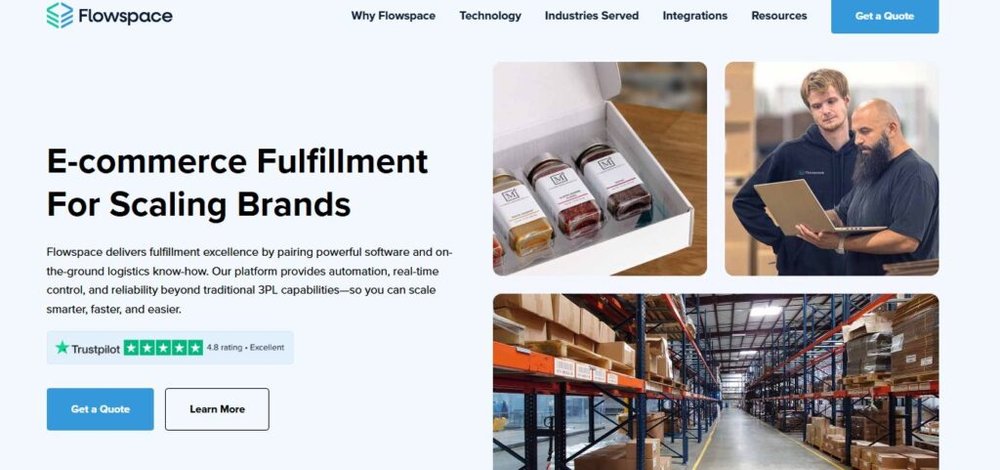
Flowspace is one of the most flexible ecommerce fulfillment companies on the market, built for modern brands that want on-demand logistics.
It’s perfect for growing businesses that need control and adaptability without long-term contracts or commitments.
Pay-As-You-Go Model That Improves Cost Control
What makes Flowspace so appealing is its pay-as-you-go pricing. Instead of monthly retainers or minimums, you pay only for the storage, picking, packing, and shipping you actually use.
For new or scaling brands, that’s a lifesaver. It means you can test new product lines or regional launches without overcommitting to warehouse space.
Let’s say you sell a line of eco-friendly beauty products and want to expand to the West Coast. With Flowspace, you can store inventory in one of their nearby facilities for just that market. If it doesn’t perform as expected, you simply scale down—no penalties, no wasted costs.
In short: Flowspace gives you startup-style flexibility with enterprise-grade logistics support.
Distributed Warehouse Network for Nationwide Reach
Flowspace has over 150 fulfillment centers across the U.S., allowing brands to position inventory closer to customers—reducing delivery times and shipping costs.
Their software automatically routes orders to the warehouse that minimizes both time and expense. This distributed model ensures that even smaller brands can offer two-day or next-day shipping without the overhead of owning multiple warehouses.
The best part is how seamlessly it connects with major ecommerce platforms. Flowspace integrates with Shopify, WooCommerce, and marketplaces like Amazon and Walmart, keeping everything synced automatically.
Pro insight: Use Flowspace’s analytics to test fulfillment locations. Move stock closer to your best-performing zip codes to lower your per-order shipping costs.
How Flowspace Supports Agile, Profitable Scaling
Flowspace stands out because it’s built around agility. Whether your business is seasonal, subscription-based, or fast-growing, you can adjust operations on the fly.
Its platform offers detailed analytics on order performance, storage utilization, and shipping spend—so you can make decisions backed by real data. For example, you might find that splitting inventory between two hubs cuts your delivery costs by 18%.
If I had to summarize Flowspace in one phrase, it would be flexibility without friction. It’s ideal for businesses that want to scale sustainably, test markets easily, and never feel tied down by rigid fulfillment contracts.
Pro tip: Start by sending only 20–30% of your inventory to Flowspace to test performance. Once you’re confident in the cost savings and delivery times, scale up gradually for maximum control.
10. ShipHero: Fulfillment Software and Services in One
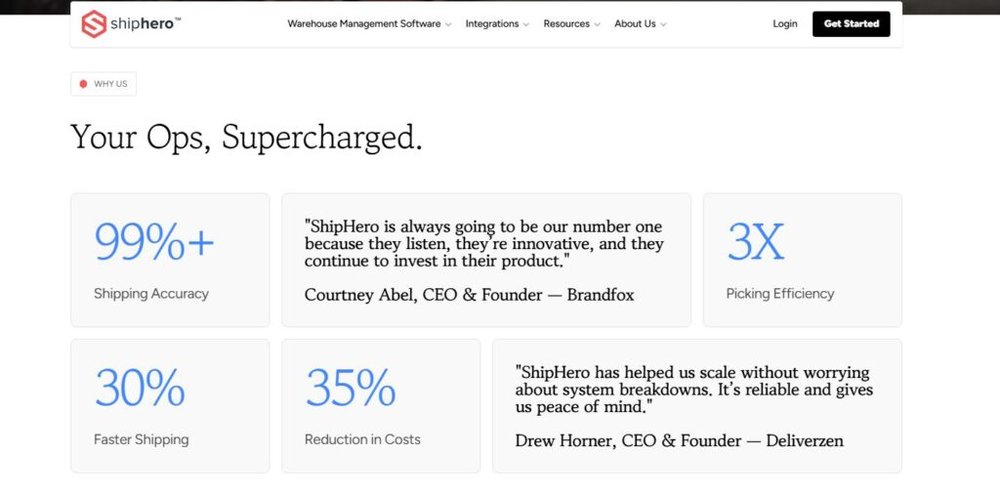
ShipHero is a rare find among ecommerce fulfillment companies because it’s not just a 3PL—it’s also a full-fledged fulfillment software provider.
That means you get both technology and operations under one roof, which can dramatically simplify your logistics workflow.
In-House Software That Reduces Operational Friction
ShipHero’s proprietary software is the backbone of its fulfillment service. Instead of juggling multiple tools for inventory, order tracking, and warehouse management, everything is built into a single dashboard.
Here’s why that matters:
- Real-time visibility: You always know where your inventory is and what’s selling fastest.
- Automatic sync: The system connects seamlessly with major platforms like Shopify, Amazon, and Etsy, reducing manual data entry.
- Fewer errors: With barcode-based picking and smart automation, order accuracy improves—protecting profit margins from costly mistakes.
What I personally like is how intuitive the interface is. Even smaller teams can manage thousands of orders without feeling overwhelmed. It’s built with the mindset of “make fulfillment less stressful,” and it shows.
One brand I spoke with saw a 25% drop in fulfillment time within the first two months of using ShipHero’s system simply because their team no longer had to reconcile data across multiple tools.
Omnichannel Fulfillment for Shopify, Amazon, and Etsy
ShipHero truly shines in omnichannel fulfillment. It doesn’t matter if you sell on Shopify, Amazon, Etsy, or all three—the platform keeps your orders and inventory perfectly aligned.
This is especially valuable if you’re trying to expand across multiple sales channels but don’t want the headache of managing each one separately.
ShipHero updates every channel automatically when inventory changes, reducing the risk of overselling or disappointing customers with out-of-stock messages.
Plus, ShipHero supports both DTC (direct-to-consumer) fulfillment and marketplace fulfillment from the same system. That means you can run everything—your website, your Amazon store, and your Etsy shop—without having to split logistics between multiple partners.
Pro insight: If you’re growing quickly across different marketplaces, use ShipHero’s multichannel analytics to identify where your profit per channel is highest. You might find that one platform delivers better margins even with slightly lower sales volume.
How ShipHero’s System Drives Cost Efficiency and Growth
The biggest advantage of ShipHero is efficiency. Because they own both the tech and the warehouses, you avoid the usual disconnect between software and operations that plagues many fulfillment setups.
Their system automatically recommends inventory placement based on order data, helping you lower average shipping distances and costs. It’s also transparent—you’ll see exactly where every dollar of fulfillment spend goes.
This efficiency adds up fast. Lower labor costs, fewer returns, and better carrier selection all feed directly into higher margins. And since ShipHero doesn’t rely on third-party software, you won’t have to pay for extra integrations or data sync tools either.
In short, ShipHero is perfect for ecommerce brands that want scalable fulfillment without sacrificing control or visibility.
Choosing the Right Ecommerce Fulfillment Partner
Choosing the right fulfillment partner can be one of the most important decisions for your business. The right one helps you scale profitably; the wrong one can quietly eat into your margins.
Key Factors to Compare Before Signing a Contract
When comparing ecommerce fulfillment companies, focus on more than just price.
Here’s what I recommend prioritizing:
- Delivery Speed and Coverage: Do they have warehouses near your main customer bases? Fast delivery boosts conversions.
- Technology Stack: Make sure they integrate smoothly with your sales channels and offer transparent reporting.
- Scalability: Can they handle seasonal spikes or new product launches without performance dips?
- Support and Accountability: Look for SLAs (Service Level Agreements) that guarantee response times and delivery accuracy.
- Fee Transparency: Avoid providers that charge hidden “handling” or “admin” fees—these can wreck your margins quietly over time.
I’ve seen too many small brands sign with the cheapest provider, only to discover surprise storage costs later. Always read the fine print, and if something seems unclear, ask for a full breakdown in writing.
How to Calculate Total Cost of Fulfillment (Not Just Fees)
One common mistake is only comparing per-order fulfillment fees. The true cost of fulfillment includes:
- Receiving and storage fees.
- Picking, packing, and packaging material costs.
- Shipping and last-mile carrier fees.
- Returns processing and customer service handling.
- Technology or integration fees.
To find your real fulfillment cost per order, use this simple formula:
(Total monthly fulfillment costs ÷ total number of fulfilled orders)
Then, compare that to your average order value (AOV). If your fulfillment costs exceed 25–30% of AOV, you may need to renegotiate or optimize inventory distribution.
Tips for Negotiating Better Fulfillment Terms
You’d be surprised how flexible many fulfillment partners can be—especially if you come prepared.
- Leverage volume: Even projected growth can give you negotiation power.
- Ask for trial periods: Some providers will offer 30-day or 90-day pilots.
- Bundle services: If you also use them for returns or kitting, ask for a package discount.
- Review quarterly: Don’t lock into a long-term contract until you’ve reviewed performance metrics after 3–6 months.
Remember, you’re not just hiring a warehouse—you’re choosing an extension of your customer experience. Make sure the relationship feels collaborative, not transactional.
Final Thoughts and Expert Tip
Working with the right fulfillment partner isn’t just about outsourcing logistics—it’s about unlocking growth and protecting your profit margins.
The top ecommerce fulfillment companies today offer more than warehouses; they offer data, automation, and strategic insight that can redefine how efficiently your brand operates.
How to Continuously Improve Profit Margins With Fulfillment Insights
Profitability in ecommerce comes down to one word: optimization. Your fulfillment partner should help you identify ways to continuously improve.
Here’s what that might look like in practice:
- Reviewing cost-per-order trends monthly.
- Using analytics to relocate inventory closer to high-order regions.
- Automating reorder alerts to avoid stockouts.
- Tracking packaging efficiency to reduce material waste.
Even small tweaks can add up. I’ve seen brands improve margins by 8–12% in one quarter simply by redistributing inventory based on fulfillment data.
If your partner doesn’t provide these insights, ask for them—or consider one that does.
Pro Tip: Use Data, Not Assumptions, to Optimize Fulfillment Performance
It’s easy to assume you know which warehouses, carriers, or shipping zones are most profitable—but the data often tells a different story.
Every fulfillment platform mentioned—whether it’s ShipBob, ShipHero, or Flowspace—offers analytics tools. Use them.
Run reports on:
- Average delivery times.
- Order accuracy rates.
- Carrier cost comparisons.
- Inventory turnover by region.
Then, make small data-backed changes each month. You’ll spot trends faster and avoid costly surprises.
In my experience, fulfillment isn’t something you “set and forget.” It’s something you refine continuously, just like marketing or product strategy. The brands that understand this tend to scale faster, spend smarter, and keep customers coming back.
Because at the end of the day, the real secret to higher profit margins isn’t just who ships your products—it’s how intelligently you manage every shipment that leaves your warehouse.

I’m Juxhin, the voice behind The Justifiable.
I’ve spent 6+ years building blogs, managing affiliate campaigns, and testing the messy world of online business. Here, I cut the fluff and share the strategies that actually move the needle — so you can build income that’s sustainable, not speculative.
Related posts:
 Ecommerce Fulfillment Guide: How to Ship Faster and Smarter
 How Ecommerce Fulfillment Services Help You Scale Quickly
 Ecommerce Inventory Management Made Simple for Faster Growth
 CartFlows Pricing & Alternatives: Which One Wins?
 What Is Headless Commerce and Why Does It Matter?
 Ecommerce Website Design Tips That Boost Conversions Fast