
Table of Contents
Some links on The Justifiable are affiliate links, meaning we may earn a small commission at no extra cost to you. Read full disclaimer.
When people search for ecommerce marketing agencies, they’re usually not looking for theory or branding fluff—they want real growth, real revenue, and partners who actually understand how online stores scale.
I’ve seen how frustrating it can be to hire an agency that talks a big game but doesn’t move the sales needle.
That’s why this list focuses only on ecommerce marketing agencies known for driving measurable sales results, not just traffic or impressions.
SmartSites Ecommerce Marketing Agency Focused On ROI
SmartSites is often recommended when store owners want accountability and measurable revenue growth, not vague “brand lift.”
From what I’ve seen, they’re very numbers-driven and tend to work best for ecommerce brands that already have some traction and want to scale profitably.
Performance-Driven Google Ads For Ecommerce Stores
SmartSites approaches Google Ads with a clear focus on purchase intent, not just traffic volume. That means prioritizing Shopping Ads, Performance Max, and high-intent search terms that directly tie to products people are ready to buy.
In practice, they usually break campaigns down by product category and margin. This matters more than most people realize. If one SKU has thin margins, scaling it aggressively can actually lose money even with decent ROAS.
They lean heavily on:
- Google Shopping and Performance Max for product visibility
- Search campaigns targeting bottom-of-funnel queries like “buy,” “discount,” or “free shipping”
- Negative keyword sculpting to cut wasted spend early
One ecommerce brand example they’ve shared publicly showed a ROAS improvement of over 40 percent within three months after restructuring product-level bidding. That kind of lift usually comes from tighter segmentation, not bigger budgets.
Conversion-Focused SEO Strategies Built For Online Sales
SmartSites treats ecommerce SEO differently from blog-first SEO agencies. Instead of chasing informational traffic, they focus on product pages, category pages, and internal linking that supports buying paths.
Their SEO work usually centers on:
- Optimizing category pages for high-volume commercial keywords
- Fixing technical SEO issues like crawl depth, faceted navigation, and duplicate URLs
- Improving product schema to enhance rich results and click-through rates
They also prioritize revenue keywords over vanity rankings. Ranking number one for a keyword that never converts doesn’t help anyone. I agree with this approach—it’s slower upfront, but it compounds much better over time.
For Shopify and Adobe Commerce stores especially, this kind of structured SEO can quietly become a top revenue channel within 6–9 months.
Integrated Email And SMS Marketing For Revenue Growth
SmartSites treats email and SMS as revenue channels, not newsletters. Their flows usually focus on behavior-based automation rather than one-off campaigns.
Typical flows include:
- Abandoned cart sequences sent within minutes, not hours
- Browse abandonment emails tied to specific product views
- Post-purchase cross-sell flows based on order history
They commonly work with platforms like Klaviyo and Postmark, setting up segmentation based on customer lifetime value and purchase frequency. SMS is used sparingly, usually for time-sensitive offers or cart recovery, which helps avoid customer fatigue.
I’ve seen stores recover 10–20 percent of abandoned carts just by tightening timing and copy. It’s not flashy, but it works.
CRO Testing Frameworks That Improve Checkout Conversions
Conversion rate optimization is where SmartSites tends to surprise people. Instead of random A/B tests, they start with friction audits—looking for anything that slows or confuses buyers.
Common CRO improvements include:
- Simplifying checkout steps to reduce drop-off
- Improving trust signals like shipping clarity and return policies
- Testing product page layouts for mobile-first shoppers
They use tools like VWO and Hotjar to track behavior and test changes. Even a 0.3 percent lift in conversion rate can translate into significant revenue gains at scale.
Disruptive Advertising Ecommerce Growth Specialists
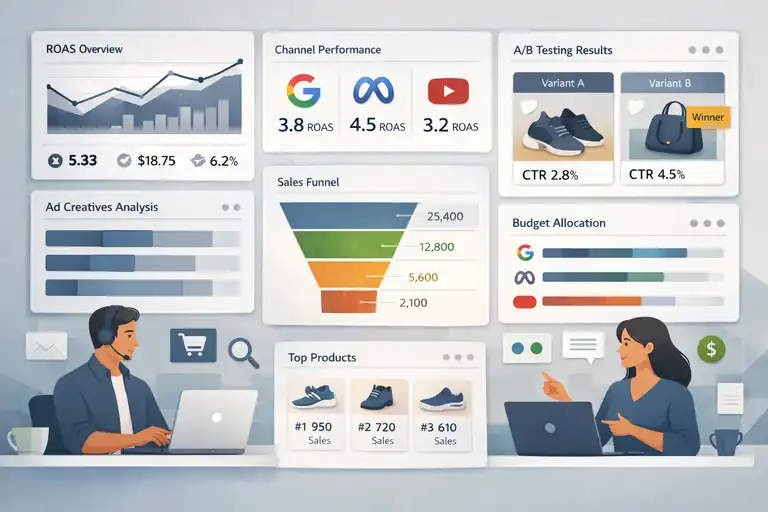
Disruptive Advertising is known for aggressive testing and disciplined analytics.
They’re usually a strong fit for ecommerce brands spending at least five figures per month on ads and wanting tighter control over profitability.
Paid Media Management Optimized For Ecommerce ROAS
Disruptive Advertising focuses heavily on ROAS and contribution margin, not just top-line sales. That distinction matters when ad costs rise, which they inevitably do.
Their paid media process often includes:
- Channel-specific ROAS targets for Google, Meta, and YouTube
- Creative-level performance tracking, not just campaign results
- Frequent budget reallocation toward what’s actually converting
They’re especially strong with Meta Ads for ecommerce, where creative fatigue kills performance fast. By rotating angles and formats weekly, they keep acquisition costs from creeping up.
I’ve seen brands reduce CPA by 20–30 percent simply by cutting emotional but non-converting creatives. Disruptive is very pragmatic about this.
Analytics-First Ecommerce Funnel Optimization Approach
Analytics is where Disruptive Advertising really differentiates itself. Every decision starts with data, usually pulled from Google Analytics 4, platform dashboards, and internal reporting.
They map the full ecommerce funnel:
- Ad click to landing page
- Product view to add-to-cart
- Checkout start to purchase
This makes it easier to diagnose where revenue is leaking. For example, if add-to-cart rates are strong but checkout completion is weak, the issue isn’t ads—it’s the checkout experience.
They often implement enhanced ecommerce tracking so store owners can actually see which products and traffic sources drive profit, not just sales volume.
Creative Testing Systems For High-Intent Product Ads
Disruptive runs structured creative testing frameworks rather than “let’s try a few ads and see.” Each test isolates one variable at a time.
Common tests include:
- Product-only visuals vs lifestyle imagery
- UGC-style videos vs polished brand ads
- Offer-driven copy vs benefit-driven copy
They use short testing cycles, often 7–10 days, to quickly kill underperforming ads. This protects budget and speeds up learning.
For ecommerce brands selling commoditized products, this creative discipline can be the difference between scaling and stalling.
Lifecycle Marketing Strategies For Repeat Purchases
Disruptive Advertising looks beyond first purchases. They work closely with email and SMS teams to improve lifetime value, which lowers acquisition pressure.
Their lifecycle focus includes:
- Audience exclusions to avoid overpaying for existing customers
- Retention-focused campaigns promoting refills or reorders
- Upsell and cross-sell ads based on past purchases
They often sync ad platforms with tools like Klaviyo so messaging stays consistent across paid media and owned channels. When done right, this can increase LTV by 15–30 percent over time.
If you’re feeling stuck constantly chasing new customers, this approach usually brings some breathing room.
Coalition Technologies Ecommerce SEO And PPC Experts
Coalition Technologies is one of those ecommerce marketing agencies that tends to shine when complexity increases.
If you’re managing hundreds or thousands of SKUs and feel buried by technical issues or inefficient ad spend, this is where their depth really shows.
Technical Ecommerce SEO Built For Large Product Catalogs
Coalition’s SEO strength comes from handling scale. Large ecommerce catalogs introduce problems most smaller stores never notice, like crawl budget waste and duplicate URLs.
They typically focus on:
- Crawl optimization: Making sure Google spends time on revenue-driving pages, not filters or thin variations
- Faceted navigation control: Preventing duplicate category URLs from hurting rankings
- Structured data implementation: Helping product listings qualify for rich results
They work heavily inside tools like Screaming Frog and Google Search Console to uncover technical leaks. I’ve seen catalog-heavy stores regain thousands of lost indexed pages simply by fixing parameter handling and internal links.
This kind of SEO isn’t glamorous, but when done right, it quietly unlocks sustainable organic revenue.
Data-Backed Paid Search Campaigns For Product Visibility
Coalition’s PPC team takes a methodical approach to Google Ads, especially Shopping and Performance Max campaigns.
They rely on:
- Product-level bidding: Adjusting bids based on margin and conversion rate
- Search term mining: Pulling converting queries into exact-match campaigns
- Feed optimization: Improving product titles and attributes to boost visibility
For ecommerce brands with thin margins, this precision matters. One misaligned bid strategy can eat profit fast. Coalition tends to tighten campaigns until wasted spend is minimized, which often improves ROAS without increasing budget.
Platform Expertise Across Shopify, Magento, And BigCommerce
Coalition doesn’t treat platforms interchangeably. Shopify, Adobe Commerce, and BigCommerce all behave differently under the hood, and their team adapts accordingly.
For example:
- Shopify: Emphasis on app performance and theme speed
- Adobe Commerce: Deep server-side optimization and custom indexing
- BigCommerce: URL structure and native SEO features
This matters because platform-specific quirks can quietly hurt performance. I’ve seen Adobe Commerce stores struggle simply because their infrastructure wasn’t configured with SEO in mind.
Conversion Optimization Tactics For Product And Category Pages
Coalition blends CRO with SEO and PPC, which isn’t always common. They focus on removing friction from buying decisions.
Common improvements include:
- Clear value props above the fold
- Improved product imagery and zoom behavior
- Simplified category filtering for mobile users
They use tools like Hotjar and GA4 to observe behavior before testing changes. Even small adjustments, like reordering product attributes, can lift conversions noticeably.
Blue Stout Ecommerce Agency For Retention And Growth
Blue Stout approaches ecommerce differently. Instead of obsessing over acquisition alone, they focus on keeping customers coming back, which is often where real profit lives.
Customer Retention Strategies That Increase LTV
Blue Stout starts by analyzing purchase behavior. They look at how often customers return, what they buy next, and when churn happens.
Retention tactics usually include:
- Post-purchase education: Helping customers get more value from what they bought
- Behavior-based segmentation: Messaging based on buying patterns
- Timing optimization: Reaching customers before interest drops
Increasing lifetime value by even 10 percent can dramatically reduce reliance on paid ads. I’ve seen brands stabilize cash flow just by focusing here.
Subscription And Repeat Purchase Optimization Systems
For brands with replenishable products, Blue Stout builds subscription systems that don’t feel pushy.
They focus on:
- Flexible subscription options: Easy pauses and swaps
- Clear value incentives: Savings without locking customers in
- Smart reminders: Nudges based on usage cycles
This reduces churn and improves predictability. Subscription revenue often becomes the backbone that supports growth experiments elsewhere.
Email And Loyalty Programs Designed For Ecommerce Brands
Blue Stout treats email and loyalty as long-term relationship tools.
Typical setups include:
- Tiered loyalty programs: Rewards that increase with engagement
- Personalized email content: Based on past purchases
- Win-back campaigns: Designed to re-engage lapsing customers
They often integrate platforms like Klaviyo and Smile.io, aligning rewards with actual profitability, not just points inflation.
Analytics And Cohort Tracking For Scalable Revenue
Cohort analysis is one of Blue Stout’s strongest skills. They track how customer groups behave over time.
Key metrics include:
- Repeat purchase rate
- Revenue per customer by cohort
- Churn timelines
This makes growth decisions more grounded. Instead of guessing, you can see which changes actually improved retention.
Common Thread Collective DTC Ecommerce Growth Agency
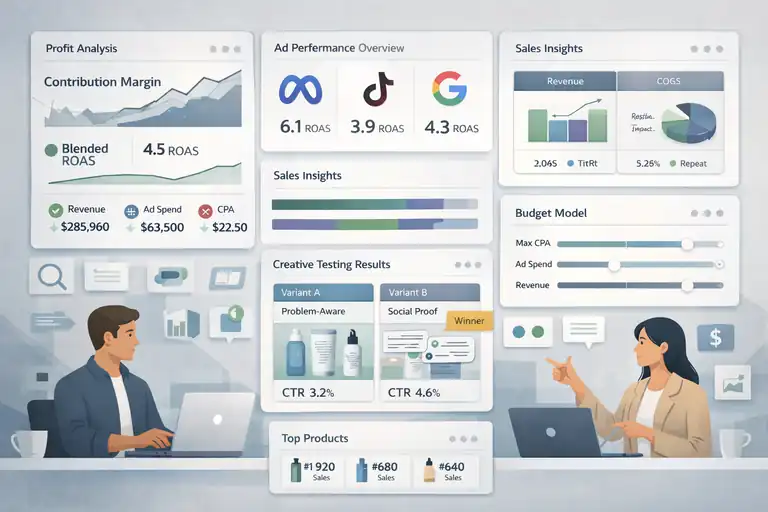
Common Thread Collective is well-known in the DTC space for tying marketing decisions directly to financial outcomes. They’re less about hype and more about profit clarity.
Profit-Focused Paid Social Campaigns For DTC Brands
They treat paid social as a lever, not a goal. Campaigns are structured around contribution margin, not vanity metrics.
Their approach includes:
- Blended ROAS targets: Accounting for backend revenue
- Creative aligned with offers: Not just aesthetic branding
- Audience saturation monitoring: Avoiding diminishing returns
This is especially useful when Meta CPMs spike. Profit discipline keeps brands from scaling themselves into trouble.
Financial Modeling To Scale Ecommerce Profitably
This is where Common Thread really stands out. They build financial models that show how ad spend affects cash flow.
Models typically factor in:
- Cost of goods sold
- Shipping and fulfillment
- Repeat purchase behavior
I believe this is essential once you cross six figures monthly. Growth without modeling is just guesswork.
Creative Strategy Built Around Customer Buying Psychology
Creative is treated as a conversion tool, not art.
They test:
- Problem-aware messaging
- Social proof angles
- Offer-first vs story-first formats
By aligning creative with awareness stages, ads feel more relevant and convert better.
End-To-End Ecommerce Growth Planning And Execution
Common Thread operates as a growth partner, not just an ad manager.
They connect:
- Paid acquisition
- Retention systems
- Financial forecasting
For brands ready to scale responsibly, this joined-up thinking often makes the difference between short-term wins and long-term sustainability.
Tinuiti Enterprise-Level Ecommerce Marketing Agency
Tinuiti is one of those ecommerce marketing agencies that tends to make the most sense once a brand hits real scale.
If you’re juggling multiple channels, marketplaces, and large budgets, their systems are built to handle that complexity without guesswork.
Advanced Amazon And Marketplace Advertising Management
Tinuiti is especially strong on Amazon, Walmart, and other marketplaces where ad mechanics are very different from Google or Meta.
They go deep into:
- Amazon DSP: Amazon’s demand-side platform, which lets you advertise both on and off Amazon using shopper data
- Sponsored Ads structure: Breaking campaigns by match type and product profitability
- Buy Box monitoring: Adjusting bids when listings lose purchase eligibility
What I like here is how disciplined they are with margin protection. They don’t just scale Sponsored Products blindly. If a SKU loses profitability due to fees or competition, it gets pulled back fast.
For brands doing seven figures or more on Amazon, this level of control usually saves more money than it costs.
Omnichannel Paid Media Strategies For Ecommerce Brands
Tinuiti doesn’t treat channels as silos. They look at how Google, Meta, Amazon, and even streaming TV influence each other.
Their omnichannel approach includes:
- Budget rebalancing across platforms based on incrementality, not last-click results
- Audience syncing so prospects see consistent messaging across channels
- Upper-funnel testing without losing sight of downstream revenue
They often use platforms like Google Ads, Meta Ads Manager, and Amazon Ads together, measuring how awareness channels assist conversions later. This is especially useful when attribution gets messy, which it always does at scale.
Proprietary Attribution Models For Accurate Revenue Tracking
Attribution is where Tinuiti really earns its reputation. They don’t rely solely on platform-reported numbers.
Instead, they use:
- Custom attribution models that factor in assist value
- Blended ROAS calculations across channels
- Incrementality testing to see what truly drives net-new revenue
In simple terms, they try to answer a hard question honestly: “What would have happened if we didn’t run this campaign?” Most agencies avoid that question. Tinuiti leans into it.
Feed Optimization And Shopping Ads At Scale
Product feeds are the backbone of ecommerce ads, and Tinuiti treats them like a performance asset.
They optimize:
- Product titles and attributes to match real search behavior
- Category mapping for better Shopping visibility
- Automated rules to pause low-margin SKUs
For large catalogs, this alone can lift Shopping ROAS significantly. I’ve seen feed fixes outperform creative changes more times than people expect.
Thrive Internet Marketing Agency For Ecommerce Sales
Thrive is often a good fit for growing ecommerce brands that want structure, transparency, and steady improvement rather than risky experimentation.
Ecommerce SEO Built To Capture High-Intent Buyers
Thrive’s SEO work focuses on keywords tied directly to buying intent.
They prioritize:
- Product and category optimization over blog-heavy strategies
- Internal linking structures that push authority to money pages
- Local and national SEO alignment for hybrid ecommerce brands
They work inside tools like Ahrefs to track keyword movement and revenue impact. This approach tends to attract shoppers who are closer to checkout, not just browsing.
Paid Advertising Campaigns Optimized For Product Sales
Thrive’s paid media is straightforward and disciplined.
Their campaigns usually involve:
- Google Shopping and Search for bottom-of-funnel demand
- Meta retargeting to recapture warm traffic
- Clear KPI tracking tied to product-level sales
They’re not overly aggressive with experimental spend, which I actually appreciate for brands with limited budgets. Stability beats chaos when cash flow matters.
Conversion Rate Optimization For Ecommerce Funnels
Thrive approaches CRO with practical fixes rather than endless testing.
Common improvements include:
- Mobile checkout simplification
- Clear shipping and return messaging
- Product page trust elements
They use tools like Hotjar and GA4 to identify friction before making changes. Even small tweaks here can improve revenue without increasing traffic.
Transparent Reporting And Revenue Attribution
Reporting is one of Thrive’s strengths.
Clients typically get:
- Monthly performance breakdowns by channel
- Clear explanations of what worked and what didn’t
- Revenue-focused dashboards instead of vanity metrics
If you value clarity over hype, this is where Thrive tends to shine.
OuterBox Ecommerce Agency Specializing In Online Stores
OuterBox is deeply ecommerce-focused. They’re not trying to serve everyone, and that specialization shows in how they approach SEO, paid media, and development.
Ecommerce SEO Strategies For Competitive Product Niches
OuterBox excels in crowded niches where ranking isn’t easy.
Their SEO strategy includes:
- Competitor gap analysis to find ranking opportunities
- Category-level keyword mapping
- Ongoing content optimization tied to conversion data
They’re especially strong in industries like automotive, manufacturing, and B2B ecommerce, where search intent is very specific.
Paid Media Campaigns Built For Ecommerce Scalability
OuterBox treats paid media as a scaling lever, not a starter engine.
They focus on:
- Shopping-first strategies
- Query-level optimization for search ads
- Cross-channel retargeting to maximize traffic value
As traffic grows, campaigns are adjusted to protect ROAS, not just volume.
In-House Development Supporting Ecommerce Performance
This is a big differentiator. OuterBox has in-house developers who understand ecommerce constraints.
They handle:
- Site speed improvements
- Custom SEO fixes
- Platform-specific enhancements
Having development and marketing aligned avoids the “we need to ask your dev team” bottleneck.
CRO Programs Focused On Revenue Per Visitor
OuterBox measures CRO success by revenue per visitor, not just conversion rate.
Their CRO work often includes:
- Product page layout testing
- Category navigation refinements
- Checkout flow adjustments
This mindset keeps optimization tied to real money, which is where it should stay.

I’m Juxhin, the voice behind The Justifiable.
I’ve spent 6+ years building blogs, managing affiliate campaigns, and testing the messy world of online business. Here, I cut the fluff and share the strategies that actually move the needle — so you can build income that’s sustainable, not speculative.
Related posts:
 How to Promote My Online Store and Get Traffic Fast
 How to Make Money Dropshipping: 7 Secrets to a $10K/Month
 Dropshipping Marketing Strategies That Actually Drive Sales
 NetSuite Ecommerce Features That Drive Serious Growth
 Ecommerce Automation That Saves Time Without Breaking Sales
 Dropshipping Platforms Ranked: Speed, Fees, and Control