
Table of Contents
Some links on The Justifiable are affiliate links, meaning we may earn a small commission at no extra cost to you. Read full disclaimer.
If you’ve ever stared at a blank screen wondering what blog content could actually make money and rank fast, you’re not alone.
I’ve been there—trying to figure out what kind of posts attract both Google and real readers who convert.
The truth is, not all blog topics are created equal. Some bring in steady passive income while others just sit quietly in your archives.
So, let me walk you through powerful, strategic blog content ideas that are proven to rank faster, attract organic traffic, and generate real revenue.
High-Intent Blog Content That Converts Readers Into Buyers
When your goal is to make money from blog content, you need to create posts that meet readers right at the decision stage.
These are the kinds of articles people find when they’re ready to buy—but just need a little push.
Product Comparison Posts That Influence Purchase Decisions
These are your “Product A vs Product B” articles—perfect for readers who are almost ready to buy but want reassurance. They work so well because they meet strong commercial intent.
Here’s what makes them effective:
- Real-World Testing: Compare products you’ve actually used. Be honest about pros, cons, and use cases. Readers trust imperfection more than hype.
- Decision Tables: Add a simple feature or pricing table to help users decide quickly. Visual clarity boosts conversions.
- Search Intent Match: Focus on transactional keywords like “best for,” “vs,” or “review.” They align directly with buying behavior.
Example: A post comparing “Jasper vs Copy.ai” can pull affiliate income fast because readers searching this are already evaluating options—not browsing casually.
Best-Of Lists That Target Transactional Search Terms
“Best” posts are magnets for organic traffic and affiliate clicks. They work because they bundle multiple buying options into one post, saving the reader research time.
How to make them profitable:
- Focus on Intent: Use keywords like best CRM for freelancers or best protein powder for beginners.
- Add Short Verdicts: After each product, include a one-line summary like “Best for small teams” or “Most budget-friendly.”
- Update Frequently: Rankings fluctuate, so revisiting the post quarterly keeps it fresh and competitive.
In my experience, these listicles consistently earn recurring revenue once they rank because they catch readers mid-purchase.
Alternative Posts That Capture Missed Brand Traffic
“Alternatives to [Brand]” posts are a goldmine when people are unhappy with a product or looking for a cheaper or better version.
Key steps to win with this format:
- Target Frustration-Based Searches: Use terms like “better than,” “alternative to,” or “similar to.”
- Compare Fairly: Don’t bash—be objective. Readers appreciate balanced, data-backed comparisons.
- Highlight Differentiators: Show how each alternative stands out (pricing, support, features, usability).
These posts tend to rank quickly because the keyword competition is often lower—and conversions higher.
“X vs Y” Articles That Drive Affiliate Conversions
This format lets you go deep on two options, attracting serious buyers who are one click away from purchase.
To write a high-performing comparison post:
- Show Firsthand Insight: Use or demo both tools. Include screenshots or short examples of how they differ.
- Include a Clear Winner: End with a recommendation that fits specific user needs—Google rewards clear intent.
- Add CTAs Naturally: Use simple transitions like, “If you value simplicity, [Tool A] is the better fit—try it here.”
These posts convert beautifully because they eliminate confusion for the reader and provide immediate clarity.
Evergreen Blog Content Ideas That Rank for Years
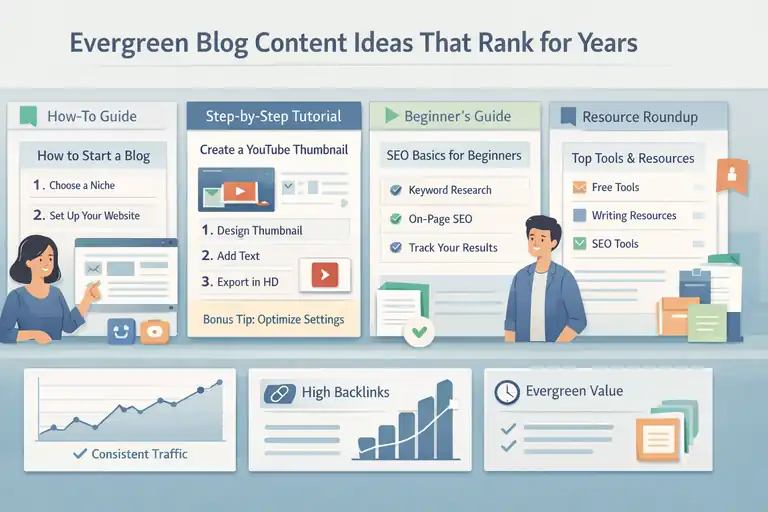
Evergreen blog content is the foundation of sustainable growth. It keeps attracting traffic long after publication—no trends or timing required.
How-To Guides That Solve Specific, Lasting Problems
These are your “forever relevant” posts that continue to drive traffic. Think “How to Start a Blog That Makes Money” or “How to Create a Content Calendar.”
Tips to make them last:
- Be Comprehensive: Cover every step clearly so readers don’t bounce to competitors.
- Include Updated Screenshots: Visuals age faster than text—refresh them yearly.
- Answer Common Follow-Up Questions: Anticipate what readers will ask next; it keeps them engaged longer.
The more complete and timeless your guide feels, the higher its search visibility over time.
Step-By-Step Tutorials With Search Demand
Tutorials are practical, solution-driven posts that teach something specific.
How to make them stand out:
- Target Specific Tasks: Instead of “How to Use Canva,” go for “How to Create a YouTube Thumbnail in Canva.”
- Structure Clearly: Use numbered steps and visuals for each stage.
- Include a Bonus Tip: Add a mini-optimization (like “how to export for best quality”) that others skip.
From what I’ve seen, these tutorials earn backlinks naturally because people love linking to helpful, visual instructions.
Beginner-Friendly Posts That Attract Consistent Traffic
These posts capture the largest segment of any audience—people just getting started.
How to write them effectively:
- Simplify Concepts: Explain industry terms right away. Assume zero prior knowledge.
- Use Gentle CTAs: Invite readers to explore next steps or try beginner tools.
- Add Progression Links: Guide readers to intermediate-level posts, building internal traffic flow.
The beauty here is scalability—every niche always has beginners entering.
Resource Roundups That Earn Natural Backlinks
A well-curated resource post can become a link magnet if done right.
Make your roundup share-worthy by:
- Focusing on Quality: Include only genuinely valuable tools or articles.
- Organizing Clearly: Use categories or filters (by use case, price, or skill level).
- Updating Regularly: Outdated resources can tank trust fast.
These posts often become your most linked content, especially when shared in communities or newsletters.
Blog Content That Leverages Search Trends for Fast Rankings
If you want to rank quickly, you need to tap into what’s new and hot before everyone else does.
Trend-Driven Topics That Match Seasonal Searches
Seasonal and timely posts rank fast because search volume spikes suddenly.
Strategy to use:
- Monitor Seasonal Keywords: Tools like Exploding Topics show what’s about to trend.
- Publish Early: Aim for 3–4 weeks before peak interest.
- Repurpose Each Year: Update and relaunch with fresh stats or visuals.
Think “Top Holiday Gift Ideas for Content Creators” or “Q4 Marketing Trends”—both thrive yearly.
Fresh Keyword Opportunities Using Google Trends
Google Trends is an underrated goldmine for discovering rising search topics.
Here’s how to use it:
- Search your niche term and filter by “rising” queries.
- Identify new variations or breakout topics.
- Quickly write short-form content to capture early traction.
In my own testing, posts built from “breakout” keywords often hit page one within weeks due to low competition.
Timely Industry Updates That Build Authority Fast
When something shifts in your industry—like a major algorithm update or tool change—be among the first to explain it.
Key tips:
- Simplify Complex News: Translate jargon into plain English.
- Add Context: Explain what it means for your readers, not just what happened.
- Include Action Steps: Suggest what readers should do next.
Early, insightful analysis builds trust—and earns backlinks fast.
Seasonal Content That Ranks Year After Year
Seasonal posts are like digital perennials. They fade for a few months but bloom again on cue.
To make them work long-term:
- Use Year-Neutral URLs: Avoid “2026” in slugs; instead, update headlines annually.
- Refresh Details: Update dates, deals, and stats before the next cycle.
- Add Evergreen Context: Blend temporary trends with lasting advice.
For example, a post like “Holiday Marketing Ideas for Small Businesses” can rank every December if refreshed strategically.
Pro Tip: The best-performing blog content often mixes these types—evergreen foundations with trend-driven layers. That way, you get both fast wins and long-term stability in one smart content strategy.
Data-Driven Blog Content That Builds Credibility
If you want your blog content to stand out and be trusted, data should be your backbone. People believe numbers more than opinions, especially in competitive niches.
When you can back your claims with credible sources or original research, your content becomes both authoritative and share-worthy.
Research-Based Articles Using Verified Industry Data
When you use verified data, you position yourself as someone who’s done the homework. Readers (and Google) love that.
Here’s how to create trustworthy, data-backed articles:
- Cite Reputable Sources: Pull stats from trusted research hubs like Statista, HubSpot, or Pew Research.
- Connect Data to Action: Don’t just throw numbers in—explain what they mean for your reader. For example, “Email marketing ROI averages $42 per $1 spent” matters only if you follow it with “…which is why investing in strong subject lines pays off.”
- Refresh Annually: Outdated data can undermine credibility. Make it a habit to review your posts once a year.
From what I’ve seen, posts that tie stats to actionable insights not only rank better but also get referenced by other blogs, building backlinks naturally.
Statistical Roundups That Attract High-Quality Backlinks
This type of post curates stats from across your industry into one well-organized article. People love citing these because they save time.
To make it backlink-worthy:
- Pick a Focused Topic: Example: “30 Blogging Statistics Every Content Creator Should Know.”
- Add Context, Not Just Numbers: Explain why each stat matters and how it impacts strategies.
- Include a Downloadable Chart: Offer a quick-reference infographic—this alone can double your backlink potential.
I’ve personally seen “data roundups” outperform even pillar posts when promoted right, simply because they become a go-to citation source.
Expert Insights and Thought Leadership Content
Bringing in expert perspectives gives your content extra depth and credibility. Readers feel they’re learning from real-world experience, not theory.
A few practical ways to add authority:
- Quote Industry Experts: Reach out via LinkedIn or X for one-line insights.
- Include Personal Commentary: Add your own take beside each expert quote—it shows confidence and builds connection.
- Blend Experience With Data: Combine opinions and evidence for a well-rounded argument.
This approach not only strengthens trust but also boosts shareability among professionals who recognize the experts featured.
Data Visualizations That Boost Shareability
Visual content turns complex data into something instantly understandable. Charts, graphs, or infographics keep readers engaged longer and make your post easier to share.
Smart ways to use visuals:
- Highlight Key Metrics: Turn one strong statistic into a simple bar or pie chart.
- Use Tools Like Canva or Visme: They simplify the design process, even if you’re not a designer.
- Optimize File Names and Alt Text: Include descriptive keywords to help your visuals rank in Google Images.
I’ve found that even a single well-designed chart can earn backlinks from other blogs that reference your data.
SEO-Focused Blog Content That Boosts Authority
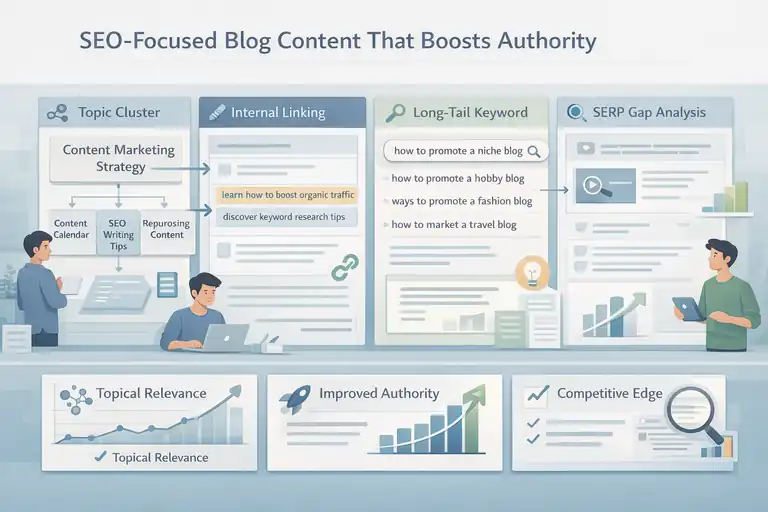
SEO-driven blog content is what fuels long-term visibility. When done right, it turns your blog into a system that builds authority and attracts leads on autopilot.
Topic Clusters That Strengthen Keyword Relevance
Topic clusters help Google understand your expertise by connecting related posts around one central theme.
How to create them:
- Pick a Core Topic: For example, “Content Marketing Strategy.”
- Write Cluster Posts: Related topics might include “How to Create a Content Calendar” or “Content Repurposing Techniques.”
- Link Internally: Point each post back to the main hub page.
This structure boosts topical relevance and helps your content rank for multiple related terms.
Internal Linking Strategies That Enhance Page Authority
Internal links guide both readers and search engines through your content ecosystem. Done strategically, they increase session duration and distribute page authority.
Best practices:
- Use Descriptive Anchor Text: Instead of “click here,” write “learn more about keyword research.”
- Link From High-Traffic Posts: Send authority from your top pages to newer or lower-ranking ones.
- Limit Links Per Page: Keep it natural—too many links can dilute authority.
I like to treat internal linking as storytelling—it helps users discover more, not just bounce away.
Long-Tail Keyword Posts for Fast, Low-Competition Wins
Long-tail keywords may not bring massive traffic individually, but collectively they can dominate search results.
To find and use them effectively:
- Look for Intent-Driven Phrases: Tools like AnswerThePublic and Ahrefs help uncover what people are really asking.
- Answer Specifically: Tailor each post around one question or narrow topic.
- Add Related Phrases Naturally: Use variations to expand reach without over-optimizing.
From experience, these posts often rank within weeks and bring highly targeted visitors ready to convert.
SERP Gap Analysis to Find Underserved Topics
This is where you look at search results and ask: “What’s missing?” By identifying content gaps, you can create posts that fill those holes.
Steps to apply:
- Analyze Top Results: Read the first 10 pages on Google.
- Spot Missing Angles: Maybe they lack examples, visuals, or updated data.
- Create Something Better: Cover the same keyword but add more clarity, relevance, or freshness.
This method has helped me rank for competitive terms without heavy backlinking—simply by out-serving what’s already out there.
Blog Content Ideas That Generate Passive Income
Monetizing blog content is about strategy, not luck. The goal is to build assets that keep earning even when you’re not actively promoting.
Affiliate Review Posts With Real-World Experience
Affiliate reviews convert best when they’re genuine. Readers can sense when you’ve actually used the product.
Here’s how to make them trustworthy:
- Show Evidence: Include screenshots, usage photos, or quick demos.
- Share Real Pros and Cons: Be transparent—honesty increases clicks and conversions.
- Compare Alternatives: Help readers find the best fit for their needs.
One honest review can outperform ten generic ones because it builds trust—and trust drives sales.
“Best Tools” Roundups With Transparent Recommendations
Roundups are a great way to earn affiliate income while providing real value.
To make them perform:
- Group by Use Case: Example: “Best Tools for Email Marketing Beginners.”
- Add Experience Notes: Mention which tools you personally prefer and why.
- Keep It Updated: Replace outdated tools or rebranded ones regularly (like Kit and Brevo).
These posts can generate steady income if maintained well, especially when they rank for commercial-intent searches.
Educational Posts That Lead to Digital Product Sales
If you sell digital products, use your blog as a teaching platform that naturally introduces your offers.
Practical approach:
- Teach a Related Skill: For instance, write “How to Create a Content Planner” and link to your paid template.
- Offer Real Value First: Give away insights so readers trust your paid products will be even better.
- Use Subtle CTAs: Invite readers to “get the template” instead of pushing a hard sell.
I’ve found this to be one of the most sustainable ways to earn—education builds loyalty, and loyalty converts.
Content Upgrades and Lead Magnets That Convert
Lead magnets turn casual readers into email subscribers, building your long-term income funnel.
Simple ways to create them:
- Offer Downloadables: Checklists, templates, or quick guides that match the article topic.
- Keep It Instantly Useful: Readers should get value the moment they download it.
- Integrate With Email Automation: Use platforms like Kit or Brevo to nurture leads over time.
Done right, your blog becomes a mini sales engine—educating, converting, and earning even while you sleep.
Pro Tip: Mix data-driven authority content with SEO-focused and income-generating strategies. That balance keeps your blog content ranking fast, building credibility, and bringing in passive revenue—all without burning out trying to “chase the algorithm.”
Community-Driven Blog Content That Builds Loyal Readers
If you want your blog content to do more than attract traffic—to actually build a loyal audience—you need to create space for connection.
Community-driven content turns passive readers into active participants who keep coming back because they feel seen, heard, and valued.
Reader Q&A Posts That Encourage Engagement
Q&A posts are one of the simplest ways to make readers feel like they’re part of your process. They show you’re listening, not just broadcasting.
How to make them work:
- Collect Real Questions: Pull them from blog comments, DMs, or emails. The authenticity shows.
- Answer Conversationally: Keep your tone approachable—like you’re chatting over coffee.
- Encourage Follow-Ups: End with an invitation such as, “What would you add to this?”
In my experience, Q&A posts not only drive engagement but also help generate fresh keyword ideas based on what your audience actually asks.
Expert Roundups That Expand Audience Reach
Expert roundups bring multiple perspectives together in one post—and the magic is, every contributor shares it. That means more visibility for you.
Quick strategy:
- Pick a Focused Question: Example: “What’s one underrated SEO tactic that worked for you in 2025?”
- Reach Out Personally: Keep your pitch short and respectful. Experts appreciate clarity.
- Add Commentary: Don’t just list quotes—summarize common threads or surprising contrasts.
I’ve seen a single well-crafted roundup drive thousands of referral visits when shared by participants with engaged audiences.
Opinion Pieces That Spark Meaningful Conversations
Sometimes, readers connect most with posts that challenge assumptions. Opinion content builds your voice and sparks authentic discussion.
To write an effective opinion piece:
- Take a Clear Stand: Ambiguity kills engagement.
- Use Evidence or Experience: Ground your point in data or personal insight.
- Invite Conversation, Not Conflict: Ask open-ended questions at the end.
The goal isn’t to be controversial—it’s to be thoughtful and human. When readers see honesty, they trust your brand more.
Collaboration Posts With Influencers or Creators
Partnering with creators brings your content new energy and audiences. It doesn’t have to mean big names—micro-collaborations work beautifully.
A few creative ideas:
- Co-Create a Blog Series: Each of you writes from your unique perspective on the same theme.
- Host a Written Interview: Simple and easy for both parties.
- Exchange Guest Intros: Cross-promote each other’s content naturally.
Collaborations help you grow faster by borrowing trust—something algorithms can’t replicate.
Blog Content That Expands Your Brand’s Visibility
Visibility is about getting your blog content seen beyond your site. You want your name to appear on other platforms, in search results, and in people’s feeds—without sounding spammy or repetitive.
Guest Blogging for High-Authority Backlinks
Guest blogging still works when done intentionally. It’s not about volume; it’s about relevance and credibility.
Here’s what works now:
- Pitch With Value: Focus on what you can teach their readers, not what you’ll gain.
- Target Relevant Niches: One great link from a top site beats ten from weak ones.
- Link Naturally: Include your site only when it adds context.
From experience, guest posts are still one of the strongest ways to build both authority and audience at once.
Content Partnerships With Complementary Brands
This strategy builds mutual growth—both brands share value and visibility.
Examples that work:
- Co-Written Guides: Two experts, one in-depth post.
- Joint Webinars: Record and transcribe them into posts for double content value.
- Mutual Mentions: Trade feature sections in newsletters.
Partnerships work best when both audiences overlap in intent but not competition—for example, a content writer and a web designer.
Thought Leadership Posts on Trending Industry Topics
When you write about what’s new—and add why it matters—you earn trust fast.
To do this effectively:
- Act Quickly: Publish within days of a trend emerging.
- Share Actionable Takeaways: Don’t just analyze—guide readers on what to do next.
- Stay Balanced: Combine opinion with facts to build authority.
This type of post positions you as someone “in the know,” even if you’re not the biggest name in the niche yet.
Repurposed Blog Content for YouTube, Podcasts, or LinkedIn
Repurposing is the smartest way to expand reach without burning out.
Practical tips:
- Turn Tutorials into Videos: Visual content builds deeper trust.
- Convert Blog Posts into LinkedIn Carousels: Great for engagement and reach.
- Record Summaries as Podcasts: Perfect for busy audiences.
The goal isn’t to copy-paste—it’s to adapt your best ideas for new audiences and formats.
Conversion-Optimized Blog Content for Monetization
Every piece of blog content can sell something—an idea, a product, or even your expertise. The trick is doing it without sounding salesy.
SEO-Optimized Landing Blog Posts That Sell
These are hybrid posts—part helpful guide, part sales page.
How to write them:
- Start With Pain Points: Address what your reader is struggling with right away.
- Offer a Solution Naturally: Weave your product or service into the teaching.
- Use Subtle CTAs: Avoid pushy language; use invites like “Explore this option.”
When optimized well, these posts can rank and sell simultaneously—no paid ads needed.
Case-Based Posts That Build Trust and Social Proof
People trust stories more than claims. Case-based posts show results and make readers think, “That could be me.”
Structure idea:
- The Problem: What was happening before?
- The Process: What steps did you take?
- The Result: Use data if possible (e.g., “Increased traffic by 70% in 3 months”).
This type of storytelling humanizes your brand and helps readers see the practical value of what you teach.
Lead Nurturing Sequences Hidden in Blog Series
Blog series are brilliant for guiding readers deeper into your content funnel—without them even realizing it.
How to use them strategically:
- Plan a 3–5 Post Sequence: Each post builds on the last.
- Add Light CTAs: Offer next-step resources (like guides or email sign-ups).
- Track Behavior: Use your email platform (like Kit or Brevo) to follow up.
You’re not pushing a sale; you’re leading readers on a journey.
CTA-Integrated Content That Converts Without Pressure
Calls to action (CTAs) work best when they feel natural. Think gentle nudges, not pop-up ambushes.
Best practices:
- Match CTA to Content Intent: Don’t ask for a sale on an informational post—invite an email sign-up first.
- Use Contextual Placement: Add CTAs at points of curiosity or clarity.
- Test Copy and Placement: A/B test subtle variations to see what resonates.
A well-placed CTA can double conversions without changing your writing style.
Pro Tip: Mix Evergreen and Trend-Driven Blog Content
To build a truly sustainable blog content strategy, you need both stability and momentum.
Evergreen posts bring steady traffic, while trend-driven pieces deliver short-term spikes. The mix keeps your blog alive year-round.
How to Maintain Consistent Traffic and Revenue
Think of your blog as a portfolio. You want assets that perform differently but balance out together.
My approach:
- 60% Evergreen: Long-term guides and tutorials.
- 30% Trend-Driven: Timely posts on current topics.
- 10% Experimental: Opinion or data-driven experiments.
This mix gives you steady growth with space to adapt.
Building a Sustainable Publishing Strategy
A publishing plan helps you stay consistent without burnout.
Steps to build one:
- Plan Themes Monthly: Focus on one core topic each month.
- Batch Content Creation: Write multiple posts at once when possible.
- Track ROI: Note which posts bring leads or sales, not just clicks.
When you see patterns, you can double down on what actually works.
Balancing Search Intent With Monetization Goals
Not every keyword should sell; some should build trust first.
A simple framework:
- Informational Content: Builds awareness (tutorials, guides).
- Transactional Content: Converts readers (comparisons, reviews).
- Relationship Content: Builds loyalty (community-driven posts).
Mixing all three ensures your audience grows with you, not just for you.
Tracking and Updating Posts for Long-Term Success
The best-performing blogs don’t just publish—they maintain.
How to keep your content fresh:
- Audit Quarterly: Identify declining traffic posts.
- Update With New Data or Tools: Especially if a product rebrands or feature changes.
- Add Internal Links: Connect older posts to newer ones for renewed visibility.
From what I’ve seen, even small updates—like adding one new section—can revive a post’s rankings within weeks.
Final Thought: Your blog should feel alive, not like an archive. Blend evergreen authority with trend-driven excitement, and your blog content will do more than rank—it will build trust, generate income, and create real relationships with your readers.
FAQ
What type of blog content makes money fastest?
High-intent blog content works fastest. This includes comparisons, “best of” lists, reviews, and alternatives because readers are already close to buying.
How long does blog content take to rank in Google?
Well-optimized blog content can rank in weeks if it targets low-competition keywords, matches search intent, and solves one clear problem better than existing results.
Can blog content rank fast without backlinks?
Yes. Blog content can rank without backlinks when it targets long-tail keywords, fills SERP gaps, and delivers clearer, more useful answers than competitors.

I’m Juxhin, the voice behind The Justifiable.
I’ve spent 6+ years building blogs, managing affiliate campaigns, and testing the messy world of online business. Here, I cut the fluff and share the strategies that actually move the needle — so you can build income that’s sustainable, not speculative.
Related posts:
 How to Build a Blog Post Website That Makes Money
 What’s the Best Way to Create a Blog for Income?
 Creating a Blog to Make Money With Smart Strategies
 How to Build an Easy Blog That Makes Real Income
 Online Blog Ideas That Help You Build Income Faster
 Create a Blog Free and Start Earning With No Risk