Table of Contents
Some links on The Justifiable are affiliate links, meaning we may earn a small commission at no extra cost to you. Read full disclaimer.
When I first decided to become an affiliate marketer, I had no clue how people were actually earning money online by recommending products.
What I learned is that affiliate marketing isn’t about luck—it’s about building trust, choosing the right networks, and using proven strategies that grow over time.
In this guide, I’ll show you the exact steps you can take to start your own affiliate journey and turn it into a real online income stream.
Understanding What Affiliate Marketing Really Means
Affiliate marketing isn’t just about dropping links and hoping someone clicks—it’s a business model built on relationships, strategy, and value.
When you become an affiliate marketer, your main job is to help people make informed purchase decisions while earning a commission for every sale or lead you generate.
How Affiliate Marketing Works Behind The Scenes
At its core, affiliate marketing connects three key players:
- The merchant or advertiser — the brand selling the product (like Awin or Impact advertisers).
- The affiliate or publisher — that’s you, promoting those products.
- The customer — the person who clicks your unique tracking link and makes a purchase.
Here’s how it works in real terms:
- You sign up for an affiliate program (for example, through FlexOffers).
- You get a unique referral link for a product or service.
- You share that link in your blog post, YouTube video, or email newsletter.
- When someone buys through your link, the system tracks it—usually via a cookie—and you earn a percentage of the sale.
Quick example: If you promote a $100 course on LearnWorlds and the program offers 30% commission, you’ll earn $30 for every sale.
It’s simple in concept but strategic in execution. The top earners don’t just promote—they build trust and choose offers that align with their audience’s needs.
Common Myths About Affiliate Marketing That Hold You Back
There’s a lot of noise online, and unfortunately, it scares many beginners away. Let me break down a few myths I wish someone had told me about early on:
- Myth 1: You need a huge following.
- Not true. Many affiliates start with small, niche audiences but high-quality, focused content. It’s about relevance, not reach.
- Myth 2: It’s a get-rich-quick scheme.
- Affiliate marketing is a business. It takes time to research niches, create content, and build audience trust.
- Myth 3: You can promote anything and still make money.
- Audiences are smarter than that. Promoting random or low-quality products erodes trust and long-term growth.
The truth? Success comes from helping first, selling second.
Why Trust and Authenticity Matter More Than Traffic
You could drive thousands of visitors to your site, but if they don’t trust you, you’ll earn nothing. That’s the real secret behind every profitable affiliate business.
Here’s why authenticity wins:
- People buy from people they trust. Real reviews, honest pros and cons, and transparency about commissions build credibility.
- Search engines reward trust signals. Google favors sites with consistent, helpful content and genuine engagement.
- Long-term value beats quick gains. When readers see your recommendations work for them, they come back for more—and bring others.
In my experience, adding a personal note like “Here’s what I actually use…” instantly changes how people respond. It turns a sales pitch into a conversation.
Choosing The Right Niche For Long-Term Profitability
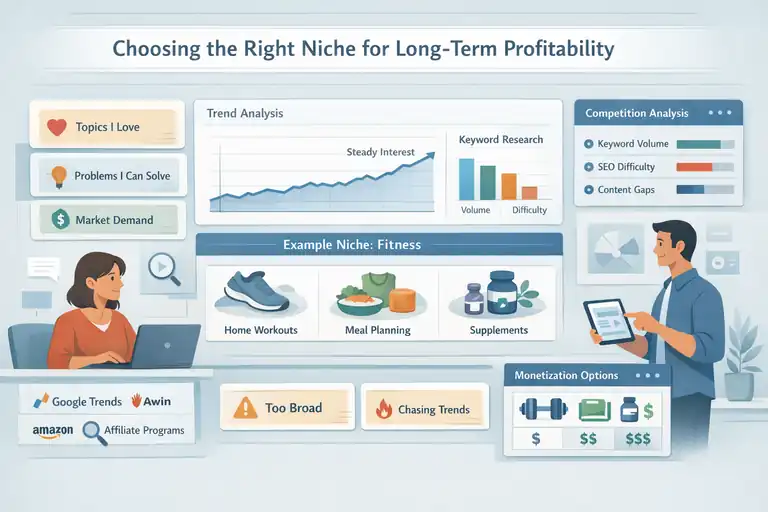
Picking the right niche is where your journey as an affiliate truly begins.
The goal isn’t just to choose what’s profitable—it’s to find a niche you can sustain passion and expertise in over time.
How To Find a Profitable Niche That Fits Your Interests
Start by asking yourself three simple questions:
- What topics do I love talking about?
- What problems can I help solve for others?
- Are people already spending money in this space?
To test profitability:
- Use Google Trends to see consistent interest over time.
- Browse affiliate marketplaces like Awin or FlexOffers for active programs in your niche.
- Check Amazon or Rakuten Advertising to see product variety and demand.
Example: If you love fitness, look for sub-niches like home workouts or meal planning. Then explore affiliate programs offering fitness equipment, courses, or supplements.
It’s not about chasing trends—it’s about building around what you can confidently create value in.
Evaluating Competition and Demand Using SEO Tools Like Semrush and Surfer SEO
Once you’ve picked a few potential niches, it’s time to validate them with real data. Tools like Semrush and Surfer SEO help you uncover:
- Keyword volume – how many people search for your topic monthly.
- Keyword difficulty – how hard it is to rank for that keyword.
- Content gaps – topics your competitors haven’t covered well yet.
Here’s how I’d do it:
- In Semrush, enter your niche keyword (e.g., “plant-based meal plans”). Look at related keywords and search intent.
- In Surfer SEO, analyze top-ranking pages to see what kind of content they publish and how they structure it.
If you notice consistent search demand and moderate difficulty, you’re likely looking at a sustainable niche.
Mistakes Beginners Make When Selecting a Niche
I’ve seen many beginners fall into traps that slow their growth.
Here are three to avoid:
- Chasing fads: Avoid “viral” topics like crypto or NFTs unless you truly understand them. These trends fade fast.
- Going too broad: “Health” is too big. “Keto for busy moms” is specific, monetizable, and easier to rank for.
- Ignoring monetization options: Always check if affiliate programs exist before committing.
A focused niche gives you clarity, consistent content ideas, and a clear path to income.
Picking The Best Affiliate Networks To Join
Now that you have your niche, it’s time to find the right networks that actually pay well and offer trustworthy programs.
Why You Should Start With Trusted Networks Like Awin and FlexOffers
Awin and FlexOffers are among the most beginner-friendly affiliate networks. They host thousands of programs across nearly every niche, from fashion to finance.
Here’s why I recommend starting there:
- Easy approval process: Most publishers get approved within days.
- Reliable tracking: They use strong systems to track every click and sale accurately.
- Diverse merchants: You’ll find major brands and smaller companies all in one dashboard.
Quick tip: When inside Awin, go to Advertisers > Join Program and filter by your niche (e.g., “home & garden”). This helps you find brands that align perfectly with your content.
Exploring Additional Networks Like PartnerStack, Impact, and Rakuten Advertising
Once you’re comfortable with Awin or FlexOffers, you can branch out into specialized networks:
- PartnerStack: Ideal for SaaS (software-as-a-service) products. Many tools in digital marketing, like Brevo or Kit, list programs there.
- Impact: Known for high-paying global brands and performance-based campaigns.
- Rakuten Advertising: A top choice if you want to work with enterprise-level companies and global merchants.
Diversifying across these networks reduces risk—if one network changes policies, your income doesn’t disappear overnight.
What To Look For Before Joining Any Affiliate Program
Before you hit that Join button, review these essentials:
- Commission rate: Look for at least 10–30% unless the product has a recurring subscription model.
- Cookie duration: Longer cookies (30–90 days) increase your chances of earning commissions later.
- Payment terms: Check payout minimums and frequency.
- Brand reputation: Never promote low-quality or misleading offers—it damages your credibility.
Example: If a course platform like Thinkific offers a 30% lifetime commission, that’s often better than a one-time $10 payout from a lesser-known brand.
When you become an affiliate marketer, choosing trustworthy programs is half the battle. The other half? Building relationships with your audience so they trust your recommendations.
Building Your Affiliate Website or Blog
Creating your affiliate website is where the real magic begins. It’s your online home—where your recommendations, reviews, and content live.
You don’t need to be a web developer or designer to start. You just need the right foundation, tools, and a bit of patience to bring it all together.
How To Choose Reliable Hosting From Hostinger or WP Engine
If your website is your business, your hosting is your office. It needs to be reliable, fast, and secure. Choosing the right hosting service affects your site’s loading speed, uptime, and overall SEO performance.
Hostinger is a great option for beginners—it’s affordable, easy to use, and comes with a one-click WordPress installation. Inside your Hostinger dashboard, you can go to Websites > Manage > Auto Installer, then select WordPress. Within minutes, your site is live.
If you plan to grow into a large affiliate brand with heavy traffic, WP Engine is the next-level option. It’s a managed WordPress host that handles speed optimization, daily backups, and security updates automatically. I like how WP Engine gives you staging environments—a safe “test space” where you can try design changes before going live.
Quick tip:
- Choose a hosting plan that includes SSL (for security), daily backups, and at least 99.9% uptime.
- Test your hosting speed using tools like GTmetrix or PageSpeed Insights before adding heavy plugins.
Setting Up WordPress and Essential Plugins for SEO Optimization
Once your hosting is ready, it’s time to install WordPress. This is your content management system—the platform where you’ll publish all your affiliate posts.
Here’s a quick step-by-step:
- Log into your hosting dashboard (Hostinger or WP Engine).
- Choose the WordPress installer.
- Select your domain name and create login credentials.
After installation, install key plugins that make your site optimized and search-friendly.
My personal essentials:
- Rank Math: Helps you optimize meta titles, descriptions, and on-page SEO directly from your editor.
- WP Rocket: Speeds up your site by caching pages and minimizing code.
- AIOSEO (All in One SEO): Great for sitemap generation and schema setup.
- PrettyLinks: Makes your affiliate URLs clean and trackable (e.g., yourdomain.com/go/productname).
- WPForms: Allows you to easily build contact or opt-in forms.
These tools do 80% of your technical work automatically—so you can focus on writing and promoting.
Pro tip: Always keep your site lightweight. Too many plugins can slow you down and harm your SEO performance.
Creating High-Quality Content That Converts Readers Into Buyers
Your website won’t earn anything until it offers real value. High-quality content doesn’t just mean writing well—it means understanding what your reader wants to know before making a purchase.
Here’s what works:
- Answer intent clearly. Each blog post should solve one problem or answer one question.
- Include comparisons. Readers love seeing options side by side.
- Add visuals. Use screenshots, product images, or short demo clips when allowed.
- Call to action (CTA): End every post with a helpful nudge—something like, “You can check the latest deal on Awin here.”
Think of your posts as mini-conversations. Don’t write at people; write to them. Share personal experiences, small wins, or lessons learned—these human touches make people trust your voice and, ultimately, your recommendations.
Writing Product Reviews That Actually Sell
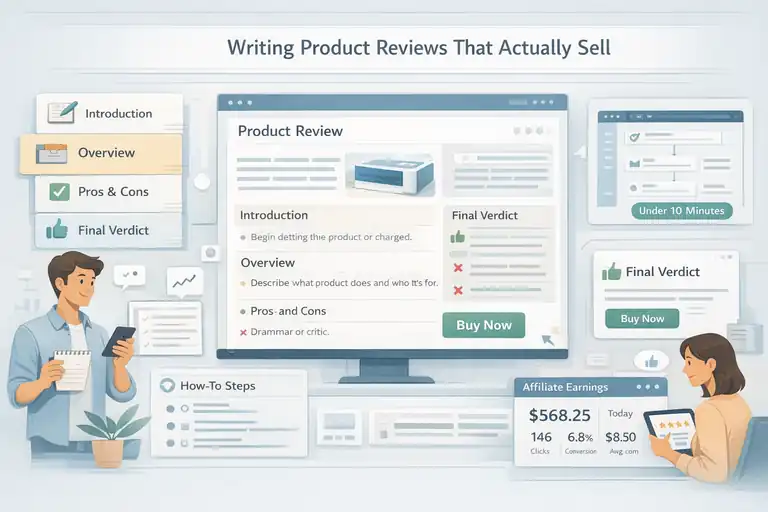
Affiliate marketing thrives on trust—and trust is built through reviews that feel honest and useful.
The goal isn’t to push a product; it’s to guide someone toward a choice that genuinely benefits them.
How To Structure a Review Post for Maximum Engagement
A solid review post has a predictable but powerful structure.
Here’s a format that consistently performs:
- Introduction: Start by sharing your initial reason for trying the product.
- Overview: Describe what the product does and who it’s for.
- Pros and Cons: Be honest. Even great tools have drawbacks.
- Real Experience: Add screenshots, test results, or short case examples.
- Final Verdict: Wrap up with who should (and shouldn’t) buy it.
Example: If reviewing Aweber, include a note like, “I tested Aweber’s automation builder—it took me under 10 minutes to create a welcome email sequence.” That level of detail makes your review believable.
Keep paragraphs short, use subheadings, and format key takeaways as bullet points. Readers often skim, so make it easy for them to absorb your insights quickly.
The Role of Storytelling and Honest Recommendations
Storytelling transforms average reviews into memorable ones. Share your journey—why you were looking for a tool, what problem it solved, or even where it disappointed you.
When readers sense honesty, they trust your judgment. If you say something like, “I tested both Awin and Impact, but Awin’s dashboard felt easier for beginners,” that’s authenticity. You’re not selling—you’re sharing experience.
Over time, these genuine reviews help you build authority. People begin to recognize your name, not just your niche. That’s where long-term earnings come from.
Using Tools Like ThirstyAffiliates or PrettyLinks To Manage Affiliate URLs
Affiliate links can look messy and intimidating, but tools like ThirstyAffiliates and PrettyLinks make them clean, trackable, and professional.
For example, instead of sharing this: https://awin.com/track?aff_id=12345&product=67890
You can share this: yourdomain.com/go/awin-hosting
Here’s how to set it up:
- Install the PrettyLinks plugin.
- Go to Pretty Links > Add New.
- Paste your affiliate URL and choose a custom shortlink.
- Save and use this link anywhere—on your blog, social media, or email.
You can also track clicks, conversions, and identify which links perform best. Over time, this data helps refine your content strategy and focus on what drives the most revenue.
Driving Traffic To Your Affiliate Offers
Once your website is live and optimized, it’s time to bring in traffic. Without consistent visitors, even the best content won’t generate income.
The good news? You don’t need paid ads to start. Organic traffic and smart promotion can get you far.
How To Use SEO Strategies With Rank Math or Sitechecker
Search engine optimization (SEO) is the foundation of affiliate success. With tools like Rank Math and Sitechecker, you can grow your traffic steadily without guessing.
Here’s how I usually approach it:
- Use Rank Math to optimize titles, meta descriptions, and internal links. Inside WordPress, just scroll to the Rank Math box under your post editor—it shows a real-time SEO score.
- Run audits with Sitechecker to find broken links, slow-loading pages, or missing alt text. These issues quietly hurt your rankings if ignored.
- Focus on long-tail keywords. Instead of targeting “best hosting,” go for “best WordPress hosting for beginners.”
Consistency is key. SEO doesn’t work overnight, but six months of steady optimization often builds unstoppable organic momentum.
Leveraging Social Media Platforms and Tools Like Later or Hootsuite
Social media is perfect for promoting affiliate content without being pushy. Tools like Later and Hootsuite help you plan, schedule, and analyze posts across platforms.
For example:
- Use Later to preview Instagram grids and schedule posts at optimal times.
- Use Hootsuite to monitor brand mentions, reply to comments, and share new articles automatically on multiple networks.
Don’t try to be everywhere. Focus on where your audience actually spends time. If you promote design tools, hang out on Pinterest. If it’s software or business, LinkedIn might perform better.
Add a mix of quick tips, personal stories, and links back to your content. The goal is to start conversations, not just post links.
Building an Email List Using Platforms Like Kit, Mailerlite, or Brevo
Your email list is your most reliable traffic source—completely independent of algorithms. With tools like Kit (formerly ConvertKit), Mailerlite, and Brevo, you can create automated sequences that nurture trust and convert leads.
Here’s how I usually set it up:
- Offer a freebie (like a checklist or mini-guide).
- Use Mailerlite to create a landing page.
- Set up an automation sequence in Kit to send follow-up emails.
- Add subtle affiliate recommendations inside your helpful content.
The key is to focus on value first. I’ve found that when you give readers something useful without immediate expectations, they naturally engage with your later recommendations.
Tracking Performance and Optimizing Earnings
If you want to become an affiliate marketer who earns consistently, tracking your performance isn’t optional—it’s essential.
Most affiliates fail not because their strategy is bad, but because they never analyze what’s working (and what’s not).
Why Tracking Tools Like ClickMagick or RedTrack Are Essential
When you’re running multiple affiliate campaigns, guessing performance is like flying blind. Tracking tools such as ClickMagick and RedTrack simplify everything by showing you exactly where your clicks and conversions are coming from.
ClickMagick helps you:
- Track every link click in real time.
- Identify which traffic sources convert best (like email vs. social media).
- Split-test multiple links to find higher-performing ones.
Inside ClickMagick, go to Links > Create New Link, paste your affiliate URL, and name it based on the campaign (e.g., “YouTube_Traffic_Awin”). This simple naming habit helps when analyzing performance later.
RedTrack takes it a step further with advanced attribution—it connects traffic, conversions, and cost data all in one dashboard. If you’re promoting multiple products from networks like Awin or PartnerStack, RedTrack automatically matches each sale to its original click source.
These insights allow you to focus your effort where the money actually comes from, instead of spreading yourself too thin.
Understanding Metrics That Matter: Clicks, Conversions, and ROI
There’s no shortage of data in affiliate marketing, but not all of it matters. You only need to focus on a few key metrics to make informed decisions:
- Clicks: How many people actually clicked your affiliate links. A high click rate usually means your content is engaging.
- Conversion rate: The percentage of visitors who took action (purchased, subscribed, or downloaded).
- Earnings per click (EPC): How much you earn on average per click.
- Return on investment (ROI): The total profit made compared to what you spent (if you’re using paid ads).
Here’s a quick example: If you got 500 clicks and 10 conversions, your conversion rate is 2%. If each sale earns you $25, that’s $250 in total—giving you an EPC of $0.50.
When you track these metrics weekly, you’ll quickly see patterns. Maybe one blog post drives tons of clicks but low conversions—meaning it needs better call-to-actions. Or maybe a specific audience segment converts higher, signaling where to focus your content next.
How To A/B Test Landing Pages Using Unbounce or Instapage
Small design tweaks can double your affiliate income, and that’s where A/B testing comes in. This process compares two versions of a landing page to see which one performs better.
With Unbounce or Instapage, you can easily set this up:
- Create two variations of your landing page.
- Change only one key element—like the headline, button color, or CTA text.
- Split your traffic 50/50 between both pages.
- Let the test run for at least 1,000 visits before deciding the winner.
For instance, I once tested a headline from “Top Tools for Bloggers” to “Top Tools I Personally Use to Earn Online.” The personal touch increased conversions by 27%.
A/B testing isn’t about big redesigns—it’s about finding small, data-backed improvements that stack up to real growth over time.
Scaling Your Affiliate Marketing Business
Once you’ve got steady income and reliable traffic, the next step is scaling. The goal here isn’t to work harder—it’s to automate, streamline, and expand intelligently.
Automating Workflows With CRM Tools Like HubSpot or Freshsales
A CRM (Customer Relationship Management) system helps organize your audience, leads, and email sequences—all in one place. Tools like HubSpot or Freshsales make this process almost effortless.
In HubSpot, you can go to Marketing > Email > Workflows and set up sequences for nurturing new subscribers automatically. It tracks every interaction, letting you see who clicked, who bought, and who needs a follow-up.
Freshsales, on the other hand, is perfect if you’re managing multiple partnerships or outreach campaigns. It logs emails, tasks, and affiliate communications, ensuring you never miss opportunities.
Automating your communication not only saves time—it keeps your audience consistently engaged while you focus on scaling your strategy.
Building Funnels With CartFlows or ClickFunnels To Increase Conversions
Affiliate funnels guide your audience from curiosity to purchase smoothly. Tools like CartFlows and ClickFunnels are designed to make that journey simple to build and optimize.
With CartFlows, you can create step-by-step checkout or offer flows directly inside WordPress. Example: Landing Page > Email Opt-in > Product Review > Call-to-Action.
ClickFunnels is more advanced, offering drag-and-drop templates and analytics. You can test different funnel paths—like offering a free PDF before leading to a paid course link.
Funnel building turns casual visitors into loyal subscribers, and loyal subscribers into repeat buyers. It’s one of the fastest ways to boost lifetime earnings without chasing new traffic constantly.
Expanding Into Multiple Niches Without Losing Focus
It’s tempting to jump into several niches once you start earning. But spreading too thin can backfire. The best approach is to expand gradually and strategically.
Start by scaling horizontally—launching new subtopics within your existing niche. For example, if your current niche is “digital marketing tools,” expand into email automation, SEO tools, or analytics software.
Once your first niche runs on autopilot, use your data and templates to enter a new one. The systems you’ve already built—your content format, tracking setup, and automation—will make new launches much easier.
Always remember: Mastery in one area pays more than mediocrity in many.
Common Mistakes New Affiliates Should Avoid
Affiliate marketing is simple in theory but easy to mess up in practice. Knowing what not to do can save you months of frustration.
Ignoring Analytics and Relying Only on Guesswork
One of the biggest mistakes I made early on was not checking analytics regularly. I kept publishing content without knowing what was driving results.
Analytics tell you exactly where to focus your time. Whether you use Google Analytics or tracking tools like RedTrack, always check which posts bring traffic and conversions. If a page isn’t converting, update the content, improve CTAs, or test a different affiliate offer.
Ignoring your numbers means guessing—and guessing rarely leads to growth.
Promoting Too Many Products Too Early
Many beginners believe more products mean more money, but it’s the opposite. Promoting too many unrelated products dilutes your message and confuses your readers.
Instead, start with 2–3 affiliate programs that genuinely fit your niche. Learn what works, create strong content around those offers, and expand once you’re confident.
Quality recommendations build trust—and trust builds income.
Neglecting To Build an Email List From Day One
Relying only on SEO or social media is risky. Algorithms change overnight. Your email list, however, is yours forever.
Start building it from day one using Mailerlite, Kit, or Brevo. Offer something simple—a mini guide, checklist, or free tutorial—in exchange for signups.
Your email subscribers will become your most loyal followers, often driving 2–3 times higher conversions than cold traffic.
Pro Tips To Succeed As a Modern Affiliate Marketer
Affiliate marketing keeps evolving. What worked five years ago doesn’t always work today. To stay ahead, you need a mix of adaptability, authenticity, and strategy.
Focus On Solving Problems, Not Just Selling Products
The most successful affiliates don’t “sell”—they help. Every piece of content should answer a question or fix a pain point.
Instead of saying “Buy this hosting plan,” try “Here’s how I sped up my site using Hostinger’s caching feature.” People respond to value, not pressure.
Helping first builds the kind of trust that naturally leads to conversions.
Use SEO Tools and AI Platforms To Scale Content Creation
You can’t manually write everything forever, and that’s okay. Use smart tools like Surfer SEO for optimization and AI platforms to assist with outlines, keyword research, or idea generation.
But always add your personal voice. AI can structure content—but your insights and experiences make it resonate.
Consistency plus human touch is the winning formula.
Keep Learning and Adapting—Affiliate Marketing Rewards Consistency
The affiliate space changes fast—new tools, policies, and algorithms appear every year. Keep learning through platforms like Coursera or LearnWorlds, and follow affiliate-focused newsletters.
What separates top earners from the rest isn’t talent—it’s persistence. Keep experimenting, tracking, and refining. Every small win compounds over time.
And remember, affiliate marketing isn’t about luck. It’s about building trust, helping people, and showing up consistently. That’s the real secret behind sustainable online income.
FAQ
How can I become an affiliate marketer with no experience?
You can become an affiliate marketer by choosing a niche you understand, joining trusted networks like Awin or FlexOffers, and creating helpful content that includes your affiliate links.
How do affiliate marketers make money online?
Affiliate marketers earn commissions when someone buys a product or service through their referral link. Earnings depend on the product type, traffic quality, and conversion rate.
What is the best way to start earning faster as an affiliate marketer?
Focus on one niche, use SEO tools like Rank Math to drive organic traffic, and promote products that genuinely help your audience.

I’m Juxhin, the voice behind The Justifiable.
I’ve spent 6+ years building blogs, managing affiliate campaigns, and testing the messy world of online business. Here, I cut the fluff and share the strategies that actually move the needle — so you can build income that’s sustainable, not speculative.