
Table of Contents
Some links on The Justifiable are affiliate links, meaning we may earn a small commission at no extra cost to you. Read full disclaimer.
Awin pros and cons for affiliates can look simple from the outside, but once you actually use the platform, the picture gets more complicated.
I’ve seen a lot of people treat Awin like a quick yes-or-no network, when in reality it works really well for some affiliate models and feels frustrating for others.
This guide breaks down the real tradeoffs, from sign-up and approvals to tracking, payouts, tools, and scaling, so you can decide whether Awin fits the way you promote offers.
What Awin Is And Why Affiliates Keep Considering It
The reason is simple: It combines access to a large advertiser marketplace with network-level tracking, reporting, and payment handling, which is exactly what many affiliates want when they are trying to manage multiple brand relationships in one place.
What Awin Actually Does For Affiliates
If you are brand new, here is the practical version. Awin is an affiliate network, which means it acts as the middle layer between advertisers and publishers.
Instead of building a separate relationship with every brand one by one, you can use one account to browse programs, apply to them, create links, track sales, and receive commissions.
Awin also gives publishers access to an advertiser directory and link-building tools like MyAwin and Convert-A-Link, which makes it easier to turn content into monetized affiliate placements.
What matters here is not the definition. What matters is workflow. If you run a content site, coupon site, cashback product, loyalty tool, newsletter, or social-driven affiliate business, networks like Awin can save a lot of operational mess.
You do not have to chase five different dashboards, five different payment terms, and five different tracking systems for every small campaign.
I believe this is one of the biggest reasons affiliates stay interested in Awin even when they complain about approvals or validation delays. The network model is just convenient when you want scale.
Why Awin Gets So Much Attention
Awin is not a tiny, niche network. On its advertiser-facing pages, it says it works with 30,000+ brands worldwide and offers access to 1M+ global partners, which signals serious marketplace depth even if not every program will fit your traffic type.
That kind of scale matters because affiliate success is often less about the platform itself and more about whether you can find merchants that match your audience. Imagine you run a UK deals site, a travel blog, or a product review site in a category like home, fashion, finance-adjacent services, or retail.
A larger network gives you more testing room. You can compare commission models, creative quality, conversion potential, and approval speed without rebuilding your whole setup elsewhere.
Still, bigger is not automatically better. A larger marketplace can also mean more noise, more mediocre programs, and more competition from stronger publishers already sitting inside the network. That is where the real pros and cons start showing up.
The Biggest Pros Of Awin For Affiliates
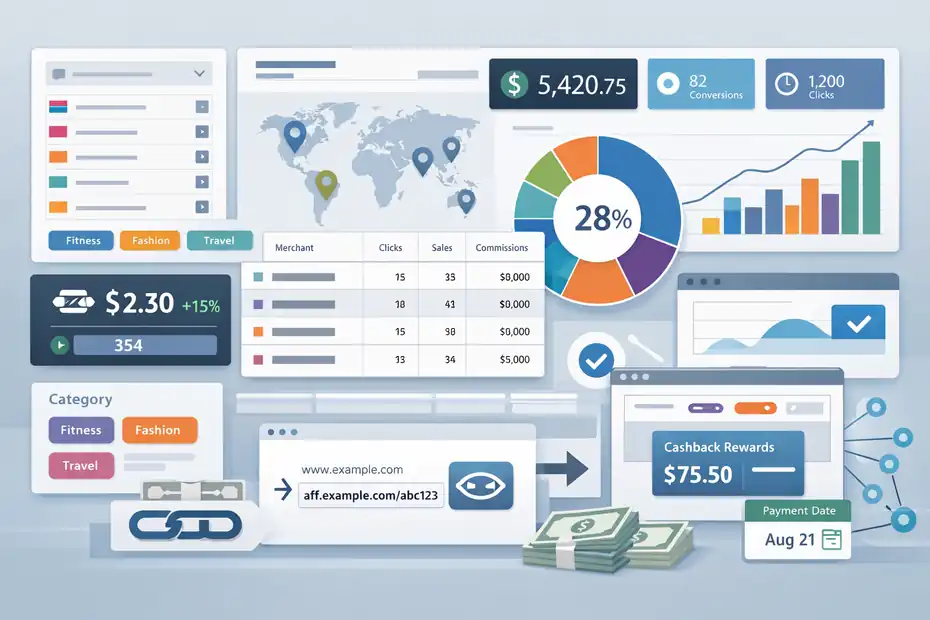
This is the part most list posts oversimplify. The best things about Awin are not just “many brands” and “easy links.”
The real advantages show up when you already have traffic and need systems that reduce friction.
Large Advertiser Access Is A Real Advantage
The biggest Awin benefit for affiliates is simple: reach. Awin’s advertiser directory lets publishers browse programs across multiple territories and categories, which gives you more options than relying on a single direct affiliate program.
That matters more than people think. Let’s say you publish buying guides for fitness equipment. On a smaller network, you may find three or four acceptable brands.
On Awin, you can often find multiple merchants, compare acceptance criteria, test links against different price points, and rotate placements based on actual earnings per click instead of assumptions.
A larger advertiser pool also helps when a brand pauses its program, cuts commission, or becomes unresponsive. You are not stuck. You can replace underperforming merchants faster.
In my experience, this flexibility is one of the strongest reasons content affiliates stay with larger networks. Not because every advertiser is amazing, but because optionality protects revenue.
Built-In Link Tools Make Content Monetization Faster
Awin offers publisher tools such as MyAwin, a Chrome extension for link creation, and Convert-A-Link, which can automatically convert qualifying links into affiliate tracking links once installed correctly.
For a blogger, publisher, or editorial affiliate, this can save a surprising amount of time. Instead of manually building every deep link from scratch, you can create tracking links while browsing merchant pages or let existing merchant links become trackable through the script.
Here is where this becomes useful in real life:
- Example: You update a “best luggage brands” article with eight outbound links.
- Without a quick link tool: You manually generate and replace each link.
- With a tool like MyAwin or Convert-A-Link: You cut the admin work and reduce missed monetization opportunities.
That does not sound dramatic, but at scale it is. If you manage 100 or 300 existing pages, link efficiency matters. The faster you can turn content updates into monetized placements, the more likely you are to maintain fresh affiliate coverage.
Useful For Multiple Affiliate Models, Not Just Bloggers
Awin is often discussed as if it is only for bloggers, but that is too narrow. Its ecosystem clearly supports different publisher types, including content, influencer, cashback, voucher, loyalty, and API-driven partners.
Awin’s documentation and partner-facing materials also show support for transaction notifications, offer retrieval, product feeds, and publisher APIs, which matters for more technical affiliate operations.
This is an underrated point. Some networks are fine when your entire strategy is just placing links in articles. But once you want product data, offer automation, callback notifications, or custom reporting, weaker platforms start feeling restrictive.
Awin has more depth than many beginners realize. If you are building a coupon portal, shopping comparison experience, or loyalty-style product, the technical side becomes much more important than the pretty dashboard.
I would not say every affiliate needs that depth. Most do not. But if your business model is more operational than purely editorial, Awin starts looking a lot more attractive.
Centralized Payments And Tracking Reduce Chaos
One overlooked advantage of affiliate networks is that they reduce relationship management overhead. Awin handles the network infrastructure around tracking and payments, which is one reason many affiliates prefer a network account over managing dozens of direct partnerships individually.
If you have ever worked with a messy stack of direct affiliate deals, you know how annoying that can get. Different payment schedules. Different attribution logic. Different reporting formats. Different contact points. Some brands pay late. Some disappear. Some give almost no visibility into conversions.
Awin does not eliminate all of those issues, because brands still control program terms, validation, and commissions. But it creates a more standardized environment.
That standardization matters more as your affiliate business grows. At 10 monthly clicks, it barely matters. At 100,000 monthly sessions and dozens of brand partners, it absolutely does.
The Real Cons Of Awin For Affiliates
Now for the part people usually soften. Awin has legitimate downsides, and they are not minor if your business model depends on fast approvals, clean attribution, and quick cash flow.
Approval Friction Can Slow You Down
One of the most common frustrations with Awin is that joining the network does not mean instant access to earnings. You still need to apply to individual advertiser programs, and each advertiser has its own acceptance criteria.
Awin’s own documentation explains that publishers sign up to the network and then request to join advertiser programs before they can promote them.
This becomes painful when you are trying to move quickly.
Imagine you are publishing a time-sensitive gift guide before a seasonal traffic spike. You identify five promising merchants on Awin.
But three are slow to review applications, one rejects your traffic model, and one accepts you but gives you weak creative and mediocre commissions. Suddenly the “huge network” advantage feels less impressive.
I suggest thinking of Awin access in two stages:
- Stage 1: You get approved to the network.
- Stage 2: You get approved to the specific programs that actually matter.
A lot of beginners underestimate Stage 2. That is where delay and disappointment often happen.
Validation And Payment Timing Can Test Your Patience
Awin can be frustrating for affiliates who expect fast, predictable cash flow. Networks do not magically pay out the second a sale happens.
Transactions often go through a validation process controlled by the advertiser, and that means your reported earnings can sit in a pending state before becoming payable.
Awin’s systems and publisher support materials are built around tracking transactions and payment management, but the network structure still depends heavily on advertiser-side approval.
This is where many affiliates get disillusioned. They see conversions in the dashboard and mentally count the money too early.
A more realistic mindset is this: Tracked revenue is not finalized revenue.
If you are a small affiliate depending on affiliate income to fund content production, this lag can hurt. It is even worse in niches with higher return rates, service cancellations, or stricter validation rules.
I do not think this is a dealbreaker by itself, but it does mean Awin is much easier to handle when you have enough financial buffer not to panic over pending commissions.
The Dashboard And Learning Curve Can Feel Heavy At First
Awin is not the hardest platform in affiliate marketing, but it is not the most beginner-friendly either. The Help Center is extensive, which is useful, but that alone tells you there is a lot going on inside the platform.
Features include offers, link creation, reporting, APIs, account management, payment setup, and program-specific controls.
That complexity is good once you know what you are doing. Before that, it can feel like you are clicking through too many tabs to answer simple questions.
A beginner often wants very straightforward answers:
- Which merchants should I join?
- Which links should I use?
- Why is a sale pending?
- Why was I rejected?
- Which report should I trust?
Awin gives you the infrastructure, but it does not remove the need for judgment. In my experience, this is one reason some affiliates bounce off larger networks early.
They were hoping for a plug-and-play earnings machine, but what they really got was a professional marketplace that still expects them to think like an operator.
Not Every Affiliate Type Will Benefit Equally
This is the brutal truth part. Awin is not automatically good just because it is well known.
If you have weak traffic, unclear promotion methods, no real audience, or a site that looks unfinished, Awin may feel disappointing fast. Not because the platform is broken, but because stronger networks reveal weak affiliate fundamentals. Advertisers have standards. Compliance matters.
Disclosure rules matter, especially for influencer and social media partners, where Awin explicitly requires clear advertising disclosures such as marked hashtags for sponsored or paid content.
That means Awin tends to reward affiliates who already understand positioning, intent matching, and audience trust.
If your model is “drop links everywhere and hope,” you will probably struggle.
If your model is “match the right brand to the right traffic with clear intent,” you have a much better shot.
Who Awin Is Best For And Who Should Probably Skip It
This is the section I wish more affiliates read before signing up. The platform is not the whole story. Fit is the story.
Awin Is Best For Affiliates With Clear Traffic Intent
Awin tends to work best for affiliates who already know how their audience behaves. That includes content sites with commercial-intent pages, newsletter operators with segmented recommendations, loyalty or cashback publishers, and niche comparison publishers who can connect users to relevant offers.
Why does this matter so much? Because advertiser applications are easier to justify when your traffic story is clear.
- Good fit: “I run a UK home office review site with product comparison pages and buying-intent traffic.”
- Weak fit: “I’m starting an affiliate business and I plan to promote stuff on social media somehow.”
The first sounds monetizable. The second sounds uncertain.
If I were advising a newer affiliate, I would say this: before worrying about whether Awin is good, make sure you are presenting a program-friendly business. Clear niche. Clear audience. Clear traffic source. Clear content quality. That alone can improve approval odds and long-term results.
It Can Be Excellent For International And Retail-Focused Publishers
Awin’s marketplace breadth and territory options make it especially interesting for publishers targeting retail, ecommerce, and cross-border brand partnerships. The advertiser directory is built to be browsed across regions, and Awin promotes multi-market access as part of its overall network value.
If your audience is in the UK or Europe, Awin often enters the conversation quickly because many recognizable ecommerce brands either run programs there or have a strong regional presence. That does not mean every commission rate will be generous, but it does mean your testing pool is often broader.
A realistic scenario: Imagine you publish travel accessories content for readers in the UK, Germany, and the Netherlands. A network with stronger regional advertiser coverage can be far more useful than a platform that is heavily US-only.
That kind of geographic fit is not glamorous, but it can directly affect earnings.
Beginners Can Use It, But Only With The Right Expectations
Yes, beginners can use Awin. No, I do not think every beginner should start there first.
Awin requires enough setup discipline that total beginners sometimes misread normal affiliate friction as platform failure. The sign-up process includes user details, affiliate details, promotion details, and financial details, and Awin has historically required a small deposit at sign-up as a verification measure.
That is not outrageous, but it does signal that this is not a casual toy platform.
If you are new, Awin works better when you already have:
- A live site or real promotional channel
- A clear explanation of your traffic model
- A few pieces of useful content already published
- Basic disclosure and compliance awareness
- Patience with approvals and pending commissions
Without that foundation, you may technically join and still get nowhere.
How Awin Works For Affiliates Step By Step
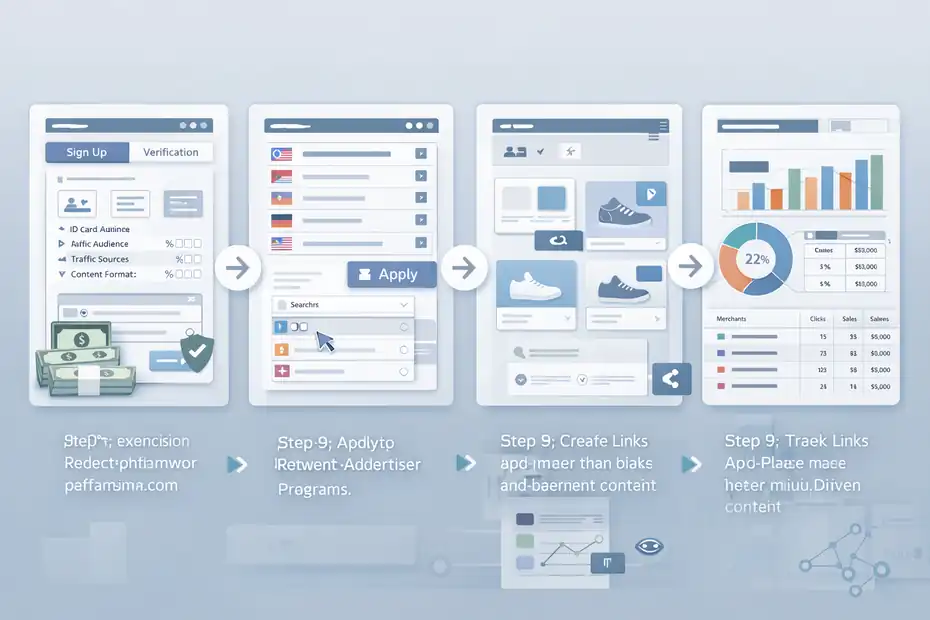
Let me break this down in the simplest practical flow possible.
This is the part that helps you judge whether the network matches your workflow.
Step 1: Join The Network And Complete Your Publisher Profile
Awin’s publisher onboarding asks for core identity, promotional, and payment details. Historically, the network has also required a small deposit during sign-up as part of verification.
This stage matters more than people think because your profile shapes how advertisers perceive you later. A sloppy description can quietly hurt approvals.
Here is how I suggest approaching it:
- Step 1: Describe your audience clearly, not vaguely.
- Step 2: Explain traffic sources honestly.
- Step 3: Mention your content format, such as reviews, comparisons, guides, newsletter placements, or social content.
- Step 4: Make your site look active before you apply widely.
Think of your publisher profile like a lightweight pitch deck. Advertisers want to know whether sending approval your way has upside.
If your profile says almost nothing, you create unnecessary doubt.
Step 2: Apply To Relevant Advertiser Programs
Once inside Awin, you browse programs and request access. This is where quality beats quantity. Awin’s advertiser directory exists to help publishers find and join brands they want to promote, but getting accepted depends on the advertiser.
A common beginner mistake is applying to everything. I would not do that.
A better approach looks like this:
- Step 1: Pick advertisers closely aligned with your niche.
- Step 2: Prioritize programs with obvious audience fit.
- Step 3: Review commission structure, brand strength, and landing-page quality.
- Step 4: Track which applications get accepted quickly.
Imagine you run a parenting blog. Ten random offers across finance, home insurance, fashion, and software look less convincing than three highly relevant family-focused ecommerce merchants.
Relevance helps approval odds and conversion rates. Both matter.
Step 3: Create Links And Place Them Inside Intent-Driven Content
Once approved, you can create affiliate links through Awin’s tools. This can happen manually or through publisher tools such as MyAwin and Convert-A-Link.
The important part is not the link itself. It is the placement context.
I recommend matching link style to user intent:
- Review article: Deep links to exact products or category pages
- Comparison page: Links beside feature-based comparisons
- Deals page: Time-sensitive placements with clear offer context
- Newsletter: Curated recommendations with a reason to click
- Social content: Disclosed affiliate placements with a clean bridge to the merchant
Awin works best when your links feel like a natural next step, not an interruption. That sounds obvious, but a lot of affiliates still drop generic homepage links into articles and wonder why EPC stays weak.
Specificity usually wins. Better landing page match. Better user trust. Better conversion potential.
Step 4: Track Performance And Improve Merchant Selection
Awin provides reporting and publisher-side data tools, and its APIs allow more advanced users to pull transaction and program details.
For beginners, the useful habit is simple: do not judge a program by commission rate alone.
Track things like:
- Click-through rate from the content
- Conversion quality after the click
- Reversal or validation patterns
- Seasonal performance
- Which merchant actually fits the audience better
I have seen affiliates choose a 12% commission offer over a 6% offer and still make less money because the lower-commission brand converted far better.
That is the kind of mistake better reporting helps prevent.
The longer you use Awin, the more your success depends on merchant selection quality, not just network access.
The Hard Truth About Awin’s Approval, Tracking, And Payment Experience
This is where expectations need to be realistic. Awin is not “bad” because it has process. But the process absolutely affects affiliate experience.
Approval Is Often More About Your Business Than The Network
When affiliates say Awin is hard, they often mean advertiser approvals were hard. Those are related, but not identical. Awin gives you access to the marketplace. Advertisers still decide whether they want your traffic.
That means a rejection is not always a sign that Awin is a poor network. Sometimes it is simply a fit issue.
- Example: A coupon-focused advertiser may reject a blog with no deal-oriented structure.
- Example: A premium brand may reject a low-trust site full of thin content.
- Example: A program may ignore small publishers during busy periods.
I believe this is why the most successful Awin affiliates tend to have a strong business identity. They make the approval decision easy.
If that sounds harsh, it is also useful. It tells you where to improve.
Tracking Is Powerful, But You Still Need Good Attribution Hygiene
Awin’s infrastructure supports click tracking, conversion processing, and transaction notifications, and its technical documentation makes clear that it offers tools for both standard and more advanced reporting workflows.
But reliable tracking does not mean every click turns into attributable revenue.
Attribution gets messy in real life. Users click on mobile, buy later on desktop, use voucher sites at the end of the funnel, or interact with multiple publishers before converting. Depending on the advertiser setup and channel path, your role in the journey may not be rewarded the way you expected.
That is not unique to Awin. It is affiliate marketing reality.
Still, I suggest affiliates think beyond raw click counts. Watch which content types create validated earnings, not just tracked clicks. That difference matters.
Payment Feels Better When You Treat It As Portfolio Income
If you rely heavily on affiliate commissions to cover immediate monthly costs, Awin’s delayed validation cycle can feel stressful. If you treat affiliate income as portfolio-style revenue with lag, it feels much easier to manage.
This mindset shift sounds small, but I think it changes everything.
Awin is often a better fit for affiliates who can operate on rolling cash flow rather than needing instant payout psychology. That includes publishers with diversified income, agencies managing multiple revenue streams, or established content businesses with enough runway to wait for commissions to mature.
The platform is easier to like when you are not emotionally overcounting pending earnings.
Tools, Features, And Technical Advantages That Actually Matter
This section matters most if you plan to grow beyond “paste a few affiliate links into posts.”
MyAwin And Convert-A-Link Help Reduce Operational Friction
Awin’s publisher tools are not flashy, but they are practical. MyAwin speeds up link creation in Chrome, while Convert-A-Link can automatically affiliate-ize qualifying advertiser links placed on your site once implemented.
That kind of automation matters when you are maintaining older content at scale.
- Use case 1: You update legacy commerce content and do not want to rebuild every link manually.
- Use case 2: You have editorial writers who can add normal brand URLs while monetization happens at the script level.
- Use case 3: You want faster testing for newly accepted programs.
These tools will not rescue weak content. But they do make operational maintenance easier, and that can protect revenue over time.
APIs And Feeds Matter For Advanced Affiliates
Awin offers APIs and feed access for publishers, including program details, offers, notifications, and product feed functionality. Its documentation also notes API usage for pulling reports and automating workflows.
This is where Awin becomes much more interesting for serious operators.
Imagine you run a comparison engine or deals platform. Manual updates are not enough. You may need:
- Fresh product data
- Program metadata
- Promotion retrieval
- Transaction callbacks
- Custom dashboards
Awin at least gives you technical routes to build around the platform, which is a real advantage over networks that trap you inside a limited interface.
I would not overhype this if you are a pure beginner. But for scaling affiliates, it matters.
Compliance Is Annoying Until You Realize It Protects Good Publishers
Awin emphasizes compliance and disclosure requirements, especially for influencer and social placements. The platform’s materials also make clear that the network monitors activity and requires publishers to follow policies and local advertising rules.
At first, this can feel restrictive. Later, you realize it protects the ecosystem.
Good affiliates usually benefit when networks take fraud, nondisclosure, and low-quality promotion seriously. Why? Because shady partners distort advertiser trust, and when advertiser trust drops, the whole channel gets less generous.
So yes, compliance can be a con emotionally. But strategically, it is often a long-term pro for legitimate affiliates.
Common Mistakes Affiliates Make On Awin
Most Awin disappointment is not caused by one catastrophic error. It usually comes from a stack of small, preventable mistakes.
Choosing Merchants Based On Commission Alone
A high rate looks exciting. It is also one of the easiest ways to make bad affiliate decisions.
A better framework is:
- Question 1: Does this merchant match my audience?
- Question 2: Is the landing page strong?
- Question 3: Does the brand convert well in this category?
- Question 4: Are validation patterns reasonable?
A lower commission with stronger conversion often wins. The affiliate math that matters is earnings per relevant click, not rate in isolation.
Applying Too Broadly Without A Traffic Narrative
When affiliates blast applications to dozens of brands with no coherent promotion plan, they often get ignored or rejected. That is not just bad luck. It signals weak positioning.
I recommend writing a one-sentence traffic narrative for yourself:
“I help [audience] choose [category] through [format] and send them to [type of merchant].”
If you cannot say that clearly, your Awin strategy probably needs work before your program list does.
Ignoring Link Placement Quality
Affiliate links buried in vague content usually underperform. This is especially true on a network like Awin where you may have many merchant options. Strong placement strategy matters.
- Weak placement: Random text link in an informational article with no purchase intent
- Strong placement: Merchant link inside a comparison, recommendation, or decision-stage paragraph
Awin gives you enough access that placement strategy becomes the differentiator.
Treating Pending Earnings Like Banked Revenue
This one causes more emotional frustration than almost anything else.
I strongly suggest using three mental buckets:
- Tracked: Interesting, but not yours yet
- Validated: More trustworthy
- Paid: Real revenue
That simple framing will save you a lot of disappointment.
How To Get Better Results On Awin As An Affiliate
You do not need to game the network. You need to become easier for the right advertisers to approve and easier for the right users to convert through.
Build Content Around Commercial Decision Moments
The easiest way to improve Awin performance is to publish or optimize content that sits close to buying intent.
Good examples include:
- “Best” product roundups
- Merchant comparisons
- Alternatives pages
- Voucher or offer pages where appropriate
- Seasonal shopping guides
- Problem-solution buying content
These formats naturally support affiliate clicks because the user is already evaluating options.
In my experience, Awin performs best when you connect its merchant variety to decision-stage search intent. That is where the network’s breadth becomes an advantage rather than a distraction.
Be Selective With Programs And Ruthless With Testing
Not every accepted program deserves a permanent spot on your site.
I suggest this simple cycle:
- Month 1: Test 3 to 5 tightly relevant merchants
- Month 2: Review click and conversion quality
- Month 3: Remove weak fits and deepen coverage around winners
That is a much healthier model than keeping 20 mediocre programs live because you do not want to decide.
Awin gives you access. Your job is curation.
Treat Merchant Relationship Quality As A Performance Lever
This is something beginners often miss. Affiliate success is not purely dashboard math. Sometimes the difference between average and excellent results is relationship quality.
A better merchant relationship can lead to:
- Faster communication
- Better promotion planning
- Access to offers
- More useful creative
- Stronger program understanding
Even inside a network, relationships still matter. If a merchant sees that you send qualified traffic, that can improve your long-term experience.
Final Verdict: Is Awin Worth It For Affiliates?
Awin is worth it for affiliates who want access to a broad advertiser network, solid publisher tools, and room to grow into more advanced workflows.
It is especially strong for affiliates with clear traffic intent, retail-focused content, international audiences, or more technical business models that benefit from APIs, offers, and feed access.
But here is the brutal truth: Awin is not a shortcut network.
It can feel slow if you want instant approvals. It can feel confusing if you are still learning affiliate basics. It can feel disappointing if your traffic is weak or your positioning is vague. And it can test your patience if you count pending commissions too early.
So when people ask me about awin pros and cons for affiliates, my honest answer is this:
Awin is good for serious affiliates. It is not automatically good for unprepared affiliates.
That is a big difference.
If you already have a real audience, useful content, and the patience to treat affiliate marketing like a business instead of a quick hack, Awin can absolutely earn a place in your stack. If not, it will probably expose the holes in your strategy before it rewards you.
And honestly, that may be the most useful thing about it.
FAQ
What are the main Awin pros and cons for affiliates?
Awin offers access to thousands of advertisers, strong tracking tools, and centralized payments, which makes scaling easier. However, affiliates often face slow approvals, delayed commission validation, and a steeper learning curve. It works best for those with clear traffic and monetization strategies already in place.
Is Awin good for beginner affiliates?
Awin can work for beginners, but it is not the easiest starting point. New affiliates may struggle with advertiser approvals and understanding the platform. It becomes much more effective once you have a website, consistent traffic, and a clear niche or audience to present to advertisers.
How long does it take to get paid on Awin?
Payments on Awin depend on advertiser validation, which can take weeks or longer. Transactions first appear as pending, then become approved before payout. This delay varies by merchant, so affiliates should not expect instant earnings and should plan for slower cash flow cycles.
Why do advertisers reject Awin affiliate applications?
Advertisers reject applications when the affiliate lacks clear traffic, has low-quality content, or does not match their target audience. A weak website, unclear promotion methods, or missing disclosures can also reduce approval chances. Strong niche positioning and a professional site improve acceptance rates significantly.
Can you make consistent income with Awin?
Yes, affiliates can earn consistent income with Awin if they focus on high-intent content and relevant merchants. Success depends on choosing the right programs, optimizing link placement, and tracking performance over time. It is more reliable for experienced affiliates than those testing random strategies.

I’m Juxhin, the voice behind The Justifiable.
I’ve spent 6+ years building blogs, managing affiliate campaigns, and testing the messy world of online business. Here, I cut the fluff and share the strategies that actually move the needle — so you can build income that’s sustainable, not speculative.
Related posts:
 10 Proven Strategies for Creating Passive Income Streams
 Awin Worth It For Affiliate Marketers? Honest Verdict
 How to Become a Better Affiliate Marketer
 How to Make Money with CPAlead
 10 Best Affiliate Marketing Products That Sell Like Crazy
 15 Best Companies with Affiliate Programs You Can Join Today