
Table of Contents
Some links on The Justifiable are affiliate links, meaning we may earn a small commission at no extra cost to you. Read full disclaimer.
When you’re running an online business, finding the best online payment processor isn’t just about convenience—it’s about protecting your profits and delivering a seamless experience for your customers.
I’ve learned the hard way that not all payment platforms are created equal. Some charge sneaky fees, others hold your funds, and a few make customers jump through hoops just to pay.
That’s why I decided to dig deep and create this guide to help you find the best online payment processor for fast, secure, and low-fee transactions—without the headaches.
Understanding What Makes a Great Online Payment Processor
When you’re choosing the best online payment processor, it’s easy to get distracted by flashy features. But what truly matters are the behind-the-scenes details that affect your daily cash flow, customer trust, and long-term scalability.
Let’s break down what makes a payment processor genuinely great.
Key Factors That Define a Reliable Payment Processor
A reliable payment processor should feel like a quiet partner—always working in the background, ensuring every transaction runs smoothly.
- Uptime & Reliability: The processor should have a near-perfect uptime (99.9% or higher). Downtime equals lost sales, plain and simple.
- Transparent Pricing: Avoid processors that hide behind “complex fee structures.” You want clear rates for domestic, international, and chargeback fees.
- Global Reach: If you plan to scale, look for processors that support multiple currencies and international payments.
- Customer Support: Fast, responsive help can save you from revenue loss during a payment issue.
In my experience, the best processors are the ones you rarely think about—because they just work.
Why Speed and Transaction Time Matter More Than Ever
The faster your funds arrive, the faster you can reinvest and grow. Speed directly affects your cash flow, especially for small businesses and freelancers.
Here’s why transaction time is critical:
- Faster Payouts = Better Liquidity: A delay of even 48 hours can stall ad campaigns, inventory purchases, or payroll.
- Customer Perception: Slow payment confirmations can frustrate buyers or reduce trust in your checkout process.
- Competitive Edge: Real-time or same-day payments are now an expectation, not a luxury.
In short, processing speed isn’t just a tech metric—it’s your business’s heartbeat.
How Low Fees Impact Your Profit Margins
Fees can seem small, but over time, they eat into profits more than most realize.
Let’s do quick math:
If you process $50,000 a month and your provider charges 2.9% + $0.30 per transaction, you’re losing about $1,450 monthly in fees. Switching to a 2.2% rate could save you over $350 every month—or $4,000 a year.
Pro Tip: Always compare effective rates, not just headline percentages. Some providers hide extra cross-border or currency conversion fees in the fine print.
Balancing Security, Compliance, and Ease of Use
Security and convenience often clash—but a great processor manages both gracefully.
- PCI DSS Compliance: This is the gold standard for payment data protection. Always confirm your provider meets it.
- Fraud Detection Tools: Real-time AI monitoring helps detect unusual transactions before they cause damage.
- User Experience: The payment process should be simple and frictionless. Complex checkout flows increase cart abandonment.
Ultimately, your ideal processor should feel invisible—secure, compliant, and seamless.
Top Online Payment Processors for Fast, Low-Fee Transactions
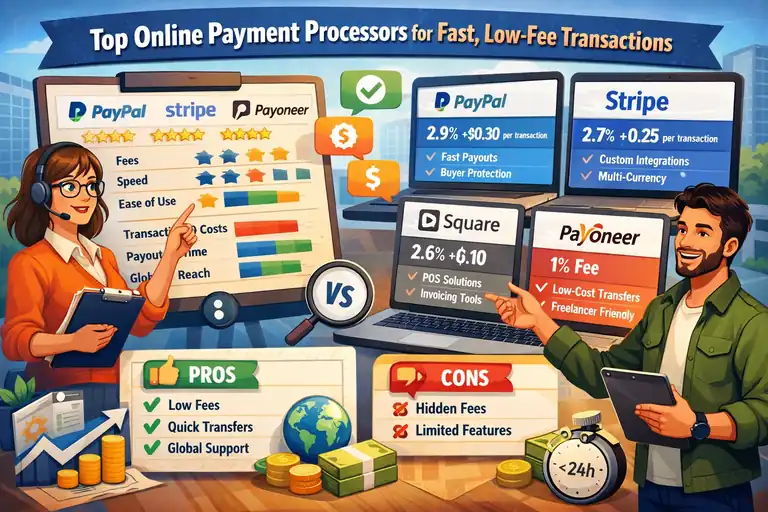
Now let’s get practical. Here are the payment processors I’ve found most reliable, efficient, and affordable for different types of businesses.
Stripe – Best for Developers and Custom Integrations
Stripe is a developer’s dream. It lets you create fully customized payment flows through its robust API (application programming interface).
Why it stands out:
- Accepts over 135 currencies.
- Offers fast payouts (as quick as 2 days in most regions).
- Integrates smoothly with Shopify, WordPress, and SaaS platforms.
Stripe’s flexibility makes it ideal for scaling startups or tech-savvy businesses that need control over every payment touchpoint.
PayPal – Ideal for Established Online Businesses
PayPal remains one of the most recognized and trusted names globally.
What makes it reliable:
- Instant payment options and broad international reach.
- Seamless integration with e-commerce platforms like WooCommerce and BigCommerce.
- Buyer protection policies enhance customer confidence.
While PayPal’s fees can be higher (2.9% + $0.30), its brand trust often boosts conversion rates enough to offset the cost.
Square – Great for Multi-Channel Sellers
If you run both online and in-person sales, Square gives you a single ecosystem to handle it all.
What I love about Square:
- Unified dashboard for POS and online transactions.
- Flat-rate pricing (2.6% + $0.10) simplifies budgeting.
- Instant transfers available for a small additional fee.
It’s perfect for retail, food service, or hybrid businesses that want simplicity and consistency.
Wise (formerly TransferWise) – Best for International Payments
Wise is built for speed and transparency in cross-border transactions.
Key advantages:
- Uses real exchange rates (no markup).
- Fees are among the lowest globally—often under 1%.
- Payouts can land in recipient accounts within hours.
For freelancers, remote teams, and international vendors, Wise is a financial lifesaver.
Payoneer – Top Choice for Freelancers and Global Payouts
Payoneer simplifies getting paid across borders. Many marketplaces like Upwork and Fiverr rely on it.
Why it works well:
- Supports multiple currencies and local bank withdrawals.
- Offers a prepaid Mastercard for easy spending.
- Transparent fees (usually 1–2%) and quick settlements.
If you’re a global freelancer, Payoneer’s accessibility and reliability make it a must-have.
Revolut Business – Best for Startups and Remote Teams
Revolut has evolved from a personal finance app into a full-fledged business payment solution.
Highlights:
- Multi-currency accounts in over 25 currencies.
- No hidden conversion costs.
- Smooth integration with accounting tools like Xero.
Revolut’s flexible, digital-first approach makes it ideal for modern, remote-first teams handling multiple currencies daily.
Comparing Transaction Fees and Speed Across Leading Processors
Choosing the right processor isn’t just about the logo—it’s about how fast your money moves and how much you keep. Let’s compare.
Fee Breakdown: Domestic vs. International Transactions
Domestic fees are usually lower and fixed, while international payments often add layers of cost.
- Stripe: 2.9% + $0.30 (domestic) / +1% for currency conversion.
- PayPal: 2.9% + $0.30 (domestic) / up to 4.4% (international).
- Wise: Typically 0.5–1.0%, no markup on exchange rates.
- Payoneer: Around 1–2%, depending on payout method.
If most of your sales are local, Stripe or Square might be more efficient. For international business, Wise or Payoneer wins hands down.
Processing Speed: Instant, Same-Day, and Delayed Payouts
Here’s how fast you can access your money:
- Stripe: 2–3 business days. Instant payouts for a small fee.
- PayPal: Instant transfer (with fee) or 1–3 days to bank.
- Square: Same-day or next-day deposits.
- Wise: 50% of transfers arrive in under an hour.
- Payoneer: 1–2 days typically.
- Revolut: Same-day transfers for supported currencies.
If speed matters most, Wise or Square is usually the best choice.
Hidden Fees You Might Overlook When Choosing a Processor
Even the best payment processors can have hidden costs. Look out for:
- Currency conversion markups disguised as “processing adjustments.”
- Chargeback fees ($15–$20 per dispute on average).
- Withdrawal fees for moving money to your bank account.
Always review the fine print or talk directly with sales reps before signing up.
Which Processor Offers the Best Value for Small Businesses
For small businesses, value isn’t about the lowest price—it’s about the best balance of cost, speed, and reliability.
- Best overall balance: Stripe
- Best for global freelancers: Wise or Payoneer
- Best for quick, local sales: Square
- Best for customer trust and recognition: PayPal
If I had to pick one, I’d say Stripe offers the best long-term value for growing online brands because of its scalability, transparent pricing, and integration ecosystem.
How to Choose the Best Online Payment Processor for Your Needs
Choosing the best online payment processor isn’t about picking the most popular name—it’s about finding what fits your business model, cash flow rhythm, and customer expectations.
The right processor should blend affordability, reliability, and ease of use. Here’s how to make that choice with confidence.
Assessing Your Business Model and Transaction Volume
Before anything else, you need to look at how your business operates day to day.
If you’re a small retailer selling physical products, you might prioritize quick deposits and simple setup. But if you’re a subscription-based business, recurring billing automation becomes essential.
Ask yourself:
- How many transactions do I process per month?
- Are they mostly domestic or international?
- Do I need recurring payments, or is each sale one-time?
A coffee shop owner using Square might value fast, same-day payouts, while a SaaS startup integrating Stripe benefits from customizable APIs that support scaling. Matching your processor to your transaction behavior is step one in keeping costs low and operations smooth.
Questions to Ask Before Committing to a Payment Platform
Don’t sign up blind. Payment platforms often look similar on the surface, but the differences can be costly over time.
Key questions to ask include:
- What are the actual total fees per transaction, including hidden costs?
- How quickly are funds deposited into my account?
- Are there fees for refunds, chargebacks, or international transfers?
- Does the platform integrate easily with my current systems?
- How responsive is their customer support when something breaks?
From experience, I always advise testing support before committing—send a query and see how fast and clearly they respond. A company’s email tone often tells you more than their marketing ever could.
Evaluating Processor Integrations With Your E-Commerce Tools
A payment processor is only as strong as how well it plays with your existing stack. If it doesn’t integrate easily, you’ll waste hours manually reconciling data or patching tech issues.
For example:
- Shopify users often prefer Stripe or PayPal for smooth native integration.
- WooCommerce store owners might lean toward processors with plugin flexibility like Square or Payoneer.
- Service-based businesses might benefit more from Wise or Revolut for managing client invoices across borders.
If your processor connects directly to your accounting or inventory system, you save time, reduce human error, and gain better insights into cash flow—all of which compound into real operational savings.
Testing User Experience From Both Merchant and Customer Sides
You can’t just test your side of the checkout. You need to see what your customer experiences.
Do this simple test: try to make a small purchase through your own checkout as if you were a buyer. Notice how many steps it takes, whether there’s friction, or if payment confirmation feels delayed.
From your side, check how easy it is to:
- Issue a refund.
- Track transaction history.
- Reconcile daily payouts.
The best processors make both sides effortless. If you or your customers have to “figure things out,” it’s probably not the right fit.
Common Pitfalls to Avoid When Selecting a Payment Processor
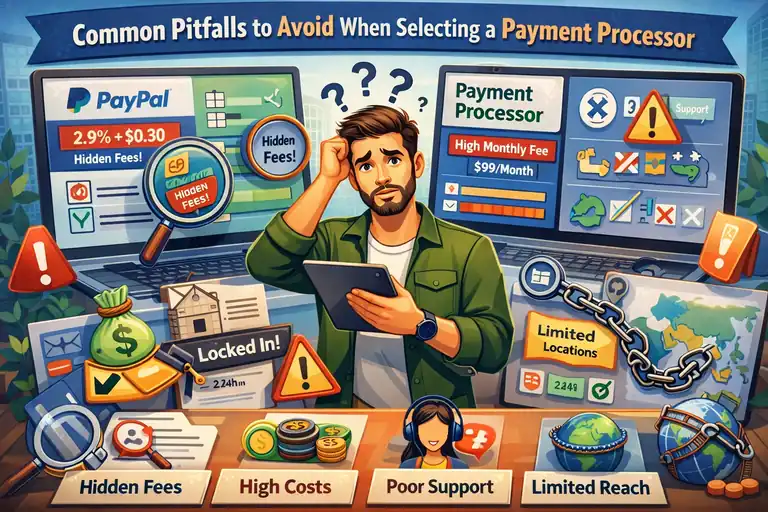
Even the smartest business owners sometimes overlook small details that later become costly. Here are the most common traps I’ve seen—and how to sidestep them.
Ignoring Currency Conversion and Cross-Border Fees
This is one of the most expensive blind spots. Many processors advertise “low fees,” but international payments are where costs sneak in.
Let’s say you sell $10,000 monthly overseas. A 2% currency conversion markup means $200 vanishes—every single month. Wise and Revolut are better suited for cross-border payments because they use the real exchange rate, not inflated ones.
If global customers are part of your audience, prioritize a processor that supports multi-currency accounts and transparent exchange rates.
Overlooking Customer Support and Dispute Resolution Speed
When payment issues happen—and they will—you’ll want fast, reliable support.
A 24-hour delay in response can mean hundreds or thousands in frozen transactions. I once helped a client stuck in a chargeback loop because their provider only responded via email once a week. It nearly crippled their cash flow.
Before choosing a processor, test their:
- Response time via live chat or phone.
- Availability (24/7 support is gold).
- Knowledge of your specific business model.
Support might not matter much on calm days—but it’s priceless in a crisis.
Choosing Based Solely on Popularity or Brand Recognition
It’s tempting to pick a processor just because “everyone uses it.” But that doesn’t mean it’s right for you.
PayPal, for instance, is trusted and globally accepted—but its higher fees and risk of frozen funds make it tough for small, high-volume sellers. Meanwhile, Square or Stripe might better fit those processing frequent, smaller transactions.
The takeaway: base your choice on functionality and compatibility, not popularity. What’s popular isn’t always profitable.
Not Reading the Fine Print on Fund Holds and Reserves
This one’s sneaky but critical. Some processors withhold a portion of your balance as a reserve—a safety net against chargebacks or refunds.
These holds can range from 5% to 10% of your total sales and last 30 to 90 days. For a new business, that’s a painful cash flow hit.
Always check the fund release policy and how reserves are handled before committing. If you’re in a higher-risk industry (like travel or digital goods), this becomes even more important.
Security and Compliance: What Every Business Should Know
Payment processing isn’t just about money—it’s about trust. Customers share sensitive information with you, and it’s your responsibility to protect it. Here’s what to know before selecting your processor.
PCI DSS Compliance and Why It Matters
PCI DSS (Payment Card Industry Data Security Standard) is the rulebook for keeping cardholder data safe. Every legitimate payment processor must comply with it.
When a provider is PCI compliant, it means:
- Transactions are encrypted.
- Systems are monitored for suspicious activity.
- Stored card data is protected or tokenized.
Choosing a non-compliant processor might save a few bucks, but it opens you to massive liability if a breach happens. Always confirm PCI compliance—it’s non-negotiable.
Encryption and Tokenization Explained Simply
These terms can sound technical, but they’re just fancy ways of saying your customer’s data is safe.
- Encryption: Scrambles data during transmission so hackers can’t read it.
- Tokenization: Replaces card details with a unique code (token) that’s useless if stolen.
A good processor uses both. Stripe and Square, for instance, handle this automatically so you never directly store sensitive data—a big plus for peace of mind.
How to Spot and Avoid Fraudulent Processors
Unfortunately, not all processors are legitimate. Some pop up promising low fees, then vanish with client funds.
Red flags include:
- No transparent pricing or contact information.
- Unclear data protection policies.
- Pushy sales tactics or “guaranteed approval” claims.
Stick to processors with verifiable reputations, strong regulatory backing, and clear documentation. If something feels off, it probably is.
Tips for Protecting Customer Data and Building Trust
Building customer trust starts with visible security and transparency.
Simple things make a difference:
- Display trust badges or SSL certificates on your checkout.
- Offer familiar payment methods like PayPal or Visa.
- Send confirmation emails immediately after purchase.
- Be upfront about refunds and dispute timelines.
When customers feel safe, conversions rise naturally. I’ve seen small tweaks—like adding “secure checkout” messaging—boost trust scores and reduce cart abandonment by up to 20%.
Future of Online Payments: Trends to Watch
The best online payment processors today are evolving faster than ever. What worked even two years ago might soon feel outdated.
As businesses demand faster settlements, stronger security, and more flexibility, new technologies are shaping how we send and receive money online.
Let’s look at the biggest trends transforming digital payments right now.
Rise of Real-Time Payments and Instant Settlement Systems
We’re entering the era of “instant everything.” Real-time payments—where money moves from one account to another within seconds—are changing business cash flow forever.
Here’s what’s driving it:
- Faster Cash Flow: Businesses can access funds immediately, instead of waiting days for bank transfers.
- Customer Expectation: Buyers expect instant confirmation; delays feel outdated.
- New Infrastructure: Networks like FedNow in the U.S. and SEPA Instant in Europe are making this possible globally.
Imagine a freelancer completing a project and getting paid instantly—no waiting until Monday, no “funds pending” message. This shift will pressure every major processor to offer real-time settlement as the new standard, not a premium feature.
How AI and Machine Learning Are Reducing Fraud
AI (artificial intelligence) isn’t just a buzzword—it’s becoming the secret weapon in payment security.
Modern processors now use machine learning algorithms to detect unusual behavior in milliseconds. For example, Stripe Radar flags suspicious transactions based on hundreds of factors—like IP address, transaction timing, or card behavior patterns.
Key benefits include:
- Fewer Chargebacks: Fraudulent purchases are stopped before they’re approved.
- Smarter Decision-Making: AI learns from past data to predict future risks.
- Frictionless Checkout: Legitimate customers aren’t slowed down by unnecessary verification.
I’ve seen businesses reduce chargebacks by over 40% after adopting AI-driven fraud tools. It’s not magic—it’s data doing what humans can’t do fast enough.
Impact of Blockchain and Crypto Payment Gateways
Blockchain technology is bringing transparency and speed to online payments in ways traditional processors can’t match.
Cryptocurrency gateways like Coinbase Commerce or BitPay allow businesses to accept Bitcoin, Ethereum, and stablecoins (digital currencies pegged to the dollar) directly.
The biggest benefits are:
- Lower Transaction Costs: Fees are often under 1%.
- No Chargebacks: Once confirmed, payments can’t be reversed.
- Global Access: No banks or borders to slow things down.
That said, volatility and regulation remain challenges. Stablecoins and central bank digital currencies (CBDCs) could bridge that gap by offering crypto’s speed with traditional currency stability. From what I’ve seen, this hybrid approach is likely where we’re headed next.
Why Open Banking Could Reshape Online Transactions
Open banking is a quiet revolution—allowing third-party apps to connect directly with banks (with user permission). It’s secure, transparent, and gives customers more control over how they pay.
For businesses, open banking means:
- Lower Fees: Payments can move directly between accounts, skipping card networks.
- Instant Authorization: Transactions are verified instantly through trusted banks.
- Better Data Sharing: You can analyze spending patterns or offer custom payment plans.
In simple terms, it lets you get paid faster and with fewer middlemen. Europe and the UK are leading this trend, but the U.S. is catching up fast.
Expert Tips for Reducing Payment Processing Costs
Even the best payment processors can quietly drain profits through transaction fees, currency charges, or settlement costs. The good news? You can take back control with a few smart strategies.
Negotiating Lower Transaction Fees With Providers
Most business owners don’t realize you can negotiate your processing rates. Providers often have flexibility—especially if your transaction volume is growing.
Here’s how to approach it:
- Collect Your Data: Know your average ticket size, transaction volume, and chargeback rate.
- Shop Around: Use competing offers as leverage.
- Ask for Volume Discounts: Once you process above $10K–$20K monthly, rates often drop.
- Review Regularly: Renegotiate every 6–12 months as your volume grows.
I’ve helped small e-commerce stores save up to 0.4% per transaction this way—which adds up fast when you’re processing thousands of sales a month.
Choosing the Right Payment Method Mix (Credit, ACH, Wallets)
Your fee structure depends heavily on how your customers pay. Credit cards are convenient but costly; ACH transfers and digital wallets can be much cheaper.
Here’s a quick comparison:
- Credit Cards: 2.5–3% per transaction, instant but pricey.
- ACH Transfers: 0.5–1%, slower but ideal for recurring payments.
- Digital Wallets (Apple Pay, Google Pay): 1.5–2%, fast and secure.
Encourage lower-cost methods where possible. For example, offering ACH for subscriptions or large invoices can reduce fees without hurting convenience.
Using Automation to Reconcile and Track Transactions
Manual reconciliation is slow, error-prone, and costly. Most modern processors now integrate directly with accounting tools like Xero or QuickBooks, which automate matching transactions to invoices.
Benefits of automation include:
- Time Savings: Hours of manual work reduced to minutes.
- Fewer Errors: Automated systems catch mismatches instantly.
- Real-Time Cash Insights: You always know what’s cleared, pending, or refunded.
Stripe’s integration with QuickBooks, for instance, auto-syncs every sale and payout, which helps business owners stay cash-positive without hiring an accountant.
Leveraging Multi-Currency Accounts to Avoid Conversion Losses
If you sell globally, currency conversion can quietly eat 2–3% of every sale. The fix? Multi-currency accounts.
Platforms like Wise and Revolut let you hold and manage balances in multiple currencies, so you can:
- Get Paid in Local Currency: No forced conversions.
- Transfer at Real Exchange Rates: No markup.
- Use Local Bank Details: Improve trust with international clients.
One of my clients who sells digital templates globally switched to Wise and saved over $500 a month in conversion fees—just by holding USD, GBP, and EUR balances separately.
Final Thoughts: Finding Your Best Fit
The truth is, there’s no single “best online payment processor” for everyone. The right choice depends on how you sell, who you sell to, and how fast you need your money.
Matching the Processor to Your Growth Goals
Your payment processor should grow with you—not hold you back.
For startups, Stripe or Revolut may offer the agility and customization needed early on. For established sellers, PayPal’s brand trust can drive conversions, even with slightly higher fees.
Think long-term: how will this processor support your expansion into new markets or payment types?
Balancing Cost, Speed, and Scalability
Every processor excels in one area but compromises in another. Wise leads in international fees, Square wins for speed, and Stripe shines in flexibility.
The sweet spot is where cost efficiency, payout speed, and technical scalability align. Always test how well these three balance before committing.
Why Testing Before Committing Is the Smartest Strategy
Here’s my personal rule: never rely on marketing claims—test real performance.
Set up sandbox accounts or pilot a few transactions. Evaluate:
- Actual payout times vs. promises.
- Support response speed.
- Checkout flow quality from the customer’s side.
Once you experience a processor firsthand, you’ll know whether it truly fits your rhythm. And that’s what matters most—finding the one that feels effortless, reliable, and built for your kind of business.
Pro Tip: The best online payment processor isn’t just about saving a few cents per transaction—it’s about creating a smoother, more trusted payment experience that builds your brand’s credibility and keeps your cash flow strong.

I’m Juxhin, the voice behind The Justifiable.
I’ve spent 6+ years building blogs, managing affiliate campaigns, and testing the messy world of online business. Here, I cut the fluff and share the strategies that actually move the needle — so you can build income that’s sustainable, not speculative.
Related posts:
 Viral Launch Chrome Extension: The Ultimate Tool for Sellers
 Ecommerce Automation That Saves Time Without Breaking Sales
 Salehoo Dropshipping Reviews: Is It Worth Your Money Today?
 How the Salehoo Catalog Helps You Spot Winning Items Quickly
 How the Salehoo App Works and Why It Speeds Up Product Research
 Top Ecommerce Platforms That Make Selling Simple