
Table of Contents
Some links on The Justifiable are affiliate links, meaning we may earn a small commission at no extra cost to you. Read full disclaimer.
Can you make money with SaleHoo? That’s the exact question I had when I first started looking for a low-risk way to get into ecommerce and dropshipping without getting burned by shady suppliers.
If you’re a beginner, side hustler, or even an experienced seller wondering whether SaleHoo is actually profitable—or just another directory that looks good on paper—this guide is for you.
I’ll break down how people realistically earn with SaleHoo, what business models work best, and whether the platform makes sense for your goals, budget, and experience level.
How SaleHoo Works for Making Money With Ecommerce
SaleHoo sits in a very specific place in the ecommerce stack. It doesn’t run your store, ship products, or bring traffic—but it can remove some of the riskiest parts of sourcing if you use it correctly.
What SaleHoo Is and What It Is Not
SaleHoo is a vetted supplier directory and product research tool, not a dropshipping app or marketplace. That distinction matters more than most people realize.
Here’s what it is:
- A database of verified dropshipping and wholesale suppliers
- A research platform that shows demand, pricing, and competition data
- A sourcing shortcut that helps avoid scams and fake wholesalers
Here’s what it is not:
- A store builder like Shopify
- A fulfillment service like Amazon FBA
- A traffic or marketing solution
In my experience, people fail with SaleHoo when they expect it to “make money for them.” SaleHoo doesn’t earn—you do. The platform simply reduces guesswork around suppliers and products, which is often where beginners lose money first.
How the SaleHoo Supplier Directory Generates Income
The SaleHoo supplier directory helps you make money by shortening the path between product idea and reliable supplier.
Instead of cold-emailing factories or gambling on random Google results, you:
- Search by product or niche
- Filter suppliers by dropshipping or wholesale
- Contact suppliers directly to set pricing and terms
That matters because supplier reliability directly affects:
- Shipping times
- Product quality
- Refund and chargeback rates
According to ecommerce benchmarks, long shipping delays alone can reduce conversion rates by over 20%. Using pre-vetted suppliers doesn’t guarantee profits, but it dramatically lowers operational risk—especially early on.
SaleHoo vs Traditional Wholesale Sourcing Methods
Traditional wholesale sourcing usually looks like this:
- Trade shows
- Industry directories
- Cold outreach to brands or manufacturers
That approach can work, but it’s slow, expensive, and intimidating if you’re new. SaleHoo compresses that process into a searchable interface, which is why it appeals to beginners and side hustlers.
The tradeoff:
- You save time and reduce risk
- You may face more competition on popular products
This is why product selection and positioning matter more than the tool itself.
Where SaleHoo Fits in a Real Online Business Model
SaleHoo works best as a sourcing layer—not the foundation of your business.
Strong use cases include:
- Shopify dropshipping stores
- Amazon or eBay reselling
- Wholesale-based niche stores
- Testing product ideas before bulk buying
I see SaleHoo as a starting leverage tool. It helps you move faster and safer, but long-term profits still depend on branding, traffic, pricing strategy, and customer experience.
Ways People Actually Make Money Using SaleHoo
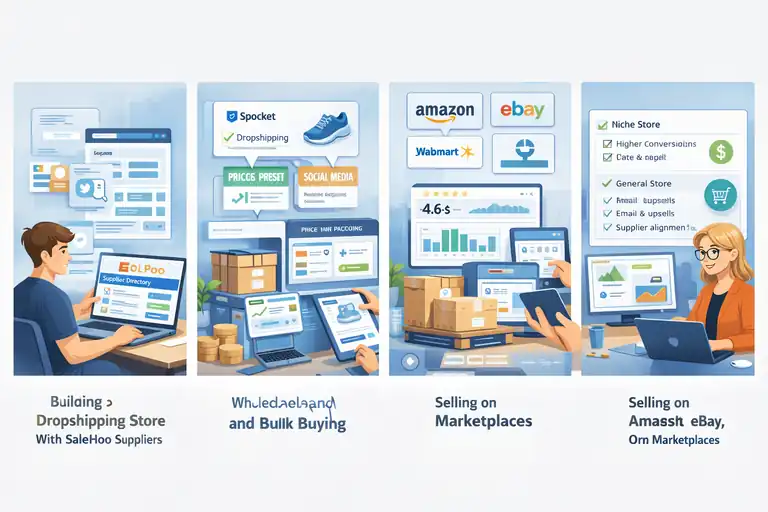
There isn’t just one way to earn with SaleHoo. The platform supports multiple ecommerce models, each with different risk levels and profit ceilings.
Building a Dropshipping Store With SaleHoo Suppliers
This is the most common path—and usually the lowest barrier to entry.
The basic flow looks like:
- Find a product with demand using SaleHoo tools
- Connect with a dropshipping supplier
- List the product on a Shopify or WooCommerce store
- Run paid ads or organic traffic to test sales
The advantage is low upfront cost. You don’t buy inventory until you’ve made a sale. The downside is thinner margins and heavier reliance on marketing skills.
From what I’ve seen, beginners who treat dropshipping as a testing ground—not a forever model—tend to do better long term.
Using SaleHoo for Wholesale and Bulk Buying
Wholesale is where SaleHoo quietly shines.
With bulk buying:
- You negotiate lower per-unit pricing
- You control inventory and packaging
- You unlock higher margins over time
This works well for:
- Amazon FBA sellers
- Etsy brand builders
- Niche ecommerce stores with repeat buyers
Yes, it requires more capital. But even modest bulk orders can double margins compared to dropshipping when executed properly.
Selling on Amazon, eBay, and Other Marketplaces
SaleHoo suppliers are often used for:
- Amazon FBM and FBA
- eBay resale
- Walmart Marketplace
Marketplace selling benefits from built-in traffic, which lowers your marketing burden. The challenge is competition and platform fees.
A practical strategy I’ve seen work:
- Use SaleHoo to source reliable products
- Validate demand on eBay or Amazon
- Transition winning products into branded or bulk models
Niche Store vs General Store Strategies With SaleHoo
SaleHoo supports both, but niches tend to win.
General stores:
- Easier to launch
- Harder to brand
- Lower trust and repeat purchases
Niche stores:
- Higher conversion rates
- Better email and upsell potential
- Clearer supplier alignment
If you’re asking can you make money with SaleHoo, niche-focused execution dramatically improves the odds.
Dropshipping With SaleHoo: Profit Potential Explained
Dropshipping with SaleHoo can be profitable—but only when expectations are realistic and execution is tight.
Typical Profit Margins When Dropshipping SaleHoo Products
Most SaleHoo dropshippers see:
- Gross margins between 15%–35%
- Net margins closer to 10%–20% after ads and fees
That means a $50 product might leave you with $5–$10 profit per sale. Scale matters. Volume and optimization are what turn small margins into real income.
If someone promises massive margins with zero effort, that’s usually a red flag.
Product Research Inside SaleHoo Market Research Lab
The Market Research Lab is one of SaleHoo’s most underrated features.
It shows:
- Average selling price
- Competition levels
- Demand trends over time
Used correctly, it helps you avoid:
- Saturated products
- Race-to-the-bottom pricing
- Short-lived trends
I suggest pairing SaleHoo data with real-world validation like Amazon reviews or Google Trends to avoid false positives.
Supplier Communication and Order Fulfillment Realities
SaleHoo doesn’t manage fulfillment—you do.
That means:
- You must email suppliers
- You negotiate terms manually
- You confirm shipping times upfront
This is where many beginners skip steps and pay for it later. Clear communication early prevents refund issues and unhappy customers down the line.
Scaling a Dropshipping Store Using SaleHoo Suppliers
Scaling isn’t about adding more products—it’s about doubling down on what works.
Smart scaling tactics include:
- Increasing average order value with bundles
- Moving bestsellers to faster suppliers
- Transitioning to partial bulk orders
Long-term, the most profitable SaleHoo users evolve beyond pure dropshipping and use it as a bridge into stronger business models.
If you’re asking can you make money with SaleHoo, the honest answer is yes—but only if you treat it as a tool, not a shortcut.
Wholesale Selling With SaleHoo: Is It More Profitable?
Wholesale is where the SaleHoo conversation shifts from “testing ideas” to “building something real.”
It’s also where profit math starts to look very different from dropshipping.
How Wholesale Pricing From SaleHoo Suppliers Works
Wholesale pricing through SaleHoo suppliers is usually tier-based. The more units you commit to, the lower your per-unit cost becomes.
Here’s how it typically plays out in practice:
- Suppliers quote a base wholesale price
- Discounts kick in at higher order quantities
- Shipping costs are negotiated separately
What I like about SaleHoo here is transparency. You’re not guessing whether a supplier is legitimate before wiring money. That alone can save thousands compared to sourcing blindly.
A realistic example:
- Product retail price: $39
- Dropshipping cost: $28
- Wholesale cost (100 units): $16–$19
That margin difference is where wholesale starts to make sense.
Minimum Order Quantities and Cash Flow Considerations
Minimum order quantities, often called MOQs, are the biggest hurdle for new sellers.
Most SaleHoo wholesale suppliers require:
- 50–500 units per order
- Upfront payment
- Longer lead times
This affects cash flow fast. You’re paying before you sell, which means forecasting demand matters.
A simple way to reduce risk:
- Validate the product via dropshipping or marketplace sales first
- Move to wholesale only after consistent demand
I’ve seen people wipe out their budget by skipping this step and overestimating demand.
Private Label and Brand Control Opportunities
Wholesale opens the door to private labeling, which means selling products under your own brand.
Benefits include:
- Higher perceived value
- Stronger customer loyalty
- More pricing control
Some SaleHoo suppliers allow:
- Custom packaging
- Logo placement
- Product modifications
This is where ecommerce stops feeling like reselling and starts feeling like ownership. Even small branding changes can significantly improve conversion rates and repeat purchases.
Risks and Rewards Compared to Dropshipping
Wholesale is riskier upfront—but more stable long term.
Key differences:
- Higher startup cost vs higher margins
- Inventory risk vs fulfillment control
- Slower start vs stronger brand equity
If dropshipping is about speed, wholesale is about durability. In my experience, sellers who survive past the first year often transition here.
SaleHoo Market Research Lab for Finding Profitable Products
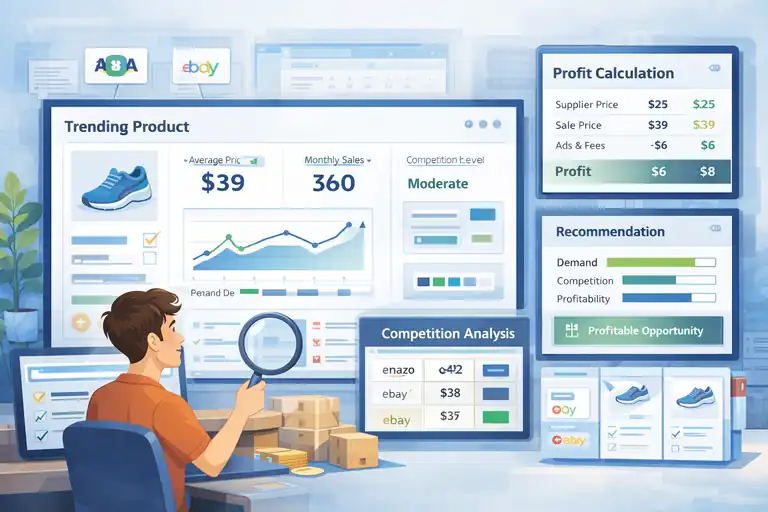
The Market Research Lab is one of the few tools inside SaleHoo that directly influences whether you can make money with SaleHoo—or waste months chasing bad ideas.
How the Market Research Lab Identifies Demand
The tool pulls data from real marketplace activity, primarily Amazon and eBay.
You can see:
- Average selling prices
- Estimated monthly demand
- Historical trend direction
This helps answer a critical question early: Are people already buying this?
Demand validation is the difference between guessing and making informed bets.
Reading Competition and Price Data Correctly
Most beginners misread this data.
Low competition doesn’t always mean opportunity. Sometimes it means no demand.
What I look for instead:
- Moderate competition
- Stable pricing
- Consistent sales volume
If prices are racing downward, margins will disappear fast—no matter how good the product looks.
Avoiding Saturated Products Using SaleHoo Data
Saturation isn’t about how many sellers exist—it’s about how replaceable the product is.
Red flags include:
- Dozens of identical listings
- No branding differentiation
- Ultra-thin margins
SaleHoo data helps spot these patterns early so you don’t build on shaky ground.
Turning Product Data Into Real Profit Decisions
Data only matters if you act on it correctly.
A practical workflow:
- Validate demand in Market Research Lab
- Check supplier pricing and shipping
- Estimate real margins after fees and ads
If the numbers don’t work on paper, they won’t magically work in real life.
SaleHoo Pricing, Costs, and Real Return on Investment
Before asking can you make money with SaleHoo, you need to understand exactly what you’re paying for—and what you’re not.
SaleHoo Membership Plans and What You Actually Get
SaleHoo uses a subscription model, usually billed annually.
The membership includes:
- Full supplier directory access
- Market Research Lab
- Educational resources and support
Compared to the cost of a single bad supplier mistake, the pricing is relatively modest.
Hidden Costs Beyond the SaleHoo Subscription
SaleHoo isn’t the expensive part—execution is.
Additional costs often include:
- Ecommerce platform fees
- Paid advertising
- Samples and test orders
- Marketplace seller fees
Ignoring these is how ROI calculations fall apart.
Break-Even Scenarios for New Sellers
A realistic break-even example:
- SaleHoo membership: recouped after 10–20 profitable sales
- Wholesale inventory: recouped after first batch sells through
Most sellers underestimate how long this takes. Expect months, not weeks.
When SaleHoo Pays for Itself—and When It Doesn’t
SaleHoo pays for itself when:
- You actively contact suppliers
- You validate products before scaling
- You treat it as a research and sourcing tool
It doesn’t work if you expect it to replace strategy, marketing, or effort.
From what I’ve seen, SaleHoo rewards builders—not browsers.
SaleHoo Compared to Other Supplier Platforms
Choosing the right supplier platform can quietly decide whether you struggle or scale.
SaleHoo isn’t the only option, so let’s compare it honestly against the tools people usually consider next.
SaleHoo vs Spocket for Dropshipping Businesses
Spocket is a dropshipping app that plugs directly into your store. SaleHoo is a supplier directory and research platform. They solve different problems.
Key differences that matter in real use:
- Spocket focuses on US and EU-based suppliers with faster shipping
- SaleHoo offers a wider global supplier range but requires manual setup
- Spocket automates product imports and order syncing
- SaleHoo requires you to contact suppliers and manage processes yourself
If speed and automation matter most, Spocket feels easier. If supplier vetting and long-term flexibility matter more, SaleHoo has the edge. In my experience, SaleHoo works better for sellers who want control rather than convenience.
SaleHoo vs Worldwide Brands for Wholesale Sellers
Worldwide Brands is often compared to SaleHoo for wholesale sourcing.
Here’s the practical difference:
- Worldwide Brands focuses heavily on certified wholesalers
- SaleHoo includes both wholesale and dropshipping suppliers
- Worldwide Brands has a higher upfront cost
- SaleHoo is more beginner-friendly and flexible
Wholesale sellers who already know what they’re doing may prefer Worldwide Brands. Newer sellers usually find SaleHoo easier to navigate without feeling overwhelmed.
SaleHoo vs AliExpress Supplier Sourcing
AliExpress is free, which makes it tempting—but that’s where the simplicity ends.
Comparing the two:
- AliExpress has no supplier vetting
- SaleHoo verifies suppliers before listing them
- AliExpress shipping times are unpredictable
- SaleHoo suppliers often offer clearer communication
AliExpress works for testing, but it’s risky for scaling. SaleHoo reduces uncertainty, which is why many sellers graduate away from AliExpress once money is on the line.
Which Platform Fits Different Business Goals Best
Quick breakdown by goal:
- Fast store launch: Spocket
- Low-risk supplier vetting: SaleHoo
- Wholesale scaling: SaleHoo or Worldwide Brands
- Pure experimentation: AliExpress
If you’re asking can you make money with SaleHoo, the answer improves when you choose it for the right reason—not because it’s trendy.
Common Mistakes That Limit Earnings With SaleHoo
SaleHoo doesn’t usually fail people. Misuse does. These mistakes show up again and again.
Choosing Products Without Validating Demand
Many sellers scroll the directory and pick products that look profitable.
The problem:
- Visual appeal doesn’t equal demand
- Supplier availability doesn’t guarantee buyers
Validation shortcuts that work better:
- Check Market Research Lab demand trends
- Cross-check Amazon reviews and sales rank
- Search Google Trends for consistency
Skipping this step is the fastest way to stall.
Relying Too Heavily on Supplier Lists Alone
SaleHoo gives you access, not advantage.
If your strategy is:
- “Find supplier → list product → wait”
You’ll struggle.
What actually moves the needle:
- Better positioning
- Clear differentiation
- Stronger offers and messaging
Suppliers are the starting line, not the finish.
Underestimating Marketing and Traffic Costs
This one hurts budgets fast.
Common overlooked costs:
- Facebook or Google ads
- Influencer seeding
- Content creation
- Conversion testing
Even great products fail without traffic. I’ve seen sellers blame SaleHoo when the real issue was zero marketing plan.
Expecting Passive Income Without Execution
This is the quiet killer.
SaleHoo is not:
- Passive income
- A set-and-forget system
It rewards action, testing, and iteration. Browsing tools without execution doesn’t create momentum.
Who SaleHoo Is Best For and Who Should Avoid It
SaleHoo is a strong fit for certain people—and a poor fit for others. Being honest here saves time and money.
Beginners Looking for Vetted Supplier Access
If you’re new and worried about scams, SaleHoo makes sense.
It’s especially useful if you:
- Want safer supplier sourcing
- Need structure and research tools
- Prefer learning while building
That safety net matters early on.
Sellers Who Benefit Most From SaleHoo Tools
SaleHoo shines for:
- Dropshippers testing ideas before scaling
- Wholesale sellers validating suppliers
- Marketplace sellers sourcing reliably
People who like data, research, and outreach tend to get more value.
Situations Where SaleHoo Is the Wrong Choice
SaleHoo may not be ideal if:
- You want instant automation
- You hate supplier communication
- You expect done-for-you systems
If speed beats control for you, other tools may feel better.
Skill Sets and Budgets That Perform Best
SaleHoo performs best when paired with:
- Basic marketing knowledge
- Willingness to negotiate and test
- Modest but flexible budgets
It rewards effort more than raw capital.
Can You Make Money With SaleHoo Long-Term?
This is the real question—and the answer depends less on SaleHoo than on how you use it.
Realistic Income Timelines and Expectations
Most sellers don’t see consistent profits overnight.
Typical timeline:
- First 1–3 months: learning and testing
- Months 3–6: traction or pivots
- Beyond 6 months: scalable decisions
Patience matters more than tools.
What Determines Success Beyond the Platform
Key success drivers include:
- Product-market fit
- Traffic strategy
- Offer clarity
- Customer experience
SaleHoo supports these—it doesn’t replace them.
How SaleHoo Fits Into a Sustainable Ecommerce Business
Long-term, SaleHoo works best as:
- A sourcing backbone
- A validation layer
- A transition tool into wholesale or branding
Many profitable sellers outgrow dropshipping but still use SaleHoo for supplier discovery.
Final Verdict on SaleHoo’s Earning Potential
So, can you make money with SaleHoo?
Yes—if you treat it as a tool, not a shortcut.
From what I’ve seen, the people who win are the ones who:
- Validate before scaling
- Execute consistently
- Use SaleHoo to reduce risk, not avoid work
That’s where SaleHoo quietly does its best work.
Frequently Asked Questions
Can you make money with SaleHoo?
Yes. You can make money with SaleHoo by using it to find vetted suppliers and profitable products, then selling through dropshipping, wholesale, or online marketplaces. SaleHoo itself doesn’t generate income—it reduces sourcing risk so your business model can perform.
How much money can beginners realistically make with SaleHoo?
Most beginners earn modest profits at first, often a few hundred dollars per month once they validate products and traffic. Earnings increase as sellers move into wholesale, private labeling, or scale winning products with paid or organic marketing.
Is SaleHoo better than AliExpress for making money online?
For long-term businesses, yes. SaleHoo offers verified suppliers, clearer pricing, and more stable fulfillment, while AliExpress is better for quick testing but riskier for scaling due to quality and shipping inconsistencies.

I’m Juxhin, the voice behind The Justifiable.
I’ve spent 6+ years building blogs, managing affiliate campaigns, and testing the messy world of online business. Here, I cut the fluff and share the strategies that actually move the needle — so you can build income that’s sustainable, not speculative.
Related posts:
 Salehoo Supplier List for High-Profit Winning Products
 Is SaleHoo Legit? What Real Sellers Actually Discover
 The Best SaleHoo Shopify Suppliers for Dropshipping
 Salehoo Suppliers Explained: How to Find Reliable Partners
 Is SaleHoo Worth the Money? Costs, Gains, and Risks
 Is SaleHoo Worth It? Honest Breakdown for New Sellers