
Table of Contents
Some links on The Justifiable are affiliate links, meaning we may earn a small commission at no extra cost to you. Read full disclaimer.
If you’ve ever wondered how to create your own blog website that not only shares your ideas but also generates real income, you’re not alone.
Many people start blogging with passion but struggle to turn it into something profitable. So, what exactly does it take to build a blog that grows your income steadily?
In this guide, I’ll walk you through the essential steps — from picking the right niche to setting up your site, building traffic, and monetizing your efforts — so you can turn your blog into a sustainable income source.
Choose a Profitable Blogging Niche That Aligns With You
Before you create your own blog website, the most important first step is choosing the right niche — one that feels natural to you but also has the potential to make money.
This balance between passion and profitability determines whether your blog will thrive or fade out after a few months.
Identify What You’re Passionate and Knowledgeable About
I always tell new bloggers: start where your curiosity lives. Ask yourself what you could talk about endlessly without getting bored.
This might be travel, finance, fitness, or even DIY crafts. But passion alone isn’t enough — it must intersect with expertise or a genuine willingness to learn deeply.
A simple trick I use:
- Write down five topics you love discussing.
- For each, ask: Can I provide useful, actionable advice people would actually search for?
- If yes, that’s a strong niche contender.
For example, if you enjoy photography, you could focus on “beginner photography tips” rather than general lifestyle blogging — a narrower angle often performs better.
Research Market Demand and Search Volume for Your Topic
Passion matters, but data confirms profitability. Use tools like Google Keyword Planner, Ahrefs, or Ubersuggest to check whether people are actually searching for your topic. Look at monthly search volumes, competition levels, and related terms.
If you notice that a keyword like “budget travel hacks” gets 10K+ monthly searches with moderate competition, that’s a green light. However, if your topic has fewer than 100 searches a month, it might not be sustainable.
Pro tip: Use Google’s “People also ask” section to discover content gaps. That’s how you find fresh article ideas your competitors might be missing.
Validate Income Potential Through Competitor Analysis
Once you’ve found potential topics, it’s time to test income viability. Search for blogs in your niche and look at how they make money.
Here’s how to do it effectively:
- Visit at least 3–5 competitor blogs.
- Note their revenue models — are they using ads, affiliate links, or selling courses?
- Check their traffic using SimilarWeb.
If several competitors are earning through affiliate products or sponsored posts, that’s a good sign. It shows brands are actively spending in that space.
Avoid Oversaturated Niches Without a Clear Angle
Oversaturated niches like “fitness” or “travel” can work, but only if you niche down. For example, instead of “fitness,” try “fitness for new moms” or “workout routines for busy professionals.”
I suggest finding your unique hook — the intersection between what you love, what people need, and what others haven’t fully explored. This helps you stand out in a crowded space.
Pick a Memorable Domain Name and Reliable Hosting Provider
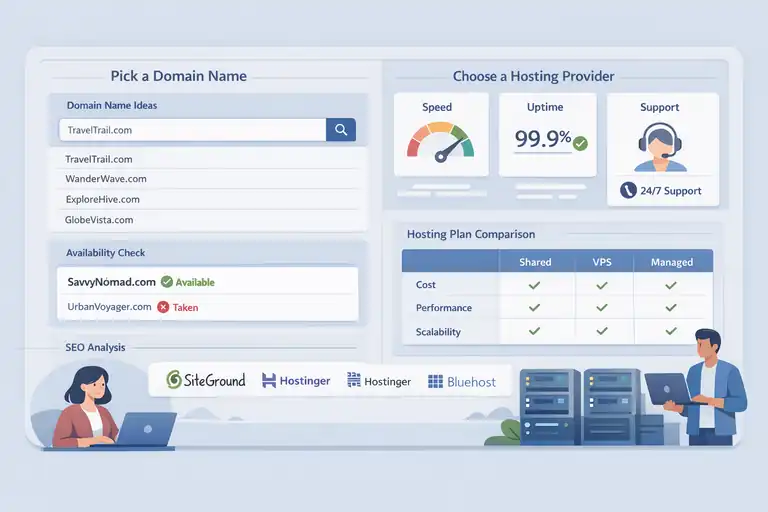
After you’ve chosen your niche, it’s time to give your blog a name and a home. Think of this as choosing both your brand’s identity and its digital foundation.
Brainstorm Domain Names That Reflect Your Blog’s Identity
Your domain name should be simple, easy to spell, and relevant to your niche. Ideally, it should sound trustworthy and memorable.
Here’s how I brainstorm:
- Combine a keyword with a personal or creative twist (e.g., SavvyNomad.com for travel).
- Avoid hyphens and numbers — they make your domain harder to remember.
- Use Namecheap to explore available ideas.
If possible, go for a .com domain. It’s universally trusted and ranks slightly better for brand authority.
Use Domain Tools to Check Availability and SEO Value
Before buying, check if the domain has a clean history. Some expired domains carry penalties from past misuse. You can use Whois Lookup to confirm it hasn’t been associated with spammy backlinks.
Also, test the SEO potential of your domain:
- Does it include a relevant keyword naturally?
- Is it short enough to type easily?
- Is it free of brand confusion (not too similar to another site)?
A good domain supports long-term SEO and brand growth.
Compare Hosting Providers for Speed, Uptime, and Support
Your hosting service affects your site’s performance and SEO ranking. A slow or unreliable host can kill your momentum before you even begin.
Here’s what to look for when comparing hosts:
- Speed: Look for hosts with LiteSpeed servers or SSD storage.
- Uptime: Anything below 99.9% uptime is a red flag.
- Support: You’ll want 24/7 live chat or phone support — trust me, it’s a lifesaver.
Top hosting providers I often recommend are Hostgator, Hostinger, and WPengine — all beginner-friendly with one-click WordPress installs and scalable plans.
Choose a Scalable Hosting Plan for Long-Term Growth
It’s tempting to start with the cheapest plan, but I suggest investing in a hosting tier that allows easy scaling. As your traffic grows, you’ll need more bandwidth and storage.
Most providers offer tiers like:
- Shared hosting: Great for beginners.
- VPS hosting: Ideal once you start getting 50K+ monthly visitors.
- Managed WordPress hosting: For bloggers who want speed and convenience without handling updates manually.
Start small but plan for growth — migrating later can be a hassle.
Install WordPress and Customize Your Blog’s Design
Now comes the fun part — setting up your blog so it actually looks and feels like you.
WordPress is the go-to choice for most bloggers because it’s flexible, easy to use, and supported by thousands of plugins.
Install WordPress Using a One-Click Setup
Most hosting providers have a one-click install feature inside the dashboard. For example, in Bluehost: Dashboard → My Sites → Create Site → Install WordPress.
Follow the prompts, create an admin login, and you’ll have your site live in minutes. Once done, access your dashboard at yourdomain.com/wp-admin.
If you’re using cPanel, you can also install it through Softaculous Apps Installer. Both methods take under 10 minutes.
Choose a Lightweight, SEO-Friendly Theme
Your theme determines how your blog looks and loads. A bloated theme can slow you down, which affects rankings.
Here are some lightweight, customizable options I recommend:
- Astra: Fast, minimal, and ideal for beginners.
- GeneratePress: SEO-optimized with clean code.
- Kadence: Great balance between aesthetics and functionality.
Always preview your theme on mobile before finalizing — over 60% of visitors will likely view your blog on a phone.
Customize the Layout to Reflect Your Personal Brand
Your design should make visitors feel instantly connected to your message. Use consistent colors, typography, and imagery that reflect your niche.
For example:
- A finance blog might use cool blues and structured layouts.
- A lifestyle blog might prefer warmer tones and playful fonts.
Inside the WordPress dashboard, go to Appearance → Customize to adjust:
- Logo & tagline
- Navigation menu
- Color palette
- Homepage layout
You don’t need to hire a designer — a few tweaks can make your site look professional.
Install Essential Plugins for Functionality and Security
Plugins extend WordPress’s power. But don’t overload your site — 10–15 quality plugins are usually enough.
Here are some must-haves I suggest:
- Rank Math: For optimizing on-page SEO.
- WP Rocket: For improving site speed.
- UpdraftPlus: For automatic backups.
- Wordfence: For security protection.
- Elementor or Block Editor: For drag-and-drop page customization.
Keep plugins updated regularly to avoid compatibility or security issues.
Plan High-Value Content That Attracts and Retains Readers
Once your blog is set up, it’s time to focus on what truly drives growth — your content.
To create your own blog website that actually earns income, you need to publish valuable, consistent, and optimized posts that make readers trust you enough to return.
Define Core Categories and Content Pillars
Before you start writing, define 3–5 main content categories, often called pillars. These are the foundation of your blog — they help organize your topics and make your site easier to navigate for readers and search engines.
For example, if your blog is about personal finance, your pillars might include:
- Budgeting tips for beginners
- Saving and investing strategies
- Side hustles and online income
- Debt management and credit advice
Each pillar supports subtopics that you can build over time. This method not only boosts SEO but also helps establish your authority in a specific niche.
Pro tip: Think of each pillar as a long-term content roadmap. Every new post should connect back to one of these pillars to maintain relevance and focus.
Use Keyword Research Tools to Find Blog Post Ideas
Keyword research is where strategy meets creativity. It’s not just about finding popular terms — it’s about understanding what your readers want answers to.
I usually start with tools like Ubersuggest.
Here’s how I do it:
- Enter your niche keyword (e.g., “budget travel”).
- Look at the top-ranking content — what questions are people asking?
- Note keywords with moderate competition but steady traffic.
Also, use free tools like AnswerThePublic or Google’s People also ask section for content inspiration. These show you what people are genuinely curious about.
An example: if you’re in the “fitness for beginners” niche, instead of a generic post like “Workout Tips,” write “5 Simple Home Workouts for Complete Beginners.” That’s the kind of specificity that attracts clicks and ranks well.
Create a Content Calendar for Consistency
Consistency builds both traffic and trust. A content calendar keeps you organized, ensuring that you publish regularly and balance different topics.
You can use tools like Trello, Asana, or Notion to create a simple publishing schedule.
I recommend this structure:
- Weekly goal: 1 quality post (1,500–2,000 words).
- Monthly review: Identify which posts are performing best and double down on similar topics.
- Seasonal planning: Schedule posts around timely trends (e.g., “Holiday Budget Tips” or “Summer Fitness Challenges”).
A regular schedule helps readers know when to expect new content — and Google rewards consistency too.
Write SEO-Optimized Posts with Real Reader Value
SEO should enhance your content, not dominate it. Write naturally, but always with a purpose.
I follow this simple on-page structure:
- Include your target keyword in the title, intro, and at least one subheading.
- Use short paragraphs and descriptive headers for readability.
- Add relevant internal links to your own posts for stronger SEO.
Above all, focus on usefulness. I believe a post that genuinely solves a problem will outperform any keyword-stuffed article. Ask yourself: If I were the reader, would this actually help me?
Build an Engaged Audience Through Smart Promotion
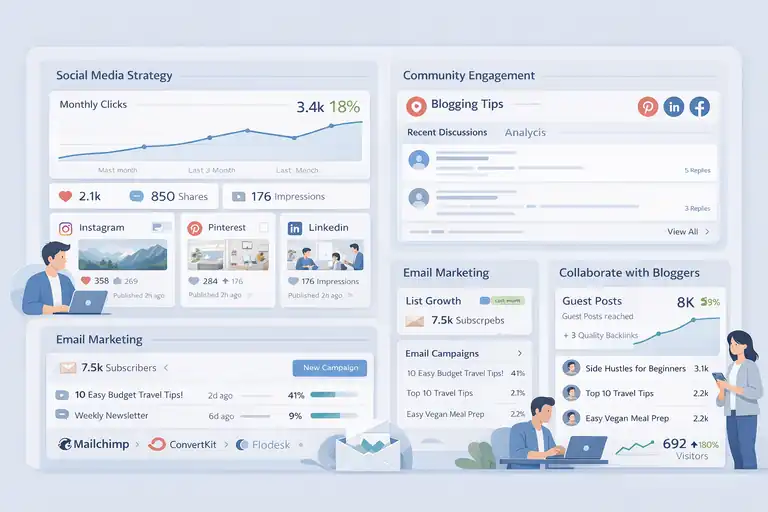
You can write the most amazing content in the world, but it won’t matter if no one reads it. Promotion is where your blog starts gaining momentum — and income potential.
Use Social Media Platforms Strategically
Not every social platform will work for your niche, so choose wisely. The key is to focus where your audience already spends time.
Here’s how I break it down:
- Instagram for visual niches like travel, lifestyle, or food.
- Twitter/X for real-time engagement and sharing quick insights.
- LinkedIn for professional or educational topics.
Post regularly and share snippets from your blog — like quick tips, quotes, or “behind-the-scenes” moments. Use engaging captions that encourage comments or shares.
I recommend setting aside 20–30 minutes daily for genuine engagement — reply to comments, join conversations, and follow relevant accounts. It builds community, not just clicks.
Leverage Pinterest, Facebook Groups, and LinkedIn Communities
Pinterest is a goldmine for blog traffic, especially for topics like home decor, travel, finance, or parenting. Create visually appealing pins using Canva, add keyword-rich descriptions, and link directly to your posts.
On Facebook, join groups related to your niche. Instead of just promoting links, answer questions and share your insights. When people see your value, they’ll naturally check out your blog.
LinkedIn communities are powerful for authority building. Share original posts, join discussions, and publish short thought pieces linking back to your full articles.
Build an Email List to Retain Loyal Readers
Social media algorithms change all the time, but your email list is 100% yours. It’s one of the most reliable ways to nurture long-term readers.
Start with an easy setup using MailerLite, Aweber, or Moosend. Offer a freebie like:
- A mini ebook or checklist (e.g., “10 Ways to Save $500 a Month”).
- An exclusive newsletter with tips you don’t share publicly.
Send emails consistently — even once every two weeks is fine. I suggest keeping your tone personal, as if you’re writing to a friend. That’s what makes readers stay subscribed.
Collaborate With Other Bloggers for Guest Posts and Backlinks
Collaboration accelerates growth faster than any paid promotion. Reach out to other bloggers for guest posting opportunities or link swaps.
Guest posts help you:
- Build credibility in your niche.
- Gain referral traffic from established sites.
- Improve SEO through high-quality backlinks.
A small example: When I collaborated with a finance blogger to write about “Side Hustles for Beginners,” both of us saw traffic spikes that lasted weeks.
Networking isn’t about self-promotion — it’s about community. When others grow, you grow too.
Monetize Your Blog Using Multiple Income Streams
Once your audience starts growing, it’s time to make your efforts pay off.
Monetizing your blog doesn’t have to feel complicated — it’s about aligning your content, audience, and products in the right way.
Earn Through Display Ads (Google AdSense, Mediavine)
Display ads are one of the simplest income methods for beginners. You place ad code on your site, and you earn money when visitors see or click those ads.
Here’s a quick breakdown:
- Google AdSense: Great for beginners, but lower payouts.
- Mediavine: Requires 50,000 monthly sessions but offers higher RPM (revenue per 1,000 views).
- AdThrive: Premium network for large blogs with 100,000+ monthly views.
Make sure your ads don’t overwhelm readers. Balance user experience with earnings — a clutter-free layout keeps visitors returning.
Join Affiliate Programs That Match Your Niche
Affiliate marketing lets you earn a commission for recommending products or services. It works best when the product genuinely helps your readers.
For example:
- A tech blogger might promote Bluehost hosting.
- A travel blogger might recommend Booking.com or Airbnb links.
- A lifestyle blogger might use Flexoffers.
I suggest writing honest reviews or tutorials that show how you use the product. Readers trust real experience, not salesy pitches.
Offer Digital Products, Courses, or Memberships
Once you’ve built trust, your readers will want more from you. That’s where digital products come in — they’re scalable, passive, and highly profitable.
Some ideas to start:
- Ebooks (e.g., “Beginner’s Guide to SEO”)
- Video courses or online workshops
- Paid memberships or exclusive communities
If you’re not ready to build a full course, start small with a downloadable workbook or checklist. You can host digital products on Gumroad, Podia, or Teachable — all beginner-friendly platforms.
Promote Sponsored Content and Brand Partnerships
As your blog grows, brands will start noticing you. Sponsored posts and brand partnerships can become one of your biggest income streams.
Here’s how it works:
- A brand pays you to write a blog post featuring their product.
- You disclose it as “sponsored content” to maintain transparency.
- You include genuine feedback, not just promotion.
I advise setting your own media kit (a one-page PDF showcasing your traffic, audience demographics, and rates). This helps brands take you seriously.
Sponsored partnerships can easily generate $100–$1,000+ per post depending on your niche and audience size.
Optimize for SEO to Increase Organic Traffic
If you truly want to create your own blog website that grows on autopilot, you need to master SEO — not in a robotic, keyword-stuffing way, but through smart, reader-first optimization.
SEO is what helps your content show up in Google search results, bringing consistent, free traffic month after month.
Conduct On-Page SEO for Every Post
On-page SEO simply means optimizing each post so Google understands what it’s about and why it’s useful. I like to think of it as dressing your content for success — making it easy to read, structured, and relevant.
Here’s my go-to checklist for every post:
- Primary keyword placement: Include your target keyword in the title, first paragraph, and one subheading.
- Meta description: Write a short, enticing summary (under 160 characters) that encourages clicks.
- Header tags: Use H2s and H3s logically to break down sections.
- Image optimization: Rename images with descriptive file names and add alt text.
- Internal and external links: Add at least two internal links to your own posts and one external link to a trusted source.
If you use WordPress, plugins like Rank Math or Squirrly guide you through each step with a simple traffic light system — green means you’re good to go.
Improve Site Speed and Mobile Responsiveness
Google’s algorithm loves fast, mobile-friendly websites because that’s what users prefer. Even a one-second delay in load time can drop your conversions by 7%.
Here’s what I suggest:
- Compress images: Use plugins like EWWW.io or Smush to reduce file size without losing quality.
- Use caching tools: Install LiteSpeed Cache to boost loading speed.
- Choose a lightweight theme: Avoid heavy page builders that slow things down.
- Check mobile view: Use Chrome’s “Inspect” tool → Toggle Device Toolbar to see how your site looks on different screens.
A fast, responsive site doesn’t just rank better — it makes visitors stay longer, which tells Google your content is worth showing.
Use Internal Linking to Boost Engagement
Internal links are like bridges that connect your posts and guide readers deeper into your site. They improve SEO, keep readers engaged, and reduce bounce rate.
Here’s my quick method:
- When writing a new post, link to at least two older, related articles.
- Go back to older posts and link them to new content.
- Use descriptive anchor text like “check out this beginner’s SEO guide” instead of just “click here.”
If you’re using Rank Math, it even suggests internal linking opportunities automatically — a real time-saver.
Track SEO Performance Using Google Analytics and Search Console
You can’t improve what you don’t measure. Tracking your SEO helps you understand which posts bring traffic and where to focus next.
Here’s how I monitor my performance:
- Google Analytics: Shows you your most visited pages, bounce rate, and user demographics.
- Google Search Console: Reveals which keywords people use to find your blog and alerts you to any indexing issues.
Inside Search Console, go to Performance → Queries to see your top keywords. If one keyword ranks on page two, optimize that post — add better headings, more visuals, or clearer information to push it higher.
Build Authority and Trust in Your Niche
People don’t just follow blogs — they follow voices they trust. Building authority takes time, but once you’ve earned it, it becomes your greatest asset for income growth.
Share Personal Stories and Authentic Experiences
One of the fastest ways to build trust is by being real. Share your own journey — what worked, what failed, and what you learned. Readers connect with honesty more than perfection.
For example, if you’re writing about blogging tools, mention something like: “I tried three SEO plugins before settling on Rank Math because it felt less cluttered and easier to use.”
That level of transparency turns you from just another blogger into someone relatable and credible.
Showcase Expertise Through Case Studies or Tutorials
Detailed tutorials and case studies demonstrate that you know what you’re talking about. They also attract backlinks because other writers love citing practical examples.
For instance, if you run a travel blog, you could publish a post titled “How I Planned a 10-Day Europe Trip Under $800 — Step by Step.” Add real screenshots, booking links, and breakdowns.
This kind of post builds both authority and trust because it provides proof, not just advice.
Engage With Comments and Reader Questions
Engagement doesn’t stop once you hit “publish.” Reply to comments, emails, or social media questions as if you’re chatting with a friend.
Not only does this build community, but it also gives you insight into what your readers want next. Some of my best-performing posts came directly from reader questions.
If your blog grows large, consider adding a simple Q&A section or a monthly “reader spotlight” post to keep communication alive.
Maintain Consistent Quality and Tone Across All Posts
Consistency builds brand identity. Whether someone lands on your newest post or an older one, they should feel your same friendly, trustworthy voice.
To keep that consistency:
- Stick to your tone — conversational, clear, and supportive.
- Use a content checklist before publishing.
- Edit for clarity and remove fluff.
I personally use Grammarly and Hemingway Editor to polish my posts and keep sentences tight and easy to read.
Scale Your Blog and Diversify Income Over Time
Once your blog is generating steady traffic and income, your next goal should be scalability. Think of it as shifting from a one-person project to a small digital business.
Outsource Content Creation or Editing
As your workload increases, outsourcing can free up time for strategy. You can hire freelance writers from Upwork or Fiverr to handle topic research or first drafts while you focus on SEO and brand partnerships.
When I first outsourced, I created detailed content briefs with structure, tone, and target keywords. That small step helped maintain my voice even when someone else wrote the draft.
Explore Advanced Monetization Models (Courses, Coaching, Products)
Once you’ve built credibility, consider premium offerings. These could be:
- Online courses hosted on Teachable.
- Coaching programs tailored to your niche.
- Physical or digital products (e.g., planners, presets, templates).
These models can drastically increase income without needing constant new content. For example, a $49 course sold to just 100 readers a month equals $4,900 — all from knowledge you already share.
Repurpose Blog Posts Into Videos, Podcasts, or Ebooks
Repurposing multiplies your content’s reach without starting from scratch.
Turn your popular blog posts into:
- YouTube videos using simple screen-recording tools.
- Podcast episodes discussing the same topics conversationally.
- Ebooks compiled from related articles.
This not only expands your audience but also builds a stronger brand ecosystem.
Analyze Data Regularly to Identify Growth Opportunities
Analytics can show hidden gold. Review your blog’s data monthly to identify high-performing content and replicate that success.
In Google Analytics → Behavior → Site Content, look for pages with:
- High traffic but low conversion — optimize CTAs.
- Long time-on-page — create similar posts.
- High bounce rates — improve readability or visuals.
Data tells you where to double down and where to pivot.
Maintain Momentum With Continuous Learning and Improvement
The blogging world changes fast — SEO updates, social media algorithms, and content trends evolve every few months. Staying adaptable keeps your blog alive and thriving.
Stay Updated on SEO and Algorithm Changes
Google’s algorithm shifts regularly. What worked last year may not work today. Follow blogs like Search Engine Journal or Backlinko for the latest updates.
I also suggest signing up for Google Search Central Blog — it’s the official source for changes that might affect your rankings.
Monitor Competitors and Industry Trends
Competitor analysis isn’t about copying — it’s about spotting opportunities. Use Ahrefs Site Explorer or SimilarWeb to see which posts bring your competitors the most traffic.
Ask yourself: What can I do better or different? Maybe you add fresh data, visuals, or a personal touch. That’s how you stay relevant.
Experiment With New Formats and Content Strategies
Don’t be afraid to experiment. Try shorter posts, interactive polls, or new platforms like Threads or TikTok if they fit your niche.
I once repurposed a “10 Money Habits” article into a quick 60-second video — it tripled my blog traffic for a week. Sometimes, small tests bring surprising results.
Set Clear Income and Traffic Goals Each Quarter
Treat your blog like a business. Set realistic, trackable goals — for example:
- Grow traffic by 20%.
- Publish 6 high-quality posts.
- Earn $500 from affiliates.
Review your goals every three months and adjust based on results. Celebrate small wins — they’re proof of progress.
Final Thought: When you create your own blog website with strategy, patience, and heart, it becomes more than just a digital space — it turns into a living, growing asset that works for you. Keep learning, experimenting, and connecting with your audience. That’s how true income growth begins — one meaningful post at a time.
FAQ
How can I create my own blog website to earn income?
To create your own blog website, choose a niche, register a domain, set up hosting, install WordPress, and publish high-quality content. Then, monetize through ads, affiliates, or digital products.
How much does it cost to create your own blog website?
Starting a blog usually costs between $50 and $150 per year, covering domain registration, hosting, and basic tools like themes and plugins.
How long does it take to make money from a blog website?
It typically takes 6 to 12 months to earn steady income from a blog, depending on niche, consistency, and SEO strategy.

I’m Juxhin, the voice behind The Justifiable.
I’ve spent 6+ years building blogs, managing affiliate campaigns, and testing the messy world of online business. Here, I cut the fluff and share the strategies that actually move the needle — so you can build income that’s sustainable, not speculative.
Related posts:
 Start a Blog Website and Build a Profitable Side Income
 The Best Way to Start a Blog That Actually Makes Money
 How to Create a Blog Site and Start Making Money
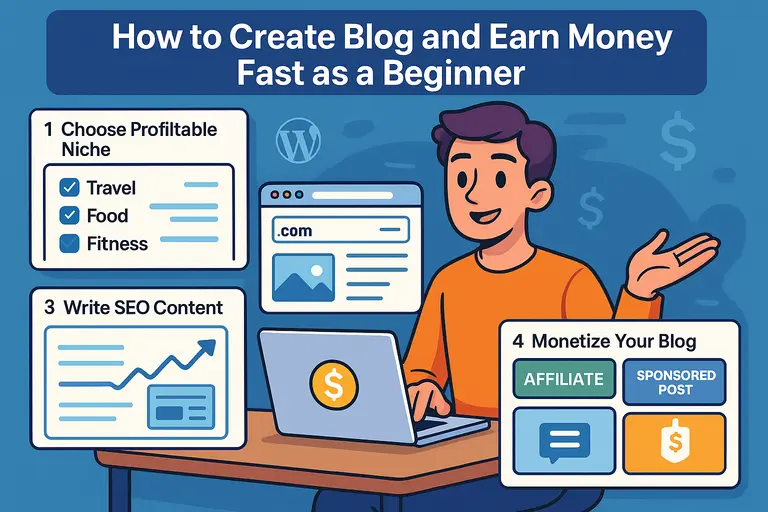 How to Create Blog and Earn Money Fast as a Beginner
 Where Is the Best Place to Start a Blog and Make Money?
 Create a Blog Free and Start Earning With No Risk