
Table of Contents
Some links on The Justifiable are affiliate links, meaning we may earn a small commission at no extra cost to you. Read full disclaimer.
Doba supplier directory review articles usually swing too hard in one direction. They either call Doba a perfect shortcut for dropshipping or dismiss it as overpriced before explaining how the directory actually works.
My take is more practical: Doba can be genuinely useful, but only if you know how to separate strong suppliers from weak ones inside the platform.
The directory is built around verified suppliers, real-time inventory syncing, and broad marketplace integrations, but the value depends on the products, margins, shipping profile, and plan limits you choose. That is where most beginners either win fast or burn money.
What Doba Really Is And Who It Is Best For
Doba is not just a contact list of wholesalers. It sits somewhere between a supplier directory and an all-in-one dropshipping platform, which matters because that changes how you evaluate it.
What Doba Actually Gives You
Most people hear “supplier directory” and picture a giant spreadsheet of wholesalers. Doba is more hands-on than that.
The platform presents products from a network of suppliers, lets you push listings to connected stores, and syncs pricing, stock, and orders from one dashboard. Doba also markets its supplier base as verified and emphasizes real-time monitoring plus marketplace integrations.
Official pages highlight 1,000+ verified suppliers, roughly 1.5 million products, and integrations with channels such as Shopify, Amazon, TikTok Shop, Walmart, and more.
That sounds great, but here is the important part: Doba is a filter and workflow layer, not magic. It reduces the pain of finding suppliers, importing products, and syncing inventory, yet it cannot automatically create healthy margins or fast fulfillment if the underlying supplier is mediocre.
In my experience, that is the real theme of any honest doba supplier directory review. The platform can simplify operations, but supplier quality still decides whether your store feels premium or messy.
If you are a beginner, Doba is easiest to justify when you care more about speed, organization, and lower research friction than squeezing every possible dollar out of each SKU.
If you are already an experienced seller with direct relationships and custom negotiated pricing, the value proposition gets weaker unless you need multi-channel automation at scale.
Who Will Usually Like Doba Most
The sellers most likely to like Doba are people who want to get a store live without spending weeks vetting random wholesalers. Doba says it has been in dropshipping since 2002, promotes pre-vetted suppliers, and leans hard into centralized inventory and order management.
That makes it attractive to newer sellers who want one place to compare products and avoid the “email ten distributors and hope one replies” stage.
I would put Doba’s sweet spot into three groups.
- Beginners: You need structure more than absolute supplier freedom.
- Small teams: You want fewer manual tasks and cleaner syncing.
- Multi-channel sellers: You need listings and stock updates to stay aligned across storefronts.
Imagine you are running a Shopify store and a TikTok Shop at the same time. Without a centralized sync layer, a product can sell on one channel after stock changed on the other. That creates cancellations, refunds, and annoyed customers. Doba’s automation pitch is built around reducing exactly that kind of operational mess.
That said, liking the software is not the same as liking every supplier inside it. Those are two separate judgments, and mixing them together is why a lot of reviews feel misleading.
Who Should Probably Be More Careful
Doba is not the obvious best fit for everyone. The Shopify App Store listing shows pricing starting at $29.99 per month, with higher tiers at $59.99, $149.99, and $299.99, and each plan imposes limits on storefront connections, listing counts, and monthly exports.
A January 3, 2026 review on the Shopify App Store specifically complained about plan-based inventory limits, setup nuance around shipping rates, and the timing gap between customer payment and supplier payment obligations.
That means Doba can feel expensive if you are testing products with tiny margins. A cheap-looking monthly fee becomes much less cheap when you stack it with product cost, shipping fees, ad spend, returns, and marketplace fees.
On the low end, the Limited plan includes one storefront and only 30 listed products, which can feel restrictive for broader catalog testing.
I would be cautious with Doba if you fall into one of these buckets.
- Ultra-lean beginners: You want the lowest possible software cost and are okay doing more manual work.
- Margin-sensitive sellers: You already know small price differences can make or break profit.
- Brand builders needing deep supplier control: You want custom packaging, negotiated terms, or direct manufacturer relationships.
That does not make Doba bad. It just means convenience has a price, and you need to know whether that price buys you leverage or just overhead.
How To Judge Best And Worst Suppliers Inside The Doba Directory
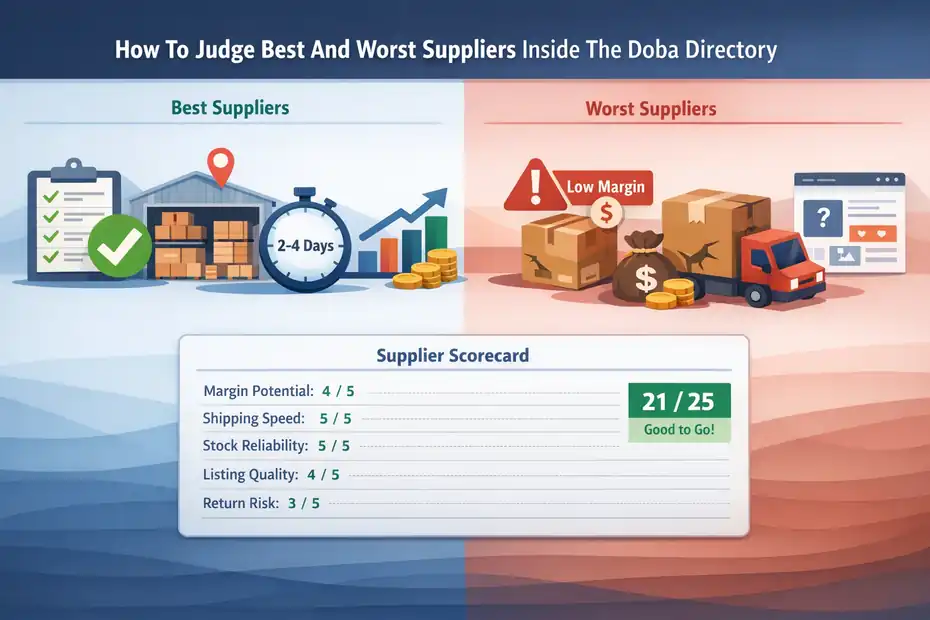
This is the part that matters most. The platform itself can be solid while individual suppliers range from excellent to frustrating. You need a framework.
What The Best Doba Suppliers Usually Look Like
The best suppliers in Doba are rarely the flashiest. They are the ones that make your business feel stable. Doba promotes verified suppliers, authentic brand sourcing safeguards, and local inventory advantages, especially around faster fulfillment and compliance.
In practice, the strongest suppliers usually combine four traits: consistent stock, realistic ship times, healthy wholesale spread, and clean product data.
A good supplier is not just “cheap.” A good supplier lets you sell without constantly apologizing to customers. If a catalog looks boring but the SKUs stay in stock, the descriptions are clean, and delivery times match expectations, that supplier is often more valuable than a trendy catalog that causes refund drama every week.
I suggest looking for suppliers whose products fit low-friction categories such as home organization, accessories, practical kitchen items, pet goods, or beauty tools with low breakage risk.
Doba’s public category pages show a very broad range of product classes, including home, kitchen, furniture, food and beverage, and more, which means the real job is not finding products but filtering for operational quality.
A supplier becomes “best” when the numbers and the customer experience both work. That combination is what many beginners underestimate.
Red Flags That Usually Signal A Weak Supplier
The worst suppliers in a Doba-style marketplace are not always scams. More often, they are simply bad fits for profitable dropshipping. They may have thin margins, slow handling, inconsistent stock, inflated shipping, weak images, vague variants, or products that invite disputes.
Official Doba messaging focuses heavily on real-time stock sync and order automation precisely because inventory mismatch is such a common e-commerce pain point. When a supplier still creates stock confusion despite that ecosystem, it is a warning sign.
Here are the red flags I would treat seriously.
- Bad economics: Wholesale price plus shipping leaves almost no room for ads, returns, or marketplace fees.
- Fragile items: Products break in transit and generate support tickets.
- Messy listings: Weak photos, vague titles, missing specs, or strange variant structures.
- Long or inconsistent fulfillment: Shipping looks acceptable on paper but slips in real use.
- No differentiation: Generic products sold by hundreds of stores with no pricing power.
The toughest lesson in dropshipping is that a supplier can look decent inside a dashboard and still be a terrible business choice. A catalog with hundreds of trendy gadgets may actually be worse than a smaller supplier with fewer products but steadier execution.
From what I have seen, “worst supplier” usually means “worst total business model,” not just “worst human behavior.”
A Simple Scorecard You Can Use Before Importing Anything
If you want a practical shortcut, score every supplier or product group before importing. I recommend using a 25-point screen.
- Margin Potential: 0–5
- Shipping Speed And Consistency: 0–5
- Stock Reliability: 0–5
- Listing Quality: 0–5
- Return/Support Risk: 0–5
Anything below 16 is probably not worth building around. Anything at 20 or above deserves serious testing.
Here is a realistic example. Say you find a posture corrector priced at $14 wholesale with $7 shipping. Competing stores sell it for $29.99. On paper that looks workable. But after payment fees, app costs, ad testing, and inevitable customer questions, you may not have enough room.
Compare that with a kitchen storage set costing $18 with $4 shipping that sells for $44.99 and has fewer sizing issues. The second one may look less exciting, but it often creates a calmer, more profitable business.
That is why the best suppliers in a doba supplier directory review are usually the ones selling repeatable, low-drama products rather than hyper-trendy impulse items. Doba can help surface products faster, but you still need to think like an operator, not just a product hunter.
Pricing, Plans, And Whether Doba Is Worth The Cost
A lot of Doba reviews gloss over pricing, but pricing is where the review becomes real. A platform can be good and still not be worth paying for in your situation.
What The Plans Actually Mean In Practice
According to the Shopify App Store listing, Doba’s paid plans begin at $29.99 per month and scale to $299.99 per month, with annual billing discounts.
The listed tiers also show meaningful differences in storefront count, listing count, product export allowances, and access to Doba AI Product Guru usage.
The entry plan includes only one storefront and 30 listed products, while higher tiers increase store and export capacity significantly.
That matters more than it sounds. Many sellers focus on the monthly number and ignore the built-in operating limits. But the plan limits shape how you can test products.
If you only get a small listing allowance, your product discovery process becomes narrower. If you manage more than one storefront, you may hit a plan ceiling earlier than expected.
I believe this is where Doba becomes either a smart tool or a quiet profit leak. If you are disciplined and use the platform to test a small number of carefully selected products, the fee may be reasonable.
If you subscribe before you know your niche, your average order value, or your traffic source, the subscription can become another monthly bill attached to wishful thinking.
That is not a Doba problem alone. It is an e-commerce discipline problem.
When Doba Usually Feels Worth It
Doba tends to feel worth it when operational simplicity saves more than the subscription costs. The platform’s central promise is that it reduces manual work around sourcing, syncing, and order flow.
Public materials also emphasize broad integrations and 24/7 inventory monitoring, which can help prevent overselling and catalog drift across channels.
Here is a simple way to think about value. If Doba saves you five to ten hours a month and helps you avoid even a handful of refund-causing stock errors, the subscription may pay for itself quickly.
That is especially true if you sell on multiple channels. Time saved is not just convenience. It can be margin protection.
For example, imagine you are manually managing 150 SKUs and one supplier changes pricing or stock overnight. If your storefront stays outdated, you can lose money on unexpected orders or disappoint customers.
A sync layer becomes much more valuable once your catalog grows beyond hobby size. Doba’s own materials repeatedly position automation and inventory accuracy as core benefits, and that is the right angle to evaluate.
So yes, Doba can be worth it. But it is worth it because of workflow leverage, not because every product inside the directory is automatically a winner.
When Doba Usually Feels Overpriced
Doba feels overpriced when you expect it to solve market selection, branding, and profit math by itself. It does not. The subscription can sting if your store has low traffic, poor conversion, or weak margins.
And because Doba still sits on top of supplier economics, you can end up paying for access to products that are simply too competitive or too expensive to advertise profitably.
The Shopify review summary is mostly positive, with a 4.6 rating from 100 reviews and 82% five-star ratings, but the critical reviews are useful because they point to practical friction rather than vague dislike.
Complaints include plan limitations, setup complexity, and support expectations during early use. Trustpilot also shows mixed feedback over time, which reinforces the idea that user experience depends heavily on expectations and use case.
I would call Doba overpriced in three situations.
- You want a cheap experiment, not an operating system.
- You sell low-ticket products with thin room for software costs.
- You are not prepared to vet products and suppliers carefully.
In those cases, even a decent platform can feel disappointing because you are paying for structure you are not ready to use well.
The Best Supplier Types To Target On Doba
Since Doba’s live directory changes and many internal supplier listings are not fully public on the open web, the smartest way to review “best and worst suppliers” is by supplier profile, not by pretending a static top-ten list will stay accurate.
Doba itself emphasizes premium suppliers, top-ranking products, US-focused speed, and curated high-demand categories.
Best Type 1: US-Based Practical Goods Suppliers
If I had to start with the safest supplier profile inside Doba, I would choose US-based suppliers focused on practical, non-fragile products.
Doba’s public messaging repeatedly stresses local stock, quality assurance, and faster shipping, with one comparison page explicitly framing Doba’s US-based supplier network around roughly 2–5 day shipping.
That supplier type tends to work well because it aligns with current customer expectations. Buyers do not care that you saved two dollars on product cost if shipping takes too long or the item arrives damaged.
Simple home, kitchen, pet, and storage products often outperform flashy gadgets because they are easier to explain, easier to ship, and easier to support.
A good scenario is a compact home organization niche. Think drawer organizers, kitchen storage tools, shelf helpers, or pet cleanup accessories. These products solve clear problems, photograph well, and create fewer sizing and technical support issues.
They are also easier to bundle into collections, which helps increase average order value.
In my experience, that kind of supplier is boring in the best possible way. Boring suppliers often build stable stores.
Best Type 2: Authorized Brand And Compliance-Friendly Suppliers
Another strong category is suppliers that carry authentic, compliance-friendly branded goods. Doba explicitly says its network includes pre-vetted authorized suppliers for authentic brand-name products and frames that as a way to reduce counterfeit risk and support marketplace compliance.
This matters more than many beginners realize. Selling branded products on channels like Amazon, Walmart, or even some niche marketplaces can trigger authenticity checks, policy reviews, or customer skepticism.
Working through a platform that emphasizes authorized sourcing can reduce that risk, though you still need to follow each marketplace’s rules carefully.
The catch is that branded inventory does not automatically mean big margins. Sometimes it means the opposite. You may get trust and conversion benefit, but less room on price.
That is why I suggest using branded suppliers when trust is the main selling lever, not when you are trying to compete in a race to the bottom.
A realistic example would be a store targeting premium baby care accessories or licensed wellness products where authenticity matters more than novelty. In categories like that, the supplier’s compliance profile is part of the product value.
Best Type 3: Suppliers With Clean Catalog Data
One underrated sign of a high-quality supplier is clean product information. Doba highlights “effortless product listing,” automation, and synchronization, but those benefits are much stronger when the original supplier data is tidy.
The best suppliers usually provide:
- Clear titles: You know what the product is immediately.
- Useful specs: Size, material, compatibility, and package details are obvious.
- Multiple images: You are not trying to build a product page from one blurry photo.
- Variant clarity: Colors, sizes, and bundles are easy to map correctly.
This sounds small, but it affects conversion rate, support burden, and even returns. If a supplier’s data is sloppy, you end up rewriting everything, fixing images, and explaining the product to confused buyers. That is real labor. At scale, it is expensive labor.
I have seen sellers chase margins and ignore data quality. Then they spend hours patching listings and answering preventable questions. A clean catalog is not glamorous, but it is one of the clearest signals that a supplier is worth your attention.
The Worst Supplier Types To Avoid On Doba
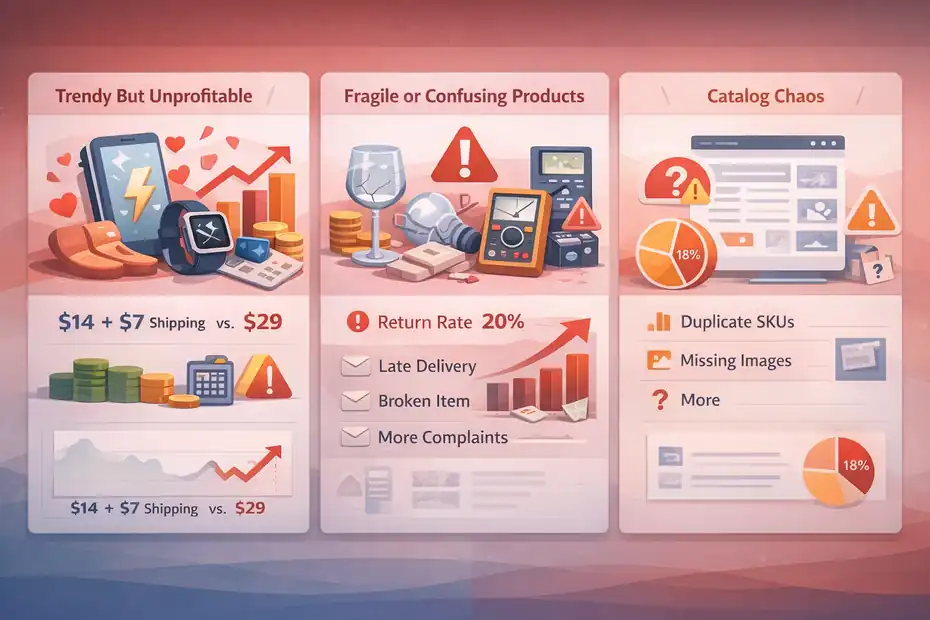
This is where you protect your money. The worst suppliers usually do not reveal themselves through one dramatic issue. They reveal themselves through friction.
Worst Type 1: Trendy But Margin-Starved Suppliers
Some suppliers look exciting because they list products that are already popular on social media. The problem is that popularity attracts competition.
Doba’s ecosystem includes trending, top-ranking, and high-profit discovery angles, which can be useful, but trendy products lose their shine fast when too many sellers crowd the listing.
A supplier becomes a bad choice when the wholesale price is high, shipping adds even more cost, and the market price is already compressed by other sellers. You end up with a product that can get clicks but not profit.
This is especially common with impulse gadgets, posture tools, low-end electronics accessories, and “viral” household hacks. The creative angle works for a week, but then the economics fall apart.
You are left paying app fees, refunding customers, and competing with dozens of stores using the same product photos.
I recommend treating every trending item like a suspect until it proves its math. Do not ask, “Can I sell this?” Ask, “Can I still make money after shipping, fees, ad testing, and returns?” That question alone eliminates many weak suppliers.
Worst Type 2: Fragile Or Complaint-Prone Product Suppliers
Suppliers centered around fragile, breakable, or high-confusion products can be brutal for a newer store.
Doba’s own operational pitch is built around reducing order errors and improving fulfillment accuracy, which tells you how damaging post-purchase problems are in practice.
Here are the categories I would inspect very carefully before importing.
- Glass-heavy home goods: Breakage risk is obvious.
- Complex electronics: More defects, more “it doesn’t work” tickets.
- Size-sensitive items: Apparel and wearable supports can create fit disputes.
- Expectation-heavy beauty devices: Customers expect premium results fast.
A supplier can be legitimate and still be a terrible fit because the product naturally generates complaints. The issue is not always fraud or incompetence. Sometimes the issue is that the product category itself is expensive to support.
If you are just building momentum, I suggest avoiding categories where one misunderstanding turns into a refund request, chargeback, and one-star review.
Worst Type 3: Suppliers That Create Catalog Confusion
The most annoying supplier type is the one that creates hidden admin work. This is the supplier with weird titles, duplicate SKUs, inconsistent image sets, unclear bundles, or variants that do not map well to your store.
A Shopify reviewer in January 2026 specifically mentioned friction around inventory exporting, shipping setup, and live support expectations, which fits a broader truth: complexity kills speed for small sellers.
When a supplier’s catalog is confusing, three bad things happen. First, your product pages look less trustworthy. Second, your team makes avoidable mistakes. Third, customers buy the wrong thing more often.
Imagine listing a set of kitchen containers where the image shows six pieces, the title suggests four, and the description barely explains dimensions. Even if the supplier is technically “fine,” that product page becomes a return waiting to happen.
In my opinion, this is one of the most overlooked reasons people think a platform is bad. Sometimes the platform is okay. The supplier data is the real problem.
How To Use Doba The Smart Way If You Decide To Try It
Doba works best when you treat it like a curated operations tool, not a lottery ticket. The win comes from careful testing, not bulk importing random products.
Start Small And Build A Tight Test Catalog
Because the entry plan has listing limits, a tight product selection is not just smart, it is necessary. The Shopify App Store listing shows the Limited plan capped at 30 storefront product listings and one storefront connection.
That is actually useful if you use it properly. It forces you to test with discipline instead of flooding your store with junk.
I recommend beginning with 10 to 20 products in one narrow niche. Pick products that solve related problems so your store feels coherent. For example, instead of “general home goods,” build around “small-space kitchen organization” or “pet cleanup essentials.”
That makes your merchandising stronger and your creative easier to write.
Use one simple test rule: Every product should justify its place. If you cannot explain the target customer, the margin logic, and the shipping expectation in one sentence each, do not import it yet.
That may sound strict, but it saves you from the classic beginner move of confusing catalog size with store quality.
Validate The Economics Before You Publish
Before a product goes live, run a basic viability check.
- Landed Cost: Add product cost and shipping together.
- Target Sale Price: Compare with current market positioning, not fantasy pricing.
- Contribution Margin: Estimate what remains after transaction costs and returns risk.
- Support Risk: Ask how many questions or complaints the product is likely to trigger.
Doba can automate a lot, but it cannot rescue a product with broken economics. That is why I suggest keeping a spreadsheet with only four numbers per product: landed cost, sale price, expected ad cost, and expected refund risk. If the numbers are shaky, skip it.
This is also where you separate the best suppliers from the worst. Strong suppliers produce products that survive this math exercise. Weak suppliers only look good until you calculate everything honestly.
Use Automation For Accuracy, Not Laziness
One of Doba’s biggest selling points is automation around listing, syncing, and order flow, and that can absolutely help. The official site and support content emphasize real-time price and inventory monitoring, order syncing, and connected storefront management.
But I want to be blunt here: Automation is there to reduce preventable mistakes, not to replace judgment. I have seen sellers automate bad catalogs faster and then wonder why the store still struggles. Fast duplication of weak products is not a growth strategy.
Use Doba’s automation to keep stock accurate, push updates, and reduce routine admin. Then put your energy into the parts no software can solve for you: product selection, page quality, offer structure, creative testing, and customer trust.
That balance is where Doba starts to make sense.
Final Verdict On This Doba Supplier Directory Review
Doba is neither a miracle platform nor a scammy dead end. It is a structured, supplier-driven dropshipping platform with real strengths: verified supplier positioning, broad marketplace integrations, centralized product management, and strong automation around inventory and orders.
Public-facing data also suggests it has meaningful merchant adoption on Shopify, where the app shows a 4.6 rating from 100 reviews, even though criticism around plan limits and setup friction is still worth taking seriously.
My honest verdict is this: Doba is best for sellers who want a cleaner operating system and are willing to vet suppliers like a real business owner. It is worst for people hoping a paid directory alone will create margins, product-market fit, or brand differentiation.
So, are the best suppliers on Doba actually good? Yes, especially when they are US-based, operationally stable, compliance-friendly, and backed by clean catalog data. Are the worst suppliers bad enough to waste your money?
Also yes, especially when they live in crowded categories, offer weak margins, or create support-heavy product experiences.
If I were starting with Doba today, I would not ask, “Is Doba good or bad?” I would ask, “Can I use Doba to find five low-drama products from two high-reliability suppliers and sell them with healthy margins?” That is the question that actually leads to profit.
And honestly, that is the only doba supplier directory review lens that matters.
FAQ
What is Doba and how does its supplier directory work?
Doba is a dropshipping platform that connects you with verified suppliers and allows you to manage products, inventory, and orders from one dashboard. Its supplier directory provides access to pre-vetted products, helping you avoid manual sourcing while syncing listings across multiple sales channels automatically.
Is Doba worth it for beginners in dropshipping?
Doba can be worth it for beginners who want a structured and simplified way to start dropshipping. It reduces supplier research and automates key tasks, but the monthly cost means you need to choose products carefully to maintain healthy profit margins.
How do you find the best suppliers on Doba?
The best suppliers on Doba usually offer consistent stock, fast shipping, clear product data, and reasonable pricing. You should evaluate each supplier based on margins, fulfillment reliability, and product quality instead of relying only on popularity or trending items.
What are the biggest drawbacks of using Doba?
The main drawbacks of Doba include monthly subscription costs, limited product listings on lower plans, and varying supplier quality. Some products may have low margins or slow shipping, so careful selection is essential to avoid losing money or disappointing customers.
Can you make money using Doba suppliers?
Yes, you can make money using Doba suppliers if you choose the right products and maintain strong margins. Success depends on selecting reliable suppliers, pricing strategically, and avoiding oversaturated or low-quality products that lead to high return rates.

I’m Juxhin, the voice behind The Justifiable.
I’ve spent 6+ years building blogs, managing affiliate campaigns, and testing the messy world of online business. Here, I cut the fluff and share the strategies that actually move the needle — so you can build income that’s sustainable, not speculative.
Related posts:
 Doba Review: Honest Pros, Cons, and Real Costs
 Doba Supplier Marketplace Review: Hidden Costs And Truth
 Doba Pros And Cons For Dropshipping: Honest No Hype Guide
 Salehoo Directory Free: What You Can Access Without Paying
 Why the Salehoo Wholesale Directory Helps You Scale
 Doba Supplier Network Explained: Quality and Reliability