
Table of Contents
Some links on The Justifiable are affiliate links, meaning we may earn a small commission at no extra cost to you. Read full disclaimer.
Ecommerce fulfillment is the engine that keeps online businesses moving—but how do you make it faster and smarter without breaking the bank?
Shipping delays, inventory errors, and unhappy customers can quickly derail your success.
The question is: How can you streamline your fulfillment process to deliver orders quickly, efficiently, and accurately every time?
In this guide, we’ll explore proven strategies, tools, and best practices to help you master ecommerce fulfillment and turn logistics into a competitive advantage.
Understanding Ecommerce Fulfillment and Its Importance
Ecommerce fulfillment is the invisible backbone of every successful online store.
It’s not just about shipping products—it’s about creating a seamless experience from the moment a customer clicks “buy” to when their order lands at the doorstep.
What Ecommerce Fulfillment Really Means for Online Stores
When I talk about ecommerce fulfillment, I’m referring to everything that happens after an order is placed: receiving, processing, packing, and delivering the product. It’s like a relay race where speed and precision matter at every handoff.
For example, if you’re running a Shopify store, your fulfillment workflow might look like this:
New order → Inventory update → Pick list generated → Packing → Shipping label printed → Tracking shared with customer.
The smoother this chain, the fewer delays or mix-ups you face. I suggest viewing fulfillment as an experience, not a department—because customers don’t see your warehouse, but they do feel its efficiency.
Why Fulfillment Speed Directly Impacts Customer Satisfaction
Let’s be honest: Amazon has changed the rules. Two-day delivery is no longer a luxury—it’s an expectation. Studies show that 73% of online shoppers expect fast, affordable delivery, and nearly half abandon carts if the estimated delivery time feels too long.
Here’s why speed matters:
- Fast fulfillment builds trust and repeat purchases.
- It reduces customer inquiries like “Where’s my order?”
- It improves review ratings and referral potential.
I’ve seen small retailers double repeat purchase rates simply by reducing average delivery time by one day. Fulfillment isn’t just logistics—it’s customer retention in motion.
The Hidden Costs of Poor Fulfillment Performance
Slow or inaccurate fulfillment quietly bleeds profit. Mistakes like shipping the wrong item or missing inventory records can lead to expensive returns, refund requests, and lost loyalty.
Common hidden costs include:
- Paying for reshipments and returns.
- Losing customers due to bad experiences.
- Increased support time for order issues.
I often tell clients to calculate their “fulfillment cost per order”—not just postage, but packaging labor, materials, storage, and errors. Once you see that number, inefficiencies suddenly become very visible.
How Fulfillment Efficiency Shapes Brand Reputation
Every shipment tells your customer who you are. Was the box neat? Was it on time? Did it arrive damage-free? These small moments shape how people talk about your brand.
When fulfillment is efficient, customers perceive your business as professional and trustworthy.
I’ve seen brands turn plain packaging into branding tools—like including handwritten thank-you notes or eco-friendly materials. It’s not just shipping; it’s storytelling.
Efficient fulfillment means fewer errors, faster deliveries, and happier customers—and in ecommerce, reputation is currency.
Choosing the Right Ecommerce Fulfillment Model
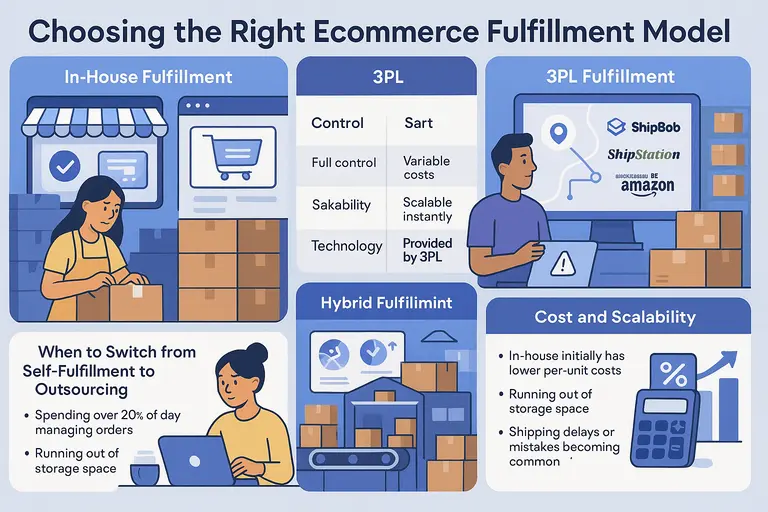
Your fulfillment model decides how orders flow through your business. The right choice depends on your product type, order volume, and growth goals.
In-House Fulfillment vs. Third-Party Logistics (3PL): Key Differences
In-house fulfillment means you manage everything yourself—storing inventory, picking, packing, and shipping. It gives you full control but requires space, staff, and time.
Third-party logistics (3PL) companies like ShipBob, ShipStation, or Fulfillment by Amazon (FBA) handle storage and shipping for you. They integrate directly with ecommerce platforms and automate most processes.
Here’s a quick comparison:
| Aspect | In-House Fulfillment | 3PL Fulfillment |
| Control | Full control | Shared control |
| Cost | Higher fixed costs | Variable costs |
| Scalability | Limited by space | Scalable instantly |
| Technology | Self-managed | Provided by 3PL |
| Focus | Operational | Strategic |
I generally advise smaller stores to start in-house, then shift to 3PL once order volume outpaces their team’s capacity.
When to Switch from Self-Fulfillment to Outsourcing
There’s a simple rule of thumb: if fulfillment starts eating into your marketing, product, or customer service time—it’s time to outsource.
Some clear signs include:
- You’re spending more than 20% of your day managing orders.
- You’re running out of storage space.
- Shipping delays or mistakes are becoming common.
I once helped a growing boutique switch to a 3PL after hitting 200 monthly orders. Within two months, their fulfillment time dropped by 60%, and they could finally focus on product design again.
Hybrid Fulfillment: How Combining Models Improves Efficiency
Hybrid fulfillment blends in-house and outsourced approaches. You might handle high-value or fragile products internally but let a 3PL manage fast-moving inventory.
This model offers flexibility:
- You keep control over special or custom orders.
- You leverage 3PL scalability for standard products.
- You can test new regions before committing to warehouses.
I recommend this model for businesses with seasonal spikes or diverse product types. It balances autonomy with efficiency.
Cost and Scalability Considerations for Each Fulfillment Approach
Here’s the truth: Cheaper isn’t always better. In-house fulfillment has lower per-unit costs initially, but overhead grows quickly. 3PLs charge per pick, pack, and shipment, but you save on labor and rent.
To calculate scalability, consider your cost per order and fulfillment time per order. If both metrics improve after outsourcing, it’s worth the switch.
The key is flexibility—choose a fulfillment setup that grows with you, not one that boxes you in.
Streamlining Order Processing for Faster Shipping
Faster shipping doesn’t come from working harder—it comes from smarter systems. Let’s look at how to automate and optimize your order process.
Automating Order Management with Fulfillment Software
Modern fulfillment tools like ShipStation, Cin7, or Shopify Fulfillment Network integrate directly with your online store, automatically pulling new orders, printing labels, and syncing inventory.
A quick example: Shopify Admin → Orders → Fulfill Items → Print Label → Mark as Shipped. With automation, this entire flow can happen in seconds.
I suggest setting up rules like “auto-fulfill domestic orders under 2kg” to reduce manual approval time. This frees your team to handle exceptions, not every single order.
Reducing Manual Tasks with Smart Inventory Integration
Integrating your inventory with your sales channels ensures you never sell what you don’t have. Tools like Skubana sync stock levels in real-time.
When your website, POS, and warehouse systems all talk to each other, errors drop drastically. It also helps prevent overstocking and stockouts—two silent killers of ecommerce profitability.
Tip: Always maintain a “safety stock” threshold to catch unexpected surges in demand.
Using Order Batching to Save Time and Resources
Order batching groups similar orders together—like all “blue T-shirts” or “orders from New York.” Instead of handling them one by one, warehouse staff pick items in bulk.
Benefits include:
- Less walking time per picker.
- Fewer packing errors.
- Faster overall processing speed.
I’ve seen warehouses increase efficiency by up to 30% just by introducing batching. It’s a simple process change with massive payoff.
The Role of Real-Time Tracking in Order Transparency
Customers crave visibility. Real-time tracking not only reassures them but also reduces “Where’s my order?” support tickets.
By connecting tracking APIs from carriers like FedEx, UPS, or USPS directly to your ecommerce store, you can automatically notify customers at every step.
I always advise businesses to send proactive updates, not just confirmation emails. Transparency builds trust—and trust drives repeat business.
Optimizing Inventory Management for Fulfillment Success
Inventory management is the heartbeat of ecommerce fulfillment. If your stock levels aren’t accurate, fulfillment slows, customers get frustrated, and cash flow takes a hit.
Let’s look at how you can keep your shelves balanced, your data clean, and your orders flowing smoothly.
Forecasting Demand Accurately to Prevent Stockouts
Forecasting demand isn’t guesswork—it’s math plus experience. You’re essentially predicting how much of each product you’ll need, and when, based on patterns in your sales history.
Start with sales velocity, which is how quickly a product sells per day or week. Then layer in seasonal trends and marketing events.
For example, if you sell swimwear, sales will naturally spike between May and August, so your forecast should increase inventory well before summer hits.
Here’s a simple approach:
- Pull your last 6–12 months of sales data.
- Adjust for known seasonality or promotions.
- Add a safety buffer (10–20%) for unpredictable surges.
I advise using forecasting tools like Cin7, which automate demand prediction using real-time sales and supplier data. Accurate forecasting keeps your warehouse lean yet ready—no more dusty shelves or angry “out of stock” notifications.
Implementing Just-in-Time (JIT) Inventory Systems
The Just-in-Time (JIT) approach means ordering and receiving inventory only when it’s needed for fulfillment. It’s efficient, but timing is everything.
Imagine your store sells handmade candles. Instead of keeping 5,000 candles in stock, you keep materials ready and order extra wax or wicks as orders increase. This reduces storage costs but demands tight coordination with suppliers.
To make JIT work, you’ll need:
- Reliable suppliers who can deliver quickly and consistently.
- Inventory alerts for low stock thresholds.
- Real-time visibility into purchase orders and fulfillment demand.
I suggest integrating a tool like Zoho Inventory, which lets you automate reorders based on minimum quantity triggers. When done right, JIT keeps your cash tied to what sells—not what sits.
Using Data Analytics to Improve Inventory Turnover
Inventory turnover shows how fast you sell and replace your stock. Higher turnover means better cash flow and fewer dead items.
Use your inventory turnover ratio—which is Cost of Goods Sold divided by Average Inventory—to spot underperforming products. For instance, if a product turns over less than twice a year, it’s taking up valuable space.
I recommend setting up dashboards (in tools like Power BI or Google Looker Studio) to track:
- Best-selling SKUs.
- Overstocked or stagnant items.
- Average days to sell per product category.
Data analytics transforms inventory from guesswork into precision management. You’ll know when to reorder, when to discount, and when to discontinue.
How Warehouse Layout Design Speeds Up Pick-and-Pack Operations
An efficient warehouse layout isn’t just about neat rows—it’s about movement. The fewer steps a worker takes, the faster fulfillment becomes.
A good rule is to organize products by sales velocity: fast-moving SKUs near packing stations, slower ones further back. Use ABC classification, where A items (top sellers) get prime positions.
Practical example: A brand I worked with reduced pick times by 35% just by relocating their top 20 products closer to the shipping dock.
I suggest mapping out your picking routes visually and updating them every few months. Even small layout tweaks can save minutes per order—which adds up fast.
Leveraging Technology for Smarter Ecommerce Fulfillment
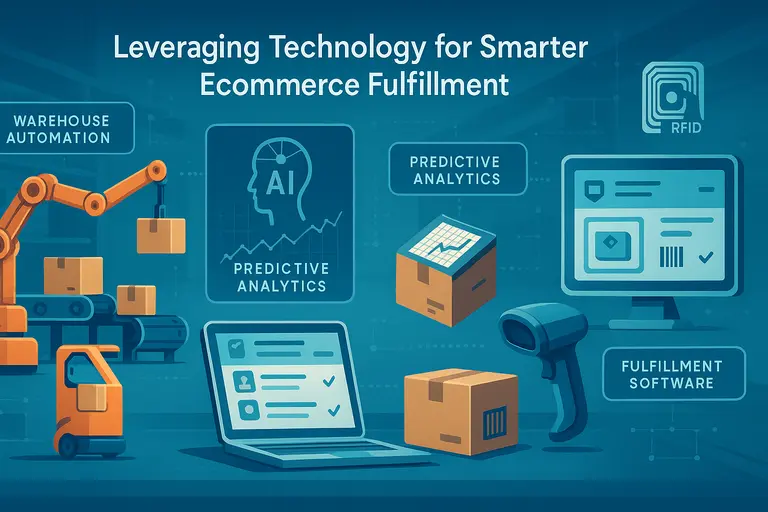
Technology is no longer optional—it’s the core of modern ecommerce fulfillment. Automation, AI, and integrated systems can reduce human error, speed up shipping, and improve visibility across every order.
How Warehouse Automation Tools Reduce Human Error
Automation tools handle repetitive tasks that humans struggle to do consistently—like sorting, scanning, or labeling. Automated conveyor belts, robotic pickers, and sorting arms are becoming common even for mid-sized ecommerce businesses.
For example, a system like Locus Robotics can autonomously pick and transport items across a warehouse while updating your fulfillment dashboard in real time.
Benefits include:
- Fewer picking errors.
- Consistent throughput during peak seasons.
- Lower labor costs over time.
If robotics feels out of reach, start smaller with automated packing stations or label printing software (like ShipStation). These still cut fulfillment time significantly.
The Benefits of Using AI and Predictive Analytics in Logistics
Artificial intelligence (AI) helps you anticipate problems before they happen. Predictive analytics uses historical data to forecast shipping delays, warehouse bottlenecks, and even return likelihood.
Imagine knowing that certain SKUs tend to sell faster after a TikTok trend hits. AI tools like OptimoRoute and Logiwa can help reallocate inventory automatically based on forecasted demand spikes.
From my perspective, AI’s biggest win is resource planning—it tells you not just what’s happening now, but what’s about to happen. That kind of insight keeps your fulfillment agile and cost-efficient.
RFID and Barcode Systems for Accurate Tracking
Radio-Frequency Identification (RFID) and barcode systems make it almost impossible to lose track of stock. RFID tags transmit data wirelessly, while barcodes are scanned manually.
Here’s how they differ:
| Feature | RFID | Barcode |
| Scanning | Automatic, no line of sight | Manual scan required |
| Speed | Very fast | Slower |
| Cost | Higher setup cost | Low cost |
| Accuracy | Excellent | Good |
For smaller operations, barcode systems (like Fishbowl Inventory) are a low-cost start. Larger ones might use RFID-enabled bins that auto-update stock levels in real time.
These systems eliminate manual entry errors and improve visibility—especially when integrated with ecommerce platforms like Shopify or BigCommerce.
Integrating Fulfillment Software with Ecommerce Platforms
Your ecommerce platform and fulfillment system should speak the same language. Integration connects everything—from orders to shipping to inventory—in one seamless workflow.
For instance, integrating Shopify with ShipBob means every time an order is placed, it automatically syncs to the fulfillment center, prints labels, updates stock, and sends tracking info to the customer—all without a single click.
I always recommend using middleware tools like Zapier for smaller stores, as they automate tasks between systems without custom coding. Integration saves time, cuts errors, and keeps operations running like clockwork.
Selecting the Best Shipping Strategies for Your Business
Shipping is where fulfillment meets the customer. Your goal is to balance speed, cost, and reliability—and the right strategy makes all the difference.
Zone Skipping: How It Cuts Down Shipping Time and Cost
Zone skipping means consolidating shipments headed to the same region and transporting them closer to their destination before handing them to carriers.
For example, instead of sending 100 individual packages from New York to California, you send one bulk shipment to a California distribution hub, where it’s then broken down for local delivery.
This strategy:
- Reduces total shipping costs.
- Shortens delivery times.
- Lowers environmental impact through fewer long-distance trips.
I’ve seen ecommerce businesses cut transit times by two full days using zone skipping during peak seasons—it’s especially effective for high-volume sellers.
Multi-Carrier Shipping: Diversifying for Reliability and Flexibility
Relying on one carrier can backfire during delays or strikes. Multi-carrier shipping means using multiple shipping partners—like USPS, UPS, and DHL—based on cost, speed, and destination.
You can automate this choice using shipping software (like Shippo) that compares rates and delivery times in real time.
Benefits include:
- Lower average shipping cost per order.
- Reduced risk from carrier delays.
- More delivery options for customers.
I believe flexibility beats loyalty here—choose carriers that serve your customer’s needs, not just your habits.
Offering Same-Day and Next-Day Delivery Options Effectively
Offering faster delivery is a game-changer for conversion rates, but it only works with proper inventory placement and warehouse coordination.
Steps to implement effectively:
- Use regional warehouses or micro-fulfillment centers near major cities.
- Sync real-time inventory to prevent overselling.
- Set delivery cut-off times clearly on your store (e.g., Order by 2 PM for same-day dispatch).
Even offering same-day shipping on select SKUs can boost sales significantly—I’ve seen conversion rates increase up to 25% after enabling this option.
Negotiating Better Shipping Rates with Carriers
Shipping rates aren’t fixed—they’re negotiable, especially if you ship in volume.
Before negotiating, know your average package weight, delivery zones, and shipping frequency. Carriers love predictability, so showing steady volume trends strengthens your case.
Try this:
- Consolidate shipments to reduce costs per parcel.
- Ask for dimensional weight discounts if you ship bulky but light items.
- Review rates quarterly as your volume grows.
In my experience, even small stores can save 10–20% annually by simply renegotiating rates once they hit consistent volume milestones.
Expert Tip: Fast, transparent, and efficient fulfillment isn’t about spending more—it’s about designing smarter systems. The real winners in ecommerce are those who combine automation, data, and strategy to make fulfillment almost invisible to the customer—because when it feels effortless, it’s done right.
Reducing Fulfillment Costs Without Sacrificing Quality
Lowering fulfillment costs doesn’t mean cutting corners—it means making your operations leaner, smarter, and more predictable. In ecommerce fulfillment, efficiency is the real cost-saver.
Let’s look at practical ways to reduce expenses without damaging customer trust or product quality.
Identifying and Eliminating Fulfillment Bottlenecks
Bottlenecks usually hide in plain sight—like a slow packing station, delayed inventory restocks, or manual data entry. These small inefficiencies pile up into expensive delays.
I suggest starting with a process map of your entire fulfillment flow. Track each stage: order received → picking → packing → shipping → delivery confirmation. Look for patterns where delays happen most.
For example: If you notice orders sit for hours between picking and packing, you might need better task assignment or extra packing staff during peak times.
To fix bottlenecks effectively:
- Automate repetitive tasks like label printing or order sorting.
- Cross-train employees so they can step into different roles during rush periods.
- Use time-tracking software (such as ShipStation Analytics) to pinpoint process delays.
Once you find your weak points, small changes—like reorganizing pick paths or adding barcode scanners—can shave minutes off every order. Those minutes turn into thousands in savings over time.
How Packaging Optimization Saves Money and Improves Sustainability
Packaging is often an overlooked cost center. Oversized boxes, excessive filler, or custom prints can eat into margins. But with the right packaging strategy, you can lower costs and reduce waste.
I recommend performing a packaging audit—review what you’re using, why, and how often.
Then:
- Switch to right-sized packaging that fits your most common order sizes.
- Use lightweight materials that still protect products.
- Consider biodegradable mailers or recycled cardboard to appeal to eco-conscious customers.
One client of mine saved nearly 15% in shipping costs simply by switching from double-walled boxes to padded mailers for smaller products. Lighter packaging also means lower dimensional weight charges from carriers.
Sustainable packaging isn’t just ethical—it’s good branding and cost efficiency combined.
Outsourcing Non-Core Fulfillment Tasks to Save Resources
Outsourcing doesn’t mean losing control—it means focusing on what matters most. Tasks like returns processing, kitting, or custom labeling can often be handled more efficiently by a third-party logistics (3PL) partner.
I advise outsourcing when:
- Your in-house team is stretched thin.
- Order volume spikes seasonally.
- Tasks are repetitive but time-consuming.
For instance, if returns take up 30% of your daily operations, partnering with a returns management provider like Loop or Happy Returns can streamline that process and free up internal resources.
This lets you and your team focus on high-value areas—like customer service or product development—while specialists handle the repetitive grunt work.
Measuring Cost per Order to Track Efficiency Over Time
Your cost per order (CPO) is a key metric for understanding how much each shipment truly costs. It includes labor, materials, storage, and shipping.
To calculate: Total Fulfillment Costs ÷ Number of Orders = Cost Per Order
I recommend tracking CPO monthly and breaking it into categories—labor, packaging, and postage. Once you see trends, you’ll spot quick wins like renegotiating rates, changing box sizes, or automating tasks.
Lowering CPO without harming quality comes from better systems, not cheaper materials. In my experience, businesses that measure fulfillment costs consistently improve them faster than those that don’t.
Improving Customer Experience Through Better Fulfillment
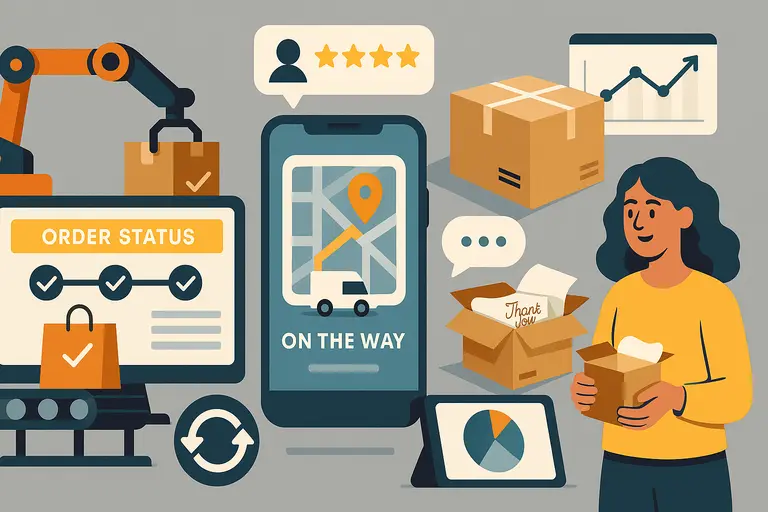
Your fulfillment process doesn’t just deliver products—it delivers your brand promise. Fast, transparent, and thoughtful fulfillment can turn one-time buyers into lifelong customers.
Real-Time Order Tracking and Communication Best Practices
Customers crave visibility. Real-time tracking gives them confidence and reduces anxiety about their purchase.
I recommend using fulfillment software that integrates tracking directly into your ecommerce platform—like Shopify’s Order Tracking Page or AfterShip. These tools automatically send updates as orders move through each stage.
Best practices include:
- Sending a “Your order has shipped” email with live tracking links.
- Updating customers proactively during delays.
- Displaying tracking info clearly in their account dashboard.
Transparent communication reduces “Where’s my order?” tickets, saving you time and earning customer trust.
Creating Hassle-Free Return and Exchange Processes
Returns are a reality of ecommerce, not a failure. A smooth, simple return process can actually increase repeat purchases.
Keep your return policy easy to find and easy to follow. Platforms like Loop Returns let customers generate labels, track return status, and even choose store credit—all automatically.
Here’s a simple path:
- Customer logs into account → clicks “Start a return.”
- System provides pre-paid label and next steps.
- Returns are processed and tracked automatically.
I suggest offering exchanges as an alternative to refunds—customers often prefer swapping for the right item if the process feels frictionless.
Personalizing the Unboxing Experience to Build Loyalty
Unboxing is your brand’s most tangible touchpoint. Small details—custom thank-you notes, branded inserts, or eco-friendly packaging—turn fulfillment into marketing.
I once worked with a skincare brand that included handwritten notes and small samples in each order. Their repeat purchase rate jumped 18% in three months.
Personalization ideas include:
- Adding first-name greetings on packing slips.
- Including loyalty discount cards.
- Using eco-conscious packaging that reflects brand values.
It’s not about extravagance—it’s about intention. The box is the first physical conversation your customer has with your brand. Make it memorable.
Using Fulfillment Data to Enhance Post-Purchase Engagement
Your fulfillment data is a goldmine of customer insight. Use it to improve communication and retention.
For example, analyze shipping zones to see where your most frequent buyers are. If a specific region has a high reorder rate, you can create targeted promotions or faster delivery options there.
Connect fulfillment data with your CRM or email tool to trigger messages like:
- “Your second order shipped even faster than your first!”
- “We noticed you often reorder—here’s a loyalty code.”
This kind of personalization builds connection and makes customers feel seen, not sold to.
Measuring and Continuously Improving Fulfillment Performance
You can’t improve what you don’t measure. Tracking performance data helps you see where you’re winning—and where you’re leaking money or time.
Key Metrics to Track: Accuracy, Speed, and Cost Efficiency
There are three primary fulfillment KPIs that matter most:
- Order Accuracy Rate – The percentage of correctly fulfilled orders.
- Average Fulfillment Speed – Time between order placement and shipment.
- Cost Per Order – How much it costs to fulfill each shipment.
An accuracy rate above 98% is solid; anything below signals process or training gaps. Speed and cost benchmarks will vary by industry, but tracking them monthly reveals trends before they become problems.
Using Fulfillment KPIs to Identify Weak Spots
KPIs aren’t just numbers—they tell stories. If your accuracy drops, it may point to a layout issue or software mismatch. If fulfillment time increases, maybe order batching isn’t optimized.
I recommend visual dashboards (like in ShipBob Analytics or Zoho Inventory Reports) that display KPI changes in real time. You’ll spot trouble before customers do.
Once a quarter, pick one metric to improve by 5%. Continuous small improvements beat one-time overhauls every time.
Regular Audits and Performance Reviews for Quality Control
Fulfillment audits don’t have to be painful. A quick monthly review can prevent major breakdowns.
Here’s what I suggest checking:
- Randomly inspect 10 shipped orders for accuracy.
- Verify packaging and labeling quality.
- Review order-to-shipment times from system logs.
Even simple team debriefs help—ask your fulfillment staff what’s slowing them down. They often spot inefficiencies faster than reports do.
How Continuous Improvement Frameworks Keep You Competitive
Continuous improvement frameworks like Kaizen or Lean Six Sigma keep fulfillment evolving. These systems focus on incremental, data-driven changes that compound over time.
In ecommerce, that might mean refining packing layouts, updating automation workflows, or A/B testing new shipping partners.
The mindset is simple: never assume your process is perfect. The best ecommerce operations evolve constantly, just like customer expectations.
Expert Tips for Scaling Your Ecommerce Fulfillment Operations
Scaling fulfillment isn’t just about handling more orders—it’s about staying efficient as you grow. Let’s look at how to expand your operations without losing control or quality.
Building Strategic Partnerships with 3PL Providers
Your 3PL partner isn’t just a vendor—they’re an extension of your brand. Choose partners with strong tech integration and regional coverage.
Ask about:
- API connections with your ecommerce platform.
- Peak-season capacity and backup plans.
- SLA (service-level agreements) for accuracy and delivery time.
I always suggest testing a 3PL with a small product line first before full migration. That way, you can gauge reliability without risking the whole operation.
Expanding Warehouse Locations for Faster Regional Delivery
As your customer base grows geographically, centralized warehouses can cause longer delivery times. Adding regional fulfillment centers can cut shipping time and cost dramatically.
Use sales data to identify where most orders come from. If 40% of your sales are in the West Coast, consider partnering with a 3PL that has facilities there.
Distributed warehousing means your products are closer to customers—and customers love faster, cheaper delivery.
Preparing for Seasonal Peaks and High-Volume Sales Events
Holiday seasons and flash sales can overwhelm even the best systems. Preparation is key.
Here’s how to handle it smoothly:
- Increase temporary staff 2–4 weeks before major events.
- Stock high-demand items early and track reorder points daily.
- Set realistic delivery cutoffs for customers to manage expectations.
I advise running a “mock peak week” internally—simulate a surge in orders to test your system’s limits. You’ll find weak spots before they find you.
Future Trends in Ecommerce Fulfillment: Automation and AI
The future of ecommerce fulfillment is data-driven, predictive, and highly automated. AI is already optimizing inventory, routing, and customer communication.
Emerging trends include:
- Micro-fulfillment centers for urban same-day delivery.
- Autonomous vehicles and drones for last-mile logistics.
- AI-driven demand forecasting that adjusts purchasing automatically.
In my view, businesses that embrace automation early will lead their industries. The goal isn’t just speed—it’s precision, personalization, and predictability.
Expert Tip: The most successful ecommerce businesses treat fulfillment as a growth engine, not a cost. When every box is shipped with care, speed, and intelligence—you’re not just moving products. You’re building trust, one delivery at a time.

I’m Juxhin, the voice behind The Justifiable.
I’ve spent 6+ years building blogs, managing affiliate campaigns, and testing the messy world of online business. Here, I cut the fluff and share the strategies that actually move the needle — so you can build income that’s sustainable, not speculative.
Related posts:
 Top Ecommerce Fulfillment Companies That Boost Profit Margins
 How Ecommerce Fulfillment Services Help You Scale Quickly
 Best Platform to Sell Online for Fast Growth and Low Fees
 Ecommerce Automation That Saves Time Without Breaking Sales
 Top Online Store Platforms for Building Income Streams
 Ecommerce SEO Strategy That Drives Buyers, Not Just Rankings