
Table of Contents
Some links on The Justifiable are affiliate links, meaning we may earn a small commission at no extra cost to you. Read full disclaimer.
If you’ve ever tried to find the perfect freelance services for your business, you know it’s not as simple as scrolling through a few profiles on Fiverr or Upwork.
The challenge isn’t finding freelancers—it’s finding the right ones who actually understand your goals, deliver on time, and align with your brand.
So, how can you confidently choose freelancers who elevate your business instead of draining your time and budget? Let’s break it down step-by-step.
Understand What Your Business Actually Needs
Before you can find the perfect freelance services for your business, you have to know exactly what you’re hiring for.
Many businesses skip this step and end up with the wrong freelancers, wasted budgets, and missed deadlines.
Define Your Business Goals Before Hiring
Start by identifying what you want to achieve through outsourcing. Are you trying to scale content production, improve design quality, or manage your social media more consistently?
Be specific. Instead of saying “I need help with marketing,” try:
- “I want to increase organic traffic by 30% in six months.”
- “I want to redesign the product pages to improve conversions.”
Clear goals shape your hiring decisions. For example, if your goal is traffic growth, you need an SEO content writer—not just a general writer.
I always recommend documenting your objectives in a project brief or a simple Google Doc. This makes it easier to communicate expectations later on.
Identify Which Tasks Can Be Outsourced
Not everything needs a freelancer. Focus on tasks that are:
- Repetitive or time-consuming: like data entry or customer support.
- Project-based: like website design or copywriting.
- Specialized: like video animation or technical SEO.
I usually advise entrepreneurs to start with non-core activities that eat up time but don’t directly drive revenue.
For instance, if you’re a founder, handling blog formatting or scheduling social posts isn’t the best use of your hours—let a freelancer handle that.
Distinguish Between One-Time Projects And Ongoing Work
Clarity here helps you hire smarter. A website redesign or product video is a one-time project. Content writing, email marketing, or social media management are ongoing tasks.
Why it matters: Ongoing work benefits from long-term freelancer relationships, while one-time projects can go to specialists. Define this before you even post your job listing so you can structure payment and workflow properly.
Set Clear Success Metrics For Freelance Roles
Freelancers perform best when expectations are measurable. Define KPIs (key performance indicators) such as:
- Traffic growth (for content or SEO)
- Conversion rate increase (for design or ad copy)
- Engagement metrics (for social media)
For instance, if you’re hiring a freelance email marketer, track open rate, click-through rate, and sales generated. Setting metrics upfront keeps projects accountable and results-driven.
Know Where To Look For Quality Freelancers
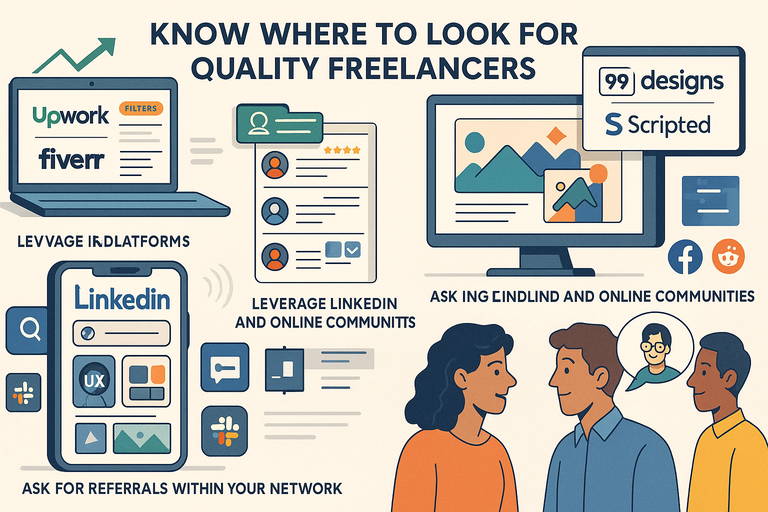
Finding great freelancers isn’t luck—it’s strategy. The right platform depends on the skill level, budget, and type of work you’re outsourcing.
Explore Top Freelance Marketplaces (Upwork, Fiverr, Toptal)
Each platform has its own personality.
- Upwork: Ideal for professional, long-term projects. You can post detailed job descriptions, set milestones, and filter freelancers by verified earnings or client history.
- Fiverr: Best for smaller or fast-turnaround projects. Think: logo design, video editing, or quick landing pages.
- Toptal: Great for high-end talent in tech, design, or finance. Toptal vets freelancers heavily, so expect higher rates but less screening on your end.
From experience, I suggest starting on Upwork if you want structured communication and vetted freelancers, and using Fiverr for one-off creative tasks.
Use Niche Platforms For Specialized Skills (e.g., 99designs, Scripted)
If you know exactly what you need, go niche.
- 99designs: Perfect for branding, logos, and packaging. Designers compete with visual drafts—you pick your favorite.
- Scripted: A content-focused platform that matches you with vetted writers for blogs, web copy, or product descriptions.
Niche sites tend to deliver higher-quality work in their category since they attract domain experts instead of general freelancers.
Leverage LinkedIn And Online Communities
LinkedIn is a goldmine for specialized freelancers. Use search filters like “Freelance UX Designer” or “Freelance Copywriter.” Check mutual connections for social proof.
Also, join communities—Slack groups, Facebook groups, or Reddit threads like r/freelance—to connect directly with freelancers and see portfolios without middlemen.
I’ve personally found incredible design talent through Facebook groups where freelancers share their latest work and testimonials.
Ask For Referrals Within Your Network
Word of mouth still wins. Ask other founders, marketers, or business owners who they trust. A referral often means the freelancer is proven, reliable, and already understands how to collaborate with clients effectively.
A quick LinkedIn post like, “Looking for a freelance content strategist experienced in SaaS—any recommendations?” can surface top-tier candidates fast.
Evaluate Freelancers Beyond Their Portfolios
A polished portfolio looks great—but it doesn’t tell the whole story. You need to evaluate a freelancer’s reliability, communication, and strategic understanding.
Check For Industry-Relevant Experience
Experience matters more than aesthetics. A writer who’s worked with SaaS brands will write differently from one who’s written for fashion blogs. When reviewing portfolios, look for case studies or examples tied to your niche.
Ask direct questions like:
- Have you worked on similar projects before?
- Can you explain your process for understanding a new brand?
The goal isn’t just skills—it’s fit.
Analyze Their Client Reviews And Ratings Carefully
Client feedback is a window into consistency. Don’t just glance at star ratings—read the reviews for patterns.
If multiple clients mention missed deadlines or slow communication, that’s a red flag. On Upwork, click “View all reviews” and filter by “Lowest rating” first—it’s the fastest way to see dealbreakers.
I also pay attention to repeat clients. A freelancer with returning customers usually delivers dependable work.
Look For Proven Communication And Reliability
Even the best freelancer can derail a project if communication fails. During initial chats, notice how fast they reply and how clearly they express ideas.
Tip: Use a short onboarding call via Zoom. It helps you gauge professionalism and clarity before committing.
If a freelancer is responsive, asks smart questions, and suggests improvements—you’ve likely found someone reliable.
Request A Small Paid Test Project
Never skip the test phase. A small paid trial reveals more than any portfolio.
Example: If you’re hiring a content writer, assign a 500-word article to see how they handle research, tone, and formatting. For a designer, request a single banner or homepage draft.
Keep it paid—it shows respect for their time and professionalism. If the freelancer exceeds expectations, you can move to larger, ongoing projects confidently.
Set A Clear Budget And Value Expectations
Budgeting isn’t just about numbers—it’s about aligning expectations with results.
When you find the perfect freelance services for your business, you’re paying for more than deliverables; you’re investing in expertise, time, and reliability.
Understand Market Rates For Each Skill
Rates vary wildly between industries and experience levels. A social media manager might charge $25/hour on Fiverr, while a seasoned strategist on Upwork might start at $75/hour.
It’s not just about skill—it’s also about understanding the market they serve.
Here’s a quick snapshot of typical freelance rates (as of 2025):
- Copywriters: $30–$120/hour, depending on niche and complexity.
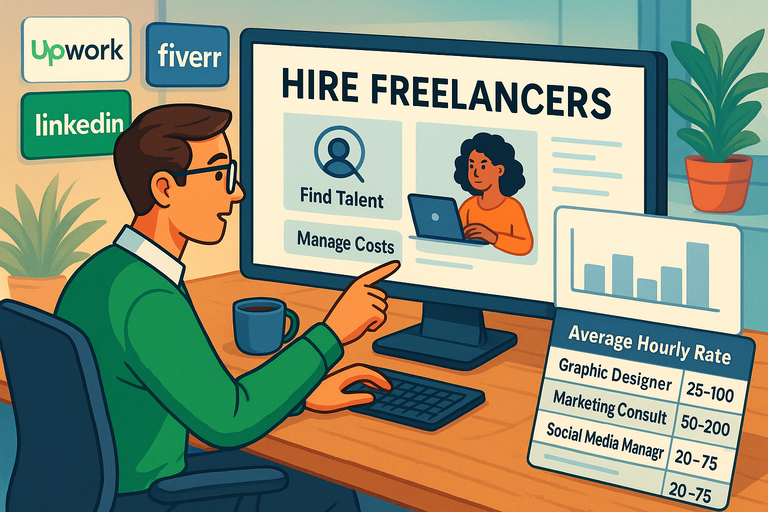
- Graphic designers: $25–$100/hour.
- Web developers: $40–$150/hour.
- SEO specialists: $50–$200/hour.
I usually advise checking platforms like Upwork’s rate insights or Glassdoor to get realistic benchmarks before setting a budget. Paying fair market rates helps you attract freelancers who are motivated to deliver real results.
Avoid Basing Decisions Solely On Low Prices
Cheap isn’t always cost-effective. I’ve seen business owners hire $5-per-hour freelancers and end up paying triple later to fix poor work. The better approach is to compare value, not price.
Ask yourself:
- Can this freelancer demonstrate results, not just promise them?
- Do they understand my audience and brand?
- Is their process clear and professional?
Sometimes paying a little more upfront saves you headaches and rework later.
Discuss Payment Terms And Milestones Early
Money conversations can be awkward, but clarity prevents friction. Set expectations in writing before any work begins.
Most platforms like Upwork or Fiverr automate this through milestone systems.
Here’s a good framework:
- Deposit upfront: 25–50% to confirm commitment.
- Milestone payments: Triggered after specific deliverables (e.g., draft approval).
- Final payment: Released upon project completion and file handover.
If you’re managing payments manually, use secure platforms like PayPal Business or Wise. I recommend avoiding informal arrangements—keep everything documented for accountability.
Consider Long-Term Value Over Short-Term Cost
A freelancer who understands your brand deeply will deliver exponentially better results over time. The first project might take longer (and cost more), but by project three or four, efficiency improves and communication flows naturally.
I’ve worked with the same SEO writer for years. Because they understand my tone and audience, projects that once took days now take hours—and the quality keeps improving.
That’s long-term ROI. Think of freelance partnerships as investments, not transactions.
Communicate Your Brand And Expectations Clearly
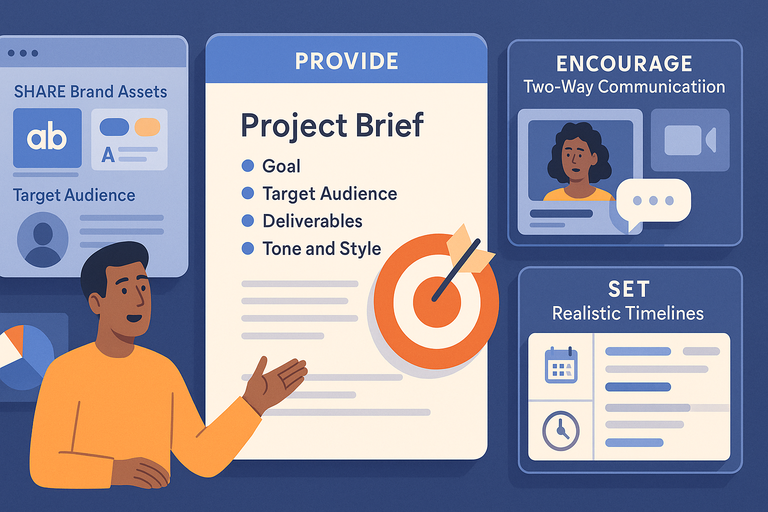
Freelancers can only deliver as well as you explain. When you clearly communicate your brand identity, goals, and guidelines, you empower freelancers to produce work that feels on-brand from the start.
Provide A Clear Brief With Goals, Deadlines, And Guidelines
A strong brief is your freelancer’s roadmap. Include:
- Project overview: What’s the main goal?
- Target audience: Who is this for?
- Deliverables: What’s expected and when?
- Tone and style: Formal, casual, witty, or authoritative?
For example, if you’re hiring a writer, share previous blog links or examples you admire. If it’s a designer, attach brand colors and past graphics.
I always suggest including a short “what to avoid” list—it prevents misalignment early.
Share Brand Assets, Tone, And Target Audience Info
Send freelancers your brand kit (logo, fonts, color codes, tagline, mission statement). If you use tools like Notion or Google Drive, keep these organized in a shared “Brand Resources” folder.
Your brand tone matters, too. A SaaS brand’s voice might sound analytical, while a lifestyle brand’s tone might be conversational and emotional.
Freelancers need this context to reflect your business authentically.
Encourage Two-Way Communication For Feedback
Good freelancers aren’t robots—they think, ask questions, and challenge ideas. I recommend setting up one feedback round mid-project and one final review before completion.
Use tools like Loom for quick video feedback or comments in Google Docs for writers. This creates clarity without endless back-and-forth.
I’ve noticed the best freelancers actually invite feedback—they see it as collaboration, not criticism.
Set Realistic Timelines To Prevent Burnout Or Rushed Work
Tight deadlines often lead to mediocre results. If a freelancer says they need five days, don’t squeeze it into two. Respecting time builds trust.
To plan realistically:
- Add buffer time for revisions.
- Communicate early if priorities shift.
- Keep time zones in mind if you’re working globally.
For example, if your project management tool is Asana, create tasks with due dates and subtasks (like “Draft,” “Review,” “Final Edit”) so both sides stay aligned.
Use Tools To Manage Freelancers Efficiently
The right tools make freelance management smoother, transparent, and scalable. You don’t need a complex tech stack—just the essentials that keep communication clear and work visible.
Use Project Management Platforms (Trello, Asana, ClickUp)
These tools organize projects visually.
- Trello: Best for simple boards (To Do, Doing, Done). Drag-and-drop cards make progress easy to track.
- Asana: Ideal for managing multiple freelancers or departments. Use “Timeline” view to track deadlines.
- ClickUp: A powerhouse tool that combines docs, tasks, and time tracking in one dashboard.
In practice, I use ClickUp to manage content pipelines—each blog post gets its own task, with subtasks for keyword research, writing, and editing. Everyone knows where things stand.
Track Progress And Time With Tools Like Toggl Or Hubstaff
If your freelancers charge hourly, time-tracking tools create transparency.
- Toggl: Lets freelancers track time per task and export reports.
- Hubstaff: Includes activity tracking, screenshots, and idle time detection—useful for long-term projects.
Just be careful not to over-monitor; trust is crucial. Use tracking for accountability, not surveillance.
Centralize Communication Through Slack Or Notion
Communication scattered across emails, chats, and files can be chaos. Tools like Slack or Notion simplify collaboration.
- Slack: Great for real-time discussions and file sharing. Create separate channels per project or freelancer.
- Notion: Combines docs, notes, and tasks. You can create shared pages for brand guidelines, project briefs, and deadlines.
A simple rule I follow: one tool for tasks, one for chats. Mixing both in one place usually leads to confusion.
Keep File Sharing Organized With Google Drive Or Dropbox
Centralized storage prevents lost assets.
- Google Drive: Perfect for collaborative docs, editable spreadsheets, and live commenting.
- Dropbox: Best for large media files or static design deliverables.
Use consistent naming formats like ProjectName_Date_Version so files are easy to locate. I suggest granting view-only access until final delivery to protect document integrity.
Pro Tip: The secret to managing freelancers effectively isn’t control—it’s clarity. When expectations, communication, and workflows are aligned, freelancers feel empowered to deliver their best work. That’s how you transform one-time hires into long-term partners who truly understand your business.
Build Long-Term Relationships With The Right Freelancers
Once you find the perfect freelance services for your business, the next goal is to keep them around.
Consistent freelancers who already understand your brand save time, reduce onboarding, and deliver stronger results over time.
Offer Constructive Feedback And Appreciation
Freelancers thrive on clarity and recognition. When you provide feedback, make it actionable—not personal. Instead of saying, “This doesn’t work,” try, “Can we make this section more conversational to match our brand tone?”
Here’s what I suggest:
- Be specific: Focus on what can be improved and why.
- Balance feedback: Mention what you liked before suggesting changes.
- Show appreciation: A simple thank-you message or testimonial goes a long way.
I’ve seen morale skyrocket when clients acknowledge great work. One client testimonial on LinkedIn can make a freelancer prioritize your projects without you even asking.
Rehire Proven Freelancers For Consistent Quality
When you find freelancers who deliver on time and understand your brand voice or design standards, don’t let them go. Rehiring proven freelancers creates consistency across your business.
Use platforms like Upwork’s “Favorite Freelancer” feature or create a private talent list in Asana or Notion. That way, when a new project comes up, you can reach out to the same people immediately instead of starting the search all over again.
I recommend scheduling periodic check-ins with your best freelancers—maybe once a quarter—to align on goals and get their insights. They often spot opportunities for improvement you might miss.
Negotiate Retainer Agreements For Ongoing Projects
If you have recurring tasks like blog content, social media design, or PPC management, a retainer agreement simplifies everything. Instead of renegotiating each project, you agree on a set number of deliverables per month for a fixed fee.
Example: You could hire a content writer for 4 blog posts monthly at $1,000 instead of $250 per post. It saves administrative hassle and ensures steady availability.
Most freelancers love retainers because they provide income stability, and you benefit from predictable quality. Just make sure to review scope monthly to keep things fair on both sides.
Create A Reliable Pool Of Go-To Freelancers
Think of your freelancers as an extension of your internal team. Build a freelance roster with names, specialties, and contact info. Tools like Notion, Airtable, or even Google Sheets work perfectly for this.
Include:
- Freelancer name and role
- Hourly or project rate
- Availability
- Notes on performance or style
When deadlines pile up, you’ll be able to assign tasks immediately without scrambling for new talent. This pool becomes your competitive advantage—your on-demand team for scaling fast.
Avoid Common Mistakes When Hiring Freelancers
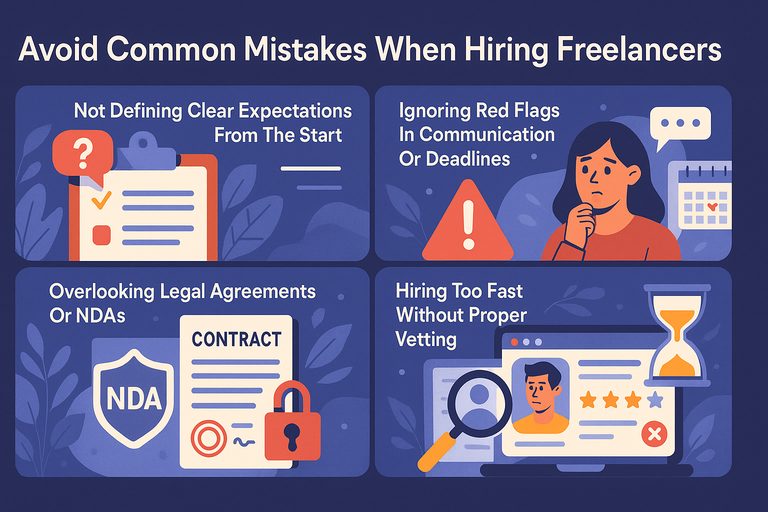
Even seasoned business owners make hiring mistakes that cost time and money.
Recognizing these pitfalls early helps you build stronger, more reliable freelance relationships.
Not Defining Clear Expectations From The Start
Miscommunication often starts with vague briefs. If you say, “I need a landing page,” but don’t specify layout, copy length, or goal, you’ll get inconsistent results.
Always define:
- Deliverables (what’s being created)
- Timeline (when it’s due)
- Quality standards (examples or metrics)
Clear expectations reduce revisions and eliminate misunderstandings. I always send freelancers a mini creative brief before any project begins—it keeps everyone on the same page.
Ignoring Red Flags In Communication Or Deadlines
A freelancer’s early communication habits are the best predictor of future reliability. Missed deadlines, delayed responses, or vague answers are early warning signs.
Trust your instincts. If you feel uneasy after the first conversation or trial task, move on. In my experience, early hesitation almost always proves justified later.
Overlooking Legal Agreements Or NDAs
Never skip contracts. They protect both you and your freelancer. Platforms like Upwork or Fiverr include built-in agreements, but if you’re hiring independently, use standard contracts that cover:
- Ownership of deliverables
- Payment terms
- Confidentiality clauses
If your project involves sensitive information—like upcoming product launches—have freelancers sign an NDA (Non-Disclosure Agreement). It’s a simple step that safeguards your intellectual property.
Hiring Too Fast Without Proper Vetting
Rushing the hiring process leads to mismatches. I always recommend taking these steps before finalizing a hire:
- Review their portfolio and reviews.
- Conduct a short video chat to assess communication style.
- Assign a small paid test task.
It takes an extra day or two, but it saves weeks of fixing avoidable mistakes later.
Measure The ROI Of Your Freelance Hires
You can’t improve what you don’t measure. Tracking performance helps you determine whether freelancers are adding real business value or just filling tasks.
Track Key Performance Indicators (KPIs) For Each Project
Every freelance project should have measurable outcomes.
Examples include:
- Writers: Traffic increase, conversions, or engagement rate.
- Designers: Click-through rate or conversion uplift after a redesign.
- Marketers: ROI on ad spend or lead generation cost.
I suggest tracking metrics in a shared dashboard using tools like Google Sheets, Airtable, or ClickUp. That visibility keeps freelancers accountable and helps you evaluate ROI accurately.
Compare Freelancer Output To Business Goals
Don’t just track output—tie it to broader business goals. If you hired a copywriter to increase sign-ups, measure conversions, not just word count.
Ask yourself:
- Did this work move the needle?
- Did it save time or improve brand consistency?
- Would I hire this freelancer again based on performance?
When freelancers see how their work impacts your goals, they become more invested in your success.
Calculate Time Saved Versus Cost Spent
One underrated metric is time saved. If outsourcing content creation saves you 10 hours a week, that’s time you can reinvest into sales, product strategy, or customer relationships.
I often calculate ROI as: (Time saved × your hourly rate) – freelancer cost = net gain.
For example, if your time is worth $100/hour and a freelancer saves you 10 hours for $600, your real ROI is $400.
Adjust Your Hiring Strategy Based On Data
Track results over time and refine your process. If a platform consistently brings underperformers, switch. If one freelancer drives high ROI, increase their workload.
Keep an eye on metrics like revision count and on-time delivery rate to spot patterns. Data-driven hiring helps you scale smarter, not just faster.
Create A Scalable Freelance Hiring System
The real power of freelancing lies in scalability. When you systemize your hiring process, you can expand your team effortlessly without sacrificing quality or control.
Document Your Hiring And Onboarding Process
Write down every step: from posting a job to delivering feedback. Include templates for job descriptions, interview questions, and onboarding checklists.
For example, in Notion, you can create a simple workflow:
- Job posted → Freelancer shortlisted → Test task → Hired → Onboarded.
This makes it easy for anyone on your team to hire consistently, even without your direct involvement.
Build A Talent Database For Future Projects
Keep a structured list of vetted freelancers. Include categories like content, design, marketing, and development. Note their rates, skill level, and reliability score.
You can use Airtable to create a “Freelancer CRM” that filters by skill and rating—this saves hours when new projects pop up.
Use Templates For Briefs, Contracts, And Evaluations
Templates create consistency. Build editable docs for:
- Project briefs
- NDAs and contracts
- Performance reviews
If you’re using Google Docs or ClickUp, store templates in a shared folder so your team can duplicate and customize them quickly.
Continuously Improve Your Freelance Hiring Workflow
Treat your hiring system as a living process. Review what works, identify bottlenecks, and refine.
Maybe your freelancers need better onboarding videos, or you realize adding one extra approval step saves revisions later. Continuous improvement turns chaos into a repeatable, scalable system.
Expert Tip: When you build systems that attract, manage, and retain great freelancers, your business gains flexibility most competitors lack. You’ll scale faster, maintain consistent quality, and always have the right people ready to bring your ideas to life.

I’m Juxhin, the voice behind The Justifiable.
I’ve spent 6+ years building blogs, managing affiliate campaigns, and testing the messy world of online business. Here, I cut the fluff and share the strategies that actually move the needle — so you can build income that’s sustainable, not speculative.
Related posts:
 Hire Freelancers for Design and Marketing A Quick Guide
 Hire Marketing Freelancers: Get Results Without Big Budgets
 How to Work Effectively With a Freelance Java Developer
 10 Freelance Gigs That Anyone Can Start from Home
 Python Freelance Jobs Where to Land High-Paying Projects
 Freelance Developer: How to Find the Perfect Fit for Your Project