
Table of Contents
Some links on The Justifiable are affiliate links, meaning we may earn a small commission at no extra cost to you. Read full disclaimer.
Instapage worth it for small businesses is a fair question, especially when every software bill needs to justify itself. If you run a lean team, you do not just need a landing page builder.
You need something that helps you launch faster, convert better, and avoid wasting ad spend. In my experience, Instapage can absolutely be worth it, but only for a specific kind of small business.
Its strengths are real, yet its pricing and feature depth make it a smarter fit for paid-acquisition-focused companies than for early-stage businesses just trying to get a simple page live.
What Instapage Is And Why Small Businesses Consider It
Instapage is built around one job: creating landing pages that help paid traffic convert.
That sounds simple, but the real question is whether that focus solves a small business problem strongly enough to justify the cost.
What Instapage Actually Does
Instapage is not trying to be your full website platform, your CRM, or your email system. It is a specialized landing page and conversion platform with a drag-and-drop builder, templates, reusable page sections, experimentation tools, personalization, collaboration features, and more than 120 integrations.
The company also highlights products such as AdMap, personalization, collections, and AI-assisted content features, which tells you where the platform is aiming: serious campaign optimization, not just basic page creation.
For a small business owner, that matters because many page builders look similar at first glance. The difference shows up when you are running ads and need message match, version control, testing, and cleaner handoff between marketing, design, and stakeholders. Instapage has real depth there, especially with reusable blocks and collaboration commenting.
I believe this is the first filter you should use. If you only need a brochure-style landing page for a local offer, Instapage may feel like buying a commercial oven to make toast. If you are spending meaningful money on paid campaigns, it starts to make more sense.
Why The “Worth It” Question Comes Up So Often
The main reason people ask whether Instapage is worth it is pricing. Instapage positions itself as a premium platform and pushes prospects toward custom plans and demos, while competitors like Unbounce publicly show plans starting at $249 per month billed annually and Leadpages shows plans starting at $49 per month as a promotional entry point, with standard pricing referenced higher.
That pricing gap changes the conversation. When a small business compares “Can this build pages?” the answer for multiple tools is yes. But when the comparison becomes “Can this platform help me recover enough wasted ad spend or increase enough lead volume to pay for itself?” Instapage becomes a more strategic decision.
There is also the conversion benchmark angle. Unbounce’s 2024 benchmark work, published in 2025, says the median landing page conversion rate across industries was 6.6% based on 464 million visits and 57 million conversions.
That does not prove Instapage will get you there, but it does prove landing page performance is measurable enough that better tools can matter when traffic volume is high enough.
How Instapage Works In A Real Small Business Marketing Setup
Before deciding whether Instapage is a smart investment, it helps to picture where it sits in your actual workflow.
Most small businesses do not fail because they lack a page builder. They fail because their funnel is messy.
The Typical Workflow Instapage Supports
A realistic setup looks like this: you run Google Ads or paid social, send traffic to a focused landing page, collect a lead through a form, push that lead into your CRM or email platform, and then track performance to see whether the campaign is profitable.
Instapage is designed to sit in the middle of that flow by handling the post-click experience and connecting to the rest of your stack through integrations.
That focus is important. If your website homepage is trying to explain everything to everyone, your paid traffic usually performs worse. A landing page narrows attention to one offer, one audience, and one action. Instapage leans heavily into that principle through personalization, dynamic text replacement, and ad-to-page mapping.
Imagine you run a local bookkeeping service. One ad speaks to “tax prep for freelancers,” another to “monthly bookkeeping for Shopify stores.” Sending both audiences to the same generic services page is usually a mistake.
Sending each to a page with matching language, offer framing, and form intent is much stronger. That is exactly the kind of use case Instapage is built around.
Where Instapage Creates Leverage
The real leverage comes from speed, alignment, and iteration. Speed means you can build and publish campaign pages quickly. Alignment means the promise made in the ad matches the message on the page. Iteration means you can test, comment, and improve without rebuilding from scratch.
Instapage supports all three through templates, reusable blocks, collaboration comments, experimentation, and publishing options across custom domains and other environments.
In my experience, this is where a small business either wins or wastes money. If every campaign requires waiting on a developer, hunting through email threads, and editing a page that was never meant for paid traffic, you lose days and often performance. A platform like Instapage can remove that friction.
But there is a catch: leverage only matters when you will actually use it. If you launch two campaigns a year and never test anything, the extra power may sit idle.
The Biggest Benefits Of Instapage For Small Businesses
Instapage does have real advantages. The problem is not whether the platform is good.
The problem is whether your business is in the slice of the market that can fully use what makes it good.
Better Message Match For Paid Campaigns
One of Instapage’s strongest differentiators is its emphasis on personalization and ad-to-page matching. Its AdMap product is built to visualize ads and connect them with relevant landing pages, and the platform also supports URL-parameter-based personalization and dynamic text replacement.
That matters because message match is one of the easiest ways to improve paid traffic efficiency without increasing spend.
Let me put that in plain English. If your ad says “Same-Day HVAC Repair,” the landing page should not open with “Trusted Home Services Since 2002.” It should continue the same promise. People need to feel they landed in the right place instantly. Instapage is designed to help you build those tightly matched experiences faster.
For a small business spending even a modest monthly budget on Google Ads, better message match can reduce bounce, improve conversion rate, and make your cost per lead more tolerable.
Since the median landing page conversion rate benchmark is 6.6% across industries, even moving from a weak page to a decent one can materially change lead economics.
Fast Page Creation Without Constant Developer Help
Instapage emphasizes a drag-and-drop builder, mobile-responsive templates, reusable Instablocks, and layout controls like grouping, alignment, and distribution. That means you can create landing pages that look polished without needing a custom-coded build every time.
For many small businesses, this is the hidden ROI. Not just “Can I make a page?” but “Can I make one without interrupting my web developer, waiting a week, and paying for revisions?” If your team is small, reducing dependency is valuable.
I suggest thinking about it this way: if a developer-charged landing page costs you a few hundred dollars each time, plus delay, Instapage may start paying for itself after a few launches.
But that only works if you are actually launching campaigns regularly. If you create one page and leave it untouched for six months, that ROI story gets weaker.
Collaboration Is Better Than Most Small Businesses Expect
A lot of small business owners underestimate how annoying feedback loops become. You send a draft page to a partner, a client, or a manager. They reply with screenshots, vague notes, or messages like “move the button up.”
Instapage’s collaboration tools let people comment directly on page elements, tag team members, and review changes in context.
That sounds like a team feature for big companies, but I actually think it is underrated for agencies and owner-led businesses. A two-person company can still lose a ridiculous amount of time in revision chaos.
A cleaner review process means pages go live sooner, and campaign momentum does not die in approval limbo.
The Downsides Small Businesses Need To Be Honest About
This is where the article gets practical. Instapage has clear strengths, but there are also very real reasons many small businesses should not buy it.
Pricing Can Be Hard To Justify Early On
Instapage’s pricing page is demo-oriented and centered on premium positioning rather than transparent low-cost entry. Its help center describes the Convert plan as a premier solution for larger teams and agencies, which is a strong signal that the platform is targeting more advanced users.
Meanwhile, Unbounce publicly lists a plan at $249 per month billed annually, and Leadpages publicly promotes lower-cost entry plans.
For a very small business, that matters more than almost any feature list. If your total marketing budget is tight, software overhead can quietly eat the budget you actually need for traffic, testing, and follow-up. I have seen businesses overspend on tools and underspend on learning what offer and audience actually work.
Here is the blunt version: If paying for Instapage would reduce your ad budget so much that you cannot gather meaningful conversion data, it may slow you down rather than help you.
The Platform Can Be More Than You Need
Instapage includes experimentation, personalization, advanced collaboration, and ad-to-page mapping. Those are useful, but not every small business needs them right now.
A solo consultant collecting a handful of monthly leads may be better served by a simpler page stack until traffic volume, campaign complexity, and team involvement increase.
This is the classic software trap. You buy for the business you hope to become instead of the one you are operating today.
That is not always wrong. Sometimes investing ahead is smart. But with landing page platforms, it only pays off when your usage grows into the feature set. Otherwise you are mostly paying for optionality.
It Is Best For Paid Traffic, Not Every Marketing Model
Instapage makes the most sense when your business depends on campaign-specific landing pages, especially for paid media. If your growth comes mostly from referrals, SEO blog traffic, repeat customers, or simple local search discovery, the platform’s specialized value may not show up as strongly.
A coffee roaster with a strong Shopify store and email list does not always need an advanced landing page platform. A legal lead-gen firm or SaaS company driving paid traffic to multiple offer pages often does. Context changes everything.
When Instapage Is Worth It For Small Businesses
This is the section most readers really need. Not “Is Instapage good?” but “Would it be good for a business like mine?”
It Is Worth It If You Run Serious Paid Campaigns
Instapage is easiest to justify when paid acquisition is already a real growth channel. If you are running Google Ads, Meta ads, or other campaigns consistently, every click has a cost.
That makes landing page performance more valuable because even modest conversion gains can improve return on ad spend. Instapage’s positioning around ad relevance, personalization, and experimentation fits that use case directly.
A simple example helps. Say you pay for 1,500 clicks a month. If your landing page converts at 4% instead of 6%, that is a large difference in lead output from the same spend. You do not need dramatic improvements for a premium platform to pay for itself. You just need enough volume that optimization has economic weight.
I recommend Instapage most often for service businesses, agencies, SaaS companies, and lead-gen-driven businesses where each extra lead has meaningful value.
It Is Worth It If Speed And Testing Matter More Than Cheapness
Sometimes the value is not just in conversion rate. It is in speed to market. If you need to launch pages quickly, test offers, clone winners, and keep campaigns moving, Instapage’s workflow tools become more important.
Templates, reusable blocks, comments, and publishing flexibility all reduce launch friction.
That matters a lot for small teams. A business with one marketer and one founder often cannot afford operational drag. In those cases, I would rather pay more for a tool that gets campaigns live and improvable than save money on a tool that creates bottlenecks.
It Is Worth It If One Conversion Has High Value
This is the easiest ROI math of all. If one booked consultation, demo request, or qualified lead is worth hundreds or thousands of dollars, then paying premium software pricing can make sense quickly.
In higher-ticket businesses, a slightly better page can cover months of software cost with one or two extra conversions.
For example, a B2B consultant, local legal practice, or specialized home service company may only need a few extra qualified leads to justify the investment. A low-ticket ecommerce side project usually has a harder time making that case.
When Instapage Is Probably Not Worth It
Just as important, there are clear situations where I would tell a small business to wait.
It Is Not Worth It If You Are Still Validating Your Offer
If you are early, uncertain about your offer, and have not yet proven that people want what you sell, Instapage is probably too much. At that stage, your biggest problems are usually offer clarity, pricing, targeting, and follow-up, not landing page infrastructure.
I believe many small businesses would get more value from using a cheaper page builder, talking to customers, and spending the difference on traffic tests or better sales follow-up. Premium optimization software cannot rescue a weak offer.
This is especially true when traffic is low. If you are not getting enough visitors to learn from the page, advanced experimentation features are nice in theory but weak in practice.
It Is Not Worth It If Your Funnel Is Simple And Stable
Some businesses do not need much landing page variation. They need one strong page, a contact form, basic analytics, and occasional updates. If that is your situation, Instapage may be overkill.
A local photographer, tutor, or accountant who relies mainly on word-of-mouth might not benefit from AdMap, dynamic personalization, or advanced team review. A simpler tool can handle the job at a lower cost.
I would not buy Instapage just because it is sophisticated. I would buy it because your workflow and economics demand sophistication.
It Is Not Worth It If You Will Not Test Or Optimize
This is the big one. Instapage becomes more valuable when you iterate. If your habit is to publish once and never revisit performance, you are leaving most of the platform unused.
A premium landing page platform rewards active operators. That means watching conversion data, refining copy, adjusting forms, matching ad intent, and testing versions. If that sounds exhausting rather than exciting, you may be happier with a cheaper tool and a simpler process.
Instapage Vs Other Options For Small Businesses
A comparison helps because “worth it” is always relative. Instapage is rarely judged in isolation. It is judged against simpler, cheaper alternatives.
Quick Comparison Table
Here is a practical snapshot based on publicly visible positioning and pricing pages.
| Platform | Best Fit | Entry Pricing Signal | Standout Strength |
|---|---|---|---|
| Instapage | Paid-campaign-focused teams and advanced lead gen | Demo/custom-plan oriented | Personalization, ad-to-page mapping, collaboration, premium post-click workflow |
| Unbounce | Growth marketers needing CRO depth with visible pricing | $249/month billed annually | Landing pages, testing, AI traffic optimization, established CRO focus |
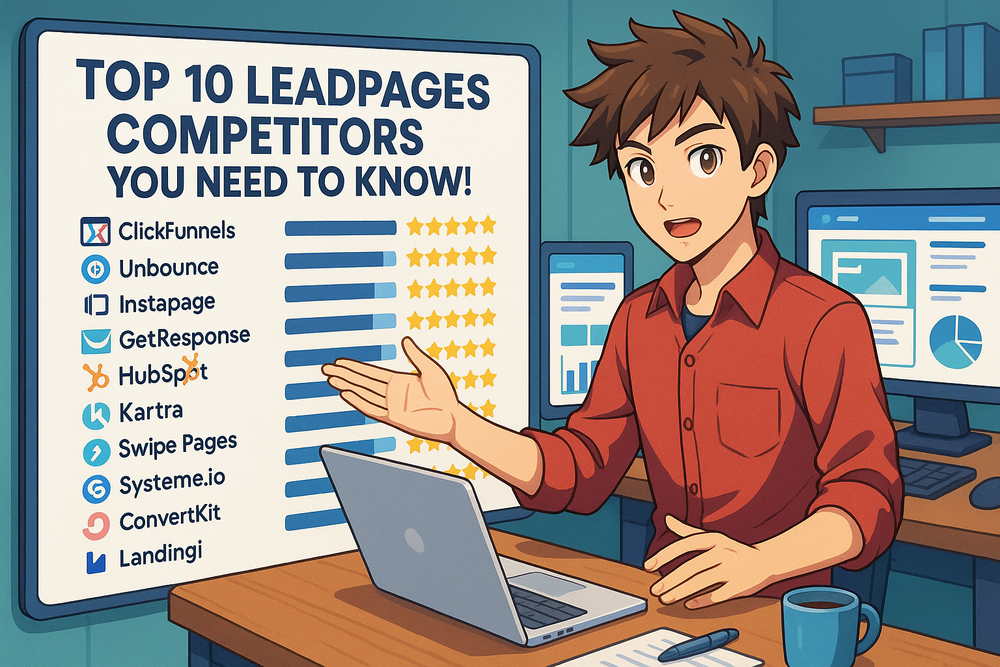
| Leadpages | Budget-conscious small businesses | From $49/month promo pricing on current page | Lower-cost entry, unlimited traffic/leads messaging, simpler affordability story |
The key takeaway is not that one platform is objectively better. It is that Instapage sits toward the premium end of the market. That means expectations should be different. You should expect better workflow support for campaign-heavy marketing, not just “a page builder.”
The Practical Difference In Buyer Type
In my view, Leadpages is often the “I need something live and affordable” option. Unbounce is the “I want serious optimization with transparent pricing” option. Instapage is the “I care deeply about post-click campaign performance, personalization, and workflow” option.
That does not mean Instapage is automatically the best. It means it is the best fit for a narrower kind of buyer.
If you are choosing based only on price, Instapage will usually lose. If you are choosing based on campaign precision and team workflow, it becomes much more competitive.
How To Decide If Instapage Will Pay For Itself
The smartest way to answer “instapage worth it for small businesses” is with simple ROI math, not opinions alone.
Use A Basic ROI Formula
Here is a simple way to evaluate it:
- Step 1: Estimate your monthly paid traffic.
- Step 2: Estimate your current landing page conversion rate.
- Step 3: Estimate the value of one lead or sale.
- Step 4: Model a realistic uplift, not a fantasy one.
For example, imagine you buy 2,000 clicks per month. Your current page converts at 4%. That gives you 80 conversions. If a better page and better message matching lift you to 5.5%, you now get 110 conversions. That is 30 extra conversions from the same traffic. If each qualified lead is worth $50 in profit, that is $1,500 in added value. In that scenario, premium software starts looking very reasonable.
I suggest being conservative. Do not assume the platform will double performance. Assume it helps you execute proven best practices faster and more consistently.
Ask These Five Screening Questions
Use these as your decision filter:
- Do you run paid campaigns every month?
- Is one lead or sale valuable enough to matter?
- Do you need more than one landing page variation?
- Will you actually test and optimize?
- Is launch speed currently a bottleneck?
If you answer yes to most of these, Instapage is much more likely to be worth it. If most answers are no, a cheaper solution is probably the smarter move.
How Small Businesses Should Set Up Instapage To Get Real Value
Buying the platform is not the hard part. Using it well is. This is where many teams waste the opportunity.
Start With One Offer, One Audience, One Goal
Do not begin by building ten pages. Start with one tightly focused campaign. Pick one offer, one traffic source, and one conversion goal. That makes your data cleaner and your page easier to improve.
A strong small-business landing page usually needs these basics: a headline that matches the ad, a clear benefit-driven subheadline, proof elements like testimonials or trust cues, a focused form or call to action, and minimal distractions. Instapage gives you templates and layout flexibility, but strategy still matters more than decoration.
Imagine you own a med spa. Instead of a generic “Our Services” page, create one page for “Botox Consultation Offer,” matched to one ad set and one booking action. That clarity is where conversion lift usually begins.
Use Integrations And Tracking Early
Instapage integrates with CRM, analytics, email, ecommerce, webinar, and marketing automation categories. Set these up early so you can actually trace lead quality, not just form fills.
This is one of my strongest recommendations. A landing page that generates unqualified leads can look successful while hurting your business. Connect the page to your follow-up system and check what happens after the form submission.
For many of us, the most expensive mistake is confusing lead volume with lead quality.
Build Reusable Systems, Not Just Pages
Instapage’s reusable blocks and campaign-oriented workflow make it possible to build repeatable systems. That is where small businesses can start acting bigger without adding headcount.
Create a winning testimonial section once. Reuse it. Create a layout framework for service pages. Reuse it. Build your review process around page comments instead of scattered email threads. Reuse that too.
That kind of operational consistency is not glamorous, but it is often the real profit lever.
Common Mistakes Small Businesses Make With Instapage
A good platform can still disappoint if the implementation is weak. These are the errors I would watch most closely.
Treating Design As More Important Than Offer
Many users get excited about layout freedom and polished templates, then forget the page still needs a compelling offer. A beautiful landing page with vague copy and weak positioning will not convert just because it looks modern.
I recommend spending as much energy on offer clarity as on design. Why should this visitor act now? Why this service, this lead magnet, or this demo? What friction are you removing? That is the conversion conversation.
A landing page builder improves execution. It does not replace strategy.
Sending Mixed Traffic To One Generic Page
This is one of the easiest mistakes to fix. Different ad groups, search terms, and audiences often deserve different pages or at least different page variants. Instapage’s personalization and ad mapping features are built for this exact issue.
If you sell to dentists and real estate brokers, those visitors should not see the same generic promise. Small message shifts can have outsized impact because people convert faster when the page feels made for them.
Ignoring Post-Click Follow-Up
A landing page is only part of the funnel. If leads sit untouched in an inbox, page performance becomes almost irrelevant. This is why integrations matter so much. Push leads into your CRM, send instant confirmations, and define what happens next.
I have seen businesses blame the page when the real problem was no follow-up process. Do not make that mistake.
Advanced Optimization Tips Once Your Basics Are Working
After your first pages are live and tracking is set up, this is where Instapage can justify its premium positioning.
Personalize Pages By Intent, Not Just Demographics
A lot of marketers hear “personalization” and think of swapping a first name or city. That is not the important version. The useful version is intent-based personalization: matching the page to the promise, pain point, or awareness level of the visitor.
Instapage supports URL-based personalization and dynamic replacement, which can help align headlines, images, and calls to action with the click source.
For example, a software company could run separate campaigns for “project management for agencies” and “project management for consultants.” Same product, different anxieties, different language, different proof. That is the sort of variation worth building.
Use Experimentation On High-Impact Elements First
Do not test random colors because a blog told you to. Start with big levers:
- Headline angle
- Offer framing
- Form length
- CTA wording
- Proof placement
Instapage includes experimentation tools, but the best results come from testing meaningful variables tied to user motivation.
From what I have seen, the strongest early tests usually involve the headline, the hero section, and the form. Those are the parts that most directly affect whether the visitor continues.
Build A Page Portfolio, Not A Single “Perfect” Page
This is a mindset shift. The goal is not one perfect landing page. The goal is a repeatable system of pages tailored to offer, audience, and channel. Instapage’s collections, reusable blocks, personalization, and campaign structure support that way of working.
Small businesses that grow well with paid traffic usually stop thinking in terms of “the landing page” and start thinking in terms of “our landing page system.”
Final Verdict: Is Instapage Worth It For Small Businesses?
Yes, Instapage is worth it for small businesses when the business already relies on paid acquisition, values landing page speed, needs message-matched campaign pages, and can earn enough from each lead or sale to justify premium software. Its strengths in personalization, collaboration, experimentation, reusable assets, and campaign alignment are real.
No, it is not worth it for every small business. If your traffic is low, your offer is still unproven, your funnel is simple, or your budget is tight, you may get a better return from a cheaper builder and stronger fundamentals first. Competitors with lower visible starting prices make that tradeoff hard to ignore.
My honest opinion is this: Instapage is a smart investment for growth-minded small businesses with real campaign intent. It is not the best first investment for small businesses that are still trying to figure out whether their marketing works at all. If you are already buying clicks and care about squeezing more revenue from each one, Instapage deserves a serious look. If not, save the money, simplify the stack, and revisit it when your funnel complexity catches up.
FAQ
What is Instapage and how does it help small businesses?
Instapage is a landing page platform designed to help businesses create high-converting pages for marketing campaigns. It helps small businesses improve lead generation by aligning landing pages with ads, increasing conversion rates, and simplifying the process of launching and optimizing pages without needing advanced technical skills.
Is Instapage worth it for small businesses on a budget?
Instapage may not be ideal for very tight budgets because it is priced as a premium tool. However, if a small business runs paid ads and values higher conversion rates, the potential increase in leads and sales can justify the cost over time.
When should a small business invest in Instapage?
A small business should consider Instapage when it consistently runs paid campaigns, needs multiple landing pages, and wants better performance from its traffic. It becomes more valuable when each lead or sale has a high return, making optimization efforts financially worthwhile.
How does Instapage compare to cheaper landing page builders?
Instapage offers more advanced features like personalization, collaboration tools, and ad-to-page mapping compared to cheaper builders. While basic tools are more affordable, Instapage focuses on improving campaign performance, making it better suited for businesses prioritizing conversion optimization over cost savings.
Can Instapage improve conversion rates significantly?
Instapage can improve conversion rates when used correctly with strong messaging and targeted campaigns. Its tools help match ads with landing pages and enable testing, which can lead to measurable improvements, especially for businesses already generating consistent traffic.

I’m Juxhin, the voice behind The Justifiable.
I’ve spent 6+ years building blogs, managing affiliate campaigns, and testing the messy world of online business. Here, I cut the fluff and share the strategies that actually move the needle — so you can build income that’s sustainable, not speculative.
Related posts:
 Instapage Review For Marketers: Real Results Or Hype?
 Instapage Features For Landing Pages: What Makes It Powerful
 What Is Aweber Communications
 Constant Contact Pricing: Which Plan Is Right for You?
 Top 10 Leadpages Competitors You Need to Know!
 Landingi Pricing Explained: Plans, Value, Hidden Costs