
Table of Contents
Some links on The Justifiable are affiliate links, meaning we may earn a small commission at no extra cost to you. Read full disclaimer.
When I first decided to open a blog, I realized how many people struggle with knowing where to start, what steps actually matter, and how to build something that grows year after year.
If you’re wondering how to turn a simple blog into a real income source, this guide walks you through the exact steps.
What do you need to get right from day one to build long-term growth instead of short-term frustration?
Choosing A Profitable Niche For Long-Term Blog Growth
I’ve noticed that choosing a niche is where most new bloggers either set themselves up for long-term success or unknowingly limit their income ceiling.
Let me walk you through the process in a simple, practical way so you can open a blog with clarity instead of confusion.
Identifying Audience Needs Using Search Intent Research
One of the easiest ways to understand what people actually want is by studying search intent. Whenever I’m validating a topic, I start by looking at what people are already typing into Google.
Tools like People Also Ask, AnswerThePublic, and even the autocomplete bar will show you the exact problems readers care about.
When you analyze these searches, pay attention to patterns. If you notice repeated terms like “how to,” “best tools,” or “step-by-step,” it usually means users want practical guidance rather than opinions. That’s a strong sign that the topic has content depth and long-term demand.
I also like checking whether a topic has multiple content angles. If you can naturally create tutorials, comparisons, FAQs, and beginner guides around one niche, it usually means you’ve found a sustainable space with room to grow.
You don’t need to chase high-volume keywords at first. Instead, look for problem-based searches. These are the people most likely to trust you, join your list, or buy your recommendations.
Validating Niche Profitability Through Real Market Demand
Once you know what people search for, the next step is making sure the niche can actually make money. I always start by looking for signs of existing demand.
Here are a few ways I validate profitability:
- Affiliate opportunities: Search “[your niche] affiliate programs.” If you see software, tools, or courses, that’s a good sign.
- Advertiser demand: A high CPC (cost per click) on Google Ads often means businesses are willing to spend money in that space.
- Digital product potential: If you can imagine creating templates, guides, or mini-courses, you’re looking at long-term scalability.
If a niche only allows for ad revenue, it may still grow, but you’ll need significantly more traffic to earn meaningful income. I personally look for at least two different monetization paths before committing.
Another trick I use is checking niche-specific Facebook groups or Reddit threads. If people frequently ask for recommendations, solutions, or step-by-step help, it’s usually a profitable category.
Narrowing Your Topic Focus Without Limiting Future Growth
A common mistake I see (and made myself early on) is picking a niche that’s either too broad or too narrow. The sweet spot is a focused niche that still leaves room for expansion.
For example, instead of blogging about “fitness,” you might start with “strength training for beginners.” This gives you a clear audience and target problem, but you can later expand into nutrition, mobility, or home workouts as your site grows.
When narrowing your niche, ask yourself:
- Can I create at least 50 targeted posts from this angle?
- Does this audience have a specific problem I can solve repeatedly?
- Can I logically expand into related topics later?
I believe starting focused gives you a competitive advantage. Search engines reward topical depth, and readers trust blogs that feel like specialists, not generalists.
You’re not limiting yourself—you’re building a strong foundation that supports natural growth over time.
Using Competitor Analysis To Find Gaps You Can Dominate
Competitors aren’t a bad sign—in fact, they’re validation. But the trick is not copying what they do. It’s understanding where their content falls short and creating something genuinely better.
I usually start with simple tools like Google, Ahrefs, or Ubersuggest. Search your main topics and study the top-ranking blogs. Look for missing details, outdated stats, generic explanations, or areas they didn’t fully explore. These become easy content opportunities.
You can also dig into their menu structure. If they have categories like “Tutorials,” “Reviews,” or “Guides,” that tells you which content types perform well in the niche.
A practical move I recommend is scanning their comments section. Readers will often ask questions that the post didn’t answer. Those questions? They’re content ideas waiting for you to cover them more thoroughly.
Setting Up Your Blog Platform And Essential Foundations
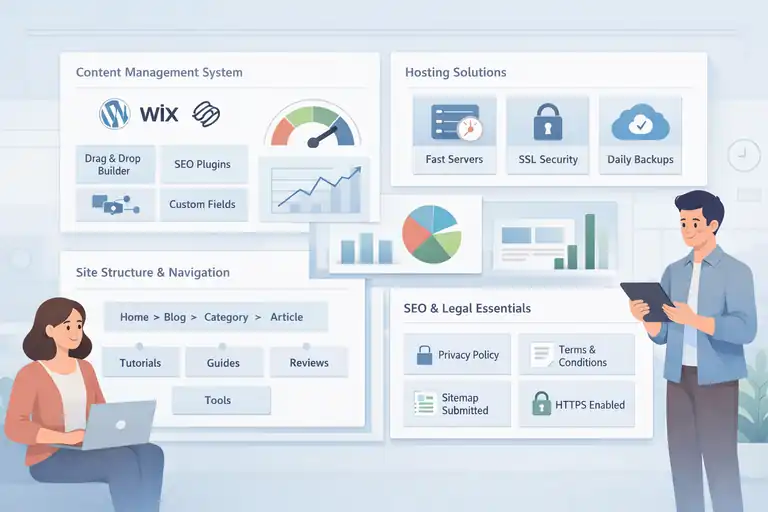
Now that your niche is set, the next step is putting the right foundation in place.
I’ve learned that the decisions you make at the beginning—your CMS, hosting, and structure—can either make your life smooth or endlessly frustrating later.
Selecting The Right CMS Based On Flexibility And Control
When you open a blog, the platform you choose affects everything: design, SEO, page speed, even how easily you can scale.
From what I’ve seen, WordPress.org remains the best option if you want ownership, flexibility, and long-term monetization freedom.
WordPress lets you install plugins like Rank Math or Yoast for SEO, and you can customize your site without needing to hire a developer. It also supports advanced tools such as:
- Elementor: Drag-and-drop builder for easy design.
- WP Rocket: Helps pages load faster.
- Advanced Custom Fields: Great for structured content.
If you prefer a simpler, hosted solution, platforms like Wix or Squarespace are easier but give you less control over long-term growth.
I only recommend them if your site won’t rely heavily on SEO or advanced monetization.
Choosing Hosting That Supports Speed, Security, And Scaling
Your hosting provider directly affects site performance, which impacts your rankings and user experience.
I usually recommend going with managed WordPress hosting because it handles updates, backups, and security automatically.
Popular options include:
- Hostinger: Great for beginners needing speed and support.
- WPX Hosting: Known for fast load times and excellent support.
- WPengine: More premium, built for long-term scaling.
When comparing hosts, look for:
- CDN availability
- SSL certificates included
- Automated backups
- At least 99.9% uptime
- Data centers near your primary audience
Even a 1-second delay can reduce conversions by up to 7%, according to Akamai. So hosting isn’t just technical—it’s directly tied to your income.
Structuring Your Site For Clean Navigation And Strong UX
A clean structure helps both readers and search engines understand your content. I like to map out categories before I ever publish the first post. Think of categories as the pillars of your topic clusters.
A simple structure might include:
- Tutorials
- Guides
- Tools
- Reviews
I suggest avoiding messy menus, too many dropdowns, or clever labels that confuse readers. Clarity always wins.
You should also create a simple UI path like: Home > Blog > Category > Article
This keeps everything easy to navigate and improves time on page—two factors that help long-term SEO.
Setting Up Core Legal Pages And Basic Technical SEO
Before publishing, make sure your site includes:
- Privacy Policy
- Terms & Conditions
- Disclosure Page (especially for affiliate links)
These build trust and meet legal requirements.
On the technical SEO side, I recommend:
- Installing an SEO plugin (Rank Math or Squirrly)
- Submitting your sitemap through Google Search Console
- Setting clean, short permalinks
- Enabling HTTPS
- Compressing images with tools like ShortPixel
These steps make Google understand, trust, and index your site faster. It’s a small effort for long-term stability.
Creating High-Value Content That Drives Steady Income
Content is what turns your blog into a long-term asset. This is where you begin building trust, authority, and the kind of traffic that grows month after month.
Developing Topic Clusters That Strengthen Your Topical Authority
Topic clusters help Google understand your expertise. When you write multiple related articles and interlink them, you tell search engines, “I cover this topic deeply.”
A cluster usually starts with a broad “pillar post,” then expands into narrower supporting posts.
For example:
- Pillar: How To Start Meal Planning For Busy Families
- Supporting posts:
- Best Meal Planning Apps
- Budget Meal Plans For Beginners
- How To Prep A Week Of Meals In One Hour
This structure strengthens your SEO, increases internal link value, and gives readers a navigation path that keeps them engaged. I’ve seen topic clusters reduce bounce rates dramatically.
Writing Evergreen Posts That Build Long-Term Consistent Traffic
Evergreen content is the backbone of stable income. These posts remain relevant for years, often needing only small updates.
Examples of evergreen formats include:
- Step-by-step guides
- Tool comparisons
- FAQs
- Tutorials
- Checklists
I suggest choosing topics that people search for year-round. For instance, “how to meal prep” or “how to start a side hustle” never go out of style.
Evergreen posts allow you to build a traffic foundation that doesn’t disappear when trends fade. I like to mix in a few timely topics, but evergreen is where sustainable growth comes from.
Adding Strategic CTAs That Move Readers Toward Monetization
A well-placed CTA (call to action) can dramatically increase your income. I’ve found that CTAs work best when they feel natural, like a continuation of the conversation, not an interruption.
Examples include:
- A link inside a tutorial recommending the tools you personally use
- A short signup form offering a free template that solves the next step in the process
- A product recommendation that fits organically within a solution
You don’t need dozens of CTAs. A few thoughtful ones placed at the right moment can convert far better than aggressive pop-ups or banners.
Using Content Upgrades To Grow Your Email List Quickly
A content upgrade is simply a bonus resource that complements a specific post. This could be a checklist, template, quick-start guide, or short worksheet.
When the upgrade solves a problem the reader has right now, opt-in rates can jump dramatically. I’ve seen upgrades convert anywhere from 20% to 45% of readers.
Some examples include:
- A printable meal plan inside a meal planning post
- A budgeting spreadsheet inside a finance article
- A niche-specific beginner guide offered inside a tutorial
Your email list becomes your most reliable traffic source. It’s the one audience you truly own, and it supports stable, long-term income.
Building Sustainable Traffic Channels For Blog Growth
Once your blog is live, your next goal is to bring people to it—consistently. I’ve learned that the most stable traffic doesn’t come from one magic source but from balancing several channels that support each other over time.
Let’s look at how you can build a system that keeps traffic flowing whether you post daily or take a break for a week.
Applying SEO Best Practices To Rank For Competitive Queries
SEO is still the strongest long-term growth engine for any blog. But to truly compete, you need to go beyond keyword stuffing and start thinking strategically about intent and structure.
Here’s how I approach SEO when helping someone open a blog:
- Start with low-competition keywords. Target specific long-tail phrases like “how to grow herbs indoors in winter” rather than broad ones like “gardening.”
- Use semantic keywords naturally. Sprinkle related terms throughout your post—Google uses these to understand context.
- Structure your content clearly. Use H2s and H3s to break down sections, making both readers and search engines happy.
- Optimize images and internal links. Compressed images improve speed, and linking between related posts helps Google crawl your site better.
I also recommend checking your analytics monthly. Look for posts ranking on page 2—these are the easiest wins. A small tweak (like adding FAQs or updating examples) can often push them to page 1.
If you’re using WordPress, plugins like Rank Math or Yoast guide you step-by-step through optimization. The real trick is consistency—SEO rewards those who keep refining, not those who post and forget.
Using Pinterest, YouTube, Or Social Platforms As Traffic Amplifiers
I’ve found that relying only on Google can make your blog vulnerable to algorithm shifts. Diversifying with visual and social platforms is smart.
Pinterest: Still one of the best referral sources for lifestyle, DIY, finance, and food blogs. Create vertical pins using Canva, use keyword-rich descriptions, and pin to both your boards and group boards for reach.
YouTube: Great for showing processes visually. You can turn your blog posts into short tutorials or tips videos, then link back to the full post. For example, a “5-Minute Blog Setup” video can direct viewers to a full written guide.
Social media: Instead of trying every platform, pick one where your audience naturally hangs out.
For example:
- Instagram works well for personal brands and lifestyle niches.
- LinkedIn is powerful for business or marketing blogs.
- TikTok can grow fast if you offer quick, visual tips.
Each platform should ultimately drive people back to your site or email list—never build your business entirely on rented land.
Building An Email List That Drives Repeat Visits And Sales
Your email list is your most valuable asset because it’s the only audience you truly own. Algorithms can change overnight, but your subscribers are yours to reach directly.
Here’s what’s worked best for me:
- Offer a specific, high-value lead magnet (like a mini-guide or checklist).
- Use a tool like MailerLite for easy automation.
- Create a welcome sequence that builds trust and guides readers toward your best content.
For example, when someone downloads a “Start a Blog in 7 Days” checklist, your email sequence might send:
- Day 1: How to choose a name and niche.
- Day 2: Setting up WordPress and hosting.
- Day 3: Writing your first post.
- Day 4–7: Monetization and traffic tips.
That’s how you turn casual readers into loyal followers and future buyers.
Combining Short-Term And Long-Term Traffic Strategies
I believe every blogger should combine quick wins with sustainable growth tactics. Short-term channels give you fast visibility, while long-term SEO and email lists compound over time.
Short-term examples:
- Running low-budget Pinterest ads.
- Promoting posts in relevant Facebook groups.
- Writing guest posts or collaborations for exposure.
Long-term strategies:
- Consistent SEO-optimized content.
- Building backlinks through quality collaborations.
- Publishing evergreen posts that stay relevant.
Mixing both helps you grow fast and build something that lasts. You’ll never have to start from zero traffic again.
Monetizing Your Blog With Proven Revenue Strategies
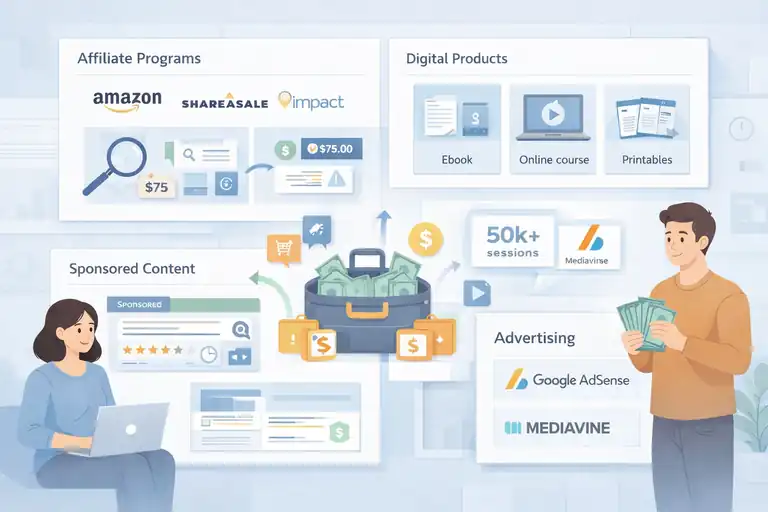
Once you’ve built steady traffic, it’s time to turn that audience into income. I’ll be honest—this is where many bloggers get lost.
They focus too early on ads or too late on monetization. The key is matching the right income model to your audience’s intent.
Choosing Monetization That Matches Your Audience Intent
Every monetization path should feel like a natural extension of your content. Before choosing one, ask: “What does my reader want at the end of this post?”
Here’s how to match intent:
- Informational content: Best for affiliate links or info products.
- Tutorials: Great for digital courses or templates.
- Product reviews: Perfect for affiliate income or sponsored content.
For instance, if you write about “home organization hacks,” your readers might be looking for practical tools. You can link to affiliate products like storage bins or planners that genuinely help.
Start small and test what works. I always tell new bloggers—don’t chase every monetization method. Find one that feels authentic, then scale it.
Using Affiliate Programs And Networks With High Payout Potential
Affiliate marketing is one of the easiest ways to earn passive income from a blog. You promote a product you use or trust, and earn a commission when someone buys through your link.
To get started:
- Join beginner-friendly programs like Flexoffers, Awin, or Impact.
- Write honest, experience-based reviews.
- Use tools like ThirstyAffiliates to manage and cloak links neatly.
A quick tip: Always disclose your affiliate relationships transparently. Readers appreciate honesty, and it keeps your site legally compliant.
I suggest focusing on products that solve real pain points. For example, if your post teaches email marketing, link to Aweber—tools you actually use. People can sense authenticity, and it converts far better than generic recommendations.
Creating Digital Products For Recurring, Scalable Income
Digital products are my favorite way to create long-term stability. They let you scale your time and income—once you create them, they can sell on autopilot.
Popular options include:
- Ebooks: Step-by-step guides or templates.
- Online courses: Teach what you know through short video lessons.
- Printables: Planners, checklists, or design templates.
For example, a blogger in the finance niche could sell a “Budget Planner for Beginners.” You can use Gumroad, Podia, or ThriveCart to host and deliver your products.
I advise starting with something small (like a $15 digital guide). It’s easier to launch, and you’ll learn what your audience actually wants before building bigger products.
Monetizing With Advertising Without Hurting User Experience
Advertising can be great if you already have steady traffic, but it needs balance. Too many pop-ups or banners make visitors leave faster than they arrive.
If you’re starting out, Google AdSense is simple to use. Once you hit 50,000+ monthly sessions, you can apply to Mediavine or Raptive for higher payouts.
A few best practices:
- Avoid placing ads between sentences or over content.
- Use responsive ad units so they look good on mobile.
- Track your RPM (revenue per thousand views) and optimize layout.
In my experience, ads work best when paired with other income sources. Think of them as a background earner, not your main strategy.
Scaling Your Blog For Long-Term Stability And Income
At this point, your blog is running smoothly. Now it’s time to turn it into a business that grows even when you’re not working every hour of the day.
Implementing Systems That Automate Publishing And Promotion
Automation frees up your time and keeps things consistent. I like to batch-create content—writing multiple posts at once, then scheduling them weekly.
For promotion, use tools like:
- Later to schedule social media posts.
- Kit automation to send newsletters automatically.
- Zapier to connect apps (for example, post to Twitter when a new blog goes live).
Even simple automations, like pre-scheduling Pinterest pins using Tailwind, can save hours each week. This systematization helps your blog feel active even during your downtime.
Outsourcing Key Tasks To Increase Output Without Burnout
There comes a point when you can’t (and shouldn’t) do everything yourself. I’ve found that outsourcing just 10–20% of your workload can double your results.
Tasks you can easily delegate:
- Graphic design (via Canva templates or Fiverr)
- Editing or formatting blog posts
- SEO optimization or technical fixes
- Content repurposing (turning posts into emails or videos)
It’s not about spending a fortune. Even hiring a virtual assistant for 5 hours a week can create breathing room so you focus on strategy and monetization.
Tracking KPIs To Improve What Drives Growth And Revenue
You can’t improve what you don’t measure. I track my core KPIs monthly to see what’s actually working.
Some key metrics:
- Organic traffic growth (Google Analytics)
- Email list growth rate
- Affiliate conversion rates
- RPM (revenue per 1,000 views)
For example, if you notice that a specific post generates 80% of affiliate sales, create more content around that topic. Data should guide your next steps, not guesswork.
Creating A Long-Term Strategy To Expand Into New Verticals
As your blog matures, you’ll start spotting opportunities to branch out—new audiences, content formats, or products.
Some examples include:
- Turning top-performing blog content into YouTube videos.
- Launching a membership or course community.
- Partnering with other creators in your niche.
The key is expanding without diluting your brand. I always suggest revisiting your mission once a year. Ask yourself: “Is my blog still aligned with what my audience wants and what I want to create?”
That reflection keeps your blog relevant, profitable, and sustainable for the long haul.
Pro Tip: The secret to lasting success isn’t publishing more—it’s refining what already works. Use automation, systems, and audience feedback to build a blog that not only earns but also gives you freedom.
FAQ
What is the first step to open a blog for income?
The first step to open a blog for income is choosing a profitable niche with clear audience demand. Focus on topics that solve real problems and have monetization potential.
How long does it take to make money after opening a blog?
Most bloggers start earning within 6–12 months if they post consistently, apply SEO best practices, and build multiple income streams like affiliate marketing or digital products.
Do I need technical skills to open a blog?
No, you don’t need advanced technical skills to open a blog. Platforms like WordPress make setup easy with user-friendly dashboards and guided tools for beginners.

I’m Juxhin, the voice behind The Justifiable.
I’ve spent 6+ years building blogs, managing affiliate campaigns, and testing the messy world of online business. Here, I cut the fluff and share the strategies that actually move the needle — so you can build income that’s sustainable, not speculative.
Related posts:
 The Best Way to Start a Blog That Actually Makes Money
 How to Create a Blog Site and Start Making Money
 How Do I Create My Own Blog and Get Paid Fast?
 Setting Up a Blog Website That Earns From Day One
 Create a Blog Free and Start Earning With No Risk
 Start a Blog Website and Build a Profitable Side Income