
Table of Contents
Some links on The Justifiable are affiliate links, meaning we may earn a small commission at no extra cost to you. Read full disclaimer.
When I first heard about Salehoo eBay dropshipping, I was skeptical. Could you really find reliable suppliers, sell products without holding inventory, and make profits fast?
The idea sounds almost too good to be true—but if you know how to use Salehoo strategically and avoid common eBay pitfalls, it’s entirely possible.
In this guide, we’ll break down everything you need to know—from how Salehoo works with eBay to what it actually takes to turn a quick, sustainable profit.
Understanding How Salehoo eBay Dropshipping Works
Before diving into profits, you first need to understand how Salehoo fits into the eBay dropshipping ecosystem.
It’s not a supplier itself but a directory and research tool designed to help you find reliable suppliers and profitable products.
What Makes Salehoo Different From Other Supplier Directories
Salehoo stands out because it’s not just a massive list of random suppliers. Every supplier inside its database is manually verified by Salehoo’s team. That means they’ve checked the business’s legitimacy, communication speed, shipping policies, and pricing fairness.
Unlike other directories that bombard you with unvetted contacts, Salehoo focuses on quality over quantity. You’re not wasting time sending messages to suppliers that never respond or finding out later they only work with bulk wholesalers.
In my experience, this saves hours of frustration—especially when you’re new to dropshipping. You can confidently contact suppliers knowing they’ve been screened for reliability.
That’s the biggest difference between Salehoo and free directories that are often full of outdated or fake listings.
How Salehoo Integrates With eBay for Seamless Listing
While Salehoo doesn’t directly plug into eBay’s backend like automation tools do, it integrates with your workflow by giving you market research and supplier details that fit eBay’s selling rules.
Here’s how it works step-by-step:
- Use Salehoo’s directory to find verified suppliers that allow dropshipping.
- Choose a product that matches eBay’s selling trends and price range.
- Import supplier product info, adjust the title and description to fit eBay SEO, and publish your listing.
Salehoo helps you skip the messy research phase and focus on what matters: selling fast-moving, trustworthy items without violating eBay’s dropshipping policies.
The Real Role of Salehoo in Finding Trusted Dropship Suppliers
Think of Salehoo as your middleman for trust. You’re not buying products from Salehoo but using it to discover who you should buy from. Each supplier listing includes details like:
- Minimum order quantities (some allow single-item dropshipping)
- Shipping times
- Accepted marketplaces (many allow eBay reselling)
- Average product price range
This transparency helps you quickly see whether a supplier fits your business model. I’ve found this especially useful for avoiding suppliers who pretend to be “wholesale” but actually sell at retail prices.
Why Supplier Verification Matters for Fast and Reliable Profits
In eBay dropshipping, your entire business depends on supplier reliability.
One late shipment or poor-quality product can lead to negative feedback and account flags. Salehoo’s verification system minimizes that risk.
Here’s why it matters:
- Faster fulfillment: Verified suppliers ship on time and communicate delays.
- Consistent inventory: Less chance of listing out-of-stock items.
- Refund reliability: Reputable suppliers handle returns smoothly.
In short, when Salehoo verifies a supplier, they’re not just adding a name to a list—they’re protecting your brand reputation. And that’s what ultimately helps you make profits faster.
Choosing the Right Products for Quick eBay Sales
Even the best supplier won’t help if you pick the wrong products. Salehoo gives you the tools to identify what’s trending, profitable, and actually selling on eBay.
How to Use Salehoo’s Market Research Lab to Spot High-Demand Items
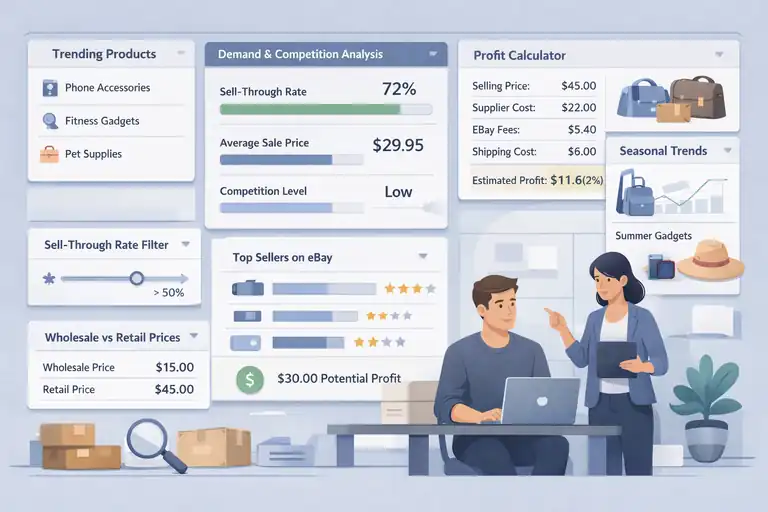
Salehoo’s Market Research Lab is a built-in analytics tool that shows what products are trending across eBay and Amazon. It reveals demand levels, average pricing, and competition—so you’re not guessing what to sell.
For example, if you see that phone accessories have a high sell rate and low competition, that’s a green light. You can then find suppliers offering those items at competitive prices.
Quick tip: Filter by sell-through rate (the percentage of listings that sell successfully). Anything above 50% usually indicates strong demand.
Evaluating Profit Margins and Competition Before Listing
Before listing an item, calculate your real profit margin. That means factoring in eBay’s 12–14% seller fees, payment processing fees, and shipping costs.
Here’s a simple formula I use: Profit = (Selling Price – Supplier Price – Fees – Shipping)
If you can’t make at least a 20–30% margin, it’s probably not worth your time. Salehoo helps here by showing wholesale and retail price comparisons, so you can quickly spot which items give you enough breathing room to profit even after fees.
Seasonal and Trending Product Strategies for Faster Results
Some of the quickest profits come from seasonal or trending products. Think: Christmas ornaments, summer wear, or tech gadgets tied to new phone releases.
Salehoo updates its data frequently, allowing you to spot these trends early. By planning your listings around seasonal spikes, you can ride waves of demand before competition catches on.
For instance, during back-to-school season, laptop sleeves and stationery often spike. Timing listings 4–6 weeks ahead gives you a strong advantage.
Mistakes to Avoid When Selecting eBay Dropshipping Products
I’ve seen many new sellers fall into these traps:
- Selling brand-name products from unverified suppliers (a fast way to get banned).
- Choosing low-profit items that look popular but have razor-thin margins.
- Ignoring eBay policies on prohibited or restricted categories.
A better approach is focusing on niche items that people consistently search for—like car accessories, pet grooming tools, or smart home gadgets. Salehoo’s filters make it easy to uncover these hidden gems.
Setting Up a Profitable eBay Store Using Salehoo
Once you’ve chosen your products and suppliers, the next step is optimizing your eBay store for conversions. This is where Salehoo’s product data and insights really come in handy.
Creating Listings That Convert With Data From Salehoo
Salehoo gives you access to pricing trends, product keywords, and sales data. Use that information to craft listings that speak to buyer intent.
Here’s a quick structure for your listing:
- Title: Include brand, main keyword, and benefit (e.g., “Waterproof Hiking Backpack – Lightweight & Durable”).
- Item specifics: Fill every field eBay provides. It helps with SEO.
- Description: Use short, persuasive bullet points. Highlight benefits, not just features.
Remember: most buyers scan, they don’t read. Salehoo’s keyword suggestions can help your title appear in more searches.
Writing Effective Product Descriptions That Drive Clicks
A strong description doesn’t just describe—it sells. Use storytelling and benefit-driven language. Instead of saying “Made of nylon,” say, “Built with tear-resistant nylon that keeps your gear dry even in heavy rain.”
Structure your description like this:
- Problem: Why someone needs this product.
- Solution: How your product solves it.
- Proof: Mention durability, warranty, or shipping speed.
Even if your item is common, great copy sets you apart from competitors using generic supplier text.
Pricing Strategies to Stay Competitive Without Killing Profits
On eBay, buyers compare prices instantly. The trick is to stay competitive without racing to the bottom.
Try these approaches:
- Bundle small accessories (like a free pouch or cord) to justify a higher price.
- Offer limited-time discounts to trigger urgency.
- Use Salehoo’s pricing insights to set prices that align with market averages but still leave margin.
I’ve found that setting your price 3–5% lower than the top-rated seller often brings visibility and conversions without sacrificing profit.
Using Professional Photos and Branding to Build Buyer Trust
Images sell faster than words. Always use clear, high-resolution photos with neutral backgrounds. If your supplier allows, add your logo or watermark to build recognition.
Consider these quick tips:
- Use at least 5–7 images per listing.
- Show real-world use (e.g., a bag being worn).
- Keep lighting consistent—avoid heavy filters.
Buyers trust what looks professional. Salehoo suppliers often provide quality product images, so use them as a base but add your own touches to stand out.
Building Strong Supplier Relationships Through Salehoo
Your suppliers are the backbone of your Salehoo eBay dropshipping business. Even with great products and pricing, a weak supplier relationship can kill profits fast.
Let’s go over how to build long-term, dependable partnerships that keep your business running smoothly.
How to Negotiate Better Terms With Verified Dropship Suppliers
Negotiation in dropshipping isn’t about squeezing suppliers for every penny—it’s about finding mutual wins. Most verified suppliers on Salehoo are open to flexible terms once they see consistent orders coming from you.
Here’s how you can approach it effectively:
- Start with clear data: Mention your projected order volume and show that you’re serious about growth.
- Ask about order thresholds: Some suppliers lower prices if you hit certain monthly sales.
- Negotiate on shipping, not just price: Faster or discounted shipping can often be more valuable than a small discount on product cost.
For example, when I started selling camping gear through Salehoo, I offered my supplier guaranteed weekly orders in exchange for reduced express shipping rates.
That small tweak increased my delivery speed and boosted positive reviews—without cutting deeply into my profits.
Managing Shipping Times and Return Policies Effectively
Fast and predictable shipping is what keeps your eBay feedback healthy. Always confirm your supplier’s processing time before listing their products. If they say 3–5 business days, list 5–7 to give yourself a buffer.
Here’s a simple approach I use:
- Choose suppliers located in or near your main customer base.
- Offer tracked shipping for all orders.
- Communicate expected delivery times clearly in your listings.
When it comes to returns, partner only with suppliers who have transparent and flexible policies. This gives you peace of mind when customers request refunds.
A good rule of thumb: avoid suppliers who refuse to accept returns for damaged or defective items. That’s a red flag.
Communicating Professionally to Ensure Consistent Inventory
Suppliers appreciate sellers who treat them like partners, not just vendors. Keep communication consistent, polite, and professional.
You can follow a simple rhythm:
- Send a brief weekly message to check stock levels.
- Notify them of any bulk orders in advance.
- Confirm shipping schedules for high-volume products.
Building rapport early pays off. I’ve had suppliers reserve inventory for me during peak seasons simply because I kept open, friendly communication throughout the year.
Avoiding Common Supplier Scams and Unreliable Sources
Salehoo does a great job vetting suppliers, but staying alert is still important. Watch for these warning signs:
- Requests for large upfront payments.
- Inconsistent product pricing or vague contact info.
- Poor response times to basic inquiries.
A genuine supplier will be transparent about their operations and provide clear shipping details. If something feels off—even with a verified supplier—trust your gut and reach out to Salehoo’s support team for verification.
Maximizing Sales With Smart eBay Marketing Tactics
Marketing your Salehoo eBay dropshipping store isn’t just about advertising—it’s about creating consistent visibility and trust.
The goal is to stand out among thousands of listings and keep customers coming back.
Leveraging eBay SEO to Rank Higher in Product Searches
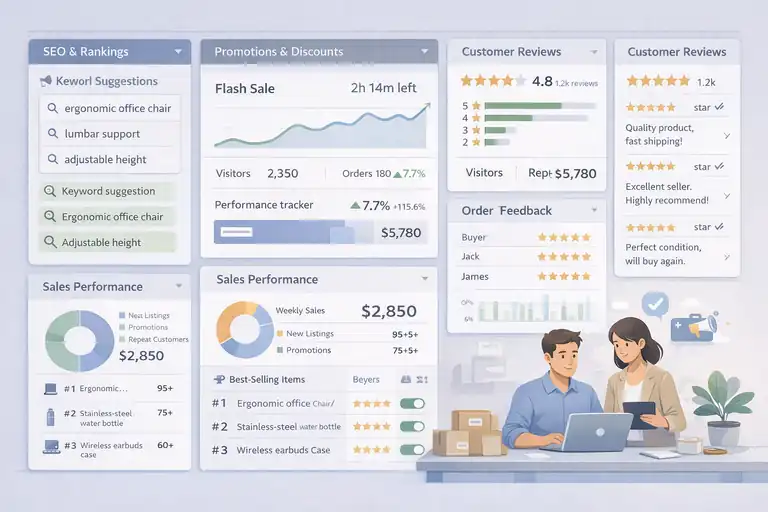
eBay SEO is all about relevance. When you optimize your titles, categories, and item specifics, eBay rewards you with better placement in search results.
Here’s what works best:
- Use keyword-rich titles: Combine brand names, features, and benefits. For example, “Ergonomic Office Chair With Lumbar Support – Adjustable Height.”
- Fill every item detail field: eBay’s algorithm loves completeness.
- Use Salehoo’s keyword data: It can show you trending product terms your competitors might be missing.
Consistency is key. Refresh older listings every few weeks and test different keywords to see what drives more clicks.
Using Promotions and Discount Offers Without Losing Profit
Promotions are a smart way to boost visibility, especially for new listings. But they need to be done strategically to protect your margins.
A few tested approaches:
- Offer volume discounts: “Buy 2, get 10% off” encourages larger orders.
- Run short flash sales: 48-hour deals create urgency.
- Bundle complementary items: Use Salehoo suppliers that offer related products to make these bundles easy.
Even a small 5% discount can bump your listing higher in search results, giving you more exposure and long-term sales growth.
The Power of Customer Reviews and Seller Feedback
Positive reviews are the lifeblood of your eBay success. According to eBay’s internal data, listings with higher seller ratings convert up to 35% more.
To build credibility fast:
- Message buyers after delivery to thank them.
- Politely ask for feedback (never pressure).
- Handle every issue quickly—refund or replace when needed.
I’ve noticed that one satisfied customer who leaves a five-star review often leads to two or three more organic sales without extra marketing spend.
How to Handle Negative Feedback Without Hurting Your Store
Negative feedback happens to everyone, even with great suppliers. The key is handling it gracefully.
Steps I always follow:
- Respond quickly and professionally.
- Offer a solution—replacement, refund, or partial credit.
- Keep emotions out of your reply.
If you resolve the issue well, customers sometimes revise or remove their feedback entirely. And when eBay sees proactive responses, it strengthens your credibility as a seller.
Calculating True Profit Margins in Salehoo eBay Dropshipping
Profitability isn’t just about how much you sell—it’s about how much you keep. Many new dropshippers underestimate fees and end up breaking even. Let’s fix that.
Factoring in eBay Fees, PayPal Costs, and Shipping Expenses
eBay typically charges around 12–14% per sale (including listing and final value fees). Add another 3–4% for PayPal or payment processing. If you don’t account for these, your real margins shrink fast.
Here’s a sample breakdown for a $50 item:
- Supplier cost: $25
- Shipping: $5
- eBay + PayPal fees: $8
- Net profit: $12 (24%)
That 24% margin is healthy. But if shipping spikes or returns rise, it can easily drop below 10%. Always double-check your math before scaling listings.
Understanding How Small Markups Can Lead to Big Returns
You don’t need massive margins to succeed. Many high-volume eBay sellers operate on 10–20% profit margins but make solid income because they sell a lot.
Here’s why small markups work:
- Low-cost products move faster.
- Volume builds feedback and trust, improving visibility.
- You can upsell or cross-sell related items for better overall margins.
A simple example: If you sell 10 phone chargers daily at $3 profit each, that’s $900 per month from one listing. Scale that across ten listings, and suddenly you’re in serious business territory.
Tools and Methods to Track Profit in Real Time
Manual tracking doesn’t cut it when you start managing dozens of listings. You’ll need tools to calculate profit automatically.
Some practical options include:
- Salehoo Labs: Provides estimated selling prices and average costs.
- Google Sheets: Custom formulas to track fees and profit margins.
- eBay Seller Hub: Monitors performance metrics like conversion rate and total profit.
I personally like setting a weekly profit review—every Friday, I look at which items performed best and which need pricing tweaks.
Knowing When to Scale Your Listings for Maximum ROI
Scaling isn’t about adding random products—it’s about doubling down on proven winners. Once a product hits consistent weekly sales, that’s your cue.
Here’s how to scale smartly:
- Increase quantity slowly to match demand.
- Test international shipping options.
- Reinvest profits into new, related listings.
From my experience, the biggest mistake sellers make is scaling too fast without checking supplier stability. Always confirm your supplier can handle extra volume before you expand.
Common Challenges in Salehoo eBay Dropshipping and How to Fix Them
No matter how good your Salehoo strategy is, you’ll hit a few bumps along the way. That’s normal.
The key isn’t avoiding challenges—it’s knowing how to handle them smartly and professionally when they happen.
Handling Delayed Shipments and Stock Outs Professionally
Delayed orders can happen even with verified Salehoo suppliers. The trick is to stay proactive. Always monitor your supplier’s stock levels and shipping updates.
Here’s what I usually do:
- Check inventory weekly for your top-selling items.
- When an item goes out of stock, immediately hide or pause that listing.
- If an order is delayed, message the buyer right away and explain the situation clearly.
Most buyers are understanding if you’re transparent early.
A short message like, “Hey [Name], I wanted to let you know your order is slightly delayed due to a supplier issue. It should ship by [date]. I’ll keep you updated.” keeps your reputation intact.
Salehoo’s supplier contact system makes it easier to communicate fast—something that can save your eBay feedback score from taking a hit.
Dealing With eBay Policy Changes and Account Limits
eBay updates its dropshipping policies often, especially around third-party fulfillment. The main rule: you must ensure your supplier ships directly to your customer, without including their branding or invoices.
To stay compliant, I recommend:
- Choosing Salehoo suppliers that specialize in eBay dropshipping (it’s listed on their profiles).
- Keeping eBay messages professional and avoiding phrases like “dropshipping” when talking to buyers.
- Staying within eBay’s daily and monthly selling limits until your account builds trust.
If you do get flagged or limited, contact eBay support, show proof of supplier legitimacy, and emphasize your fulfillment reliability. I’ve seen accounts reinstated within days when sellers provide documentation clearly.
Managing Returns and Refunds Without Losing Money
Returns are part of the game—but they don’t have to eat your profit. The best way to manage them is by setting clear policies upfront and working closely with your suppliers.
Here’s how to keep it smooth:
- Post your return window clearly in listings.
- Only accept returns for damaged or incorrect items.
- Work with suppliers who offer refund guarantees.
Salehoo suppliers often have standardized return systems, which helps simplify communication. When you do process a return, don’t argue—offer a quick solution. A small loss is better than a negative review that could hurt multiple listings.
Staying Compliant With eBay’s Dropshipping Rules
eBay allows dropshipping if you source directly from a wholesaler. What’s not allowed is buying from another retailer (like Amazon) and shipping directly from them.
To stay compliant:
- Always use Salehoo suppliers listed as wholesale or manufacturer-based.
- Double-check that the products have no retail packaging or competitor branding.
- Track every shipment for proof of delivery.
This keeps your business clean and scalable without risking sudden suspension. Remember, eBay’s goal is simple—they just want sellers to deliver reliably and professionally.
How to Scale and Automate Your Salehoo eBay Business
Once your sales become consistent, it’s time to automate tasks and scale your efforts. This is where dropshipping starts to feel like a business instead of a job.
Using Automation Tools to Sync Orders and Inventory
Manually updating listings or tracking inventory is fine when you have ten items—but impossible when you have hundreds. That’s where automation tools help.
Some practical options include:
- AutoDS – Syncs stock levels between eBay and your supplier.
- Zik Analytics – Helps with product research and price optimization.
- Salehoo Dropship – Offers an integrated system to list products and manage inventory automatically.
I’ve used automation tools to prevent overselling when suppliers ran out of stock. It not only saved me refund headaches but also helped maintain my seller rating.
Hiring Virtual Assistants for Order Management and Support
When you start making daily sales, repetitive tasks like order fulfillment, messaging buyers, and checking stock can eat up your time. That’s where virtual assistants (VAs) come in.
You can find skilled eBay-trained VAs on platforms like Fiverr or Upwork. Train them on:
- Placing orders through your Salehoo suppliers.
- Handling buyer inquiries politely and quickly.
- Monitoring order tracking numbers.
Hiring a VA isn’t about cost-cutting—it’s about freeing you to focus on scaling and strategy.
Expanding Beyond eBay Into Other Marketplaces
Once your eBay store is stable, consider expanding your Salehoo dropshipping business to platforms like Amazon, Shopify, or Facebook Marketplace.
Here’s why it’s worth it:
- You diversify revenue streams.
- You can cross-promote products between platforms.
- It protects your income in case eBay enforces new limits.
Some Salehoo suppliers even integrate directly with multiple marketplaces, making this transition smoother. I’ve seen sellers double profits simply by listing their top eBay items on Shopify with automated fulfillment.
Building a Long-Term Brand Instead of Relying Only on eBay
Relying 100% on eBay can be risky—policy changes or sudden restrictions can impact your store overnight. The smarter move is to start building a recognizable brand.
You can:
- Create consistent packaging with your logo (if the supplier allows).
- Use social media to drive repeat customers.
- Start collecting customer emails (with permission) for long-term marketing.
That’s how you turn short-term eBay wins into a sustainable business that grows beyond one platform.
Realistic Timeline: How Fast Can You Make Profits?
I get this question all the time—and it’s a fair one. Most people want to know when the money actually starts coming in.
The truth? You can see small profits in weeks, but real, consistent income usually takes a few months.
What to Expect in the First 30 Days of Dropshipping With Salehoo
Your first month is all about setup and testing. Expect to:
- Research suppliers and pick your first 10–15 products.
- List items and tweak prices to find your sweet spot.
- Make your first few sales and collect early feedback.
Some sellers start seeing $100–$300 profit in the first 30 days, depending on how aggressively they list and optimize. Don’t chase perfection early—focus on learning.
Key Performance Metrics to Track Progress and Growth
Numbers tell you exactly where your business stands. The key metrics I monitor weekly are:
- Conversion rate (should aim for 2–5%)
- Average profit per order
- Refund rate (keep under 5%)
- Seller feedback score
Salehoo’s data insights help you compare your listings’ performance against market averages. When your conversion rate improves, you know your titles, prices, and descriptions are working.
Signs You’re Ready to Scale or Reinvest Profits
You’re ready to scale when:
- You consistently hit 20–30 sales per week.
- You’ve maintained 98%+ positive feedback for 60 days.
- You have at least one supplier with a stable inventory.
When you reach that stage, reinvest 30–40% of your profits into expanding your listings or testing automation tools. It’s the safest way to grow without financial stress.
Why Slow and Steady Growth Beats “Get Rich Quick” Promises
Fast profits sound exciting—but they rarely last. The sellers who succeed with Salehoo are the ones who focus on sustainable systems, not overnight spikes.
I’ve seen sellers who tried to scale too fast and ended up with account suspensions due to supplier delays. The ones who grew steadily, refining listings and supplier relations, built 5-figure stores within a year.
So, take it slow, refine constantly, and build something that lasts.
Expert Tips for Long-Term Success in Salehoo eBay Dropshipping
The beauty of Salehoo eBay dropshipping is that once you’ve built your foundation, you can refine and improve endlessly. Here’s how to stay ahead as your business matures.
How to Continuously Research and Update Winning Products
Products that sell today might fade tomorrow. Make research a weekly habit. Check Salehoo’s Market Research Lab to identify trending items and replace underperformers.
A simple rhythm I follow:
- Every Friday, analyze your top five products.
- Replace one poor performer with a trending one.
- Refresh listings with new photos or updated keywords.
This keeps your store fresh and aligned with buyer demand.
The Importance of Reinventing Your eBay Strategy Quarterly
Every few months, pause and review your entire operation—listings, supplier performance, and profits. eBay’s algorithms and buyer behavior shift constantly.
Ask yourself:
- Are my top listings still ranking well?
- Has a competitor undercut my prices?
- Is my shipping speed still competitive?
Making small quarterly adjustments prevents big losses later and helps you stay competitive long-term.
Leveraging Customer Data for Repeat Sales and Upsells
Repeat buyers are gold in eBay dropshipping. You already earned their trust once—now you just need to keep it.
Here’s what I like to do:
- Include a thank-you note in each order (digital or printed).
- Offer discounts for repeat customers through messages.
- Track frequent buyers and offer similar items they might like.
Even a 10% repeat purchase rate can add hundreds of dollars a month in extra profit without spending a cent on ads.
Pro Tip: Building an Email List to Drive Repeat eBay Traffic
eBay limits direct marketing, but you can still build relationships through creative ways. For example, create a small website or landing page for warranty registration or future discounts.
Once buyers sign up voluntarily, you can:
- Send updates on new product drops.
- Offer early access to seasonal deals.
- Gently direct them back to your eBay store.
This simple system can turn one-time buyers into lifelong customers—something that separates serious eBay entrepreneurs from casual sellers.
FAQ
What is Salehoo eBay dropshipping?
Salehoo eBay dropshipping is a business model where you use Salehoo’s verified supplier directory to find reliable wholesalers and list their products for sale on eBay without holding inventory.
Can you make profits fast with Salehoo eBay dropshipping?
Yes, but it depends on your product choices, pricing strategy, and supplier reliability. Many sellers start seeing profits within the first 30–60 days by focusing on high-demand, low-competition items.
Is Salehoo worth it for eBay dropshipping beginners?
Absolutely. Salehoo helps beginners by offering vetted suppliers, market research tools, and product data that make finding profitable eBay items faster and safer.

I’m Juxhin, the voice behind The Justifiable.
I’ve spent 6+ years building blogs, managing affiliate campaigns, and testing the messy world of online business. Here, I cut the fluff and share the strategies that actually move the needle — so you can build income that’s sustainable, not speculative.
Related posts:
 Ecommerce Strategy Boost: 8 Simple Steps to Increase Profits
 Viral Launch Chrome Extension: The Ultimate Tool for Sellers
 Get Your Alidropship Custom Store Done Right Today!
 Ecommerce Marketing Guide: Turn Traffic Into Sales
 The Best SaleHoo Shopify Suppliers for Dropshipping
 How the Salehoo App Works and Why It Speeds Up Product Research