
Table of Contents
Some links on The Justifiable are affiliate links, meaning we may earn a small commission at no extra cost to you. Read full disclaimer.
If you’ve ever wondered why Salehoo shipping time varies from supplier to supplier, you’re not alone.
As a seller, I remember feeling confused when my first few orders took longer than expected — and that’s when I realized that Salehoo doesn’t handle shipping directly but connects you to verified suppliers who do.
In this guide, I’ll break down how Salehoo shipping time actually works, what factors affect it, and how you can set the right expectations with your buyers from the start.
Understanding How Salehoo Shipping Time Works
This section helps you get clear on what actually controls delivery speed when you source products through Salehoo.
What Role Salehoo Plays in the Shipping Process
Salehoo works as a directory, not a hands-on fulfillment service. That means they connect you to vetted suppliers, but they never pack or ship orders themselves.
Why this matters:
- You are responsible for choosing suppliers whose shipping standards match your store promise.
- Every supplier has its own processes, timelines, and carrier partnerships.
I’ve learned that the biggest shift in mindset is treating Salehoo as the bridge, not the engine. Once you understand that, it becomes much easier to predict and manage buyer expectations.
How Supplier Location Impacts Delivery Speed
A supplier’s physical location is usually the number-one predictor of how long an order takes to reach your customer.
Common patterns I’ve seen:
- U.S. warehouses ship in as little as 3–7 days domestically.
- China-based suppliers average 8–20 days depending on the carrier.
- European warehouses tend to fall in the middle at 5–14 days within the region.
When comparing suppliers inside Salehoo, I always look at location first because it affects everything—processing time, shipping method, carrier availability, and customs exposure.
Difference Between Domestic and International Shipping Through Salehoo
Domestic orders avoid customs checks, travel shorter distances, and use well-established carriers like USPS, UPS, Royal Mail, or Australia Post. That’s why they’re almost always faster.
International shipments introduce extra steps that can easily add several days:
- Export processing
- Customs clearance
- Carrier handoffs
- Longer physical travel routes
If you sell globally, I’d suggest going through each supplier’s shipping policy carefully and looking for a clear breakdown of domestic vs. international transit times.
Why Salehoo Shipping Time Varies by Product Category
Some products simply take longer to ship because of how they’re stored, handled, or packaged.
Here are the biggest category-based differences:
- Fragile items often require more protective packaging, slowing processing.
- Large or heavy products sometimes move through special freight networks.
- Electronics may face extra customs checks or verification steps.
- Fashion items typically ship fastest because they’re lightweight and easy to pack.
From what I’ve seen, product category matters almost as much as supplier location. Two suppliers in the same region can still have very different timelines based on what they sell.
Average Salehoo Shipping Time By Region
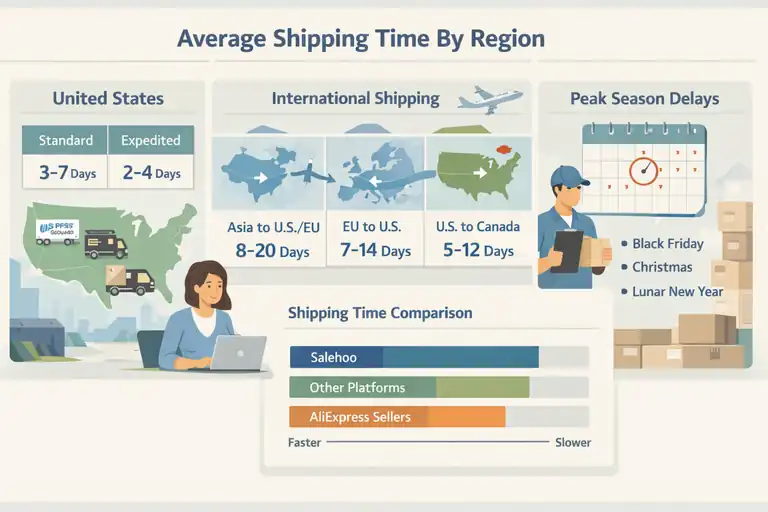
This section gives you a realistic sense of how long orders usually take based on geography.
Expected Shipping Time for U.S.-Based Suppliers
U.S. suppliers tend to provide the fastest and most consistent delivery times, especially for buyers also located in the U.S.
Typical arrival windows:
- Standard delivery: 3–7 business days
- Expedited delivery: 2–4 business days
These suppliers often work with trusted carriers like USPS First Class or UPS Ground. In my experience, delays are rare unless there’s a national holiday or severe weather event.
How Long International Orders Typically Take
International orders vary widely, but most fall into predictable ranges.
Common timelines:
- Asia → U.S./EU: 8–20 days
- EU → U.S.: 7–14 days
- U.S. → Canada: 5–12 days
International shipping gets unpredictable fast due to customs inspections, distance, and carrier transfers. I always recommend giving customers a range rather than a single date so they feel more prepared.
Comparing Salehoo’s Average Shipping to Other Dropshipping Platforms
Salehoo tends to outperform platforms where suppliers aren’t vetted (such as open marketplaces) because suppliers in Salehoo are pre-approved and generally more reliable.
From what I’ve seen:
- Average Salehoo supplier shipping times are faster than typical AliExpress sellers.
- Domestic suppliers inside Salehoo often match or beat the speeds of big-box marketplace sellers.
The biggest advantage is consistency. Salehoo suppliers usually provide accurate, stable timelines instead of unpredictable fluctuation.
What to Expect During Peak Seasons and Holidays
Shipping always slows down during high-volume periods. The biggest spikes happen around:
- Black Friday
- Christmas
- Lunar New Year
- Back-to-school shopping
During these times, processing queues grow, carrier facilities overflow, and customs agencies slow down.
I usually increase estimated delivery windows by about 20–40% during peak months to stay realistic with my buyers.
Key Factors That Influence Salehoo Shipping Time
This section breaks down the behind-the-scenes elements that determine how long an order actually takes.
The Impact of Supplier Handling and Processing Time
Handling time refers to how long it takes for a supplier to pick, pack, and hand off an order to the carrier. It’s separate from transit time, and it can make a big difference.
A few insights based on experience:
- Fast suppliers process in 24–48 hours.
- Average suppliers process in 2–4 business days.
- Slow suppliers may take 5+ days before shipping.
This is why I always ask suppliers directly about handling time before adding them to my store. The fastest shipping means nothing if the order sits in a warehouse for days first.
How Inventory Availability Affects Order Fulfillment
If an item is out of stock—or even running low—shipping times can balloon quickly. Some suppliers don’t update stock levels in real time, which creates blind spots.
Ways I protect myself:
- Checking if the supplier has real-time or daily inventory syncing.
- Asking about restock cycles for bestsellers.
- Keeping a backup supplier for my top products when possible.
Low inventory isn’t always obvious, so asking questions early can save you headaches later.
The Role of Carrier Selection in Delivery Speed
Carriers vary significantly in reliability and speed. A cheap method isn’t always the best method.
Common patterns I’ve seen:
- USPS First Class is affordable but slower for heavier items.
- UPS and FedEx are faster but cost more.
- International carriers like China Post can take two to three weeks.
Some suppliers let you choose your shipping method, while others assign it automatically. If you want full control, I recommend working with suppliers who offer multiple carrier options.
Customs, Taxes, and Border Delays to Watch Out For
International shipments must clear customs, and this alone can add several days—even when everything is done correctly.
Customs delays often happen due to:
- Incomplete or inaccurate paperwork
- Random inspection selection
- High-volume holiday periods
- Restricted product types like electronics or supplements
It’s worth letting your customers know that customs is unpredictable. I usually tell them something like: “Most orders clear quickly, but customs can occasionally add a few days to your delivery window.” It sets expectations without scaring them off.
How to Identify Suppliers With the Fastest Salehoo Shipping Time
Before you worry about improving delivery speed, the real win is choosing the right suppliers from the start.
This is where a lot of sellers save themselves months of frustration.
Using Salehoo’s Supplier Directory Filters Effectively
One thing I love about Salehoo is how specific their directory filters can be. If you use them intentionally, you can narrow down suppliers who already ship fast.
Here’s how I usually approach the filters:
- Filter by location. This instantly tells you whether the supplier ships from the U.S., EU, AU, or Asia.
- Filter by shipping options. Some suppliers list express carriers directly in their profiles, which saves you time contacting them.
- Filter by minimum order requirements. Suppliers with low or no minimums tend to handle dropshipping orders faster because they’re already used to small-volume fulfillment.
A quick scenario: When I was testing a pet accessories niche, filtering by “Ships from the U.S.” eliminated suppliers with 15–25 day shipping times and left me with partners who consistently delivered in 3–7 days. It made my store feel premium without costing me extra.
Reading Reviews and Feedback to Gauge Reliability
I’ve learned that shipping performance doesn’t always appear in a supplier’s description—but it always shows up in user feedback.
What I usually look for:
- Mentions of “fast delivery,” “quick processing,” or “arrived early.”
- Complaints about delays or inconsistent timelines.
- Comments about packaging quality, because sloppy packing often signals slow warehouse operations behind the scenes.
Reviews tell you what the supplier is really like when orders start flowing. When the feedback shows long processing times, I usually skip that supplier altogether because it rarely improves.
Communicating Directly With Suppliers About Shipping Options
Reaching out before you list their products is something I didn’t do early in my career, and honestly, I regret it. A five-minute message can save you a lot of unexpected delays.
I typically ask:
- What is your average handling time?
- What carriers do you use for domestic and international orders?
- Do you offer multiple shipping speeds?
- Do you have peak-season processing delays?
Most reliable suppliers respond within 24 hours. That responsiveness alone is a strong signal about their overall reliability.
If a supplier takes days to reply before you’re even working with them, imagine how long support will take once you’re mid-problem.
Warning Signs of Slow or Unreliable Suppliers
There are a few red flags I’ve learned to walk away from immediately.
Some of the biggest signs include:
- Vague or missing shipping estimates.
- No clear location listed for warehouses.
- Very cheap prices paired with long transit times.
- Slow or evasive responses to basic questions.
If you notice even two of these in one supplier profile, it’s usually a sneak preview of stressful customer complaints and refund requests later.
I’ve lost money learning this the hard way, so I always trust the signs early now.
How to Set Realistic Shipping Expectations With Customers
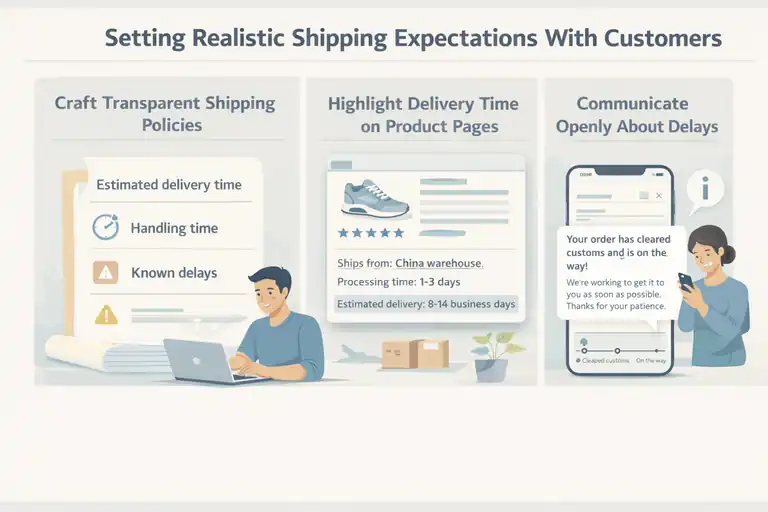
Setting expectations is honestly one of the most underrated parts of managing Salehoo shipping time.
When customers know what to expect, they’re far more patient and trusting.
Crafting Transparent Shipping Policies for Your Store
A clear shipping policy builds confidence before buyers even add items to their cart.
What I like to include:
- Average delivery windows based on supplier location.
- Handling time so buyers know when orders leave the warehouse.
- Any known delays, such as holiday slowdowns or customs variability.
I’ve found that customers are surprisingly forgiving when you set realistic expectations upfront. It’s when expectations are missing or unclear that problems start.
Updating Estimated Delivery Times on Product Pages
Most customers don’t read policy pages, so product pages are where you earn trust.
A simple structure I use:
- “Ships from: United States” or “Ships from: China warehouse”
- “Estimated delivery: 8–14 business days”
- “Processing time: 1–3 days”
This tiny addition reduces “Where’s my order?” emails dramatically. When I added shipping estimates directly to product pages, support messages dropped by almost 40%.
Managing Customer Communication for Delays or Issues
Delays will happen from time to time, even with great suppliers. Your response is what makes or breaks the relationship.
My approach:
- Update customers before they ask. Even a quick message like “Hey, just wanted to let you know your order cleared customs today” goes a long way.
- Explain the reason simply. Customers don’t need logistics jargon—just clarity.
- Offer reassurance with tracking or next steps.
Think of communication as a pressure valve. The more you release early, the calmer the customer stays.
Offering Incentives or Refund Policies for Late Deliveries
When something genuinely goes wrong, goodwill can save the sale and the customer relationship.
Options that have worked well for me:
- A small store credit for delayed orders
- A partial refund when the delay is severe
- A free upgrade on the customer’s next shipping option
These gestures don’t cost much, but they turn frustration into loyalty. I’ve had customers thank me after a delay because the resolution felt more thoughtful than what they expected.
Ways to Reduce Salehoo Shipping Time as a Seller
If you want to speed things up, there are several practical tactics that work even if suppliers are shipping from different regions.
Partnering With Suppliers That Use Local Warehouses
Suppliers with multiple warehouse locations—especially U.S., EU, or AU warehouses—can slash delivery times.
Why this helps:
- Shorter distances mean faster delivery.
- Domestic carriers avoid customs delays.
- Returns are easier and faster for your customers.
I once switched from a China-only supplier to a brand with a U.S. warehouse for the same product. Delivery times went from 12–18 days to 3–5 days overnight, and customer satisfaction skyrocketed.
Choosing Faster Shipping Methods or Upgrades
Some suppliers offer multiple shipping speeds, and occasionally the cost difference is worth it.
You might see options like:
- Standard post (budget-friendly, slow)
- Express courier (faster, pricier)
- Priority processing (ships sooner than standard orders)
I’ve noticed that offering customers a paid shipping upgrade covers the cost difference while improving the overall delivery experience.
It also gives buyers a sense of control, which reduces anxiety around long shipping times.
Automating Order Processing to Minimize Delays
Even the fastest suppliers can’t help if your orders sit unsubmitted for hours—or days—after a customer purchases.
Automation helps by:
- Sending orders to suppliers instantly
- Reducing manual errors
- Speeding up tracking code updates
- Ensuring customers get faster email confirmations
A simple automation setup usually reduces handling delays on your side by a full day, and that single day often makes shipping feel dramatically faster to the buyer.
Leveraging ePacket and Other Express Delivery Options
ePacket used to be the go-to method for China-to-U.S. shipping because it was affordable and reasonably fast.
While it’s not as widely available as it once was, some suppliers still offer it, and it can cut delivery time significantly.
When available, express options like:
- ePacket
- DHL Express
- FedEx International Priority
These speed up international orders noticeably. I use them mainly for lightweight products like accessories or beauty tools because the cost stays reasonable.
How Salehoo’s Verified Suppliers Help Improve Delivery Times
Salehoo’s verification system does a lot of the heavy lifting for you, especially when you’re trying to work with suppliers who ship quickly and consistently.
The Benefits of Working With Pre-Vetted, Trusted Suppliers
When a supplier is pre-vetted, it means Salehoo has already looked into their track record, communication habits, shipping reliability, and business legitimacy.
A few benefits I’ve noticed:
- More accurate shipping estimates. Verified suppliers tend to provide realistic timelines instead of overly optimistic guesses.
- Stronger operational systems. These sellers usually have established warehouse processes and better inventory management.
- Lower risk of long delays. Many have domestic warehouses or predictable international shipping routes.
One example that stuck with me: I once switched from a non-verified supplier to a verified one selling the same phone accessories.
Delivery times went from 15 days on average to 6–8 days simply because the verified supplier had tighter fulfillment practices.
How Salehoo’s Verification System Reduces Shipping Risks
Salehoo checks for a supplier’s legitimacy before adding them to the directory, but they also evaluate fulfillment performance. This reduces a lot of the common risks sellers face.
The system focuses on:
- Consistent handling times
- Accurate shipping disclosures
- Responsive communication
- Long-term business stability
Because of this, verified suppliers are far less likely to ghost you, mislabel products, or change shipping policies unexpectedly.
This leads to smoother order flow and fewer unhappy customers.
What to Do if a Verified Supplier Consistently Ships Late
Even verified suppliers can have off months, especially during peak seasons. But if you notice a pattern, it’s worth addressing before it affects your store reputation.
Here’s how I usually handle it:
- Contact the supplier and ask for clarity on the cause of delays.
- Request updated handling or shipping times if their pace has permanently changed.
- Reduce order volume temporarily or switch high-risk products to another supplier.
- If the issue continues, report it to Salehoo so they can review the supplier’s performance.
This protects both your business and future sellers who might work with the same supplier.
Tracking Orders and Handling Shipping Issues Efficiently
Fast communication and visibility can make slow shipping feel manageable for your customers. This section helps you tighten up your order-tracking workflow.
How to Track Salehoo Orders in Real-Time
Tracking usually depends on the supplier, but most reliable ones provide a tracking number as soon as the package is scanned by the carrier.
What I like to do:
- Add tracking updates directly into the customer’s order portal.
- Use automated emails to notify buyers when their order ships.
- Test tracking links myself to ensure they work before sending them out.
Customers feel much safer when they can see movement—especially for international orders that pass through several checkpoints.
What Steps to Take if an Order Is Lost or Delayed
Lost or stalled orders happen, but there’s a simple process I follow to handle them calmly and professionally.
My approach:
- Check the tracking status and look for errors like “label created” or “in transit for X days.”
- Contact the supplier for details since they have direct access to the carrier.
- Ask the supplier if they can file a trace or open a support ticket.
- Give the customer a clear timeline for the next update.
If a package is genuinely lost, most suppliers will resend it or issue a refund. I always document each step so I can keep the customer fully informed.
Communicating With Both the Supplier and Buyer Effectively
A three-way communication flow can sound overwhelming, but it’s easier when you keep things simple.
Here’s my rhythm:
- Provide customers with short updates that explain what you’re doing on their behalf.
- Keep suppliers informed with order numbers, dates, and screenshots when needed.
- Always relay updates from the supplier back to the customer within 24 hours.
In my experience, customers care more about being kept in the loop than receiving perfect news.
When to Escalate an Issue Through Salehoo Support
If a supplier stops responding, keeps missing timelines, or refuses to resolve a shipping issue, Salehoo’s support team can step in.
You should escalate when:
- The supplier repeatedly ignores your messages.
- Tracking hasn’t updated for 15+ days with no explanation.
- The supplier refuses refunds even when at fault.
- Multiple customers are experiencing the same delay pattern.
Salehoo support can’t force shipping, but they can mediate issues and review the supplier’s standing in the directory.
Understanding Refunds, Returns, and Shipping Disputes
Refunds and disputes can be stressful, but when you understand how Salehoo suppliers work, it becomes much easier to handle them professionally.
How Salehoo Suppliers Typically Handle Returns
Every supplier has its own return policy, but most fall into three categories:
- Return to warehouse
- Return to sender
- No returns, replacement only
Suppliers with domestic warehouses usually offer simpler return processes. International suppliers often prefer resending the item because shipping back overseas costs more than the product itself.
I always add a summary of each supplier’s return policy into my internal notes so I don’t have to search for it during customer conversations.
Steps to Take When Shipping Issues Lead to Refunds
When a refund is required because of shipping problems, I follow a very structured approach.
- Confirm the issue with tracking or supplier communication.
- Decide whether to refund, resend, or offer store credit.
- Inform the customer with a clear, friendly message.
- Request compensation or reimbursement from the supplier if their policy allows it.
This keeps the process clean on both sides and helps you avoid financial loss where possible.
Preventing Common Disputes Related to Shipping Times
Most disputes happen when customers feel misled about delivery timelines.
To prevent them, I rely on:
- Clear shipping ranges instead of exact dates
- Visible processing times on every product page
- Automated tracking updates that show movement
- Extra communication for international orders
Doing this dramatically reduces PayPal and card chargebacks. When buyers see transparency, they trust you much more.
Pro Tips to Improve Customer Satisfaction Despite Long Shipping Times
Even if your Salehoo shipping time isn’t the fastest, you can still build a strong, trustworthy brand your customers love.
Setting Clear Expectations Before Checkout
I’ve found that being upfront about slower delivery times actually increases conversions because customers appreciate honesty.
What works best for me:
- A quick note near the Add to Cart button
- Estimated delivery ranges
- A friendly reminder that some items ship internationally
When people know the timeline before they pay, they accept it much more easily.
Offering Order Tracking and Status Updates Automatically
Tracking gives customers visibility, but updates give them peace of mind.
I like to automate:
- “Your order has shipped” emails
- “Your package is in transit” reminders
- “Your package is out for delivery” notifications
Customers love these because it makes their order feel cared for instead of forgotten.
Turning Shipping Transparency Into a Trust-Building Opportunity
Transparency is one of the simplest ways to stand out in a crowded market.
Some ways I use it:
- Adding a small note like “We ship responsibly and avoid false delivery promises”
- Explaining why certain items take longer (such as international warehouses)
- Sharing average delivery times based on real customer data
This kind of honesty often turns first-time buyers into repeat customers.
How to Use Feedback to Choose Better Suppliers Over Time
Customer feedback is one of the most underrated tools for improving your supply chain.
I like to track:
- Comments about delivery speed
- Mentions of damaged packaging
- Complaints about inconsistent shipping
- Praise for items that arrived faster than expected
Over time, this creates a clear map of which suppliers deserve more orders and which ones need to be replaced. It’s like letting your customers guide your operations strategy in real time.
FAQ: Salehoo Shipping Time
How long is salehoo shipping time on average?
Salehoo shipping time typically ranges from 3–7 days for domestic suppliers and 8–20 days for international suppliers, depending on location, carrier, and handling time.
Does Salehoo control shipping and delivery speed?
No. Salehoo does not ship products. Shipping speed depends entirely on the individual supplier you choose, including their warehouse location and fulfillment process.
How can sellers reduce salehoo shipping time?
You can reduce salehoo shipping time by choosing suppliers with local warehouses, confirming handling times upfront, and offering faster shipping methods when available.

I’m Juxhin, the voice behind The Justifiable.
I’ve spent 6+ years building blogs, managing affiliate campaigns, and testing the messy world of online business. Here, I cut the fluff and share the strategies that actually move the needle — so you can build income that’s sustainable, not speculative.
Related posts:
 Salehoo Supplier List for High-Profit Winning Products
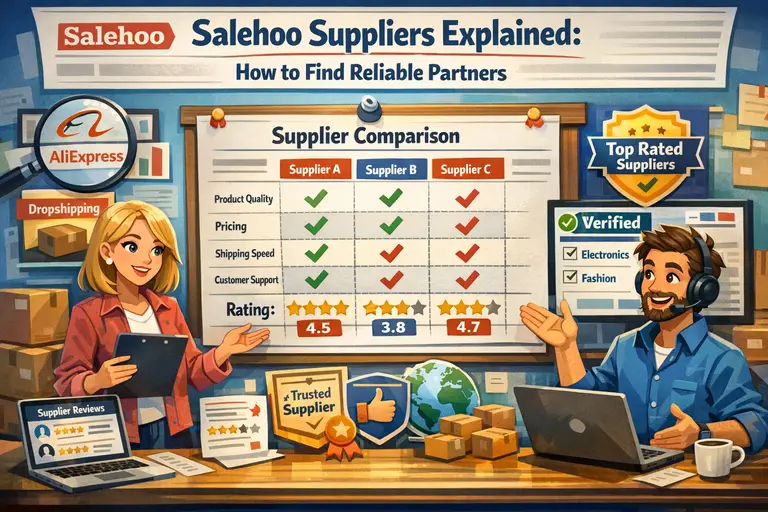 Salehoo Suppliers Explained: How to Find Reliable Partners
 Headless Ecommerce Platform: Is It the Faster Way to Scale?
 Ecommerce CRM Tools That Turn Customers Into Repeat Buyers
 Online Store Website Builder That Helps You Sell Fast
 Starting an Ecommerce Business: A Realistic Step-By-Step Guide