
Table of Contents
Some links on The Justifiable are affiliate links, meaning we may earn a small commission at no extra cost to you. Read full disclaimer.
Serpstat pros and cons for marketers is one of those topics that sounds simple until you actually try to pick an SEO platform with real budget pressure, client deadlines, and reporting needs.
I’ve seen too many reviews either praise Serpstat as a hidden gem or dismiss it too quickly because it is not the biggest name in the category. The truth sits somewhere in the middle.
For many marketers, Serpstat can be a very practical all-in-one SEO toolkit. But it also has trade-offs you should understand before you commit time, workflows, and money to it.
What Serpstat Actually Is For Marketers
Serpstat makes the most sense when you see it as an all-in-one search marketing platform, not as a single-purpose SEO app.
That framing matters because your experience with it depends on what kind of marketer you are.
Who The Platform Is Built For
Serpstat positions itself as an all-in-one SEO platform for individuals, teams, and agencies, with core tools for keyword research, competitor analysis, rank tracking, backlink analysis, and site audits.
Its current plans range from Individual at $50 per month to Agency at $410 per month on annual billing, with a 7-day free trial available.
If you are a freelancer, in-house marketer, small agency, content lead, or growth marketer trying to cover multiple SEO tasks from one dashboard, that matters a lot.
You are not buying Serpstat for one killer feature alone. You are buying it because you want reasonable coverage across several workflows without paying enterprise-level pricing.
That is the core appeal. Instead of stitching together one rank tracker, one audit crawler, one keyword tool, and one backlink checker, you get a bundled environment that handles most everyday SEO work.
In my experience, that makes Serpstat especially attractive to lean teams that need operational efficiency more than prestige.
The Main Tools You Get
Serpstat’s official feature set includes keyword research, competitor analysis, rank tracking, site audit, page audit, backlink analysis, keyword clustering, API access on higher tiers, browser extensions, and newer AI-related features such as AI tools, ChatGPT and Claude integration on Team x2, and an LLM Brand Monitor product.
The company says its database covers 230 countries and includes billions of keywords and backlinks.
That mix tells you what Serpstat wants to be: a broad operating system for search marketers. It is not just for finding keywords. It is also built to help you monitor rankings, analyze competitors, diagnose site issues, export reports, and collaborate across projects.
For a marketer managing multiple channels, that creates a practical advantage. You can move from researching a keyword to checking ranking movement to auditing the page and then building a client-facing report without leaving the same ecosystem.
Why Marketers Keep Considering It
Serpstat claims more than 1.1 million users and 600+ reviews on its site, while G2 currently shows a 4.6 out of 5 rating. Those numbers do not prove the tool is perfect, but they do suggest it has enough adoption and user satisfaction to be taken seriously.
What keeps Serpstat in the conversation is simple: it offers a lot of surface area for the price. When marketers compare software, they are rarely asking, “What is the absolute best tool in one category?” More often they ask, “What gets my team 80% to 90% of what we need without wrecking our budget?”
That is exactly where Serpstat is strongest. It is a value play with real utility, especially for marketers who need a capable suite more than they need the deepest data in every single module.
The Biggest Serpstat Pros For Marketers
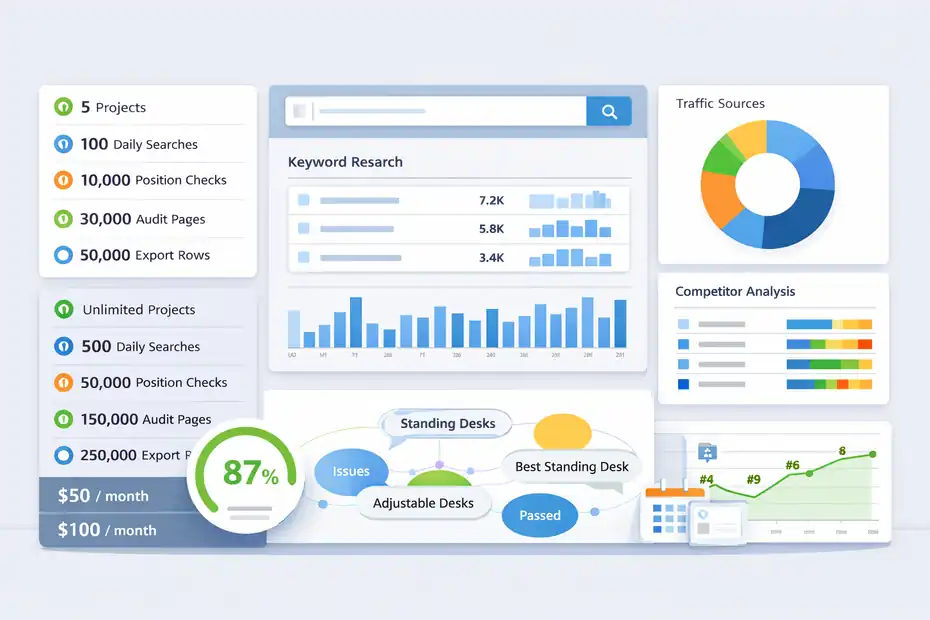
This is where Serpstat becomes genuinely appealing. Its best strengths are not flashy. They are practical, budget-aware, and workflow-friendly.
Strong Value For Money
The biggest reason marketers look at Serpstat is cost efficiency. The Individual plan includes 5 projects, 100 daily searches, 10,000 Top-100 keyword position checks, 30,000 audit pages, and 50,000 export rows for $50 per month on annual billing.
Team increases that to unlimited projects, 500 daily searches, 50,000 position checks, 150,000 audit pages, and 250,000 export rows for $100 per month.
That matters because many marketing teams are not choosing between Serpstat and “the best tool on earth.” They are choosing between getting a workable SEO stack now or delaying investment altogether.
Imagine you run a three-person content and SEO team for a SaaS company. You need keyword research, weekly ranking checks, technical audits, and some competitor snapshots. On a tighter budget, Serpstat can cover those bases without forcing you to buy several separate subscriptions.
I believe this is Serpstat’s clearest advantage. It lowers the barrier to doing serious SEO work consistently.
Useful Breadth Across Core SEO Tasks
Serpstat’s core modules cover the everyday jobs marketers actually have to do: keyword discovery, search visibility analysis, competitor research, site auditing, backlink analysis, reporting, clustering, and position monitoring.
Official plan descriptions also show that collaboration, API access, share access, scheduled reports, and white-label reporting are available as you move up tiers.
That breadth is valuable because SEO rarely happens in neat silos. You may start the day identifying a ranking drop, then discover a technical issue, then need to compare a competitor page, then prepare a stakeholder update by lunch. An all-in-one toolkit supports that reality better than a fragmented stack.
For marketers, the real win is fewer handoffs. You do not need to export everything constantly or explain three different interfaces to your team. Serpstat helps reduce operational drag, which is a bigger benefit than many reviews admit.
Friendly For Smaller Teams And Newer Users
Serpstat’s messaging emphasizes a user-friendly interface, training, support, and onboarding materials, while customer quotes on its site repeatedly highlight usability and the site audit experience. Its help center also documents project setup, audit launch steps, tracking schedules, competitor tracking, and exports in a fairly direct way.
This is one of those strengths that sounds boring until you live through the opposite. A feature-rich platform is not helpful if your team avoids using it because the learning curve feels heavy.
If you are onboarding junior marketers, content managers, or account managers who need quick access to reports and dashboards, Serpstat is easier to justify than a platform that requires constant interpretation by a specialist. In many organizations, “easy enough to use consistently” beats “technically deeper but ignored.”
Keyword Clustering And Content Support Are Practical
Serpstat includes keyword clustering and text analysis capabilities, and its help documentation explains use cases such as structuring site architecture, grouping semantic themes, mapping keywords to pages, and identifying gaps in a semantic core.
For content marketers, this is more useful than it may sound. Keyword lists are easy to collect. Turning them into a content structure is harder. Clustering helps you decide whether to build one page, a hub, or several supporting articles around a topic.
A realistic example: Say you manage an ecommerce category around standing desks. Instead of writing one thin page for every micro-variation, you can use clustering to separate commercial keywords, comparison intent, and informational support topics. That leads to cleaner site structure and fewer cannibalization mistakes.
That is the kind of feature that saves strategy time, not just research time.
The Most Important Serpstat Cons You Should Know
Every SEO tool has weak spots. Serpstat’s cons are not deal-breakers for everyone, but they do matter more once your campaigns grow.
Data Depth Will Not Match Premium Leaders In Every Area
Serpstat offers wide functionality, but marketers should not expect it to outperform category leaders in every data set.
Even Serpstat’s own help materials note that some PPC and keyword data is average or incomplete, that no service can provide 100% reliable contextual advertising analysis, and that some keywords may be absent from the database, especially low-volume queries.
That is an honest limitation, and frankly, I respect that they state it. If your SEO strategy depends heavily on ultra-deep long-tail coverage, niche market intelligence, or very granular backlink research at scale, this limitation becomes more noticeable.
For example, a national publisher, large affiliate business, or enterprise SEO team may find that Serpstat gives enough directional insight for general work but not enough depth for high-stakes strategic decisions. In those environments, “good enough” can still be too shallow.
This does not mean the data is bad. It means the margin for error is smaller when the business stakes are larger.
Lower-Tier Limits Can Be Tight For Busy Marketers
Serpstat is affordable, but affordability comes with usage limits. The Individual plan includes only 100 searches per day, 10,000 Top-100 keyword position checks, 30,000 pages to audit, and 50,000 export rows.
Even the Team plan, while stronger, still requires you to pay attention to search and reporting volume if you handle many clients or large sites.
This is where many marketers get surprised. The monthly price looks comfortable, but the operational ceiling may show up faster than expected.
Imagine you are a consultant with six active clients. One wants a competitor teardown, another needs rank tracking across multiple locations, and two larger sites need recurring audits. Suddenly, those limits stop feeling generous.
In my view, Serpstat is best when your workload fits the tier naturally. If you constantly bump against limits, the tool starts feeling less like a bargain and more like a compromise.
Backlink And Competitive Intelligence May Feel “Enough,” Not “Best”
Serpstat includes backlink analysis and competitor research, and those features are useful for routine SEO work.
But for marketers who live inside link acquisition campaigns, deep referring domain reviews, and aggressive competitor intelligence, the experience can feel more serviceable than exceptional.
Official materials promote backlink analysis heavily, but they do not change the fact that some teams want maximum breadth and historical depth.
This matters most if off-page SEO is central to your strategy. A content-focused brand may barely notice. A digital PR or authority-building team probably will.
I would frame it this way: Serpstat can absolutely help you spot patterns, compare domains, and monitor link-related signals. But if backlinks are your main battleground, you may end up wanting a more specialized or larger-scale data source.
Newer AI And LLM Features Are Interesting But Not The Main Buying Reason
Serpstat’s current pricing page highlights newer add-ons and features such as ChatGPT and Claude integration, AI Overview Brand Opportunities reporting, and a separate LLM Brand Monitor product. Those are clearly part of the company’s direction.
That is promising, but I would not buy Serpstat mainly for the AI angle yet. For most marketers, the reason to subscribe is still the classic SEO foundation: research, tracking, audits, and reporting.
AI features in search software are moving fast across the entire industry. That means anything impressive today can become standard tomorrow. So I would treat these additions as helpful bonuses, not the core reason to choose the platform.
How Serpstat Performs Across Real Marketing Workflows
The best way to judge an SEO tool is to test it against daily marketing jobs, not just feature lists.
For Keyword Research And Content Planning
Serpstat is solid for building topic lists, researching related terms, grouping keywords, and identifying content opportunities across multiple markets.
The platform promotes keyword research, clustering, and traffic checking as central workflows, and its database spans 230 countries.
For content marketers, that usually translates into enough data to build briefs, content hubs, editorial calendars, and page optimization plans. You can start from a seed keyword, review related opportunities, cluster terms, and shape a page strategy without leaving the tool.
That said, your satisfaction will depend on how deep you need to go. If you publish ten articles a month for a mid-sized business, Serpstat may feel very capable.
If you run a large editorial operation targeting thousands of long-tail queries, you may begin to notice data edges and database gaps.
For most teams, though, it covers the planning stage better than many “budget” tools do.
For Rank Tracking And Reporting
Rank tracking is one of Serpstat’s stronger use cases. Official documentation shows support for tracking across mobile and desktop, local and global queries, flexible schedules including daily and monthly options, and competitor tracking inside projects.
This is important for marketers because rank tracking is not just an SEO vanity metric. It is often the cleanest way to show progress to clients, executives, or internal stakeholders.
If you manage recurring campaigns, Serpstat gives you enough structure to monitor movement, compare competitors, and generate scheduled reporting workflows on higher tiers. That is very useful for agencies and in-house teams trying to standardize updates.
I suggest paying close attention to keyword position check limits when choosing a plan. The feature is good, but its usefulness depends on having enough allowance for the scope of your campaigns.
For Technical SEO Monitoring
Serpstat’s site audit is consistently one of its most praised modules. The platform’s feature pages and tutorials emphasize identifying technical SEO issues, comparing previous checks, monitoring audit history, and using audit summaries to track score changes over time.
For many marketers, this is a big deal. Technical SEO is where “we know we should fix things” often turns into “we have no idea where to start.” A good audit tool creates order.
A practical scenario: You inherit a site with redirect chains, duplicate metadata, slow pages, and crawl confusion. Serpstat’s audit workflow gives you a working list of issues, recurring checks, and a way to show improvement over time. That alone can justify the subscription for some teams.
I would not say it replaces deep technical expertise. But it absolutely helps translate technical SEO into an actionable operating process.
Which Marketers Will Benefit Most From Serpstat
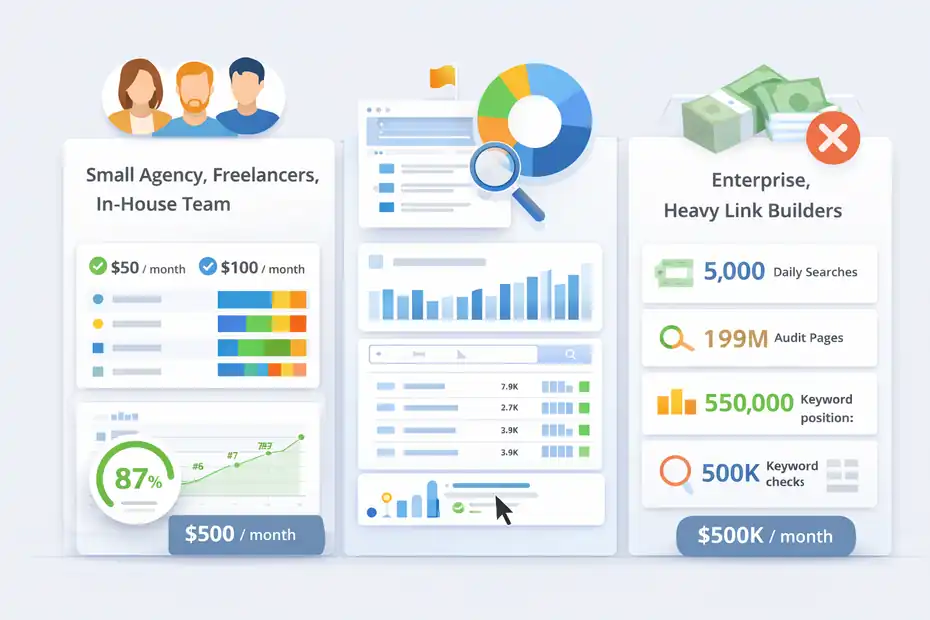
This is where the honest verdict becomes clearer. Serpstat is not equally good for everyone.
Best Fit: Freelancers, Small Agencies, And Lean In-House Teams
If you need one platform to handle a broad set of SEO jobs on a moderate budget, Serpstat makes a lot of sense.
The Individual and Team plans are designed around that exact use case, with Team especially aimed at agencies and growing teams through unlimited projects, more searches, more exports, and access to collaboration-oriented features.
This makes Serpstat a good fit for:
- Small agencies that need rank tracking, site audits, and client reporting in one place.
- Freelancers who want a professional toolkit without paying top-tier software costs.
- In-house marketers who wear multiple hats across SEO, content, and competitor research.
- Startups that need structure and repeatability more than maximum dataset depth.
For these users, Serpstat’s balance is often better than its reputation suggests.
Decent Fit: Content-Led Brands And Ecommerce Teams
Content-led brands can get strong value from keyword research, clustering, ranking monitors, and audits. Ecommerce teams can also use it for category research, competitor checks, and technical issue discovery.
I think the fit is best when the team needs a central SEO workspace rather than a highly specialized link intelligence platform. If your traffic growth depends on publishing better content, organizing search intent clearly, and keeping technical SEO under control, Serpstat is very workable.
It is especially useful if your team is still maturing. You do not always need the most complex platform. Sometimes you need the tool that helps everyone execute consistently.
Weakest Fit: Enterprise, Heavy Link Builders, And Data-Hungry Specialists
This is where the downsides become more meaningful. If your work depends on the deepest possible link index, very broad competitive intelligence, or large-scale enterprise reporting and modeling, Serpstat may not be your final destination.
The Agency tier is much stronger, with 5,000 daily searches, 500,000 keyword position checks, 1.5 million audit pages per month, 2.5 million export rows, and white-label reporting.
But even with those bigger limits, some advanced teams will still prioritize platforms known for maximum depth in their specialty.
So yes, Serpstat scales up. But whether it scales far enough depends on your complexity.
Serpstat Pricing, Plans, And Practical Value
Price is one of the main reasons this tool keeps getting shortlisted, so it deserves a direct breakdown.
Current Plan Snapshot
Here is the current official plan structure on annual billing:
| Plan | Price | Best For | Notable Limits / Features |
|---|---|---|---|
| Individual | $50/mo | Freelancers, beginners | 5 projects, 100 daily searches, 10,000 position checks, 30,000 audit pages |
| Team | $100/mo | Small agencies, growing teams | Unlimited projects, 500 daily searches, API, share access, AI tools |
| Team x2 | $169/mo | Heavier agency workflows | 1,000 daily searches, 100,000 position checks, ChatGPT/Claude integration |
| Agency | $410/mo | Large agencies, businesses | 5,000 daily searches, white-label reports, phone support |
Serpstat also offers a 7-day free trial, and its help materials specify trial limits for Individual and Team-level access.
Is The Pricing Actually Good?
In my view, yes, if you use the platform the way it is designed. Serpstat is good value when you want one subscription that covers several SEO functions reasonably well.
It is weaker value when you buy the cheapest tier and immediately expect agency-scale throughput. That is not a Serpstat problem as much as a plan-fit problem.
The practical question is not “Is $50 or $100 cheap?” The real question is, “Will this replace enough other tools or manual work to justify itself?” For many smaller teams, the answer is yes.
When The Pricing Stops Looking Cheap
Low monthly cost can hide friction if your campaigns are large. Search caps, audit limits, export ceilings, and rank tracking allowances can become the real cost center.
A marketer managing one site may love Serpstat’s pricing. A consultant handling multiple high-page-count sites may quickly need a higher plan. So I recommend judging value based on workflow volume, not just sticker price.
Honest Verdict: Should Marketers Use Serpstat?
If you want the clearest answer on serpstat pros and cons for marketers, here it is: Serpstat is a smart choice for marketers who need a broad, affordable, and practical SEO toolkit, but it is not the strongest option for teams that need best-in-class depth in every data layer.
The Simple Verdict
I would recommend Serpstat to freelancers, startups, content teams, and small agencies that want one platform for keyword research, rank tracking, audits, competitor analysis, and reporting without stepping into premium pricing too early.
I would be more cautious if you are an enterprise SEO lead, a heavy digital PR team, or a specialist who depends on the deepest backlink and competitive datasets available.
That is the honest trade-off. Serpstat wins on balance, coverage, and affordability. It loses when the job demands maximum depth at scale.
The Final Pros And Cons Summary
Here is the cleanest way to think about it:
- Pros: Affordable entry point, strong all-in-one coverage, useful rank tracking, strong audit utility, practical clustering, manageable learning curve, helpful for smaller teams.
- Cons: Data depth may lag premium leaders in some areas, lower-tier limits can get tight, backlink intelligence may feel adequate rather than elite, and AI extras are not yet the main reason to buy.
My Recommendation
I suggest using Serpstat when your marketing team needs consistent execution more than bragging-rights software. If your current challenge is getting keyword research done, tracking results, auditing site issues, and reporting clearly, Serpstat can absolutely do the job.
If your challenge is squeezing marginal gains from huge datasets across complex enterprise campaigns, you may outgrow it.
For most marketers, that puts Serpstat in a very respectable position: not perfect, not overhyped, and often more useful than people expect.
FAQ
What are the main advantages of Serpstat for marketers?
Serpstat offers strong value for money by combining keyword research, rank tracking, site audits, and competitor analysis in one platform. It is especially useful for small teams and freelancers who need an affordable all-in-one SEO solution without managing multiple tools.
What are the biggest disadvantages of Serpstat?
The main drawbacks of Serpstat include limited data depth compared to premium SEO tools, usage limits on lower-tier plans, and backlink analysis that may not satisfy advanced users. It works best for moderate workloads rather than enterprise-level SEO campaigns.
Is Serpstat good for beginners in SEO?
Yes, Serpstat is beginner-friendly due to its simple interface and all-in-one structure. It allows new marketers to perform keyword research, track rankings, and run audits without needing advanced technical skills, making it a practical starting point for learning SEO.
How does Serpstat compare to other SEO tools?
Serpstat focuses on affordability and broad functionality rather than deep specialization. While it may not match premium tools in data depth, it provides enough features for most marketers to manage SEO campaigns effectively within a single platform.
Who should use Serpstat for marketing?
Serpstat is best suited for freelancers, small agencies, startups, and in-house marketers who need a cost-effective SEO toolkit. It is ideal for teams that want to handle keyword research, audits, and tracking in one place without investing in multiple expensive tools.

I’m Juxhin, the voice behind The Justifiable.
I’ve spent 6+ years building blogs, managing affiliate campaigns, and testing the messy world of online business. Here, I cut the fluff and share the strategies that actually move the needle — so you can build income that’s sustainable, not speculative.
Related posts:
 Semrush Alternatives Cheaper But Still Good Picks
 Semrush Vs Ahrefs Which Is Better For SEO Today?
 Website SEO Marketing: Easy Way
 Squirrly SEO – The Ultimate WordPress SEO Plugin for Boosting Your Website’s Rankings
 SEO Checker: The Secret Weapon of Top 5% Webmasters
 Drive Organic Traffic: Increase Visits by 200% with 4 Tips