
Table of Contents
Some links on The Justifiable are affiliate links, meaning we may earn a small commission at no extra cost to you. Read full disclaimer.
Here’s the thing about the squirrly plugin: most people install it, see a few prompts, and assume it’s just another basic SEO tool.
I used to think the same until I actually dug into what it does behind the scenes and how differently it approaches optimization compared to more traditional plugins.
If you’ve ever wondered what Squirrly is really doing for your SEO, this breakdown will make that clear.
How The Squirrly Plugin Handles Keyword Research In Real Time
This is where the squirrly plugin immediately feels different from most SEO tools.
Instead of pushing you into a separate keyword research dashboard, it brings keyword decisions directly into your writing flow, while you’re creating content.
Live Keyword Suggestions Based On Current Google Data
When I first noticed this feature, it felt almost distracting—in a good way. As soon as you start typing inside WordPress, Squirrly pulls live keyword suggestions based on current Google search behavior, not static databases that get updated once a month.
Here’s what’s actually happening behind the scenes:
- Google SERP data is analyzed in real time, so suggestions reflect what people are searching for right now.
- Trends shift dynamically, which matters a lot if you write about fast-moving topics.
- Suggestions change as your content evolves, instead of locking you into one idea early.
In practice, this means you’re not guessing whether a keyword is still relevant. I’ve personally seen suggestions shift mid-article when Google trends changed slightly—something traditional keyword tools simply don’t do.
If you’re used to tools that separate “research” and “writing,” this feels more natural. You’re not hunting keywords first and forcing them into content later. You’re discovering opportunities as ideas take shape.
Competition Scoring And Opportunity Analysis Explained
Squirrly doesn’t just tell you what people search for—it tries to answer the harder question: Can you realistically rank for this?
The plugin assigns a competition score that blends several signals:
- Domain strength of ranking competitors
- Content depth already ranking
- Search intent difficulty, not just keyword volume
What I appreciate here is that Squirrly doesn’t oversimplify competition into “easy” or “hard.” Instead, it highlights opportunities where smaller sites can still win with focused content.
For example, you might see:
- Medium search volume
- Moderate competition
- Weak intent alignment on page one
That’s often a green light. In my experience, these are the keywords that quietly bring consistent traffic without needing backlinks on day one.
Search Intent Matching For Content And Pages
This is one of the most underrated parts of the squirrly plugin. It actively checks whether your content matches the dominant search intent behind a keyword.
You’ll see intent categories like:
- Informational
- Transactional
- Navigational
If your article is informational but the SERP is full of product pages, Squirrly flags that mismatch. That alone can save hours of writing content that never had a chance.
I’ve used this to pivot articles mid-draft—changing structure, adding comparisons, or reframing the angle—before hitting publish.
Long-Tail Keyword Discovery Inside The Editor
Long-tail keywords are usually buried in external tools. Squirrly surfaces them while you write.
As you build paragraphs, it suggests:
- Question-based phrases
- Related modifiers
- Semantic variations Google expects
This naturally expands topical coverage without keyword stuffing. You end up writing better content, not just optimized content—and Google tends to reward that.
Reading about real-time keyword suggestions is one thing. Watching Squirrly adapt recommendations as your content evolves is where it clicks. This is the feature that changes how you plan, write, and publish—without bouncing between tools. See How Real-Time SEO Feels While You Write!
Squirrly Plugin SEO Audits And Performance Monitoring
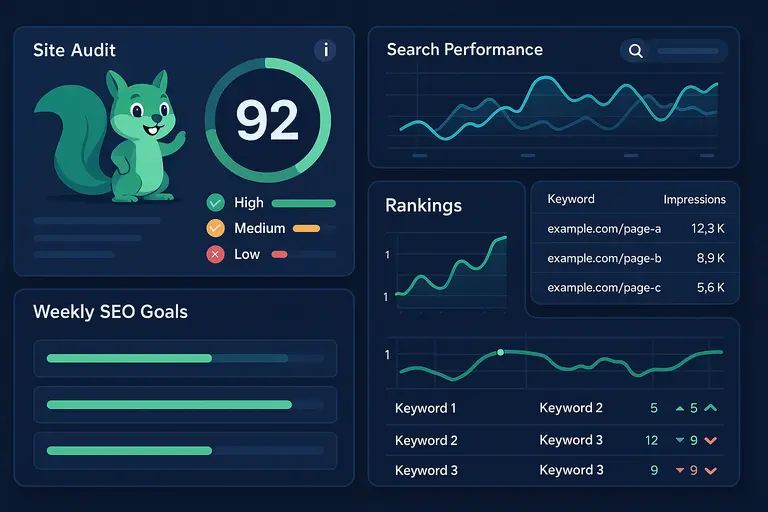
This is the part of the squirrly plugin that feels closest to having an SEO assistant quietly checking your site in the background.
Instead of dumping overwhelming reports on you, it breaks audits and performance data into priorities you can actually act on.
Site-Wide SEO Audits With Priority-Based Tasks
Squirrly’s site audit isn’t just a checklist. It evaluates your entire WordPress site and then sorts issues by impact, which is honestly refreshing.
What it looks at includes:
- Indexing and crawlability issues
- On-page SEO gaps across posts and pages
- Missing metadata or structural problems
- Content-level weaknesses tied to rankings
Instead of saying “fix everything,” Squirrly ranks tasks by importance. In real terms, that means you’ll see things like:
- High-impact tasks that affect visibility now
- Medium-priority fixes that improve consistency
- Low-priority polish items
In my experience, this helps avoid the classic SEO trap of fixing tiny things while ignoring what actually moves rankings. You work top-down, not randomly.
Weekly SEO Goals And Progress Tracking System
This is one of Squirrly’s most human features. The plugin sets weekly SEO goals based on your site’s current state, not generic best practices.
Each week, you’ll see:
- Specific actions to complete
- Progress bars showing completion
- Clear feedback on what moved the needle
What surprised me is how motivating this becomes. SEO usually feels endless. Seeing progress in weekly cycles makes it feel manageable, especially for solo site owners or small teams.
I’ve seen sites improve consistency simply because people knew exactly what to do next instead of guessing.
Ranking Position Tracking For Target Keywords
Squirrly includes built-in rank tracking, so you don’t need a separate tool just to see movement.
You can:
- Track specific keywords per page
- See ranking trends over time
- Spot sudden drops or gains early
It’s not trying to replace enterprise tools, but for most WordPress sites, it’s more than enough. I like that rankings are tied directly to pages, not floating in a disconnected dashboard.
That context makes optimization decisions much easier.
Google Search Console Data Integration
The plugin connects directly with Google Search Console, which means you’re not working off guesses.
You’ll see:
- Impressions and clicks per page
- Queries triggering your content
- Pages with visibility but low CTR
This is where real opportunities show up. If a page has impressions but few clicks, Squirrly often nudges you toward better titles, descriptions, or intent alignment instead of telling you to rewrite everything.
How The Squirrly Plugin Uses AI For SEO Decisions
This is where the squirrly plugin starts feeling less like software and more like a strategist. The AI isn’t there to write content for you. It’s there to guide decisions.
AI-Powered Focus Pages And Ranking Strategy
Focus Pages are Squirrly’s way of saying, “This page matters more than the rest.”
You manually select pages you want to rank, and the AI:
- Analyzes competitors ranking for similar terms
- Identifies gaps in structure and coverage
- Suggests improvements tied to ranking signals
I’ve used this on cornerstone content, and the difference is noticeable. Instead of optimizing everything equally, you’re investing effort where it actually counts.
Machine Learning For Keyword And Content Choices
Squirrly’s machine learning models analyze patterns across:
- SERP behavior
- Content performance
- Keyword trends over time
This helps it recommend keywords that aren’t just popular, but achievable. From what I’ve seen, this reduces wasted effort on keywords that look good on paper but never convert into traffic.
It’s not magic, but it’s smarter than static keyword lists.
SEO Automation Versus Manual Control Balance
This is where Squirrly gets the balance right. Nothing is forced.
You can:
- Follow AI suggestions fully
- Partially apply recommendations
- Ignore them and do your own thing
I personally like this approach. SEO is part data, part judgment. Squirrly respects that and doesn’t lock you into automation-only workflows.
Data-Driven Recommendations Versus Generic Rules
Unlike rule-based plugins that apply the same standards everywhere, Squirrly adapts recommendations based on your site’s data.
That means:
- Different advice for different pages
- Context-aware suggestions
- Fewer cookie-cutter warnings
It feels closer to how a real SEO consultant would think.
Technical SEO Capabilities Inside The Squirrly Plugin
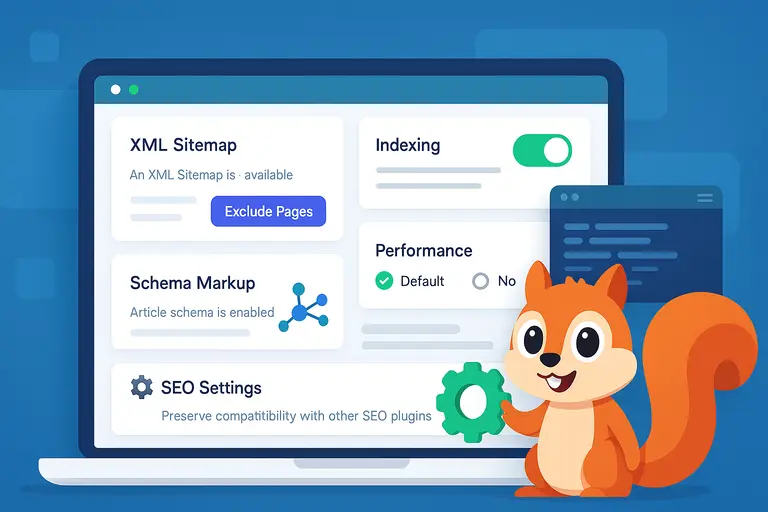
Technical SEO is where many content-focused site owners get stuck. Squirrly tries to make it approachable without hiding what’s happening.
XML Sitemaps And Indexing Controls
Squirrly generates XML sitemaps automatically and gives you control over what gets indexed.
You can:
- Exclude low-value pages
- Control post types and taxonomies
- Update sitemaps dynamically
This helps search engines focus on what matters, especially for growing sites with lots of content.
Schema Markup And Structured Data Handling
Schema markup sounds intimidating, but Squirrly simplifies it.
It adds structured data for:
- Articles and blog posts
- Pages and basic entities
- Clear content relationships
You don’t need to touch code. The plugin applies schema logically based on content type, which reduces errors while still helping search engines understand your site.
SEO Settings For WordPress Performance Signals
While Squirrly isn’t a caching plugin, it respects performance-related SEO signals.
It works alongside performance tools to ensure:
- Clean metadata output
- Minimal SEO-related bloat
- Compatibility with Core Web Vitals improvements
That matters because slow or bloated SEO plugins can quietly hurt rankings.
Compatibility With Other SEO And Cache Plugins
One thing I appreciate is that Squirrly plays well with others.
It’s compatible with:
- Popular caching plugins
- Security plugins
- Performance optimization tools
You’re not forced into an all-or-nothing setup. That flexibility makes it easier to fit Squirrly into existing WordPress stacks without breaking things.
If you’re serious about SEO but don’t want to drown in tools, this balance is one of Squirrly’s strongest advantages.
Squirrly Plugin Versus Traditional SEO Plugins For WordPress
This comparison matters because most people come to the squirrly plugin after using tools like Rank Math. On the surface, they all promise “SEO for WordPress,” but the way they actually work day to day is very different.
Workflow Differences Compared To Yoast And Rank Math
The biggest difference you’ll notice is workflow. Traditional SEO plugins work in a stop-and-check pattern. You write first, then optimize afterward.
With Squirrly, SEO happens during writing.
Here’s how that plays out in real life:
- Yoast and Rank Math rely on post-publish checklists.
- Squirrly guides decisions before mistakes are made.
- Optimization happens inside the editor, not after the fact.
I’ve found this especially helpful when publishing frequently. Instead of fixing SEO issues later, you avoid creating them in the first place.
Strategy-Based SEO Versus Checklist SEO Models
Checklist SEO feels comforting, but it can also be misleading.
Checklist-based plugins focus on:
- Keyword count
- Green lights
- Rule-based scoring systems
Squirrly focuses on strategy:
- Which pages should rank
- Why competitors are winning
- What gaps actually matter
In my experience, strategy-based SEO produces fewer “perfect scores” but better long-term traffic. Google doesn’t rank checklists. It ranks relevance and usefulness.
If checklist SEO feels limiting and you want guidance while content is being created—not after—it’s worth seeing how Squirrly approaches optimization differently. Especially if organic traffic actually matters to your growth. Explore Squirrly’s strategy-first SEO approach!
Learning Curve And Usability Tradeoffs
Let’s be honest. Squirrly has a learning curve.
You’ll spend time understanding:
- Focus Pages
- Weekly goals
- Audit priorities
Yoast is easier on day one. Squirrly is more powerful by week three. If you enjoy learning how SEO actually works, the tradeoff is worth it. If you want something set-and-forget, it may feel heavy.
Which Types Of Websites Benefit Most From Squirrly
From what I’ve seen, Squirrly shines for:
- Content-driven websites
- Blogs targeting organic growth
- Businesses relying on search traffic
If SEO is central to your growth, Squirrly gives you more leverage than basic plugins.
Who Should Actually Use The Squirrly Plugin For SEO

Not every site needs Squirrly. And that’s okay. Knowing whether it fits your situation saves frustration later.
Bloggers And Content Creators Focused On Rankings
If you publish content consistently and care about rankings, Squirrly feels like a coach sitting next to you.
It helps with:
- Topic selection
- Intent alignment
- Content depth
I’ve seen bloggers reduce wasted articles simply by validating intent before publishing.
Small Businesses Without Dedicated SEO Teams
For small businesses, hiring an SEO expert isn’t always realistic.
Squirrly fills that gap by:
- Prioritizing tasks
- Explaining why changes matter
- Preventing common SEO mistakes
It doesn’t replace an expert, but it does reduce dependency on guesswork.
Agencies Managing Multiple WordPress Websites
Agencies benefit from:
- Centralized audits
- Consistent workflows
- Scalable optimization systems
Focus Pages alone can save hours when deciding where to invest effort across multiple client sites.
If you recognized yourself in these scenarios, this is where Squirrly tends to earn its keep.
Situations Where Squirrly May Not Be The Best Fit
Squirrly may not be ideal if:
- You publish very little content
- SEO is not a traffic priority
- You want zero learning curve
In those cases, simpler tools might be enough.
Limitations And Tradeoffs Of The Squirrly Plugin
No SEO tool is perfect. The squirrly plugin is powerful, but it has tradeoffs you should know upfront.
Areas Where Manual SEO Knowledge Is Still Required
Squirrly guides decisions, but it doesn’t replace understanding.
You’ll still need judgment for:
- Content tone
- Brand voice
- Strategic priorities
SEO is not fully automatable, no matter what any tool claims.
Feature Overlap And Potential Complexity Issues
Because Squirrly covers many areas, some features overlap with:
- Analytics tools
- Rank trackers
- Audit platforms
If you already use multiple SEO tools, things can feel redundant. I recommend simplifying your stack when using Squirrly.
Pricing Considerations And Feature Gating
Advanced features live behind paid plans.
That includes:
- Full rank tracking
- Advanced audits
- AI-driven insights
For serious SEO efforts, the cost usually makes sense. For casual sites, it might not.
Common Misconceptions About Automated SEO Tools
One big misconception is that tools “do SEO for you.”
Squirrly doesn’t:
- Write content
- Build links
- Guarantee rankings
What it does is reduce bad decisions. That alone can be incredibly valuable.
How To Decide If The Squirrly Plugin Is Worth Using
This decision becomes easier when you stop asking, “Is it good?” and start asking, “Is it right for me?”
Matching Squirrly Features To Your SEO Goals
Ask yourself:
- Do I want more organic traffic?
- Am I publishing content regularly?
- Do I want guidance, not just scores?
If yes, Squirrly aligns well.
Evaluating ROI Based On Content And Traffic Needs
ROI isn’t just traffic. It’s time saved and mistakes avoided.
Even one article ranking better because of intent alignment can justify the cost.
When To Combine Squirrly With Other SEO Tools
Squirrly pairs well with:
- Performance plugins
- Analytics platforms
- Keyword research tools for ideation
You don’t need everything. Just the right mix.
Practical Criteria For Making The Final Decision
Here’s a simple gut check:
- If SEO feels confusing, Squirrly helps.
- If SEO feels boring, Squirrly structures it.
- If SEO already feels mastered, you may not need it.
From my experience, the squirrly plugin is best for people who want to grow, not just maintain. And that’s usually where real SEO gains come from.

I’m Juxhin, the voice behind The Justifiable.
I’ve spent 6+ years building blogs, managing affiliate campaigns, and testing the messy world of online business. Here, I cut the fluff and share the strategies that actually move the needle — so you can build income that’s sustainable, not speculative.
Related posts:
 SEO Plugin by Squirrly SEO: What Makes It Different?
 How to Craft a Winning SEO Strategy for Your Website
 How to Build a Powerful SEO Website in 5 Easy Steps
 How to Evaluate Your SEO Strategy for Maximum ROI
 How To Choose SEO Marketing Solutions That Fit Your Business
 Does the Squirrly SEO Plugin Improve Rankings?