
Table of Contents
Some links on The Justifiable are affiliate links, meaning we may earn a small commission at no extra cost to you. Read full disclaimer.
SEO marketing solutions can make or break your online growth. The right one helps your business rank higher, attract qualified traffic, and convert visitors into loyal customers—but the wrong one can drain your budget with little return.
With so many options—agencies, software, freelancers, and in-house teams—how do you decide which solution truly fits your business?
This guide walks you through a practical, step-by-step framework to confidently choose the SEO marketing solution that aligns with your goals, resources, and stage of growth.
Understand What SEO Marketing Solutions Include
Before you can choose the right SEO marketing solution, you need to know what’s actually inside the “box.”
SEO (Search Engine Optimization) isn’t just about ranking high on Google — it’s about optimizing every piece of your digital ecosystem so people can find and trust your business online.
Define The Core Components Of SEO Marketing
At its core, SEO marketing combines strategy, content, and technology to help your website show up when your ideal customer searches for what you offer.
The main components include:
- On-Page SEO: Optimizing what’s on your site — keywords, meta descriptions, titles, and user experience. Think of it as making your website easy for Google and humans to understand.
- Off-Page SEO: Building authority off your website through backlinks, social mentions, and digital PR. It’s your reputation outside your own walls.
- Technical SEO: Ensuring your website’s infrastructure supports ranking — fast loading, mobile-friendly, secure (HTTPS), and easily crawlable by search engines.
I suggest thinking of these like a three-legged stool: if one leg (say, technical SEO) is weak, the whole thing wobbles. You can’t grow sustainably without balance.
Differentiate Between Full-Service SEO And Specialized Services
Here’s where many businesses get tripped up: not every SEO provider offers the same thing.
- Full-Service SEO Solutions cover everything from strategy and content to link building and technical fixes. These are great for brands that want a hands-off experience with consistent reporting.
- Specialized SEO Services focus on a single area, like link building, content optimization, or technical site audits.
In my experience, startups or small teams often start with a specialized service (like technical SEO cleanup), then expand into full-service once they see traction.
Larger companies, on the other hand, benefit from integrated solutions that align with multiple departments — marketing, dev, and analytics.
Identify The Right Mix Of On-Page, Off-Page, And Technical SEO
The “right mix” depends on your website’s current health and your competition level.
- If your website isn’t loading fast or indexing properly, prioritize technical SEO first.
- If your pages don’t convert or target the right keywords, focus on on-page SEO.
- If your site is technically strong but not gaining visibility, invest in off-page SEO to build authority.
A balanced approach works best for long-term growth. For example, I often start clients on a 70/20/10 ratio:
- 70% focus on on-page (content and UX)
- 20% on off-page (links and mentions)
- 10% on technical fine-tuning
You can adjust that over time as rankings improve.
Evaluate Whether You Need Strategy, Execution, Or Both
Here’s a truth I’ve learned after years in SEO: strategy without execution is wasted potential — and execution without strategy is wasted effort.
Ask yourself:
- Do I already know what needs to be done, or do I need expert guidance?
- Do I have internal staff who can execute, or should I outsource both?
If you’re an established business with a marketing team, you might only need strategic direction — for example, keyword roadmaps, content calendars, or technical audits.
But if SEO feels like a mystery box, go for an agency or consultant that offers both strategy and implementation (such as on-page optimization + reporting).
The key is clarity: define exactly what gaps you want the solution to fill before you start comparing options.
Assess Your Business Goals And Growth Stage
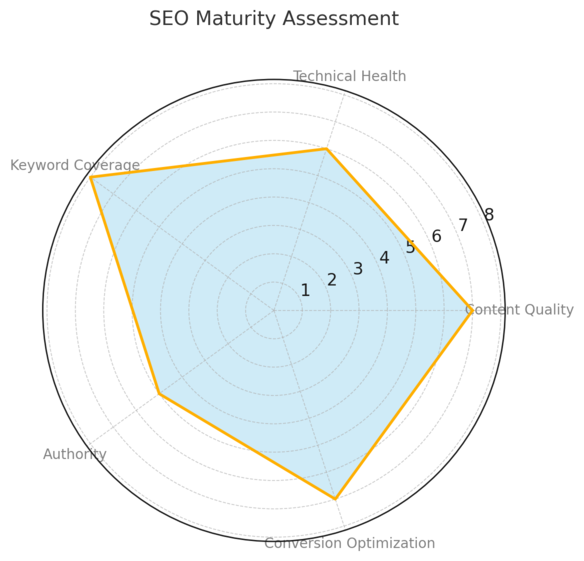
SEO only works when it’s mapped to your actual business stage and objectives.
Whether you’re bootstrapping a startup or scaling a mature brand, your SEO marketing solution should evolve with you.
Clarify What You Want To Achieve With SEO
Ask yourself: What does success look like? Increased organic traffic sounds great, but it’s not a goal — it’s a metric.
Here are clearer goal examples:
- Generate 50 qualified leads per month from organic search.
- Increase eCommerce sales by 20% through SEO-optimized product pages.
- Rank top 3 for local keywords like “plumber in Austin.”
These measurable targets help you and your SEO provider create a roadmap that ties every effort to business growth.
Align SEO Objectives With Overall Marketing Goals
Your SEO strategy shouldn’t exist in a silo. It should complement your other marketing channels — like social media, paid ads, or email campaigns.
For instance:
- If your paid campaigns drive awareness, SEO should capture intent-based traffic ready to buy.
- If your brand relies heavily on content marketing, SEO should guide your content topics based on search demand.
I always advise creating a “goal map” where SEO supports broader KPIs — like customer acquisition cost (CAC) or lifetime value (LTV) — instead of just chasing rankings.
Consider Business Size, Budget, And Market Competition
The right SEO solution depends on your current scale and market conditions.
- Small Businesses or Startups: Often benefit from affordable, agile SEO tools like Ahrefs, Surfer SEO, or Ubersuggest. They offer DIY capabilities to build momentum.
- Medium Businesses: Usually need a hybrid model — some in-house SEO with outside agency help for technical or link-building tasks.
- Enterprises: Require deep analytics, cross-department coordination, and multi-country SEO strategies.
Budget isn’t just about cost — it’s about value per dollar spent. Spending $2,000/month with transparent deliverables beats $500/month with vague “optimization” promises.
Recognize When To Scale From DIY Tools To Professional Services
Most businesses start small — managing SEO with tools like Yoast SEO or SEMRush. But there’s a clear sign when it’s time to level up:
- You’ve hit a traffic plateau.
- You can’t diagnose technical issues.
- You’re spending more time “learning SEO” than running your business.
At that point, I recommend hiring an SEO consultant or agency. They bring expertise, resources, and data insights that tools alone can’t deliver.
Here’s a practical transition model:
- DIY Stage: Use basic SEO tools and follow checklists.
- Hybrid Stage: Bring on a freelancer or part-time expert for audits or link-building.
- Professional Stage: Hire an agency for end-to-end management and growth tracking.
Scaling SEO is like shifting gears — do it when your business engine is ready to accelerate.
Compare Different Types Of SEO Marketing Solutions
Choosing the right SEO marketing solution starts with understanding what’s available and how each option fits your goals, resources, and timeline.
Every path—agency, freelancer, in-house team, or software—has its strengths and trade-offs.
Explore SEO Agencies And Their Pros And Cons
Working with an SEO agency often feels like hiring a full marketing department without building one from scratch. Agencies combine specialists—strategists, writers, link builders, and analysts—under one roof.
Pros:
- Comprehensive Expertise: You get access to a full team skilled in content, technical, and off-page SEO.
- Scalable Solutions: Agencies can adapt services as your business grows, whether you’re targeting local or international markets.
- Proven Processes: Established workflows, dashboards, and reporting make performance easy to track.
Cons:
- Higher Cost: Expect to pay anywhere between $1,000–$10,000 per month depending on scope and competition.
- Less Personalization: You might feel like one of many clients unless you’re with a boutique agency.
- Slower Response Times: Larger agencies juggle multiple accounts, which can slow feedback loops.
Example: A SaaS company using an agency might receive a full SEO roadmap with keyword clusters, monthly reports in Google Looker Studio, and on-page implementation handled directly in WordPress or Webflow.
Assess Freelancers For Flexible And Affordable Support
Freelancers offer flexibility and cost-effectiveness, especially for small businesses or startups testing SEO waters.
Pros:
- Lower Cost: Freelancers typically charge hourly ($30–$150) or per project.
- Direct Communication: You work one-on-one with the person doing the work.
- Adaptability: Ideal for short-term projects like audits, keyword research, or link-building campaigns.
Cons:
- Limited Scope: A single freelancer might not cover all SEO areas.
- Inconsistent Availability: If they’re booked or unavailable, your progress pauses.
- Varied Quality: Vetting skill level is critical—ask for case studies or references.
Tip: I suggest finding freelancers on vetted platforms like Upwork Pro or MarketerHire. Always ask for access to their Google Search Console insights or Ahrefs reports as proof of previous success.
Consider In-House SEO Teams For Long-Term Control
If SEO is a long-term revenue driver for your business, an in-house team gives full ownership of strategy and execution.
Pros:
- Deep Brand Understanding: Internal teams align with your voice, goals, and customer journey.
- Full Control: You manage strategy, pacing, and tools.
- Faster Communication: Real-time collaboration with marketing, product, and dev teams.
Cons:
- Higher Overhead: Hiring SEO managers, content writers, and link builders can easily exceed $100K annually.
- Training Required: Keeping up with algorithm changes demands constant learning.
- Limited Perspective: In-house teams can become siloed without external insights.
I’ve seen brands succeed with a hybrid model: an in-house strategist supported by an external agency for technical audits and backlink outreach. It blends stability with fresh expertise.
Evaluate SEO Software Platforms For Automation And Insights
SEO software platforms are ideal for hands-on marketers who want real-time data and automation.
Examples:
- Ahrefs for backlink analysis and competitor tracking.
- SEMRush for keyword research, audits, and content planning.
- Surfer SEO for optimizing content using AI-driven guidelines.
- Screaming Frog for technical audits.
Pros:
- Data Transparency: You see what’s working and what’s not.
- Scalability: Manage multiple campaigns and sites in one dashboard.
- Affordability: Monthly plans start around $100—cheaper than agencies.
Cons:
- Learning Curve: You need SEO know-how to interpret data correctly.
- Time Investment: You’re responsible for execution.
If you love analytics and want to stay close to the numbers, SEO software is a solid foundation—just remember, tools alone won’t create a strategy.
Analyze Pricing Models And Value For Money
Before signing a contract, it’s vital to understand how SEO pricing works and what you’re truly paying for.
Not all packages are built equally—and price rarely guarantees performance.
Understand Common SEO Pricing Structures
Most providers use one of four pricing models:
- Monthly Retainer: A flat fee covering ongoing services like audits, keyword tracking, and link-building.
- Project-Based: Ideal for one-time needs like a technical cleanup or content audit.
- Hourly Rate: Common for consultants or freelancers offering specialized help.
- Performance-Based: Pay only when specific milestones (like ranking or conversions) are met—though these can sometimes lead to short-term tactics.
Quick example: A mid-sized eCommerce store might pay a $2,000 monthly retainer for on-page optimization, link building, and performance tracking in tools like SEMRush.
Avoid Unrealistic Promises And Low-Cost Traps
Be wary of providers offering “guaranteed first-page rankings.” No one can control Google’s algorithm.
Red flags to watch for:
- Packages under $300/month promising top rankings.
- Providers refusing to share strategy details.
- Overuse of automated link-building tools.
I recommend asking questions like: “What’s your typical time frame for measurable improvements?” and “How do you define success beyond rankings?”
Measure Value Beyond Rankings—Focus On ROI
Ranking alone means little if it doesn’t translate into leads or sales. True value lies in measurable returns.
Key ROI indicators include:
- Increased qualified organic traffic (users likely to convert).
- Lower cost per acquisition (CPA) through organic channels.
- Higher conversion rate on SEO-driven pages.
For instance, an SEO campaign that boosts conversions from 1% to 2% doubles ROI even without dramatic ranking gains. Always track outcomes, not just positions.
Compare Costs Against Expected Performance Metrics
A good SEO partner should provide clear performance forecasts—traffic growth, keyword visibility, or conversion increases.
Create a simple table comparing offers:
| Provider Type | Monthly Cost | Deliverables | Reporting Frequency | Expected ROI |
| Freelancer | $800 | Keyword research + link building | Monthly | 2x traffic growth |
| Agency | $3,000 | Full SEO + content + reporting | Bi-weekly | 3x traffic growth |
| In-House | $7,000 | Full control, tools access | Real-time | 2–4x revenue growth |
This side-by-side view helps you weigh cost against potential performance instead of price alone.
Check Proven Track Records And Case Studies

Reputation matters more than promises in SEO. Before you commit, dig deep into a provider’s past performance, communication style, and transparency.
Review Client Testimonials And Portfolio Results
Look beyond surface-level praise—seek detailed testimonials that mention specific outcomes.
A good case study should include:
- Starting keyword rankings.
- Tactics used (content strategy, backlink outreach, etc.).
- Measurable results (e.g., 200% increase in organic leads).
If possible, contact past clients directly. A five-minute call can reveal more than ten glowing reviews.
Look For Transparency In Reporting And Communication
Trustworthy SEO providers don’t hide data. They share full access to tools like Google Analytics, Search Console, or Ahrefs.
Ask to see a sample report.
It should include:
- Keyword movements.
- Traffic insights.
- Conversion tracking.
- Future recommendations.
I personally avoid any provider that says, “We handle everything internally—you don’t need to worry about it.” SEO should always be collaborative.
Analyze Past Campaigns In Similar Industries
Every industry behaves differently in search. For instance, local SEO for a law firm isn’t the same as eCommerce SEO for fashion.
Look for case studies within your niche. A provider who’s improved “SEO for SaaS websites” will better understand your metrics, content funnels, and customer journey.
If they’ve never worked in your vertical, ask how they’d research your audience and competitors. Their answer reveals how strategic they really are.
Verify Experience With Measurable SEO Outcomes
Finally, look for hard numbers—impressions, CTR (click-through rate), and ROI. Real results don’t hide behind vague metrics.
Example metric ranges to look for:
- Traffic increase: 50–200% over 6–12 months.
- Conversion lift: 1.5–3x after content and UX optimization.
- Ranking improvement: Keywords moving from positions 30–10 to top 5.
I suggest asking providers to show a sample report with actual data trends rather than screenshots of rankings. It’s the easiest way to separate data-backed experts from talkers.
Evaluate Tools, Technology, And Reporting Methods
The tools and reporting systems your SEO provider uses say a lot about their professionalism and transparency.
It’s not just about fancy dashboards—it’s about how clearly they show progress and help you make smarter business decisions.
Identify What SEO Tools The Provider Uses
A good SEO marketing solution relies on a combination of data-driven tools for tracking, auditing, and performance analysis. These aren’t optional—they’re essential.
Core tools to look for:
- Ahrefs or SEMRush: Used for keyword research, backlink analysis, and competitor tracking.
- Google Search Console: Monitors indexing, clicks, and impressions directly from Google.
- Screaming Frog: Performs technical SEO audits to spot broken links or redirect issues.
- Surfer SEO or Clearscope: Helps optimize on-page content for search intent and readability.
If a provider can’t tell you what tools they use—or worse, refuses to share screenshots from these platforms—it’s a red flag.
In my experience, the most trustworthy SEO professionals are transparent about their stack and explain why they chose it.
A quick example: if they mention using Ahrefs, ask to see your Site Explorer overview (the tool’s main dashboard).
It’ll show total backlinks, organic traffic trends, and top keywords—all metrics that prove their process is grounded in real data.
Ensure You’ll Have Access To Transparent Data Reports
Your SEO provider’s reports shouldn’t feel like secret documents. You deserve visibility into your own performance data.
At a minimum, they should give you:
- Access to shared dashboards in Google Looker Studio.
- A monthly summary explaining what changed and why.
- A clear breakdown of tasks completed (e.g., “15 new backlinks acquired,” “10 pages optimized”).
I recommend asking upfront: “Will I have access to the same tools you use for reporting?” Ideally, you should be able to log in anytime and see progress without waiting for a monthly PDF.
Transparency builds trust—and without it, you’re just guessing whether your investment is paying off.
Understand How They Track Performance And KPIs
Metrics are the heartbeat of SEO success. But not all metrics are created equal.
Here are the key KPIs (Key Performance Indicators) I suggest focusing on:
- Organic Traffic Growth: Tracks visitors coming through unpaid search results.
- Keyword Rankings: Shows how visibility changes over time.
- Click-Through Rate (CTR): Reveals how compelling your titles and meta descriptions are.
- Conversions or Leads Generated: The real measure of SEO success.
- Bounce Rate and Session Duration: Indicates content relevance and engagement.
Ask your provider how they calculate these metrics.
For instance, “How do you attribute conversions from organic search?” If they rely only on vanity metrics like “number of backlinks” or “keywords ranked,” it’s a sign they’re not focused on real business outcomes.
I believe a solid SEO solution ties every KPI to business growth—not just search visibility.
Compare Their Reporting Cadence And Data Visualization Quality
Frequency and clarity matter as much as accuracy. You should know when and how updates are shared.
Best practices to expect:
- Bi-weekly updates for active campaigns.
- Monthly performance reviews with action steps.
- Visual dashboards using charts, trend lines, and goal comparisons.
A good report tells a story: What happened, why it happened, and what’s next.
I suggest asking for a sample report before signing any contract—if it’s just rows of data with no insights, you’ll end up lost in numbers instead of understanding progress.
Examine Communication, Collaboration, And Support
SEO partnerships thrive on communication. Even the best strategy will fail if your provider isn’t accessible, responsive, or aligned with your internal team.
Gauge How The Provider Handles Client Communication
Strong SEO relationships are built on transparency and regular updates. I always suggest confirming communication preferences before starting.
What to look for:
- Regular calls or check-ins (weekly or bi-weekly).
- Slack or email threads for real-time collaboration.
- Shared project boards in Asana, Trello, or ClickUp to track tasks.
Ask: “Who will I talk to when I have questions?” and “How quickly do you usually respond?” A clear communication plan prevents misunderstandings later.
Check Availability And Responsiveness To Your Team
You’ll quickly learn whether an SEO partner values your time.
If emails go unanswered for days or deliverables come late without explanation, that’s a red flag. The best SEO professionals set clear response times—often within 24 hours during business days—and proactively share updates.
Some agencies use client portals or Slack integrations for faster replies. If you prefer direct communication, I suggest asking for a shared workspace where messages don’t get buried in email threads.
Review Their Workflow For Revisions And Feedback
Revisions are part of the process—especially when content and strategy are involved. Ask how your feedback fits into their workflow.
A good provider will:
- Present drafts or deliverables for review.
- Allow structured feedback rounds (usually one or two per piece).
- Implement changes quickly and confirm updates.
In one project I managed, an agency used Google Docs commenting for content feedback and Notion boards to track revisions.
It saved hours of back-and-forth and made collaboration effortless. Look for systems like that—it shows organization and respect for your input.
Look For A Dedicated Account Manager Or Point Of Contact
Having a single contact person prevents confusion and builds accountability. This person should understand your business goals, coordinate across departments, and keep communication flowing.
If your provider doesn’t offer this, you risk losing context every time a new specialist touches your project.
I always recommend working with teams that assign a dedicated strategist or account manager—it’s a small detail that makes a huge difference in long-term success.
Consider Scalability And Long-Term Partnership Potential
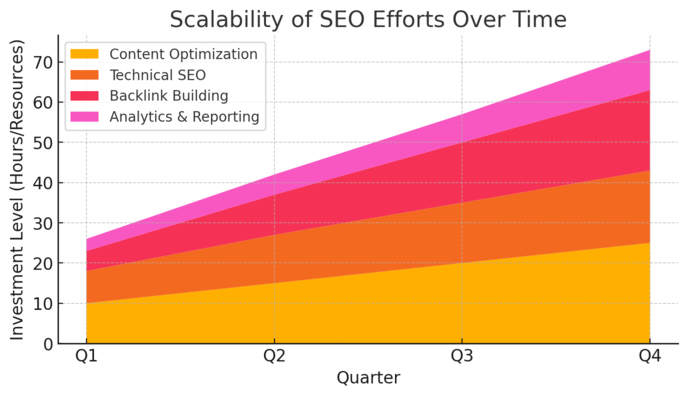
Your SEO needs today won’t be the same six months from now. The best SEO marketing solutions evolve with your growth, not against it.
Assess Whether The Solution Can Grow With Your Business
When evaluating a provider, ask how they handle growth. Can they scale from a small campaign to a multi-domain SEO strategy?
For instance, if your eCommerce store expands internationally, will they support multilingual SEO using hreflang tags and regional content? Or if your SaaS business adds new product lines, can they adjust your keyword clusters and link-building strategy accordingly?
Scalable SEO solutions build frameworks that flex with your business—not ones that break under growth.
Ensure Flexibility In Service Scope And Pricing
I always advise choosing providers who let you adjust scope and cost as needs change. Avoid rigid long-term contracts with no exit options.
Look for:
- Modular service packages (technical, on-page, content, etc.).
- Shorter contract periods (3–6 months instead of 12+).
- Clear add-on pricing for new campaigns or site expansions.
This flexibility ensures you can pivot fast—whether your marketing budget grows or needs tightening.
Look For Providers Offering Continuous Optimization
SEO isn’t “set and forget.” It’s an ongoing process of refinement. Your provider should regularly update strategies based on algorithm changes, competition shifts, and evolving keyword trends.
I recommend asking: “How often do you revisit strategy or re-optimize existing content?” The right answer should be “monthly” or “quarterly,” not “as needed.”
Providers who continuously analyze and adapt often outperform those relying on static checklists.
Plan For Long-Term SEO Maturity, Not Just Short Wins
Short-term tactics might boost rankings fast, but sustainable SEO builds brand authority.
Look for partners focused on compounding returns—those who create content assets, backlinks, and technical structures that keep paying off over time.
A long-term SEO plan might include:
- Annual audits and strategy reviews.
- Expanding into new content clusters or search features (like featured snippets).
- Investing in schema markup or voice search optimization.
I believe the best partnerships feel less like vendor relationships and more like growth alliances—built on data, communication, and shared vision.
Request A Tailored Strategy Before Signing A Contract
Before committing to any SEO marketing solution, make sure the provider takes the time to understand your business.
A good partner won’t push a pre-packaged plan—they’ll develop a strategy that fits your goals, resources, and audience.
Ask For An Initial SEO Audit Or Discovery Call
A genuine SEO partner will start with an audit or discovery session. This is where they learn how your website performs, what’s working, and where it’s falling short.
What to expect from an SEO audit:
- Technical checks (site speed, crawlability, mobile optimization).
- Keyword analysis showing how you rank compared to competitors.
- Backlink profile overview to assess authority and trust.
- On-page content evaluation for relevance and intent.
I always recommend asking for a short discovery call after the audit. It’s your chance to see how they explain findings in plain English. If they use jargon like “canonical issues” without translating what it means for your traffic, that’s a sign of poor communication.
A 30-minute call can reveal more about their expertise than any proposal.
Evaluate How They Personalize Recommendations
Any SEO proposal that looks generic probably is. Pay attention to whether their recommendations reflect your brand, target audience, and competitive landscape.
For example, if you run a local coffee shop, a personalized strategy might include optimizing Google Business Profile, generating local backlinks, and creating content around “best espresso in [city].” A generic one will just talk about “increasing keywords and backlinks.”
I suggest asking: “Can you show how this strategy applies specifically to my business?” A confident SEO professional will point out unique angles—like seasonal search trends or local events—to tailor tactics for you.
Check Whether The Strategy Matches Your Brand Voice And Goals
Your SEO should feel like an extension of your brand, not a robotic content dump.
Ask to review content samples or blog outlines they’ve prepared for similar businesses. See if the tone aligns with your brand—friendly, professional, or authoritative.
If you’re in a creative field, your content should read differently from a finance or SaaS brand. I believe consistency in voice is a crucial trust factor, especially for returning visitors and email subscribers.
Quick test: Ask them to rewrite one of your existing pages as an example. You’ll immediately see whether they understand your tone and audience.
Review The Roadmap For Implementation And Results Tracking
Before signing anything, you should have a clear roadmap showing what happens next. A professional SEO provider will break down timelines, deliverables, and success metrics.
Here’s what a good roadmap includes:
- Phase 1: Technical audit and quick fixes.
- Phase 2: Keyword and content strategy.
- Phase 3: Link-building and outreach.
- Phase 4: Reporting and performance optimization.
Make sure they specify how results will be tracked—through tools like Google Analytics 4, Search Console, or Looker Studio. This roadmap ensures you’re not buying blind promises, but a measurable growth plan.
Make An Informed Decision With A Trial Or Short-Term Contract
A short-term trial or pilot project helps you test the waters without risking a long commitment.
It’s like a test drive before buying a car—you’ll quickly learn whether the provider’s approach works for you.
Test Compatibility With A Small Project Or Pilot Phase
Start small. Ask your SEO provider to take on one defined task—like optimizing five product pages or running a local SEO audit.
This phase shows how they handle deadlines, communication, and technical depth. If they impress you in a smaller scope, chances are they’ll perform well long-term.
I often suggest using this stage to test their understanding of your niche. If you see quick wins in traffic, ranking improvements, or clarity in reports, you’re likely in good hands.
Monitor Transparency, Results, And Responsiveness
Pay attention to how they report progress during the trial. Do they share updates proactively, or do you have to chase them?
Transparency shows up in small details:
- Providing access to dashboards and keyword trackers.
- Explaining what’s being done each week.
- Being upfront about challenges or delays.
A provider who’s honest when things aren’t perfect is more valuable than one who hides behind vague positivity. I’d rather work with someone who says, “This keyword is taking longer due to high competition, here’s our plan,” than someone who avoids updates altogether.
Evaluate Deliverables Before Committing Long-Term
Before renewing or expanding the contract, review the tangible deliverables.
These might include:
- Improved keyword rankings or traffic metrics.
- New backlinks with real domain authority.
- Updated metadata or improved Core Web Vitals scores.
Ask yourself: Did they deliver what they promised? If their reports are clear and results align with expectations, it’s a good sign to move forward.
If not, that short-term investment just saved you from a bad long-term relationship.
Use Performance Data To Guide Your Final Decision
Your decision should be data-driven, not emotional. Compare metrics from before and after the trial period.
Key indicators include:
- Organic traffic increase.
- Keyword ranking improvements.
- Conversion growth from organic channels.
If you notice consistent upward trends—even modest ones—it means their strategy works. I usually tell clients: steady, measurable growth beats flashy promises any day.
Pro Tip: Prioritize Strategy Over Shortcuts
In SEO, patience and strategy always outperform quick fixes.
The providers who build your long-term visibility are the ones who understand the bigger picture—brand growth, authority, and user trust.
Focus On Providers Who Educate, Not Just Execute
An SEO partner should make you smarter, not more dependent. I recommend working with providers who explain why they do things, not just what they’re doing.
Ask if they’ll walk you through their reports or train your team on SEO basics.
The best partnerships involve knowledge sharing—because when you understand the logic behind each move, collaboration becomes effortless.
Value Long-Term Organic Growth Over Quick Fixes
Shortcuts like buying backlinks or over-optimizing pages might give a temporary boost, but they often lead to penalties or ranking drops later.
Sustainable SEO focuses on building assets: high-quality content, internal links, and authority-building partnerships.
A good provider will talk about long-term ROI, not overnight success. I always remind clients—SEO growth curves look like staircases, not rockets.
Build A Relationship Based On Trust, Data, And Shared Goals
SEO is collaborative. The more you treat your provider like a partner instead of a vendor, the better your outcomes.
Set clear expectations, celebrate wins together, and discuss setbacks openly. Providers who share your values and communicate transparently are worth keeping for years.
I once worked with a client for three years because we built trust early on—every decision was backed by data, not guesswork. That’s the kind of partnership you want.
Keep Revisiting Your SEO Strategy As Your Business Evolves
Your SEO plan should never stay static. As your business grows, your strategy needs new keywords, content formats, and user experience updates.
I advise doing a full SEO strategy review every six months. Check what’s driving traffic, what’s stagnating, and where new opportunities lie.
Tools like Google Analytics 4 and Ahrefs Content Gap make it easy to identify underperforming pages or new keyword clusters worth targeting.
The market, algorithms, and your audience will keep changing—your SEO strategy should evolve right alongside them.

I’m Juxhin, the voice behind The Justifiable.
I’ve spent 6+ years building blogs, managing affiliate campaigns, and testing the messy world of online business. Here, I cut the fluff and share the strategies that actually move the needle — so you can build income that’s sustainable, not speculative.
Related posts:
 4 Different Types of SEO: Increase Website Traffic
 Squirrly SEO – The Ultimate WordPress SEO Plugin for Boosting Your Website’s Rankings
 5 Local SEO Strategy Mistakes You’re Making Now
 Boost Your Digital Marketing Business Revenue in 90 Days
 How to Make My Online Business Grow Using SEO and Smart Marketing
 How Automated Marketing Solutions Save Time and Increase Revenue