
Table of Contents
Some links on The Justifiable are affiliate links, meaning we may earn a small commission at no extra cost to you. Read full disclaimer.
When I first decided to create my own blog website, I had no idea where to begin. All I knew was that I wanted to share my ideas online—and maybe, one day, turn it into a real source of income. If you’ve ever thought about doing the same, you’re not alone.
Many people are building profitable blogs today, even without technical skills. The process isn’t as complicated as it might seem once you understand each step.
Let me break it down for you in a clear, strategic way so you can confidently launch your own income-generating blog.
Choose A Profitable Niche That Fits Your Passion
Finding the right niche is where everything begins. It’s not just about what you like—it’s about finding the sweet spot between your passion and market demand.
Identify Your Interests And Market Demand
Start by asking yourself: What could I talk about for hours without getting bored? That’s usually your first clue. The best blogs are born from topics you genuinely care about because that enthusiasm naturally attracts readers.
But passion alone isn’t enough—you also need proof that people are searching for what you plan to write about. Use free tools like Google Trends or AnswerThePublic to see what people are actually curious about.
For instance, if you love fitness, check whether “home workouts” or “healthy meal prep” is gaining steady traction over time.
Quick tip:
- List 5–7 topics you love.
- Check search volume and social buzz for each.
- Narrow down to one that balances interest and profitability.
From what I’ve seen, profitable niches usually solve a specific problem or help readers improve their lives—like personal finance, wellness, productivity, or online business.
Analyze Your Competition And Audience Potential
Once you’ve picked a few possible niches, look at who’s already writing about them. Don’t be discouraged by competition—it’s actually a sign that money flows in that space.
Visit top-ranking blogs in your area. What are they doing well? What do you feel they’re missing?
Maybe their tone is too formal, or they focus on beginners while leaving out advanced readers. Your goal isn’t to copy—it’s to find your unique angle.
Here’s how you can do it:
- Search your niche topic on Google and note the top 10 results.
- Read their most popular posts (usually sorted by views or shares).
- Write down the audience type they serve and what questions remain unanswered.
This research helps you understand what readers crave—and gives you a chance to deliver it better.
Validate Profitability Through Keywords And Trends
Before you fully commit, validate your idea through keyword research. This helps confirm whether your chosen niche can attract consistent traffic.
Use tools like Ubersuggest or Ahrefs to find terms people type into Google. If you see keywords with decent volume (1,000–10,000 monthly searches) but low-to-medium competition, that’s a good sign.
Also, look for monetization signals—are there ads on those search results? Are affiliate products or online courses promoted in that niche? That usually means there’s revenue potential.
Mini example: A friend of mine started a travel blog but struggled—until she niched down into “digital nomad lifestyle.” Once she aligned her content with products like coworking memberships and remote job tools, her income jumped within months.
Select The Right Blogging Platform And Hosting
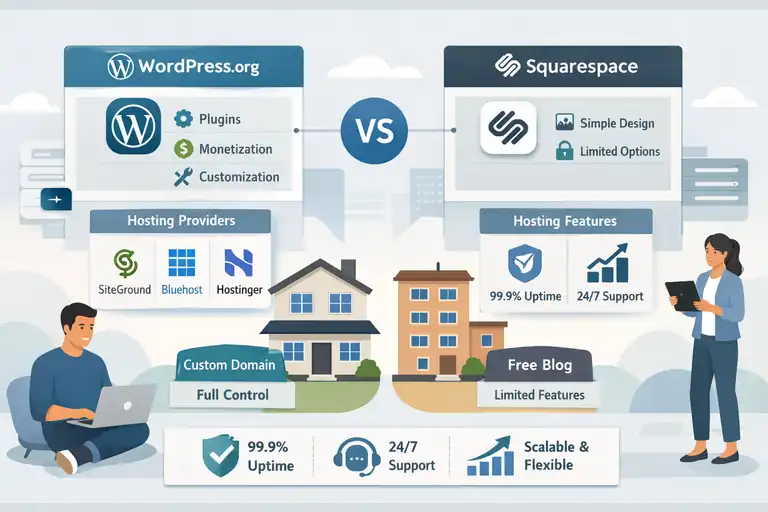
Choosing your blogging platform and hosting setup is like picking the foundation for your home—it determines how much control, growth, and income potential you’ll have later.
Compare Popular Platforms Like WordPress And Squarespace
The two most common platforms are WordPress.org and Squarespace, but they’re very different in flexibility and purpose.
- WordPress.org: This is the self-hosted version of WordPress. It’s free to use, but you’ll need to pay for hosting. The main advantage is control. You can install plugins, monetize freely, and customize everything.
- Squarespace: A good all-in-one solution for beginners who want something visual and simple. It’s great for portfolios or personal blogs but less flexible when it comes to income-generating options.
If your goal is to make money, I strongly recommend starting with WordPress.org. It gives you full ownership—meaning you’re not limited by platform rules or ad restrictions.
Pick A Reliable Hosting Provider For Long-Term Growth
Your host is where your website “lives,” and it can make or break your site’s speed and reliability. Slow blogs lose readers fast—and Google notices that.
For new bloggers, I usually suggest hosting providers like SiteGround, Bluehost, or Hostinger because they’re beginner-friendly and optimized for WordPress.
Here’s what to look for when choosing:
- Uptime guarantee: Aim for at least 99.9%.
- Customer support: 24/7 live chat can save you headaches.
- Scalability: Make sure you can upgrade as your blog traffic grows.
Pro tip: Many hosts offer discounts for the first year. Start with a basic plan and upgrade later as your audience expands.
Understand The Difference Between Free And Self-Hosted Blogs
A free blog (like on WordPress.com or Blogger) might sound tempting at first—but it’s limiting. You’ll have less control, can’t run ads freely, and your URL will look unprofessional (like yourblog.wordpress.com).
A self-hosted blog gives you full ownership, a custom domain, and unlimited monetization options. It’s the difference between renting an apartment and owning your own house.
If you’re serious about income, always go self-hosted from day one. It’s a small investment for long-term freedom.
Pick A Domain Name That Builds Brand Authority
Your domain name is your online identity. It’s what people remember, type in, and associate with your brand. So, it’s worth spending time to get this right.
Choose A Memorable And Search-Friendly Blog Name
Think of your blog name as your digital signature—it should be clear, relevant, and easy to spell. Avoid numbers, hyphens, or overly long names.
The best domain names strike a balance between creativity and clarity. For example, SmartPassiveIncome.com instantly tells you what it’s about, while still feeling branded.
Checklist for a great blog name:
- Keep it short (under 15 characters if possible).
- Make sure it reflects your topic or vibe.
- Say it out loud—if it sounds confusing, it probably is.
When in doubt, choose something timeless over trendy. You can always expand your niche later, but rebranding is tough once your site grows.
Check Domain Availability And Extensions
After brainstorming a few names, check if they’re available. You can do this easily on Namecheap or GoDaddy.
If your perfect .com is taken, consider other top-level domains (TLDs) like .co, .net, or .io—but be careful. While these are gaining acceptance, .com still carries the most trust.
You can also tweak your name slightly, like adding a small word (the, my, or blog) to secure the domain you want.
Example: If minimalhome.com is taken, try theminimalhome.com or minimalhomeblog.com.
Register Your Domain Securely With A Trusted Registrar
Once you’ve chosen your domain, register it immediately before someone else does. Domains go fast—especially catchy ones.
Most hosting providers let you buy a domain during signup, but I personally prefer keeping domains separate for safety. Namecheap is a reliable choice—they include free privacy protection, which hides your personal info from public records.
Quick steps:
- Go to a registrar like Namecheap.
- Search your chosen domain.
- Add it to your cart and register it for 1–2 years.
Then, link it to your hosting account. It’s a simple process, and most hosts have one-click setup guides to walk you through it.
Design A User-Friendly And Engaging Blog Layout
A beautiful, easy-to-navigate blog keeps visitors reading longer—which directly impacts your income potential. The goal is to make readers feel comfortable the moment they land on your site.
Use Clean, Mobile-Responsive Blog Themes
When you create your own blog website, the theme you choose sets the tone for your entire brand. A cluttered design can drive visitors away faster than slow loading times.
If you’re using WordPress, you’ll find thousands of free and premium themes. Look for mobile-responsive ones—this means your site adjusts automatically to any screen size, from phones to tablets.
Quick tips when picking a theme:
- Choose a layout with plenty of white space. It helps your content breathe.
- Test the theme demo on both desktop and mobile before installing.
- Prioritize speed-optimized themes like Astra, GeneratePress, or Kadence.
In my experience, investing in a premium theme early saves countless headaches later. They usually come with built-in SEO optimization and customization options that make your blog stand out.
Customize Branding Elements Like Colors And Fonts
Once your theme is set, it’s time to make it feel uniquely yours. Your blog’s color palette, logo, and typography should reflect your personality and niche.
For example, a wellness blog might use soft greens and calming fonts, while a business blog might lean into blues and bold typefaces. The key is consistency—using the same colors and fonts across pages helps build recognition and trust.
Here’s how to approach it step-by-step:
- Pick 2–3 main colors (one for highlights, one for text, one for accents).
- Choose readable fonts—sans-serif for modern, serif for classic tones.
- Add a simple logo (tools like Canva make this easy).
Avoid overdecorating. A clean design makes your content shine, not the other way around.
Optimize Navigation For Better Reader Experience
Even great content won’t perform if visitors can’t find what they’re looking for. Your navigation should feel intuitive, like walking through a well-organized store.
To make this happen:
- Keep your main menu simple—link only to key pages like Home, Blog, About, and Contact.
- Use categories to organize posts logically.
- Add a search bar and related posts section to guide readers deeper into your site.
I’ve seen bounce rates drop by 20–30% after improving navigation alone. That’s how powerful good user experience can be.
Create High-Quality Content That Drives Income
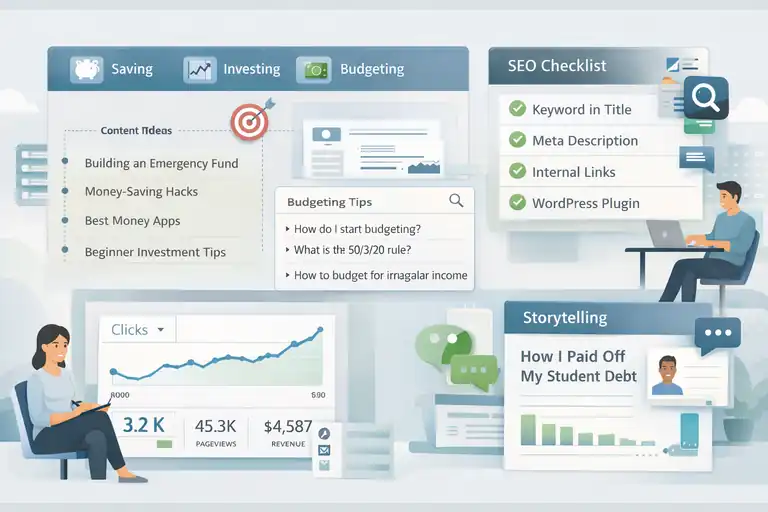
Your content is your currency. It’s what attracts readers, earns trust, and eventually converts visitors into paying customers.
Develop A Content Strategy Around Your Niche
Writing random posts won’t build a profitable blog. You need a content strategy—a roadmap that connects what you write to what your audience actually wants.
Start by listing core topics around your niche. For example, if your niche is personal finance, your categories might be saving, investing, and budgeting.
Then, brainstorm content for each category that solves specific problems. The simplest way to do this? Type your topic into Google and check the People Also Ask section. That’s your audience telling you exactly what they want to know.
Content strategy tip:
- Mix evergreen posts (like “How to Start Budgeting in Your 20s”) with trending ones (like “Best Money Apps This Year”).
- Post consistently—even once a week builds momentum over time.
Learn SEO Basics To Rank Your Blog Posts Higher
Search Engine Optimization (SEO) is how your posts get discovered organically. Don’t worry, it’s not as intimidating as it sounds. It’s mostly about writing clearly, using keywords naturally, and giving Google what it loves—valuable, structured content.
Here’s what to focus on:
- Include your main keyword in the title, intro, and one subheading.
- Add internal links to your other posts.
- Write meta descriptions (the short blurbs under your page title in Google).
You can use plugins like Rank Math or Squirrly SEO in WordPress—they guide you through optimization step by step.
And remember, SEO is a long game. From what I’ve seen, it takes 3–6 months for posts to start ranking well, but once they do, they bring in consistent traffic for years.
Use Storytelling And Personal Insights To Build Connection
The secret to blogging success isn’t just information—it’s connection. Readers stick around when they feel you understand them. That’s where storytelling comes in.
Instead of writing like a textbook, talk to your reader like a friend. Share your mistakes, lessons, and small wins. For example, if you’re writing about productivity, tell them how you struggled with procrastination before finding your system.
Stories make your blog feel human. And when readers trust you, they’re more likely to buy what you recommend—whether it’s an affiliate product, a course, or your own service.
A simple framework I like:
- Start with a relatable challenge.
- Explain what didn’t work.
- Share what finally did—and how it can help the reader too.
Build Traffic Through Proven Marketing Strategies
Once your blog is ready, it’s time to bring people in. Traffic is the lifeblood of your blog—without it, even the best content won’t earn income.
Leverage Social Media Platforms To Grow Visibility
Social media isn’t just about posting links—it’s about community. Choose one or two platforms where your target readers hang out most, and focus there instead of spreading too thin.
If you’re in a visual niche (like travel or food), Instagram and Pinterest are goldmines. For business or tech, LinkedIn and X (Twitter) work better.
A few ways to grow naturally:
- Share snippets of your posts as short tips or carousels.
- Use relevant hashtags to boost discovery.
- Engage with others’ posts—don’t just broadcast your own.
I’ve seen small bloggers double their website traffic in months simply by pinning consistently on Pinterest. Consistency really is the secret weapon.
Use Email Marketing To Build Loyal Readers
Social media followers come and go—but your email list is yours forever. That’s why email marketing is one of the most reliable ways to build a loyal audience and promote new content.
Start simple: add a signup form on your blog and offer something small but valuable in return—like a free checklist or mini guide.
Platforms like Aweber or Mailerlite make it easy to set up automated welcome sequences that nurture new subscribers.
Once readers join your list, send emails that add value, not just promotions. Share stories, lessons, and personal reflections—they’ll keep opening your emails because they’ll feel like they know you.
Collaborate With Other Bloggers And Influencers
One of the fastest ways to grow your blog audience is by partnering with others in your niche. It’s a win-win—you both reach new audiences who already trust similar content.
You can collaborate by:
- Writing guest posts for established blogs.
- Hosting live sessions or podcasts together.
- Creating joint giveaways or resource swaps.
Even one well-placed guest post can drive hundreds of new visitors if you choose the right publication. From experience, I’d say focus on collaborations that feel natural—where your voices and audiences align.
Building relationships in your niche pays off long term. Over time, these connections can lead to backlinks, partnerships, and even product collaborations.
Monetize Your Blog With Multiple Income Streams
Once you’ve started to create your own blog website and built a steady flow of traffic, it’s time to make your efforts pay off.
Monetization isn’t one-size-fits-all—it’s about finding what aligns best with your content, audience, and goals.
Earn Through Display Ads And Affiliate Marketing
The two most common ways to earn from your blog are display ads and affiliate marketing. Each works differently, but both can generate reliable passive income once your blog gains momentum.
Display ads: These are the banner or box-style ads you see on most blogs. When readers view or click these ads, you earn a small commission. Platforms like Google AdSense or Monetag handle placement and payment for you. While AdSense is great for beginners, Mediavine requires higher traffic but pays significantly more.
Affiliate marketing: This is where you promote products you genuinely use and love. When someone buys through your referral link, you earn a commission—without needing to handle the product or customer service. You can join affiliate programs through platforms like Awin, Impact, or Flexoffers.
A practical example: If you run a personal finance blog, you could write a post about “Best Budgeting Apps” and include affiliate links to the apps you use. When readers sign up, you earn income.
Pro tip: Be transparent with your audience. Always disclose affiliate links—it builds trust and keeps you compliant with FTC guidelines.
Offer Digital Products Like Ebooks And Courses
Creating digital products is one of the best ways to scale your blog income because it doesn’t rely on constant traffic. You make something once and sell it repeatedly.
Start small with an ebook—something that offers deeper insights into a topic you’ve already covered. For example, if your blog teaches productivity, an ebook titled “30 Days to a Focused Life” could attract loyal readers willing to pay for structured guidance.
Once you have experience, you can expand into online courses. Tools like Teachable, Podia, or Kajabi make it easy to host video lessons and accept payments.
Here’s the key: Don’t overcomplicate it at first. Choose a problem your readers already have and create a step-by-step solution around it.
A personal note—I’ve seen many bloggers turn a simple “how-to” series into a full-fledged course that generates thousands of dollars a month. The difference lies in clarity, not complexity.
Provide Services, Coaching, Or Consulting For Extra Revenue
If you have specialized knowledge, offering services or coaching can be an immediate source of income. Unlike ads or products, this doesn’t require huge traffic—it relies on trust and authority.
Examples include:
- Writing or design services for other bloggers.
- Coaching sessions (business, health, mindset, etc.).
- Consulting for small businesses or creators in your niche.
You can create a “Work With Me” page on your blog that outlines what you offer, who it’s for, and how to book a session. Platforms like Calendly or Acuity Scheduling help automate the booking process.
From experience, service-based income is one of the fastest ways to earn while you grow your audience. You can always scale down later as your passive income grows.
Track Performance And Improve Blog Results
A profitable blog doesn’t run on guesswork—it runs on data. Tracking what’s working (and what isn’t) helps you make smarter decisions and increase your income over time.
Use Google Analytics To Measure Traffic And Conversions
If you haven’t already, install Google Analytics 4 (GA4). It’s a free tool that shows who visits your blog, where they come from, and what they do while they’re there.
Key metrics to monitor:
- Traffic sources: See whether visitors come from search engines, social media, or referrals.
- Bounce rate: A high bounce rate often means poor navigation or slow load times.
- Conversions: Track newsletter signups, product purchases, or affiliate link clicks.
Understanding these numbers helps you focus on what’s bringing the most value. For example, if 70% of your traffic comes from Pinterest, doubling your effort there makes sense.
Identify Top-Performing Content For Optimization
Your best-performing posts are your blog’s hidden goldmines. Once you know which pages attract the most readers, you can optimize them to earn even more.
Here’s how:
- Update your most-read posts with fresh info, new links, or improved visuals.
- Add internal links to newer posts for better SEO.
- Insert calls-to-action (CTAs) like newsletter opt-ins or affiliate recommendations.
I once refreshed an old article with updated screenshots and a new headline—and its traffic doubled within weeks. Optimization isn’t glamorous, but it’s one of the most profitable blogging habits you can build.
Set Clear Income Goals And Adjust Your Strategy Regularly
Blogging income takes time to stabilize, so setting small, measurable goals helps you stay motivated.
Try this approach:
- Month 1–3: Focus on publishing and audience growth.
- Month 4–6: Add one income stream (ads or affiliates).
- Month 7–12: Expand into products or services.
Track your progress monthly. If something isn’t working after consistent effort, don’t be afraid to pivot. From what I’ve seen, flexibility is often the difference between a struggling blog and a thriving one.
Maintain Consistency And Build Long-Term Authority
Consistency builds trust—and trust builds income. The more regularly you show up, the more your readers and Google reward you.
Create A Realistic Content Schedule You Can Follow
Many new bloggers burn out because they try to publish too much too soon. The goal isn’t quantity—it’s consistency.
If you can only post once a week, that’s fine. Choose a schedule you can maintain long term. Use tools like Trello or Notion to plan content ideas in advance and keep your workflow organized.
Quick tip: Batch your work. Writing 2–3 posts in one sitting helps maintain consistency without constant pressure.
The key is showing up predictably. Over time, readers begin to anticipate your posts—and that loyalty translates into long-term growth.
Engage Regularly With Readers Through Comments And Email
Don’t think of your blog as a one-way broadcast. It’s a conversation. Reply to comments, answer questions, and thank readers for feedback.
Email is another powerful engagement channel. When someone takes the time to subscribe, it’s because they want a closer connection. Treat it that way—share behind-the-scenes stories, lessons learned, or even failures.
These small moments of authenticity create a deeper bond that no algorithm can replace.
Stay Updated With SEO And Blogging Trends
The online world evolves quickly, and so should you. SEO updates, new social media platforms, and AI tools are changing how we reach audiences.
Set aside time monthly to read industry blogs like Search Engine Journal or Backlinko. Experiment with new formats, like short-form video or interactive content.
In my experience, adaptability is one of the strongest assets a blogger can have. When you keep learning, your blog keeps growing.
Scale Your Blog Into A Sustainable Online Business
Once your blog earns steady income, you can start thinking bigger. Scaling means turning your blog from a side project into a full-fledged business.
Outsource Tasks To Focus On Strategy
As your workload grows, doing everything yourself becomes impossible. Outsourcing lets you focus on content strategy and revenue growth.
Tasks you can delegate include:
- Content editing or formatting
- Graphic design
- Social media scheduling
- Technical updates
Websites like Upwork, Fiverr, or OnlineJobs.ph make it easy to find reliable freelancers. Start small—maybe with one task a week—and gradually expand.
It might feel scary to let go at first, but remember: your time is your most valuable asset.
Diversify Revenue Streams For Stability
Relying on one source of income is risky. If an algorithm changes or a partnership ends, your earnings could drop overnight.
To build stability, mix a few income sources:
- Display ads for passive revenue
- Affiliate programs for scalable income
- Digital products for long-term sales
- Coaching or services for immediate cash flow
A diversified income portfolio keeps your blog sustainable even during traffic fluctuations.
Build A Personal Brand That Expands Beyond Your Blog
Your blog is your foundation—but your personal brand is what carries your authority across platforms.
Share your expertise on YouTube, social media, or podcasts. Speak at virtual events or host free webinars. These steps don’t just grow your audience—they position you as a trusted expert in your field.
Eventually, your brand can open doors to book deals, partnerships, or even your own product line.
Remember: scaling isn’t about doing more. It’s about doing what matters most—and doing it better than ever.
Pro tip: Success in blogging doesn’t happen overnight. But if you stay consistent, keep learning, and genuinely care about helping your readers, your blog can become one of the most rewarding income sources you’ll ever create.

I’m Juxhin, the voice behind The Justifiable.
I’ve spent 6+ years building blogs, managing affiliate campaigns, and testing the messy world of online business. Here, I cut the fluff and share the strategies that actually move the needle — so you can build income that’s sustainable, not speculative.
Related posts:
 Blog Website Ideas That Help You Start Earning Early
 Build a Blog That Ranks: SEO Secrets You Need Now
 What’s the Best Website to Start a Blog for Income?
 How to Create a Blog Site and Start Making Money
 Create a Blog Free and Start Earning With No Risk
 Start Blogging and Turn Your Knowledge Into Income