
Table of Contents
Some links on The Justifiable are affiliate links, meaning we may earn a small commission at no extra cost to you. Read full disclaimer.
ClickMagick worth it for affiliate marketers is really a question about whether better tracking can actually make you more money, not whether another software dashboard looks impressive.
If you have ever guessed which traffic source, ad, email, or funnel step produced a sale, you already know the pain.
In my experience, affiliate marketers do not usually lose because they lack offers. They lose because they cannot see what is actually working. That is where ClickMagick enters the conversation.
The real answer is nuanced, though, because the tool is clearly valuable for some affiliate setups and unnecessary for others.
What ClickMagick Actually Does For Affiliate Marketers
Before you decide whether ClickMagick is worth it for affiliate marketers, you need a simple picture of what it does.
At its core, ClickMagick is a link tracking and attribution platform. In plain English, that means it helps you see where clicks came from, which clicks converted, how much traffic was low quality, and which campaigns deserve more budget.
ClickMagick also positions itself as an ad tracking and conversion attribution solution, not just a basic link shortener.
Link Tracking Is The Real Product, Not Shortened Links
Many people first think of ClickMagick as a cloaked link or tracking link tool. That is only the surface. The real value is the layer underneath the link.
When somebody clicks from a Facebook ad, solo ad, YouTube description, blog CTA, email sequence, or banner placement, ClickMagick can help tie that click to downstream actions, including leads and sales, depending on your setup.
The company emphasizes multi-touch attribution, which means you can analyze top, middle, and bottom-of-funnel influence instead of looking only at the final click.
For an affiliate marketer, that matters because buyer journeys are messy. A person might first discover an offer through a review post, then click an email reminder two days later, then buy after retargeting. Without tracking, you might wrongly credit the last touchpoint and kill the content source that actually started the sale.
I believe this is the biggest misunderstanding around affiliate tools. People often buy them for “tracking clicks,” but the real win is decision-making. Once you know which traffic source creates profitable visitors and which one sends bots, freebie seekers, or non-buyers, your optimization gets much easier.
Attribution Helps You Stop Guessing
ClickMagick highlights advanced attribution models and true conversion tracking as part of its core offer. For affiliate marketers running multiple campaigns, this is important because affiliate programs themselves often show only limited conversion reporting.
Some networks give you decent sub-ID tracking. Others give you almost nothing beyond a conversion count and payout.
Imagine you are promoting one finance offer through three channels: SEO content, native ads, and email. The offer converts, but only modestly. Without a separate tracking layer, you might think all three channels are equally decent.
With better attribution, you may discover SEO traffic converts at 4.1%, email at 2.7%, and native at 0.6% after refunds or poor-quality clicks are filtered out. That changes your next move immediately.
This is why tracking software often pays for itself indirectly. The value is not only in “finding winners.” It is also in cutting losers faster. In affiliate marketing, avoiding wasted spend can improve margins as much as lifting conversions.
Click Fraud And Bot Filtering Matter More Than Most Beginners Realize
One reason ClickMagick gets attention is its click fraud and bot protection, branded as Click Shield™. The company says it helps reduce wasted ad spend caused by bots, competitors, and invalid traffic.
That matters most if you buy traffic. Organic affiliates can still benefit from link data, but paid traffic affiliates feel the pain sooner. If you are buying from display networks, solo ad vendors, influencer shoutouts, or even some social placements, low-quality clicks can quietly drain your budget. You might think an offer is bad when the real issue is traffic quality.
From what I have seen, this is where tools like ClickMagick become less of a “nice to have” and more of a control system. If you spend $50 testing something, the loss is annoying. If you spend $500 to $2,000 a week and cannot identify junk traffic quickly, the problem compounds fast.
Who Gets The Most Value From ClickMagick
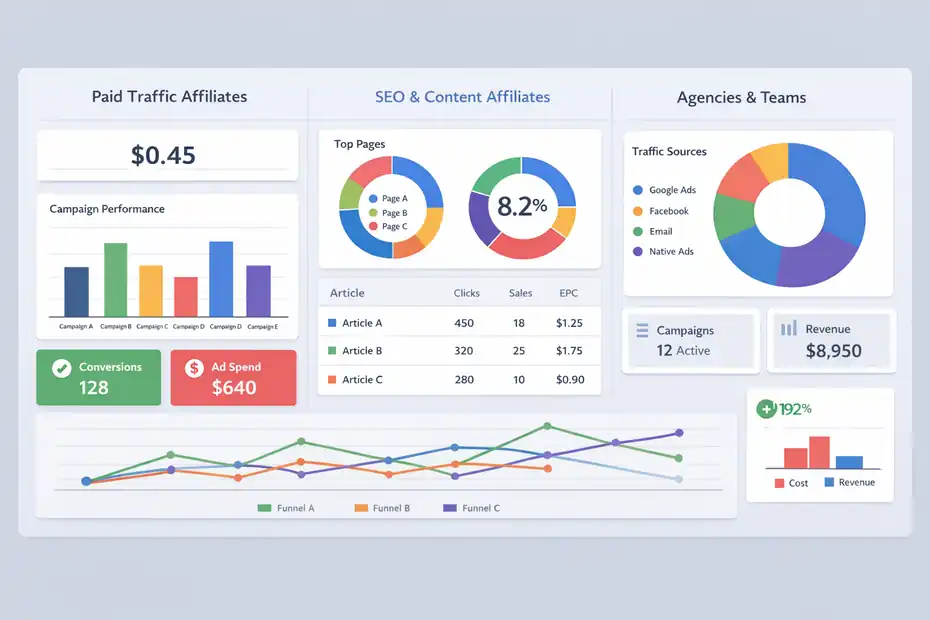
Not every affiliate marketer needs a dedicated tracker on day one. The smartest answer depends on your traffic model, offer type, volume, and how serious you are about optimization.
This is where the “worth it” question becomes practical.
Paid Traffic Affiliates Usually Benefit The Fastest
If you run paid ads, ClickMagick is much easier to justify. ClickMagick’s product pages emphasize ad platform integrations, automatic ad cost updates, conversion attribution, and optimization support. That aligns directly with what media buyers need every day: cost visibility, conversion visibility, and fast feedback loops.
Let me break it down. A paid affiliate marketer needs answers to questions like these:
- Which ad angle gets the cheapest qualified click?
- Which landing page turns traffic into leads?
- Which funnel step kills conversion rate?
- Which traffic source sends fake or low-intent visitors?
- Which campaign deserves scale today, not next week?
Without a tracker, you end up piecing those answers together from ad managers, affiliate networks, spreadsheets, and landing page tools. That is not impossible, but it is slow and full of blind spots.
I suggest thinking in terms of decision speed. If better data helps you pause losing campaigns 48 hours earlier, that alone can justify a monthly software fee. ClickMagick even claims users can improve ROAS after fixing tracking issues, with some case studies reporting sizable lifts, though real outcomes vary widely by campaign quality and setup.
SEO And Content Affiliates Benefit Differently
If your affiliate strategy is based mostly on blog content, YouTube reviews, comparison pages, and email follow-up, ClickMagick can still help, but the benefit looks different. You may not care as much about bot filtering from paid clicks. Instead, you care about knowing which pages, buttons, content upgrades, and traffic sources produce buyers.
For example, imagine you run a software review site. You rank for “best email marketing tools for creators” and “ConvertKit vs MailerLite.” Both posts send affiliate clicks.
One article gets more traffic, but the other generates more commissions per 100 visitors. A tracker can reveal that gap much more clearly than a basic affiliate dashboard alone.
In that case, ClickMagick is less about saving ad spend and more about improving monetization. You identify which article intros, call-to-action placements, bonus offers, or lead magnets drive more profitable clicks. That can be extremely useful once you already have traffic.
Still, I would be honest here: If you are a very new content affiliate with almost no traffic, ClickMagick may be premature. Data is only powerful when you have enough activity to learn from it.
Agencies, Teams, And Multi-Offer Affiliates Get Compounding Value
ClickMagick appears especially attractive for people managing multiple websites, stores, ad accounts, or team members. Its pricing and agency pages show plan differences tied to tracked visitors, team seats, ad accounts, and additional sites or stores. It also offers a Business Manager option and an agency discount structure.
This matters because complexity raises the value of organization. A solo beginner with one traffic source and one offer can survive with simpler systems. A performance marketer juggling five offers, three funnels, and multiple channels cannot afford messy attribution.
In my experience, the more campaigns you run, the more expensive “not knowing” becomes. That is the real dividing line.
The Current ClickMagick Pricing And What You’re Really Paying For
Pricing is where many affiliate marketers hesitate, so let’s look at it directly. ClickMagick’s official pricing page shows multiple plans, including Standard and Pro, with tracked visitor limits, team member allowances, ad account limits, data retention, and AI Insights usage caps.
The site also advertises a 14-day free trial and says you can upgrade, downgrade, or cancel with a couple of clicks.
ClickMagick Pricing Snapshot
Here is a simplified view based on the official pricing page at the time of writing:
| Plan | Publicly Visible Starting Price | Tracked Visitors | Team Members | Ad Accounts | Notable Extras |
|---|---|---|---|---|---|
| Standard | $129/mo or $1,290/yr | 100,000 | 2 additional team members | 2 per platform | 1-year data retention, onboarding call, bot protection, advanced attribution, phone/offline sales tracking, unlimited affiliate campaigns |
| Pro | $291/mo or $3,490/yr | 1,000,000 | Unlimited | Unlimited | More scale for teams and agencies, higher AI Insights capacity |
These figures come from ClickMagick’s official pricing page and may change, so it is always worth checking the live page before making a purchase decision.
The Monthly Fee Is Not The Real Cost
I think a smarter way to evaluate ClickMagick is by asking, “What level of wasted budget or missed optimization would equal this fee?” For a paid affiliate, the break-even math can be surprisingly simple.
Imagine you spend $3,000 a month on traffic. If better tracking helps you reduce waste by even 5%, that is $150 recovered. If it helps you improve conversion quality enough to earn 5% more revenue on a $5,000 commission month, that is another $250. Suddenly the subscription looks much less expensive.
For a content affiliate earning $300 a month, though, the same price feels heavy. The software might still be useful, but the margin for error is smaller. That is why “worth it” cannot be answered without business context.
What The Pricing Tells You About The Intended User
The official plan structure tells a story. ClickMagick is not positioning itself as a casual hobby blogger tool. It is built for people who want attribution, ad tracking, fraud protection, scaling insight, and multi-campaign visibility.
The inclusion of unlimited affiliate campaigns, ad account connections, and AI-powered performance insights makes that clear.
I would say this plainly: If your affiliate business is still at the “I am hoping this works” stage, the price may feel too aggressive. If your business is at the “I need to know exactly where revenue is coming from” stage, the price starts to make sense.
The Core Features That Matter Most For Affiliate Marketing
Features only matter if they solve real affiliate problems. So rather than listing everything in the dashboard, let’s focus on the parts that actually change outcomes.
Conversion Tracking And Funnel Visibility
ClickMagick emphasizes click tracking, conversion tracking, and deep funnel reporting. That means you can monitor what happens after the initial click rather than staring only at raw traffic.
This becomes powerful when your affiliate funnel has multiple steps. For example:
- Ad click to opt-in page
- Opt-in page to bridge page
- Bridge page to affiliate offer
- Offer to sale
- Follow-up email to repeat click
If you only look at the final affiliate network report, you miss the weak link. Maybe the offer is fine, but your bridge page is too vague. Maybe your opt-in page converts well, but the lead quality is poor. Maybe mobile users click but do not finish checkout. Funnel visibility helps you diagnose the real bottleneck.
For affiliate marketers, that clarity reduces emotional decision-making. Instead of saying “This offer sucks,” you can say, “The traffic is fine, but the pre-sell page needs work,” or “Desktop converts twice as well, so I should split bids or tailor the landing page.”
Auto Cost Updates And ROI Visibility
ClickMagick’s product page says it can automatically retrieve ad costs from platforms like Google, Facebook, LinkedIn, Microsoft Ads, and TikTok. That may sound like a convenience feature, but it is actually strategic.
When cost data is disconnected from conversion data, you end up making decisions from incomplete snapshots. A campaign may look strong in your affiliate network because it drove revenue, but if CPCs spiked yesterday, your margin may have disappeared. Pulling cost and conversion information into one place makes profitability easier to read.
I recommend paying special attention to this if you run multiple ad platforms. The more dashboards you juggle, the more likely you are to miss subtle shifts. An automated cost feed reduces manual error and makes daily optimization less exhausting.
AI Insights, Fraud Protection, And Attribution Models
ClickMagick now promotes AI Insights, daily or weekly performance analysis, bot protection, and advanced attribution models as part of its offering.
I would not buy the tool for “AI” alone. That would be the wrong reason. But I do think automated insight layers can help you catch changes faster, especially if you manage many ads and do not want to inspect each one manually every morning.
The fraud protection side is more immediately practical. If invalid traffic is eating your budget, the return from catching that problem can be very real. The attribution side helps you understand the contribution of different touchpoints, which is valuable when your audience does not buy on the first click.
Step-By-Step: How To Decide If ClickMagick Is Worth It For You
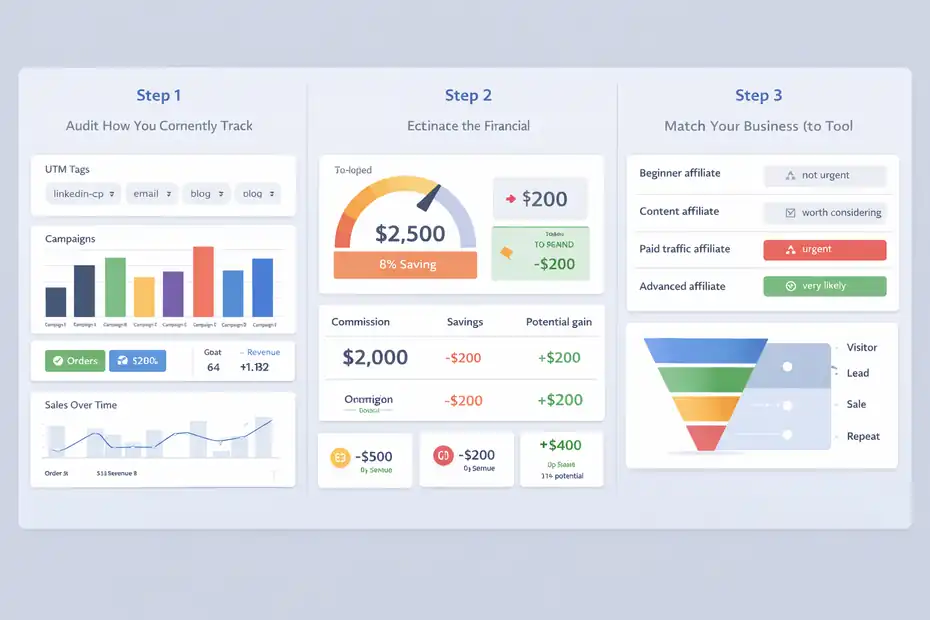
This is the section most people actually need. Not a feature tour. Not hype. A decision framework.
Here is how I would evaluate ClickMagick if I were in your position today.
Step 1: Audit How You Currently Track Traffic And Sales
Start by asking a few blunt questions. Do you know which traffic source, campaign, ad, email, and landing page generated each sale? Can you separate good clicks from garbage clicks? Can you see the path between first touch and final conversion? If the answer is mostly no, you have a tracking gap.
That does not automatically mean you need ClickMagick, but it means you need something better than guesswork. Many affiliates rely on affiliate network reports plus UTM tags plus a spreadsheet. That can work at low volume, but it usually breaks once you add multiple offers or channels.
I suggest writing down your current visibility level in one sentence. Something like, “I can see sales by traffic source, but not by landing page and not by device.” That sentence will tell you whether your bottleneck is serious or mild.
Step 2: Estimate The Financial Value Of Better Decisions
Next, put money on the problem. This step is where the choice becomes much clearer.
Ask yourself:
- How much do you spend on traffic each month?
- How much commission revenue do you generate each month?
- What percentage of that do you think is being wasted, misattributed, or under-optimized?
- How much faster could you cut losers with cleaner data?
Now do conservative math. A tiny lift is enough. Better tracking does not need to double your revenue to be worthwhile. It may only need to save one weak campaign from draining budget for an extra week.
For example, a marketer spending $2,500 monthly on traffic who reduces waste by 8% saves $200. A content affiliate making $2,000 in commissions who improves CTA performance by 10% may gain another $200. Suddenly a subscription fee looks like an operating expense, not a luxury.
Step 3: Match Your Business Stage To The Tool
This is where I think many reviews get sloppy. They talk about whether ClickMagick is “good,” but not whether it is right for your stage.
Here is a practical way to think about it:
- Beginner affiliate with little traffic: Probably not urgent yet.
- Content affiliate with growing traffic and multiple monetized pages: Possibly worth it.
- Paid traffic affiliate spending real money each month: Often worth serious consideration.
- Agency or advanced affiliate with many funnels and campaigns: Very likely worth it.
The official feature set and pricing strongly suggest ClickMagick is designed for marketers who already care about attribution and optimization, not just link shortening.
I believe that is the most honest conclusion. This is not a magic button for beginners. It is an intelligence layer for active marketers.
When ClickMagick Is Absolutely Worth It
There are specific situations where I would not overthink this. If you are in one of these scenarios, the odds are much higher that ClickMagick will pay for itself.
You Buy Traffic And Need Clear Profitability Data
This is the easiest use case. When real money leaves your account every day, data quality matters fast. Paid media is unforgiving. A campaign that looks “promising” can burn hundreds before you realize the traffic quality is awful or the attribution is broken.
ClickMagick’s official messaging around ad tracking, auto cost updates, fraud protection, and attribution is built exactly for this kind of environment.
If you are buying traffic from several places and still making decisions from scattered dashboards, you are probably operating slower than you need to.
You Promote Multiple Offers Across Multiple Funnels
Once you manage several offers, complexity multiplies. One offer may work best with quiz traffic. Another may convert only with long-form bridge pages. A third may look weak until email follow-up finishes the job.
Without strong tracking, all those patterns blur together. ClickMagick becomes useful because it helps you separate performance by source, page, and funnel step instead of relying on broad averages.
In most cases, that is where the software shifts from “interesting” to “operationally important.”
You Need To Protect Budget From Low-Quality Traffic
Invalid clicks are not just annoying. They distort your decisions. If 20% of your traffic is junk, your landing page stats, opt-in rate, and EPC picture all become noisy. ClickMagick explicitly promotes bot and click fraud protection as a key feature.
I have seen plenty of affiliates blame offers, landing pages, or traffic sources when the deeper issue was simply poor click quality. Cleaner traffic data helps you stop fixing the wrong problem.
When ClickMagick Is Probably Not Worth It Yet
A good review should also tell you when not to buy the product. There are real cases where ClickMagick might be a distraction.
You Have Almost No Traffic Or Sales Data
Tracking software shines when there is enough activity to analyze. If your site gets 200 visits a month and your affiliate links receive a handful of clicks, the data volume may be too thin to justify the cost.
At that stage, your bottleneck is likely traffic generation, content quality, offer selection, or audience trust. I would focus there first. Better tracking cannot optimize what barely exists yet.
You Only Run One Simple Traffic Path
If your setup is something like one review post to one affiliate offer, and you are not buying traffic, not emailing leads, and not split testing pages, the complexity may not justify a dedicated tracker. Simpler analytics can sometimes do the job.
That does not mean ClickMagick is bad. It just means your current business may not yet need advanced attribution.
You Will Not Actually Use The Data
This might be the most important warning. Some marketers buy trackers because “real marketers use trackers,” then never build a decision habit around the data.
If you are not going to monitor click quality, compare pages, adjust campaigns, or troubleshoot attribution, the tool will not create value by itself. Software does not replace thinking. It amplifies it.
That is why I think ClickMagick is worth it for affiliate marketers only when the marketer is ready to act on what the tracking reveals.
Common Mistakes Affiliate Marketers Make With ClickMagick
Even a good tool can become expensive clutter if you use it poorly. These are the mistakes I would try to avoid from day one.
Mistake 1: Tracking Everything But Improving Nothing
Some affiliates get obsessed with data collection and forget the goal is action. They build tons of links, tags, IDs, and segments, then make no meaningful changes.
The fix is simple: every tracking setup should answer a business question. For example, “Which bridge page headline produces the highest qualified click-through?” or “Does TikTok traffic produce lower-quality leads than YouTube traffic?” If you cannot connect tracking to a decision, simplify it.
Mistake 2: Assuming Attribution Setup Is Perfect By Default
Attribution tools are powerful, but only when implemented correctly. If postbacks, pixels, funnel steps, and naming conventions are sloppy, the reporting will mislead you.
That is one reason ClickMagick offers onboarding, support, and documentation around setup.
I recommend testing your setup aggressively before trusting it. Click your own paths, verify IDs, confirm lead and sale events, and compare results against affiliate network data. Close is fine. Blind trust is not.
Mistake 3: Ignoring Economics While Chasing Precision
Sometimes affiliates get so focused on perfect attribution that they forget basic profitability. If your campaigns are barely spending or your commissions are tiny, obsessing over advanced tracking before product-market fit can slow you down.
There is a right order here. First, prove you have traffic and monetization potential. Then improve measurement. Then scale. Tracking is a multiplier, not a substitute for a viable affiliate model.
Final Verdict: Is ClickMagick Worth It For Affiliate Marketers?
Yes, ClickMagick is worth it for affiliate marketers who already have meaningful traffic, spend real money on ads, manage multiple funnels, or need better attribution to make smarter decisions. Its current product positioning centers on conversion attribution, ad tracking, fraud protection, cost integration, and performance insights, which are all highly relevant to serious affiliate operations.
But no, it is not automatically worth it for every affiliate marketer. If you are brand new, have very low traffic, or run a simple one-page organic setup with limited volume, you may not get enough value from it yet to justify the price.
My honest take is this: ClickMagick becomes worth it at the moment when bad tracking starts costing you more than the subscription. For beginners, that moment may be months away. For paid traffic affiliates, it may already be here. For advanced marketers, it is often less of a question about “Can I afford this?” and more of a question about “How much am I losing without it?”
If you want the cleanest answer possible, here it is. ClickMagick is not a magic growth hack. It is a visibility tool. And for affiliate marketers making decisions under uncertainty, visibility is often where the real profit starts.
FAQ
What is ClickMagick used for in affiliate marketing?
ClickMagick is used to track clicks, conversions, and traffic quality across affiliate campaigns. It helps marketers understand which traffic sources, ads, and funnel steps generate real sales, allowing better decisions and improved return on investment without relying only on affiliate network data.
Is ClickMagick worth it for beginner affiliate marketers?
ClickMagick is usually not essential for beginners with low traffic or no ad spend. At early stages, focusing on traffic generation and content is more important. It becomes more valuable once you have consistent clicks, multiple campaigns, or need better tracking insights.
How does ClickMagick improve affiliate marketing results?
ClickMagick improves results by showing which campaigns, pages, and traffic sources are profitable. It helps identify wasted ad spend, low-quality traffic, and weak funnel steps. This allows marketers to optimize faster, scale winning campaigns, and cut losses more efficiently.
Do you need ClickMagick if you run paid ads?
If you run paid ads regularly, ClickMagick can be very useful. It provides clearer visibility into cost, conversions, and traffic quality. This helps you avoid wasting budget, improve targeting, and make faster optimization decisions compared to relying on ad platforms alone.
What are the main drawbacks of ClickMagick?
The main drawbacks of ClickMagick are its monthly cost and setup complexity. It may feel overwhelming for beginners and unnecessary for simple setups. Without enough traffic or a clear optimization strategy, the data it provides may not justify the investment.

I’m Juxhin, the voice behind The Justifiable.
I’ve spent 6+ years building blogs, managing affiliate campaigns, and testing the messy world of online business. Here, I cut the fluff and share the strategies that actually move the needle — so you can build income that’s sustainable, not speculative.
Related posts:
 How To Do Online Marketing: Simple And Free
 5 Key Differences Between Sales and Marketing
 ClickMagick Platform Walkthrough Guide: Setup To Results
 ClickMagick Affiliate Tracking Software Review For 2026
 ClickMagick Link Tracking Review: Boost Conversions Fast
 LearnWorlds Shopify Setup: What Works, What Fails