Table of Contents
Some links on The Justifiable are affiliate links, meaning we may earn a small commission at no extra cost to you. Read full disclaimer.
If you’ve ever thought about creating a blog to make money, you’re not alone. Many people dream of turning their ideas, skills, or hobbies into a steady income stream online—but where do you actually start?
In this guide, I’ll walk you through the smart, strategic steps that can help you build a profitable blog from the ground up.
From choosing the right niche to setting up monetization systems that work even while you sleep, this article will show you exactly how to do it—with intention, not luck.
Choosing a Profitable Blog Niche That Attracts Income
Finding the right niche is the foundation of creating a blog to make money. It’s not just about writing what you love—it’s about choosing a topic that connects passion with proven profitability.
Let’s look at how to find, validate, and refine a niche that pays.
Finding a Niche With Real Earning Potential
If you’re starting a blog to generate income, begin by asking: Would someone actually pay for information, products, or help in this space?
Here’s how you can evaluate real earning potential:
- Look for problems people are eager to solve: Profitable niches always center around pain points or goals. For example, fitness, personal finance, and digital marketing are evergreen because people constantly need help with them.
- Check if businesses advertise in that space: Search your niche topic on Google and notice if ads appear. Ads indicate commercial intent—meaning companies are spending money to reach that audience.
- Analyze product potential: Ask yourself: Can I promote affiliate products, sell digital resources, or offer services here? Niches like “budget travel” or “remote work productivity” easily lend themselves to monetization.
- Balance passion with profitability: I often tell new bloggers, choose something you’d still want to write about even if it didn’t make money for six months. Your energy sustains the blog long before profits do.
Validating Your Niche Through Market Demand and Competitor Research
Validation keeps you from building a blog in a vacuum. You want proof that real people care about your topic—and that there’s room for you in the market.
Here’s a quick step-by-step way to validate your niche:
- Use keyword tools like Ahrefs, Semrush, or Google Keyword Planner to check search volume. Look for consistent monthly searches (1,000–10,000 per main keyword is a good starting range).
- Study forums and communities like Reddit, Quora, or Facebook Groups. If people ask the same questions repeatedly, it means there’s a demand for clear answers—perfect for blog content.
- Analyze your top competitors: Visit 3–5 leading blogs in your niche. Examine:
- Their most popular articles (use Ahrefs “Top Pages” feature)
- Their monetization strategies (ads, affiliate links, products)
- Their engagement level (comments, shares, backlinks)
- Find your gap: Don’t copy competitors—improve upon them. If top blogs in your niche focus on beginners, position your content for intermediates or advanced readers.
I recommend spending at least a week validating your niche before creating content. It’s like checking the soil before planting—you’ll grow faster with solid ground beneath you.
Avoiding Common Mistakes When Selecting a Blog Niche
It’s surprisingly easy to get this wrong—many new bloggers do. They chase trends, choose overly broad topics, or ignore the audience entirely.
Here are key mistakes to avoid:
- Going too broad: “Health” or “Lifestyle” is too vague. Narrow it down to something specific like gut health for women or minimalist living for busy professionals.
- Ignoring monetization early: A niche that’s popular but unprofitable (like “free DIY crafts”) can bring traffic but no money. Always check if there are related paid products or affiliate programs.
- Choosing something you don’t care about: Blogging takes time. If you pick a niche just for profit, burnout will hit fast.
- Skipping research: Don’t assume an idea will work because it sounds good. Always validate it with search data and audience interest.
Pro tip: If you’re unsure between two niches, create a few test posts for each, share them in relevant communities, and track engagement. Real feedback often points you to the winner.
Building a Solid Foundation for Your Blog’s Success
Once your niche is set, it’s time to build the framework that supports your long-term success.
A strong technical and strategic foundation ensures your blog runs smoothly, attracts readers, and earns trust.
Choosing the Right Blogging Platform and Domain Name
Your blogging platform and domain name are like your digital home and address—they shape your first impression and determine flexibility later.
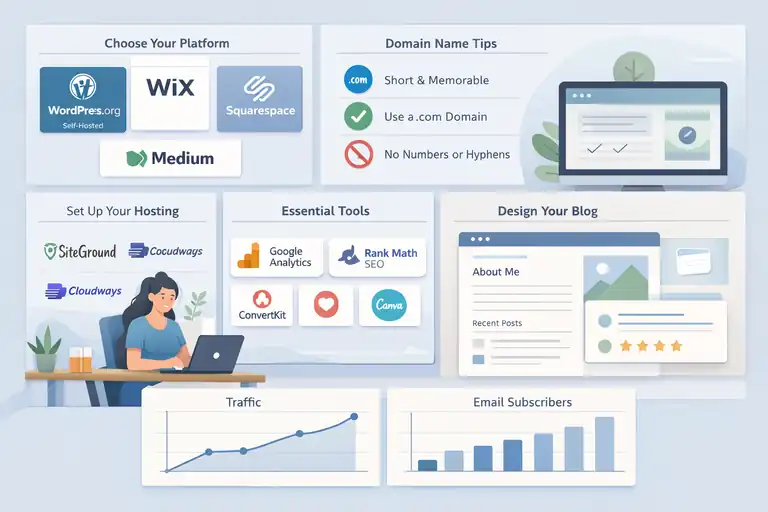
Best Platforms for Beginners:
- WordPress.org (self-hosted): Ideal for monetization and customization. You fully own your content.
- Wix or Squarespace: Easier to set up but limited for SEO and long-term scaling.
- Medium: Great for visibility but not control—you can’t monetize as freely.
If your goal is creating a blog to make money, I strongly suggest WordPress.org. It gives you total freedom over design, SEO, and income streams.
Domain Name Tips:
- Keep it short, memorable, and easy to spell (under 15 characters is best).
- Choose a “.com” if possible—it still carries the most trust.
- Avoid numbers or hyphens; they look unprofessional.
Example: Instead of thebestfitness4u.com, go for fitfoundations.com—clean and easy to remember.
Setting Up Hosting and Essential Blog Tools for Growth
Your hosting and tools can make or break your site’s performance. A slow, unreliable blog won’t retain readers—or rank well in Google.
Recommended Hosting Providers:
- Bluehost: Great support and speed for new bloggers.
- WPengine: Excellent for scaling once you start getting serious traffic.
- Hostinger: Affordable entry-level option with strong uptime.
Essential Tools to Set Up Early:
- Google Analytics and Google Search Console – to track performance and fix indexing issues.
- Rank Math – to optimize your posts for search visibility.
- Aweber or MailerLite – for collecting and nurturing your email subscribers.
- Canva – for designing quick blog graphics or Pinterest images.
I suggest setting these up before publishing your first post. That way, every piece of content you create is already optimized and measurable.
Designing a User-Friendly Blog That Builds Trust
A beautiful blog is nice—but a usable one is what keeps visitors returning.
Focus on simplicity and clarity:
- Use a clean layout with clear navigation (e.g., Home | Blog | About | Contact).
- Stick to 2–3 colors and easy-to-read fonts (sans-serif fonts like Open Sans or Lato work great).
- Keep your sidebar uncluttered—feature a search bar, recent posts, and an email opt-in box.
Building trust visually:
- Use a professional logo (you can create one free on Canva).
- Add an “About” page that shares your story and why readers should trust you.
- Display social proof—like testimonials, media mentions, or subscriber counts (once you have them).
A clean, well-structured site instantly communicates reliability—and that’s essential if you want people to buy from or through your blog.
Creating High-Value Content That Converts Readers Into Income
To succeed in creating a blog to make money, your content has to do more than just inform—it has to connect, solve problems, and gently lead readers toward taking meaningful action.
That’s how you turn traffic into income.
Writing Content That Solves Problems and Builds Authority
The fastest way to build trust (and revenue) is to create content that genuinely helps people.
Readers come to your blog searching for answers—your job is to provide them clearly, practically, and with personality.
Here’s how I approach problem-solving content:
- Start with empathy: I like to imagine one person struggling with a specific issue.
- For example, if I’m writing about “budget travel,” I picture a reader trying to plan a trip with limited funds. It helps me write conversationally and stay focused on their needs, not mine.
- Be actionable, not theoretical: Every post should leave readers thinking, “I know exactly what to do next.”
- Break your advice into simple, numbered steps or short examples they can follow right away.
- Support claims with credibility: Back your advice with data, personal experience, or references.
- For instance, if I suggest publishing two blog posts per week, I might mention that according to HubSpot, blogs publishing consistently earn 67% more monthly leads.
- Inject personal insight: Sharing your own lessons—like what worked or failed for you—humanizes your blog and builds authority faster than just repeating “expert tips” from others.
When readers trust your voice, they’re far more likely to buy what you recommend or create.
Using Keyword Research to Drive Targeted Traffic
Keyword research is how you make sure your great content actually reaches people who need it. It’s not about stuffing keywords—it’s about understanding intent.
Here’s how I suggest doing it effectively:
- Start with topic discovery: Use tools like Ahrefs Keywords Explorer, Semrush, or even the free Google Keyword Planner. Enter your niche and note phrases your audience searches for.
- Focus on long-tail keywords: These are more specific phrases like “how to start a travel blog on a budget.” They bring fewer visitors but convert much better because they target exact needs.
- Check keyword intent: Before using a keyword, ask: Is the person searching for this just curious—or ready to buy? For example, someone searching “best blog hosting for beginners” has buyer intent, which makes it perfect for monetization content.
- Organize keywords by topic clusters: Instead of treating each keyword separately, group related terms. For instance:
- Main keyword: Start a travel blog
- Supporting topics: Travel blog themes, travel blog SEO tips, travel blog income reports
This structure helps you create interconnected articles, boosting both SEO rankings and topical authority.
Quick tip: I usually drop my keywords in a simple Google Sheet and color-code them by intent—informational, commercial, or transactional. It keeps my content plan focused and strategic.
Implementing a Content Strategy That Supports Monetization
Once your blog has a clear niche and keyword direction, your next move is to create a content system that fuels income long term.
I recommend using this simple 3-part content strategy:
- 1. Core content: These are your main, evergreen posts (guides, tutorials, reviews) that bring consistent organic traffic. Example: “How to Create a Blog That Makes Money From Day One.”
- 2. Link-building content: Posts that attract backlinks naturally, like data studies, infographics, or expert roundups. This strengthens your blog’s authority and ranking potential.
- 3. Conversion content: Articles that drive revenue—like product reviews, comparison posts, or case studies showing results.
Example flow: Someone finds your “How to Start a Blog” post → subscribes for your free “Blog Setup Checklist” → later buys your course on “Monetizing Your Blog Fast.”
That’s the power of a structured strategy—it turns casual readers into paying customers naturally.
Growing Blog Traffic With Smart Marketing Strategies
You can write the best content in the world, but without consistent promotion, it stays invisible
Growing traffic requires a mix of organic and active marketing strategies that build awareness and loyalty over time.
Leveraging SEO for Long-Term Organic Traffic
SEO is the most reliable way to grow blog traffic without constant promotion. It’s like planting seeds that keep producing over time.
Here’s my practical SEO workflow:
- Optimize each post before publishing: Add your main keyword to the title, URL, intro paragraph, and at least one H2 heading.
- Use internal linking wisely: Link to 3–5 relevant posts on your site. This keeps readers browsing and helps Google understand your site structure.
- Write meta descriptions manually: Even though Google sometimes rewrites them, a strong meta description increases your click-through rate. Example: “Learn how to create a blog that makes money using simple, proven strategies anyone can start today.”
- Focus on speed and UX: Use a caching plugin (like WP Rocket) and compress images with TinyPNG to keep load times under 3 seconds.
Over time, consistent SEO builds authority that social posts can’t match—it’s how your blog earns traffic even when you’re offline.
Promoting Your Blog Through Social Media Channels
Social media isn’t just for sharing links—it’s for building community. You want readers to connect with you as much as your content.
Here’s what I recommend:
- Pick two platforms and go deep: Instead of trying to be everywhere, choose the platforms your audience actually uses. For example, Pinterest works well for visual content like travel or food, while LinkedIn is perfect for business blogs.
- Create native content: Share micro-tips, quick graphics, or short stories related to your blog posts. This builds interest before people even click through.
- Repurpose strategically: Turn one blog post into multiple formats—tweet threads, short videos, or Instagram carousels.
- Engage, don’t just post: Respond to comments, ask questions, and join conversations in your niche. Real relationships lead to loyal traffic.
I’ve found that showing up authentically on one or two platforms builds more trust (and traffic) than blasting links everywhere.
Building an Email List to Nurture Loyal Readers
Your email list is your most powerful traffic and income asset. It’s the one channel you own completely—no algorithms, no reach limits.
How to build and nurture effectively:
- Offer a valuable freebie: Create something small but useful—like a checklist, cheat sheet, or short ebook related to your niche.
- Use clear sign-up forms: Place them in your sidebar, within blog posts, and at the end of articles. Tools like Optinmonster or WPforms make this easy.
- Send consistent, helpful emails: Share quick insights, personal stories, or updates—not just sales pitches. I usually aim for one email per week that adds real value.
- Segment your audience: Over time, tag readers based on their interests so you can send targeted content or offers.
Think of your email list as a small community. When nurtured right, it becomes your highest-converting traffic source.
Monetizing Your Blog Through Multiple Income Streams
Once your traffic grows, it’s time to turn it into income. The key is diversification—never rely on one method alone. Let’s explore the main ways to monetize effectively.
Earning From Display Ads and Affiliate Marketing
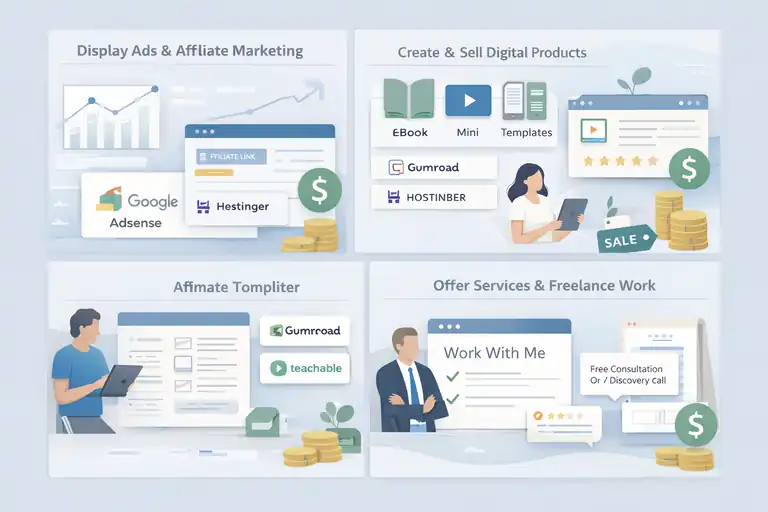
Display ads: Platforms like Google AdSense or Monetag pay you based on page views. They’re passive once set up but work best when your blog has steady traffic (10k+ monthly visits).
Affiliate marketing: This is one of my favorite ways to monetize early. You recommend a product or service and earn a commission on sales made through your referral link.
Example workflow: You write a post titled “Best Hosting for Beginner Bloggers” → include affiliate links for SiteGround or Hostinger → readers click and purchase → you earn a commission.
Tips for better results:
- Always disclose affiliate relationships transparently.
- Promote only products you’ve tested or genuinely trust.
- Write honest comparisons or tutorials—these convert better than “top 10” listicles.
Creating and Selling Digital Products Like Ebooks or Courses
Digital products are scalable and build long-term income. You create them once, but they keep earning.
Popular product types:
- Ebooks or guides
- Mini-courses or workshops
- Templates or planners
Example: If your niche is productivity, you might sell a “Daily Focus Planner Template” or a “Time Management Bootcamp.”
Tools like Gumroad, Podia, and Teachable make setup simple. Just upload your product, add pricing, and connect a payment method.
The secret is to start small—launch a single product, learn from feedback, then scale up.
Offering Freelance or Consulting Services Through Your Blog
Your blog can also act as a portfolio that attracts paying clients. If you have expertise—writing, design, SEO, coaching—you can promote it directly through your site.
How to get started:
- Create a “Work With Me” page that clearly explains your services and who they’re for.
- Showcase testimonials or examples of your work.
- Offer a free discovery call or consultation to build trust.
Many bloggers earn more through freelancing or consulting in the first year than through passive methods. It’s a great way to build income while your blog audience grows.
Expert tip: The most successful bloggers I’ve seen don’t chase every monetization trend—they focus on what fits their audience best. Whether it’s affiliate income, products, or services, consistency and authenticity always pay off long-term.
Automating and Scaling Your Blogging Income Over Time
Once you’ve started creating a blog to make money and have a few income streams in place, the next challenge is to make it sustainable—and scalable. The goal here isn’t to work harder but to work smarter.
Automation, delegation, and diversification are what turn a side hustle into a reliable online business.
Using Automation Tools to Simplify Content and Marketing Tasks
Automation is your best friend when you’re trying to grow without burning out. It saves time, keeps things consistent, and lets you focus on higher-value work.
Here’s how I use automation in practice:
- Email automation: Tools like Omnisend or Getresponse let you create sequences that automatically send welcome emails, blog updates, or product offers. Example: When someone downloads your free ebook, they automatically get a 5-day email series introducing your best content.
- Social media scheduling: Instead of manually posting every day, I schedule a week’s worth of posts using Later. A simple routine: schedule every Sunday evening, then monitor engagement during the week.
- Content repurposing: Tools like Missinglettr automatically turn blog posts into bite-sized social updates. This means you can stay active on social media even when you’re focused elsewhere.
- Analytics dashboards: I like Looker Studio for automated performance tracking—it pulls data from Google Analytics, Search Console, and social media into one visual dashboard.
Personal tip: Don’t automate everything. Keep some human touchpoints, especially in your email responses or social comments—it keeps your audience feeling connected to you, not just your systems.
Outsourcing Tasks to Focus on Growth and Strategy
There comes a point where doing everything yourself actually slows growth. Outsourcing frees your time to focus on the parts of your blog that directly grow income—like strategy, partnerships, or product creation.
Tasks worth outsourcing first:
- Design and branding: Hire a freelance designer on Fiverr or Upwork to create a professional logo or consistent visuals for your site.
- Content formatting and uploading: A virtual assistant (VA) can handle WordPress uploads, image optimization, and basic SEO tweaks.
- Pinterest or social media management: A part-time VA can schedule pins, manage posts, and track analytics.
- Technical maintenance: If your site needs optimization, updates, or plugin management, a developer from Codeable can take it off your plate.
How I suggest managing outsourced work:
- Start small—delegate one recurring task for a month and review performance.
- Use shared tools like Trello or Asana for task tracking.
- Always document your processes so new freelancers can onboard easily later.
Think of outsourcing as investing in your time. The few hours you reclaim can be redirected toward scaling income rather than managing admin work.
Diversifying Income Streams to Build Long-Term Stability
One of the smartest things you can do when creating a blog to make money is to avoid depending on a single income stream.
Algorithms change, affiliate programs shut down, and ad rates fluctuate—diversification keeps your income steady.
Here’s a simple diversification model I recommend:
- Short-term income: Freelance writing, sponsored posts, or consulting services. These bring quick cash flow.
- Medium-term income: Affiliate marketing and ads. Once traffic grows, these become passive earners.
- Long-term income: Your own digital products, membership programs, or courses. They take time to build but generate exponential returns.
Example: A food blogger might earn from sponsored recipes (short-term), affiliate links to cookware (medium-term), and an online cooking course (long-term).
As your blog grows, the goal is to shift your focus from service-based income to scalable products. That’s where real freedom begins.
Tracking Performance and Optimizing for Maximum Profit
Scaling your blog means measuring what’s working—and improving what’s not. Data isn’t just numbers; it’s the map that shows where your next profit opportunity lies.
Setting Up Analytics to Monitor Traffic and Conversions
Without analytics, you’re flying blind. You need to know who visits your site, what they do, and which pages drive income.
Essential analytics tools to set up:
- Google Analytics 4 (GA4): Tracks visitors, bounce rates, and conversion goals. To set it up: Go to analytics.google.com > Admin > Create Property > Connect to your website using a plugin like Site Kit.
- Google Search Console: Shows which keywords bring traffic and where your site appears in search results.
- Hotjar: Offers heatmaps and session recordings so you can literally see how visitors interact with your pages.
Metrics I check weekly:
- Top-performing pages (to identify what’s resonating)
- Conversion rate from blog post to email subscriber
- Bounce rate on key monetized pages
- Average session duration
Knowing these helps you refine your strategy and double down on what’s actually working.
Identifying and Improving Low-Performing Content
Not every post you publish will perform equally—and that’s perfectly normal. The key is to find underperformers and update them strategically.
Here’s a quick process I follow every quarter:
- Find low-performing posts: In Google Analytics, check pages with high impressions but low clicks or engagement.
- Update the content: Add fresh stats, internal links, or improved visuals.
- Rework your title and meta description: Sometimes a better hook can revive old posts.
- Add better CTAs (calls-to-action): Guide readers toward your email list, affiliate products, or related posts.
A single content refresh can sometimes double a post’s traffic. I’ve seen it happen countless times with posts that were originally buried on page two of Google.
Testing New Monetization Strategies for Higher Revenue
As your blog evolves, so should your monetization strategy. What worked at 10k page views may not be ideal at 100k.
Ways to test and optimize your monetization:
- Ad placement experiments: Try moving ads above the fold or within content blocks and compare click-through rates using AdThrive dashboards.
- Affiliate product comparisons: Swap underperforming links with higher-converting alternatives. For instance, test promoting ConvertKit vs MailerLite and track conversion percentages.
- A/B test landing pages: Use Thrive Optimize to see which versions of your product pages convert best.
Always track your experiments for at least 30 days before drawing conclusions. Slow, data-backed decisions compound over time into major revenue growth.
Pro Tips to Stay Consistent and Profitable as a Blogger
Consistency is what separates casual bloggers from earners. You can have the best tools and strategies, but without persistence and balance, it’s easy to burn out.
Building Habits That Keep You Motivated and Consistent
Blogging success comes from routines, not random bursts of energy. I’ve learned that sustainable habits build the foundation for creativity and discipline.
Here’s what helps me stay consistent:
- Set a realistic publishing schedule (for example, one high-quality post every 10–14 days).
- Plan content monthly using a spreadsheet or Trello board.
- Write in focused time blocks—turn off notifications and aim for 90-minute sprints.
- Review progress every Sunday: what worked, what didn’t, and what to adjust next week.
Over time, these small habits compound. You’ll build not just a blog, but a rhythm that makes blogging feel natural.
Avoiding Burnout With Smart Time Management
It’s easy to overwork when your blog starts gaining traction. I’ve been there—and trust me, burnout kills creativity fast.
Simple ways to avoid it:
- Batch similar tasks: Write multiple posts in one sitting, then schedule them out.
- Take “offline” days: One day a week without checking analytics or social media does wonders for mental clarity.
- Set work boundaries: Use tools like Pomofocus (a Pomodoro timer) to stay productive without overextending.
- Outsource early: Even small tasks like uploading blog posts or editing graphics can drain time you could spend on strategy.
Remember, long-term blogging success isn’t about working nonstop—it’s about building systems that let you sustain creativity and joy in the process.
Staying Ahead of Trends to Keep Your Blog Relevant
The digital world changes quickly, and so do blogging trends. Staying informed helps you pivot before competitors do.
How to keep your finger on the pulse:
- Follow industry newsletters like Search Engine Journal or HubSpot Blog.
- Use Google Trends to spot emerging topics in your niche.
- Experiment with new content formats—short-form videos, interactive posts, or AI-assisted content tools like SurferSEO.
- Regularly revisit your old posts to ensure they reflect current best practices.
Pro tip: I set a reminder once a quarter to review my content strategy against new SEO updates or platform shifts. This habit alone keeps my blog relevant and competitive.
FAQ
How do I start creating a blog to make money?
Start by choosing a profitable niche, setting up a WordPress blog with reliable hosting, and publishing valuable, SEO-optimized content that attracts readers.
How long does it take to make money from a blog?
Most bloggers begin earning within 3–6 months if they post consistently, build traffic, and use monetization strategies like affiliate marketing or ads.
What are the best ways to monetize a blog effectively?
You can make money through display ads, affiliate links, sponsored posts, selling digital products, or offering online services related to your niche.

I’m Juxhin, the voice behind The Justifiable.
I’ve spent 6+ years building blogs, managing affiliate campaigns, and testing the messy world of online business. Here, I cut the fluff and share the strategies that actually move the needle — so you can build income that’s sustainable, not speculative.